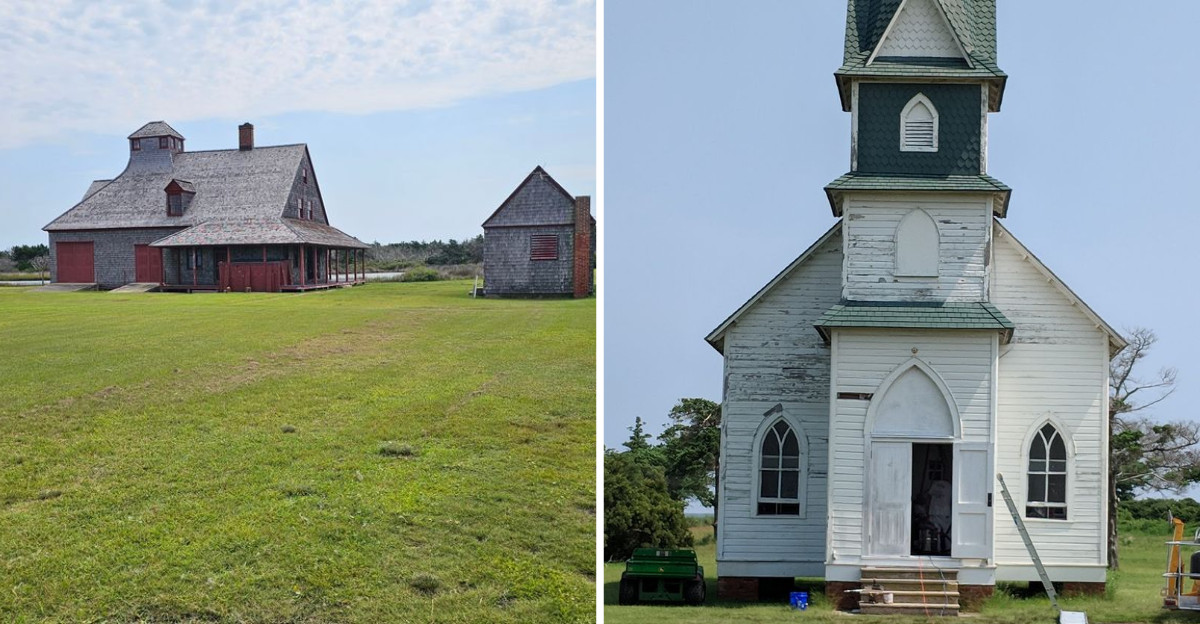
Stepping off the small boat at that North Carolina village, the silence hit me first, thick and warm and broken only by marsh birds. I had crossed the inlet expecting ruins, and instead I found a tidy cluster of white clapboard houses sitting quietly in the grass, waiting.
Nobody has lived here permanently since early 1971, when the last two residents packed up and moved to the mainland, yet roughly twenty buildings still stand along the sandy paths.
There is a church with an organ inside, a one-room schoolhouse, a general store, and a life-saving station that once watched over some of the most dangerous water on the East Coast.
The church still holds its pews, and the organ sits where it has always been, unused but intact. Walking those paths, I kept thinking about how ordinary life must have felt here in the 1860s, when nearly seven hundred people called this island home.
Some places hold their stories gently, and this one stays with you long after the ferry ride back.
The Boat Ride Across Ocracoke Inlet
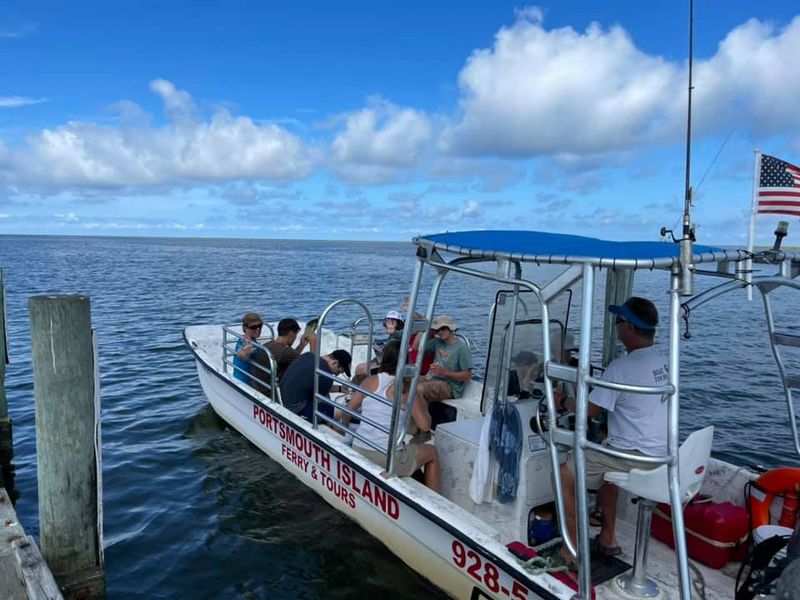
Getting here is half the story, because Portsmouth Village has no road, no bridge, and no way in except by water. Passenger ferries run from Ocracoke Island across the inlet, and the trip is short but genuinely beautiful.
I watched pelicans skim the surface while the captain pointed out shoals that used to wreck cargo ships. The water shifts color constantly, from milky green over sandbars to deeper blue in the channel.
One practical thing worth sorting out before you leave the dock: tell your ferry operator exactly where you want to be dropped off and picked up. Some boats land at the village dock, others take people to the beach side, and those two spots are a fair walk apart across marsh and sand.
Times are tide dependent and weather dependent, so schedules can shift without much warning. I would build flexibility into the day rather than planning something tight for the afternoon.
Bring everything you need, since there is nothing to buy on the island. Water, snacks, sunscreen, and a hat all earn their space in your bag.
The crossing also sets the mood nicely. By the time you step onto that dock, you already feel how isolated this community truly was.
Salter House, Now the Visitor Center
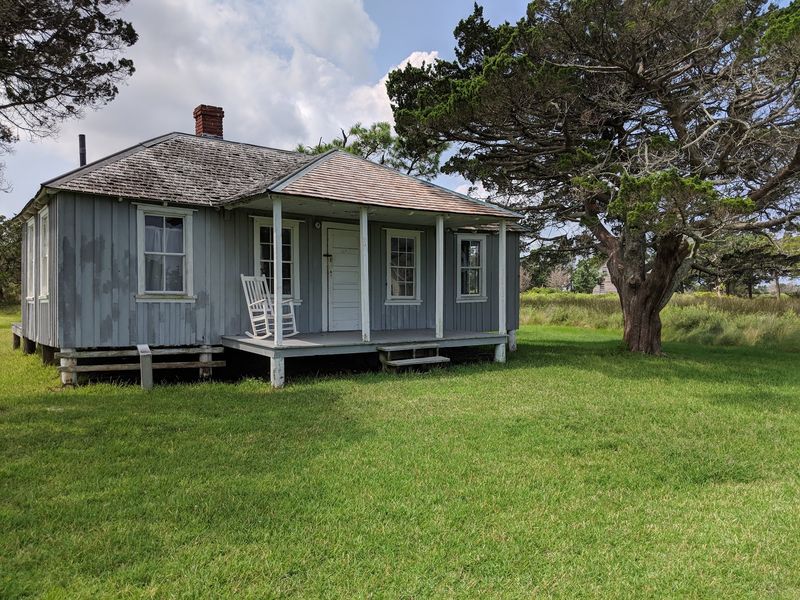
My first stop was the Salter House, which sits close to the dock and now works as the village visitor center. Inside, the rooms are cool and dim, with old photographs, maps, and interpretive displays that explain how this place grew and then emptied out.
A volunteer host often stays on site during the warmer months, which makes a big difference. Having someone there to answer questions turns a walk through empty buildings into something much richer.
What struck me most were the family names repeated on the displays. Dixon, Babb, Pigott, Salter.
Reading them made the village feel less like a museum and more like a neighborhood that simply paused.
The floors creak in that pleasant way old coastal homes do, and the windows frame views of grass bending in the wind. You can picture someone standing right there, watching for a boat.
I would treat this as your orientation point before wandering further. Grab a map, ask about which buildings are open that day, and check whether the restrooms nearby are available.
Give yourself fifteen or twenty unhurried minutes here. The context you pick up makes every other structure on the island read differently once you step back outside.
The Methodist Church and Its Quiet Interior
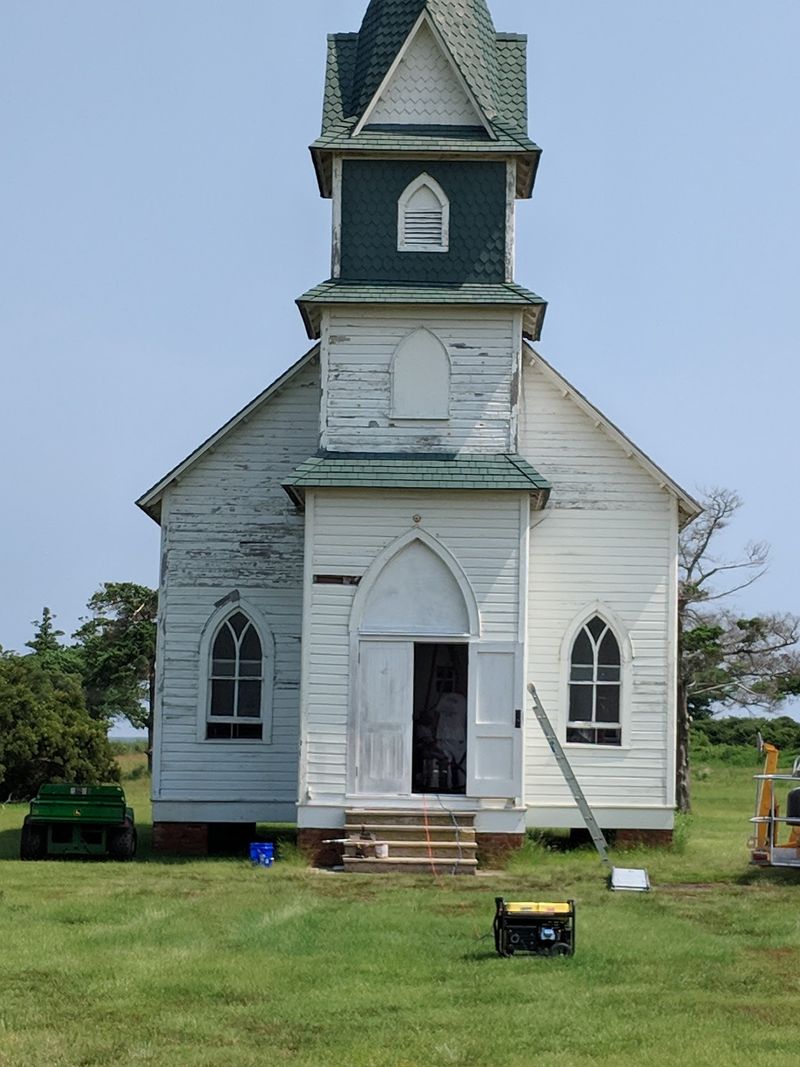
If one building has become the face of Portsmouth, North Carolina, it is the little Methodist church, rebuilt around 1914 after storms damaged what stood before. The white steeple rises above the marsh grass and can be spotted from a good distance away.
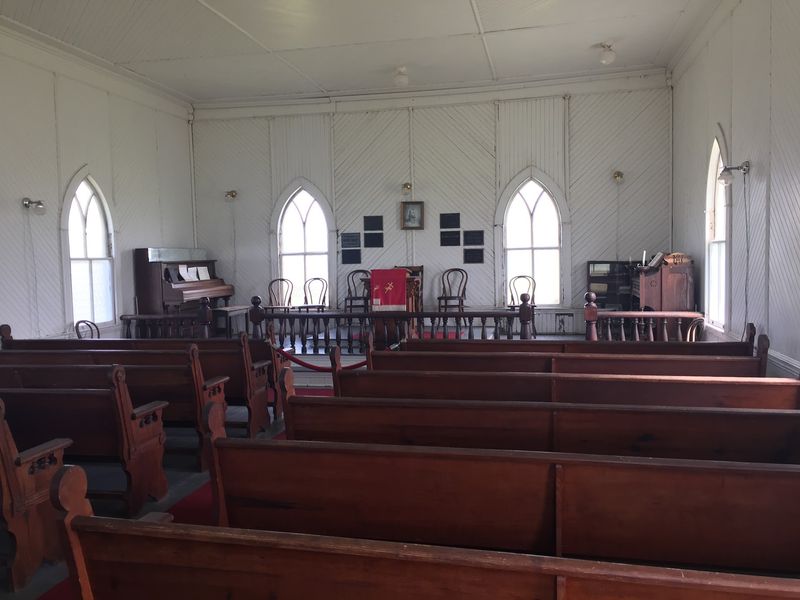
Pushing open the door felt oddly personal. Wooden pews sit in neat rows, an organ waits near the front, and light pours through the windows onto the plain plank floor.
There is no electricity, no sound system, nothing modern at all. Just wood, glass, and the faint smell of old timber warmed by afternoon sun.
I sat down for a minute because everyone does. It is the kind of space that quiets you without asking.
Services once brought the whole community together here, and descendants still gather in this building during the biennial homecoming celebration. Knowing that people return to sing in these pews makes the room feel cared for rather than abandoned.
Photographers will love the exterior in early or late light, when the white boards go golden and shadows stretch across the grass.
Be gentle with the door, watch your step on the entry stairs, and take nothing but pictures. Preservation here depends almost entirely on visitors treating the place with respect.
The 1894 U.S. Life-Saving Station
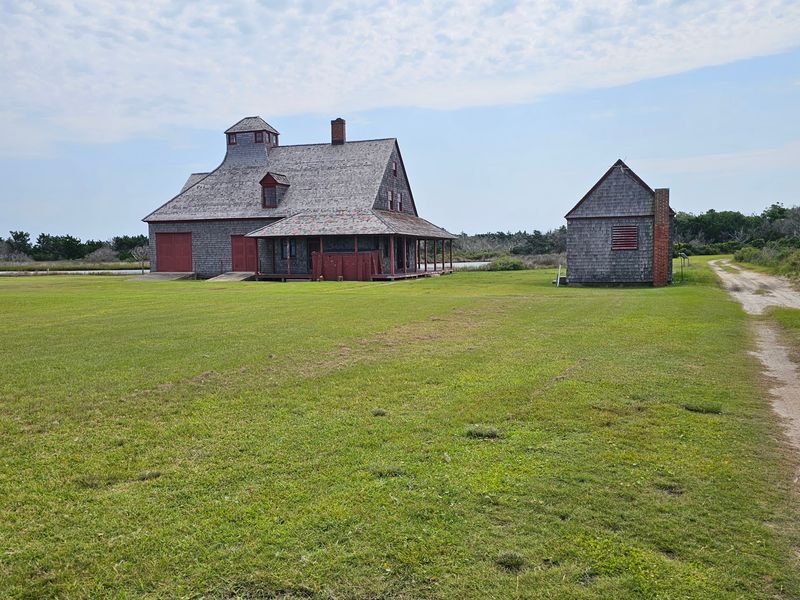
Rescue crews once lived in this building, ready to launch surfboats into water that swallowed ships whole. Established in 1894, the station operated until it was decommissioned in 1937, and it remains one of the largest structures still standing in the village.
The scale surprised me. Compared to the modest homes nearby, the station looks almost institutional, with its lookout perch and wide open interior spaces.
Ocracoke Inlet was a serious shipping route, and serious routes meant serious wrecks. Crews here trained constantly, hauling heavy gear across sand to reach vessels breaking apart offshore.
Standing near the tower windows, I could see how far a lookout could scan the horizon. On a clear day the view stretches over dune, marsh, and open ocean in one sweep.
Interpretive materials inside explain the drills, equipment, and daily routines of the surfmen. It is easily the most adventure-flavored stop in the village.
If you only have limited time on the island, pair this building with the church and post office for the best mix of stories.
Wear closed shoes for the walk over, because the path is loose sand and occasionally damp. Sandals will fill up within minutes.
Post Office and General Store, Closed Since 1959
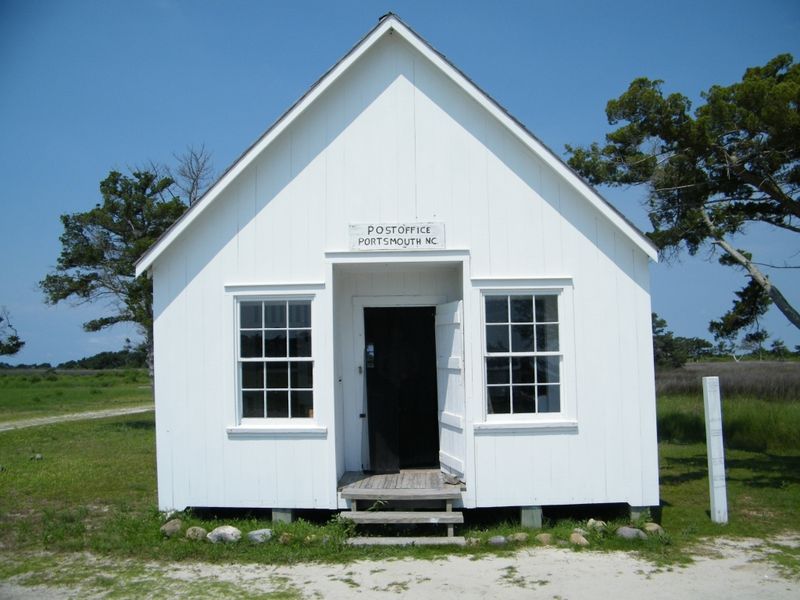
Mail and groceries once flowed through this single small building, which shut its doors in 1959. Losing a post office might sound like a minor thing, but for an island community it was a real blow.
Peeking inside, I noticed shelving and counters that hint at how tightly packed the space must have been. Flour, thread, canned goods, letters from the mainland, all in one room.
Henry Pigott, one of the village’s most remembered residents, met the mail boat and helped ferry mail and passengers ashore. That daily routine was the thread connecting Portsmouth to the wider world.
When the store closed, the practical reasons to stay closed with it. Anyone still living here had to plan trips off island for basic supplies.
I like this stop because it makes decline feel concrete rather than abstract. Hurricanes, railroads, and shifting inlets all pushed the village toward emptiness, but a locked store door is what an ordinary person would have felt first.
Take a moment on the porch and look around at the open grass. Houses once filled those gaps.
Photograph the weathered details, then move on toward the surrounding dwellings for the fuller picture.
Henry Pigott’s House and the Story of 1971
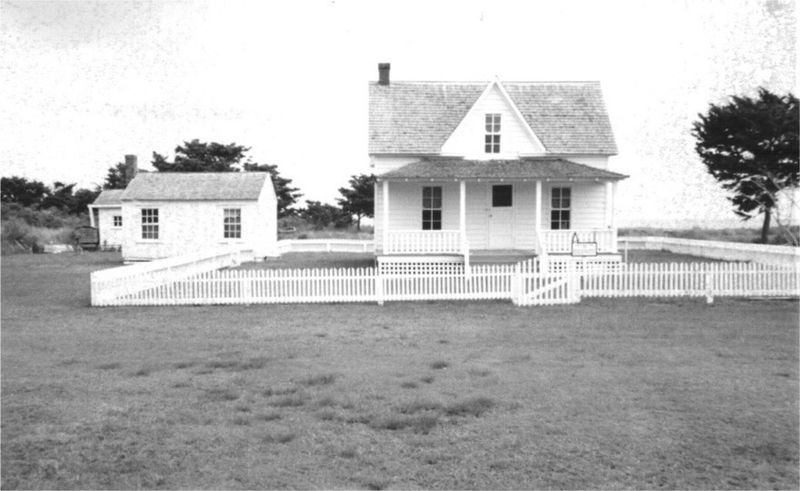
Some houses hold a whole ending inside them, and this is one. Henry Pigott lived here, and after he passed the village’s last two permanent residents, Elma Dixon and Marian Babb, left for the mainland in early 1971.
That is the moment Portsmouth stopped being a lived-in place. Two people packing up, a boat pulling away, and 218 years of continuous community quietly closing.
The house itself is modest, which somehow makes the story hit harder. No grand architecture, just a working home built to survive salt air and hurricanes.
Wandering between structures, I kept picturing how much emptier the village must have felt in those final years. Seventeen residents in 1956, then a handful, then nobody.
Several other dwellings and outbuildings still stand nearby, part of the roughly 21 historic structures maintained across the district. Some are open seasonally, others are stabilized and viewed from the outside.
Read the interpretive signs when you find them, because they name real people rather than generic settlers.
I would walk this section slowly. It is less about architecture and more about imagining ordinary neighbors who knew every path on this island by heart.
Practical Tips Before You Book the Trip
A little planning turns this from a sweaty slog into a memorable day. Portsmouth Village sits inside Cape Lookout National Seashore, and since 1978 the 250-acre historic district has been listed on the National Register of Historic Places.
Buildings open seasonally, usually during the warmer months when volunteer hosts are on site. Outside that window you can still walk the village, but interiors may be locked.
Pack like you are heading somewhere with nothing, because you are. Water, food, insect repellent, sunscreen, a hat, closed shoes, and a fully charged phone cover the basics.
Restrooms exist but are limited, and there is no power or drinking water in the village.
Weather rules everything out here. Wind and storms can cancel ferry runs, so keep your itinerary loose and have a backup plan on Ocracoke.
I would allow three to four hours minimum for the village alone, longer if you want beach time too.
Most of all, slow down. The magic of Portsmouth is not in ticking off buildings, it is in standing on a quiet path and realizing families lived full lives right here until 1971.
Address: Portsmouth Village, Portsmouth Island, North Carolina
