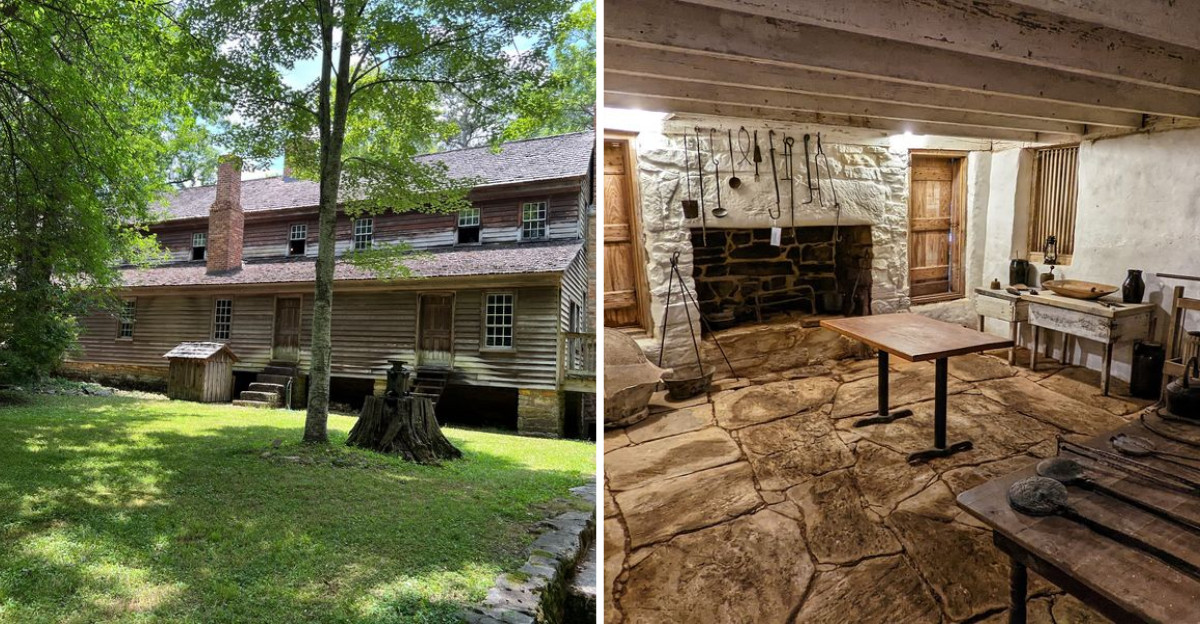
That weathered house with a porch stretching on forever appeared after a small brown sign on a Georgia road, and I nearly drove past it.
A few minutes later I was parked in front of a low, long building that once served as a stagecoach inn on the frontier, back when this quiet corner of the state was the edge of the wilderness.
What surprised me most is how much of it is still real, from the heart pine floors to the furniture that belonged to the family who lived here, the wood worn smooth by generations of hands.
The coaches stopped rolling generations ago, but the building simply refused to disappear, holding the shape of the lives that passed through it.
I spent a slow morning wandering its rooms and grounds, tracing the grain of the old planks and peering into the corners where travelers once rested. I left with more questions than I arrived with, in the best possible way.
The Unicoi Turnpike and Why This Spot Mattered
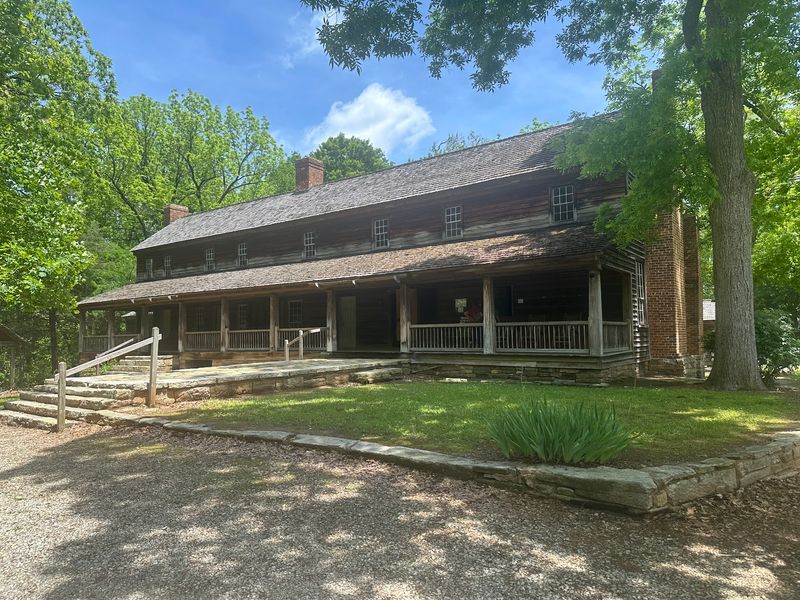
Geography explains almost everything about this place. The house sits near the crossing of the Old King’s Highway and the Unicoi Turnpike, which was Georgia’s first major interstate route.
That road linked the Tugaloo River country with the Little Tennessee River on the far side of the Blue Ridge. Traders, drovers, settlers and mail all funneled through here.
Before any of that, the land belonged to the Cherokee, and the town of Tugaloo stood nearby. Its site now lies beneath the water of Lake Hartwell, which gave me pause when I looked out toward the trees.
The first recorded land grant went to Major Jesse Walton in 1785, a Revolutionary War veteran who built a homestead here and was killed in 1789. His family later sold to James Rutherford Wyly, who saw the traffic and built accordingly.
Wyly raised the main house between roughly 1816 and 1825 and opened it to travelers. Position, not decoration, made it valuable.
Standing in the yard, I kept picturing wagon wheels and hooves on packed dirt. The road outside is paved and quiet now, but the logic of the location still makes perfect sense.
Sharing a Bed With a Stranger, Life as a Guest
Here is the detail that stuck with me longest. A traveler in the early 1800s could pay a quarter of a dollar for half a bed, and the other half went to whoever showed up next.
The common room held four beds, which meant a full night could mean eight strangers in one space. Privacy was not part of the deal.
Cleaning up happened at a washstand with a pitcher and basin, since running water simply did not exist here. Some rooms had a chamber pot, and otherwise you walked outside to the outhouse in whatever weather Georgia offered.
Even so, this inn earned a strong reputation along the Federal Post Road between Charleston and Chattanooga. Food was hearty and honest, which counted for a lot after a day of jolting travel.
An English geologist named George W. Featherstonhaugh wrote in 1837 about a breakfast here of coffee, ham, chicken, good bread, butter, honey and fresh milk.
Reading that, I found myself weirdly hungry and also grateful for modern plumbing. Comfort was relative, and by 1830s standards this was a genuinely good night.
When the Jarretts Turned an Inn Into a Plantation Headquarters
Ownership changed hands again in 1838, and the whole character of the property shifted with it. Devereaux Jarrett, one of the wealthiest men in the Tugaloo Valley, bought the inn and made it the center of a plantation that eventually spread across roughly 14,000 acres.
Cotton drove that economy, and enslaved people did the labor that made it profitable. Any honest visit here has to hold both parts of the story at once.
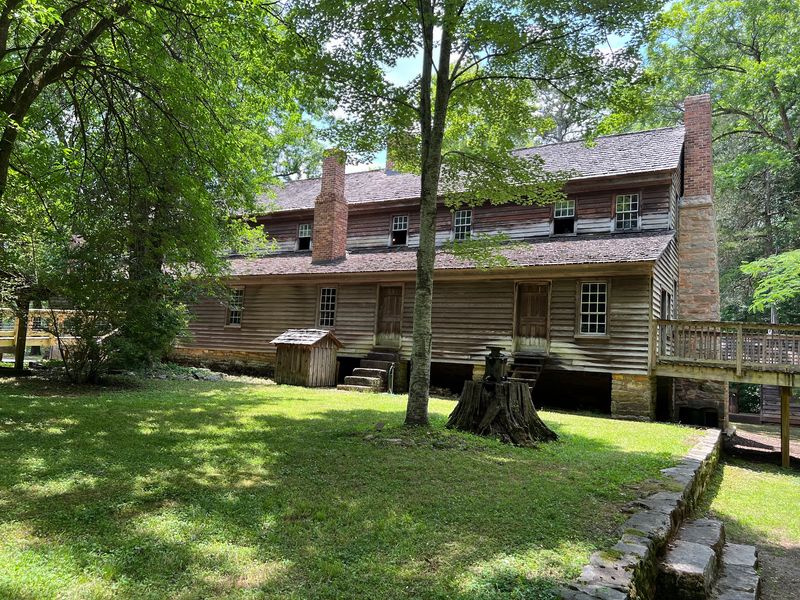
Jarrett doubled the size of the original building to fit his growing family and the demands of running an enormous agricultural operation. Under him the house worked as inn, trading post and post office all at the same time.
Three generations of Jarretts lived on the site, which is why so much of what you see inside stayed in one family’s hands.
I found the layering fascinating. A single structure served as lodging, business office, mail drop and private home, all while the surrounding countryside filled in with new settlers.
The tour material does not gloss over the difficult parts, and I appreciated that directness more than any polished version would have offered.
Ninety Feet of Porch and a Whole Lot of Heart Pine
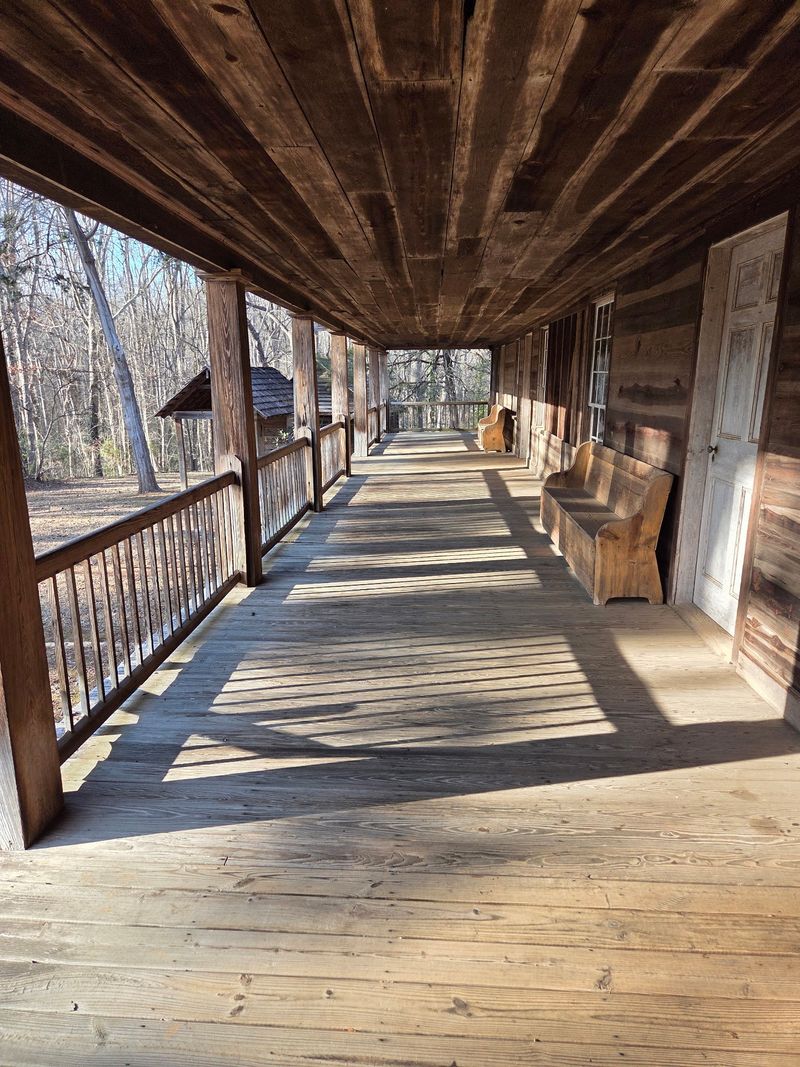
That porch is the first thing anyone notices, and it deserves the attention. It runs about ninety feet across the front of the house, held up by eight square columns with a railing tying the whole span together.
I walked its full length twice just because it felt good underfoot.
The building is described as plantation plain style, a two-story wood frame set on a solid stone foundation. Practical came first, and the beauty is a side effect of good carpentry.
Something like ninety percent of the original heart pine is still in place, which is remarkable for a structure begun in the 1810s. Most of that wood was never painted, so the grain and age show plainly.
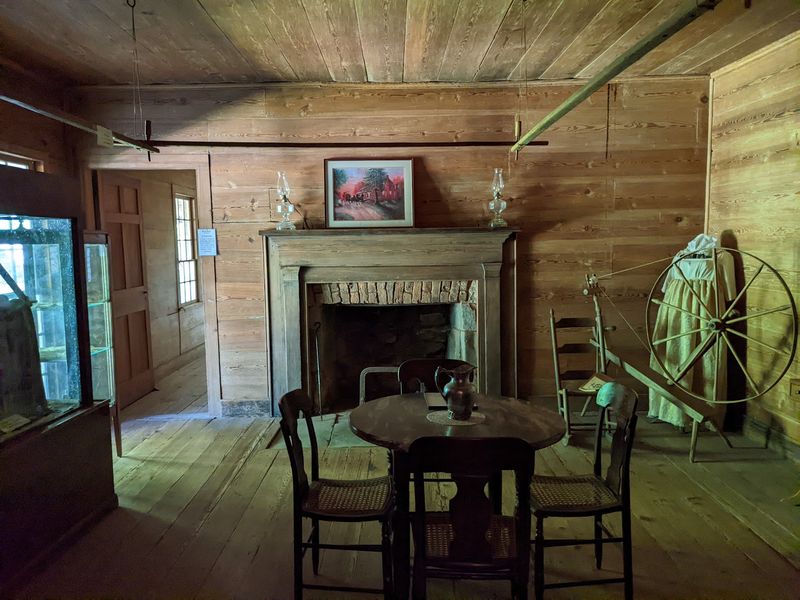
Inside, massive exposed beams cross the ceilings and big stone hearths anchor the rooms. Those fireplaces were the only heat during cold mountain-edge winters.
Look for the small carving on the main stairway and the handmade ironwork with British locks on the doors. Those touches are subtle, easy to miss, and they reward anyone who slows down.
Visitors have even pointed out that the nails themselves help date parts of the building.
Hidden Drawers, Short Doorways and a Basement Kitchen
My favorite discovery was a fireplace mantel with drawers built right into it. In a time before secure banks were common out here, hiding valuables in plain sight made a lot of sense.
There is also a large desk with a secret compartment, which felt like something from an adventure novel.
Each level behind that long porch holds seven rooms, several with their own outside entrances. An interior staircase leads upstairs to more rooms and the space that served as the post office.
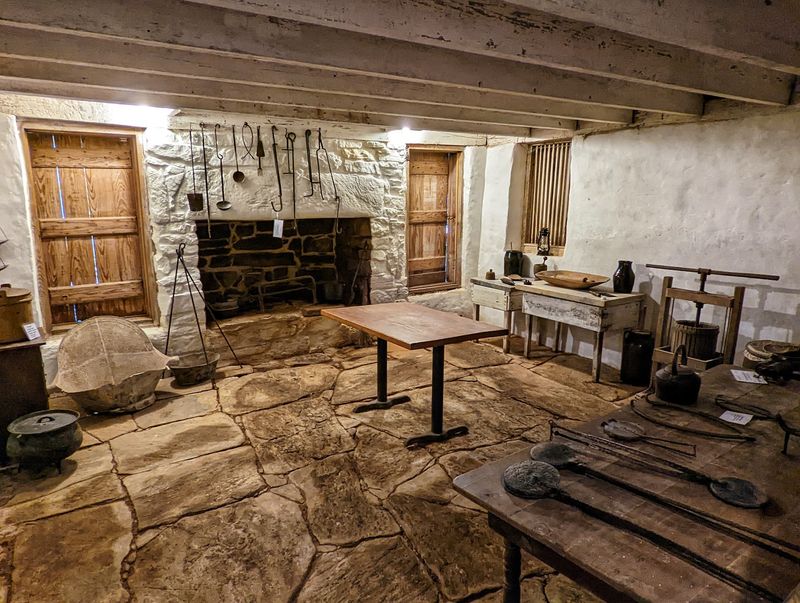
Most 19th-century kitchens sat in separate buildings to reduce fire risk, but this one is tucked into the basement. Enslaved cooks had to climb an outside staircase to bring food up to guests, a hard detail that says plenty about daily life here.
Watch your head on the short doorways, seriously. I ducked more than once and still managed to bump the frame.
Many furnishings are original, including pieces made by Massachusetts furniture maker Caleb T. Shaw and items built by the Jarretts themselves.
A cradle hollowed from a single log stopped me completely.
Saved in 1955 and Still Being Cared For
Plenty of buildings like this one quietly rotted away. Traveler’s Rest got a different ending because of a decision made in 1955.
Mary Jarrett White, granddaughter of Devereaux Jarrett and the last family owner, sold the property to the state of Georgia for $8,000. She is also remembered as Georgia’s first female voter, a fact that adds another thread to the family story.
Recognition followed quickly. The site became a National Historic Landmark in 1964 and joined the National Register of Historic Places in 1966.
Georgia State Parks now manages the house and grounds, and the upkeep is ongoing rather than finished. Museum-grade window inserts have been installed to shield fragile documents, textiles and old wood finishes from light damage while keeping the historic look intact.
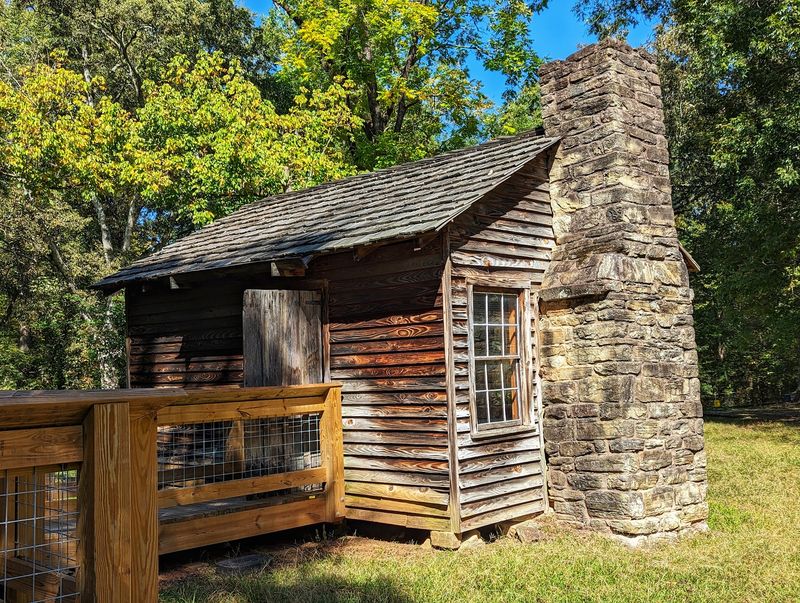
Reconstructed 19th-century outbuildings, including slave quarters, stand on the property with interpretive signs nearby.
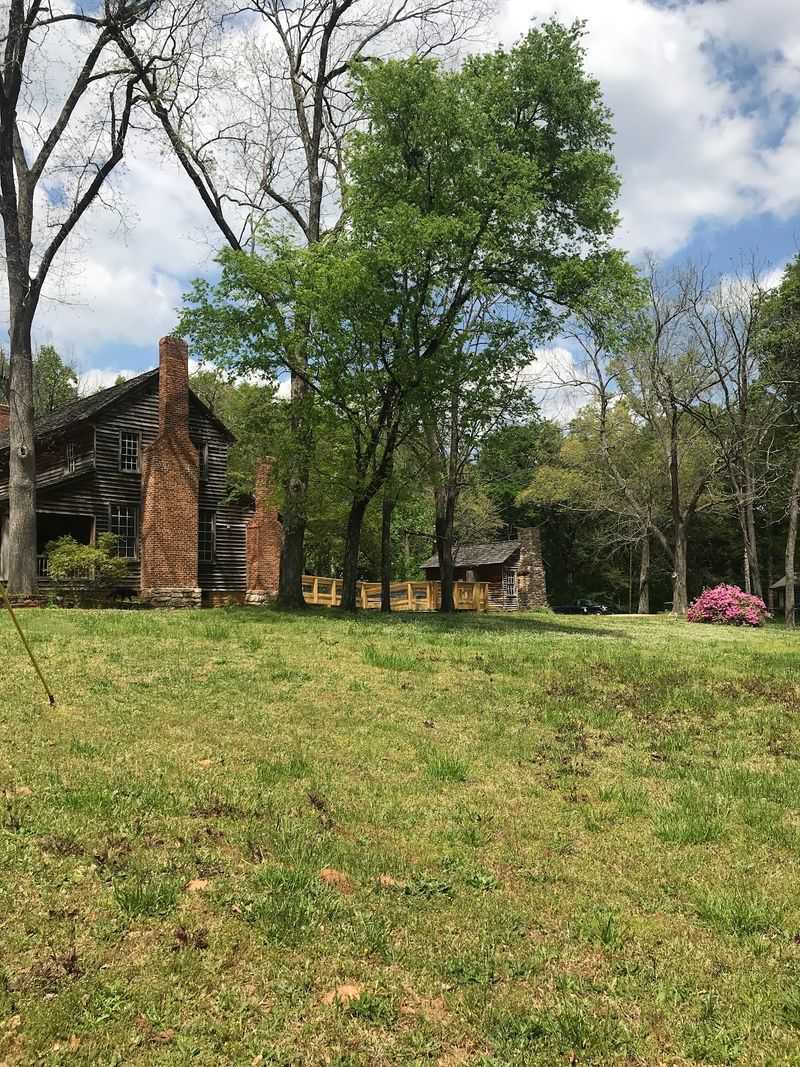
Walking between them, I kept thinking about how easily this could have become a parking lot. Preservation here is not a single heroic act, it is decades of small, unglamorous choices adding up.
Planning Your Own Stop on the Old Road
One warning saves everyone frustration. The site opens Saturday and Sunday only, from 9 AM to 5 PM, and it stays closed Monday through Friday.
I met people who learned that the hard way and had to settle for photographing the porch from the lawn.
Give yourself about ninety minutes if you like reading placards, and there are plenty scattered across the grounds. A short introductory video plays first and points out specific things to hunt for inside, which turns the walkthrough into a kind of scavenger hunt.
Staff and docents here are genuinely into the history, and several visitors have singled out guide Billy Hawkins by name for how much he shares. Ask questions, because the answers go deep.
Special events run through the year, including Pioneer Days, holiday decorations and dulcimer music.
Accessibility is limited by the nature of an old building, though a ramp reaches the inn itself. Call ahead at 706-886-2256 if that matters for your group.
Pair it with a Toccoa afternoon and you have a full, unhurried day.
Address: 4339 Riverdale Rd, Toccoa, GA 30577
