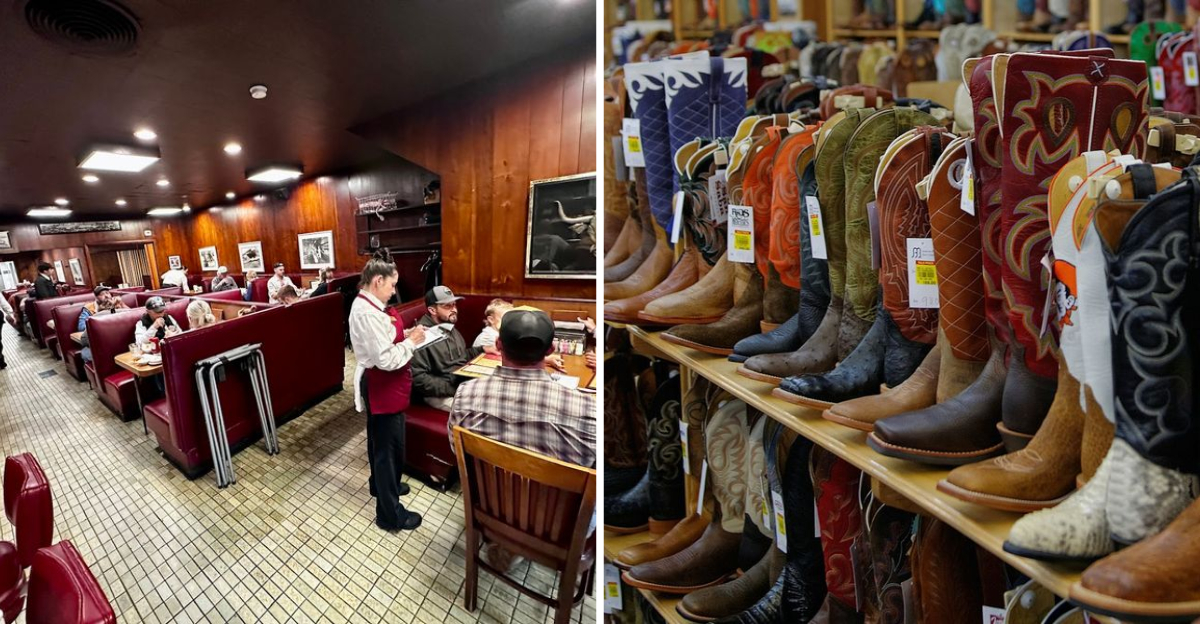
You walk through the door and the floor creaks under your feet. But the general store is just the beginning.
Down the road, an auctioneer rattles off numbers at a speed that seems impossible, as ranchers in dusty boots do business the same way their grandparents did. A steakhouse that has been feeding cowboys for over a century serves thick cuts without any fuss. Boot shops and hat makers practice crafts that take years to learn.
Even an old fashioned soda shop still serves sarsaparilla. This corner of Oklahoma feels like the Old West never left, and everything here was built to last.
The Oklahoma National Stockyards: Where the Old West Still Does Business
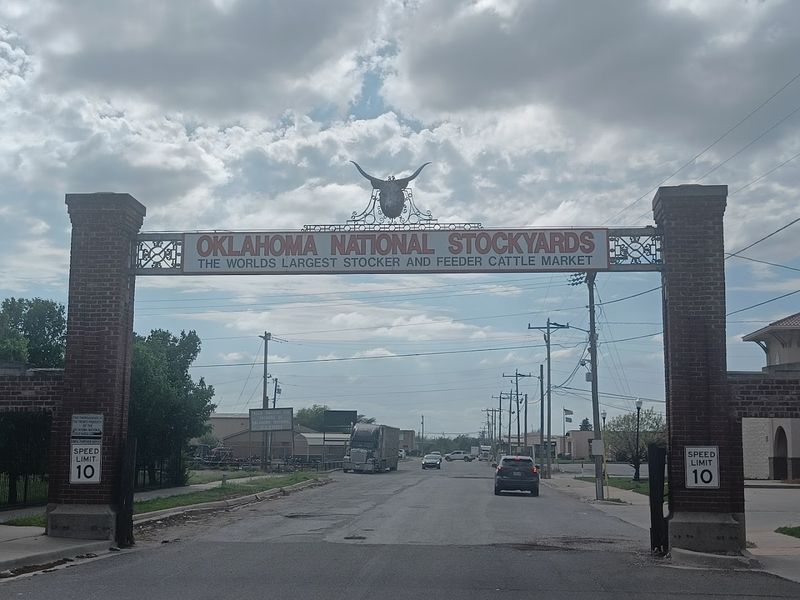
Every Monday and Tuesday, something happens in Oklahoma City that most people have no idea about. The Oklahoma National Stockyards comes alive with the sound of auctioneer calls, shuffling cattle, and ranchers in dusty boots doing business the same way their grandparents did.
It is the world’s largest feeder and stocker cattle market, and it has held that title for a long time.
Founded around 1910, the stockyards were originally part of a booming meatpacking operation that put Oklahoma City on the map. The district was known as Packingtown back then, and the energy of commerce and livestock trading shaped the entire neighborhood.
That energy never really left.
Watching a live cattle auction is one of those experiences that feels both surprising and completely natural at the same time. The auctioneer rattles off numbers at a speed that seems impossible to follow, but the ranchers in the stands track every word.
There is a rhythm to it, almost musical in a strange way.
You do not need to be a rancher or a buyer to attend. Visitors are welcome to observe, and the experience offers a genuine window into agricultural life that most Americans never get to see up close.
It is loud, it smells like the outdoors, and it is absolutely worth every second. This is not a museum exhibit.
It is a working institution that has been running without interruption for over a century.
Cattlemen’s Steakhouse: A Meal Over a Hundred Years in the Making
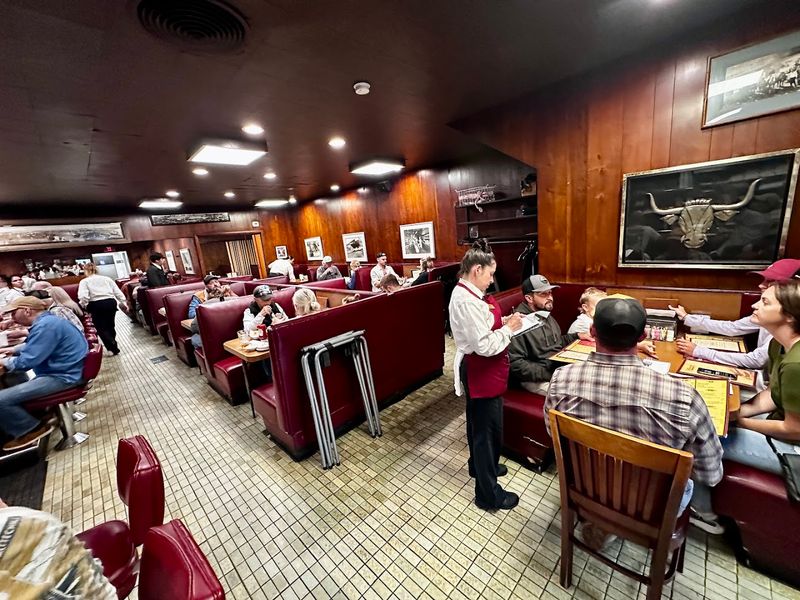
Some restaurants have history. Cattlemen’s Steakhouse practically is history.
Opened in 1910, it has been serving ranchers, cowboys, and hungry visitors for well over a century, making it one of the oldest continually operating restaurants in all of Oklahoma City. The kind of place where the menu does not need to change because it got things right the first time.
The interior feels like it has barely been touched since the early days, and that is meant as a compliment. Dark wood paneling, vintage photographs, and the general sense that serious people have been eating serious meals here for generations.
There is no pretense, no trendy decor, no attempt to modernize what already works perfectly.
The steaks are the main event, and they are exactly what you would expect from a restaurant that has spent over a hundred years perfecting the craft. Thick cuts, cooked simply, served without unnecessary fuss.
The sides are hearty and honest, the kind of food that fills you up and makes you slow down a little.
Going here feels less like dining out and more like sitting down at someone’s family table, if that family happened to have been feeding Oklahoma for five generations. I left full and oddly moved by the whole experience.
Some places earn their reputation through marketing. Cattlemen’s earned theirs by simply showing up every day for more than a century and never letting people down.
Langston’s Western Wear: Over a Century of Cowboy Style
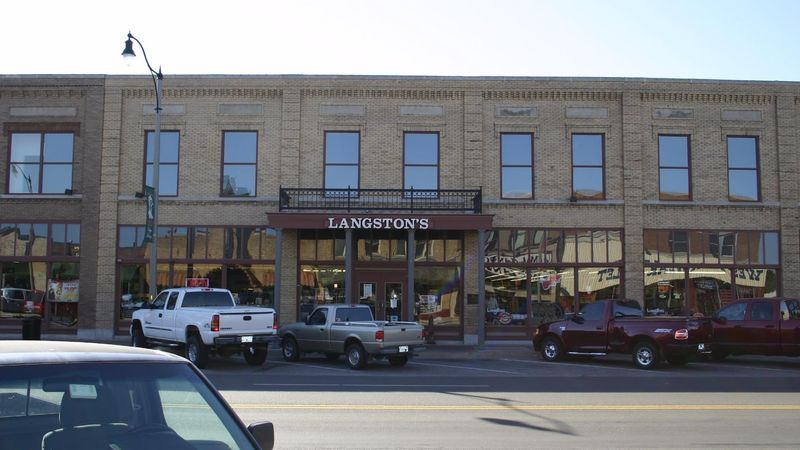
Langston’s Western Wear has been outfitting cowboys, ranchers, and western enthusiasts since 1916. That is not a typo.
The store has been open for over a hundred years, and it shows in the best possible way. The shelves are stacked with denim, the racks are full of pearl-snap shirts, and the boot selection alone could keep you busy for an entire afternoon.
There is something deeply satisfying about shopping somewhere that genuinely knows its product. The staff at Langston’s are not reading from a script or guessing at what fits.
They grew up around this stuff. Asking for help picking out a pair of boots here feels more like getting advice from a knowledgeable friend than a retail transaction.
The store itself is a sensory experience. The smell of leather hits you immediately, and the sheer variety of Western apparel on display is impressive without feeling overwhelming.
From classic ranch work gear to more decorative Western fashion, there is something here for every level of cowboy commitment.
Even if you are not planning to buy anything, browsing Langston’s is genuinely fun. It is a living catalog of Western American style, curated over more than a century of knowing exactly what the customer needs.
Picking up a pair of boots here feels like participating in a tradition rather than just making a purchase. Few stores anywhere can say that honestly.
Little Joe’s Boots: Where Every Pair Tells a Story
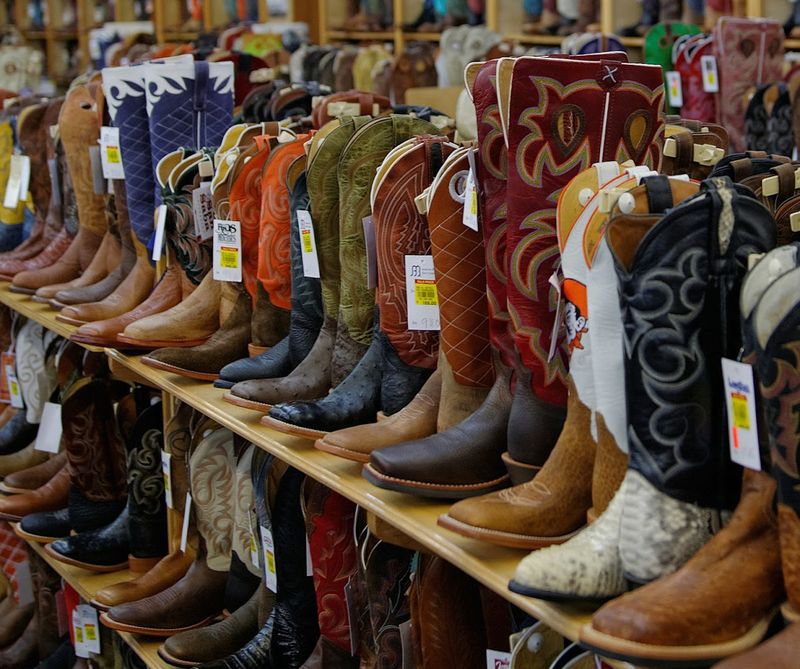
Founded in 1950, Little Joe’s Boots has been a cornerstone of Stockyards City for decades, and its reputation for quality Western footwear is the kind that spreads by word of mouth rather than advertising. People who know boots know Little Joe’s.
That is about as strong an endorsement as a shop can get in this part of Oklahoma.
The selection here leans toward the authentic and the handcrafted. These are not fast fashion boots designed to look Western for a weekend.
They are built to last, shaped for actual wear, and made with the kind of materials that age beautifully rather than falling apart after a season. Picking up a pair feels like an investment, not an impulse buy.
What makes Little Joe’s particularly enjoyable is the atmosphere inside. The displays are organized but not sterile.
Boots are arranged by style and size, and the lighting is warm enough to make every pair look like it belongs in a painting. There is a calm, unhurried quality to the shopping experience that is rare and genuinely appreciated.
If you have ever been curious about what separates a real cowboy boot from a costume, this is the place to find out. The staff can walk you through construction, leather types, and fit in a way that is informative without being condescending.
You leave knowing more than when you arrived, and possibly wearing better boots too.
Shorty’s Caboy Hattery: Custom Hats and Old-School Craft
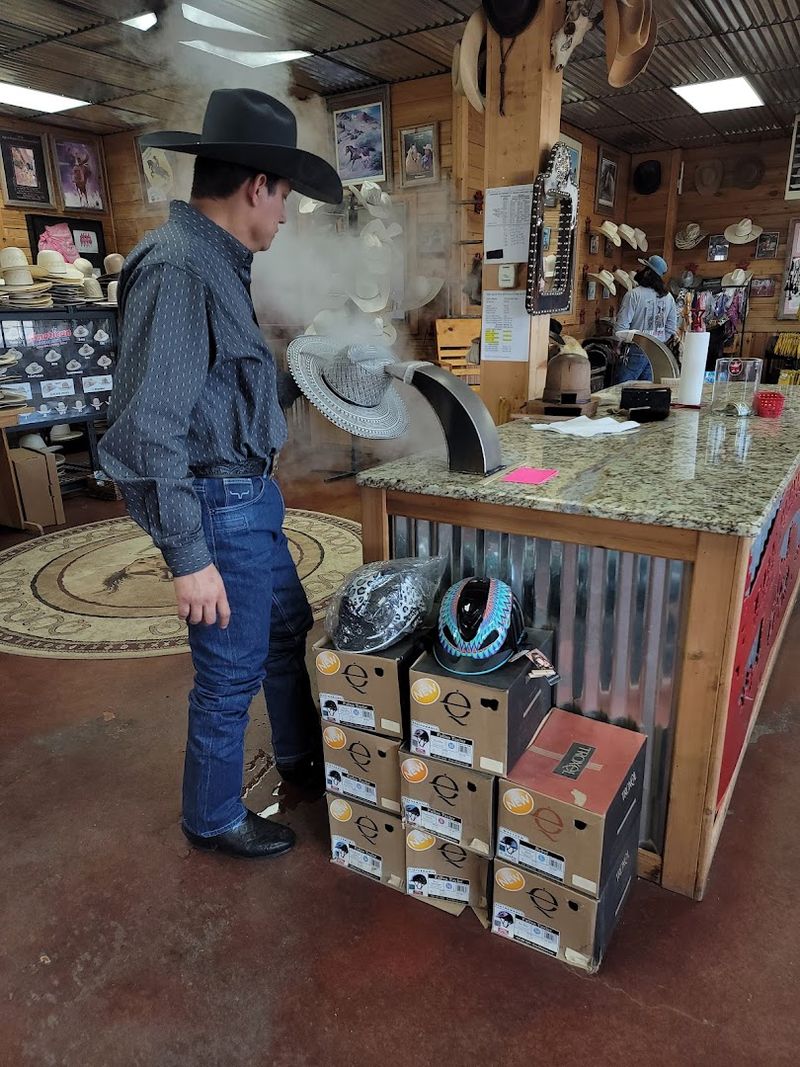
A custom hat shop in the middle of a historic Western district sounds exactly right, and Shorty’s Caboy Hattery delivers on every expectation. This is a place where hats are taken seriously, shaped carefully, and treated as the personal statement they have always been in cowboy culture.
Not every hat off a rack fits the way a shaped one does.
The process of getting a hat custom fitted or reshaped here is genuinely interesting to watch, even if you are just browsing. The craftspeople work with steam and specialized tools, coaxing felt and straw into shapes that suit the individual wearer.
It is a skill that takes years to develop, and it shows in the finished product.
Cowboy hats carry a lot of meaning in places like Stockyards City. They are not just sun protection or a fashion accessory.
They signal something about who you are, where you come from, and what kind of work you do. Shorty’s understands that completely, which is why the level of care here goes well beyond what you would find in a general western wear store.
Stopping in even for a few minutes is worthwhile. The shop has a personality that is hard to describe but easy to feel.
It is confident, a little old-fashioned, and completely sure of itself. That kind of quiet confidence is refreshing in a world full of places trying too hard to impress.
Shorty’s does not need to try. The hats speak for themselves.
Stockyards Sarsaparilla and the Sweet Side of the Old West
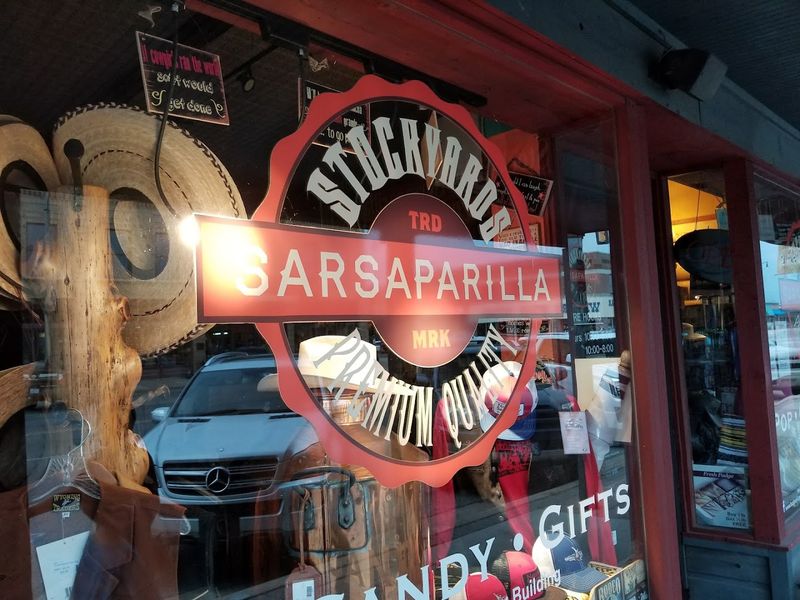
Not everything in Stockyards City is about boots and beef. Tucked into the district is an old-fashioned soda shop serving sarsaparilla, and it might be the most charming surprise the neighborhood has to offer.
Sarsaparilla was the drink of choice in frontier saloons before the era of modern sodas, and sipping one here feels like a small but genuine act of time travel.
The shop itself leans hard into the vintage aesthetic, and it works beautifully. Glass bottles, old signage, a counter that looks like it belongs in a 1920s photograph.
Everything about it is deliberate without feeling forced, which is a harder balance to strike than it looks.
It is the kind of place where you slow down automatically. There is no rush, no ambient noise pushing you out the door, no digital menu board cycling through options.
You order something cold and sweet, you sit for a minute, and you let the atmosphere settle around you. That is genuinely rare these days.
Kids love it for obvious reasons, but adults tend to linger longer. There is a nostalgic pull here that goes beyond the drink itself.
It connects to something simpler and slower, a pace of life that most people do not experience anymore. Whether you grew up with root beer floats or you have never heard of sarsaparilla, this little shop earns its place as one of the most memorable stops on the whole street.
National Saddlery and the Art of Working Leather
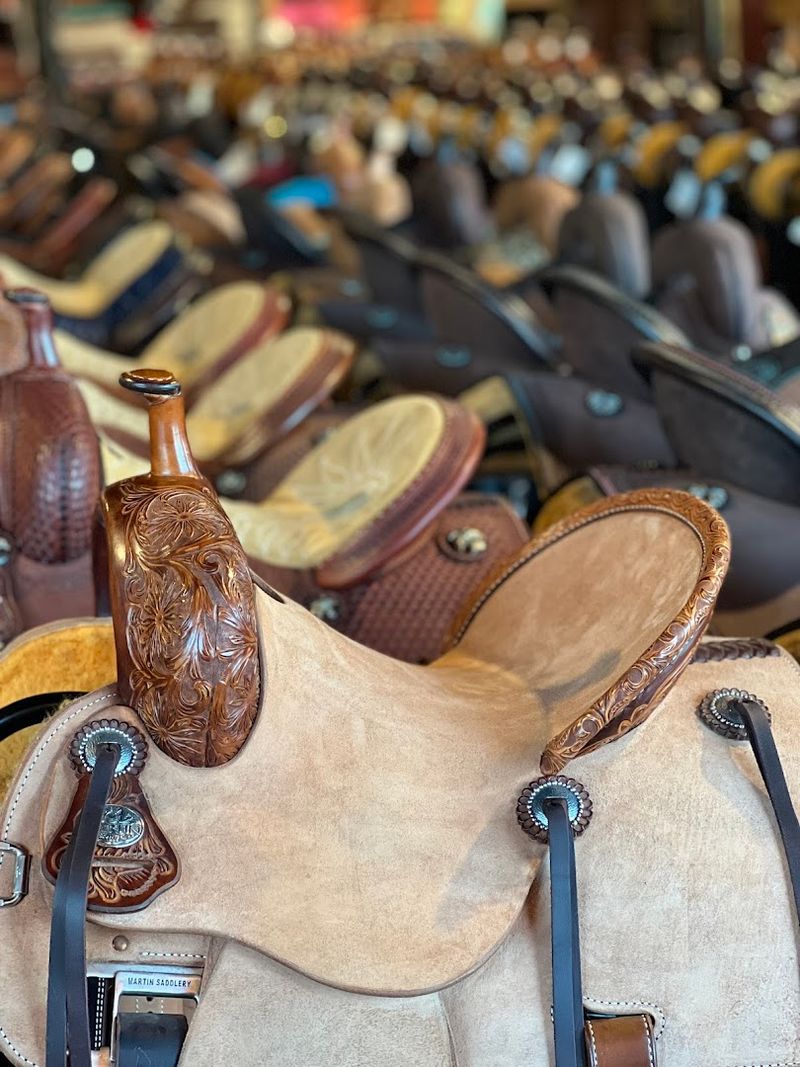
Leather saddles are not something most people think about on a daily basis, but spend five minutes inside National Saddlery and that changes quickly. The craftsmanship on display here is extraordinary, the kind of skilled handwork that takes years to learn and a lifetime to master.
Every saddle in the shop tells you something about the tradition it comes from.
National Saddlery serves working ranchers and horse owners who need equipment built for actual use, not decoration. The pieces here are functional first, and beautiful as a natural result of being made correctly.
That distinction matters. A saddle built to last looks different from one built to sell, and the difference is obvious the moment you see it up close.
Browsing the shop is a bit like visiting a workshop and a gallery at the same time. Bridles hang neatly along the walls.
Tooled leather goods sit on shelves with the kind of quiet dignity that comes from being made by hand. The smell of cured leather fills the whole space in a way that is surprisingly pleasant and completely authentic.
Even without a horse to outfit, this is a worthwhile stop. It is a reminder that some crafts have not been automated away or outsourced, that there are still people who make things carefully and well because that is the only way worth doing it.
National Saddlery is proof that the old ways of working are not dead. They are just concentrated in places like this one.
Address: Oklahoma City, OK 73108
