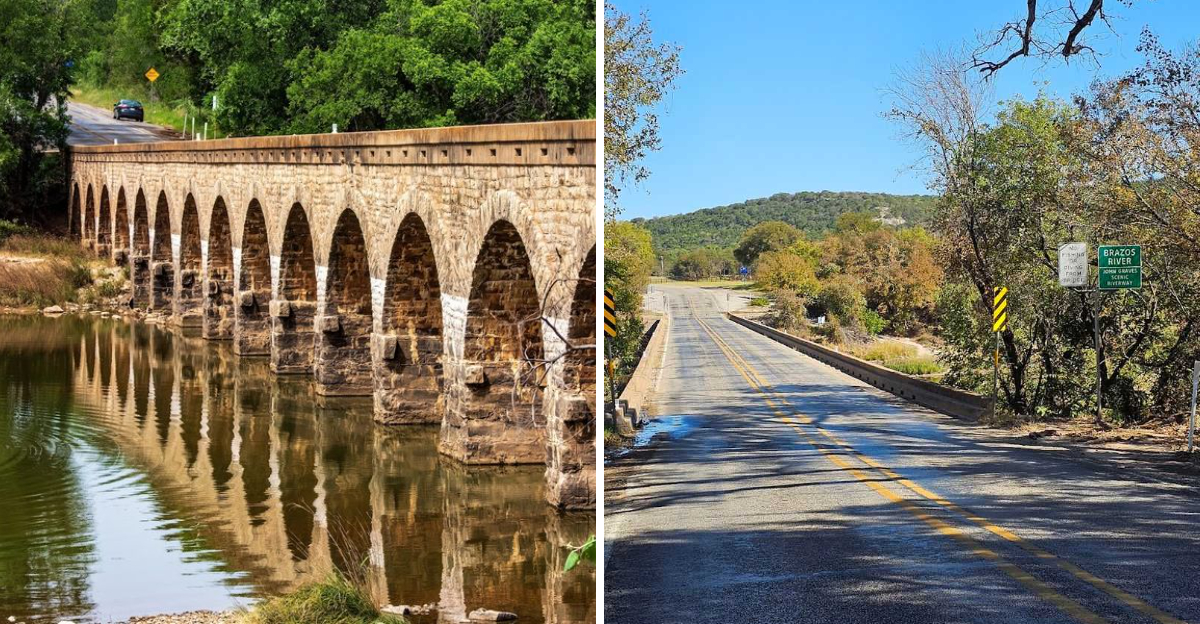
You have seen concrete bridges, steel bridges, maybe a few wooden ones. But a bridge built from 18 stone arches carved out of local limestone?
That is a different kind of beautiful. This one stretches across a river with a quiet confidence that older things have.
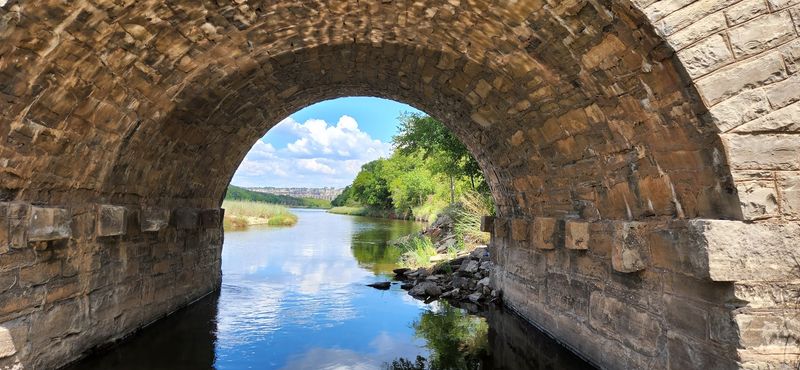
Each arch supports the next, like a row of strong shoulders holding up history. You can walk across it, stop in the middle, and watch the water move underneath without a single car rushing past.
The limestone gives it a warm, earthy color that changes with the sunlight. It is the longest stone arch bridge of its kind in the state, and it earned every single foot.
A Bridge Born From the New Deal Era
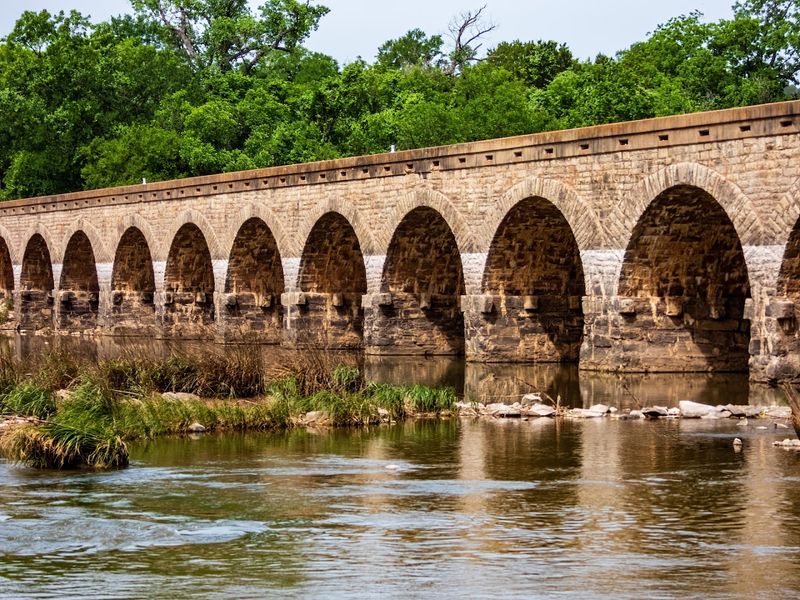
Few bridges in Texas carry as much historical weight as this one.
The Possum Kingdom Stone Arch Bridge was built between 1940 and 1942 as part of the Works Progress Administration, a federal program launched during the Great Depression to put unemployed Americans back to work on meaningful public projects.
The WPA was responsible for roads, post offices, schools, and infrastructure across the country. But this bridge stands out even among WPA projects because of the sheer craftsmanship involved.
It was not simply poured concrete or assembled steel. Every arch, every pier, every surface was shaped from locally quarried limestone by skilled hands.
The laborers who built it were mostly unemployed coal miners from the region. They had spent years underground cutting rock, and that experience translated directly into the precision stonework you can still see today.
The bridge was also strategically designed to handle the powerful floodwaters that could surge downstream from the nearby Morris Sheppard Dam. Understanding that history makes crossing it feel completely different.
You are not just driving over a river. You are rolling over decades of American resilience and hard-earned craft.
18 Arches That Refuse to Quit
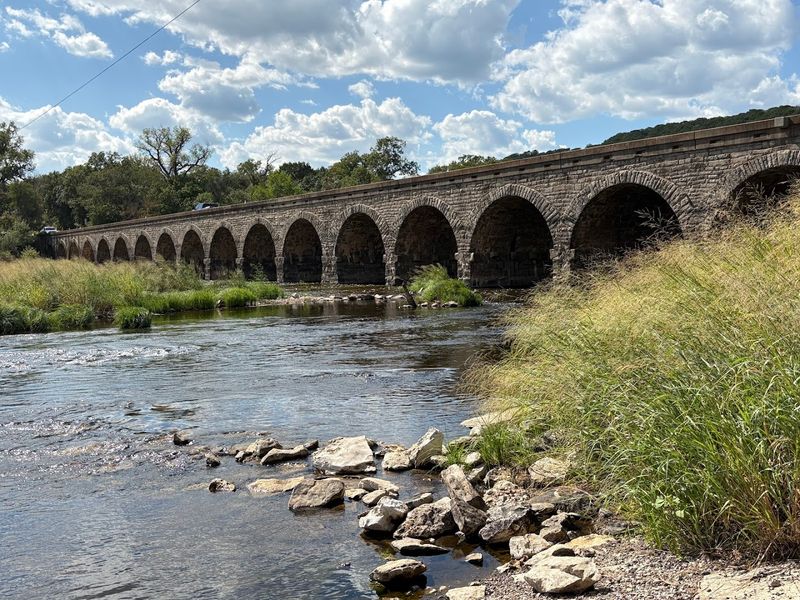
Eighteen arches. That number sounds simple until you actually see them lined up across the Brazos River, each one holding its own weight with quiet confidence.
The spans range from 23 to 30 feet in length, and together they stretch the full 433-foot width of the river crossing.
What makes the arch design so impressive is how it distributes weight. Each arch pushes outward and downward into its supporting piers, which means the whole structure works together as one system.
It is an ancient engineering principle, and it works just as well today as it did in ancient Rome. The piers themselves are founded directly on bedrock, which is part of why the bridge has survived repeated flood events without significant damage.
Two of the eighteen piers, numbers seven and thirteen, are heavier bracing piers. They taper from a wider base up to about five feet at the top, adding extra lateral strength to the overall structure.
Most of the other piers are three feet wide. The result is a bridge that looks elegant from a distance but reveals serious engineering logic up close.
Every arch earns its place in the line.
Limestone Pulled Straight From the Land
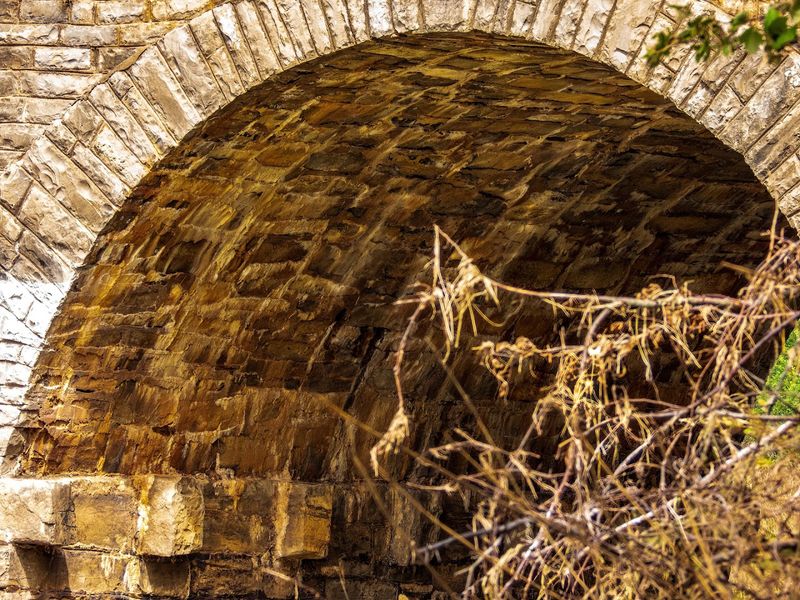
The limestone used to build this bridge did not come from a factory or a distant quarry. It was pulled from the land surrounding the Brazos River valley, which means the bridge is literally made of the same geology it sits on.
That connection between material and place gives the structure a grounded, natural quality that modern concrete bridges rarely achieve.
Limestone is a sedimentary rock formed from compressed marine fossils and calcium carbonate over millions of years. Central and West Texas sit on enormous deposits of it, which is why so many historic Texas structures, from courthouses to bridges, were built using it.
It weathers slowly, holds its shape well, and blends into the landscape in a way that feels almost inevitable.
The coal miners who shaped these blocks had to understand the stone’s grain and fracture lines to cut it cleanly. A poorly cut block could compromise an entire arch.
The fact that the bridge has survived multiple flood events, including being completely overtopped by water, without falling apart is proof that those cuts were made right. Local material, local knowledge, and local labor all came together in one structure that has lasted over eighty years.
The Brazos River Below and What It Means
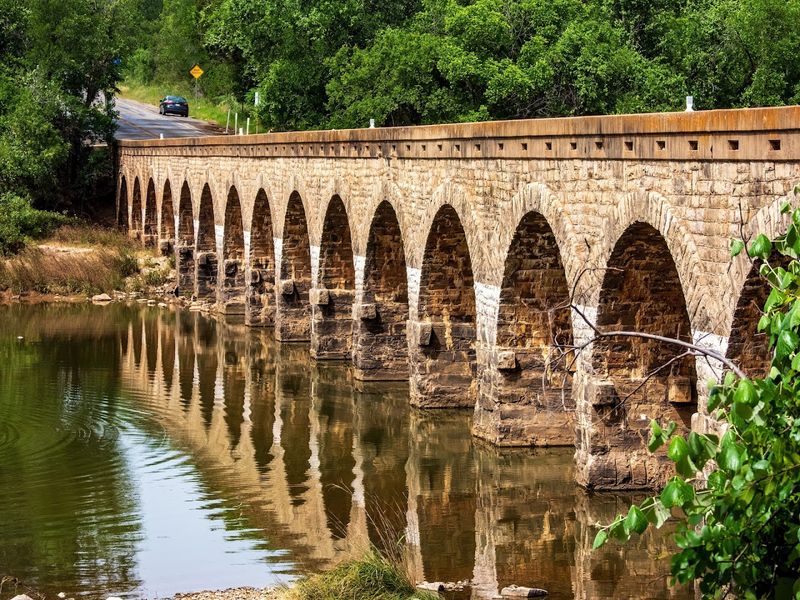
The Brazos River is one of the longest rivers in Texas, stretching over 1,200 miles from its headwaters in the Texas Panhandle all the way to the Gulf of Mexico. Near Possum Kingdom, it moves through rugged limestone terrain, carving a valley that feels ancient and unhurried.
Watching the water pass beneath those arches gives the whole visit a different kind of weight.
The river here is calm in dry seasons but can transform quickly during heavy rainfall events. The Morris Sheppard Dam, located about a mile upstream, controls much of the flow, but when it releases water, the Brazos can rise dramatically.
The bridge was specifically engineered to handle those surges, and it has been overtopped more than once without structural failure.
From the banks near the bridge, you get a clear view of the arches reflected in the water on still days. The limestone cliffs and cedar-covered hills surrounding the river valley add to the scenery in a way that feels untouched.
It is the kind of spot where you pull out your phone to take a photo and then put it away because the real thing is better. The river and the bridge feel like they belong to each other.
What Makes It the Longest of Its Kind in Texas
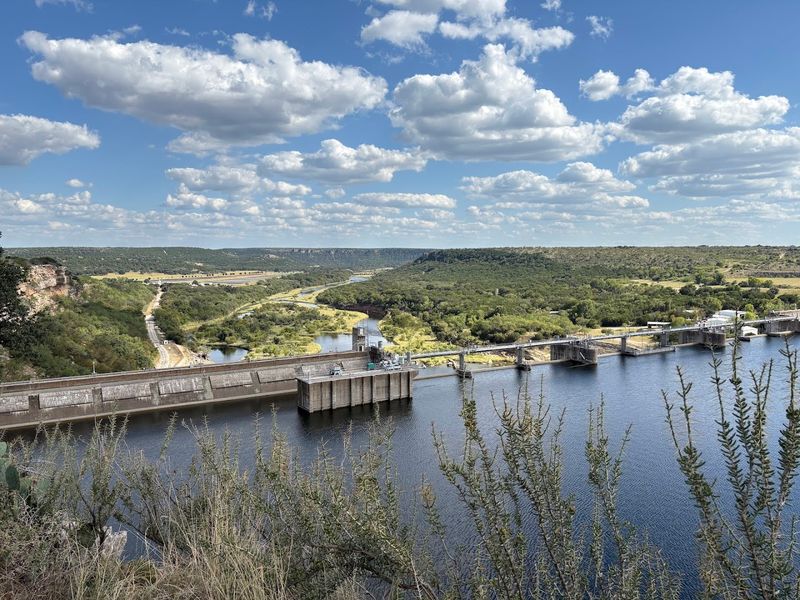
Texas has a lot of bridges. It is a big state with a lot of rivers, creeks, and highway crossings.
But when it comes to masonry arch bridges built from stone, the Possum Kingdom bridge holds the top spot. At 433 feet long with eighteen spans, no other stone arch bridge in the state comes close to matching its scale.
That distinction matters more than it might seem at first. Masonry arch bridges require an enormous amount of skilled labor and precise material handling.
You cannot rush them or cut corners the way you might with a poured concrete structure. Every stone has to be cut, fitted, and set with care, which means the longer the bridge, the more skill and effort it demanded from its builders.
The WPA built many impressive structures across Texas during the Depression era, but this one is consistently recognized as one of the finest examples of WPA roadwork in the entire state.
Historians and engineers have noted that its craftsmanship is unusually high quality, even by the standards of that program.
Being the longest is not just a number. It reflects the ambition of the project and the dedication of the people who made it happen over two years of hard, deliberate work.
The Coal Miners Who Shaped Every Stone
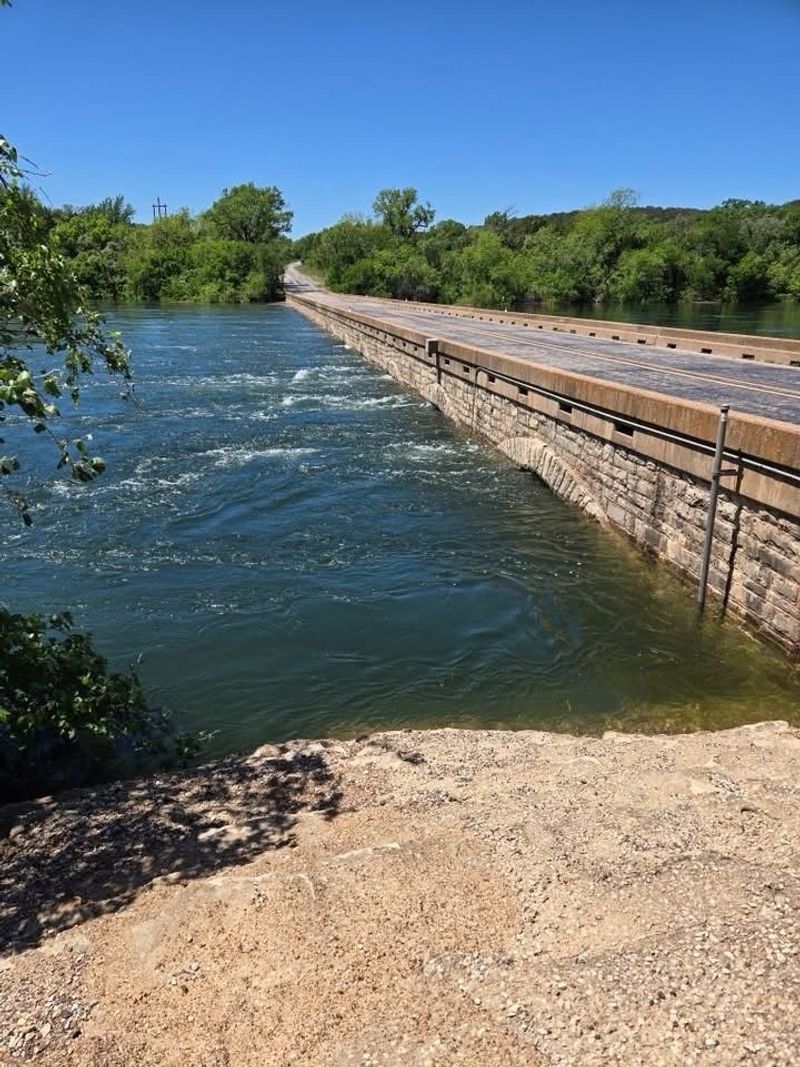
There is something remarkable about the fact that the men who built this bridge spent most of their careers underground.
The laborers brought in for the Possum Kingdom project were largely unemployed coal miners, and their underground work had given them a specific and rare skill set: the ability to read, cut, and work with stone under pressure.
Coal mining in the early twentieth century required miners to understand how rock behaved, where it was stable, where it would crack, and how to shape it efficiently with hand tools. That knowledge transferred directly to surface stonework.
When the WPA needed skilled hands for a project this ambitious, these miners already had the intuition that most construction workers would have needed years to develop.
The result is visible in the finished bridge. The joints between stones are tight and even.
The arch curves are smooth and consistent. There is no sloppiness in the work, no shortcuts visible in the stonework even after more than eighty years of weather and flooding.
For many of these miners, the bridge may have been the most visible thing they ever built. It outlasted the coal industry that trained them, and it is still standing today because they did the job right.
Visiting the Bridge: What to Expect on TX-16
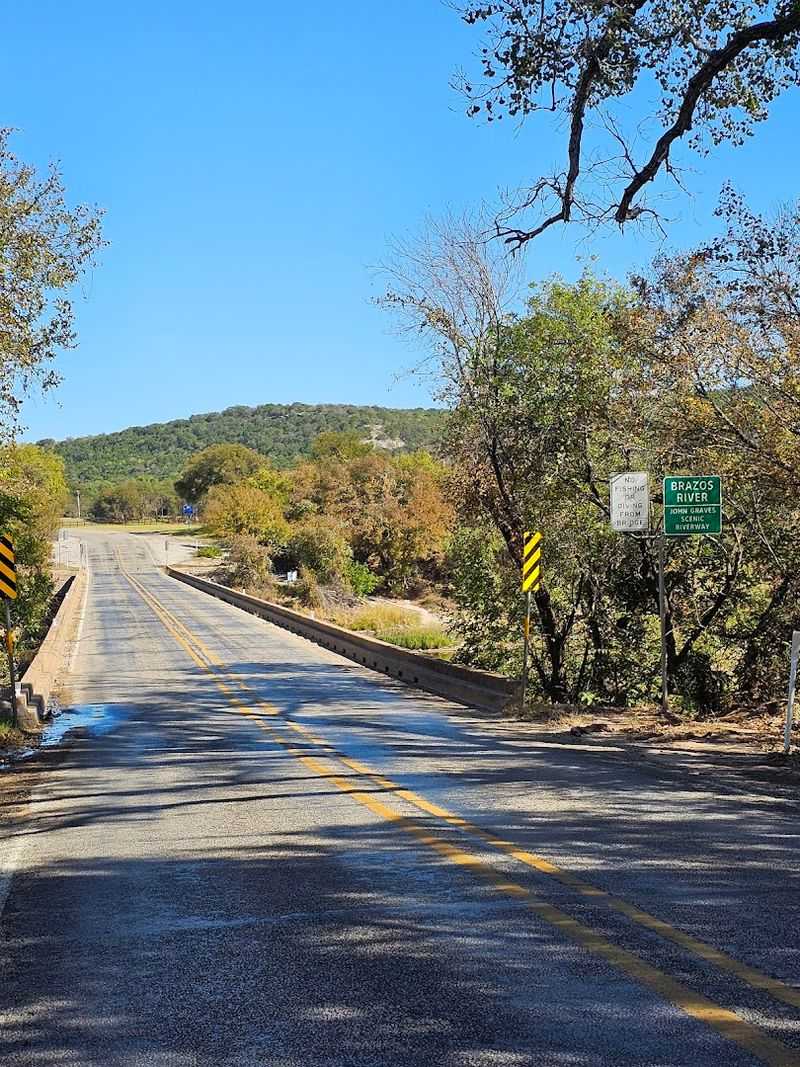
Getting to the Possum Kingdom Stone Arch Bridge is part of the experience. TX-16 runs through some genuinely beautiful West Texas terrain, with cedar-covered hills, open ranch land, and rocky outcroppings that make the drive feel like it is taking you somewhere worth going.
The bridge is located about eleven miles west of Graford, so the surrounding landscape has plenty of time to set the mood before you arrive.
Roadside parking is available along the highway, and most visitors simply pull over, get out, and walk along the shoulder to get a better look. There are no formal trailheads or visitor facilities here.
It is an honest, no-frills roadside stop, which somehow makes it feel more authentic than a polished tourist attraction would.
The best views of the arches come from the riverbank below, if you can safely access it. Early morning light hits the limestone in a warm, golden tone that makes the whole structure glow.
Late afternoon works well too. Midday sun can be harsh on the pale stone.
Bring water, wear comfortable shoes, and give yourself more time than you think you need. Most people plan a quick stop and end up staying much longer than expected once they actually see it up close.
Why This Bridge Still Matters Today
Some structures age into irrelevance. This bridge has done the opposite.
The Possum Kingdom Stone Arch Bridge has been listed in the Library of Congress as a significant historic structure, recognized for both its engineering quality and its cultural importance as a WPA project. That kind of institutional recognition is not handed out easily.
Beyond the official record, the bridge represents something that is harder to quantify. It is proof that public investment in skilled labor produces results that last generations.
The Depression-era workers who built it were not building for profit or recognition. They were building to work, to eat, and to contribute something real to their community.
The bridge carries that intention in every stone.
For travelers, historians, engineers, and anyone who appreciates craftsmanship, it is worth a stop. Texas has no shortage of impressive natural and man-made landmarks, but few combine historical depth, engineering achievement, and raw scenic beauty the way this one does.
The arches are still standing, still carrying traffic, still holding back floodwaters when the Brazos rises. Over eighty years after those coal miners set the last stone, the bridge continues to do exactly what it was built to do.
That is a legacy worth driving out to see.
Address: TX-16, Graford, TX 76449
