Some places hum after dark, and Nevada holds a few that seem to sing to themselves.
In the Mojave, wind and memory turn old boards and tin roofs into a chorus that rises after sunset.
I chased that sound to a forgotten corner near Las Vegas, where the night carries stories through empty walkways and weathered facades.
If you have ever wondered how a carnival could play its own music without a band, this field report will lead you through echoes that still feel alive.
A roadside attraction with old-west charm
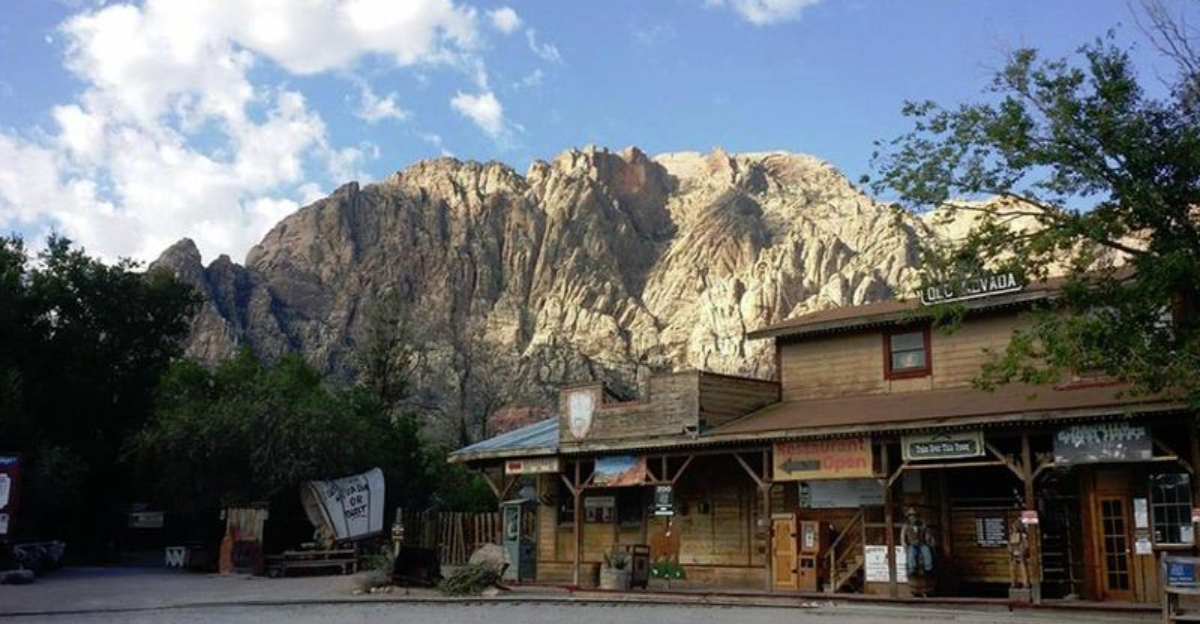
Bonnie Springs Ranch sat near Blue Diamond, Nevada, on a spring-fed patch below the tall rim of the Spring Mountains. Built as a family-run stop, it featured a replica western town, horse trails, a small motel, and a petting zoo set beside cottonwoods. Visitors arrived for simple scenes, wooden porches, and wagon wheels that framed the desert horizon.
By day, the place felt like a frontier postcard, with boardwalks and false fronts casting striped shadows on the dust. Mule deer sometimes drifted along the margins, and the oasis shimmered against the Mojave light. The contrast between greenery and open basin gave the ranch an almost stage-like clarity.
At night, the quiet revealed textures that daylight hid. Hinges creaked, sign chains knocked, and the faint sigh of air moving through gaps created gentle tones. In Nevada’s dry air, even tiny vibrations can carry, turning stillness into an unplanned score.
The decline and closure
After decades of operation, Bonnie Springs Ranch closed in March 2019 as plans shifted toward redevelopment. Activity dwindled, and the structures fell quiet while the surrounding desert resumed its slow work. With fewer footsteps, the boards and corrugated roofs met the wind alone.
As Nevada evenings stretched long, shuttered doors answered with low knocks. The reduction in human noise brought forward subtle resonances, like the soft thrum of breeze past a sign bracket. The result was not a song, but a collage of tones shaped by materials and open space.
Standing on the empty street felt like pausing backstage after the curtain drop. The lingering set, the echo of past performances, and the hush of sand made every ripple audible. The carnival mood comes from absence, a performance that exists because the audience left and the desert kept the hall.
Nighttime silence and ghost-stories
While no record proves music plays on its own, visitors describe curious sounds after dark. Wind slides past boards and through open cracks, and the geometry of the facades turns air into whistles. Some say it resembles distant carousel chimes, others hear tape-like warble from old systems long removed.
In Nevada’s high desert, temperature changes make materials flex with tiny pops. That punctuation, combined with hollow alleys, can mimic rhythm. The mind supplies meaning, stitching these noises into tunes that seem to rise from the street.
Locals mention uneasy moments, like feeling watched while the timbers murmur. Urban explorers recount soft choruses during lull periods between gusts. Whether folklore or physics, the effect is persuasive, and it guides careful listeners along an invisible parade route that only appears under stars.
The setting in the desert
The ranch lies about twenty miles west of Las Vegas in the Mojave, tucked between rocky slopes and a sparse basin. That setting matters, since wide spaces allow sound to travel without crowds to swallow it. Even a small rattle can feel theatrical when the valley returns it with calm.
The open desert frames the old town like a stage. Mountains rise behind, and the sky turns cobalt as twilight deepens. Nevada’s dry air reduces muffling, so tiny tones preserve their edges.
Here, built facades confront emptiness, and the difference amplifies every detail. Standing near the boardwalks, you hear sand tick against posts and the low hiss of the breeze. The scene reads like an abandoned carnival, an arena where the environment handles the evening’s soundtrack without help.
Architectural legacy
The Old Nevada section, a replica western town added in the 1970s, brought stylized facades, narrow alleys, and shaded arcades. That layout contributes to the acoustic quirks that now define the site after dark. Overhangs create cavities, and siding gaps act as tuned slits.
Many storefronts were theatrical in spirit, built to suggest saloons, shops, and offices. While the businesses faded, the shells remain expressive. They turn moving air into flutes and transform small knocks into whispers that travel the corridor.
In Nevada, where the night cools quickly, wood contracts and rebalances. Those tiny shifts speak through the framework. By design or accident, the architecture left behind a musical instrument, a set of chambers and reeds that still perform when wind serves as the player.
What remains today
With operations gone, the place holds weathered facades, paths, signage, and props scattered like notes on a staff. Paint fades, metal patinas, and roofs respond to every change of air. The bones of the attraction continue to shape sound in unpredictable ways.
Dusk pulls long shadows between buildings and intensifies contrast. In those strips of dark, a single chain tap can feel like a bell. Nevada’s open silence wraps the site, and small movements become noticeable melodies.
Visitors who pass during legal access hours describe a still life that behaves like a sound stage. No rides are here, yet the grounds suggest a fair paused mid-song. The carnival feeling endures because the structures conduct the wind like a conductor’s hand.
Why it fits the mood
The idea of a carnival that plays its own music suits this site because the environment activates what remains. Wind across tin, wood under tension, and hollow interiors combine into layered tones. Memory supplies the rhythm, as visitors recall shows and skits once performed here.
In Nevada’s desert, the absence of city noise reveals these textures. You notice repetitive patterns, like a bracket that taps on intervals, or a sign that hums under steady air. Those motifs resemble loops from a distant midway.
The result is suggestive rather than literal, a soundtrack assembled from weather and design. It is not supernatural, yet it feels uncanny. Standing quietly, you hear the ranch perform itself, a self-playing score built from scraps of an older entertainment dream.
Visiting considerations
Access can change with redevelopment and property rules, so verify current land use before planning. Respect posted signs and private boundaries at all times. Conditions shift quickly in Nevada, and responsible visits protect both history and safety.
Arrivals near dusk demand preparation. Bring lighting for navigation, sturdy footwear for uneven surfaces, and a charged phone with offline maps. The Mojave can feel disorienting when the sky darkens and landmarks flatten.
If viewpoints are available, keep to established areas and minimize noise. Let the site speak and listen for its subtleties. The goal is not intrusion but observation, a careful encounter with a place that still holds a quiet voice of its own.
The folklore and atmosphere
Stories circulate among locals and urban explorers about strange sensations near the old town. People describe soft chorales that appear when the breeze aligns with corridors. They also mention the feeling of being observed, a classic human response to empty facades with many windows.
Such tales fit the broader Nevada tradition of desert legends. Big skies and long silences invite interpretation, and memory clings to places that once staged performances. The line between history and myth narrows when a site keeps speaking after hours.
Listening becomes the main activity here. Step gently, wait between gusts, and map where tones emerge. Over time, you hear a pattern that sounds like an unseen calliope, built from air and wood rather than brass.
Final thoughts
This place does not spin records or power speakers, yet it creates a believable score after dark. The combination of replica architecture, dry air, and steady wind becomes a living instrument. What echoes here is not nostalgia alone, but physics playing on memory.
Nevada holds many nighttime experiences, from glowing signage in Las Vegas to distant art gatherings far out on playas. This quiet corner adds a different note, one that rewards patience over spectacle. The music is subtle and asks for close attention.
When you leave, the sounds remain in the wood and metal, waiting for the breeze to lift them again. The carnival persists as a feeling threaded through the structures. If you listen carefully, the desert will cue the next song without asking anyone to press play.
Dear Reader: This page may contain affiliate links which may earn a commission if you click through and make a purchase. Our independent journalism is not influenced by any advertiser or commercial initiative unless it is clearly marked as sponsored content. As travel products change, please be sure to reconfirm all details and stay up to date with current events to ensure a safe and successful trip.
