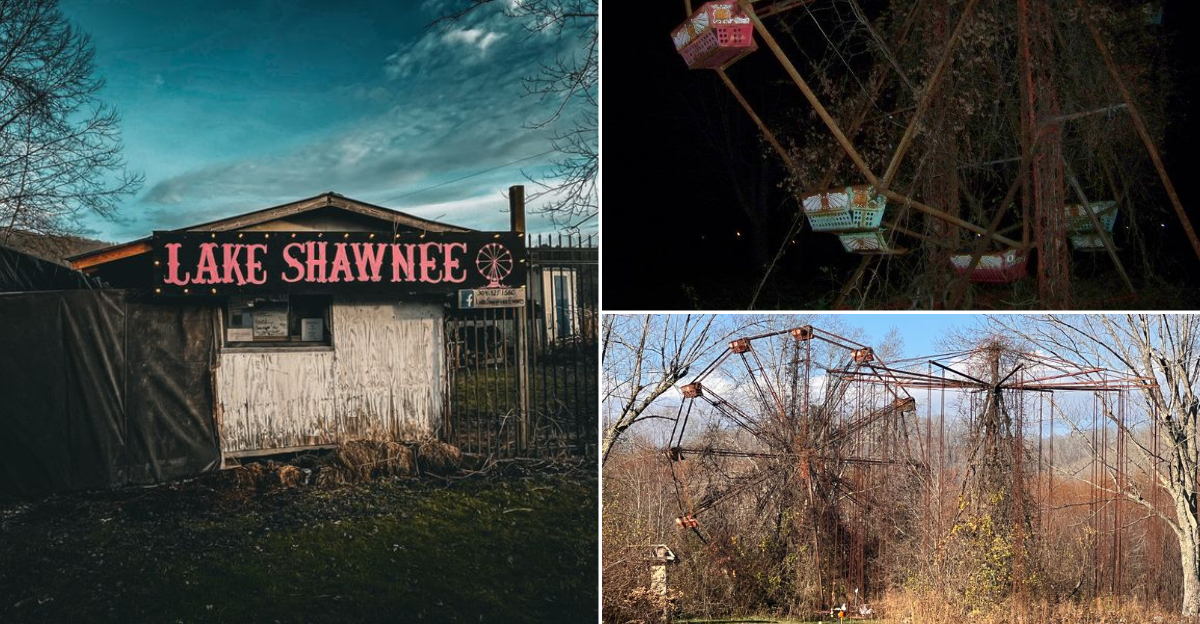
Picture us cruising the back roads of West Virginia, windows cracked, talking about places that feel paused mid sentence. There is one spot I keep circling back to because it sits right between memory and rust.
Lake Shawnee Amusement Park in Mercer County is not a ghost story so much as a quiet, real reminder of how quickly a carnival can fade. If you want something that lingers after we drive away, this is it.
The silence there feels earned, like it arrived slowly and decided to stay. You notice details you did not expect to care about, bent railings, faded paint, grass pushing through concrete.
By the time the road pulls you forward again, the place has already settled somewhere in the back of your mind.
A Carnival Built On The Edge Of A Small West Virginia Lake
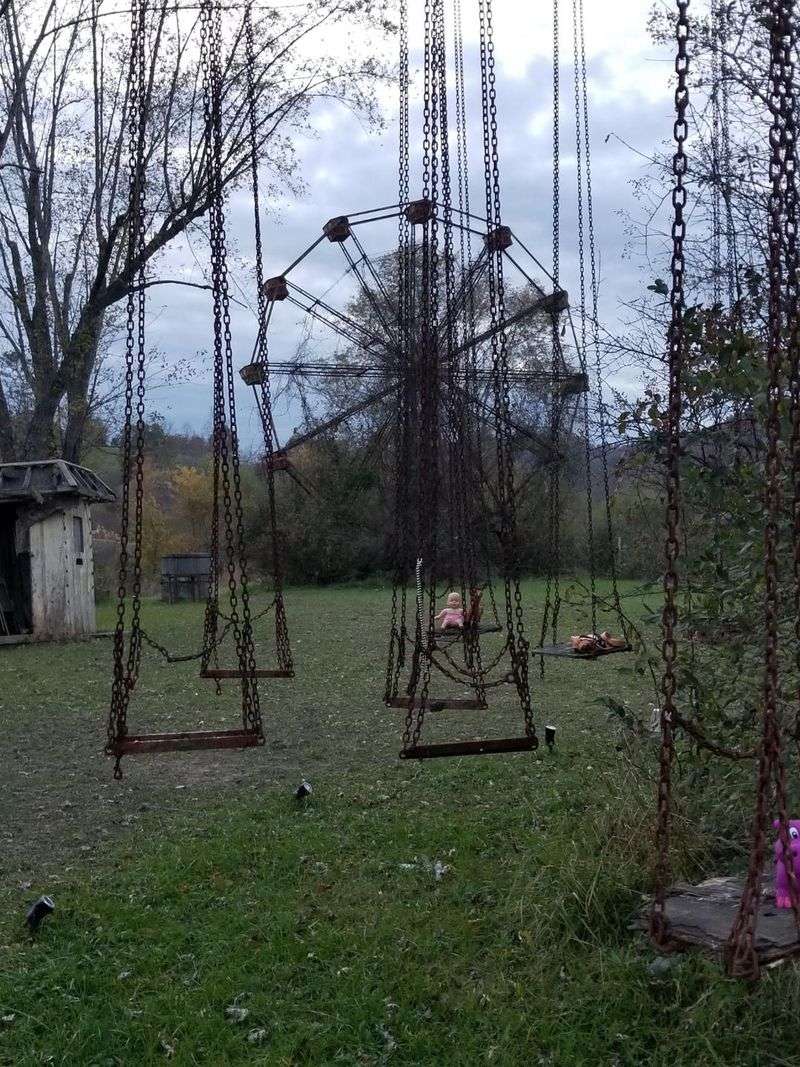
Start here, right at 470 Matoaka Road, Rock, West Virginia, where the trees pull close and the water sits still. The lake holds reflections that make the old ride frames look doubled, like the past is testing your eyes.
You can stand near the shoreline and hear nothing but birds. That silence feels heavier than any locked gate.
The place was built to hold laughter, not legends.
It makes sense when you see how the land hugs the clearings, like the carnival tried to sidle up to the lake and stay friendly.
Look at the posts and footings half swallowed by grass. They map out paths you can almost follow.
It was never a big city boardwalk. It was a local carnival stretched into something steadier beside a calm West Virginia lake.
That setting explains the mood.
The water is a mirror, and the mirror does not flatter time.
When Traveling Carnivals Settled Down Permanently
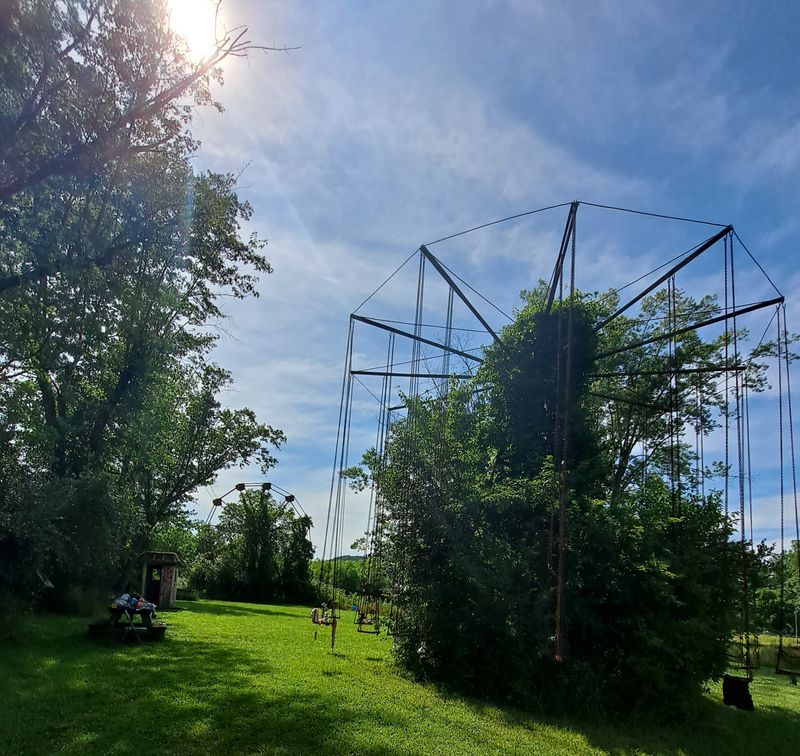
You know how a traveling show needs to stop moving eventually.
Parks like this grew when wagons and trucks parked for good and a field became a promise.
In West Virginia, a rural stop meant families could count on weekend rides without waiting for the next circuit. That steadiness made sense before big highways and giant parks soaked up attention.
Lake Shawnee’s footprint shows that shift.
Temporary booths turned into nailed walls and posts set in concrete.
A portable carousel becomes a landmark once you pour a pad. Then it becomes a responsibility.
Permanent meant wiring strung to poles and water lines run shallow under dirt. It meant the weather had a new opponent to test all season.
What started as a carnival pause turned into a hometown habit.
Until keeping it running proved heavier than setting it up.
Lake Shawnee’s Short Lived Moment Of Popularity
Imagine the first time a family drove up Matoaka Road and spotted bright paint shining against the trees.
The excitement feeds itself when you see neighbors already in line.
Rides did not need to be huge to feel new. A simple loop, a swing that lifted just enough, and a shoreline picnic were plenty.
You would hear squeals bounce off the lake.
Music carried further than the wires should have allowed.
Folks came because it was close and shared. Kids could run in circles and still be found by a glance.
That intimacy is the charm and the limit. A small park glows for a while and then needs fresh paint and new ideas.
For a short spell, Lake Shawnee hit the sweet spot.
The park fit the town like a favorite shirt before the seams started tugging.
Why Early Amusement Parks Were So Vulnerable To Fire
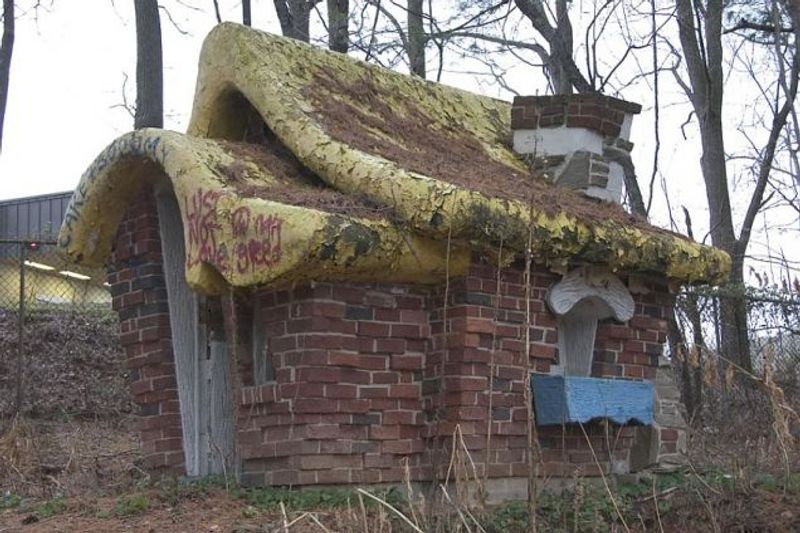
It is not spooky, it is wood and wire and luck running thin.
Early parks leaned on lumber, tar paper, and paint that flashed when heat found it.
Think about dry summers, improvised circuits, and extension cords strung like vines. A short could start small and get mean fast.
Booths were patchwork, nailed quick to meet a weekend crowd.
Roofs were light and eager to carry flame down a row.
The rides had motors that worked hard. Bearings heated, belts slipped, and sparks did what sparks do.
Water access was not guaranteed at the right pressure. And volunteer response took precious minutes on curvy West Virginia roads.
So a minor incident became a chapter.
Then the chapter kept getting footnotes every season or two.
The First Major Losses That Changed The Park’s Future
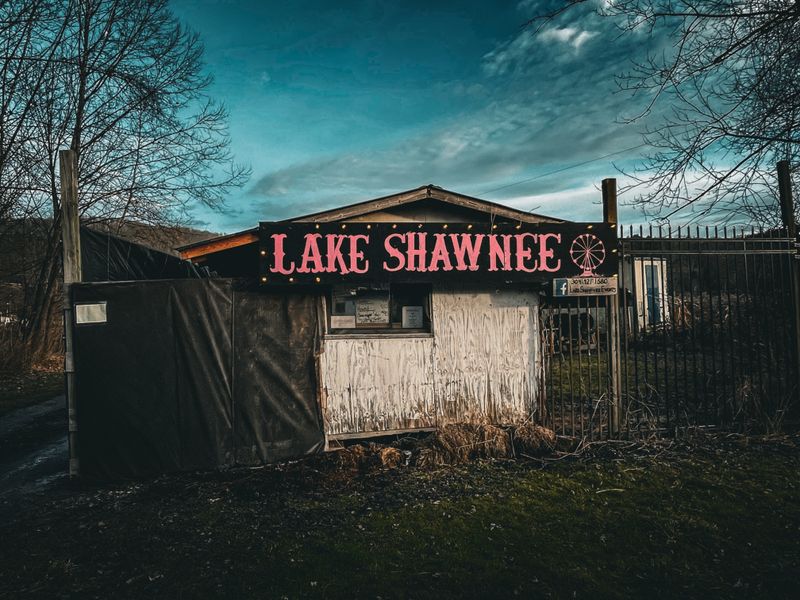
Ask anyone local and they will point to the first real blaze as the bend in the road. After that, the park was never quite chasing the same dream.
Key structures went down faster than a plan can be rewritten.
When support buildings vanish, the whole operation limps.
Replacing a ticket booth is one thing.
Losing a ride housing or electrical hub slows everything else.
Momentum matters in a small place like Mercer County. If repairs lag past the next season, habits drift to other pastimes.
You can see the break in the layout even now.
Gaps read like missing teeth where rows should line up.
The fires did not end the story in one swing. They just tilted the field until it was hard to run straight.
Repairs That Never Fully Caught Up
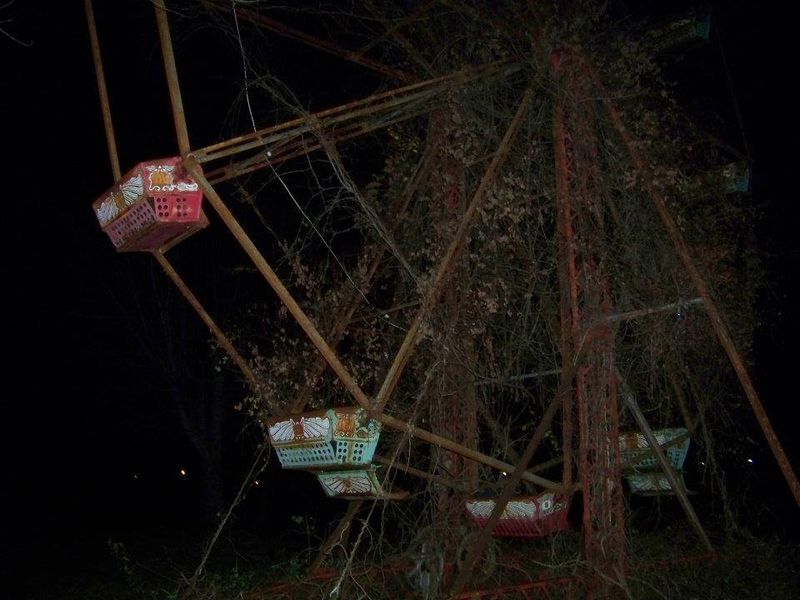
Every fix here looks like someone meaning well with limited daylight. You can almost feel the weekend deadlines pressing on the paint.
New boards never matched the old grain.
Fresh colors faded quick against the sun and lake air.
When wiring gets rerouted in a hurry, it stays temporary longer than intended. Temporary solutions age the fastest.
The park kept trying to look open and inviting. But maintenance is a tide and the water kept coming.
West Virginia weather does not negotiate with patched roofs.
Storms find seams and make them bigger.
Repairs bought seasons, not stability. Eventually the balance tilted toward holding on instead of building forward.
What Still Remains On The Grounds Today
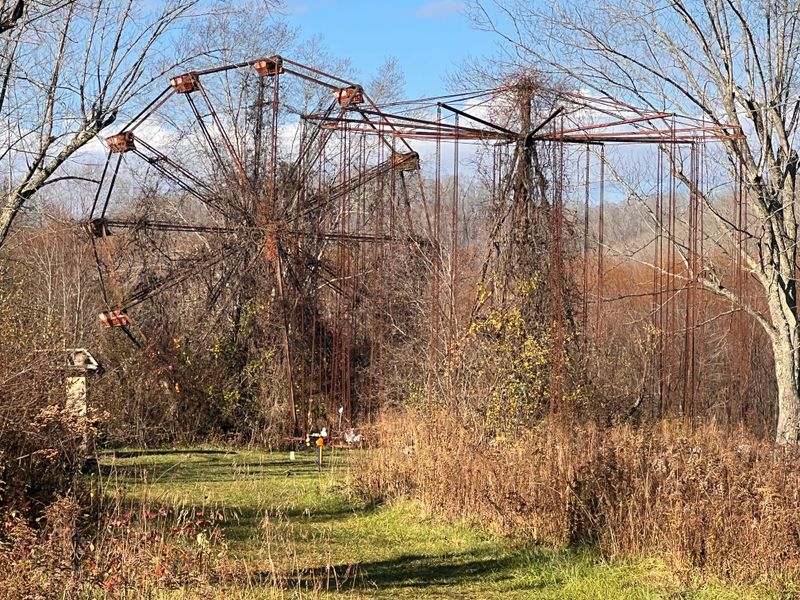
If you walk the edge of 470 Matoaka Road now, you can spot concrete pads and metal bones peeking through grass.
Foundations tell you exactly where the fun once stood.
There are posts with stubborn bolts that refuse to let go. Faded signs lean like they want one last duty.
Some parts look staged by time rather than people.
The spacing suggests queues you can almost feel in your feet.
West Virginia light hits the metal just right near evening. It makes the rust glow warm for a minute.
Do not expect tidy. Expect traces that ask you to connect dots.
The lake stays steady as a backdrop.
The park offers outlines, and your brain fills the rest in.
Why Locals Still Talk About The Park Carefully
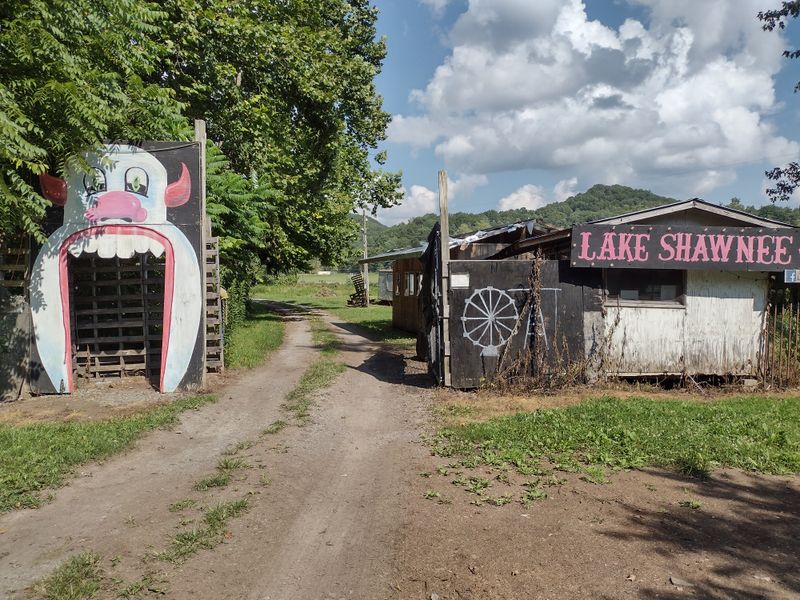
People around Rock tend to choose their words. It is not superstition so much as respect for what was lost and what never quite worked again.
Stories get passed along with careful edges. The facts carry more weight than rumors when you live nearby.
Folks remember busy weekends and messy cleanups. They also remember the nights when smoke made the sky look wrong.
Calling it forgotten does not feel right in a small county.
The place sits there and reminds everyone anyway.
West Virginia towns keep memory close. That is how you stay rooted when places change hands or go quiet.
So the talk stays measured and kind.
The carnival is a lesson, not a punchline.
A West Virginia Carnival That Was Never Replaced
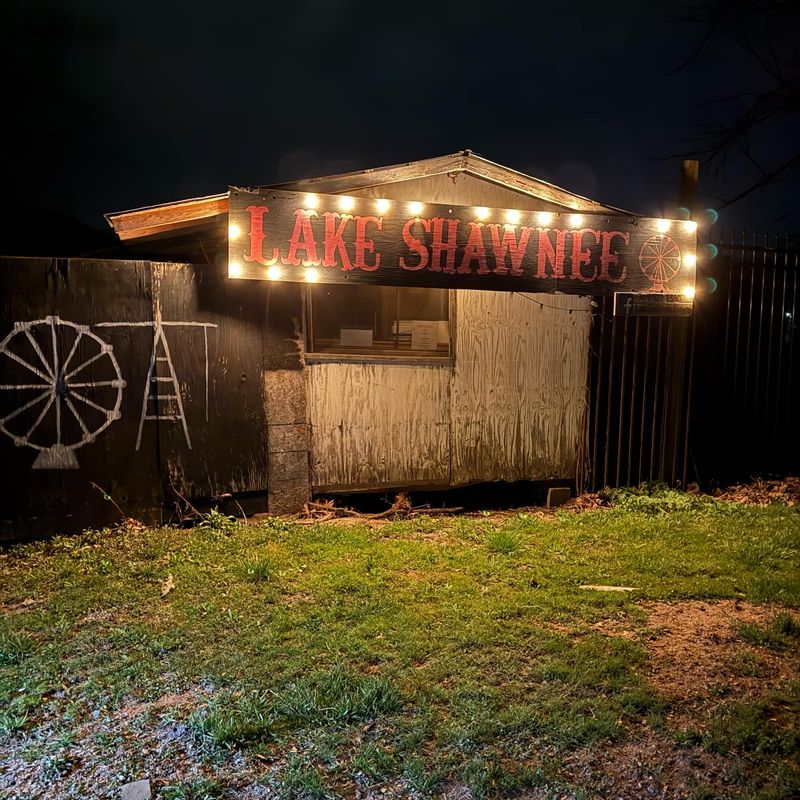
Here is the thing I keep thinking about.
When this park went quiet, nothing similar popped up down the road to fill the space.
Big destinations are far, and small ones take brave money to build. So the absence stayed put and became part of the landscape.
Kids grew up with different weekend plans. Families learned new loops that skipped Matoaka Road entirely.
That is how a carnival becomes a memory without a successor.
The routine dissolves and no one prints a new map.
West Virginia still carries the bones of old industry and old play.
This is one of those bones left in clear view.
Driving past, you feel it for a minute. Then you carry it with you longer than you planned.
How Nature Slowly Took The Park Back
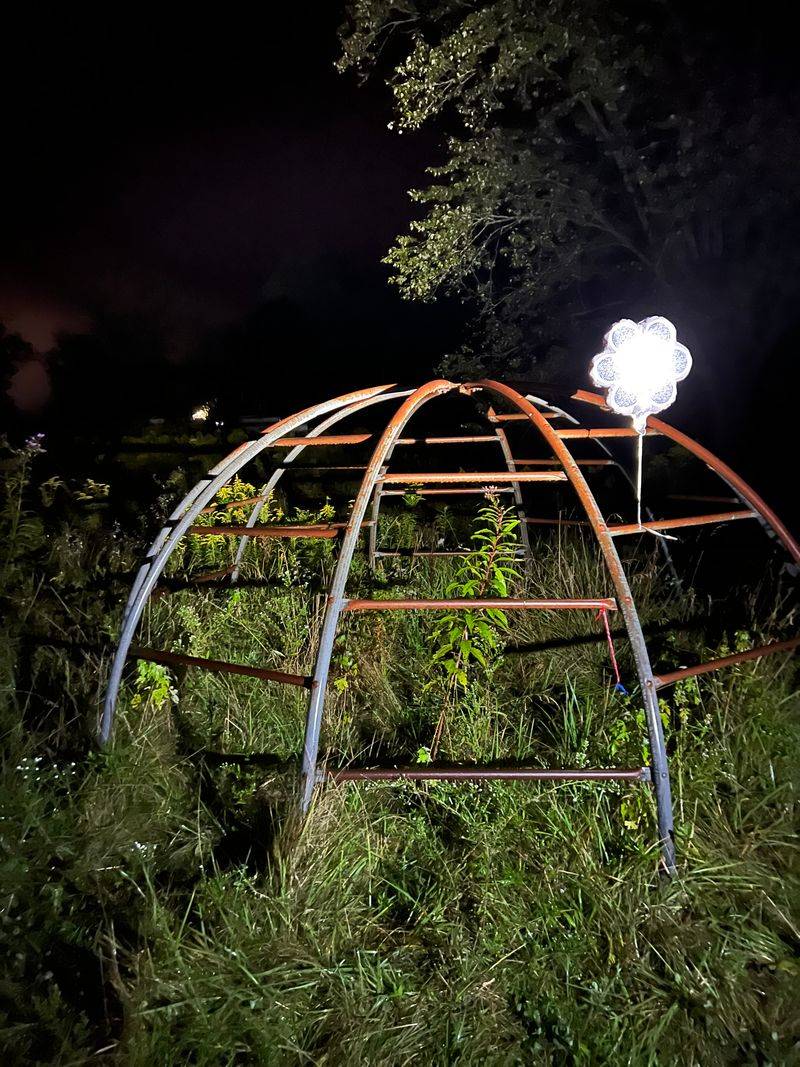
Give land a little time and it starts writing over everything. Vines find seams before people even notice the first leaf.
Gravel paths blur into green. Saplings push through cracks like they were invited.
Wood softens and turns gray.
Metal rusts into flaky layers that fall like old paint.
The lake just watches, steady as ever. It does not pick sides between structure and brush.
What you see now feels patient, not dramatic.
The slow work of weather is the main act.
West Virginia has a talent for this kind of recovery.
The hills always wait, and then they take back what stands still.
Why Lake Shawnee Feels Frozen Between Eras
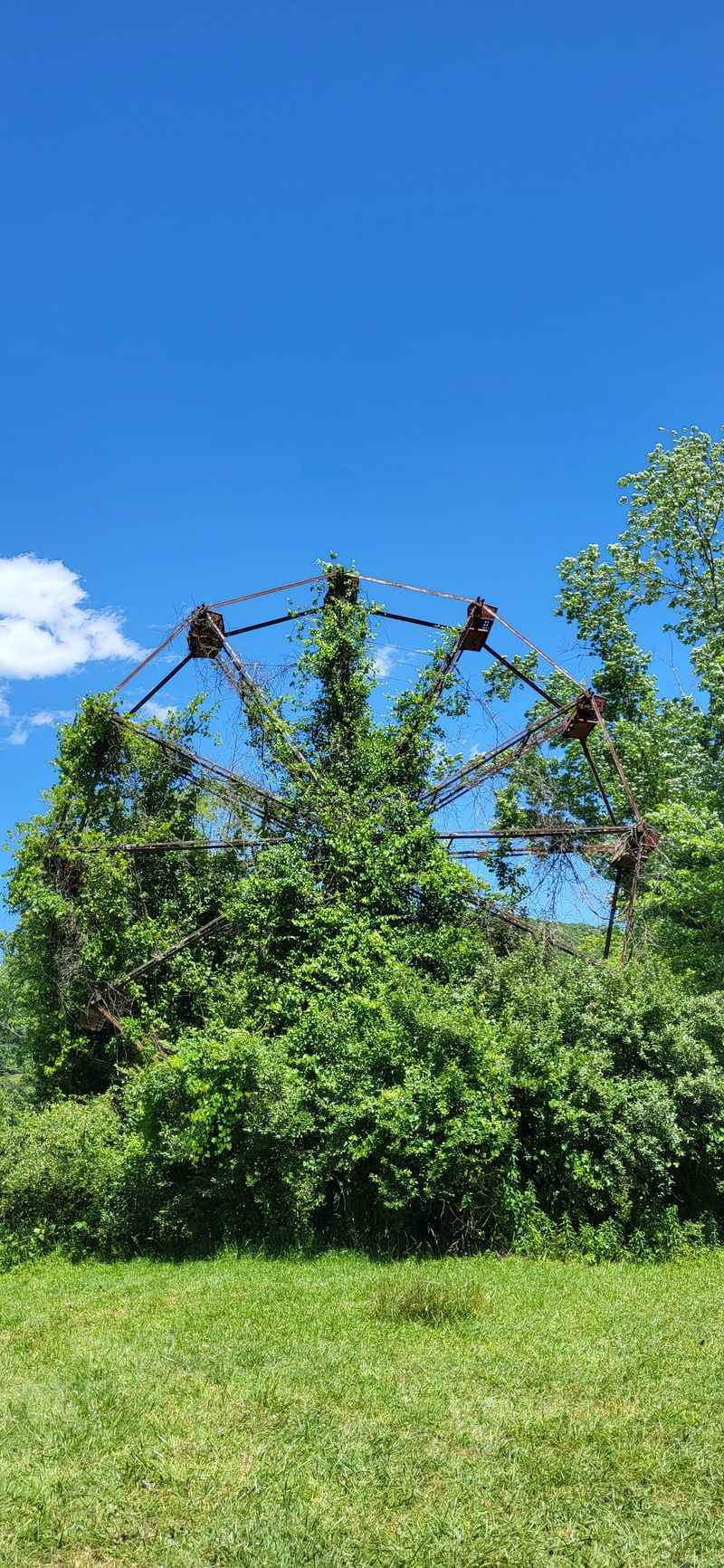
Walk a few steps and it looks abandoned beyond doubt. Turn your head and you catch a glimpse of everyday life rolling by on the road.
That mix makes the place feel paused. It is neither museum tidy nor fully gone.
You read decades in textures and gaps. Then you notice a fresh tire track curving past the fence.
The effect is a tug between memory and maintenance.
Enough presence remains to keep the story visible.
West Virginia time moves at a practical pace.
Things get fixed when needed and left alone when not.
So the park sits in a kind of middle. It teaches by existing rather than performing.
Dear Reader: This page may contain affiliate links which may earn a commission if you click through and make a purchase. Our independent journalism is not influenced by any advertiser or commercial initiative unless it is clearly marked as sponsored content. As travel products change, please be sure to reconfirm all details and stay up to date with current events to ensure a safe and successful trip.
