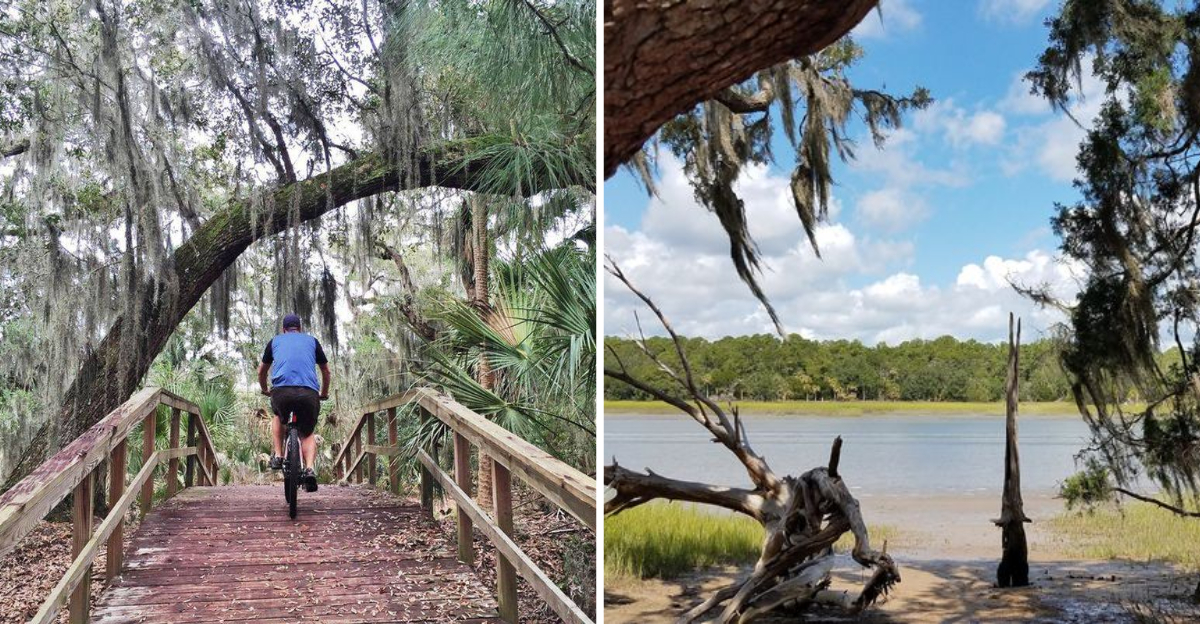
Georgia’s coastal edge shifts quickly from city rhythm into something quieter, where salt marshes, tidal creeks, and dense maritime forest begin to take over the landscape. A narrow causeway leads away from urban noise and into a world shaped by live oaks, hanging moss, and shifting waterlines that change with the tide. Wildlife becomes more noticeable than traffic, and stillness settles in without effort.
Trails wind through habitats where land and water constantly overlap, creating a sense of quiet immersion. It is a setting where a maritime forest island near Savannah, Georgia offers an escape defined by ecology, silence, and slow movement.
The Sandpiper Trail Loop: Where the Salt Flats Come Alive
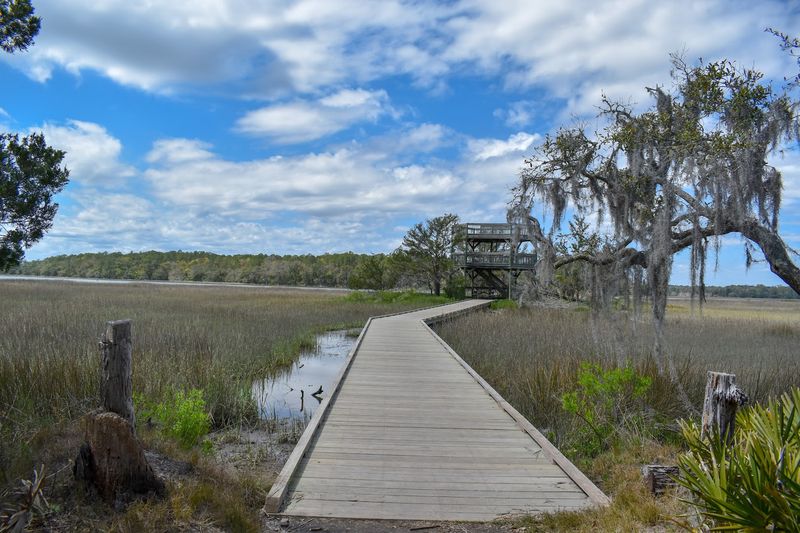
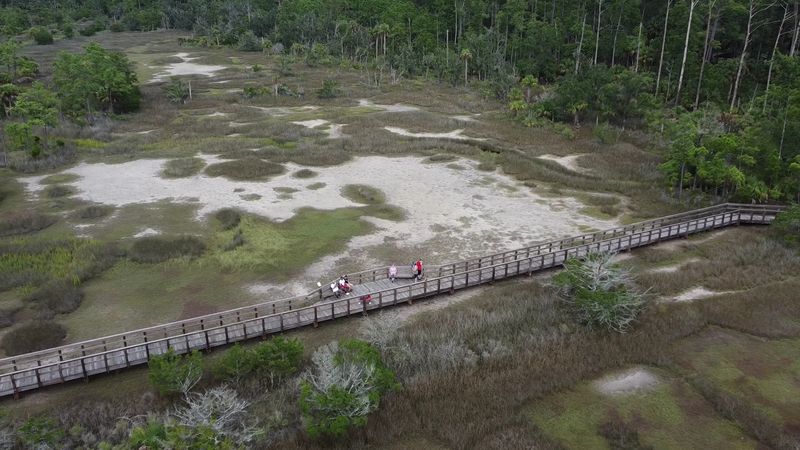
The Sandpiper Trail Loop is the kind of walk that quietly surprises you. It is only one mile long, which sounds modest, but every step along this ADA-accessible loop offers something worth pausing for.
Boardwalks carry you over tidal creeks, salt flats stretch out beside you, and then the trail dips into cool maritime forest that feels almost cathedral-like.
Fiddler crabs are one of the unexpected highlights here. They scatter across the muddy salt flats in little sideways bursts, and if you stop moving and stay quiet, they seem to forget you are there entirely.
Alphabetized interpretive posts along the trail explain what you are seeing, from black needle rush to the layered ecology of a tidal estuary.
This trail is a great starting point for first-time visitors because it covers so much variety in such a short distance. Families with younger kids tend to love it, and the accessible design means almost anyone can enjoy it comfortably.
Morning light on the salt flats has a golden, almost glassy quality that makes the whole loop feel like something you would frame and hang on a wall. Bring a camera and take your time.
Big Ferry Trail: History Tucked Inside a Forest Loop
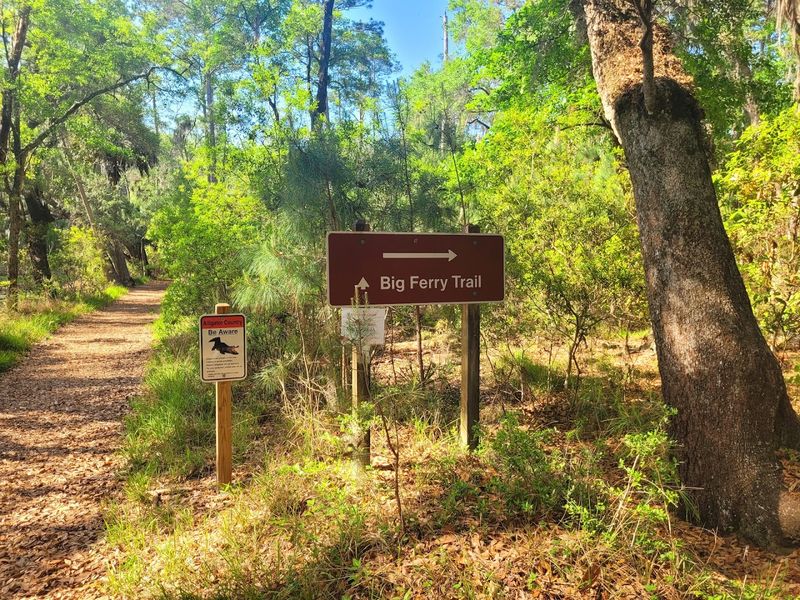
Big Ferry Trail has a different energy than the Sandpiper Loop. It feels more expansive, more exploratory, and a little more rugged in a way that rewards the effort.
The main loop stretches two miles, and you can extend it to nearly three by adding the earthworks spur, which most visitors absolutely should.
That earthworks loop passes through Confederate-era fortifications, low earthen mounds quietly reclaimed by the forest over more than a century and a half. There is something oddly moving about stumbling across that kind of history in the middle of a nature walk.
The trail also transitions between freshwater sloughs and mature forest, so the scenery keeps shifting in interesting ways.
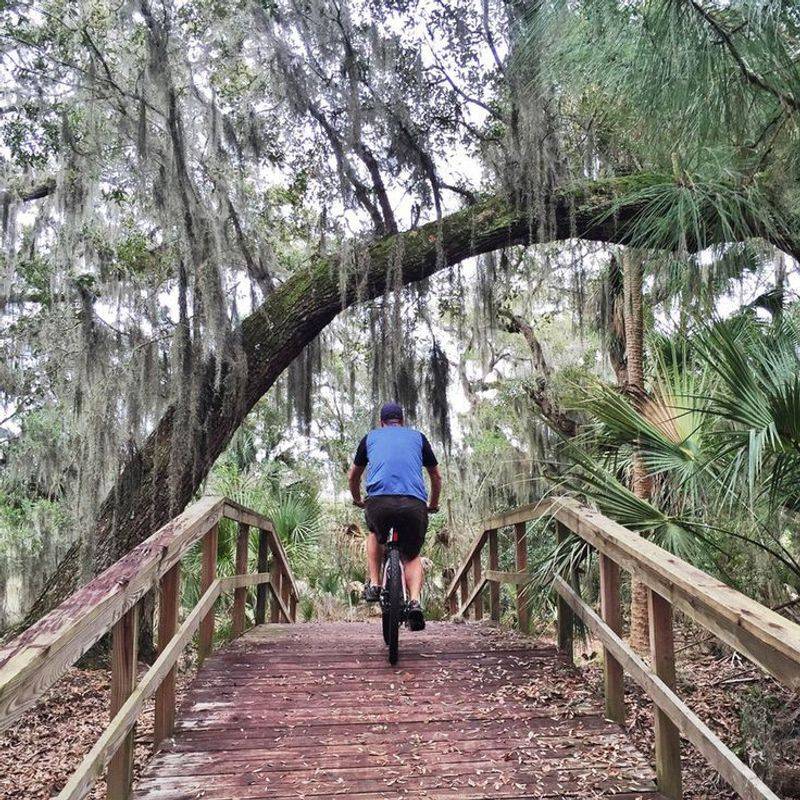
Bicycles and leashed dogs are welcome here, which makes it a popular choice for families and outdoor enthusiasts who want a bit more distance. I spotted deer tracks in the soft soil near one of the sloughs, and the whole trail had a hushed, early-morning feeling even in the middle of the day.
If you only have time for one longer trail, Big Ferry is the one to choose. Pack water, wear good shoes, and give yourself enough time to wander without rushing.
Birding on Georgia’s Colonial Coast Trail: A Feathered Spectacle
Skidaway Island State Park holds an official spot on Georgia’s Colonial Coast Birding Trail, and that recognition is well earned. The mix of habitats here, maritime forest, salt marsh, freshwater ponds, and tidal creeks, creates the kind of layered environment that draws an extraordinary range of bird species throughout the year.
Painted buntings are the crowd favorite, and for good reason. The males look almost too colorful to be real, like someone painted them with a child’s watercolor set.
Ospreys are a near-constant presence overhead, especially near the Intracoastal Waterway, and pileated woodpeckers drum through the forest with a persistence that is hard to miss once you know the sound.
Spring and fall migrations turn the park into a warbler-watching hotspot. Winter brings ducks, loons, grebes, and marsh sparrows to the waterways.
The park’s interpretive center keeps binoculars and reference guides available for visitors, and there is a dedicated window set up specifically for watching migrating species. Even if birding is not usually your thing, spending twenty minutes at that window has a way of converting people.
The sheer variety of what shows up here makes every season feel like the right time to visit.
The Maritime Forest: A Living Canopy Worth Getting Lost In
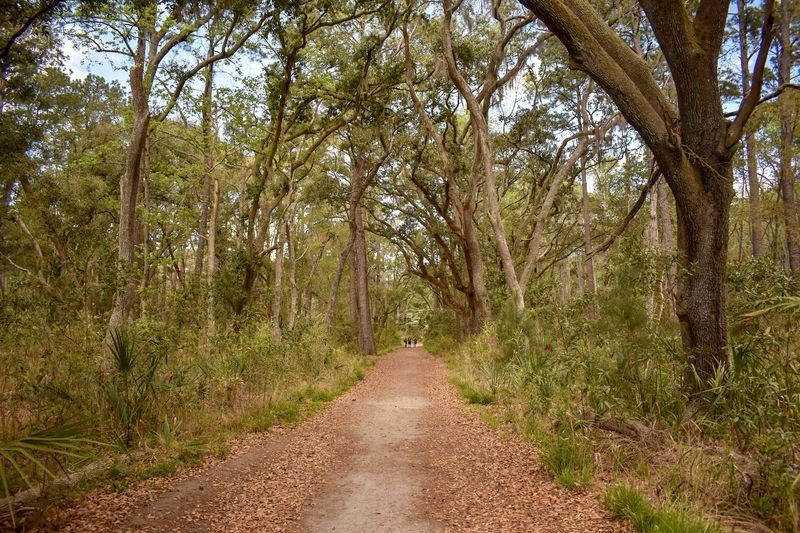
Not every great experience at Skidaway comes from checking items off a trail map. Sometimes the best thing you can do is slow down and actually look at the trees.
The maritime forest here is dominated by live oaks draped in Spanish moss, and the effect is genuinely stunning in a quiet, unhurried way.
Palmettos grow thick beneath the canopy, and the forest floor is layered with ferns and leaf litter that gives the whole place a rich, earthy smell after rain. The forest acts as a buffer between the open marshlands and the interior of the island, and it supports an incredible amount of wildlife.
Box turtles cross the trails with total confidence. Raccoons rustle through the undergrowth without much concern for nearby hikers.
What strikes me most about this forest is how it muffles the outside world so completely. A few steps in and the ambient noise just drops away.
It is the kind of stillness that feels earned rather than manufactured. The interpretive signs throughout the park help explain how this ecosystem functions and why the balance between forest, marsh, and water matters so much ecologically.
Spending time here feels less like recreation and more like a genuine reset.
Wildlife Beyond the Birds: Alligators, Deer, and Fiddler Crabs
Skidaway Island is not just a birding destination. The wildlife here covers a surprisingly wide spectrum, and part of what makes the park so engaging is that you genuinely never know what you might see next.
Alligators are a real presence in the freshwater sloughs along the trails, and spotting one half-submerged near the bank has a way of sharpening your attention for the rest of the walk.
White-tailed deer are common throughout the park and seem remarkably unbothered by human visitors. They graze near the campground edges at dusk with a calm that suggests they have been doing this for a very long time.
Fiddler crabs animate the salt flats in ways that are oddly entertaining to watch, their oversized claws waving in what looks like a constant, chaotic negotiation.
Dolphins have been spotted from the Intracoastal Waterway sections of the park, which adds an unexpected coastal thrill to an already packed wildlife roster. Snakes are present too, so staying on the trail and watching where you step is just good practice.
The park staff are genuinely knowledgeable about the local fauna and happy to share what is currently active and where the best sightings have been happening. Ask them before you head out.
The Interpretive Center and Park Amenities: More Than Just a Starting Point
The visitor and interpretive center at Skidaway Island is genuinely impressive for a state park facility. It is well-designed, bright, and stocked with resources that actually enhance your experience rather than just filling space.
Trail maps, field guides, and loaner binoculars are all available, and the staff consistently get high marks from visitors for being both friendly and genuinely informed.
There is a campground store on site that sells basics like ice and firewood, and the gift shop has earned its own reputation as a surprisingly excellent stop. Multiple visitors have mentioned leaving with more than they planned to buy, which says something about the quality of what is on offer.
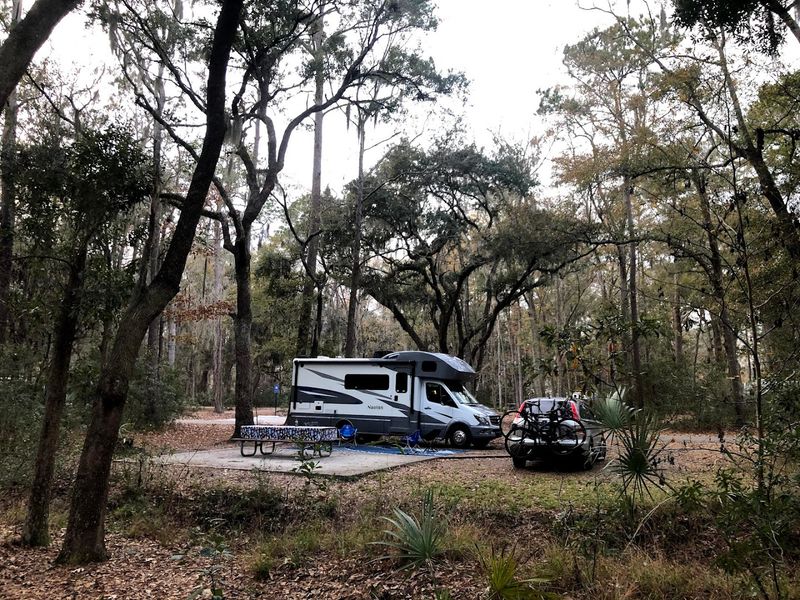
Camping options include traditional sites with electric and water hookups as well as yurts, which give the park a versatility that suits different kinds of travelers.
The campground itself sits under a canopy of moss-covered live oaks, and campsites are well-spaced for privacy. Some infrastructure renovations are ongoing as of early 2025, so a portion of the sites may be temporarily unavailable.
Even with that, the park remains very much open and operational. Arriving before dark is helpful for navigating the campground roads, which are beautifully shaded but not heavily lit at night.
Planning Your Visit: Practical Tips for Getting the Most Out of Skidaway
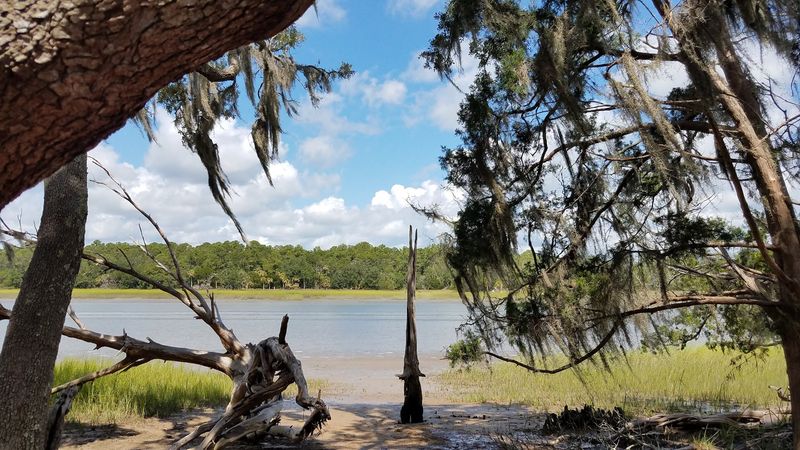
Getting to Skidaway Island State Park from downtown Savannah takes roughly 20 to 25 minutes by car, making it an easy half-day or full-day trip without a lot of logistical planning. The park is open daily from 7 AM to 10 PM, which gives early risers a real advantage since morning is when the wildlife is most active and the light on the marsh is at its most beautiful.
Tick awareness is something worth taking seriously here. Wearing long pants, using insect repellent, and doing a thorough check after your hike are all smart habits.
The habitat that makes this park so rich for wildlife also makes it good tick country, particularly in warmer months. A few visitors have flagged this as a genuine consideration, and it is worth respecting.
Spring and fall are the peak seasons for birding, but the park holds appeal in every season. Summer brings nesting ospreys and painted buntings.
Winter delivers a quieter, more contemplative experience with different waterfowl species showing up along the waterways. Dogs are welcome on certain trails when leashed.
The Georgia State Parks annual pass is a solid investment if you plan to visit more than once, and Skidaway will almost certainly make you want to come back.
Address: 52 Diamond Causeway, Savannah, GA 31411
