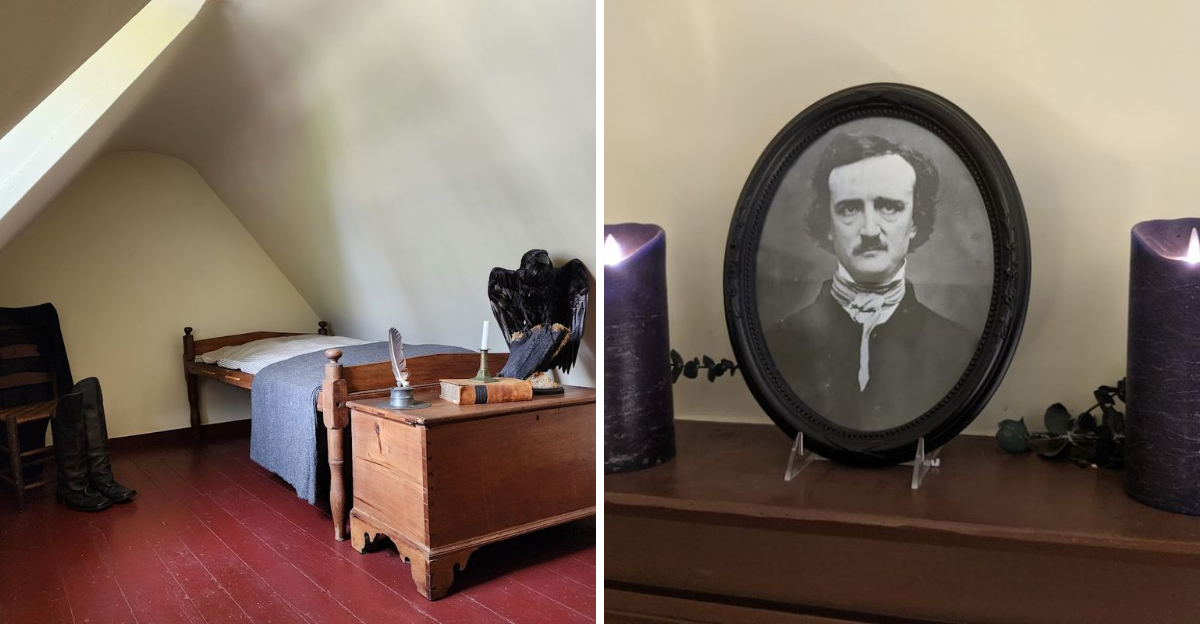
Some places carry stories with them. Not just the kind you read in history books, but the kind that makes the hairs on your arm stand up.
This Maryland landmark has a 19th-century murder mystery that refuses to fade away. The old building has seen things, and visitors swear the walls still remember.
People have reported strange sounds, cold spots, and the feeling of being watched. Whether you are a skeptic or a true believer, the atmosphere here is undeniably heavy with history and secrets.
Locals have passed down the tale for generations, and each retelling adds a new layer of intrigue. I walked through the rooms and could not shake the feeling that something happened here, something that was never quite resolved.
The architecture alone is worth the visit, but the story is what keeps people coming back. If you love history with a side of mystery, this Maryland landmark deserves a spot on your list.
The Humble Beginnings of a Literary Giant
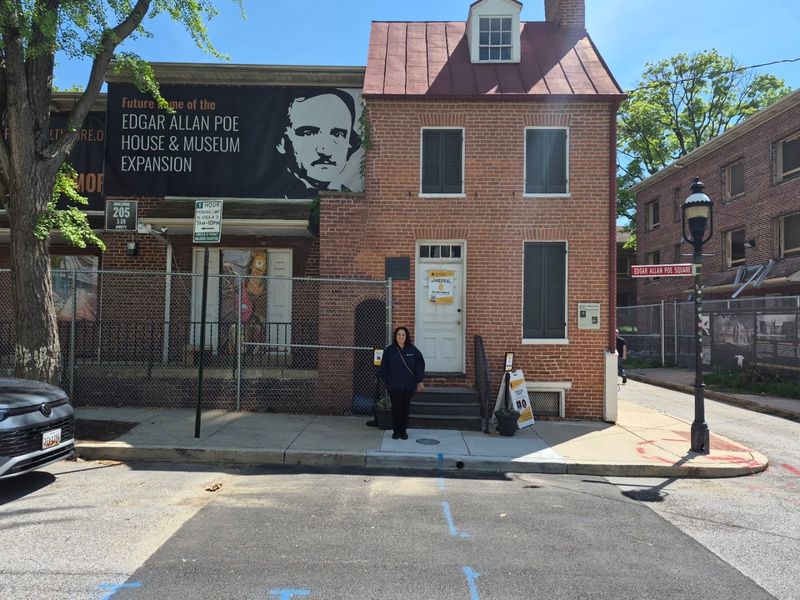
Before the fame, before the gothic masterpieces, there was a cramped brick duplex on a modest Baltimore street where a young Edgar Allan Poe was simply trying to find his footing.
He moved into this house sometime between 1832 and 1833, seeking stability with his aunt Maria Clemm after years of restless wandering.
Living alongside Poe in this tight space were his grandmother Elizabeth Cairnes Poe and his young cousin Virginia Clemm. The household ran largely on the pension Elizabeth received in recognition of her late husband’s Revolutionary War service.
It was not an easy life, but it was a life with people who genuinely cared for him, and that mattered enormously to Poe.
This period turned out to be a real turning point for his writing. He shifted from poetry toward short fiction during these Baltimore years, crafting some of his earliest stories within these very walls. “MS. Found in a Bottle” and “Berenice” were both written here.
He stayed until the fall of 1835, departing for Richmond after his grandmother’s death ended the family’s pension income. The house quietly witnessed the birth of an American literary voice that would echo for centuries.
Where Dreams and Darkness Converged
The inside of the Poe House is genuinely surprising. It is smaller than most people expect, and that compactness creates an immediate intimacy that no large museum can replicate.
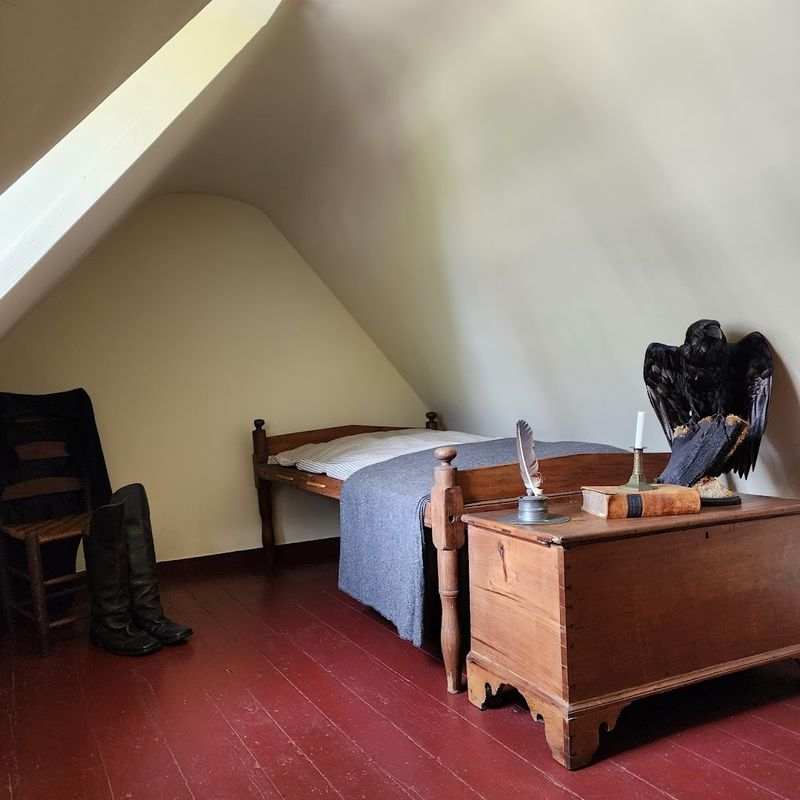
Five rooms make up the entire structure: a parlor and kitchen on the first floor, two bedrooms on the second, and a tiny attic room at the top that most visitors have to duck to enter.
That attic room is the one that really gets under your skin. Historians widely believe it served as Poe’s personal bedroom and likely his writing space.
The ceiling peaks at just six feet, and the narrow stairway leading up to it feels almost deliberately claustrophobic. It is easy to imagine a young writer hunched over a desk up there, scratching out sentences by candlelight.
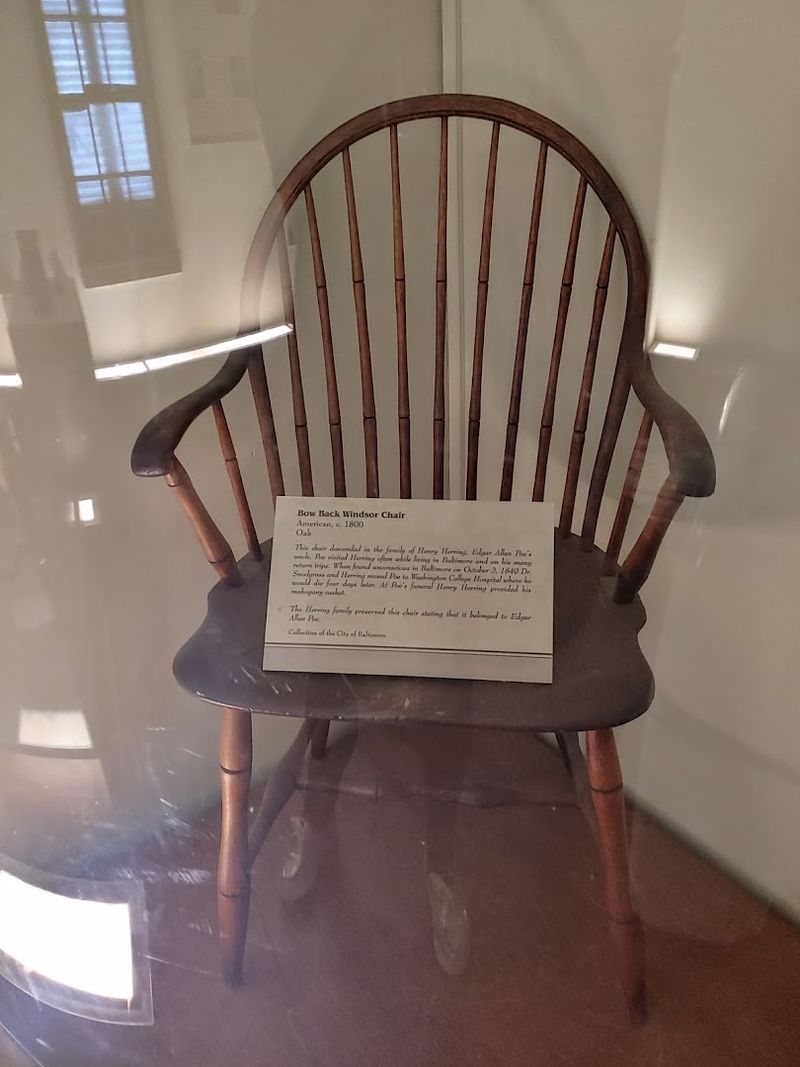
The museum does not display period furniture from Poe’s era, but it does include personal artifacts that feel remarkably close to him. His portable writing desk and chair are among the items on display, quiet objects that carry a surprising emotional weight.
The house itself nearly disappeared in the 1930s when it was threatened by a public housing project, but the Edgar Allan Poe Society of Baltimore fought to preserve it. It reopened as a museum in 1949 and earned National Historic Landmark status in 1972.
A visit here feels less like a tour and more like a genuine encounter with a life that was far more fragile than his fearless writing ever let on.
The City’s Grip, A Love Story Unfolds

Baltimore was never just a city to Poe. It was where his heart put down roots.
His relationship with his young cousin Virginia Clemm began here, in this very house, in the years when both of them were still finding their way in the world. They were married publicly in 1836, though some accounts suggest a private ceremony may have taken place even earlier.
Virginia and her mother Maria became the closest thing to a stable family Poe ever had. Their bond was unconventional by modern standards, but the devotion was real, and it shaped the emotional undercurrent of much of his later writing.
Maria Clemm, in particular, remained fiercely protective of Poe throughout his life.
Beyond love, Baltimore also gave him his first real professional win. In 1833, he entered a short story contest run by the Baltimore Saturday Visiter and won fifty dollars for “MS. Found in a Bottle.” That was not just prize money; it was the first time anyone paid him for his fiction.
The recognition opened a door to the Southern Literary Messenger in Richmond, where he landed an editorial role in 1835. He also built an important friendship with writer John Pendleton Kennedy during this time, a mentor figure who recognized his talent and helped push his career forward.
Baltimore gave Poe both a family and a future, and the Poe House stands as a quiet monument to both of those gifts.
The Ominous Return, A Fateful Stop
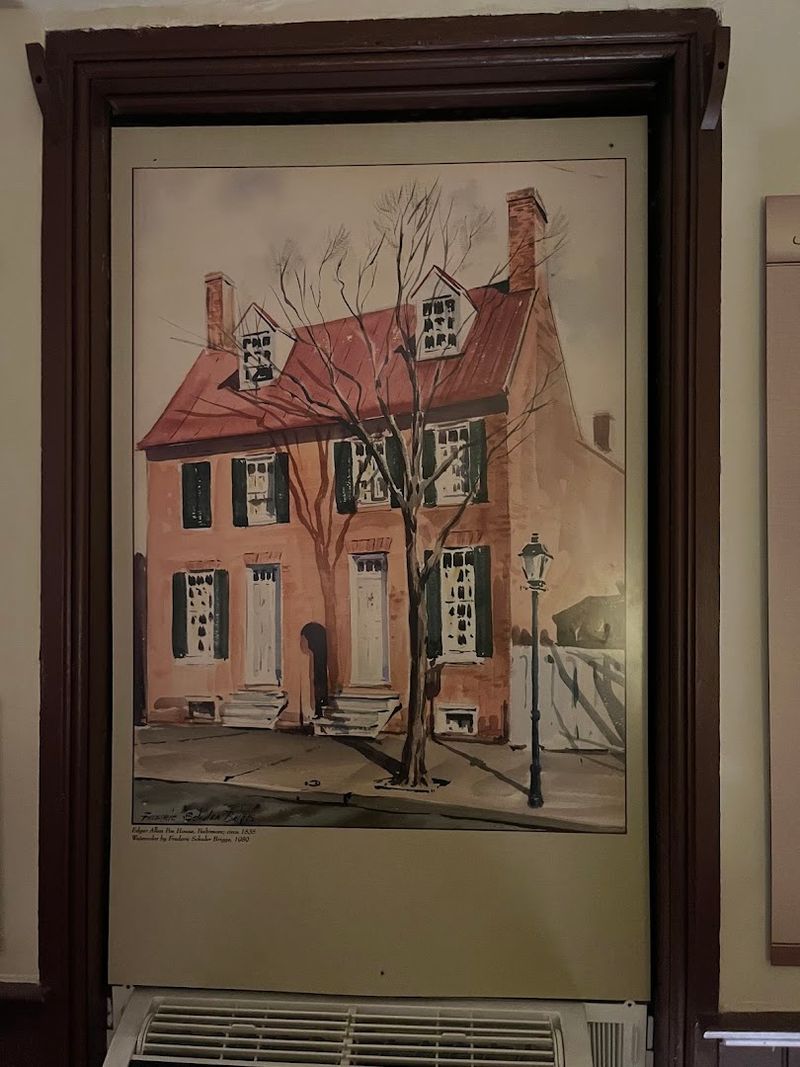
By October 1849, Poe had rebuilt some stability in his life. He was traveling from Richmond to New York, seemingly in decent health, with plans ahead of him.
Then Baltimore happened again, and this time the city would not let him leave.
He arrived around September 28, 1849, and then simply vanished from any reliable record for nearly five days. What he did during that stretch remains one of American literature’s most haunting blank spaces.
No verified account places him anywhere specific during those lost days.
On October 3, a Baltimore printer named Joseph W. Walker found Poe in a deeply distressed state near Gunner’s Hall, a tavern that also served as a polling location for local elections.
The detail that still raises eyebrows is what Poe was wearing: clothes that clearly did not belong to him, ill-fitting and disheveled in ways that suggested something had gone very wrong. Walker sent an urgent note to Dr. Joseph E.
Snodgrass, an acquaintance of Poe’s, describing the author as in great distress. Poe was taken to Washington College Hospital, where he would spend his final days drifting in and out of consciousness.
The circumstances of that discovery, the election day timing, the borrowed clothes, the missing days, set the stage for a mystery that researchers are still actively debating today. Whatever happened during those five days, Poe never recovered enough to explain it.
A Delirious Descent, The Final Hours
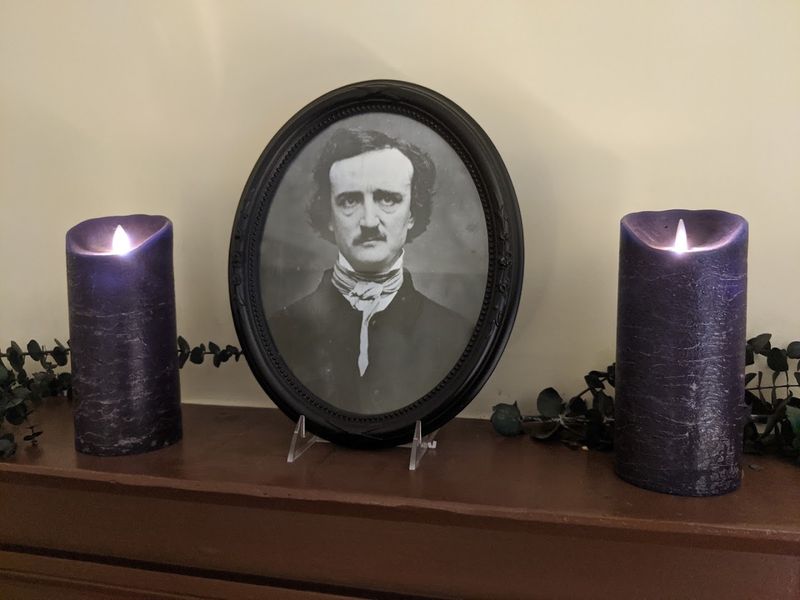
The four days Poe spent at Washington College Hospital were marked by a kind of suffering that no one around him fully understood. Dr. John J.
Moran, the attending physician, reported that Poe was largely incoherent from the start. He spoke to things no one else could see and repeatedly called out for someone named “Reynolds,” a name that has puzzled researchers ever since.
Tremors, extreme delirium, and periods of unconsciousness cycled through him without relief. During one of his more lucid moments, his face was described as pale and drenched in sweat.
He could not explain where he had been or what had happened to him, and the gaps in his memory seemed total.
Dr. Moran’s accounts have been questioned over the years because he published conflicting versions of the story at different times, making it difficult to know exactly what was observed. What is agreed upon is that Poe’s condition was severe and deteriorated steadily.
Early on the morning of October 7, 1849, he passed away at the age of 40. His final words were reportedly “Lord, help my poor soul.”
Baltimore newspapers listed the cause of death as “congestion of the brain” or “cerebral inflammation,” phrases that were frequently used at the time as vague stand-ins for causes that doctors either could not identify or chose not to name directly.
No death certificate has ever surfaced. The official record ends there, incomplete and unsatisfying, just like the mystery itself.
The Endless Enigma, Theories of a Fated End
The debate over what actually killed Edgar Allan Poe has never quieted down, and honestly, that feels fitting. One of the most widely discussed explanations is “cooping,” a form of election fraud common in 19th-century Baltimore.
The theory goes that victims were grabbed off the street, forced into a stupor, dressed in disguise, and made to vote repeatedly at different polling stations. Poe was found near a polling location on Election Day wearing someone else’s clothes, which makes this theory hard to dismiss entirely.
Alcoholism has also been proposed repeatedly. Dr. Snodgrass, who saw Poe at the scene, believed drink was involved.
But Dr. Moran later stated there was no smell of alcohol on Poe at the hospital, and Poe had reportedly joined a temperance society shortly before his death. The timeline of his illness also does not quite fit a straightforward case of withdrawal.
A cardiologist proposed in 1996 that rabies may have been responsible, pointing to Poe’s delirium, fluctuating consciousness, and what some records suggest was a sensitivity to water.
Other theories have included cholera, hypoglycemia, syphilis, a brain tumor, carbon monoxide poisoning, and heavy metal poisoning.
The list is almost as long as Poe’s bibliography. Each theory has its supporters, and none has been definitively proven.
What remains is a puzzle that mirrors the very kind of story Poe himself would have loved to tell, intricate, unsettling, and without a clean resolution.
Echoes in the Walls, Lingering Spirits
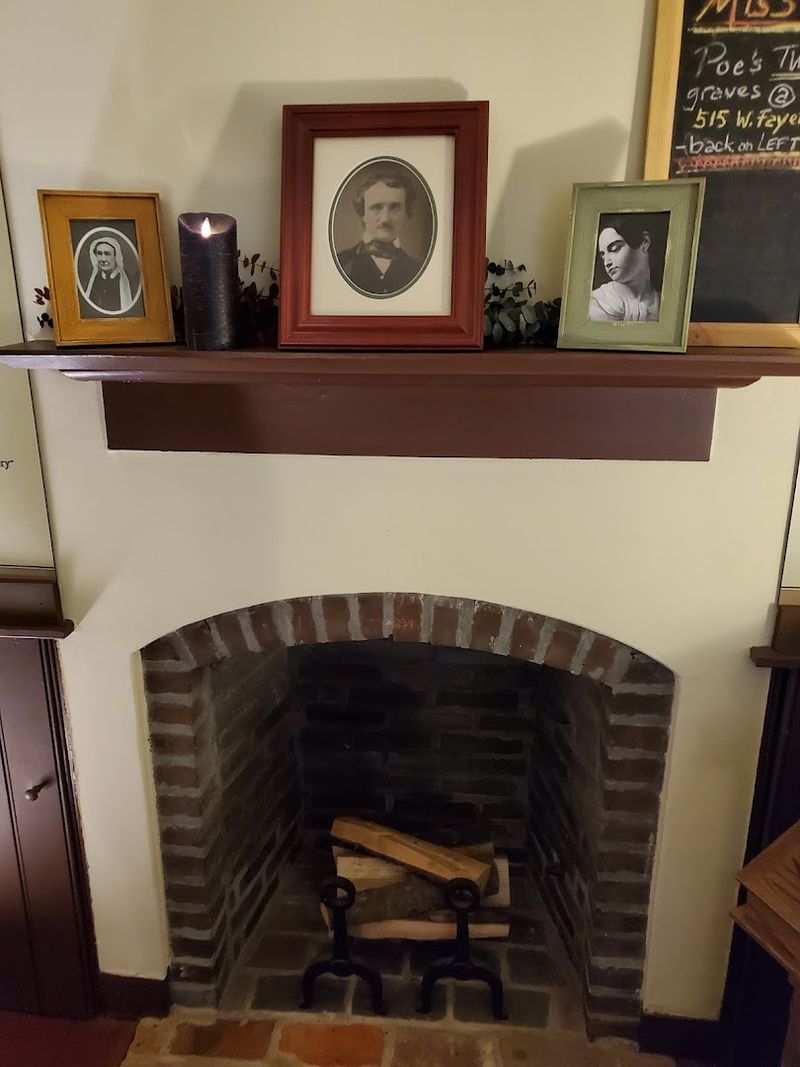
Some places carry a heaviness that goes beyond history, and the Poe House is one of them. It is hard to explain precisely, but there is a quality to the air inside those rooms that feels different from ordinary old buildings.
Maybe it is the low ceilings pressing down, or the way sound seems to get absorbed by the old plaster walls. Whatever the cause, a lot of visitors have walked out of there with stories they did not expect to be telling.
The most frequently reported presence is known as the “Lady in Gray.”
Multiple visitors over the years have described being touched by unseen hands, often followed by a sharp and unexplained drop in temperature. It is the kind of thing that is easy to dismiss until you are standing in that narrow hallway yourself.
There are also accounts of a dark, brooding shadow that some believe to be Poe himself, restless and unresolved, still occupying the space where his story began. It is a little on the nose, perhaps, that the master of gothic horror might haunt his own former home.
But the atmosphere of the Poe House genuinely supports those stories in a way that feels organic rather than manufactured. The tight stairways, the dim light, the sense of compression in every room: it all adds up to something that is hard to shake.
Whether you believe in hauntings or not, the house has a presence that stays with you long after you leave.
Baltimore’s Poetic Embrace, A Legacy Honored
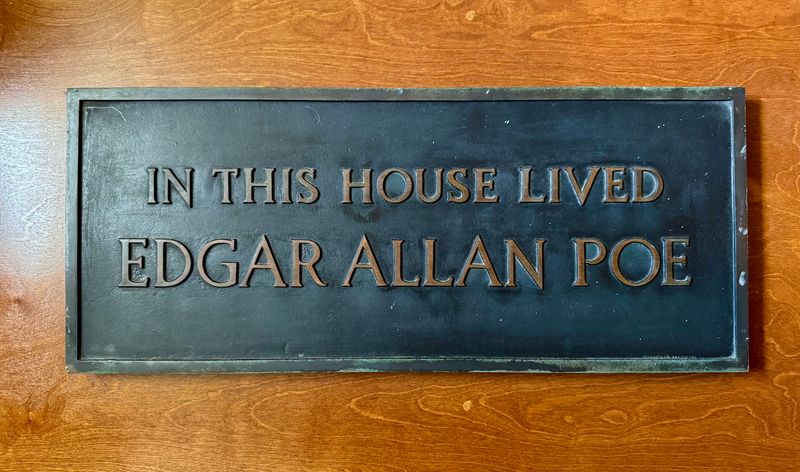
Baltimore holds Poe in a way that few cities hold their literary figures. He was born in Boston and spent significant time in Richmond, but Baltimore claimed both the start and the finish of his story.
The city has leaned into that connection with real enthusiasm, and not just through the Poe House itself.
The most famous example is the Baltimore Ravens, the NFL team whose name was directly inspired by Poe’s most celebrated poem. That is a rare kind of cultural homage, a city naming its sports franchise after a dead writer’s most iconic work.
It says something about how deeply Poe is woven into Baltimore’s identity.
Westminster Hall and Burying Ground is another essential stop for anyone tracing Poe’s Baltimore legacy. That is where he is interred alongside Virginia and Maria Clemm, in a churchyard that carries its own reputation for strange occurrences.
For decades, an anonymous figure known as the “Poe Toaster” appeared at his grave each January to leave three red roses and a small tribute, a tradition that captivated people around the world precisely because no one ever discovered who was behind it.
The Edgar Allan Poe House and Museum is managed by Poe Baltimore, a dedicated nonprofit that keeps the stories alive.
In 2020, the house became Maryland’s first designated Literary Landmark. Baltimore does not just remember Poe; it actively tends to his memory, making sure the mystery and the genius remain inseparable parts of the city’s character.
Address: 203 N Amity St, Baltimore, MD 21223
