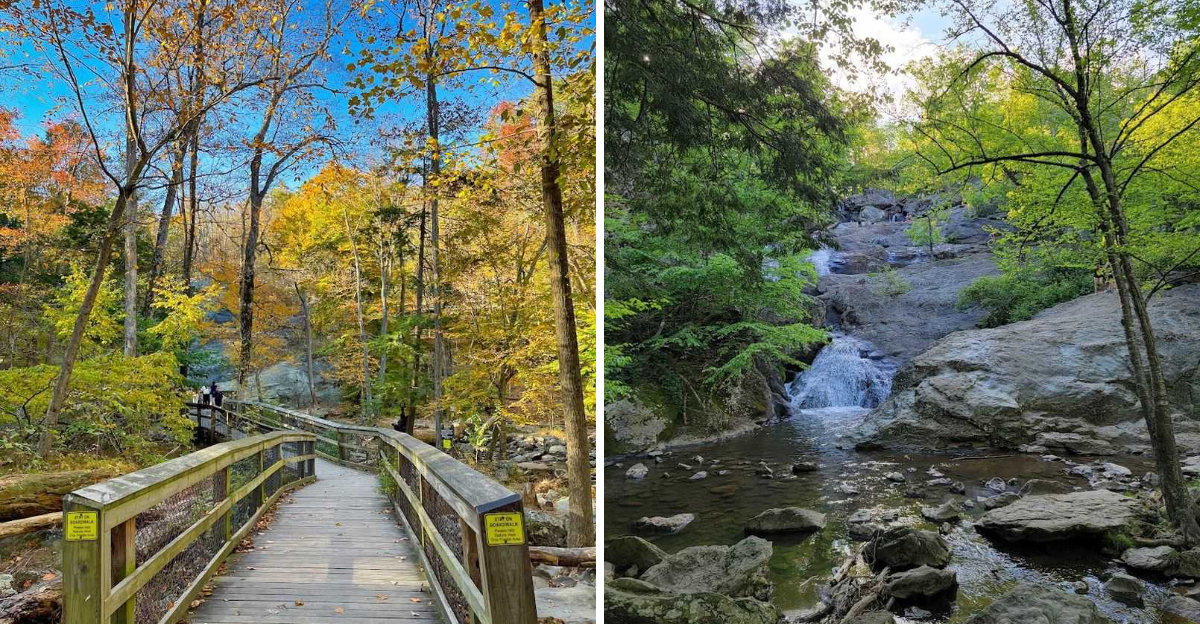
You know that hiking fantasy where you get a stunning waterfall without breaking a sweat? This one actually delivers.
Exactly ten minutes from the car, your feet hit the trail, and then suddenly you are standing under falling water like a shampoo commercial. No climbing gear.
No overnight backpack. No crying into a granola bar halfway up a mountain.
It is the perfect lazy adventurer’s dream and the ultimate “I went outside today” flex. Just park, walk, get soaked, and leave before anyone asks if you actually earned it.
Honestly, this is how all nature should work.
Cunningham Falls: Maryland’s Tallest Cascading Waterfall
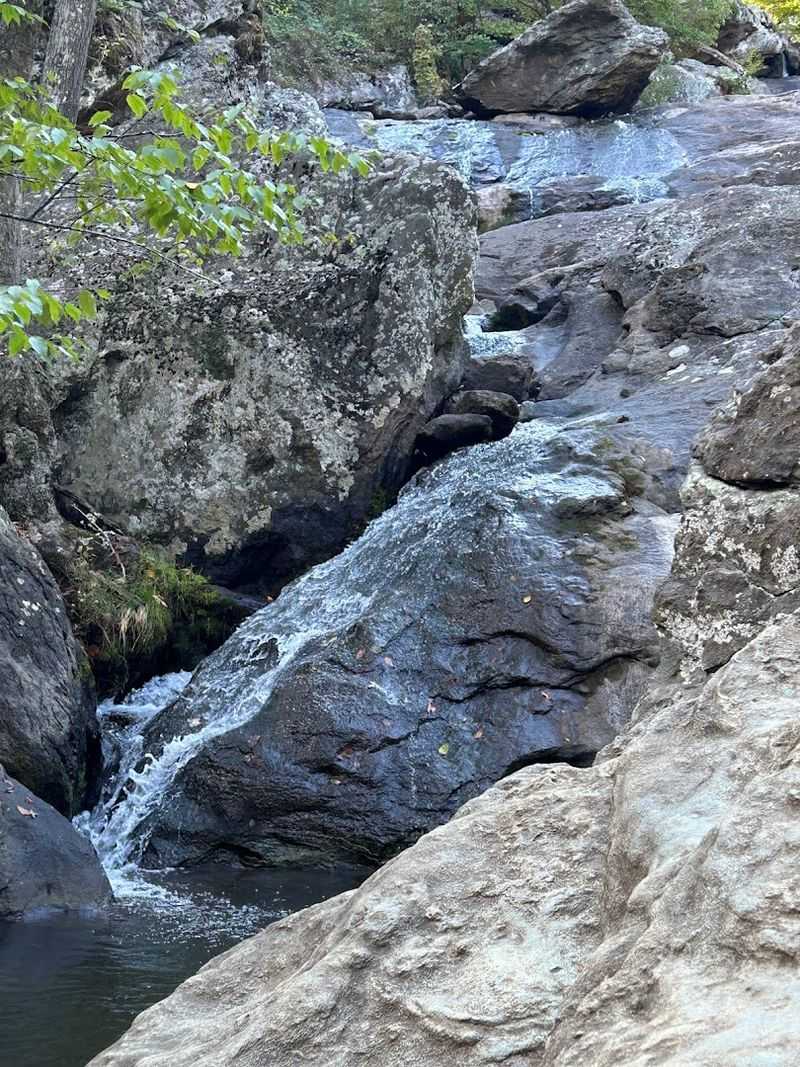
Most people do not realize that Maryland is hiding a waterfall this impressive until they are already standing in front of it. Cunningham Falls drops a total of 78 feet, making it the tallest cascading waterfall in the entire state.
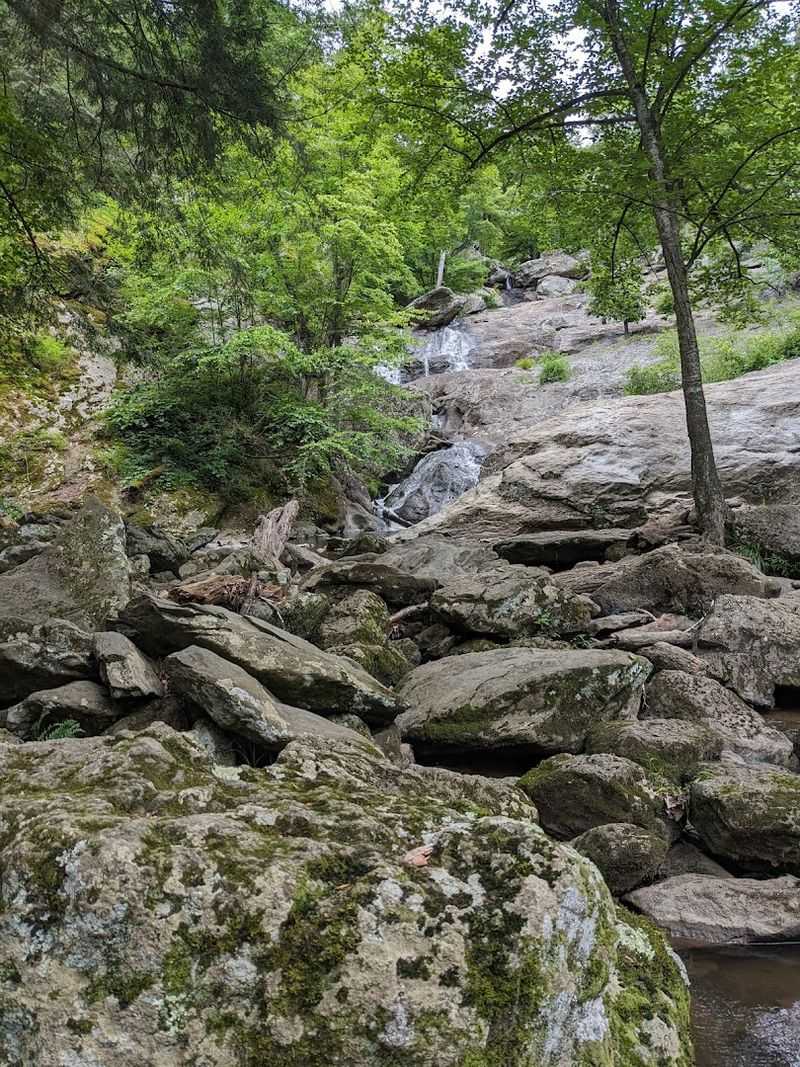
It is not a single dramatic plunge, but a series of steep slides and shelves that carry Hunting Creek downward over layered rock in a way that feels almost choreographed by nature.
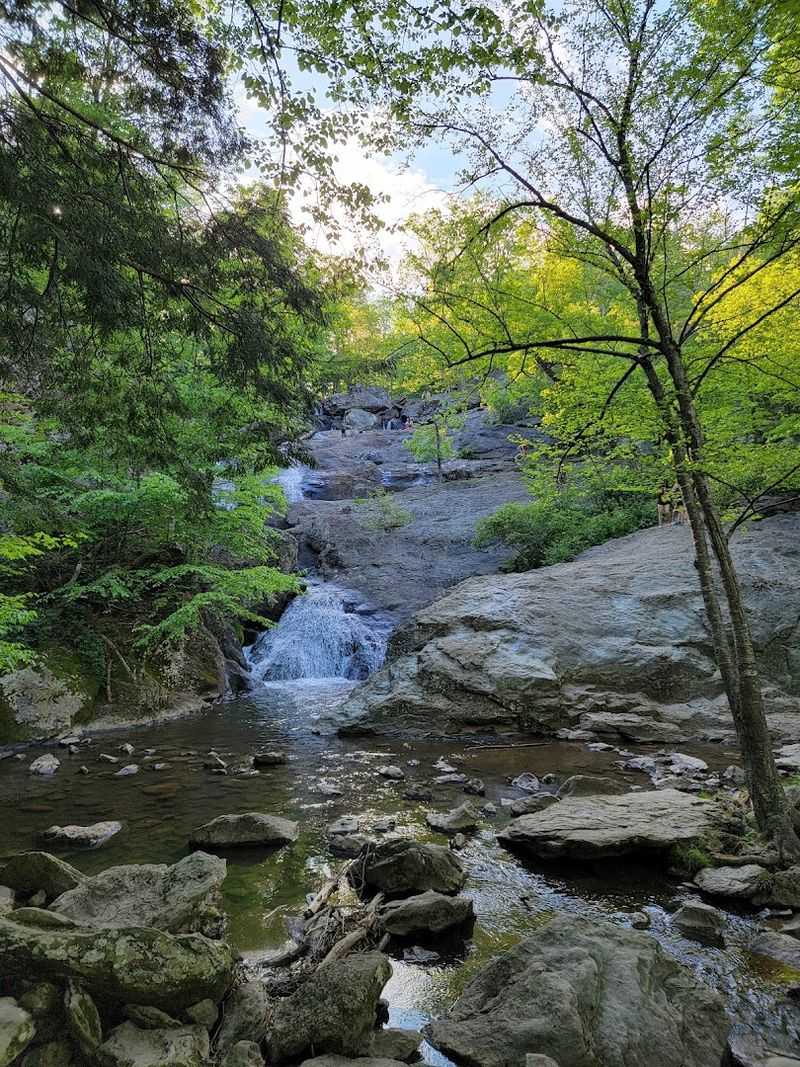
The sound builds before the view does. You hear the rush and tumble of water somewhere ahead, and then the trees thin out just enough to reveal it.
The cascade fans wide across the rock face, catching light in different ways depending on the time of day and the season.
Spring tends to bring the strongest flow, when snowmelt and rain fill Hunting Creek to its edges. During drier summer stretches, the water runs thinner but the falls still hold their shape and charm.
The shallow pool at the base reflects the surrounding forest, making the whole scene feel like a painting that changes every single time you visit. It is one of those spots that rewards repeat trips without ever feeling repetitive.
The Lower Trail: Your 10-Minute Path to the Falls
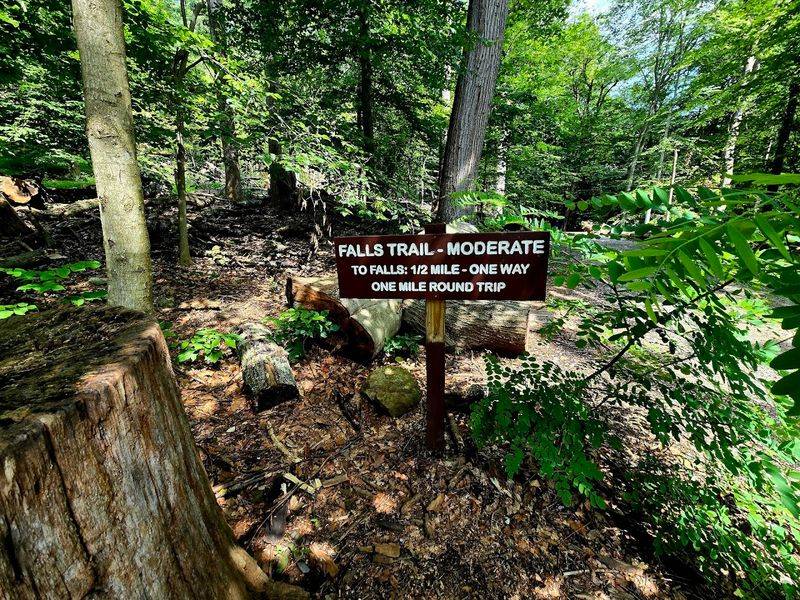
The Lower Trail is the kind of path that makes you feel like you planned perfectly. Starting from the main parking area, the trail runs about half a mile and most people cover it in roughly ten minutes at a relaxed pace.
It is graded as easy to moderate, which means almost anyone in your group can handle it without breaking a serious sweat.
Gravel crunches underfoot as you move through a canopy of mixed hardwoods. Benches are placed at natural rest points along the route, and interpretive signs pop up to share small facts about the local ecosystem, the geology of the falls, and the history of the park.
These little details make the walk feel less like a commute and more like an introduction.
Families with young kids tend to do really well on this trail. The surface is firm enough for strollers in decent condition, and the distance is short enough to keep restless energy in check.
Even on busier weekend mornings, the trail has a calm, almost meditative quality to it. Getting to a waterfall this beautiful this quickly still surprises me every single time.
The Boardwalk Trail: An Accessible Route to the Overlook
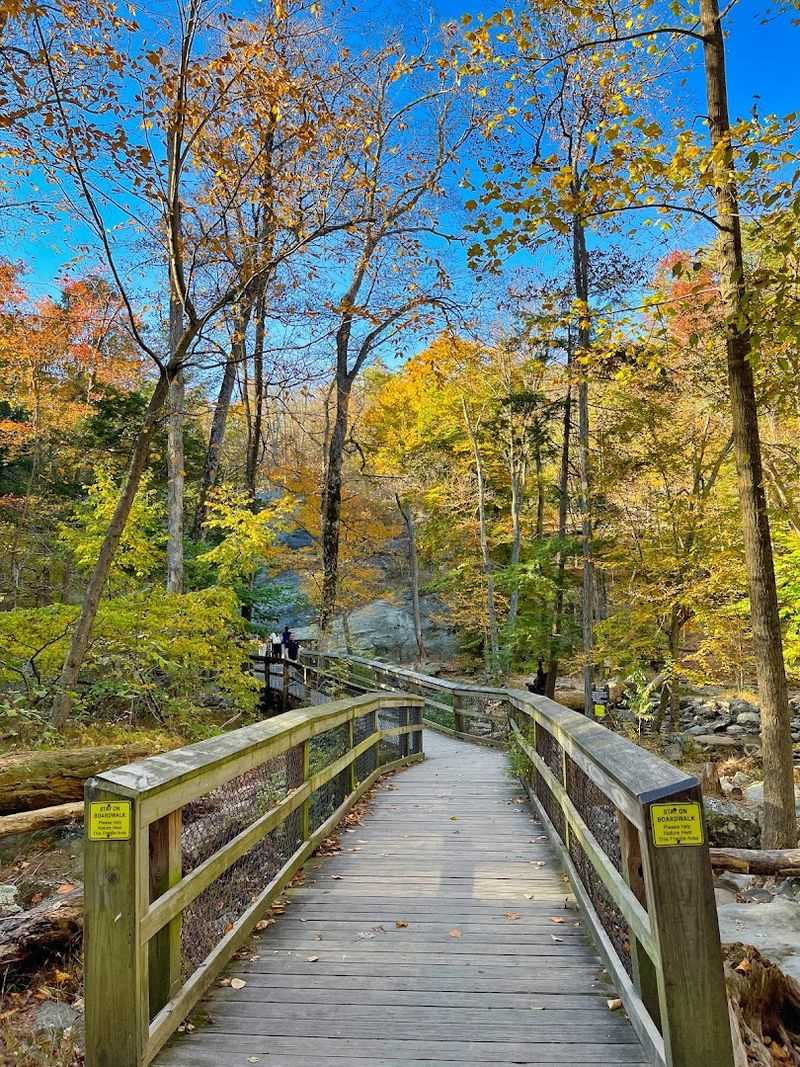
Not every path to a beautiful waterfall needs to be rugged. The Boardwalk Trail at Cunningham Falls State Park offers a 0.2-mile wheelchair-accessible route that leads to a dedicated overlook of the falls.
It connects to a handicap-only parking lot off Foxville Road, making it one of the most thoughtfully designed accessible nature experiences in Maryland.
The overlook gives you a clear, unobstructed sightline to the cascade without requiring any climbing or uneven terrain. For visitors with mobility considerations, this trail genuinely changes what is possible.
It is also a great option for anyone traveling with a stroller, or simply someone who wants a shorter, calmer approach to the view.
What I appreciate most about this trail is that it does not feel like a consolation route. The overlook itself is positioned well, framing the falls in a way that feels intentional and generous.
Trees arch overhead, the sound of the water carries clearly, and on quieter mornings the whole scene has a stillness to it that the busier Lower Trail sometimes lacks. Accessibility done right does not diminish the experience.
Here, it genuinely enhances it for everyone who uses it.
Hunting Creek: The Water Source Behind the Falls
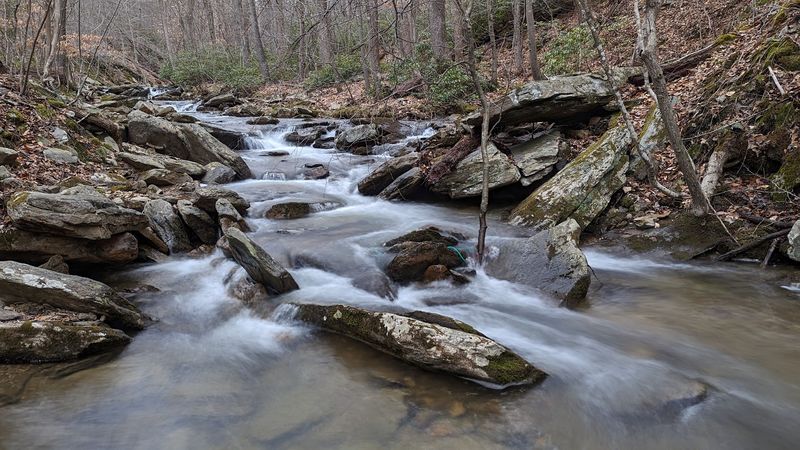
Every waterfall needs a source, and for Cunningham Falls, that source is Hunting Creek. This mountain stream winds through the Catoctin range, gathering water from the surrounding slopes before funneling it toward the falls and eventually into Hunting Creek Lake below.
The creek itself is worth paying attention to as you walk the Lower Trail, since it runs alongside parts of the path and gives you a preview of what is coming.
During spring, Hunting Creek runs fast and full, and the falls reflect that energy with a strong, wide cascade. In late summer, lower rainfall means the creek drops in volume, and the falls become narrower, though no less beautiful.
The change in flow actually shows you the geology of the falls more clearly when the water is thin, revealing the layered rock structure underneath.
The creek also supports a quiet but active ecosystem. Salamanders, crayfish, and various aquatic insects make their home in the cold, clear water.
Birdwatchers sometimes spot Louisiana waterthrushes working the stream edges for food. Hunting Creek is not just the engine behind the falls.
It is its own living corridor through the forest, full of small details that reward anyone patient enough to slow down and look.
Safety Rules at the Falls: What You Need to Know Before You Go
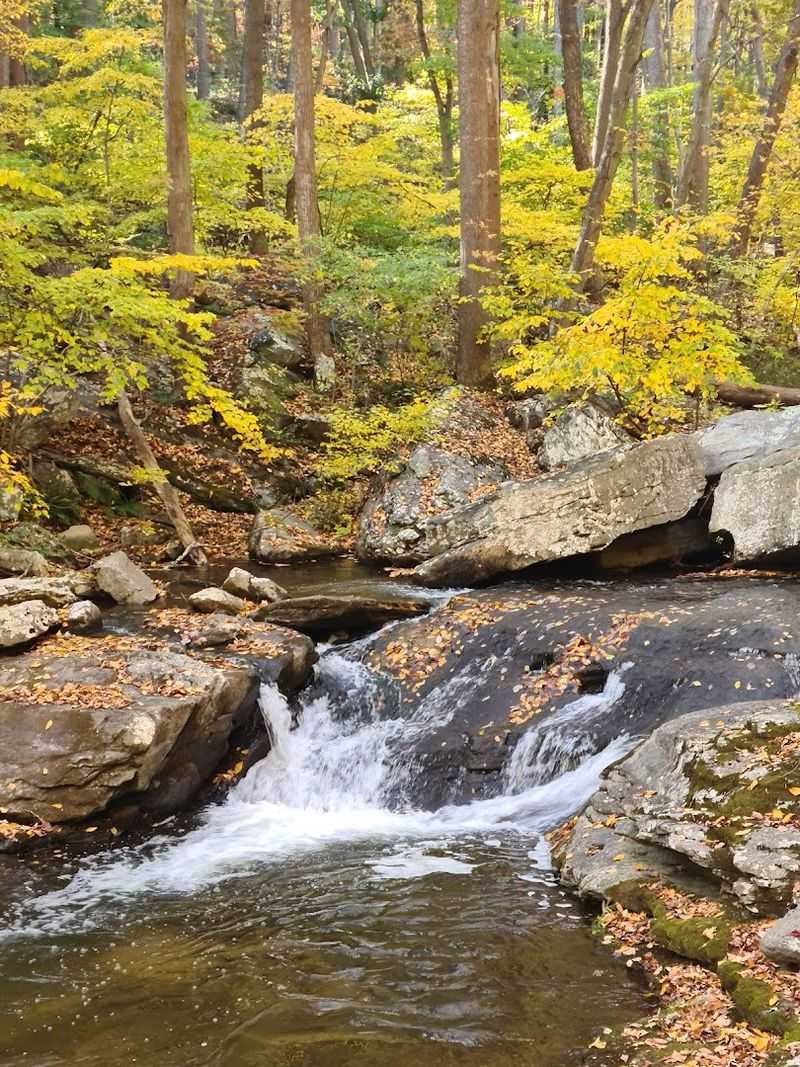
Here is something the park makes very clear, and it is worth knowing before you arrive: climbing on the rocks at Cunningham Falls is prohibited. Swimming in and around the base of the falls is also not permitted.
These rules exist because the rocks are consistently wet, often covered in algae, and significantly more slippery than they look from a few feet away. Accidents at the falls have happened over the years, and the park’s current policies are a direct response to that history.
Signs near the falls spell this out plainly. Rangers do patrol the area, especially on busy weekends.
The rules are not there to take away from the experience. They are there to make sure visitors leave the same way they arrived.
The good news is that the view from the approved vantage points is genuinely excellent. You do not need to be on top of the falls to appreciate them.
The Lower Trail brings you close enough to feel the mist on a high-flow day and hear every detail of the cascade. Respecting the boundaries here is part of what keeps the falls accessible and intact for the next person who makes the ten-minute walk down to see them.
The Catoctin Mountains: The Wild Setting Around the Falls
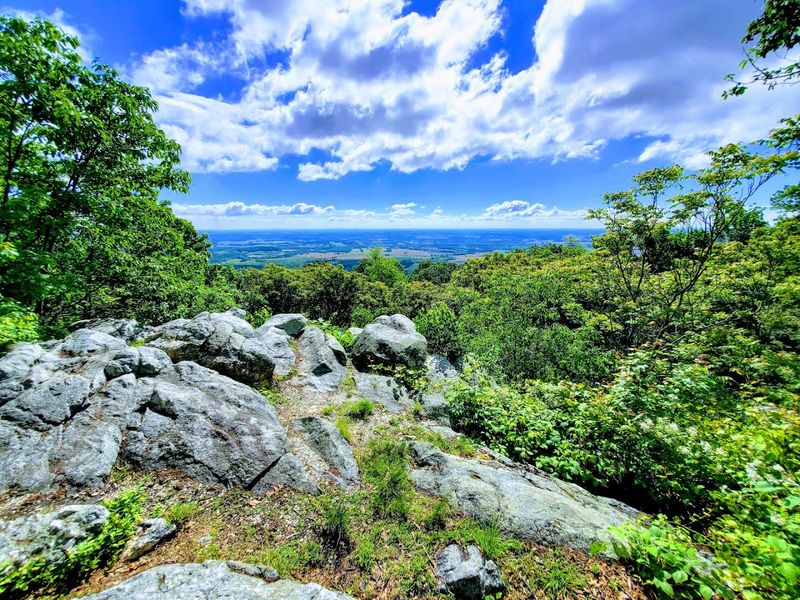
The Catoctin Mountains do not get the national attention they deserve, and that is honestly part of their charm. This range in north-central Maryland sits within a broader landscape that includes Catoctin Mountain Park, a separate federally managed area that shares a border with Cunningham Falls State Park.
Together, they form a continuous stretch of forested ridges, rocky outcrops, and quiet hollows that feel genuinely remote despite being less than two hours from Washington, D.C.
The geology here is old. The rocks that form Cunningham Falls are a type of greenstone, part of a volcanic formation that dates back hundreds of millions of years.
That layered, ancient quality shows in the texture of the falls themselves, where the water has carved smooth channels into stone that has been in place far longer than anyone can fully imagine.
Fall is when the Catoctins really show off. The mixed hardwood forest turns shades of amber, rust, and gold across the hillsides, and the contrast against the dark rock of the falls creates a scene worth photographing from every angle.
Even winter has its appeal, when cold temperatures occasionally create ice formations along the edges of the cascade. Every season here has its own personality.
Wildlife Watching Near the Falls and Along the Trail
One of the quieter rewards of the walk to Cunningham Falls is what you might spot along the way if you move slowly and keep the noise down.
White-tailed deer are common throughout the park, and early morning visitors on the Lower Trail sometimes catch them grazing near the creek bank before the crowds arrive.
They tend to hold still and watch you before disappearing into the understory.
The forest around the falls supports a healthy population of songbirds, especially during spring migration. Warblers move through in waves during May, and the mix of creek habitat and mature woodland creates ideal conditions for species like the ovenbird and the red-eyed vireo.
Birders with a good ear can identify several species without ever leaving the trail.
Black bears do live in the Catoctin Mountains, and while sightings near the falls are uncommon, they are not impossible. The park recommends standard wildlife awareness practices, which mostly come down to not leaving food unattended and making reasonable noise on the trail.
Reptiles also appear on sunnier days, with fence lizards and garter snakes occasionally visible on warm rocks near the water. The trail rewards patience in ways that the destination alone cannot.
Best Times to Visit Cunningham Falls State Park
Timing your visit to Cunningham Falls makes a real difference in what you experience. Spring is widely considered the best season for the falls themselves, since snowmelt and April rains push Hunting Creek to its fullest volume and the cascade runs wide and loud across the full width of the rock face.
Wildflowers also bloom along the trail during this period, adding color to the forest floor that is easy to miss if you are only looking ahead toward the water.
Summer brings larger crowds, particularly on weekends when the lake swimming area draws families from across the region. Arriving early on a summer morning, before ten o’clock, gives you the trail and the falls in relative quiet.
The water level tends to drop as summer progresses, but the falls remain photogenic and the walk stays enjoyable.
Fall is the season that surprises first-time visitors most. The foliage along the Lower Trail turns brilliant in October, and the combination of autumn color and moving water is hard to beat for photography or just a long, unhurried look.
Winter visits are less common, but the park stays open year-round, and a cold, still morning at the falls has a stark beauty that the busier seasons simply cannot replicate.
William Houck Area: The Hub of the Park Experience
The William Houck Area is where most visitors begin their day at Cunningham Falls State Park. It serves as the central launch point for the trails, the lake, and the falls themselves.
Pulling into the parking lot on a clear morning, with the smell of pine and creek water already in the air, sets the mood immediately.
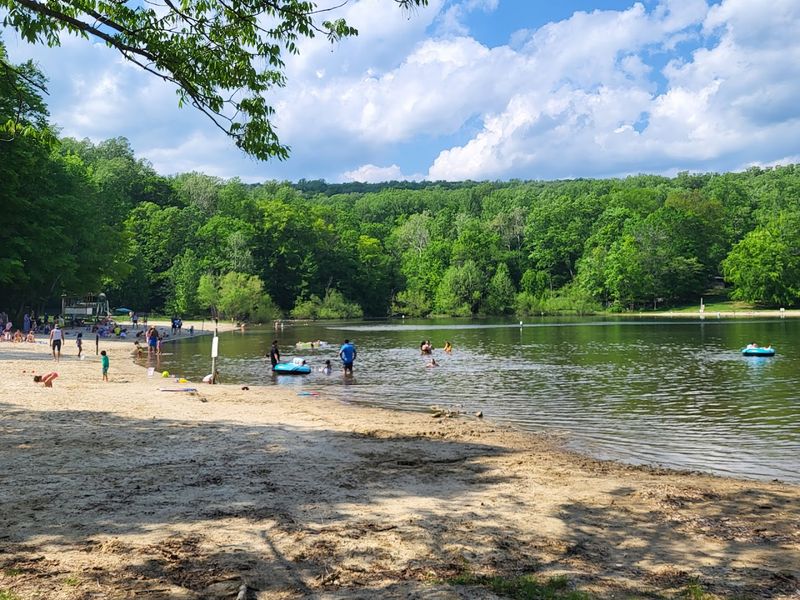
Beyond the trailhead, this area includes Hunting Creek Lake, a man-made lake that was created decades ago and now functions as a popular swimming and fishing spot during warmer months. The lake has a designated swimming area with a sandy shoreline that families tend to claim early on summer weekends.
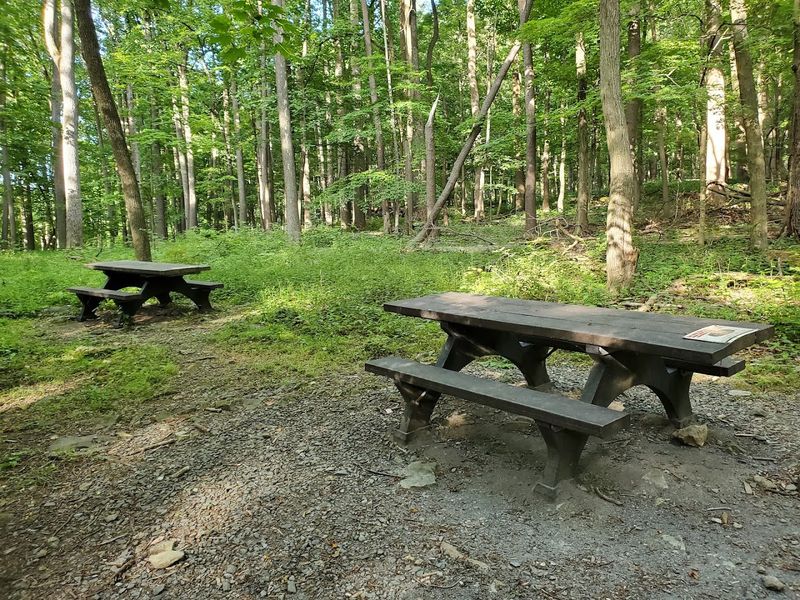
Picnic tables are spread throughout the shaded sections nearby, making it easy to stay for most of the day.
The layout of the William Houck Area is thoughtfully organized. Restrooms are available near the parking lot, which is a detail you genuinely appreciate after a hike.
Rangers and park staff are often present and happy to answer questions about trail conditions or wildlife sightings. This whole area manages to feel both well-maintained and refreshingly unhurried at the same time.
Practical Tips for Planning Your Visit to Cunningham Falls
A little preparation goes a long way at Cunningham Falls State Park. The parking area in the William Houck Area fills up quickly on summer weekends and fall foliage weekends, so arriving before nine in the morning on those days is genuinely smart advice.
The park charges a day-use fee, which varies by season, and is payable at the entrance. Bringing cash as a backup is a good habit even if card payment is available.
Footwear matters more than most people expect. The Lower Trail is gravel and relatively flat, but the area near the base of the falls involves uneven rocks and wet surfaces.
Sneakers with decent grip work fine for the trail itself. Sandals are a regrettable choice once you get close to the water.
Pack water, especially in warmer months. The walk is short, but the day tends to stretch when the park is this enjoyable, and staying hydrated keeps everything more comfortable.
Cell service in the William Houck Area is generally decent, but downloading a trail map before you leave home removes any uncertainty. The park’s address for navigation is 14274 William Houck Dr, Thurmont, MD 21788, and most mapping apps route you there accurately from major highways.
