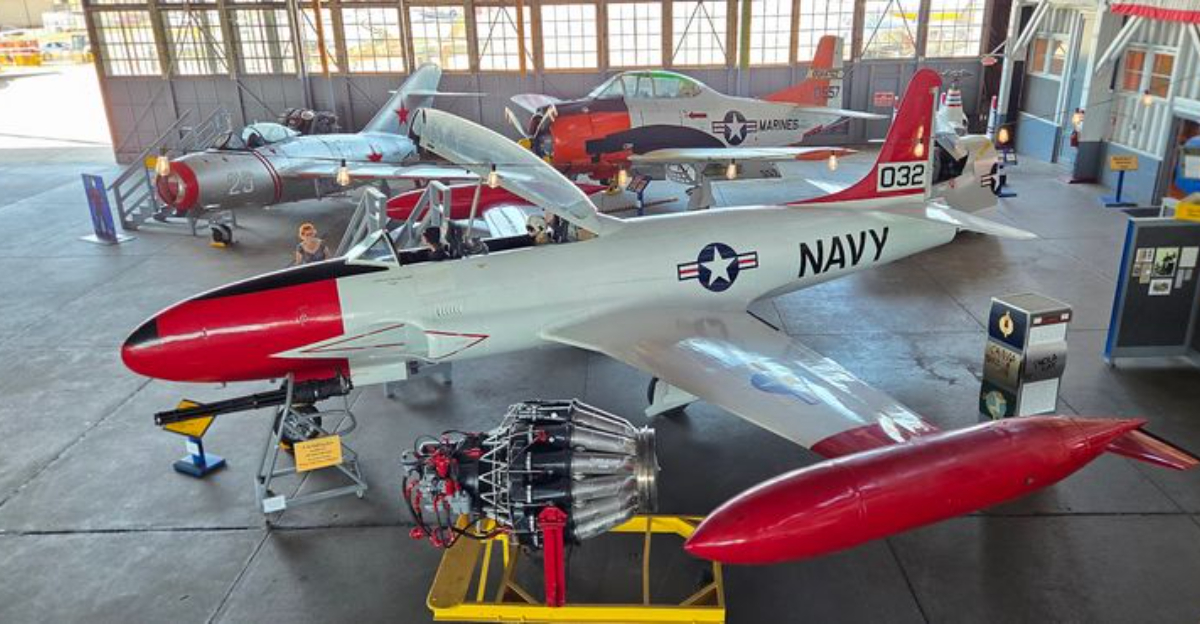
New Jersey’s got a hangar so massive it feels like a time capsule from the 1940s.
WWII aircraft line the space, each one looking like it could still thunder into the sky.
Ever stood beneath wings that practically whisper stories of dogfights and daring missions?
The scale alone makes you feel small, but the history makes the place larger than life.
It’s another reminder that Jersey doesn’t just serve epic eats; it also serves up epic aviation history.
Hangar No. 1: The Historic Wooden Giant
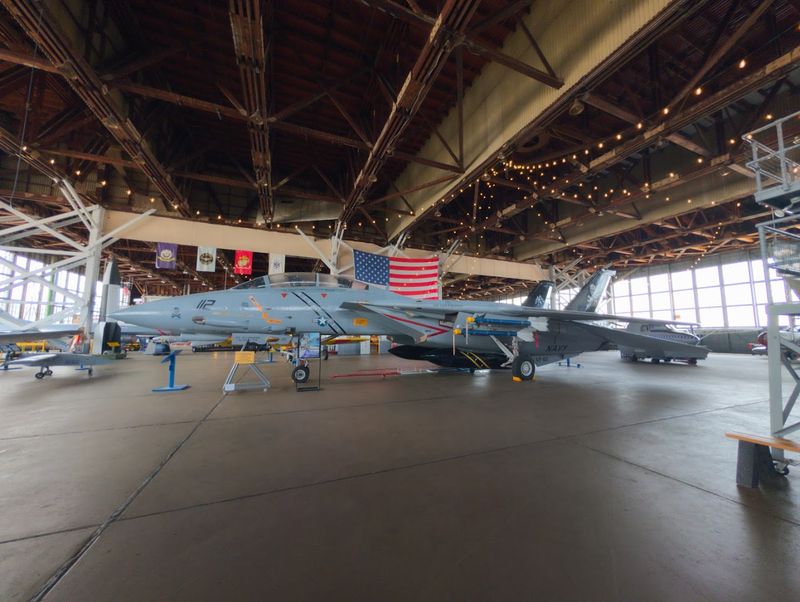
Standing inside Hangar No. 1 for the first time feels like stepping into a living piece of American history.
Built between 1942 and 1943, this enormous wooden structure was deliberately designed without steel, conserving that precious resource for other wartime needs.
The result is an architectural marvel that somehow feels both rugged and graceful at the same time.
The hangar stretches wide enough to hold multiple full-size aircraft with plenty of room to walk around each one. Its wooden framework arches overhead in a way that almost looks impossible, like someone dared engineers to build something this big out of lumber.
It is listed on the National Register of Historic Places, which tells you everything about its significance.
Visiting feels less like touring a museum and more like being invited into a moment frozen in time. Every beam and plank carries the weight of history.
The sheer scale of the building alone is worth the trip to Cape May Airport before you even look at a single aircraft.
Grumman TBM Avenger: The Torpedo Bomber That Ruled the Pacific
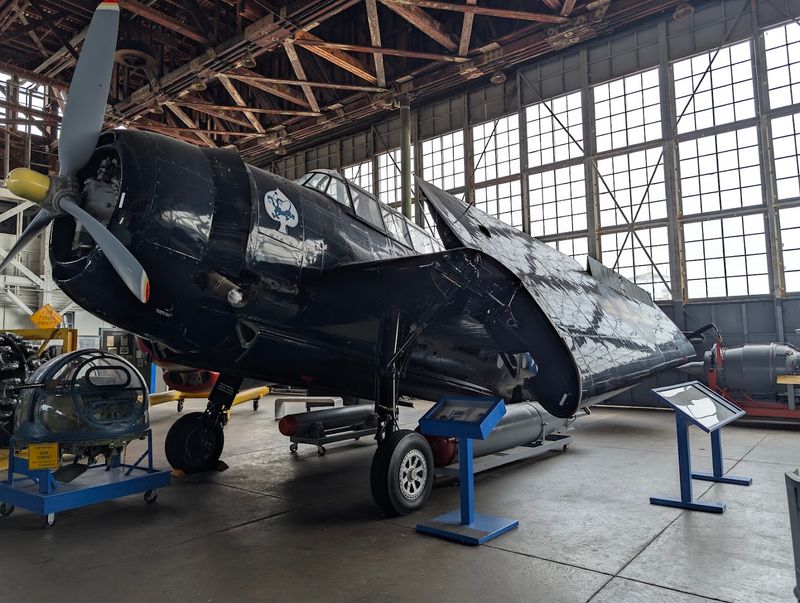
Few aircraft in the Pacific theater carried as much responsibility as the Grumman TBM Avenger, and seeing one up close makes that responsibility feel very real.
This torpedo bomber was the backbone of Navy strike operations, flying missions that changed the outcome of some of the war’s most critical battles.
It is a big, sturdy machine, and standing next to it, you understand why crews trusted it so completely.
The Avenger’s design is all business. Wide wings, a deep fuselage built to carry a torpedo, and a cockpit that looks both purposeful and cramped in equal measure.
Knowing that young pilots climbed into this exact type of aircraft before heading out over open ocean adds a layer of quiet respect to every glance.
At the museum, you can walk around the aircraft and appreciate how well it has been preserved. The paint, the markings, the overall condition all reflect the care the museum puts into honoring these machines.
It is genuinely one of the most compelling exhibits in the entire hangar.
Grumman F6F-3 Hellcat: The Fighter That Changed Everything
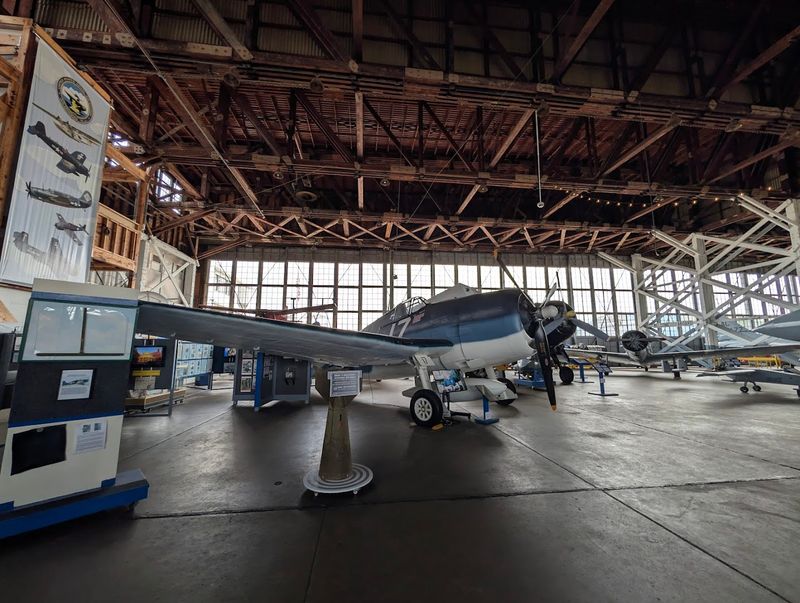
The Grumman F6F-3 Hellcat has a reputation that precedes it by about eighty years. Designed specifically to outperform the Japanese Zero, this carrier-based fighter turned the tide of air combat in the Pacific and became one of the most celebrated aircraft of the entire war.
Getting to stand next to the actual thing is a genuinely jaw-dropping moment.
What strikes you immediately is how solid it looks. Wide landing gear, a thick fuselage, and a massive radial engine up front give it a presence that photographs simply cannot capture.
The Hellcat looks like it means business from every angle, and its combat record absolutely backs that up.
Museum visitors often linger around this aircraft longer than others, and it is easy to understand why. The details are fascinating, from the wing fold mechanism designed for carrier storage to the gun ports in the wings.
This is not just a pretty exhibit. It is a machine that genuinely shaped history, and the museum does a wonderful job of telling that story with care and accuracy.
Grumman F-14B Tomcat: The Icon That Still Turns Heads
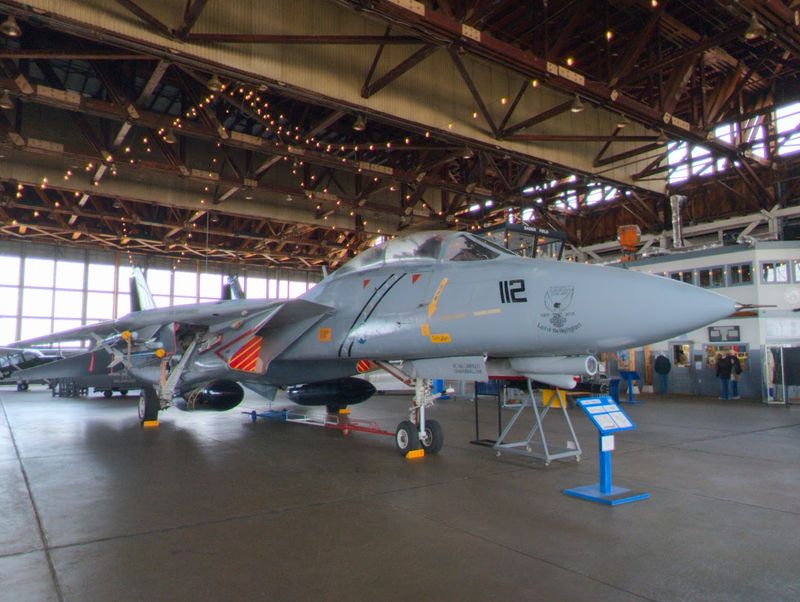
Some aircraft just have a presence that makes everything else in the room fade into the background, and the Grumman F-14B Tomcat is absolutely one of them.
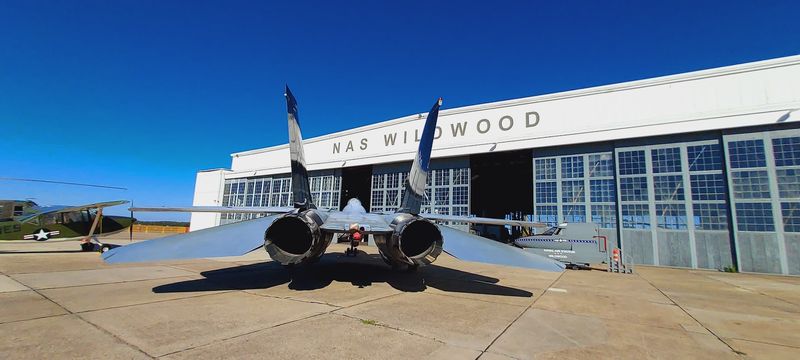
This supersonic, twin-engine, variable-sweep wing fighter jet is enormous in person, and its swept-wing silhouette is instantly recognizable to anyone who grew up watching it fly.
Seeing it parked inside the hangar feels almost surreal.
The F-14 served the U.S. Navy for decades and became a cultural icon, so there is a particular thrill in being close enough to examine the cockpit, the engine intakes, and the sheer length of the aircraft.
The variable-sweep wings alone are a mechanical wonder worth studying for several minutes. It is one of those machines that makes engineering feel like art.
Kids and adults alike tend to stop and stare at this one with wide eyes. The scale of the aircraft surprises almost everyone who sees it for the first time in person.
It is a highlight of the collection and a reminder of how far aviation technology advanced between the WWII era and the late twentieth century.
MiG-15: The Soviet Jet That Shocked the West
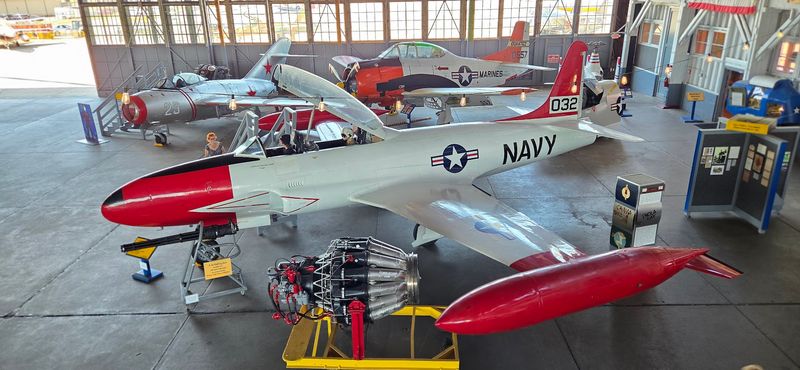
Walking up to the MiG-15 inside the museum is one of those unexpectedly fascinating moments that sneaks up on you.
This Soviet jet fighter was a genuine shock to Western pilots when it appeared during the Korean War, outperforming most aircraft it encountered and forcing a rapid rethink of American air strategy.
Seeing it here, in a New Jersey hangar, carries a certain irony that makes it all the more interesting.
The design is sleek and purposeful, with swept wings and a nose intake that give it an almost predatory look. Soviet engineering took a different approach than American designers, and the differences are visible in every line of the aircraft.
It is a fascinating contrast to the WWII-era planes nearby.
Having a MiG-15 in this collection adds real depth and context to the museum’s story of aviation history. Air power did not stop evolving when WWII ended, and this aircraft is a powerful reminder of how quickly the world changed in the years that followed.
It is an unexpected treasure that rewards curious visitors who take a moment to learn its story.
Bell AH-1 Cobra: The Attack Helicopter Up Close
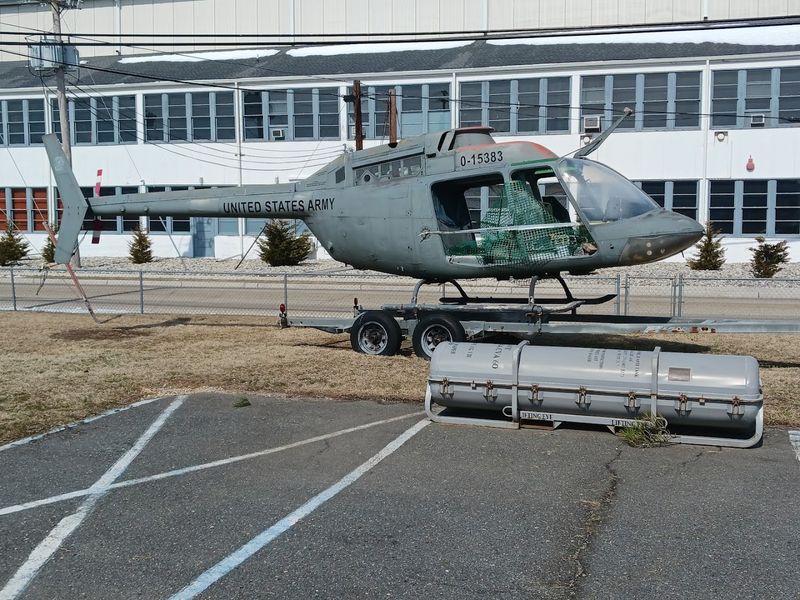
There is something almost predatory about the Bell AH-1 Cobra that becomes very clear the moment you walk up beside it.
Designed to be as narrow as possible to reduce its target profile, this attack helicopter looks like it was built with a single purpose in mind and nothing else was allowed to get in the way.
It is lean, angular, and surprisingly compact for a machine with such a fierce reputation.
The Cobra entered service during the Vietnam era and became one of the most important military helicopters in American history. Its tandem seating, with the pilot and gunner sitting one behind the other, contributes to that razor-thin silhouette that makes it so visually striking.
Up close, the weapons systems and the cockpit design tell a story of serious engineering under serious pressure.
Placing this helicopter in context with the WWII aircraft around it shows visitors just how dramatically military aviation evolved across a few short decades. From propeller-driven dive bombers to this sleek, purpose-built attack machine is a journey worth taking.
The Cobra earns its spot in the collection without question.
Interactive Flight Simulators: Where You Actually Get to Fly
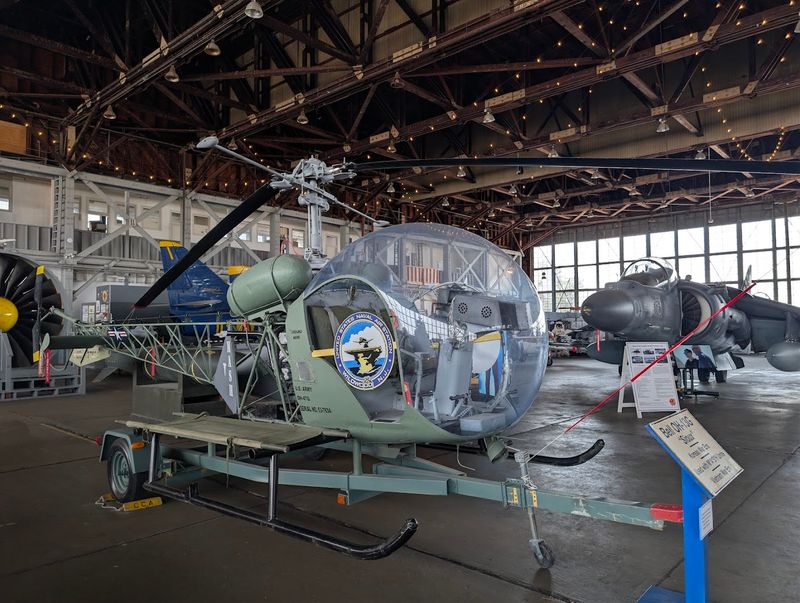
Most museum visits are about looking, but the flight simulators here flip that completely and let you actually do something.
Climbing into a simulator and taking the controls, even for just a few minutes, transforms the whole experience from observation into participation.
It is the kind of hands-on moment that makes a visit genuinely memorable rather than just educational.
Kids absolutely love this part, though adults tend to be just as reluctant to give up their turn. The simulators give you a real sense of what it feels like to manage an aircraft, and suddenly all those displays of cockpits and instrument panels in the hangar start to make a lot more sense.
Context lands differently when you have held the controls yourself.
The museum does a smart thing by pairing interactive experiences like these with its historical exhibits. Learning about WWII pilots is one thing.
Sitting in a simulator and realizing how much skill and nerve those pilots needed is something else entirely. It adds a layer of genuine appreciation that sticks with you long after you leave the hangar and drive away from Cape May Airport.
The Real Air Traffic Control Tower: A View Worth Climbing For
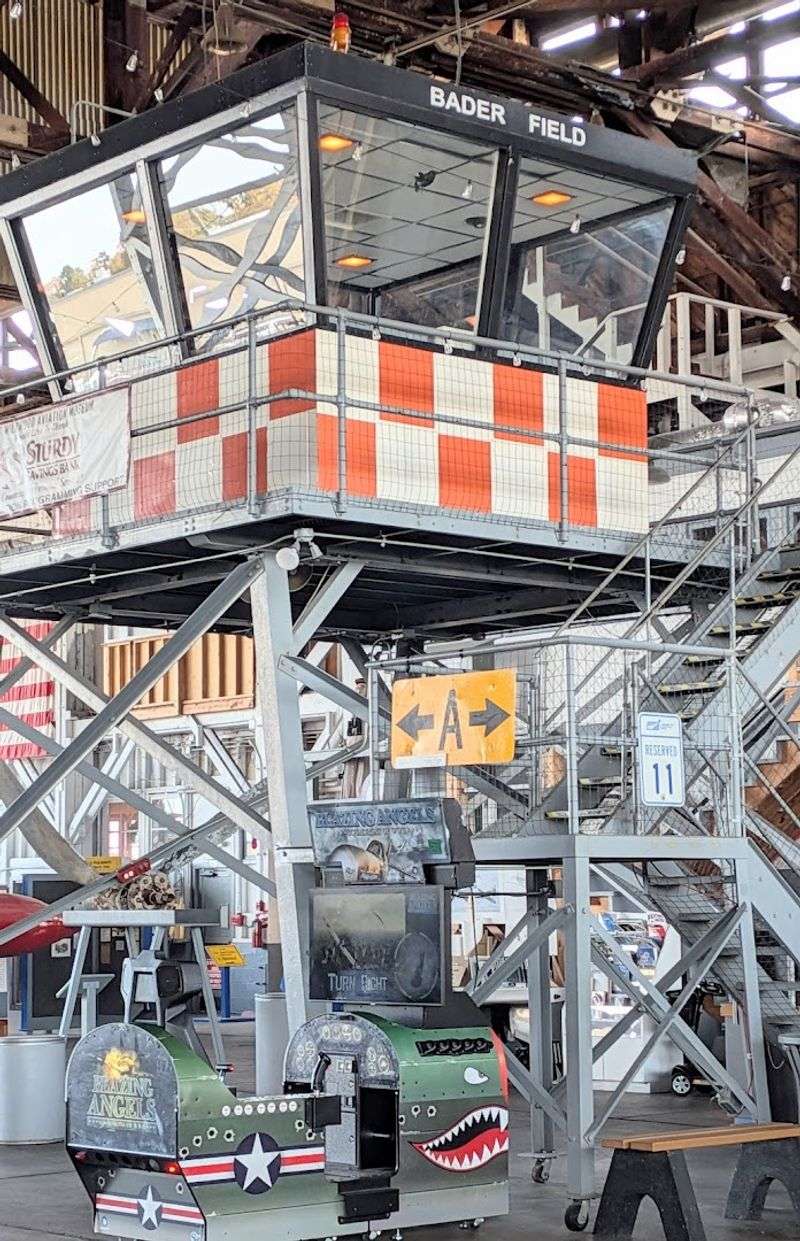
Getting access to a real air traffic control tower is not something most people ever experience, which makes this particular feature of the museum feel genuinely special.
The tower at Cape May Airport is part of the museum experience, and it offers a perspective on aviation operations that goes well beyond anything you can get from standing on the hangar floor.
Climbing up changes how you see the whole site.
From up there, the layout of the airfield makes immediate sense. You can see where aircraft taxied, where they lined up for takeoff, and how the whole operation was coordinated during the war years when this station was busy training Navy pilots around the clock.
It is a practical, physical way of understanding what this place once was.
The tower visit pairs beautifully with everything else the museum offers. After spending time among the aircraft below, stepping up into the control tower gives you the operational context to tie it all together.
Few museums offer this kind of layered, multi-perspective experience, and it is one of the reasons this place stands out so strongly among aviation destinations in the Northeast.
WWII Training History and Memorial Exhibits: The Human Story Behind the Aircraft
Planes are remarkable objects, but the stories of the people who flew them are what give a museum its soul.
The memorial exhibits here focus on the men who trained at this very station during World War II, and they bring a human weight to the experience that the aircraft alone cannot fully convey.
Photographs, records, and carefully preserved artifacts tell stories that deserve to be heard.
Training accidents claimed lives here, and the museum honors those losses with honesty and respect. Knowing that young pilots practiced their skills on this exact ground, under real pressure, with everything at stake, changes how you look at every aircraft in the hangar.
These were not abstract historical figures. They were real people doing an extraordinarily difficult job.
Spending time with these exhibits is the part of the visit that tends to stay with people longest. The aircraft are spectacular, but the human stories are what make the whole experience meaningful rather than just impressive.
This balance between spectacle and remembrance is what separates a truly great museum from a simple collection of old machines.
Address: Cape May Airport, 500 Forrestal Rd, Cape May, NJ
Dear Reader: This page may contain affiliate links which may earn a commission if you click through and make a purchase. Our independent journalism is not influenced by any advertiser or commercial initiative unless it is clearly marked as sponsored content. As travel products change, please be sure to reconfirm all details and stay up to date with current events to ensure a safe and successful trip.
