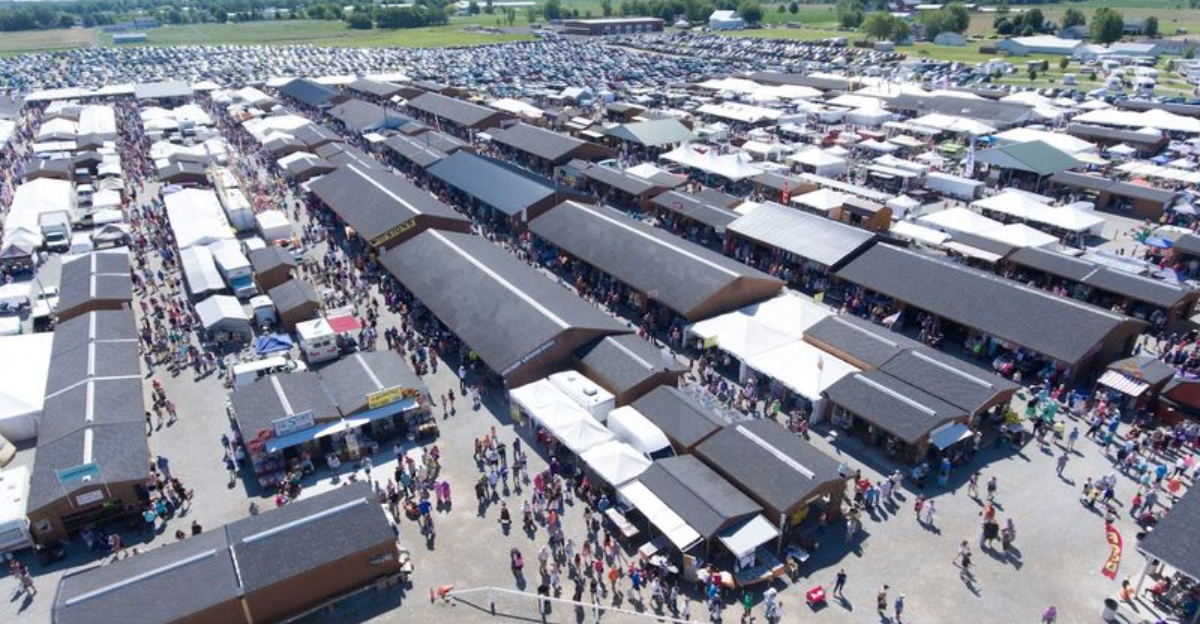
Some places just have a way of stopping you in your tracks. This massive flea market in Indiana’s Amish country is one of those places, and once you see its scale, it becomes clear why people travel from neighboring states just to spend a day there.
Spread across dozens of acres, it is widely considered one of the largest outdoor markets in the Midwest. Rows of vendor booths stretch across the grounds, offering everything from handmade goods and antiques to fresh local food and seasonal finds.
Live auctions and a steady flow of visitors give it a constant sense of movement and energy. Set in a region where horse-drawn buggies are still part of everyday life, the experience feels especially unique, blending rural tradition with a bustling marketplace atmosphere that is hard to find anywhere else.
A Scale That Has To Be Seen To Be Believed
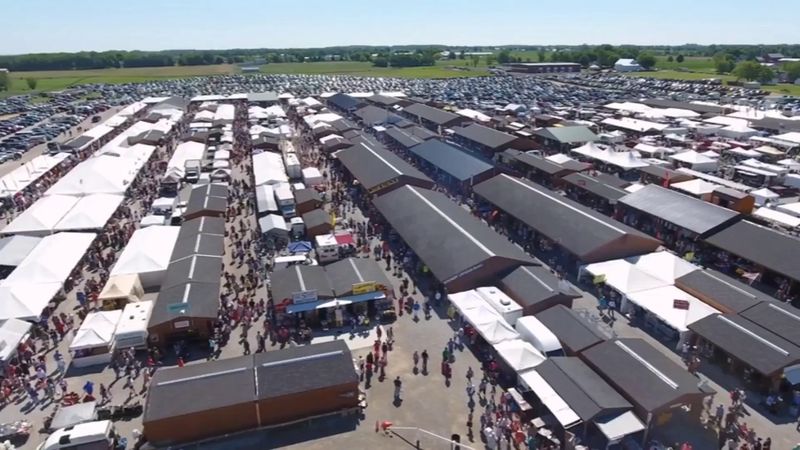
Forty acres sounds like a number until you are actually walking it. The Shipshewana Flea Market covers ground equivalent to roughly 30 football fields, and that comparison does not fully prepare you for the moment you step into the main market area and realize the rows of booths just keep going.
Located at 345 S Van Buren St, Shipshewana, IN 46565, the market runs on Tuesdays and Wednesdays from May through September, with gates opening at 8 a.m. and closing at 4 p.m. Getting there early is genuinely good advice, not just a polite suggestion.
By mid-morning, the parking lot fills fast, and the traffic on surrounding streets can back up considerably.
Parking costs five dollars per vehicle, and admission to the market itself is completely free. Scooter, wagon, and shopping cart rentals are available near the main entrance, which is a smart option if walking long stretches is not practical for everyone in your group.
Plan for a full day, because a quick visit is nearly impossible when there is this much ground to cover. Comfortable shoes are not optional here, they are essential.
Live Auctions That Are Entertainment All On Their Own
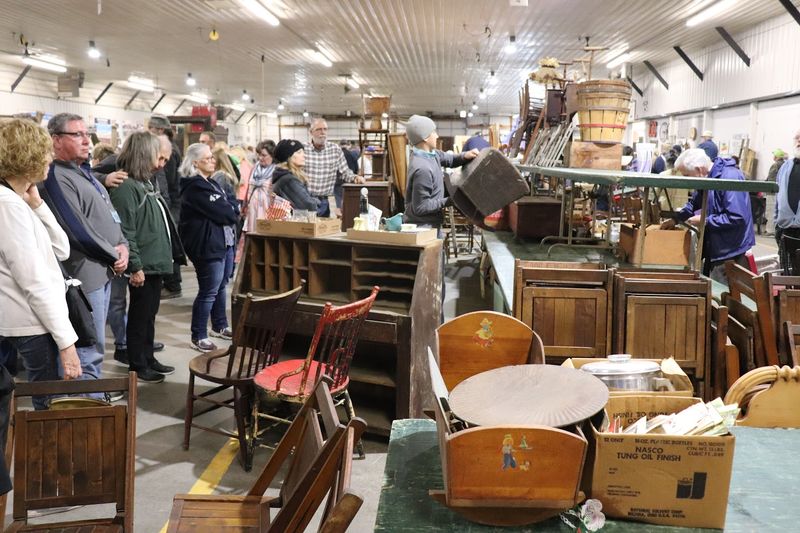
There is something genuinely exciting about watching a live auction unfold in real time. The Shipshewana Trading Place hosts its Antique and Miscellaneous Auction every Wednesday, year-round, with multiple auctioneers working simultaneously across different sections of the auction house.
The pace is fast, the energy is high, and even watching without bidding is entertaining in its own right.
Items up for bid range widely, from furniture and collectibles to tools, household goods, and unexpected oddities that seem to appear out of nowhere.
Livestock and horse auctions also take place on Wednesdays, which gives the whole Trading Place a working, agricultural energy that feels deeply connected to the region’s history.
This is not a staged performance for tourists. It is a functioning auction that has been drawing local buyers and sellers for generations.
For first-time bidders, showing up a little early to observe the rhythm before jumping in is a solid approach. Regulars who attend weekly often walk away with genuinely good finds, and the atmosphere rewards patience and attention.
Whether you are looking to buy or just want to experience something outside the usual shopping trip, the auctions at Shipshewana Trading Place offer a slice of Midwestern commercial life that feels both historic and very much alive. It is one of the more memorable parts of the whole Shipshewana experience.
An Authentic Taste of Indiana’s Amish Country
Shipshewana sits in the middle of one of the largest Amish communities in the United States, and the market reflects that in ways that go well beyond selling quilts. Horse-drawn buggies are a real part of the traffic on surrounding roads, not a novelty act.
Amish vendors throughout the market sell handcrafted furniture, hand-stitched quilts, and homemade food products made with genuine care and skill.
Supporting these vendors directly means putting money into the hands of the people who made what you are buying. That connection between maker and buyer is something that has largely disappeared from modern retail, and finding it here feels meaningful rather than nostalgic.
The craftsmanship on display in the Amish-operated booths tends to be exceptional, particularly in woodwork and textiles.
The broader setting of Shipshewana adds to the experience as well. The town itself is small and walkable, and nearby attractions reflect the same Amish heritage that defines the market.
Yoder’s Meat and Cheese, located right near the main market entrance, is a local institution worth stopping into before you leave. The E and S Bulk Foods store is another nearby favorite for those looking to stock up on pantry staples.
Being in this part of Indiana feels genuinely different from most other destinations, and the market is the best single entry point into understanding why.
Food That Goes Way Beyond Typical Flea Market Fare
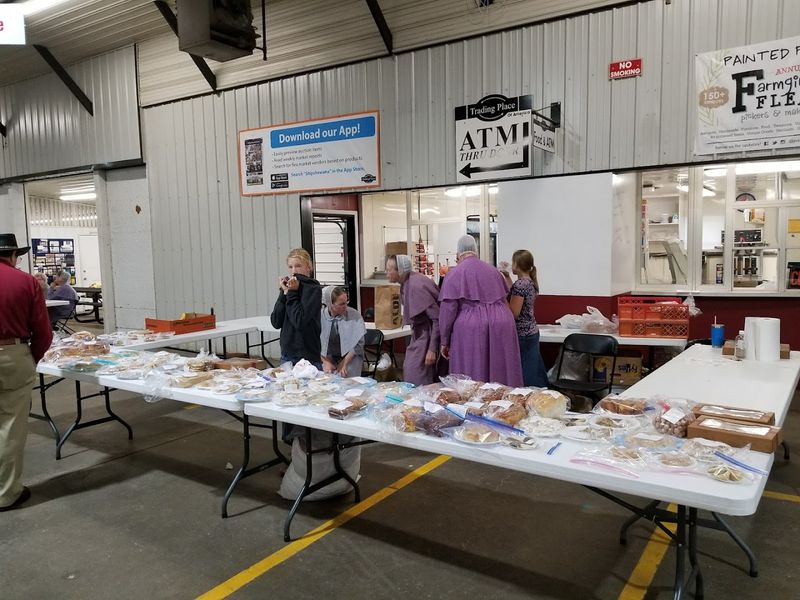
The food at Shipshewana Flea Market deserves its own conversation. Fresh-baked pretzels the size of a dinner plate, kettle corn made in large batches on-site, homemade fudge, fry pies, and the iconic Indiana breaded pork tenderloin are all part of the regular lineup.
These are not afterthought concession stands. The food here is genuinely good and worth building time into your visit to enjoy properly.
Several food courts and individual food vendors are spread across the market, so you do not have to walk back to one central location every time you want a snack. Amish peanut butter, barbecued chicken, fresh fruit, and locally made baked goods round out a menu that leans heavily into regional flavors.
For those who want to sit down and take a proper break, the Shipshewana Auction Restaurant offers a full sit-down dining experience on the property.
Bringing a cooler with cold drinks in the car is a tip that experienced visitors swear by, especially on hot summer days when walking the full market can work up a real thirst.
The food vendors tend to do brisk business, so arriving hungry and budgeting a few extra dollars for snacks along the way is a genuinely enjoyable part of the day.
The pretzel alone is worth the trip for many visitors, and that is not an exaggeration.
Family-Friendly Spaces and Special Seasonal Events
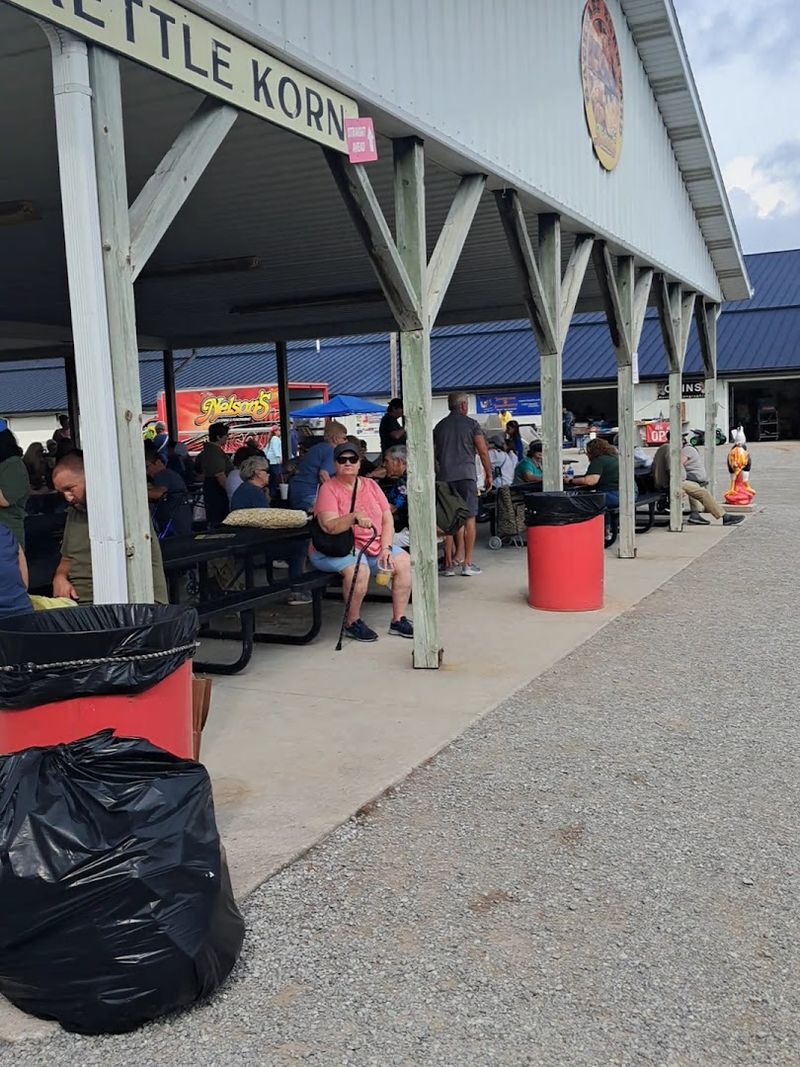
The Shipshewana Flea Market is not just a shopping destination. It has been actively expanding its family-friendly offerings, and for the 2026 season, new green spaces with playground equipment have been added near the food truck area.
That means parents can let younger kids burn off some energy while the rest of the group takes a breather between rows of booths.
Beyond the physical layout, the market hosts themed weekend markets and special holiday events throughout the season. These gatherings often include additional activities, giveaways, and a festive atmosphere that makes the market feel different from a standard shopping day.
The Christmas season brings its own version of the experience, with lights and decorations that families have described as genuinely beautiful and worth a dedicated trip.
The market is also pet-friendly, as long as animals are kept on leashes and owners clean up after them. That detail matters for families who do not want to leave a dog behind on a day trip.
With scooter and wagon rentals available near the entrance, the market has also made real efforts to be accessible for visitors with mobility concerns.
Planning ahead by arriving early, wearing comfortable shoes, and bringing snacks for younger children makes the family experience here much smoother and more enjoyable for everyone involved from start to finish.
Nearly 700 Vendor Booths Packed With Everything Imaginable
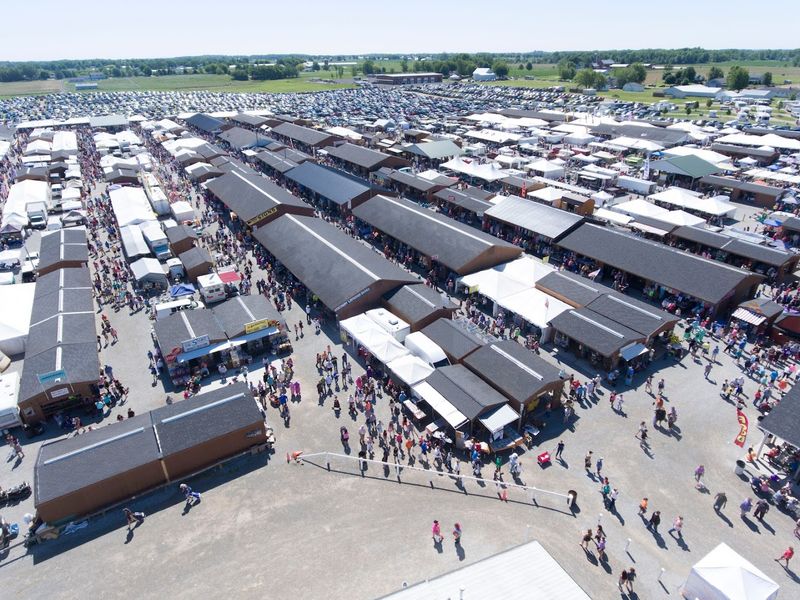
Walking through the vendor rows at Shipshewana feels a little like wandering through a small city that reorganizes itself every week. With close to 700 booths operating across the property, the variety of merchandise is genuinely staggering.
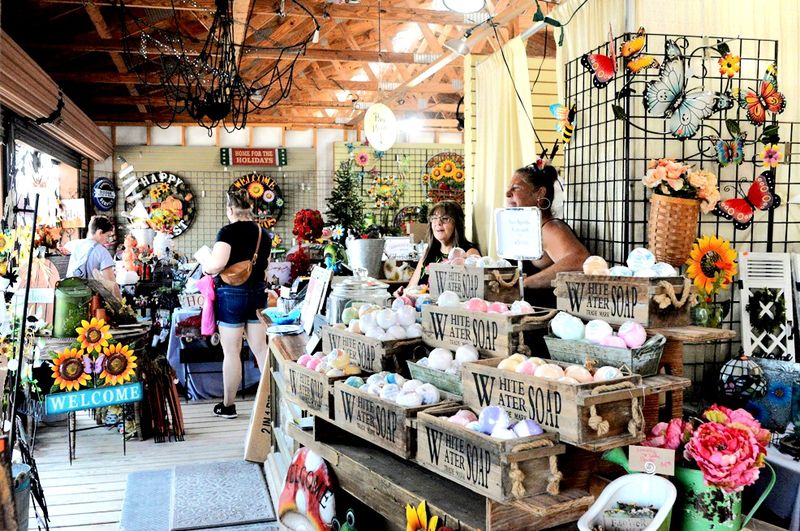
One row might be full of hand-stitched quilts and handcrafted wooden furniture, while the next offers vintage finds, garden ornaments, spices, books, and beauty supplies.
Fresh produce stands sit alongside booths selling homemade jellies and locally sourced honey. Clothing, purses, jewelry, and seasonal home decor fill entire sections on their own.
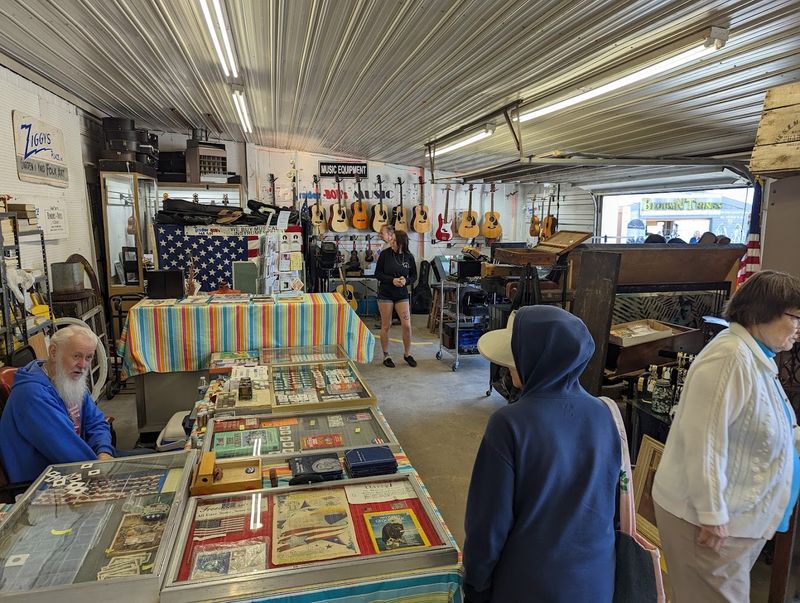
Antique hunters have plenty to dig through, and families often find lawn and garden items they were not even looking for but cannot leave without.
Many of the vendors are regulars who set up all season long, which means the market has a consistent, established feel rather than the random shuffle of a weekend yard sale.
Some booths are operated by Amish families selling handcrafted goods they made themselves, which adds a layer of authenticity that is hard to find anywhere else.
Bringing cash is strongly recommended, because not every vendor accepts card payments. A reusable bag or a small backpack also makes hauling your finds back to the car much easier than balancing things in your arms across acres of gravel paths.
A Century of History That Keeps Getting Better
The Shipshewana Flea Market has been part of this community for over a century. It started in 1922 as a livestock auction, which explains why the Trading Place still runs horse and livestock auctions today.
The market as most visitors know it was formalized in 1947, and it has grown steadily from a regional gathering point into what is now recognized as the largest flea market in the Midwest.
Being voted one of the top ten things to do in Indiana is not a small distinction in a state that has plenty of competing attractions.
Leisure and Travel has also recognized Shipshewana among the best flea markets in the country, which reflects the kind of consistent quality and scale that earns national attention over time.
That reputation did not appear overnight. It was built across decades of vendors, buyers, and community members who kept coming back.
What makes the history here feel relevant rather than just a fun fact is that the market has never stopped evolving. New green spaces, themed events, food truck additions, and ongoing improvements to the visitor experience show that the people running this place are paying attention.
A market that started as a livestock auction in a small Indiana town and grew into a 40-acre Midwestern landmark is, by any reasonable measure, a genuine success story. Visiting it feels like being part of something that actually matters to the people who live here.
