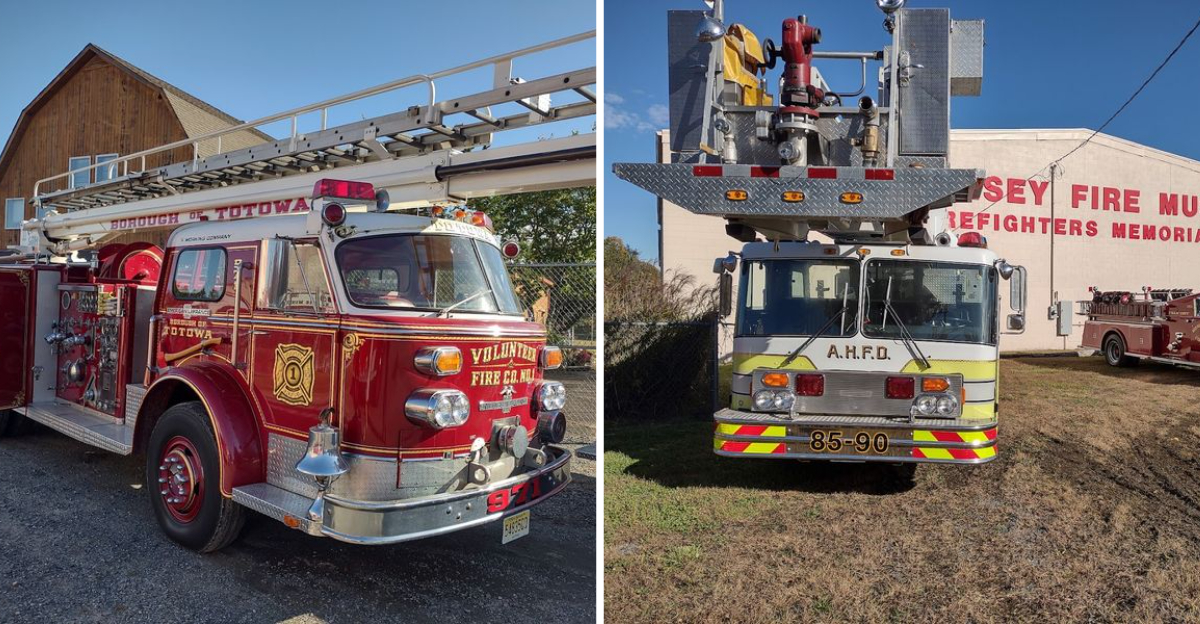
Where do fire engines go when they’re too vintage for the streets?
In New Jersey, they retire in style inside a warehouse bursting with history.
Walking through feels like stumbling into the loudest parade that suddenly hit pause.
Every polished bell and ladder whispers stories of grit and glory.
It’s proof that even heroes need a garage big enough to match their legend.
A Warehouse Full of Wonders
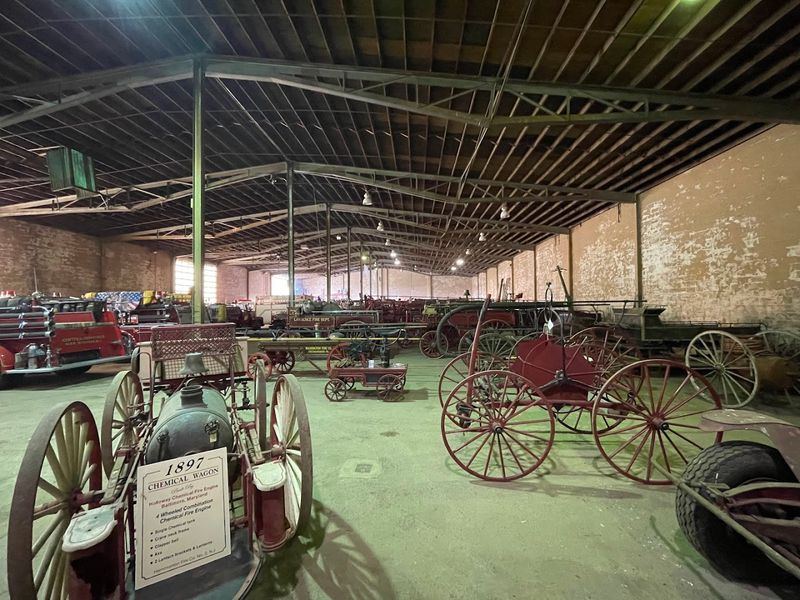
Walking into the main building at the NJ Fire Museum feels less like entering a museum and more like stepping into a time machine with wheels. The sheer size of the collection catches you completely off guard.
Vintage fire engines stretch from one end of the warehouse to the other, each one representing a different chapter in New Jersey firefighting history.
Some trucks are so tall they seem to graze the ceiling. Others sit low and compact, showing just how much the design of firefighting vehicles evolved over the decades.
The variety alone is worth the trip.
What makes this place genuinely special is that these are not behind glass. You can walk right up, get close, and really appreciate the craftsmanship.
For anyone who loves mechanical history, American industrial design, or just really cool old vehicles, the scale of this collection is something you simply have to experience in person to fully appreciate.
The 1919 American LaFrance Pumper
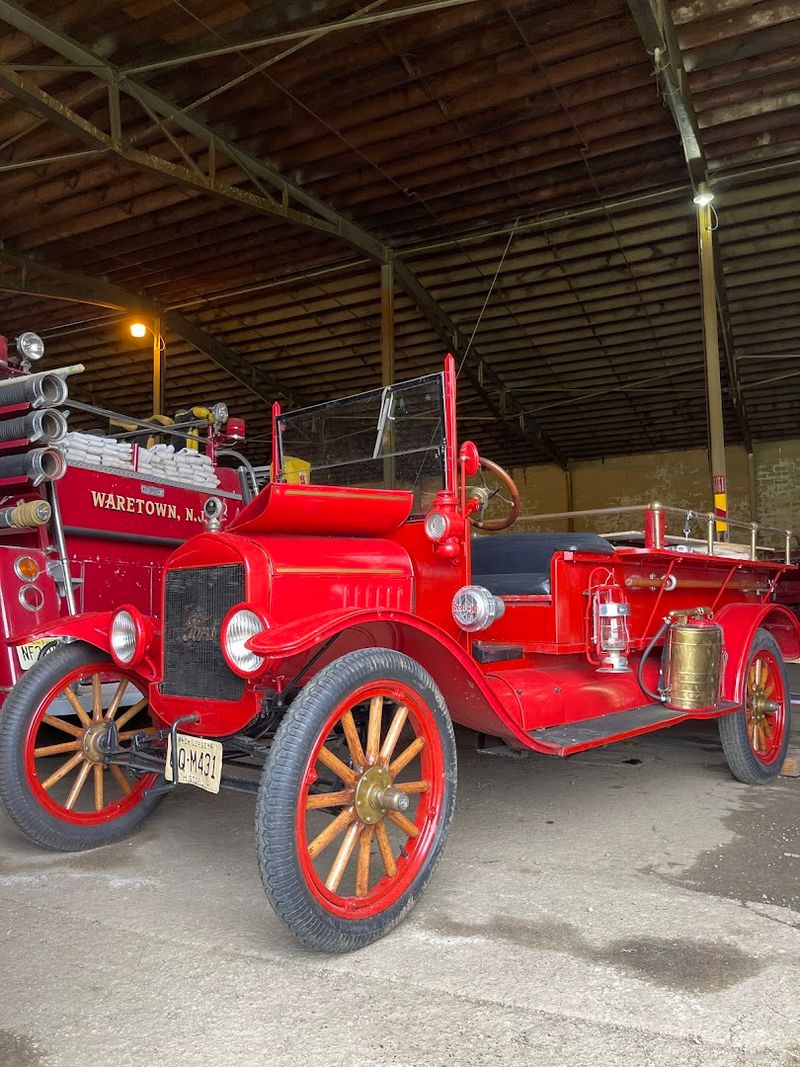
There is something almost unbelievable about standing next to a fire engine that is over a hundred years old. The 1919 American LaFrance pumper at the NJ Fire Museum is one of those rare artifacts that stops you mid-step.
Built just after World War One, this machine represents the earliest days of motorized firefighting in America.
The brass fittings catch the light in a way that feels almost theatrical. Wooden spoke wheels and hand-painted details give it a craftsmanship you just do not find in modern manufacturing.
Every inch of this truck tells a story about the firefighters who relied on it.
American LaFrance was one of the most respected names in firefighting apparatus, and this pumper is a prime example of why. Seeing it up close makes you think about the brave crews who raced through early twentieth-century streets in this very machine.
It is a humbling, genuinely moving piece of American history sitting right there in central New Jersey.
The 1948 Chesterfield Mack L Pumper
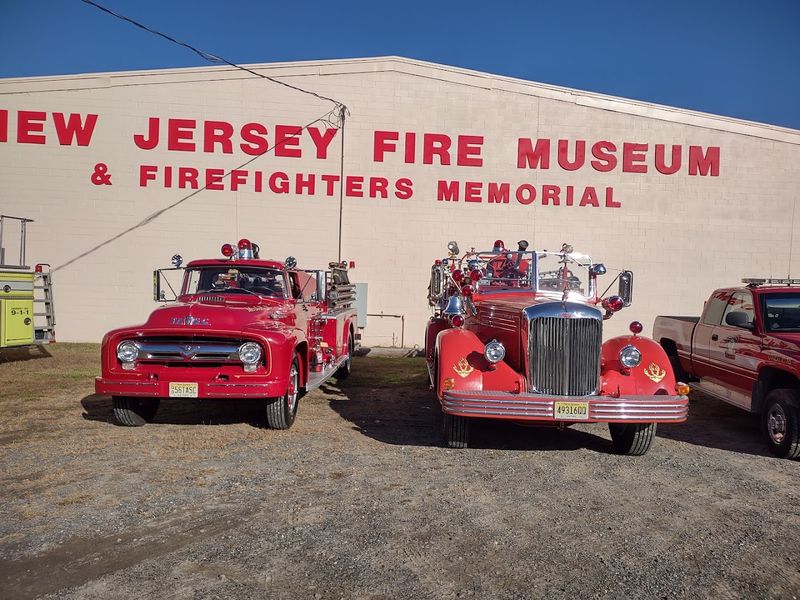
Right after World War Two, American manufacturing was booming, and fire departments across the country were upgrading their fleets with powerful new apparatus.
The 1948 Chesterfield Mack L pumper at the NJ Fire Museum is a beautiful example of that post-war era of confidence and craftsmanship.
Mack trucks were legendary for their toughness, and this pumper radiates that reputation.
The cab design feels bold and purposeful, the kind of silhouette that instantly reads as serious business. Chrome details run along the body with a precision that speaks to the pride of the workers who built it.
Getting up close to the engine compartment gives you a real sense of the mechanical ambition of the period.
Chesterfield was a small community that trusted this Mack with protecting their homes and families. Knowing that history makes the truck feel less like an exhibit and more like a retired hero.
It stands in the museum with a quiet dignity that is hard to put into words but easy to feel the moment you see it.
The 1955 Ocean Township Ahrens Fox Pumper
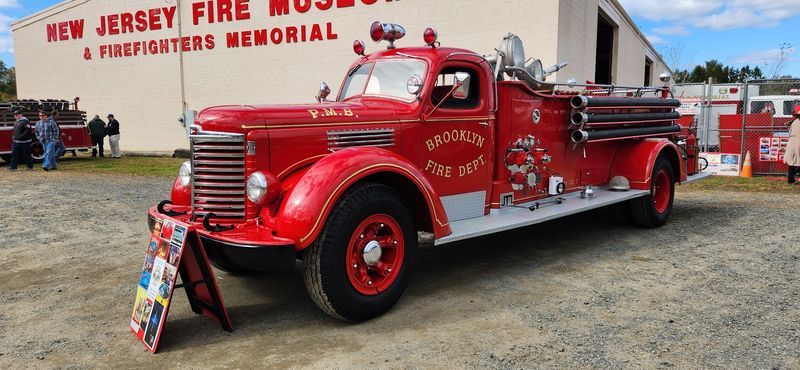
Ahrens Fox is a name that makes fire apparatus collectors go a little weak in the knees, and for very good reason. The 1955 Ocean Township Ahrens Fox pumper at the NJ Fire Museum is one of the rarest trucks in the entire collection.
By the mid-1950s, Ahrens Fox was already winding down production, making every surviving example a precious piece of firefighting heritage.
The front-mounted piston pump is the most recognizable feature, a bold chrome dome that sits right at the front of the hood like a crown. It looks almost futuristic even by today’s standards.
That pump was considered engineering brilliance when it was new, delivering water with a reliability that departments across America depended on.
Standing in front of this truck, you get the sense that you are looking at something genuinely irreplaceable. Very few Ahrens Fox pumpers survive in this condition anywhere in the country.
The fact that New Jersey has one, and that it is accessible to the public on Saturday mornings, feels like a small miracle worth celebrating.
The 1972 Keasby Mack Aerial Scope
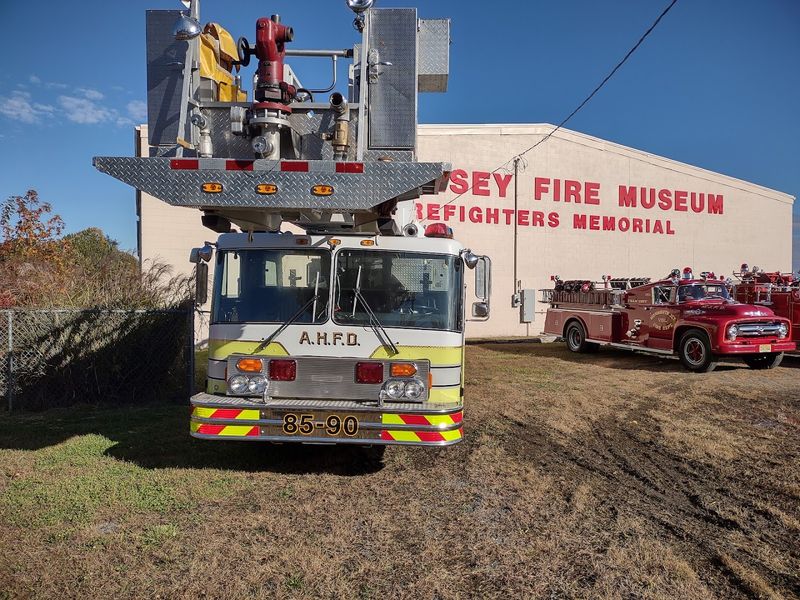
Some fire trucks are impressive because of their age. Others stop you cold because of their sheer presence.
The 1972 Keasby Mack Aerial Scope at the NJ Fire Museum falls firmly into the second category. This is a machine built to reach places that regular trucks simply could not, and even parked indoors, it commands the room with authority.
The aerial scope design was a game-changer in the early 1970s, combining a bucket platform with an articulating boom to give firefighters safe elevated access during emergencies. Mack built these rigs with a reputation for durability that the fire service absolutely depended on.
This particular truck served the Keasby community in Middlesex County, New Jersey.
Looking up at the elevated boom from ground level gives you a genuine appreciation for the courage it took to operate this equipment at a real fire scene. The mechanics involved are fascinating even to someone with zero engineering background.
This truck is one of the most visually dramatic pieces in the entire collection, and it earns every bit of the attention it gets.
The 1984 Atlantic Highlands Sutphen Tower Ladder
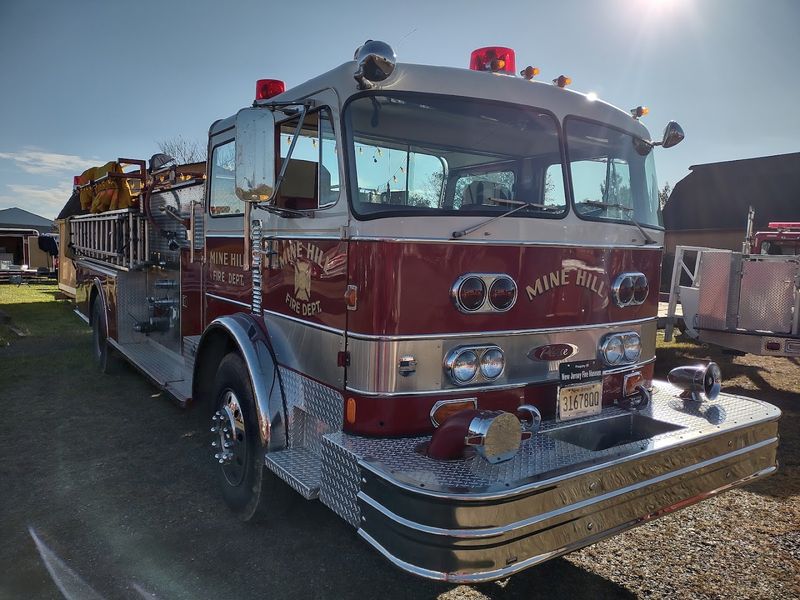
By the 1980s, fire apparatus had evolved into genuinely sophisticated machines, and the 1984 Atlantic Highlands Sutphen Tower Ladder at the NJ Fire Museum is a perfect snapshot of that era.
Sutphen was known for building exceptionally strong, reliable aerial equipment, and this tower ladder represents the company at the top of its game.
Atlantic Highlands is a small shore community, and knowing this big machine once protected those streets adds a layer of local pride to the whole experience.
The tower ladder design allowed firefighters to operate a protected platform at height during both rescue and suppression operations. That kind of versatility was a major step forward for departments that needed their apparatus to do more than one job.
The engineering behind it is genuinely impressive when you take a few minutes to look closely.
The truck still has that unmistakable 1980s aesthetic, clean lines with a purposeful, no-nonsense build quality. Parked in the warehouse, it looks like it could still answer a call tomorrow.
That readiness is part of what makes the collection feel alive rather than just preserved.
The Fallen Firefighters Memorial
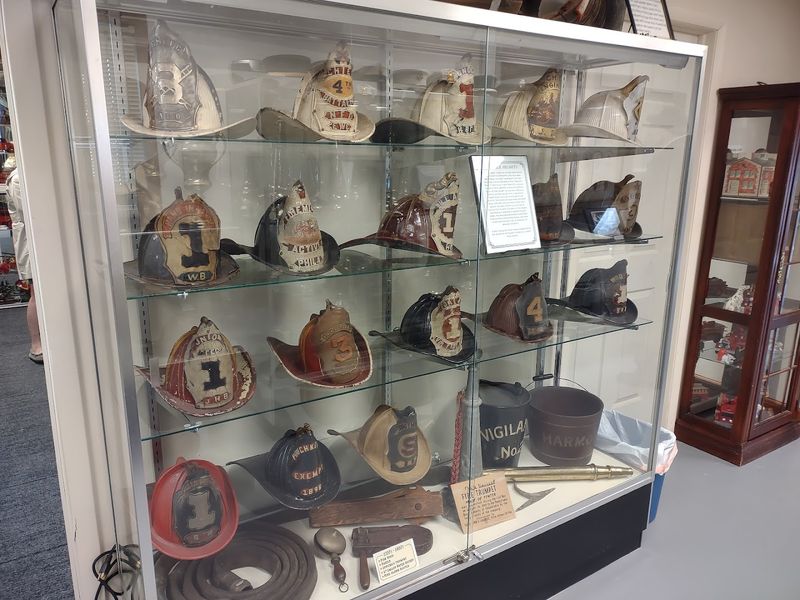
The NJ Fire Museum is not just about the machines. There is a deeply human side to this place that hits you when you reach the Fallen Firefighters Memorial.
This tribute honors the men and women of New Jersey who gave their lives in service to their communities, and the weight of that sacrifice is felt the moment you approach it.
The memorial serves as a reminder that every fire engine in this building was once operated by real people who ran toward danger without hesitation. Their names and stories are preserved here with the same care as the apparatus they once drove.
It is a quiet, respectful corner of the museum that deserves unhurried attention.
Spending a few minutes here reframes the entire visit. The trucks stop being just beautiful old vehicles and become something more meaningful, tools carried into battle by ordinary people doing extraordinary things.
The museum understands this connection deeply, and the memorial reflects a genuine commitment to honoring the full legacy of New Jersey firefighting, not just the hardware.
The Gift Shop and Collectibles Room
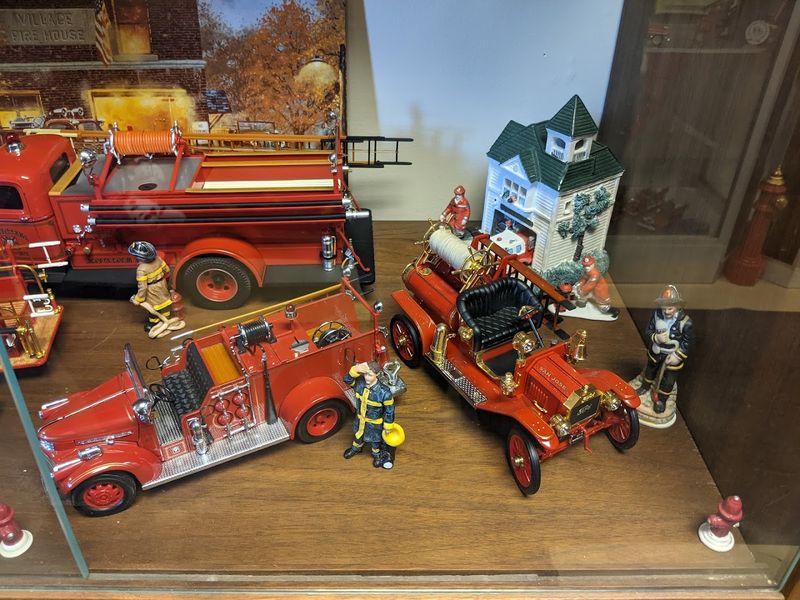
After walking through rows of full-size fire engines, stumbling into the gift shop and collectibles room feels like finding a bonus level in a great video game. The space is packed with fire service memorabilia that ranges from vintage patches and badges to model trucks and historical books.
For anyone who collects fire service items, this room is genuinely dangerous for the wallet in the best possible way.
Model fire engines line the shelves in impressive variety, covering different eras and manufacturers. Patches from New Jersey fire departments past and present make for affordable and meaningful souvenirs.
The selection feels thoughtfully curated rather than randomly thrown together, which says a lot about the care that goes into every part of this museum.
Even if collecting is not your thing, browsing the room is a pleasure. There is something charming about a gift shop that genuinely reflects the character of the institution behind it.
Every item here connects back to the broader story of New Jersey firefighting, making even a simple purchase feel like a small act of supporting something worth preserving.
What You Need to Know Before You Go
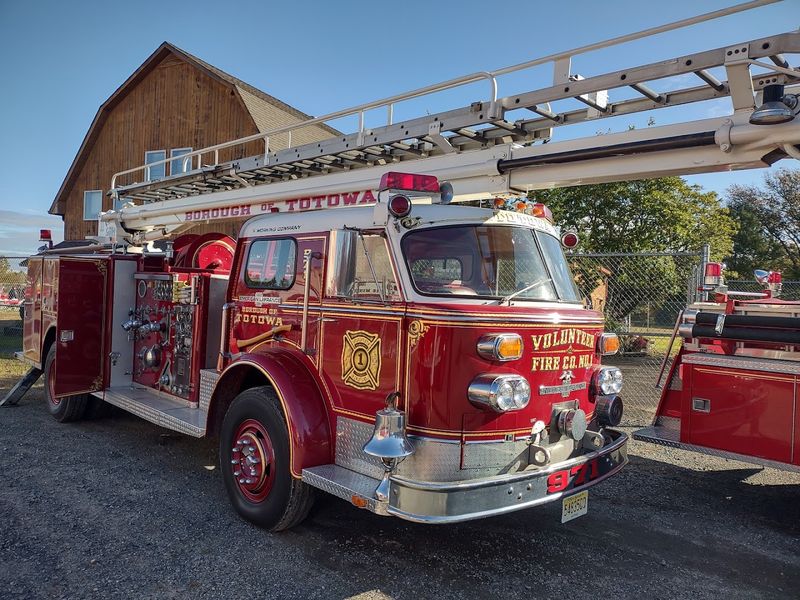
Getting the most out of a trip to the NJ Fire Museum starts with knowing when to show up. The museum is open on Saturdays from 10 AM to 2 PM, so planning around that one window is essential.
Arriving early gives you the best chance to explore at a relaxed pace without feeling rushed, and the morning light inside the warehouse makes the trucks look especially striking.
The museum is nestled in a quiet rural part of Monmouth County. The drive itself is pleasant, and the setting adds to the overall charm of the experience.
Parking is straightforward, and the whole property has an easygoing, welcoming atmosphere from the moment you arrive.
Admission is free, though donations are warmly appreciated since the museum operates as a volunteer-run nonprofit. Spending an hour or two here feels like a genuinely good use of a Saturday morning, and the memories tend to stick around a lot longer than the drive home.
Address: 4 Polhemustown Rd, Allentown, NJ.
Dear Reader: This page may contain affiliate links which may earn a commission if you click through and make a purchase. Our independent journalism is not influenced by any advertiser or commercial initiative unless it is clearly marked as sponsored content. As travel products change, please be sure to reconfirm all details and stay up to date with current events to ensure a safe and successful trip.
