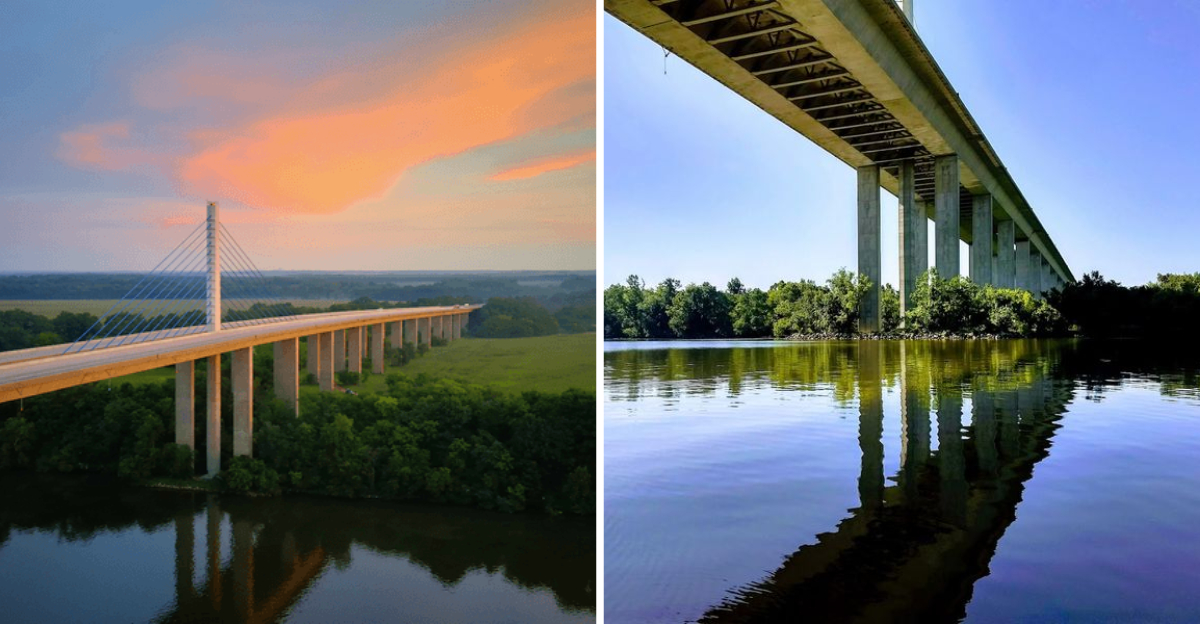
Some bridges just carry traffic. This Virginia bridge carries a story that most engineers would barely dare to dream up.
On a sweltering August day in 1993, a tornado tore across the river and hit this massive cable-stayed structure head-on, flipping trucks and churning water into a rotating wall of chaos.
When the storm passed, inspectors found something almost unbelievable: not a single crack in the concrete.
I had heard about this bridge long before I ever crossed it, and pulling onto that wide, smooth deck with those towering pylons rising above me, I finally understood why people talk about it with such reverence.
The river moved slow and quiet below, a calm that felt almost disrespectful to the chaos that once unfolded here.
This is not just a bridge that gets you across the water. It is a monument to bold engineering, quiet resilience, and one of the most dramatic weather events this state has ever seen.
The Day a Tornado Hit the Bridge and Lost
August 6, 1993, started like most summer days in central Virginia, hot, humid, and heavy with the kind of air that makes you feel like the sky is thinking about something.
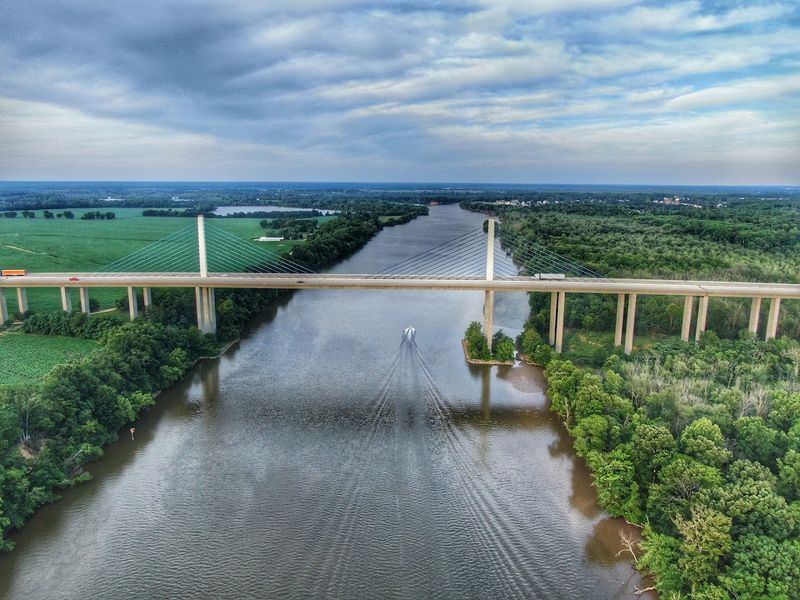
Then, in the early afternoon, a tornado rated F1 on the Fujita Scale touched down near the James River and moved directly onto the Varina-Enon Bridge with winds estimated close to 110 mph.
What happened next reads almost like a scene from a disaster film. The tornado sucked up water from the James River and slammed into the bridge deck as a spinning wall of water and wind.
Two tractor-trailers and two smaller vehicles were overturned. Five people were injured in the chaos.
And yet, the bridge itself? Zero structural damage.
Not a single crack, not a fractured cable, not a compromised pylon. Engineers inspected every inch of it afterward and found the structure completely intact.
The same storm system spawned a far more destructive F4 tornado in nearby Petersburg that day, causing widespread devastation.
The fact that this bridge shrugged off a direct tornado hit without so much as a hairline fracture is a testament to the precision and foresight baked into every layer of its design.
A Cable-Stayed Marvel That Rewrote the Engineering Playbook

The Varina-Enon Bridge did not just cross the James River. It changed how engineers thought about building bridges.
Designed by the Figg Engineering Group and opened on July 18, 1990, it became the second major concrete cable-stayed bridge completed in the United States, drawing direct inspiration from Florida’s Sunshine Skyway Bridge.
Its most groundbreaking feature is a single-plane, harp-style cable-stayed configuration, meaning the cables are anchored along the centerline of the deck between the two traffic directions rather than from the outer edges.
This keeps the visual lines clean and the structural load beautifully balanced.
The bridge also became the world’s first to use precast concrete delta frames for its main span construction, functioning essentially like concrete trusses.
That innovation was not just impressive on paper. Choosing precast segmental concrete over competing steel alternatives saved the Virginia Department of Transportation roughly ten million dollars.
The bridge stretches 4,686 feet total, with its main cable-stayed span measuring 630 feet. It received seven design awards, including the 1994 Award of Merit from the Federal Highway Administration.
Crossing it today, you can still feel that sense of forward-thinking ambition humming quietly beneath the road surface.
Two Pylons Reaching 300 Feet Into the Virginia Sky
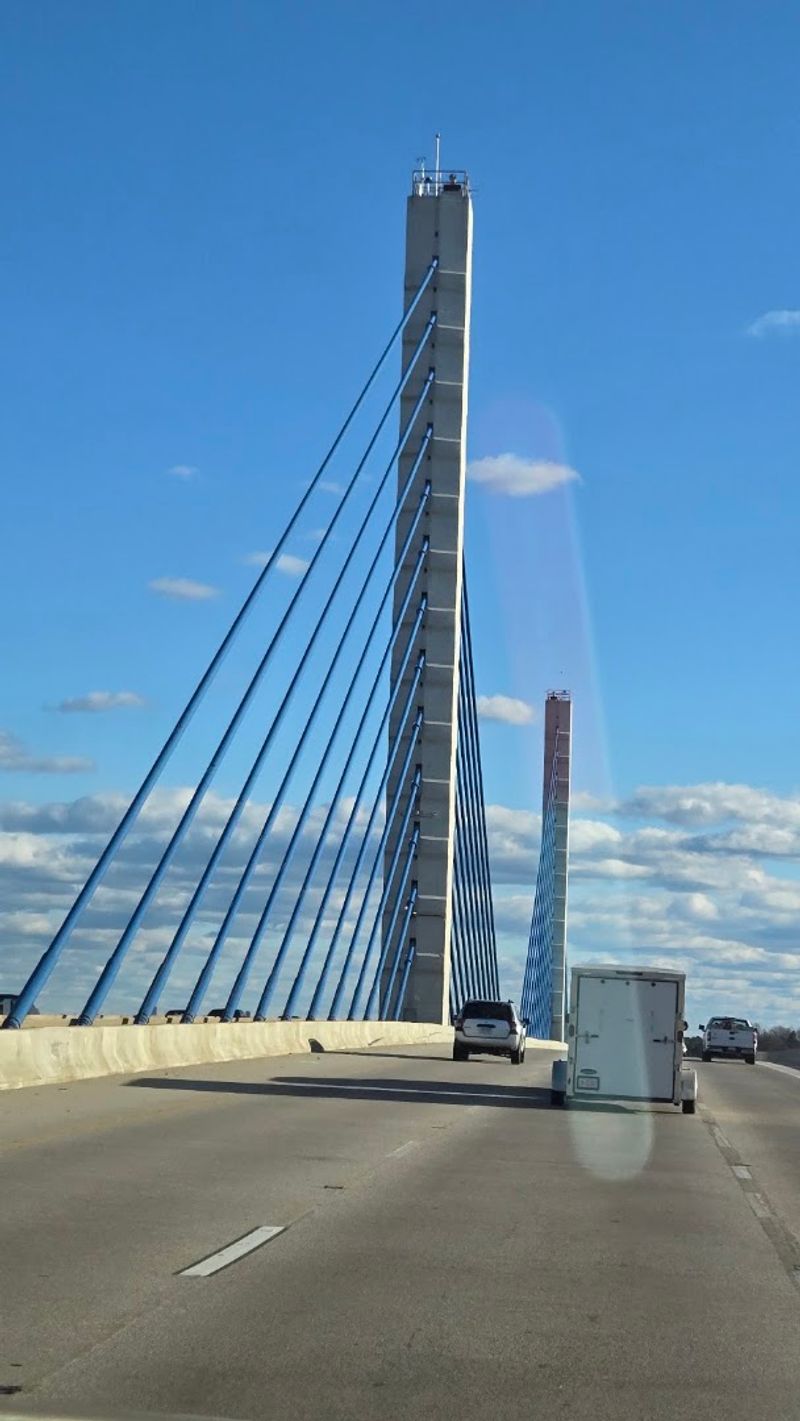
There is a moment when you approach the Varina-Enon Bridge from either direction where the two concrete pylons suddenly loom into view, and your brain takes a second to process just how tall they really are.
Each one rises approximately 300 feet above the James River, which is taller than many downtown office buildings in Richmond.
Those pylons do more than look impressive.
They anchor the entire harp-style cable system and carry the primary vertical loads of the bridge deck, distributing weight through the stay cables in a way that keeps the structure both efficient and extraordinarily strong.
The deck itself sits 157 feet above the river, making it the tallest bridge in Virginia when it opened in 1990. It has since dropped to third-tallest in the state, but the view from up there still commands attention.
The bridge also provides 150 feet of vertical navigational clearance and 630 feet of horizontal clearance over the James River’s shipping channel leading to the Richmond Marine Terminal.
That clearance was a deliberate engineering choice, prompted by a 1977 incident where a tanker struck the nearby Benjamin Harrison Memorial Bridge, knocking it out of service for over a year.
The pylons are not just structural anchors. They are a lesson learned from history, cast in concrete.
The Communities on Each Side of the River
The name Varina-Enon is not random. It tells the story of two communities that the bridge physically connects across the James River.
Varina is a historic area near the north end of the bridge and was once the county seat of Henrico County. Enon is an unincorporated community on the Chesterfield County side to the south.
Before this bridge opened, getting between these two counties in this southeastern stretch near Richmond meant navigating older, more congested routes.
The bridge sits at Interstate 295 mile marker 18, southeast of the city, and its completion in 1990 significantly cut travel times for commuters and freight haulers alike.
Regional connectivity improved in ways that ripple through the local economy to this day.
I find it quietly charming that such an engineering landmark carries such a modest, community-rooted name. There is no flashy title here, no famous politician’s name attached to it.
Just two small communities on either side of a wide river, now permanently linked by one of the most innovative bridges ever built in the United States.
If you live in either Henrico or Chesterfield County, this bridge is simply part of daily life.
If you are passing through, it is one of those places that makes you slow your thoughts down, even at highway speed.
Peregrine Falcons Have Made This Bridge Their Home
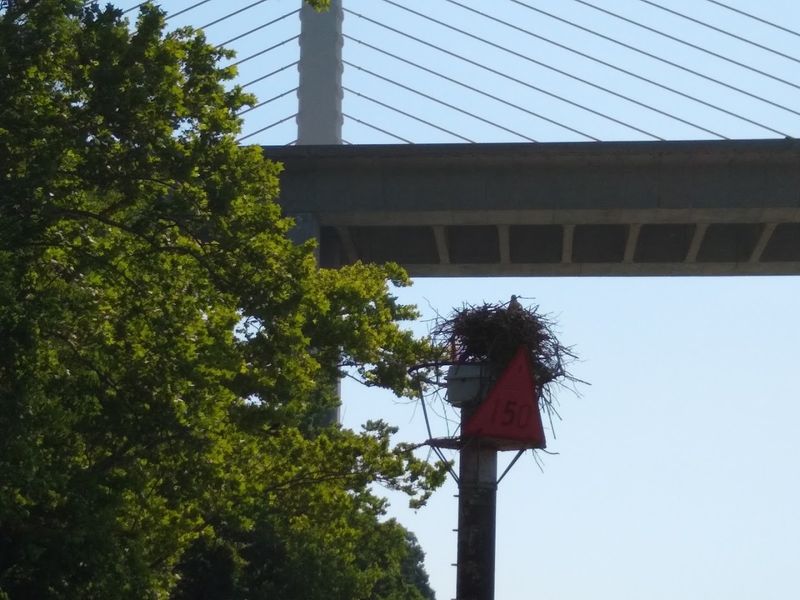
Not every bridge can claim to be a wildlife sanctuary. The Varina-Enon Bridge can.
Several pairs of peregrine falcons have made their nests in specially constructed nesting boxes attached to the bridge structure.
Their presence here has played a meaningful role in the recovery of the species across Virginia.
Peregrine falcons were once severely endangered in the eastern United States.
The tall, stable concrete pylons of the Varina-Enon Bridge turned out to be ideal nesting habitat, mimicking the cliff faces these birds naturally prefer.
The Virginia Department of Transportation leaned into this, supporting the nesting boxes and monitoring the population.
That effort earned VDOT a 1998 Federal Highway Administration Excellence Award specifically for its contributions to peregrine falcon recovery.
There is something unexpectedly moving about this. A structure built for high-speed interstate traffic quietly became a refuge for one of the fastest animals on the planet.
Peregrine falcons can dive at speeds exceeding 240 mph, which feels almost fitting for a bridge that has already survived a tornado at 110 mph.
If you visit the area around Henricus Historical Park, which sits about two-thirds of a mile upstream, you might catch a glimpse of one of these birds soaring above the river in the afternoon light.
Viewing the Bridge From the River and the Riverbank
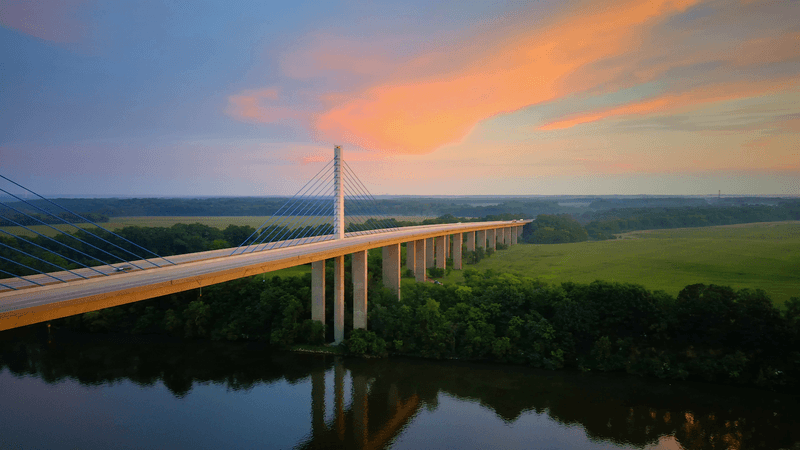
Capturing a great photograph of the Varina-Enon Bridge is genuinely tricky, and that is part of its mystique.
There are no legal stopping points on the highway or the bridge itself, so you cannot just pull over and frame the shot you want.
The bridge demands a bit of planning and patience from anyone hoping to photograph it properly.
The best views come from a few specific spots. A housing subdivision about a mile southwest of the river crossing offers a solid angle on the full span.
Henricus Historical Park, located roughly two-thirds of a mile upstream, gives you a broader river perspective with the pylons rising dramatically against the sky.
Clear afternoons work best for photos, when the light catches the cables and the concrete takes on a warm tone against the blue water below.
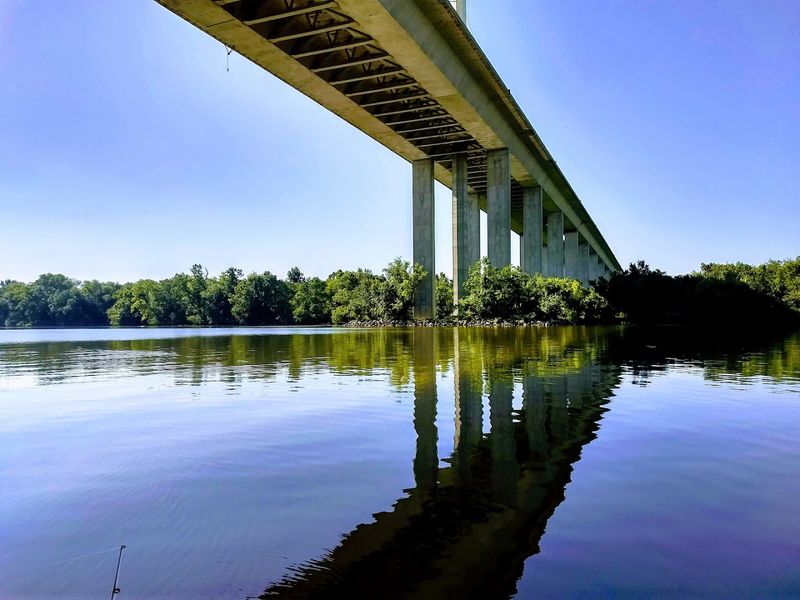
People who have kayaked the James River often describe the experience of passing under the bridge as humbling. From water level, the scale of the structure is almost hard to believe.
The deck stretches 109 feet wide to accommodate six lanes and full shoulders, and looking straight up at it from a kayak gives you a sense of just how much engineering is quietly hovering above you.
The Dutch Gap Conservation Area nearby makes the whole outing feel like a genuine adventure worth planning.
Ongoing Maintenance and the Bridge’s Enduring Strength
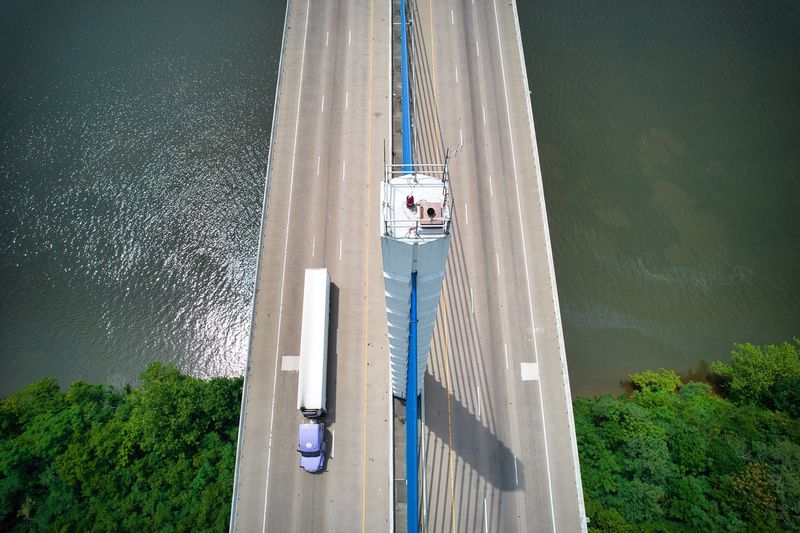
A bridge this ambitious requires serious ongoing care, and the Virginia Department of Transportation takes that responsibility seriously.
Regular maintenance of the Varina-Enon Bridge includes concrete deck repairs, elastomeric bearing replacements, foundation encapsulation, and upgrades to navigation lights.
A north footer rehabilitation project began in October 2025 with an anticipated completion date in May 2029.
What makes the maintenance story interesting is what it reveals about the bridge’s original construction quality. More than three decades after it opened, the structure remains fundamentally sound.
The tornado of 1993 did not weaken it. Heavy freight traffic has not degraded it beyond what routine maintenance can handle.
The precast segmental concrete design that saved millions during construction has also proven its durability over decades of use.
There is a kind of quiet confidence that comes with crossing a bridge like this. You are riding over something that was built to last, not just to open on schedule.
The smooth deck that drivers enjoy today reflects both thoughtful original engineering and consistent stewardship.
For a structure carrying six lanes of Interstate 295 traffic across a wide river every single day, that combination of resilience and care is exactly what you want beneath your wheels.
Address: Henrico, VA 23231
