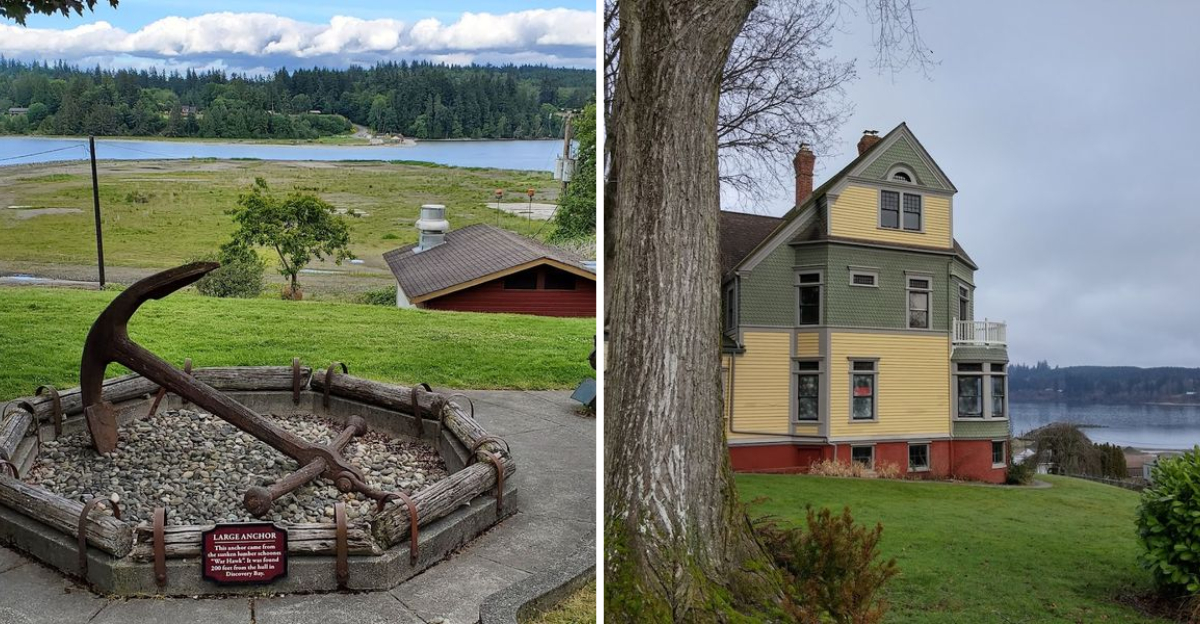
White clapboard buildings and towering firs on a Washington peninsula. This small historic town feels like it got paused around the turn of the twentieth century and never quite resumed. The moment you roll in, something shifts.
Quiet, but not empty. The streets carry a weight, the kind that comes from generations of people living, working, and possibly lingering long after they should have moved on. I came curious about the merchants and market life of nineteen oh seven.
I left with more questions than answers.
The Company Store That Never Truly Closed
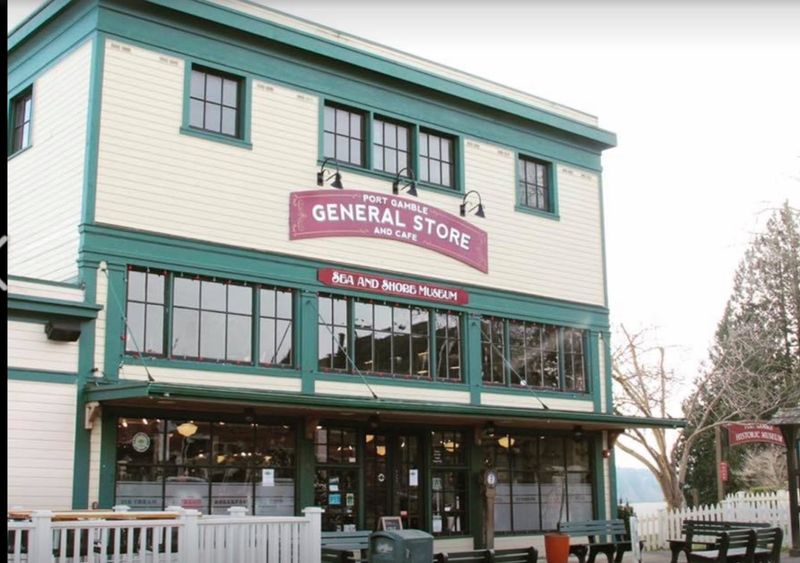
There is something quietly stubborn about a building that has outlasted every era it has witnessed. The Port Gamble General Store has been doing exactly that since the very first version opened in 1853, the same year the town itself was founded by the Puget Mill Company.
That original store opened before the sawmill was even fully running, which tells you everything about what the founders prioritized.
By 1907, the store was already a cornerstone of daily life. Mill workers collected their paychecks here, often handed over in 50-cent pieces, and spent them just as quickly on food, tools, dry goods, and household essentials.
Prices ran higher than what you would find in Seattle, but when the store is the only option for miles, you pay what they ask.
The current building dates to 1916 and sits up on the bluff, the fifth structure to carry the General Store name. Today it operates as a gift shop and cafe, and it also houses the Port Gamble Historic Museum alongside the Sea and Shore Museum.
The place still draws people in the same way it always has, not with flashy advertising, but with the simple pull of curiosity. Wandering through it now, you get the distinct feeling that the shelves remember every hand that ever reached for something off them.
A Post Office, a Doctor, and a Barber All Under One Roof
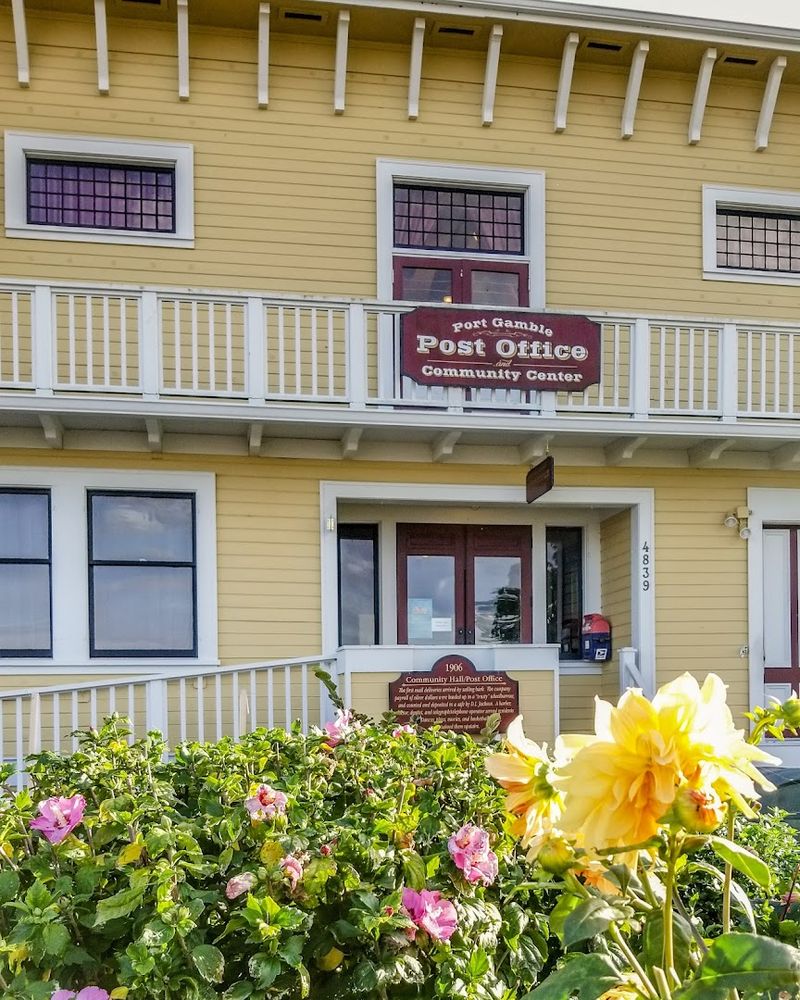
Most small towns in 1907 were lucky to have one functioning civic building. Port Gamble managed to cram a post office, a doctor’s office, a dentist’s office, a barber’s shop, and a telegraph office all onto the first floor of a single structure.
That building was the Community Hall, constructed in 1907, and it is one of the most quietly fascinating pieces of this town’s history.
Upstairs, the building opened up into an auditorium that doubled as a theater and a dance hall. After a long week of mill work, residents could come here to catch a performance, attend a community meeting, or just be around other people.
It was the kind of multi-use space that modern urban planners talk about like it is a new idea, but Port Gamble was doing it over a century ago.
The building reflects how tightly organized company towns operated. Pope and Talbot, who ran the mill, understood that a productive workforce needed more than just wages.
They needed access to healthcare, communication, and community. The Community Hall delivered all of that in one tidy package.
Also in 1907, the Masonic Lodge, originally built back in 1871, was relocated to its current position in town. That same year saw a lot of reshuffling, a town quietly reorganizing itself while the wider lumber industry around it was beginning to feel the pressure of new state taxes on timber acreage.
Mill Workers, Paychecks, and the Economy of a Captive Town
The economic setup of Port Gamble was fascinating in a way that is also a little unsettling when you think about it too long. Workers at the Pope and Talbot mill earned their wages, then turned right around and spent much of that money at the company-owned store.
It was a closed loop, and the company sat at the center of it.
Paychecks were often distributed in 50-cent pieces, which made the whole transaction feel almost theatrical. You worked, you were paid in coin, you handed those coins back to the same company for your groceries and your hardware and your family’s needs.
The store’s prices being higher than Seattle’s meant the company recaptured a significant portion of what it paid out. It was legal, it was common for company towns of the era, and it shaped every interaction residents had with commerce.
By 1907, the lumber industry was facing a new challenge. Washington state imposed a tax increase on timber acreage that year, putting financial pressure on operations like the Puget Mill Company.
That economic tension would eventually contribute to the company’s sale. But in the daily rhythm of town life, most residents would have felt it only gradually, as a slow tightening rather than a sudden break.
The merchants who kept those store shelves stocked were part of a system far larger than any individual transaction, and the weight of that system still feels present here.
Port Gamble’s New England Roots in the Pacific Northwest
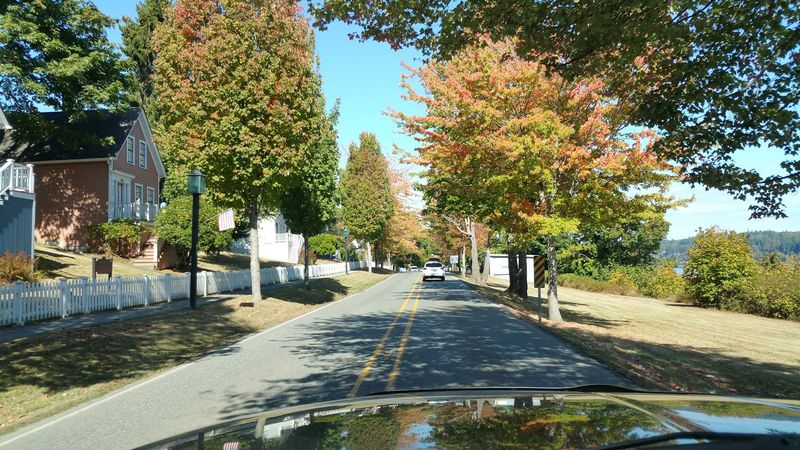
One of the first things you notice about Port Gamble is that it does not look like it belongs here. The white clapboard buildings, the tidy fences, the church perched above the water, it all reads as distinctly New England, which is exactly what the founders intended.
Andrew Pope and William Talbot, both from Maine, built this town to remind them of home.
That deliberate design choice has made Port Gamble one of the most visually intact historic company towns in the entire country. The National Register of Historic Places recognized it, and the town has been careful about preservation ever since.
There is a strange comfort in how consistent the architecture feels, like a single hand drew every roofline.
By 1907, the town had been operating for over fifty years and had settled into a mature version of its original vision. The streets were established, the social hierarchy was clear, and the physical layout reflected the values of the people who built it.
Management lived in the larger homes on the better lots. Workers lived in the rows of smaller houses closer to the mill.
The landscape itself encoded the social order. Today that layout still exists, and if you pay attention while exploring the town, you can read the old class structure right in the geography.
It is a subtle thing, easy to miss if you are only looking at the pretty buildings, but hard to unsee once you notice it.
The Ghosts Who Never Punched Out
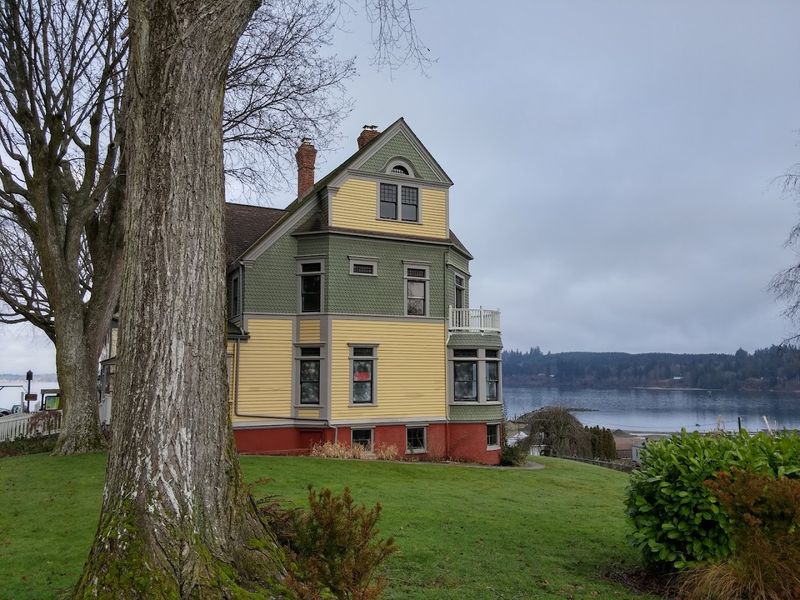
Port Gamble takes its haunted reputation seriously, and honestly, the history makes it easy to understand why. Documented paranormal experiences in the town’s buildings go back to the 1950s, and the General Store building, the Community Hall, and the Walker-Ames House all have their own reported stories.
The Walker-Ames House in particular is considered one of the most haunted locations in all of Washington state.
The town leans into this rather than shying away from it. Ghost walks, organized paranormal investigations, and an annual Ghost Conference bring visitors here specifically for the eerie atmosphere.
There is something refreshingly honest about a town that says yes, strange things happen here, come see for yourself.
What makes the haunted angle feel less gimmicky and more genuinely atmospheric is the actual history underneath it. These were real buildings where real people spent their lives.
The merchants, the mill workers, the postmaster, the barber, all of them moved through these spaces daily for decades. The idea that some residual energy might linger does not feel like a stretch when the physical environment has been so carefully preserved.
The floors, the walls, the windows, they are largely the same as they were in 1907. If a place can hold memory, Port Gamble has had over a century to accumulate it.
My visit left me with a genuine chill that had nothing to do with the Pacific Northwest weather.
What the Museums Inside the General Store Still Carry
Most gift shops are just gift shops. The Port Gamble General Store manages to be something more layered than that, partly because it shares its walls with two museums that are genuinely worth your time.
The Port Gamble Historic Museum walks you through the town’s long history, from its 1853 founding through the mill era and beyond. The artifacts are specific and local, which makes them more interesting than the broad-strokes approach many small-town museums take.
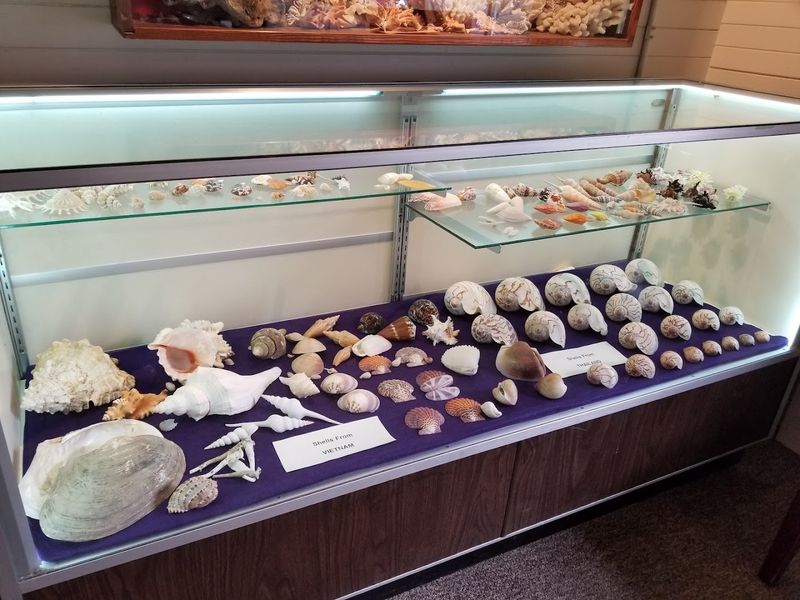
The Sea and Shore Museum is the unexpected gem. It houses a remarkable collection of shells and marine specimens, the kind of careful, obsessive gathering that feels deeply personal rather than institutional.
The collection covers species from around the world, and the sheer variety of it is quietly staggering. It is the sort of display that makes you wonder about the person who started it and what drove them to keep going.
Together, the two museums give the General Store building a depth that a simple retail space could never achieve. You can browse locally made goods, learn about the town’s economic history, and then stand in front of a glass case full of shells from the Pacific and feel genuinely transported.
The building earns its footprint in a way that feels respectful of the past while staying useful to the present. That balance is hard to pull off, and Port Gamble manages it without making a fuss about it.
Address: Port Gamble, WA 98364.
