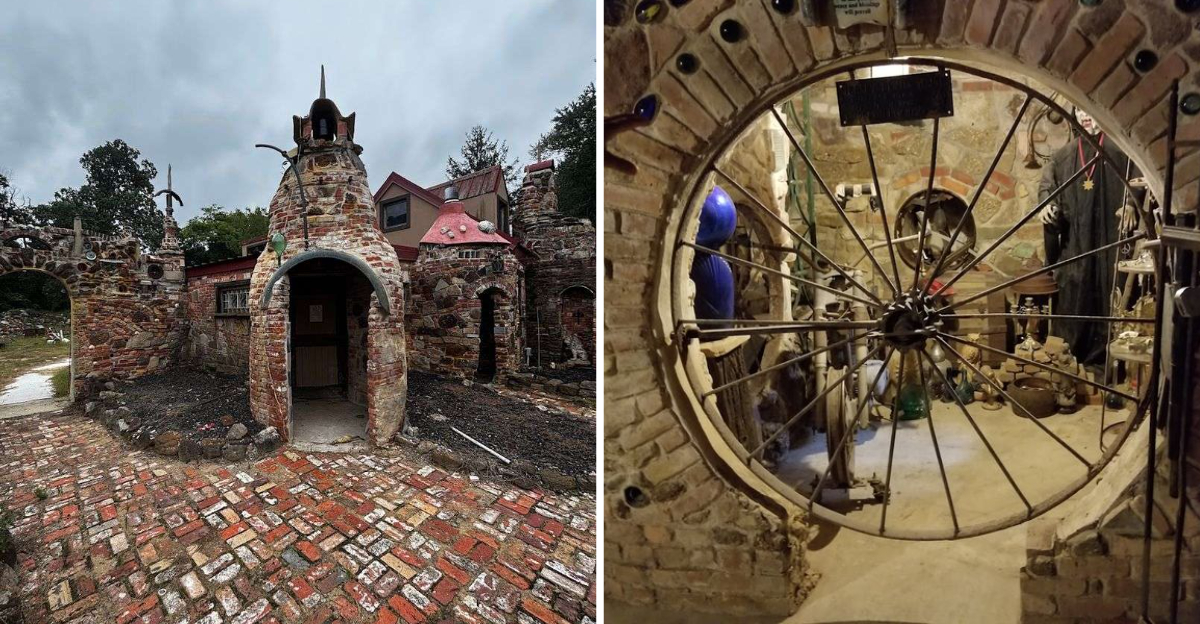
In the heart of New Jersey, there once rose a palace that laughed in the face of logic.
Forget marble columns and golden chandeliers; this fortress was cobbled together from mud, scrap metal, and sheer stubbornness.
It was less “royal estate” and more “junkyard jamboree,” yet it stood as a monument to resilience.
A castle of contradictions: ugly yet captivating, fragile yet unbreakable.
One man’s madness became a community’s marvel, proving that sometimes the most bizarre dreams refuse to crumble.
The Wildly Unlikely Origin Story
Picture losing everything overnight and then deciding your next move is to build a palace. That is exactly the kind of stubborn, spectacular thinking that gave this place its start.
George Daynor, a former Alaska gold miner, watched his fortune vanish in the 1929 stock market crash and found himself with almost nothing.
Rather than accepting defeat, he arrived at a swampy plot of land in Vineland, New Jersey, and got to work. Between 1929 and 1932, he assembled an entire structure using materials most people would toss without a second thought.
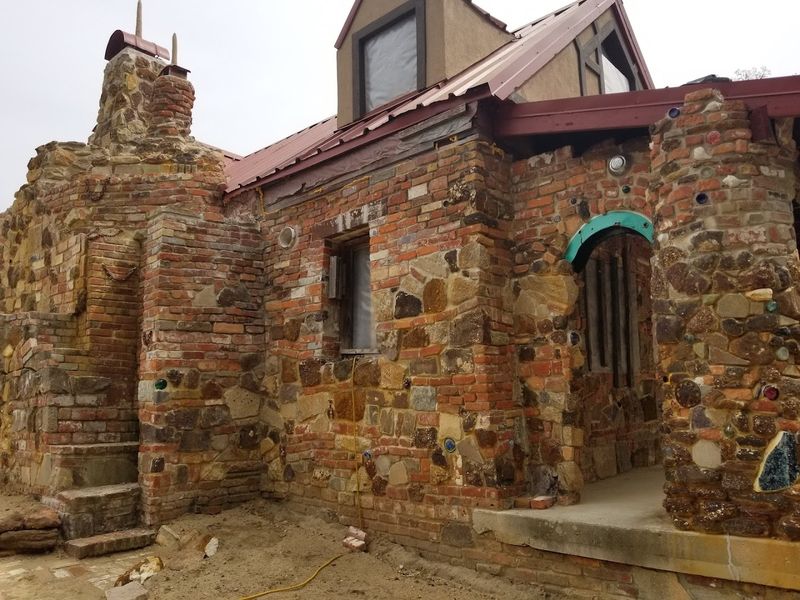
Old auto parts, shattered glass bottles, scrap metal, and bed frames all became building blocks in his hands.
The result was something nobody could have predicted. He called it the Palace of Depression, a name that acknowledged hard times while absolutely refusing to surrender to them.
It is one of the most defiant acts of creativity ever recorded in the Garden State, and that spirit still clings to every inch of the reconstructed walls today.
Building With What You Have Got
There is something almost playful about the construction method used here, once you get past the sheer audacity of it. Daynor did not walk into a hardware store with a budget.
He walked into junkyards and roadsides with a vision that most people would have laughed at.
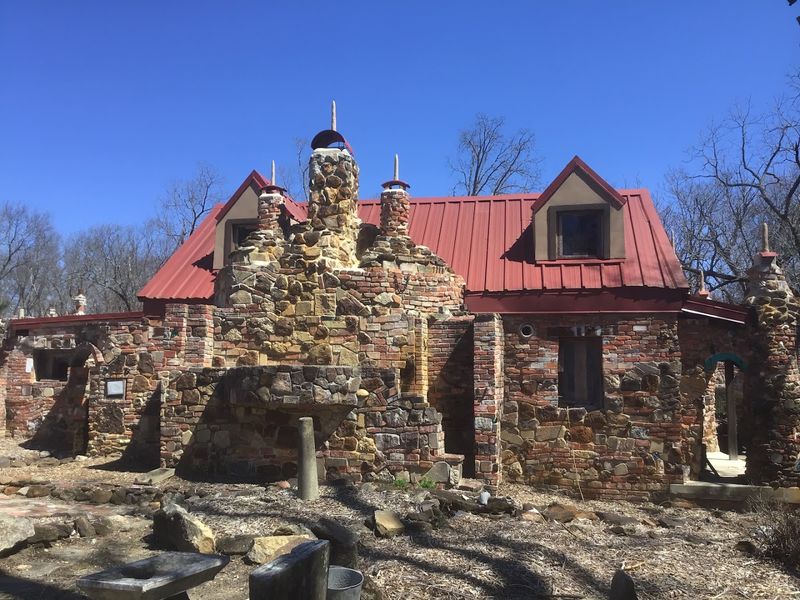
Glass bottles were pressed into concrete walls to let in colored light. Bed frames became structural elements.
Car hoods and fenders were shaped into architectural features that somehow looked intentional and even beautiful. The whole thing was held together by a mix of mud, cement, and pure determination.
What makes this even more remarkable is that Daynor had no formal training as an architect or builder. He figured it out as he went, adjusting and improvising at every turn.
The Palace grew to include 18 towering spires, a massive outdoor fireplace, and a circular door covered in shells. Every single piece of it was sourced from what others had thrown away, which makes the craftsmanship feel all the more jaw-dropping when you see it in person.
The 18 Spires That Touched the Sky
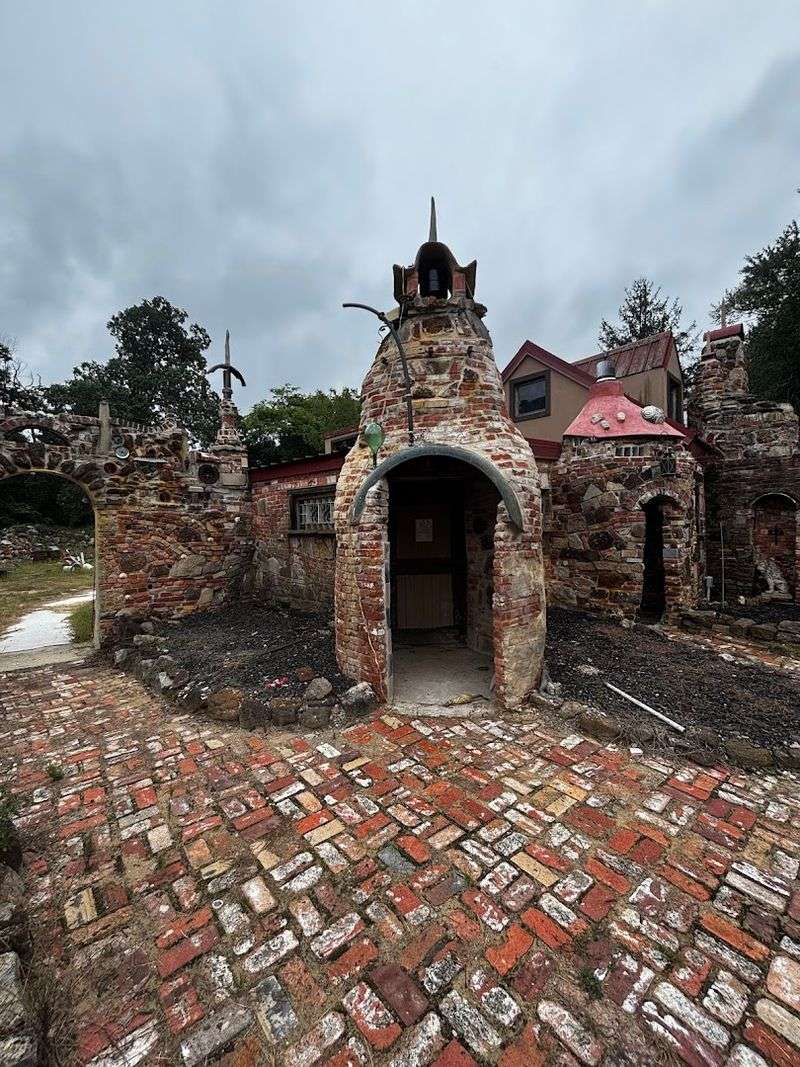
Standing outside the Palace, the first thing that grabs your attention is the skyline it creates. Eighteen spires shoot upward from the structure, giving it the silhouette of something between a cathedral and a carnival ride.
It is impossible to look at without feeling a little dizzy in the best possible way.
Each spire was crafted by hand from salvaged materials, yet they carry a strange kind of elegance. The sheer repetition of them creates a rhythm across the roofline that feels almost musical.
You keep counting them, losing track, and starting over because the eye does not quite believe what it is seeing.
From the road, the spires announce the Palace before anything else does. They rise above the surrounding trees and low rooftops of Vineland like a declaration.
Daynor wanted people to stop and stare, and he got exactly that. Over 250,000 visitors came through during the Palace’s original years, drawn in by exactly this kind of theatrical, larger-than-life presence that still commands attention nearly a century later.
A Circular Door Covered in Shells
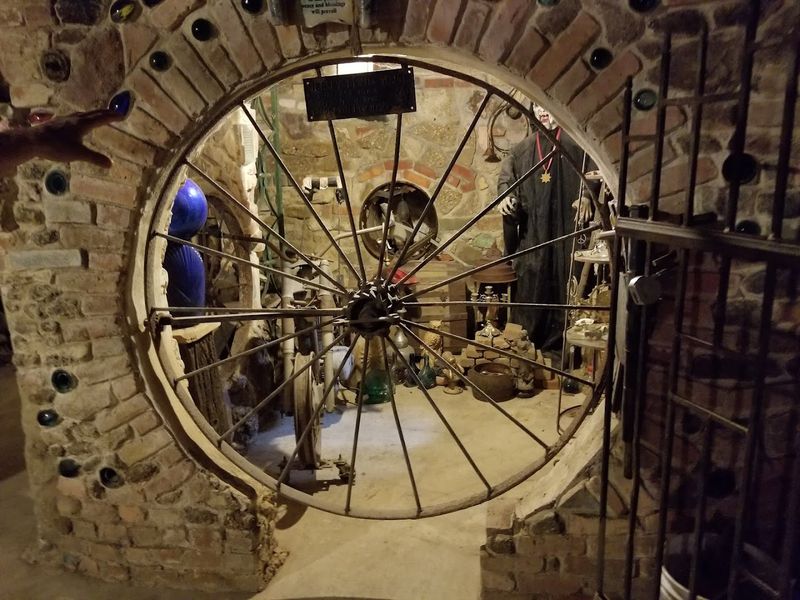
Among all the wild details packed into this building, the circular shell-covered door manages to stand out as something genuinely poetic. Shells pressed into concrete around a round doorway sounds like something from a fairy tale, but here it is, real and touchable and completely handmade.
The choice of shells is interesting. They bring a softness to a building otherwise dominated by metal, glass, and rough concrete.
It is like Daynor wanted one spot that felt almost gentle, a threshold that said welcome in the middle of all that defiant chaos.
Details like this one are what separate the Palace from being just a quirky curiosity and push it firmly into the category of genuine folk art. Every choice, every embedded object, every curve and angle was made by one person with a specific intention.
Walking up to that door, even during the ongoing restoration, gives you the feeling that you are entering something that was made with real care. It is the kind of craftsmanship that rewards a slow, unhurried look.
Charging a Quarter for Tours During Hard Times
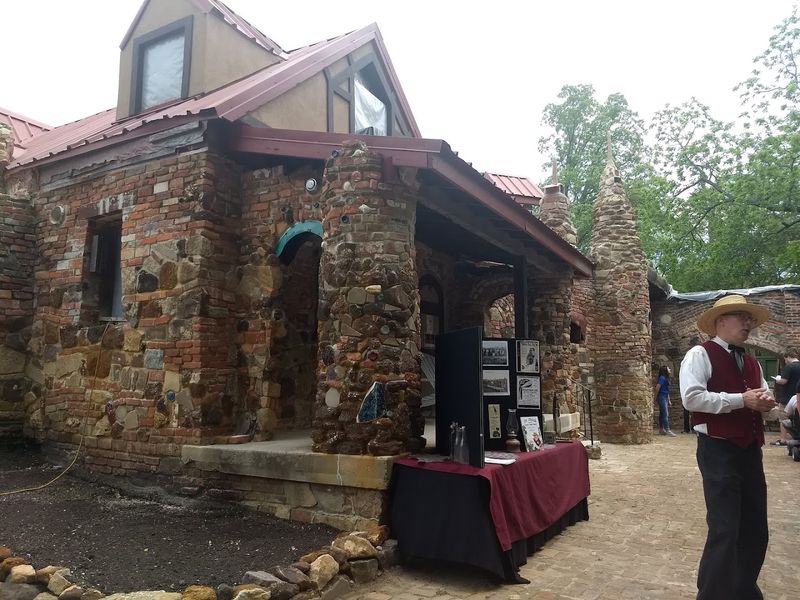
Running a tourist attraction during the Great Depression sounds like a terrible business plan on paper, and yet Daynor made it work. He charged visitors a quarter to tour his creation, which was a modest but meaningful amount during a decade when money was scarce for nearly everyone.
The fact that people paid it, and kept paying it, says everything about how compelling the Palace was. Over a quarter million visitors came through in the early years.
That is not a trickle of curious neighbors. That is a genuine phenomenon for a handmade structure in rural New Jersey built by one man with no budget.
Daynor had a flair for showmanship that matched his talent for construction. He understood that people needed wonder during dark times, and he was happy to provide it for the cost of a coin.
The Palace was not just his home. It was his livelihood, his stage, and his way of telling the world that creativity and grit could outlast any financial disaster.
That message landed, and it still does.
The Demolition and the Long Silence
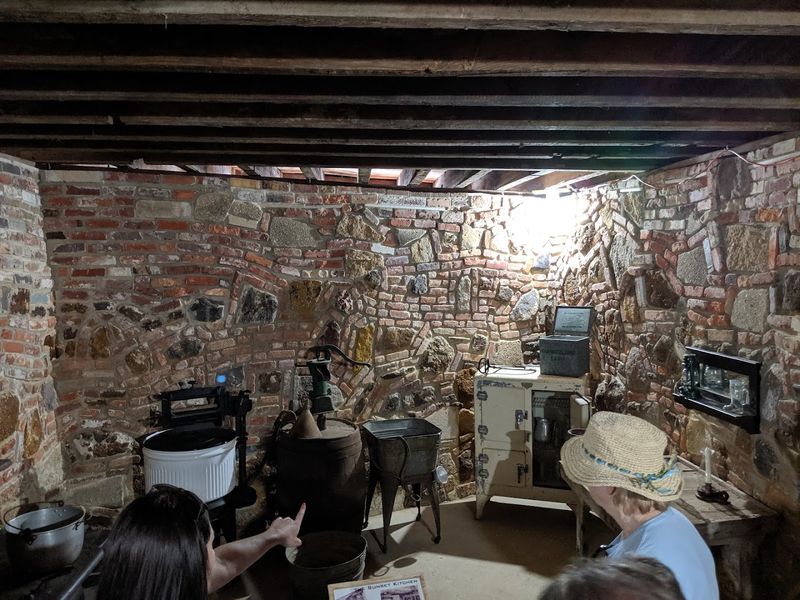
After Daynor died in 1964, the Palace lost its keeper. Without someone to maintain it and advocate for its preservation, the structure began to deteriorate.
Cities are not always kind to things that do not fit neatly into categories, and Vineland was no exception.
By 1969, the city had demolished what remained. The Palace of Depression, all its spires and shells and embedded junk and sheer improbable beauty, was gone.
The lot sat quiet for years, a flat and forgettable space where something extraordinary had once stood.
That kind of loss has a particular sting to it. Not a fire or a storm but a deliberate decision to erase something that made people stop their cars and stare.
The demolition felt, to those who remembered it, like the final chapter. But history has a way of circling back when a story is too good to stay buried.
The silence on that lot in Vineland turned out to be temporary, though nobody knew it yet. The Palace was not finished making its point.
The Restoration That Refused to Quit
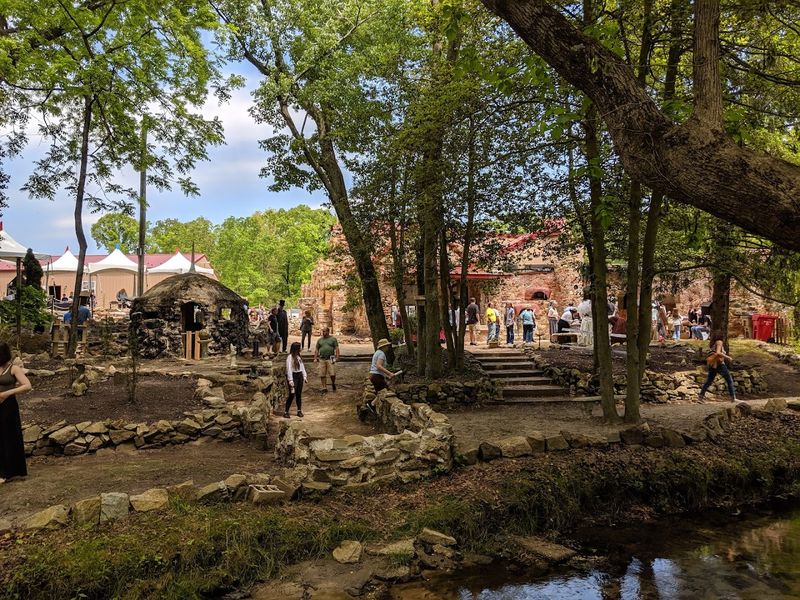
In 1998, something shifted. A restoration project launched with the goal of bringing the Palace back, and from the start it was a deeply community-driven effort.
Volunteers showed up. Donors contributed.
People who had never met Daynor but felt connected to what he had built started pouring their own time and energy into the project.
The rebuilding process has not been fast or easy. Key figures in the effort have come and gone over the years, and the work continues to move forward in stages.
But the commitment has never wavered, which is its own kind of tribute to the original builder’s spirit.
Visiting the site today means stepping into an ongoing story rather than a finished exhibit. There is something energizing about that.
The Palace is not behind glass in a museum. It is alive and actively becoming itself again, with each new section of wall and each embedded bottle cap representing another act of communal resilience.
The volunteers who show up on workdays are carrying on a tradition that started with one stubborn, visionary man nearly a century ago.
What a Guided Tour Actually Feels Like
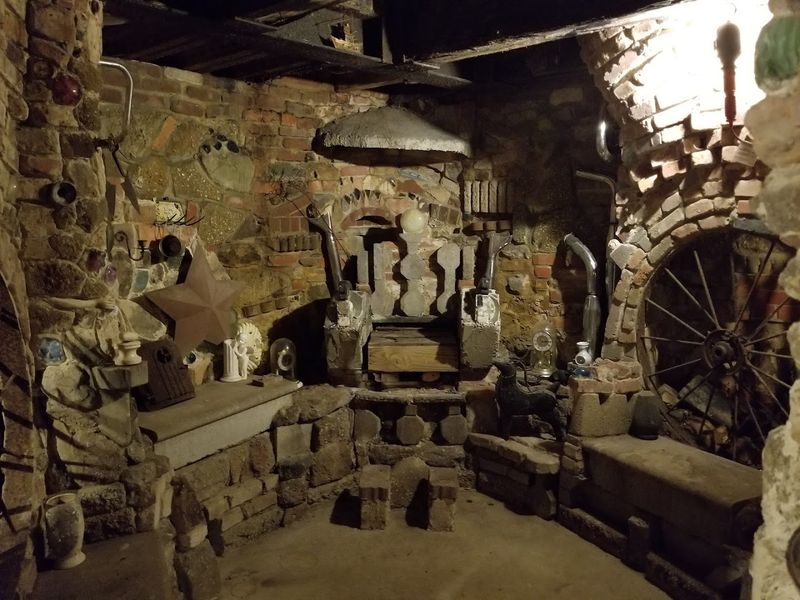
Stepping onto the property with a guide changes the whole experience. What looks from the road like an interesting curiosity reveals itself up close as something layered and deeply human.
Every section of wall has a story, and having someone walk you through it unlocks details you would never catch on your own.
The guided tours connect the physical structure to the life of the man who built it. You start to see Daynor’s personality in the choices he made, which materials he favored, where he placed decorative elements, how he thought about space and light.
It stops being a pile of junk and becomes a self-portrait made from the cast-off pieces of an era.
Tours are available by arrangement, and reaching out ahead of your visit is the smart move. The people who lead them bring genuine passion to the job, which makes the whole thing feel less like a history lesson and more like a conversation.
Plan for more time than you think you will need. The Palace has a way of holding your attention longer than expected.
The Legacy of George Daynor
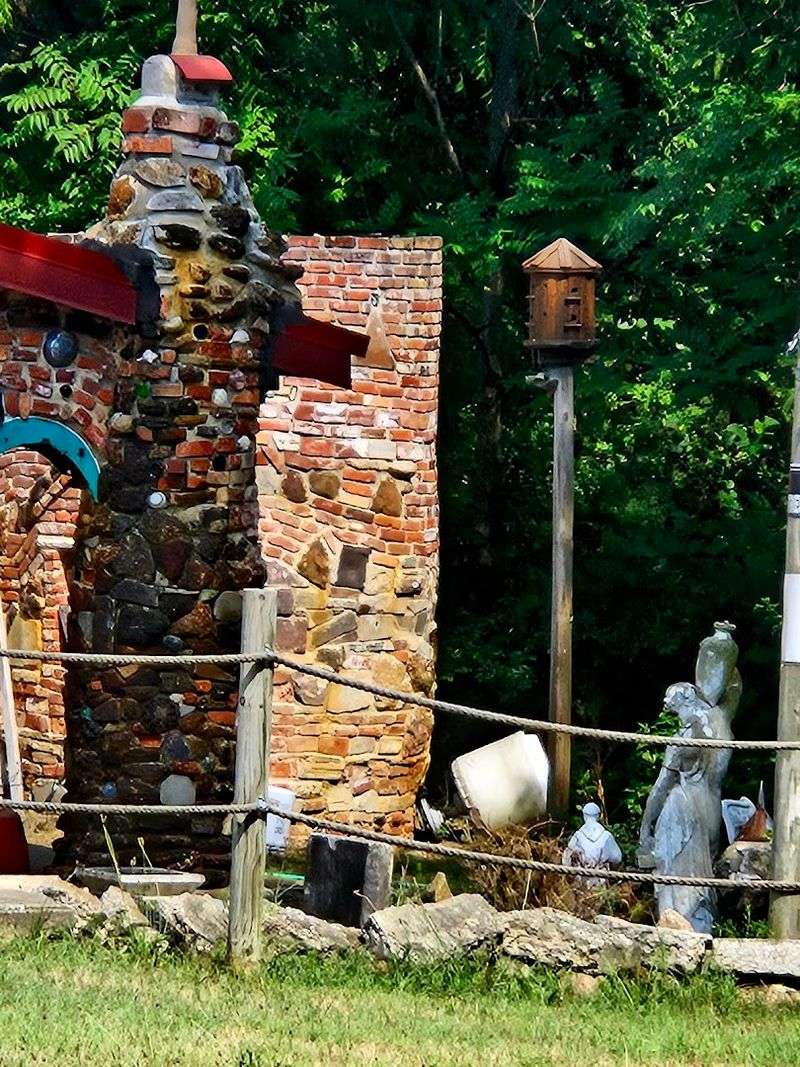
George Daynor is one of those figures who sounds almost too dramatic to be real. A gold miner turned stock market victim turned self-taught architect who built a palace from garbage and charged tourists to see it during the worst economic period in American history.
The story writes itself, and yet every part of it is true.
His legacy is complicated by the later years of his life, which included some legal trouble tied to a very public false claim in 1956. But the Palace itself stands apart from all of that.
It is the work, not the man’s full biography, that endures and inspires.
What Daynor left behind is a proof of concept for a particular kind of human stubbornness. The kind that looks at a swamp and a pile of junk and says, “I can make something from this.” That impulse is deeply relatable, even across a century of distance.
The Palace is his argument that creativity does not require resources. It requires only refusal to give up, and he made that argument in concrete and glass.
Planning Your Visit to 265 S Mill Road
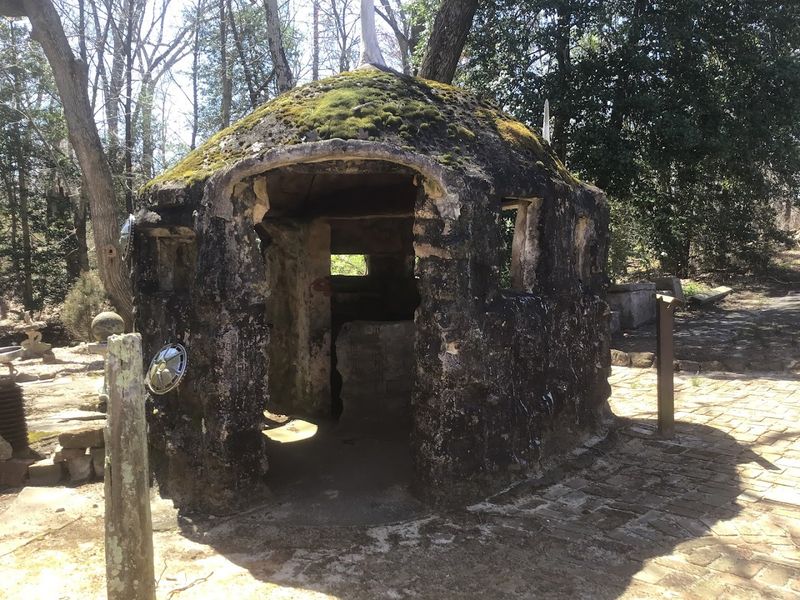
Getting to the Palace is straightforward once you know what to expect. The address is 265 S Mill Rd in Vineland, and the structure is visible from the road, which makes it easy to spot even before you park.
The surrounding neighborhood is quiet and residential, which only makes the Palace feel more surprising when it comes into view.
Because the site is actively being restored, visiting hours and access can vary. Reaching out ahead of time through the official Facebook page or by phone ensures you get the most current information before making the trip.
Showing up without checking first can mean missing out on the full experience.
The Palace rewards visitors who come with curiosity and patience. It is not a polished theme park or a slick museum.
It is a work in progress with decades of history embedded in every wall. Bringing a snack for the road and leaving your schedule flexible makes the visit feel like the adventure it genuinely is.
Address: 265 S Mill Rd, Vineland, NJ.
Dear Reader: This page may contain affiliate links which may earn a commission if you click through and make a purchase. Our independent journalism is not influenced by any advertiser or commercial initiative unless it is clearly marked as sponsored content. As travel products change, please be sure to reconfirm all details and stay up to date with current events to ensure a safe and successful trip.
