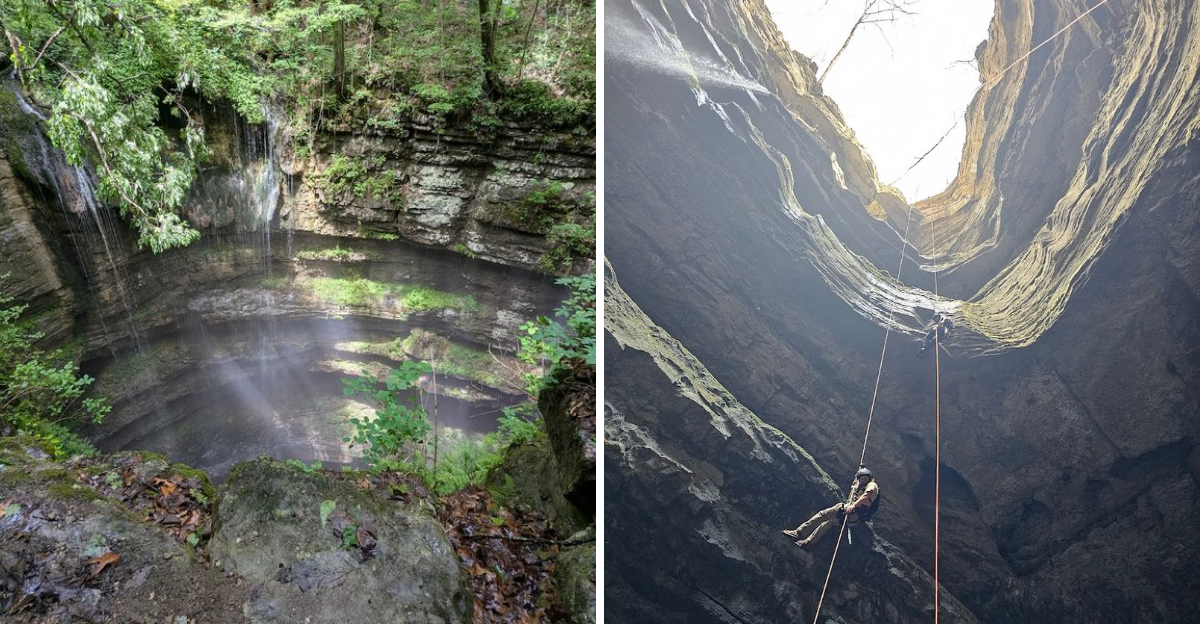
Hidden in the rugged hills of Jackson County, Alabama, this open-air sinkhole is one of those places that makes you question just how dramatic nature can be. It plunges over 160 feet straight down, roughly the height of a multi-story building, and stops visitors in their tracks the moment they peer over the edge.
Managed by a conservation organization, the site is protected and accessible by permit, helping preserve its fragile ecosystem while still allowing controlled public access. The sheer vertical drop, paired with the surrounding forest, gives it an almost surreal, otherworldly feel.
Whether you are an experienced caver looking for a technical challenge or simply someone hoping to witness something extraordinary, it is the kind of natural landmark in Alabama that leaves a lasting impression long after you leave.
A 16-Story Vertical Drop That Puts the World in Perspective
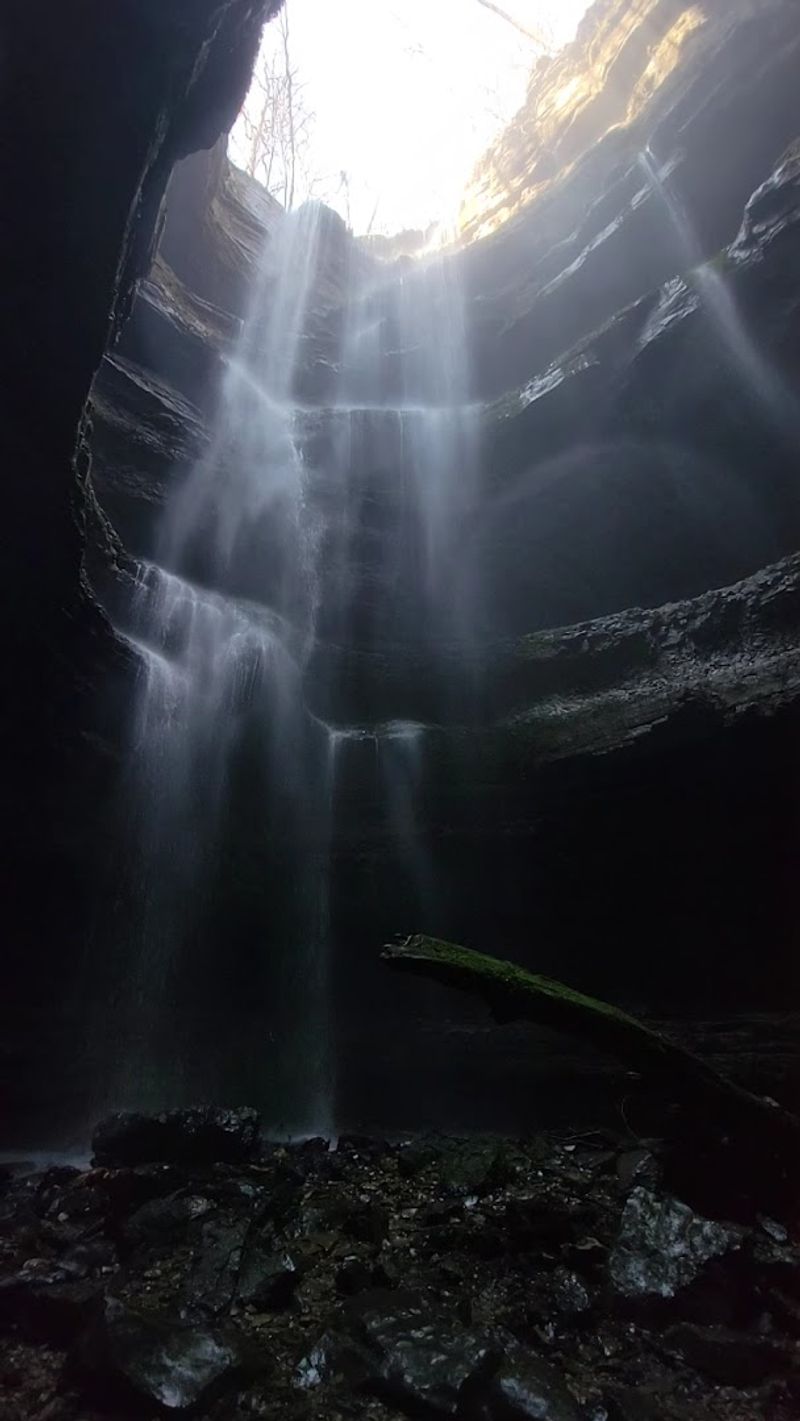
Some places make numbers feel real in a way that surprises you. Neversink Pit drops 162 feet from rim to floor, a depth that matches a 16-story building, and standing at the edge makes that comparison hit differently than any skyscraper ever could.
The pit opens at roughly 40 feet wide at the top and expands to about 100 feet across at the base, giving it a dramatic funnel-like shape that draws your eyes all the way down.
That sense of scale is hard to describe without experiencing it firsthand. The walls are layered with geological history, and the sheer vertical drop creates a stillness at the bottom that feels almost surreal when you are peering down from above.
Even on a clear day, the floor can look shadowy and distant, which only adds to the wonder.
This is not a roadside attraction you glance at and move on from. Visitors who make the uphill hike to the rim often stand quietly for several minutes, just absorbing the enormity of what they are looking at.
If you have ever wanted to feel genuinely small in the best possible way, this geological formation delivers that feeling without any exaggeration.
Seasonal Waterfalls and Winter Ice Columns That Change Everything
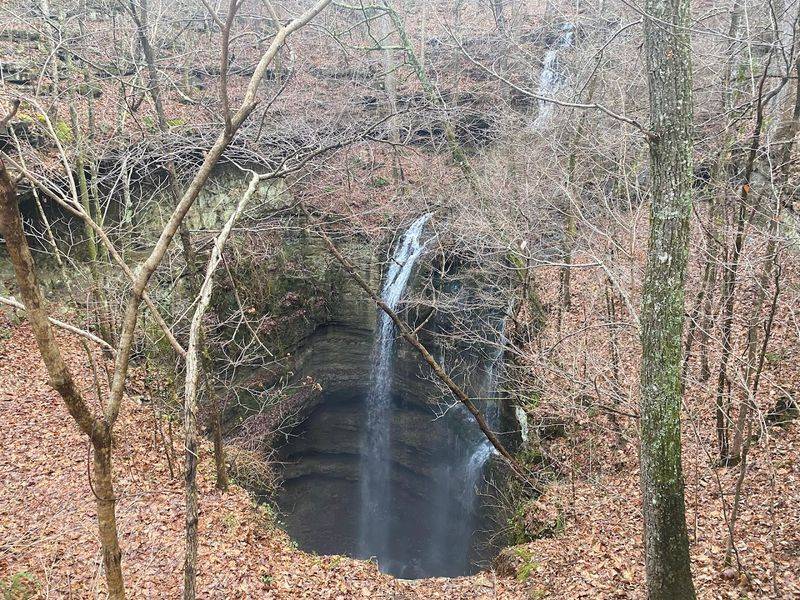
Neversink Pit is not the same place twice. After significant rainfall, water cascades over the rim and falls the full 162 feet to the floor, creating a waterfall that is both beautiful and loud in a way that echoes through the entire cavity.
Visiting after a heavy rain transforms the pit from a geological marvel into something that feels almost theatrical.
Winter brings an entirely different spectacle. When temperatures drop low enough, those same cascading flows freeze into towering columns of ice that cling to the pit walls and build up from the floor.
These ice formations can grow impressively large, and they give the pit a completely different visual character than any other season offers.
Early spring is considered one of the best times to visit for waterfall activity, though the flow in mid-autumn can be more of a trickle depending on recent precipitation.
Planning your trip around seasonal conditions takes a little research but pays off enormously. Checking recent rainfall totals before you go gives you a realistic sense of what to expect at the rim.
The preserve is open year-round, and the SCCi permit system allows you to book ahead so you are not turned away on arrival. Only a limited number of permits are issued per day, which keeps the experience uncrowded and the environment protected regardless of which season you choose to visit.
One of the Most Photographed Pits in the Entire TAG Region
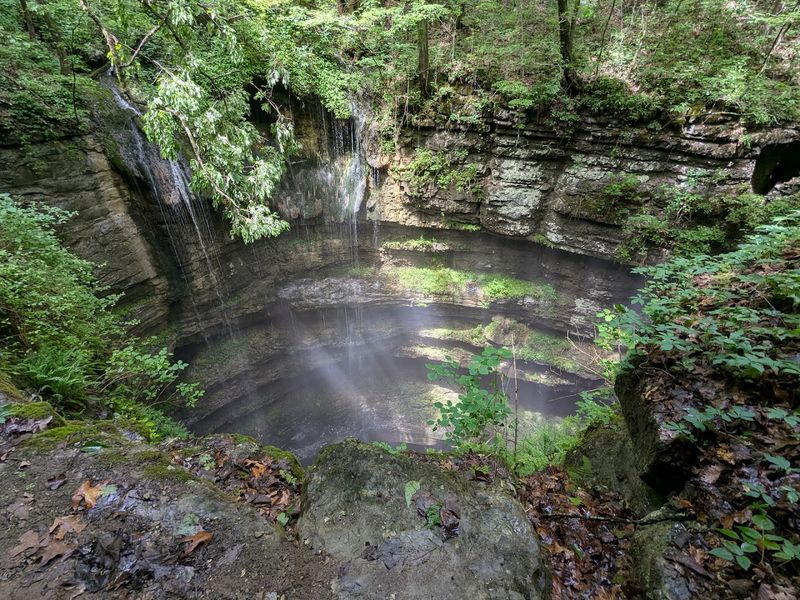
The TAG region covers Tennessee, Alabama, and Georgia, and it holds some of the most spectacular cave systems in North America. Within that already impressive territory, Neversink Pit has earned a reputation as one of the most photographed open pits in the entire area.
That is not a casual distinction when you consider the competition.
What makes it so compelling visually is the combination of depth, natural light, and organic texture. Sunlight filters through the opening and catches the mossy green walls, the fern-draped ledges, and the mist that sometimes rises from below.
On certain mornings, the pit glows with an almost otherworldly emerald light that photographers travel hours to capture.
Long-exposure shots taken from the rim looking straight down have become iconic in the caving photography community.
The circular opening frames the descent beautifully, and the contrast between the bright Alabama sky above and the shadowy depths below creates a natural tension that is hard to replicate anywhere else.
Whether you shoot on a smartphone or a professional rig, Neversink Pit gives you material that stands out. Plan your visit for early morning after recent rain for the best atmospheric conditions.
Vertical Rope Gear Is Not Optional, It Is the Whole Point
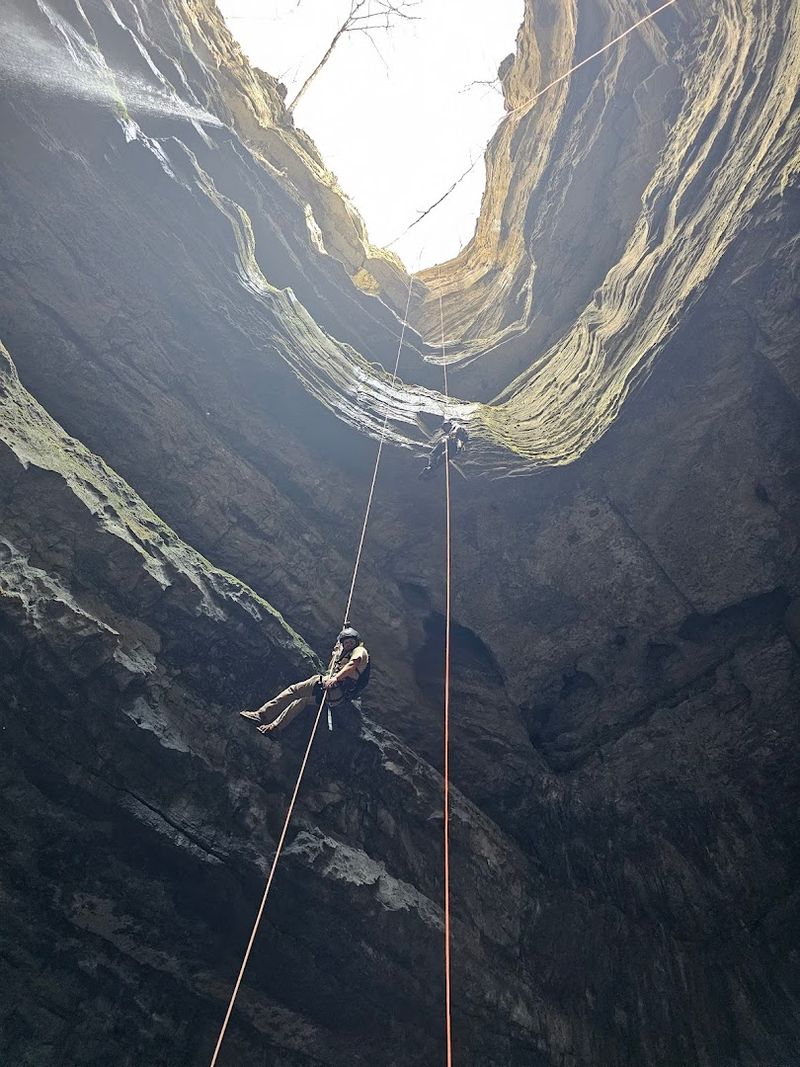
Neversink Pit does not meet you halfway. Reaching the bottom requires rappelling 162 feet on rope, and climbing back out demands mechanical ascenders and solid vertical caving skills.
There is no ladder, no elevator, and no shortcut. That strict gear requirement is exactly what keeps this place in a category of its own among adventure destinations in the southeastern United States.
For cavers who have put in the time to learn vertical technique, the descent is described as a classic and deeply satisfying experience. The rope hangs free through open air for much of the drop, meaning you are not hugging a wall but floating in the middle of this enormous geological cavity.
That kind of exposure is thrilling in a way that purely horizontal caving rarely matches.
Beginners should not attempt the descent without proper training. Rescues have been necessary for unprepared visitors in the past, and the SCCi is clear about expectations.
Renting or borrowing gear without knowing how to use it is not a safe option here. If you are serious about making the full descent, connecting with a local grotto or vertical caving club beforehand is the smartest move you can make.
Fern-Covered Ledges and a Fragile Ecosystem Worth Protecting
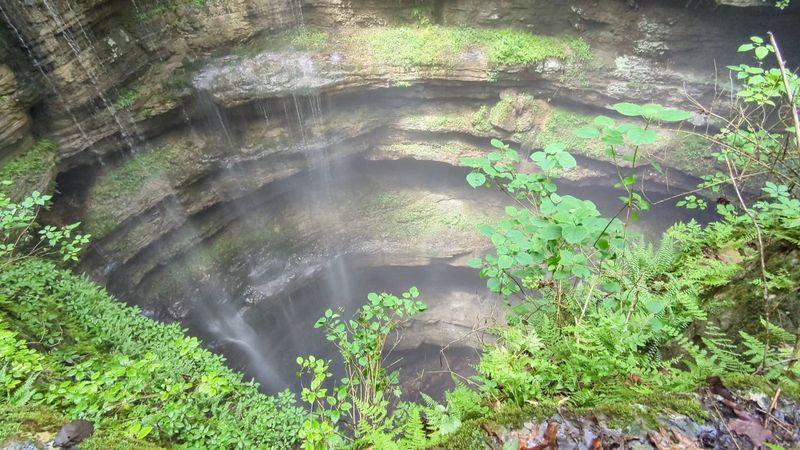
Look past the depth and drama for a moment and you will notice something quieter and equally remarkable. The ledges inside Neversink Pit are covered in living green, ferns spilling over limestone edges, moss clinging to every damp surface, and vines trailing downward into the shadowy interior.
Some of the plant species growing on those ledges are rare, and a few are considered endangered.
That fragility is part of why the SCCi manages the preserve so carefully. The permit limit exists not just for safety but to protect a biological community that took centuries to establish.
Foot traffic near the rim, dropped gear, and careless behavior can disturb species that have no ability to recover quickly. Respecting the boundaries set by the conservancy is not just a rule, it is the reason the pit still looks this pristine.
Salamanders, snails, and bat populations also use the pit as habitat, making it an active ecological site rather than simply a geological one. The interplay between geology and biology here is genuinely fascinating, and it gives the visit a layer of meaning beyond pure adventure.
Nature enthusiasts and hikers who appreciate biodiversity will find Neversink equally compelling even without rappelling.
The Hike In Is a Rewarding Challenge on Its Own
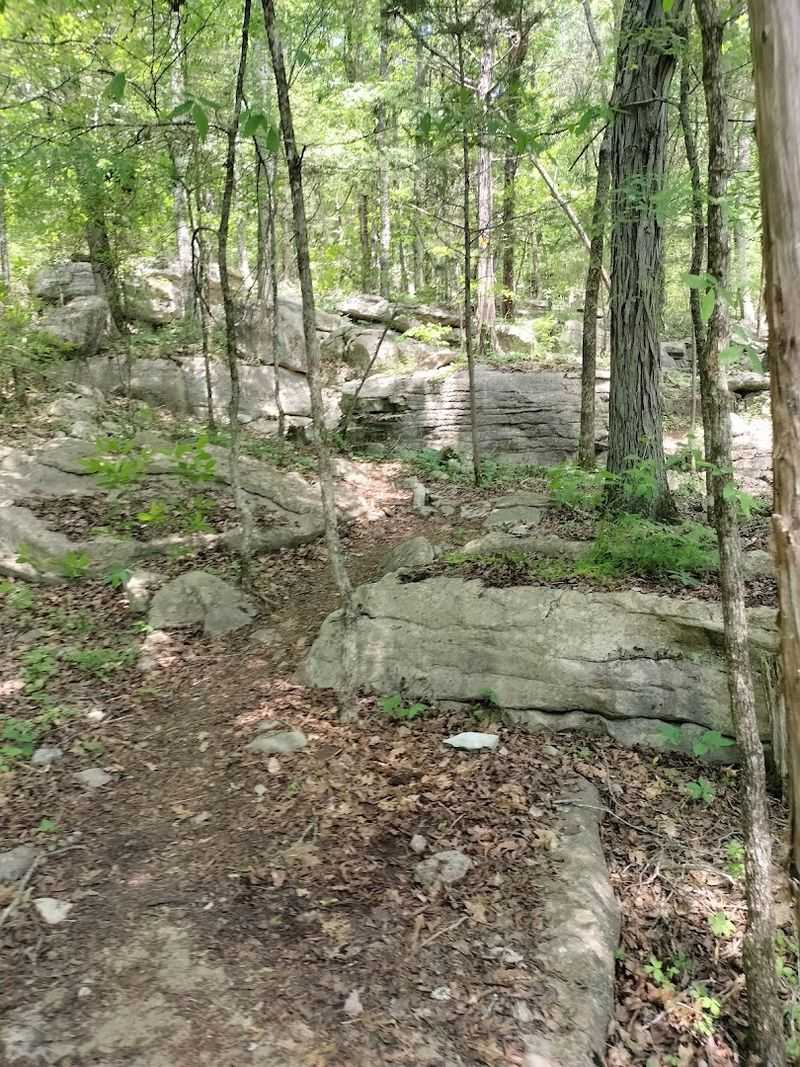
Getting to Neversink Pit is not a casual stroll, and that is part of what makes arriving at the rim feel earned. The trail from the parking area is roughly half a mile each way, but it climbs steadily uphill the entire way in.
Limestone configurations appear along the path, giving the hike geological interest well before you reach the main attraction.
The trail is marked with yellow blazes, though some visitors have noted the markers can be easy to miss in sections where fallen leaves cover the path. Staying alert and following the well-worn ground rather than assuming every turn is obvious keeps you on track.
Trekking poles make the uphill push noticeably more comfortable, especially on the return leg when your legs are already tired from the excitement at the rim.
Round trip, most visitors complete the hike in 40 minutes to an hour depending on pace and how long they linger at the pit. The trail is rated as moderately strenuous, and visitors should be in reasonable physical condition before attempting it.
Wet conditions make the rocky sections slippery, so proper footwear matters more here than on a groomed park path. Bringing water is essential, and leaving early in the day gives you the best light and the coolest temperatures.
A Permit-Required Preserve That Keeps the Experience Genuinely Special
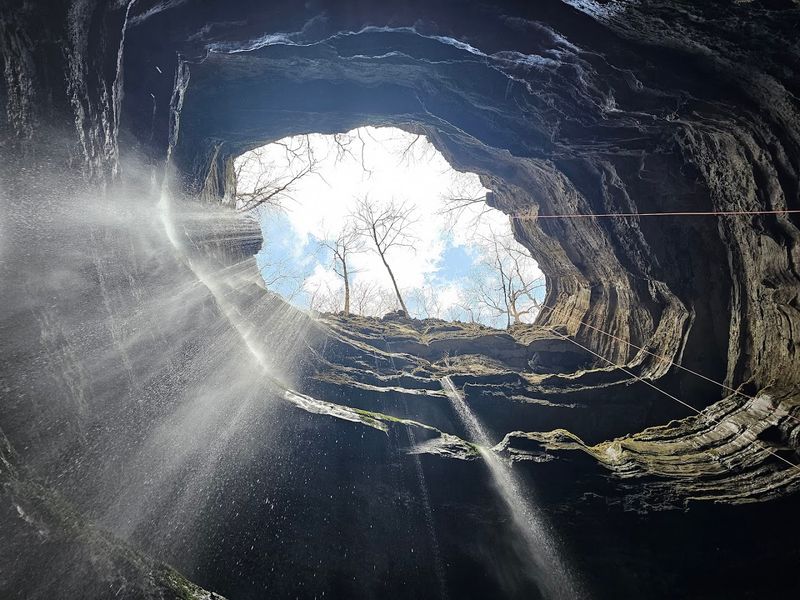
Not every incredible natural site manages to stay incredible over time. Neversink Pit has stayed remarkable partly because the Southeastern Cave Conservancy Inc. controls access through a free permit system that limits daily visitors.
That cap on numbers means you are unlikely to arrive and find the rim crowded with strangers jostling for the best view.
Permits are obtained through the SCCi website at saveyourcaves.org before your visit. Cell service at the trailhead can be unreliable, so downloading or printing your permit in advance is strongly recommended.
The permit process also means the conservancy has a general record of who is on site, which adds a practical safety layer for solo visitors or small groups heading into remote terrain.
The preserve itself is listed as open around the clock, but visiting during daylight hours is the only sensible approach for anyone not equipped for technical night caving. Children require close supervision near the rim, as there are no safety railings and the drop is immediate and severe.
The experience rewards visitors who prepare thoughtfully and arrive with realistic expectations. Nearby, Tumbling Rock Cave is another popular destination in the area worth pairing with a trip to Neversink for a full day of exploration in Jackson County.
The Neversink Cave Preserve is located in Fackler, AL 35746, and the permit remains one of the best free investments you can make before any outdoor adventure in northern Alabama.
