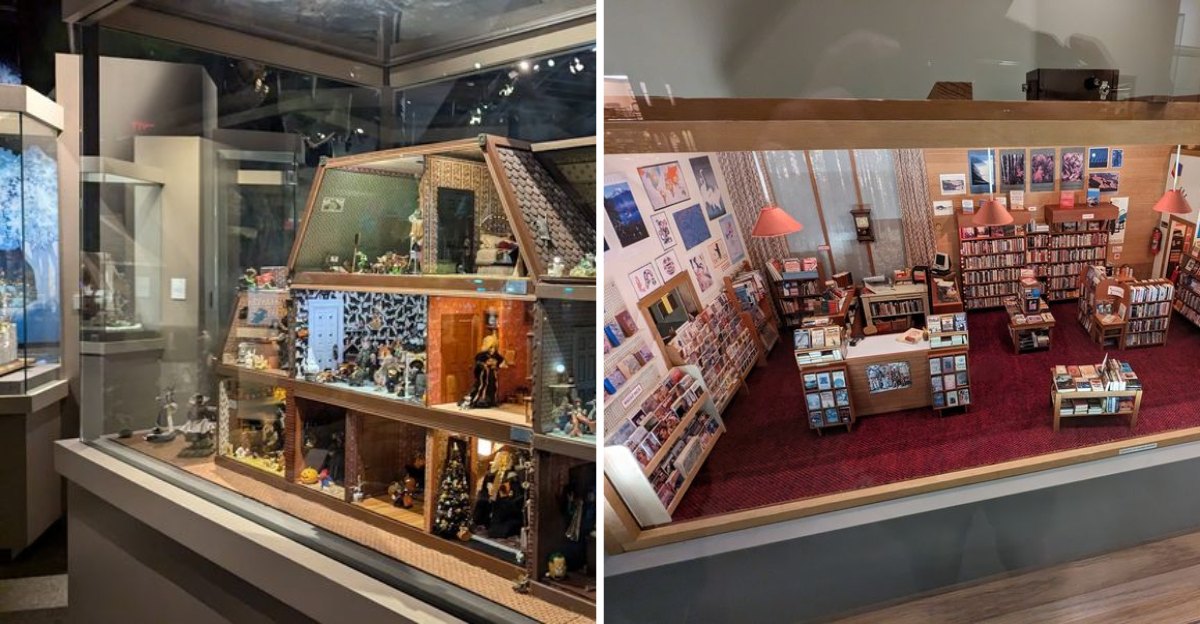
I went to Arizona expecting cactus views and dusty desert roads, and instead I spent an entire afternoon crouched down staring at a museum the size of a microwave. The place sits in a quiet part of town, set back behind a parking lot, and from the outside it gives almost nothing away.
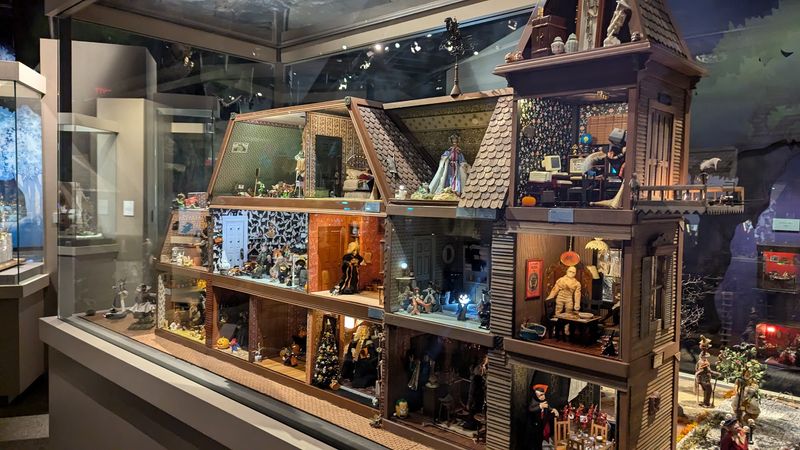
Inside, though, there are more than 500 dollhouses and room boxes spread across over 10,000 square feet, and some of them are older than the United States itself. One display features a Victorian mansion with working chandeliers, another shows a tiny 1940s diner with plates on the counter.
What surprised me most was how quickly my eyes adjusted to the scale. After twenty minutes, I stopped seeing tiny furniture and started seeing rooms, homes, whole little lives happening behind glass.
The detail is staggering, from hand-stitched curtains to miniature books with readable titles. I found myself leaning closer and closer, trying to catch every small thing.
For anyone who likes noticing small details, this place will absolutely get you.
The Enchanted Realm and Its Three-Faced Tree
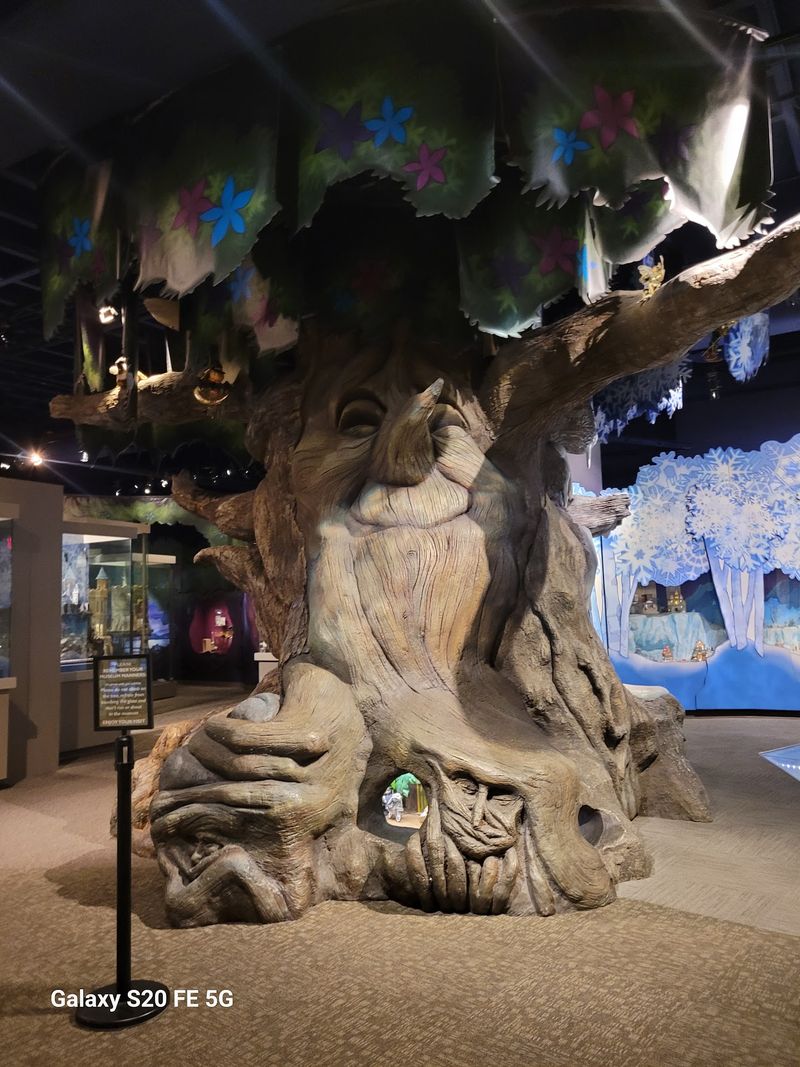
My favorite room turned out to be the one I almost rushed through. The Enchanted Realm was designed by a former Disney Imagineer, and honestly, you can tell within seconds.
The lighting drops low, the ceiling feels closer, and a giant sculpted tree anchors the middle of the space. Walk around it slowly and you’ll notice it has three different faces, each one shifting themes as you circle.
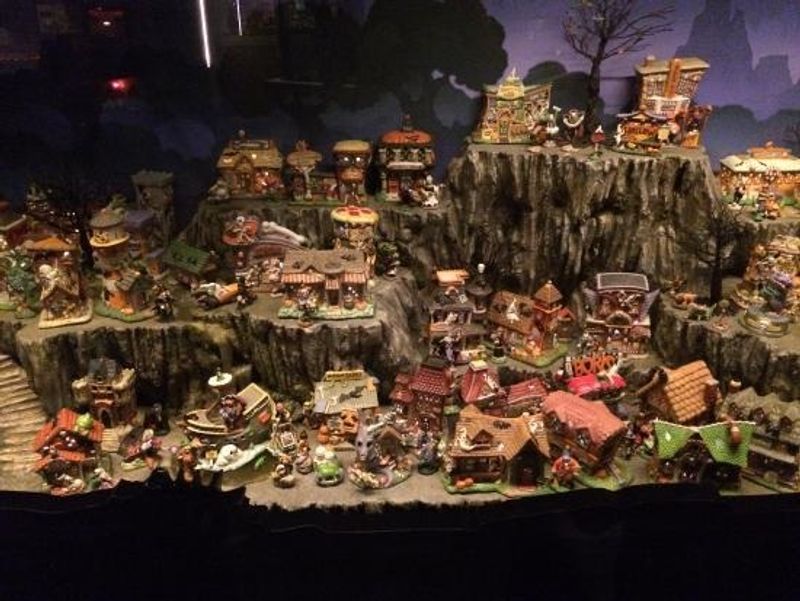
One side leans into winter wonderland, another into fairytale magic, and the third goes fully spooky Halloween.
Look down and there’s a surprise most people miss on their first lap. A snowy village sits embedded beneath the floor, visible through glass, like a whole town buried under the desert.
Around the room you’ll find aliens, Ewoks, woodland creatures, fairy castles, and a steampunk spaceship called Montastrea built by YouTube creator Ara Bentley. Kids tend to lose their minds in here, and I watched a few adults do the same.
My advice is simple. Give this gallery more time than you think you need, because the details hide in corners and under ledges rather than at eye level.
Crouch down. Lean in.
Check behind the tree.
Parents with young kids should know this room alone can hold attention for close to an hour. It’s dim, calm, and endlessly interesting, which is a rare combination.
I came back to it twice before leaving, and both times I noticed something new sitting quietly in a shadow.
Antique Dollhouses Older Than the Country
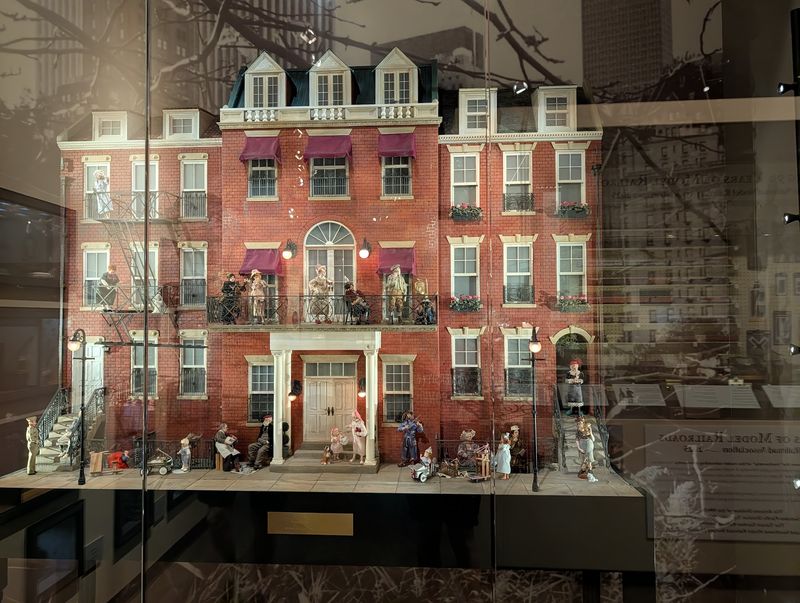
Some of the houses here were built before George Washington was president. That fact took a minute to settle in my brain.
The history gallery holds antique dollhouses with pieces dating back as far as 1742, and it also displays what’s considered the oldest miniature house in the United States, crafted in 1775. Reading those dates on a small card next to a hand-built house does something strange to your sense of time.
Daneway House, from around 1775, holds a complete miniature leather-bound set of Shakespeare’s works. Tiny books, real bindings, all of it shrunk down and shelved neatly.
Nearby sits a Victorian dollhouse constructed from walnut cigar boxes, which says a lot about how makers used whatever good wood they could find. Repurposing isn’t new, it turns out.
The piece that genuinely stopped me was an automated house with more than 30 animated figures. It once ran on a key-wound weight system connected to dozens of strings, which means someone engineered a mechanical performance inside a dollhouse centuries before anyone had electricity to help.
If you enjoy history but find big museums exhausting, this gallery is a gift. You’re reading history through furniture styles, wallpaper patterns, and kitchen tools instead of dense wall text.
Take your time with the labels here. They explain how craftsmanship shifted across decades, and once you notice that, the whole room reorganizes itself in your head.
That Bookstore With Over 1,500 Real Little Books
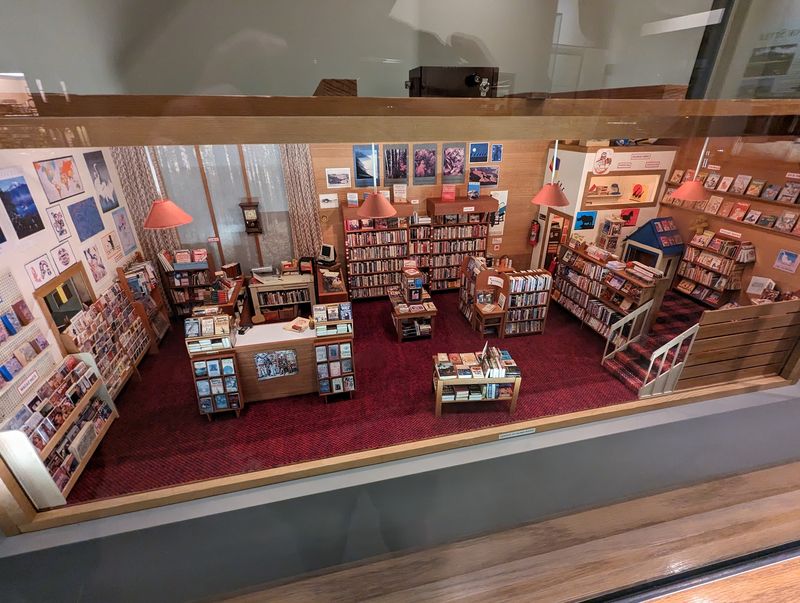
There’s one display almost everyone I overheard mentioned by name, and it deserves the hype. The Essence of Island Bookstore is a scale replica of a real bookshop, and it contains over 1,500 tiny books.
Artist Annie Herzfeld built it, and the level of commitment is a little unhinged in the best possible way. Spines are labeled.
Shelves sag in believable places.
I stood there far too long trying to read titles, which is exactly the trap. You start out admiring the whole thing, then you get pulled into one shelf, then one book.
The contemporary gallery around it is packed with reproductions of artist spaces, and each one carries the same obsessive care. A pottery studio, a weaver’s workshop with hand-woven textiles at miniature scale, and a violin maker’s shop built inside an actual regular-sized violin.
There’s also a painting studio starring a monkey painter, which I did not expect and fully enjoyed.
Nearby you’ll find pencil micro sculptures by Salavat Fidai, carved into graphite tips so small you need to lean close and hold your breath.
Miniatures from the U.K., France, Germany, Holland, Italy, Japan, Thailand, and Spain fill out the space, along with a homage to the craftsman-style Gamble House by Greene and Greene.
Bring reading glasses if you use them. Seriously, you’ll want every bit of vision you can get in this gallery.
The Scavenger Hunt That Turns Adults Into Kids
Ask at the front desk before you walk in. That’s the tip I wish someone had told me sooner.
The museum runs a scavenger hunt with cards that send you looking for hidden objects tucked throughout the galleries. Fairies and mushrooms have been popular targets, and the items change often enough that repeat visitors keep playing.
What cracked me up was watching who actually got competitive about it. Kids were fast, sure, but grown adults were the ones quietly circling back to cases with narrowed eyes.
Functionally, the hunt does something clever. It slows you down and forces you to actually look inside each display instead of drifting past at walking pace.
Without it, I probably would have breezed by half the small details. With it, I found myself examining ceilings, floorboards, and windowsills of rooms the size of shoeboxes.
Families with elementary-age kids get the most obvious value here, since it converts a museum visit into a treasure mission. But solo visitors and couples shouldn’t skip it out of pride.
The staff are genuinely friendly about explaining how it works, and they’ll point you toward where to start.
One more practical note. Because the hunt items rotate, coming back a year later feels different rather than repetitive, which makes this a decent tradition if you visit Tucson regularly.
Grab a card. Play along.
Your eyes will catch far more than they would otherwise.
Rotating Exhibits Keep the Place Feeling New
Arizona locals keep returning for a reason, and it isn’t just nostalgia. Temporary exhibits rotate through regularly, so the museum rarely feels frozen.
Past and featured shows have covered a lot of ground. Model railroads got their own celebration, a full-scale model of a British cross street appeared, and delicate Japanese netsuke carvings have been displayed too.
Peruvian Retablos by Claudio Jimenez Quispe brought bright folk-art storytelling into the mix, and miniature paintings on unusual surfaces like coins have shown up as well. Amanda Kelly’s work under the title The Need to Keep has been featured, along with Ara Bentley’s Addams Family Mini Mansion and Beetlejuice Dollhouse.
Film fans have had a real treat with a Ray Harryhausen exhibition, showing models and sketches from the stop-motion creature work that shaped mid-century movie magic. Seeing those pieces in person, rather than on a screen, hits differently.
The museum also spotlights winners from the Tucson Miniature Society’s annual showcase, which keeps local makers visible. Restoration projects appear occasionally too, like work on a 1965 fire station by local artists John Ackerman and David Fischer.
Practical takeaway. Check the museum’s website before you go so you know what’s currently up, because the special exhibit can genuinely shape your visit.
Signing up for the newsletter is a smart move for anyone in the Tucson area. Programs and workshops pop up throughout the year, and they fill in fast.
Planning a Visit Without Rushing It
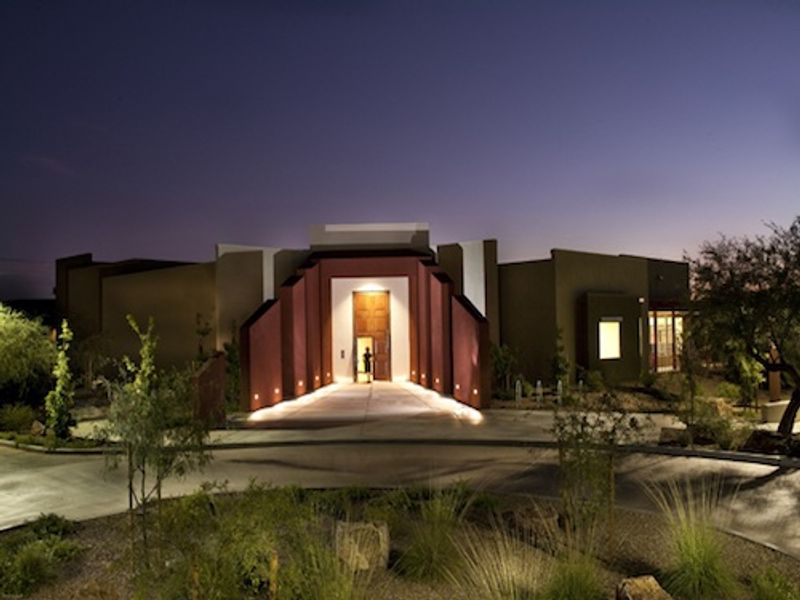
Two hours felt right to me, though I could easily have stretched it longer. The museum is bigger inside than the building suggests, and pacing matters more than you’d think.
Hours run Tuesday through Sunday, 9 AM to 4 PM, with Mondays and major holidays closed. Arriving closer to opening gave me quieter galleries and better space to lean into the cases without blocking anyone.
There’s a parking lot on site, clean restrooms inside, and the layout is ADA compliant with wide, easy paths between displays. The audio tour is worth grabbing if you like context while you wander.
Tucson summers are brutal, and this ranks high among the smartest indoor escapes in the city. Cool, dim, and endlessly distracting.
A small gift shop near the entrance sells miniature odds and ends, which is a nice landing spot for kids who’ve just spent an hour wanting to touch everything.
My honest suggestion is to pick two galleries to explore properly instead of skimming all of them. The detail rewards depth, not speed.
Also, bring a phone or camera you can hold steady. Some areas are lit brightly and photograph beautifully, while others sit in deliberate shadow.
The staff answer questions happily and clearly enjoy the collection, which makes the whole place feel welcoming rather than stuffy.
Address: 4455 E Camp Lowell Dr, Tucson, Arizona 85712
