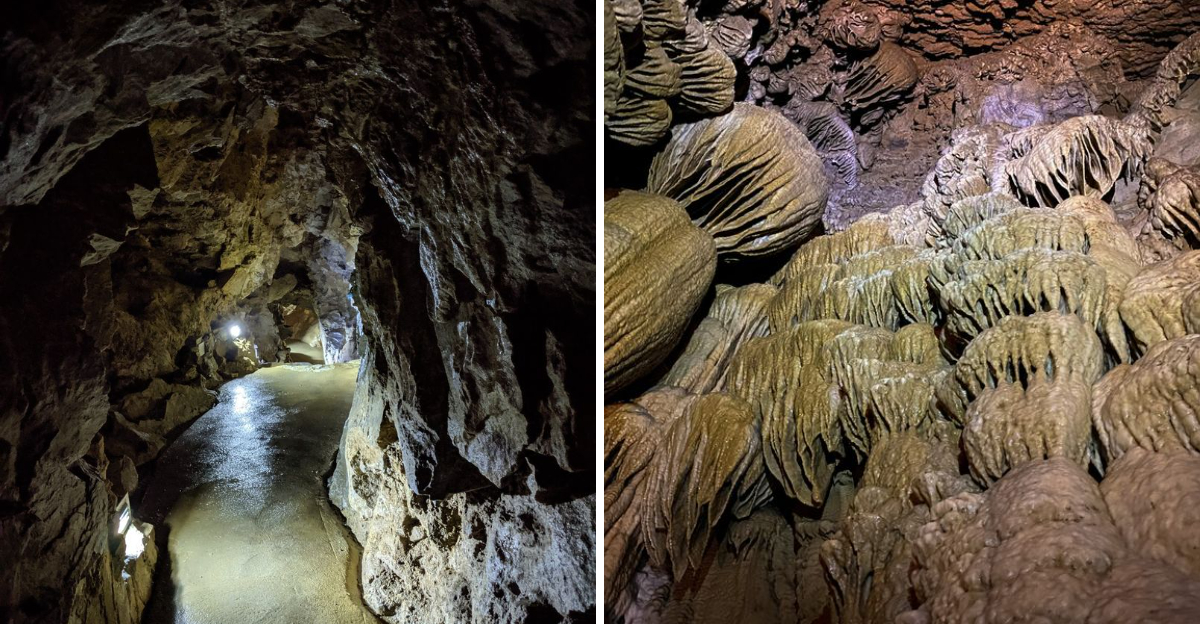
Let’s be honest, most caves are made of limestone. This Oregon cave is different. It’s carved through solid marble, a geological rarity that makes the experience feel a little more special than your typical underground tour.
The passages are tight in spots, with low ceilings that force you to stoop and pay close attention to each step. The marble walls are smooth and cool to the touch, and the formations hanging from the ceiling are unlike anything you’ve seen before.
Inside, you’ll find massive chambers with names that hint at their otherworldly beauty and ancient history hidden beneath the surface. It’s the kind of place that makes you forget you’re still in Oregon.
Pack a sweater – the temperature stays brisk year-round – and prepare for a journey that feels like stepping into another world. Oregon’s marble passageway is waiting to be explored.
Marble, Not Limestone, and Why That Matters
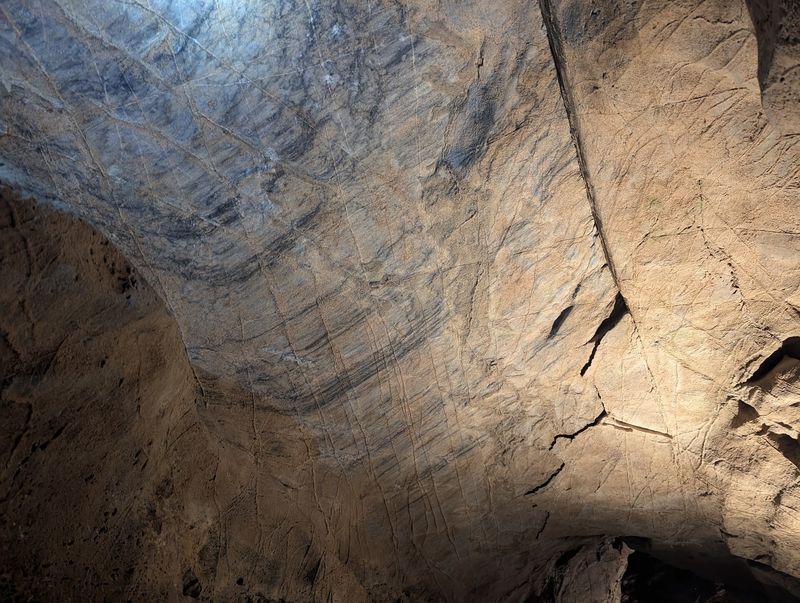
Most caves people visit are carved from limestone. Here, heat and pressure deep in the earth squeezed that limestone into marble, which is why the walls look swirled, streaked, and almost polished in places.
Rain and snowmelt seeped down through cracks over an enormous stretch of time, slowly dissolving the rock and hollowing out the twisting passageway that visitors walk today. The result is a cave that feels handmade rather than blasted out.
Rangers point out spots where three rock types show up in one place, igneous, sedimentary, and metamorphic, which turns the tour into a geology lesson that actually sticks.
What surprised me was the texture. Some walls are rough and gritty, others feel smooth and cool like a countertop, and the difference tells a story about water flow.
Look for the banded gray and cream stripes near the ceiling, since those layers formed long before the mountain existed in its current shape. Small detail, big payoff, especially once the ranger shines a light across them.
The Guided Tour Is the Only Way In
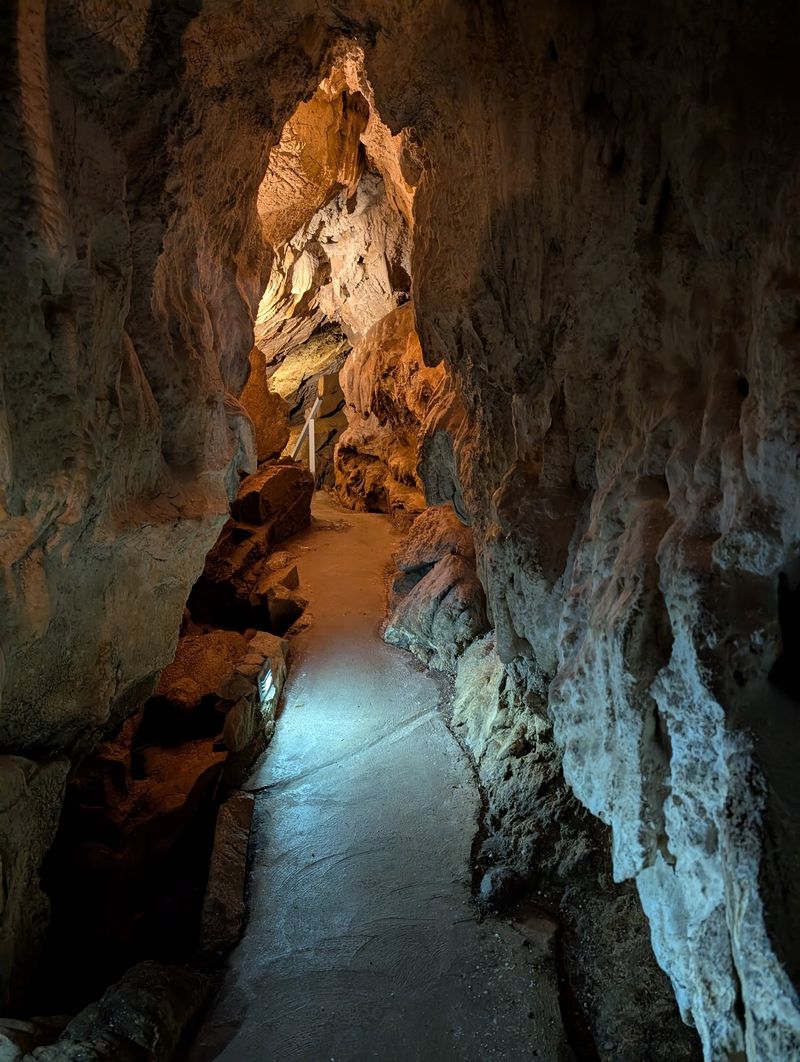
Nobody wanders into this cave alone. Every trip underground happens with a National Park Service ranger, and honestly that is part of the fun, because the guides know exactly where the good stories hide.
Tours run about 90 minutes and cover roughly half a mile of passage, with plenty of stops to catch a breath and look up.
Before heading in, the group gathers near the entrance for a safety talk that includes practicing a few crouches and steps used inside. It feels a little silly, then makes total sense once the ceiling drops.
Groups stay small enough that questions get answered, and rangers are used to keeping mixed crowds together, waiting for slower walkers on the stair sections.
At one point the lights go off on purpose so everyone can experience real cave darkness. It is complete, thick, and weirdly peaceful. Tickets are limited and often gone in summer, so reserving ahead through recreation.gov saves a long drive with no payoff.
Stairs, Ducking, and Tight Squeezes
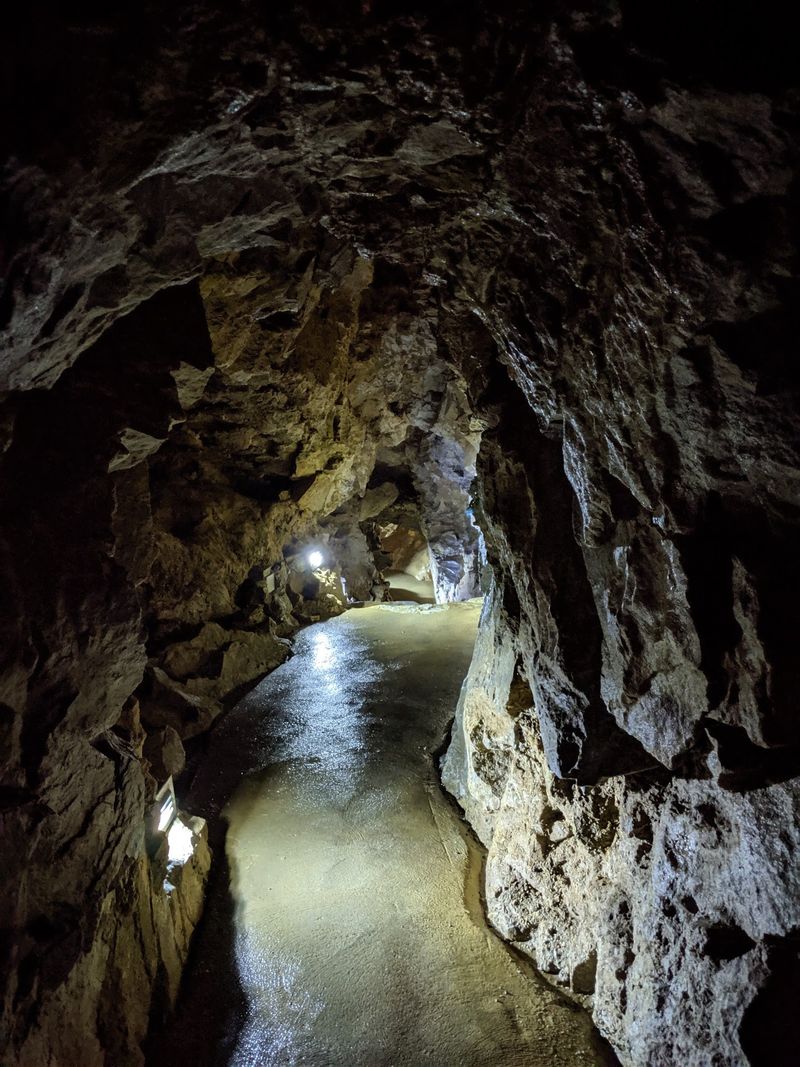
Consider this the honest heads-up: the cave route involves more than 500 stairs, several low ceilings, and a couple of passages narrow enough that shoulders brush stone.
Nobody crawls, but there is plenty of bending, ducking, and watching where knees land on uneven steps.
Sturdy closed-toe shoes with grip make a real difference, since the walkways stay damp year-round and the metal treads can feel slick. Sandals are a bad idea here.
Anyone with knee trouble, breathing difficulty, or serious discomfort in tight spaces should think it through, though there is an exit partway along the route for people who want out early.
Rangers explain each obstacle before it arrives, and the group naturally slows down to help one another through the trickier turns. That teamwork ends up being one of the nicer parts of the whole thing.
Hands stay busy on the railings, so a small backpack beats carrying anything loose. Lockers near the visitor center handle the rest.
Bring Layers Because It Stays Cold Down There
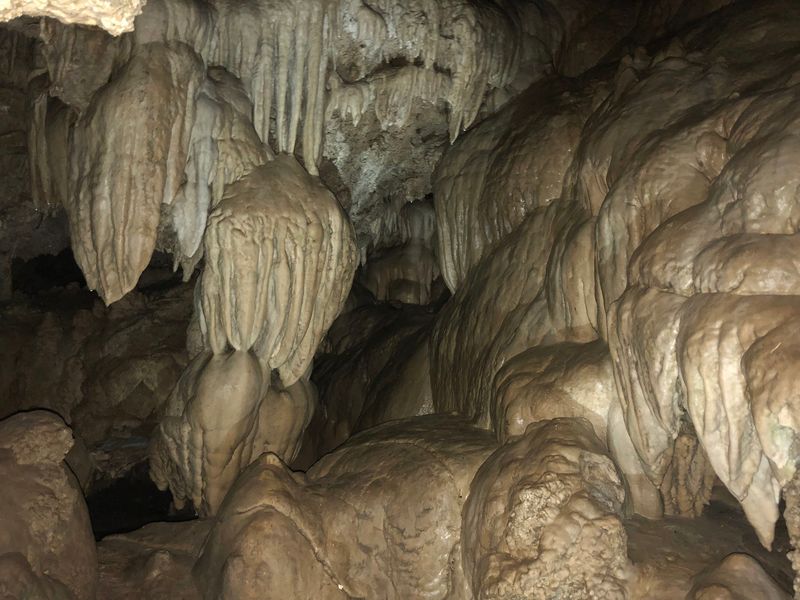
Outside it can be blazing hot. Inside, the cave holds steady at around 44 degrees Fahrenheit, which hits like opening a refrigerator door on a July afternoon.
A long-sleeve shirt or light jacket covers it for most people, though a heavy coat gets uncomfortable once the stair climbing starts.
Moving through the passages generates plenty of warmth, so layering works better than bundling. Something you can tie around your waist is ideal. Water drips from ceilings in certain spots, and the walls stay slick, which adds to the chill.
A hat is not a bad call if you dislike surprise drops on your head.
Kids feel the cold faster than adults, so an extra fleece in the car pays off. I saw more than one shivering visitor wishing they had grabbed one. The temperature also explains the bats and small cave creatures thriving here, since the steady cool air suits them perfectly.
Formations Shaped Like Castles, Hearts, and Flowers
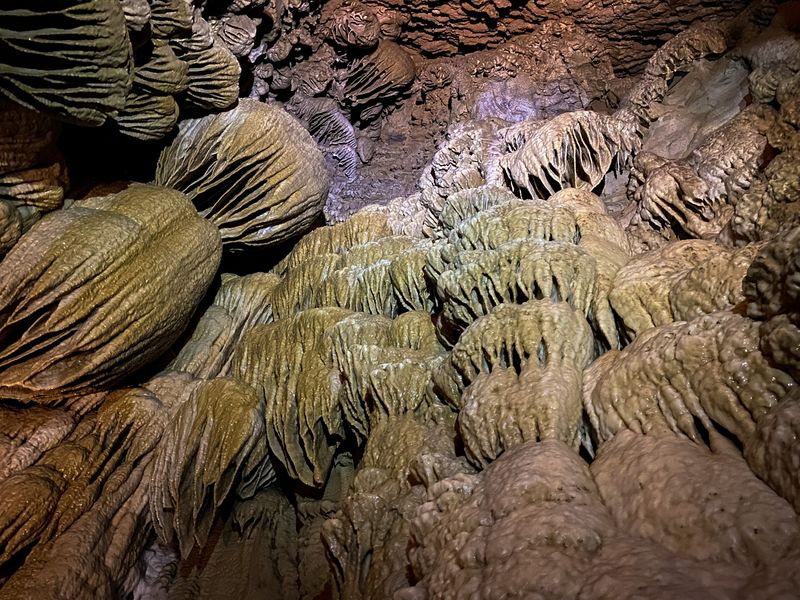
Water is a patient sculptor. Drop by drop, it built stalactites hanging like icicles, stalagmites rising from the floor, and rippled sheets of flowstone that look like frozen curtains.
Rangers point out shapes visitors have nicknamed over the decades, including formations resembling castles, hearts, and clusters of stone flowers.
Some pieces grow so slowly that a single inch can take centuries, which makes the no-touching rule easy to respect. Skin oils stop growth completely.
My favorite section had delicate knobby clusters called cave popcorn crowded across a wall, catching the light in tiny bumps. Colors shift as you walk, from chalky white to rust orange where minerals bleed through the marble. It never looks the same twice.
Photography is allowed, but the dim lighting means phone shots rarely capture it well, so put the camera down occasionally and just look.
The Ghost Room, one of the larger chambers, gives the group a rare chance to stand upright and take it all in.
Bats, Crickets, and Other Underground Neighbors
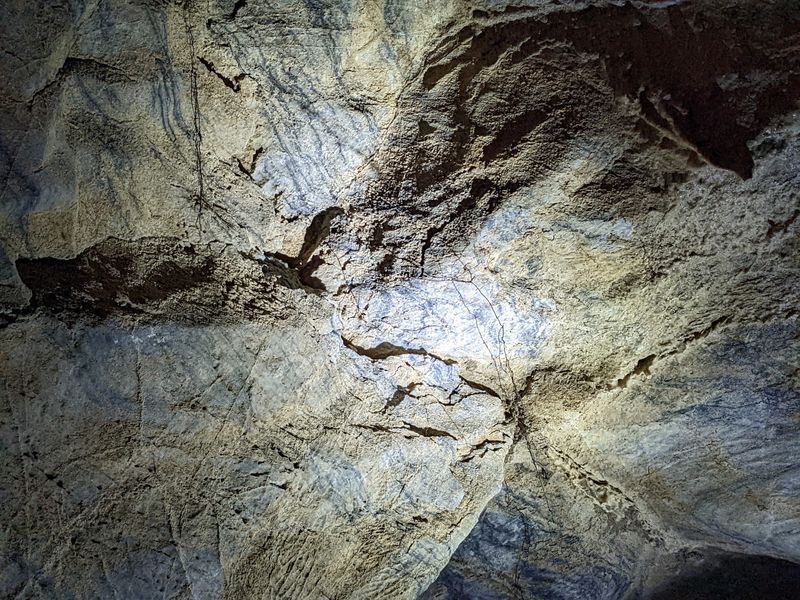
Look up often enough and you might spot a small furry lump tucked into a ceiling crevice. Bats roost in these passages, and seeing one hang perfectly still feels like catching nature off duty. Several species use the cave, and the steady cool temperature makes it a reliable shelter through the year.
Pale cave crickets cling to walls in shadowy corners, along with tiny insects adapted to life without sunlight. The visitor center has displays identifying them.
Rangers ask visitors not to shine lights directly at roosting bats or make sudden noise, since disturbing them wastes energy the animals need.
Fossils of an ancient jaguar and a grizzly bear have been found inside the cave system, which is a wild thing to consider while standing in the same passage. Anyone who has visited other caves recently should mention it to a ranger, since gear can carry a fungus harmful to bat populations.
The Visitor Center and Historic Chateau Grounds
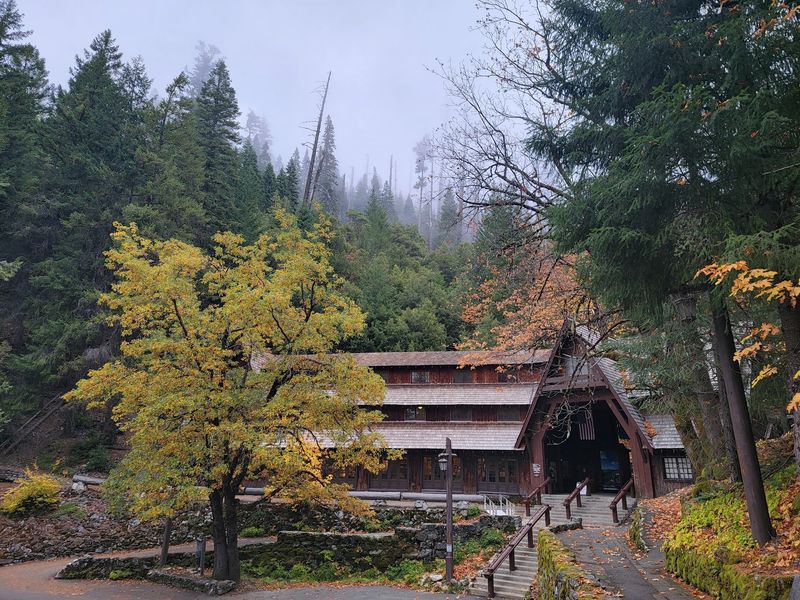
Before heading underground, the small visitor center is worth twenty minutes. There is a cave replica, exhibits on the insects living inside, and rangers happy to answer questions while you wait for your tour time.
A gift shop sells books, maps, and souvenirs, and lockers hold bags that would be awkward in tight passages. Right beside it sits the historic Oregon Caves Chateau, a six-story wooden lodge built into the canyon in the 1930s with bark-covered siding blending into the trees.
The building has been under restoration, so check current status before planning meals or an overnight stay there. Restrooms sit both at the lower parking area and up near the visitor center, which matters more than you would think before a 90-minute tour.
The canyon itself is lovely, with a creek running through and towering conifers overhead. I ended up lingering outside longer than planned, just enjoying the shade.
Big Tree Trail and Cliff Nature Trail Above the Cave
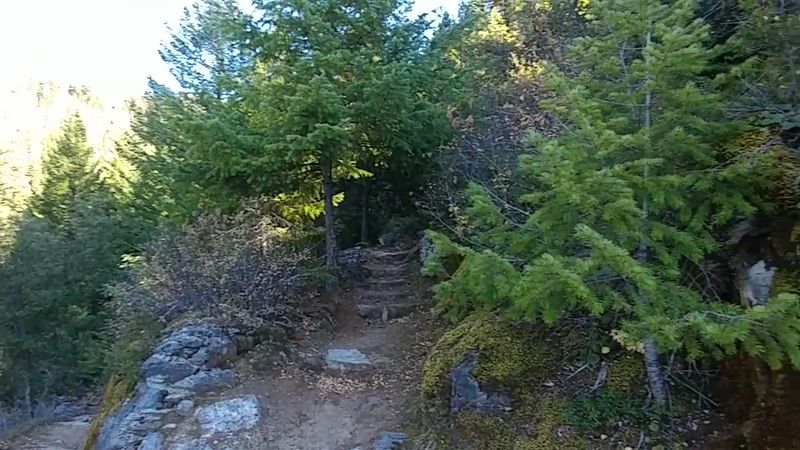
The cave gets the attention, but the trails above ground deserve a slot in the day. Big Tree Trail climbs through old-growth forest to one of the widest Douglas firs in Oregon, a trunk so thick it takes several people to circle it.
The loop runs a little over three miles with a solid elevation gain, so pace yourself and carry water.
Cliff Nature Trail is shorter and pairs nicely with it, opening onto rocky viewpoints where the forested ridges of the Siskiyou Mountains stretch out toward distant peaks.
Early morning is the sweet spot. Fewer people, cooler air, and birdsong doing most of the talking. Both trails connect near the cave exit, so hikers finishing the tour can keep going instead of heading straight to the car.
Watch for occasional blowdown across the path after winter storms, and wear shoes with real tread on the descent.
Getting There on That Twisty Caves Highway
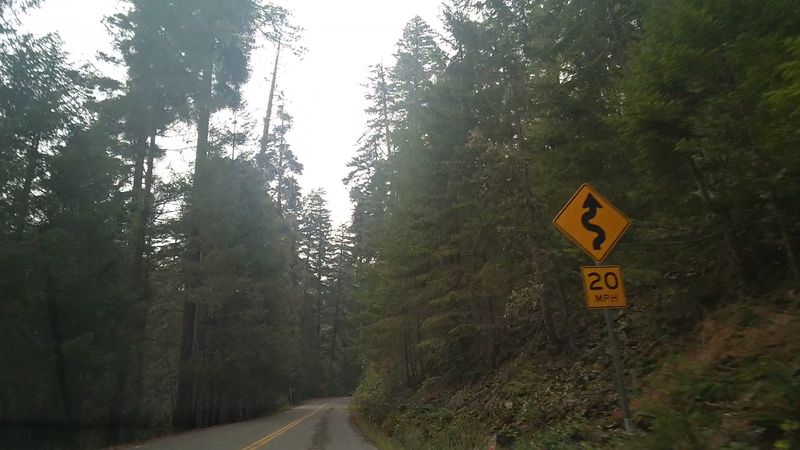
The final stretch is an experience of its own. Caves Highway climbs about twenty miles from Cave Junction in tight switchbacks, and the last ten miles rarely allow more than 30 miles per hour.
Plan roughly 40 minutes from town, longer if you stop for photos or meet an oncoming vehicle on a blind curve.
Large RVs and long trailers really are a bad match for this road, and the park recommends leaving them behind in Cave Junction. Cell service disappears well before you arrive, so download directions ahead of time. Mapping apps have been known to misjudge the final miles.
Parking sits in a lower lot with room for a good number of cars, followed by a short uphill walk to the visitor center. Anyone prone to carsickness should sit up front. The curves come fast, one after another, all the way up.
Planning Your Visit and Timing It Right
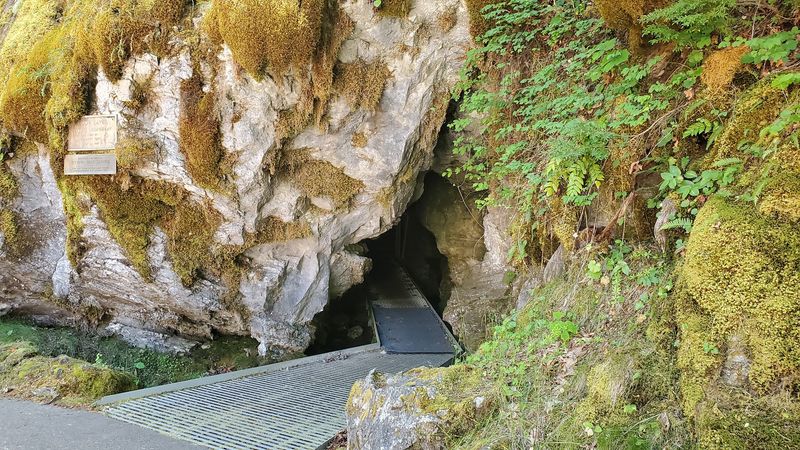
Timing shapes the whole trip. Tours generally run from late spring through early fall, with the cave closed in winter, so confirm the season before driving out.
Reservations through recreation.gov are the safest bet, especially in July and August when spots vanish quickly.
Gates open in the morning and the site closes at 5 PM, with slightly different opening times depending on the day of the week. Arriving early leaves room for a hike beforehand.
Children must be able to climb a set of test stairs on their own to join the standard tour, so check the current height and ability requirements if traveling with little ones.
Cave Creek Campground sits a few miles down the road for anyone wanting a quiet, wooded overnight near the creek. Budget two to three hours total for the tour plus wandering. It ended up being one of the most memorable stops on my southern Oregon route.
Address: 21000 Caves Hwy, Cave Junction, Oregon
