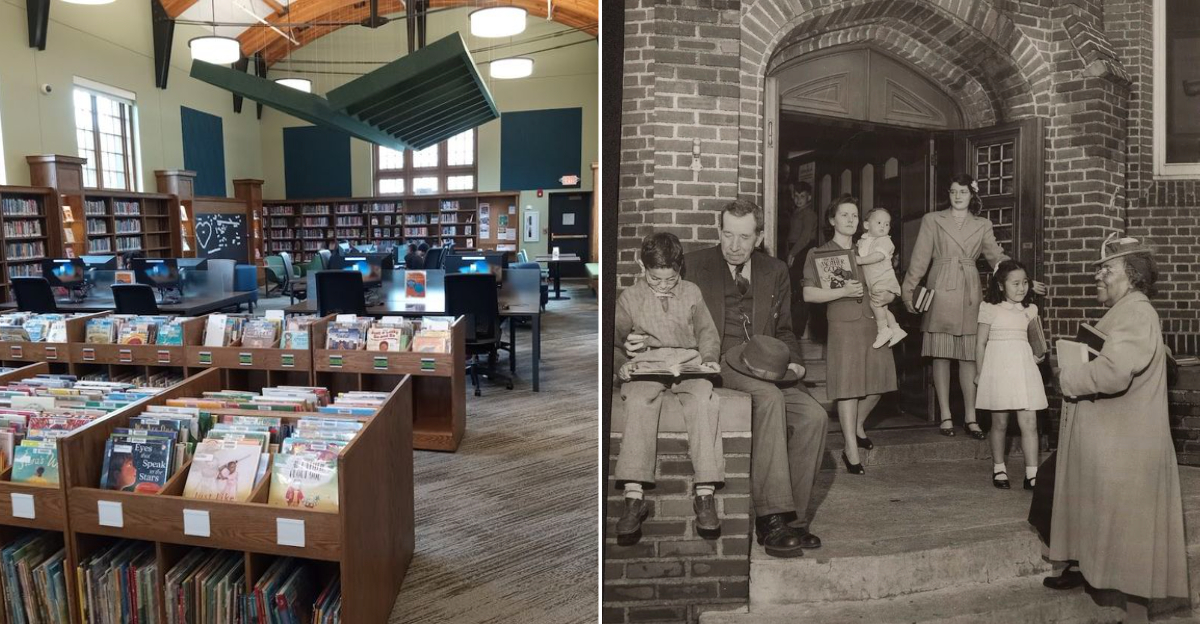
Imagine stepping into a warm, quiet library on a freezing Minnesota morning, clutching a children’s picture book in a language you barely understand. That is the brave scene that has played out at this historic Minneapolis library for over a century.
A Tudor Revival landmark built with Carnegie money in 1915, its earliest patrons were Jewish immigrants fleeing Eastern Europe. The city moved its entire collection of Yiddish and Hebrew books to this branch to serve them.
Today, the same quiet rooms welcome newcomers from Somalia, Laos, Mexico, Ethiopia, and Vietnam.
Bilingual picture books line the shelves. Free English classes help adults learn their first phrases. Citizenship test prep materials wait by the window.
So which library, named for a passionate abolitionist and listed on the National Register of Historic Places, has been teaching immigrants English through picture books for generations?
Step through the arched doorway. The stories are different now, but the hope is exactly the same.
A Building That Feels Like It Remembers
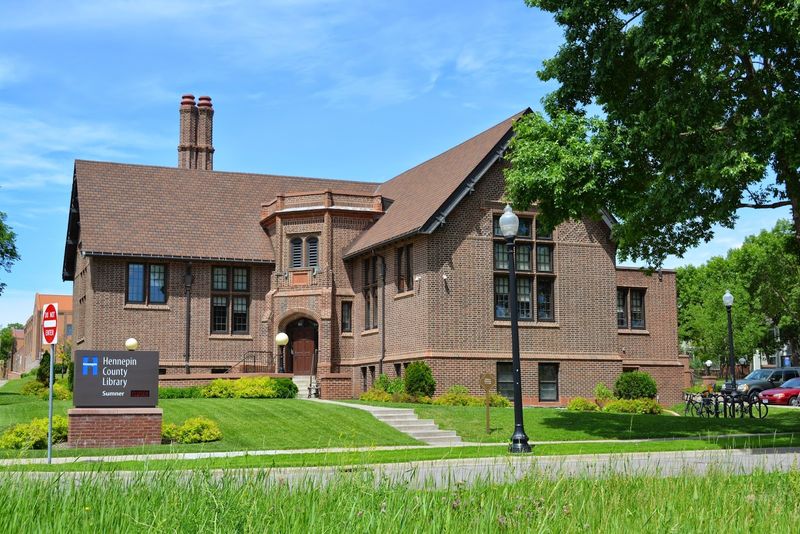
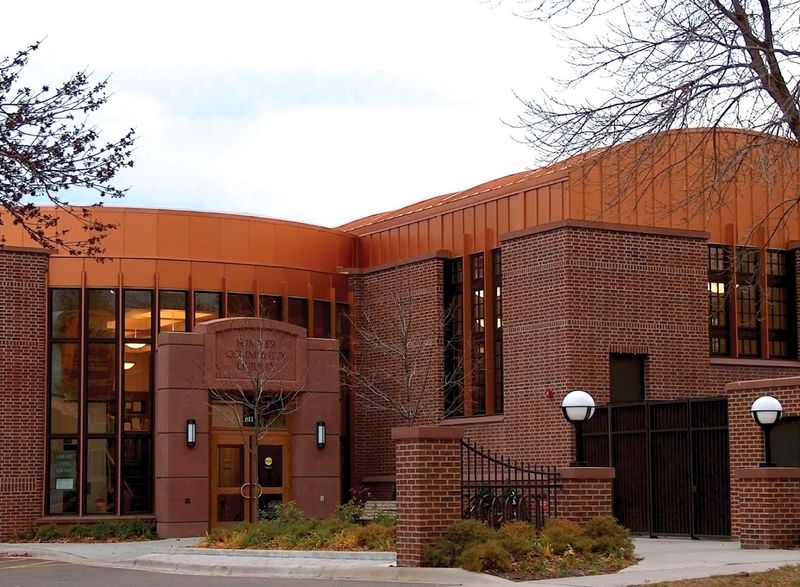
The first thing that got me was how the building seems to hold its own memory, like it has been listening longer than most places in the neighborhood. You walk up to Sumner Library and immediately feel that mix of steadiness and warmth that old public buildings sometimes carry without showing off.
It does not lean on spectacle, and honestly, that makes it easier to trust.
Inside, the mood stays gentle in a way that feels unusually grounded, with open reading areas, calm light, and the kind of seating that quietly invites you to stay longer than planned. I kept thinking about all the people who must have come through here looking for something practical, maybe language, maybe quiet, maybe a path into a new life in Minnesota.
That thought changes the room, because the shelves stop feeling abstract and start feeling personal.
There is a real dignity to a library that has served working families, children, and newcomers without making a fuss about it. Sumner carries that feeling naturally, and you can sense how literacy here was never only about books, but also about confidence and belonging.
If you like places that feel useful first and moving afterward, this one really gets under your skin.
Where The Story Actually Lands
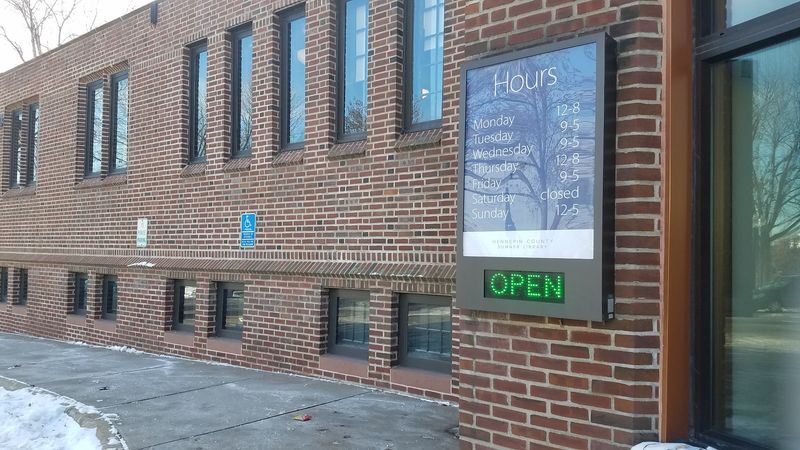
Once you step inside, the story stops being general history and becomes something you can almost picture happening around you in real time. Sumner Library – Hennepin County Library, 611 Van White Memorial Blvd, Minneapolis, MN 55411, feels like one of those places where daily life and big social change met without needing a grand announcement.
That mattered for immigrants learning English, because real progress often starts in ordinary rooms.
I kept thinking about parents and children turning pages together, sounding out words, pointing at illustrations, and using images to bridge what spoken language could not yet carry. In Minnesota, bilingual picture books connected literacy with family life in a direct, intimate way that classroom language sometimes cannot.
You can imagine how much relief there must have been in seeing stories presented with room for both English and home language.
The beauty of a place like this is that it frames learning as something shared, not judged, and that changes everything. A public library can offer privacy while still making people feel included, which is a rare combination.
Standing there, I did not just think about books on shelves, but about the soft beginning of confidence.
Picture Books As Language Bridges
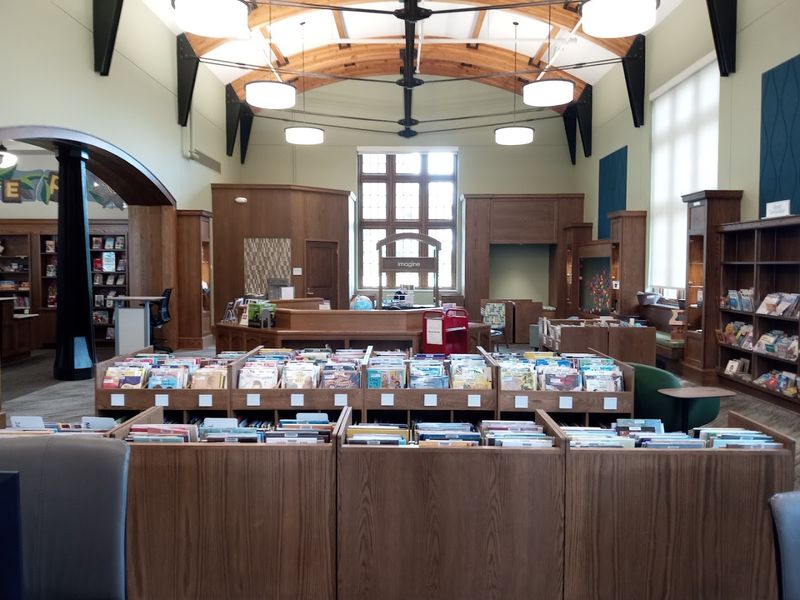
What really stayed with me was the simple brilliance of picture books doing work that feels both humble and huge at the same time. For immigrants learning English, especially adults building literacy in a new country, pictures can steady the whole experience and make language feel less slippery.
You are not staring at a wall of unfamiliar words when there is story, color, sequence, and emotion helping you along.
Minnesota Humanities helped launch Somali and English bilingual picture books that paired traditional tales with accessible reading, and that idea feels so human to me. These were not only tools for children, because preliterate adults could use them too, often with audio support that made spoken language part of the learning rhythm.
That dual purpose matters, since families rarely learn in neat, separate categories.
At Sumner, that larger statewide story makes immediate sense because the setting is so clearly about access rather than performance. A library like this gives picture books real cultural weight by treating them as useful for everyone, not just little kids.
I love that, because it reminds you that reading can begin with something visually gentle and still lead somewhere life changing.
Why Somali Stories Matter Here
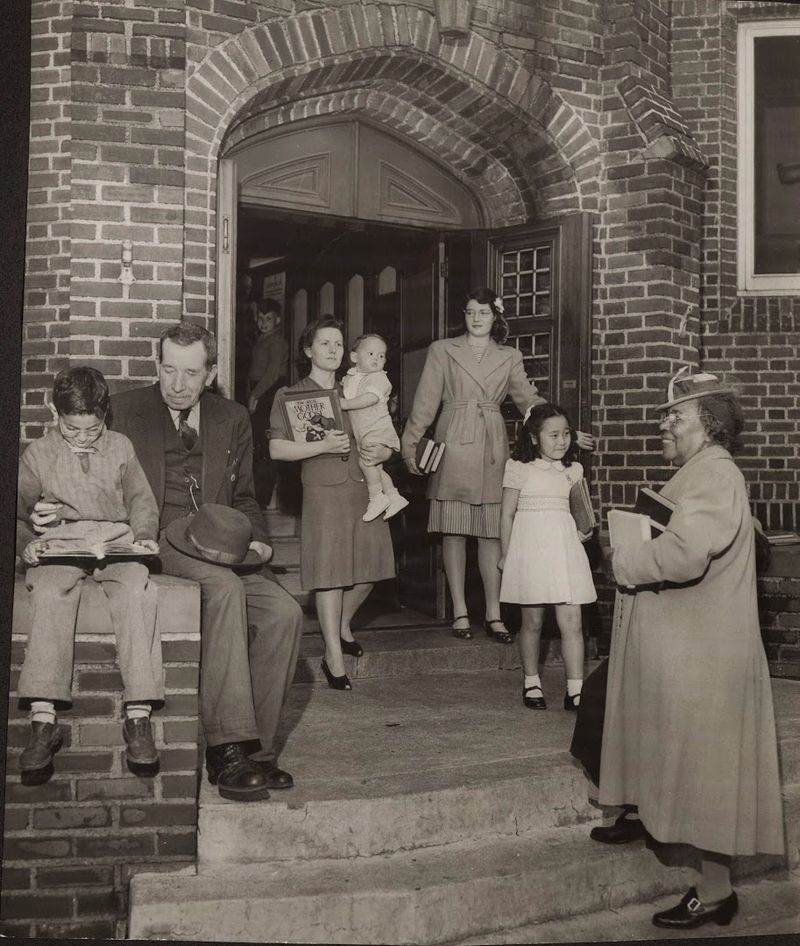
Here is where the whole thing becomes more than a nice library anecdote, because Somali stories in Minneapolis are woven into everyday city life. When bilingual books reflect familiar folktales, names, rhythms, and ways of telling, people are not asked to leave themselves behind while learning English.
That is such a different emotional experience from starting with material that feels distant and cold.
The Somali Bilingual Book Project in Minnesota understood that literacy works better when dignity comes first, and you can feel the wisdom of that approach from miles away. Families could hear stories read in Somali and English, share them across generations, and build vocabulary without treating home language like an obstacle.
I think that is one reason the idea still feels so strong, because it respected both learning and identity.
Sumner Library fits naturally into that conversation, especially given Hennepin County Library’s long effort to connect with immigrant communities in Minneapolis. The library setting makes those stories public in the best sense, meaning visible, available, and welcome.
You stand in a room like this and realize that cultural recognition is not extra, but part of how people trust a place enough to learn.
The Children’s Room Changes Everything
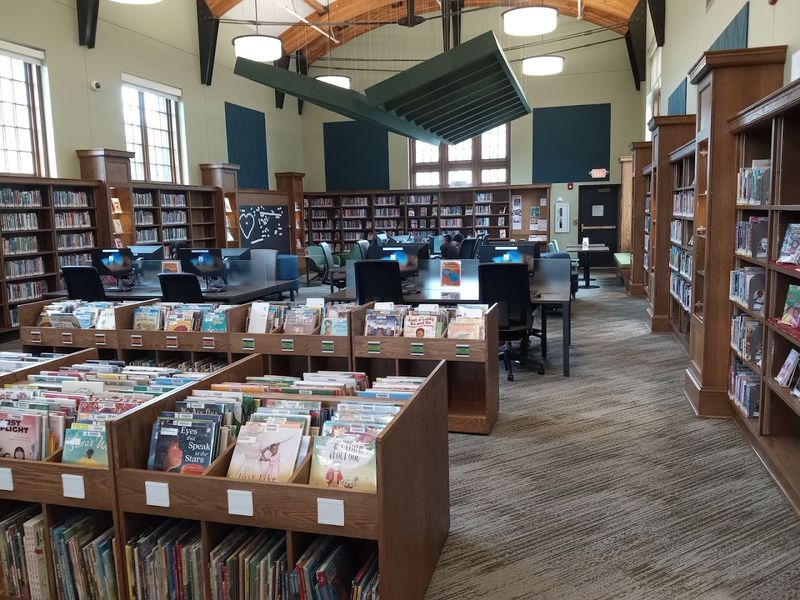
You know how some rooms instantly make sense even before you know their history, and then the history somehow makes them feel even more alive? That is the feeling I had thinking about the library tradition of creating spaces specifically for children, because it shifts reading from duty into invitation.
Once a child is welcomed seriously, a whole family often follows.
Minneapolis library history includes early efforts to build reading spaces for children in ways that were unusually intentional for their time, and that legacy still echoes. It matters here because picture books are not just charming objects on a low shelf, but practical tools that help language move through households.
A child points, a parent repeats, a sentence gets tried aloud, and suddenly learning becomes shared instead of isolated.
At Sumner, you can almost feel that chain reaction in the atmosphere, especially in the more relaxed corners where people naturally slow down. The place suggests that libraries understood something important long ago, which is that children often open the door adults need.
I really like that idea, because it means a room designed with care can support confidence long before anyone calls it instruction.
North Minneapolis In The Background
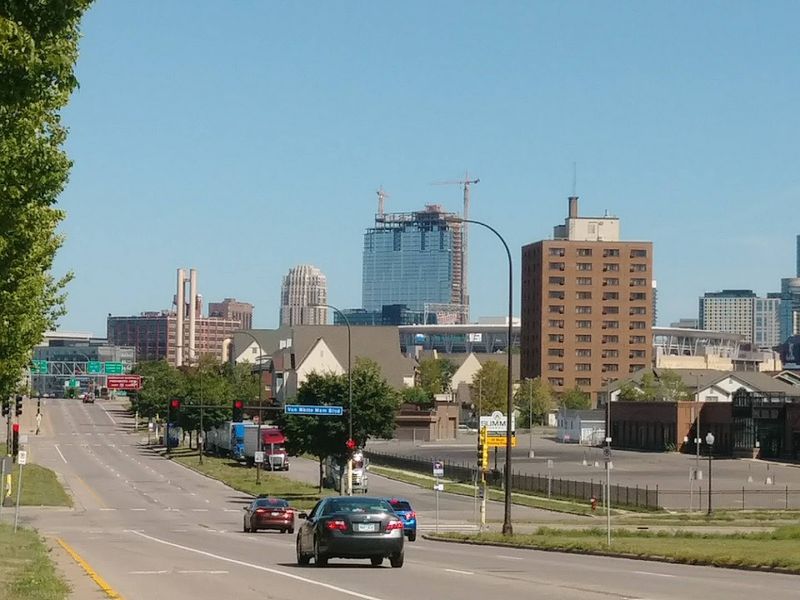
It is impossible to think about Sumner without thinking about North Minneapolis, because the neighborhood context gives the library its real emotional shape. This is not a museum piece sitting apart from daily life, but a public place that belongs to the rhythm of surrounding streets, families, schools, and conversations.
That kind of setting gives a library social weight you can actually feel.
When people talk about immigrant experiences, the discussion can drift into abstraction pretty quickly, and I do not think this place lets you do that. Here, literacy feels tied to where people live, how they move through the city, and what support is available close to home in Minnesota.
The library becomes part of neighborhood infrastructure, but in a human sense rather than a bureaucratic one.
I liked standing there and imagining how many forms of everyday courage have passed through these doors, often quietly and without fanfare. Reading with a child, searching for community information, asking for help, or just finding a calm place to think all belong to the same story.
Sumner makes those ordinary acts feel substantial, and that is one reason it lingers with you after you leave.
What Hennepin County Library Still Carries Forward
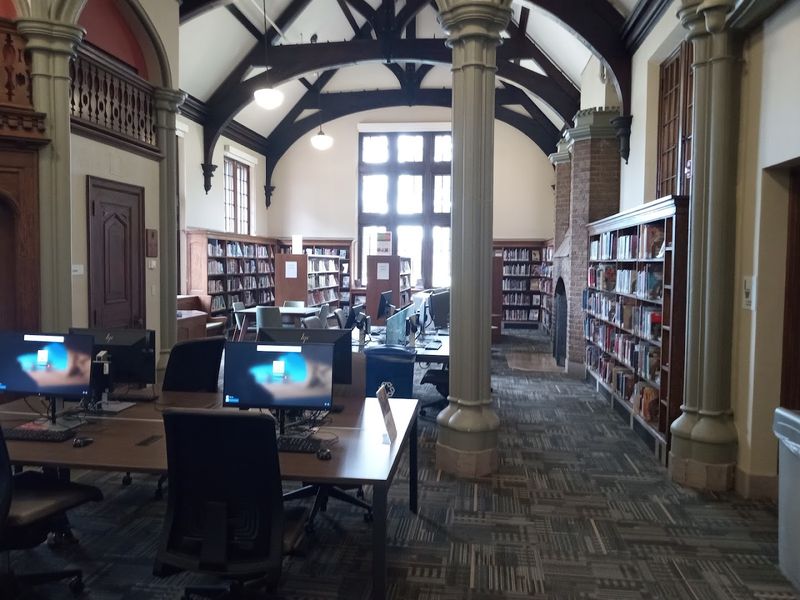
What I appreciate here is that the story is not trapped in the past, because Hennepin County Library still works to meet people where they are. Across the system, services tied to language learning, job support, and digital access continue that older public mission in a way that feels practical instead of ceremonial.
You can draw a straight line from early immigrant outreach to what libraries still try to do now.
That broader commitment matters when you are standing in Sumner, because the building starts to feel less like an isolated landmark and more like one chapter in an ongoing effort. Minneapolis has long relied on public institutions to absorb change with some grace, and libraries are one of the few places that can do that quietly.
They help people enter a city not just by finding information, but by feeling entitled to use shared space.
In Minnesota, that public ethic has real texture when immigrant communities can access resources without needing insider knowledge first. I think that is why this library story keeps opening outward the longer you sit with it.
It is about books, yes, but it is also about the idea that public culture should be usable by the people who need it most.
Why This Place Stays With You
By the time I left, what stayed with me was not one dramatic detail, but the way everything here adds up to a very human kind of importance. Sumner Library tells a Minnesota story about immigration, language, and public space that feels intimate instead of abstract.
You come expecting history, and then you realize the real subject is trust.
Trust shows up in a family using picture books to bridge two languages without apology, and it shows up in a library making room for that process without trying to overmanage it. It also lives in the old civic belief that reading should belong to ordinary people, including workers, children, refugees, and newcomers finding their footing.
That belief can sound idealistic until you stand inside a place built to practice it every day.
If you go, I think you will notice how unforced the feeling is, which honestly makes it stronger. Nothing needs to be exaggerated for this library to matter, because its significance is already sitting there in plain view.
Sometimes the most affecting travel stop is simply a room where people were given the tools to understand one another a little better.
