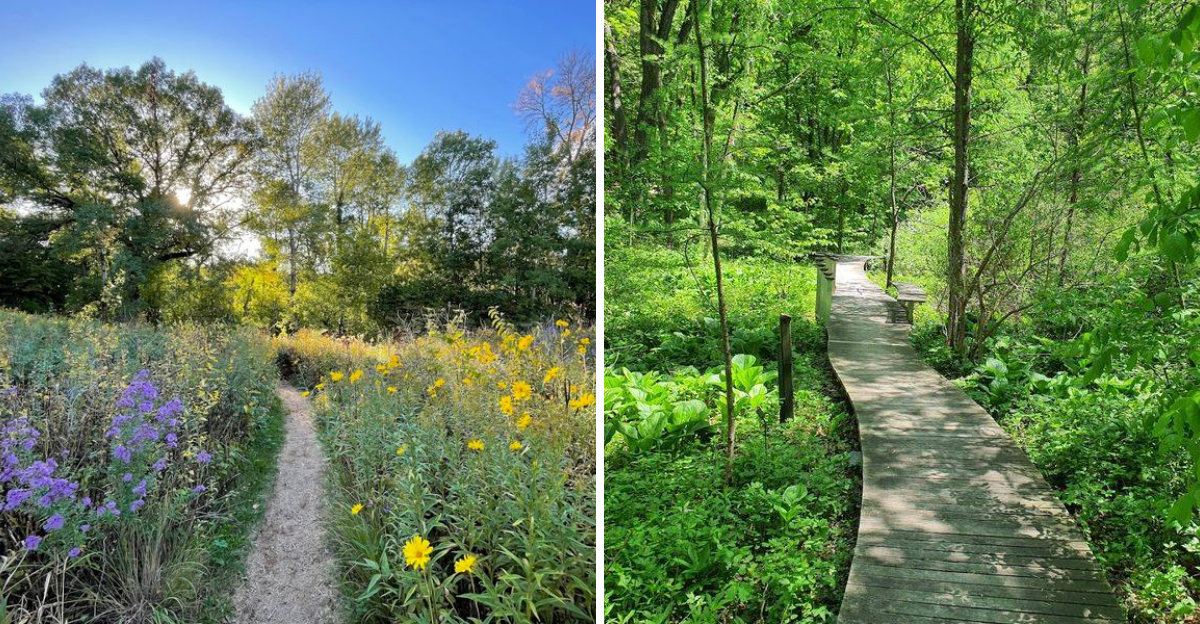
No wardrobe needed for this Narnia adventure at all. You just walk through a simple gate and everything changes suddenly.
The trail winds through a wildflower garden with six hundred plant species. That is not a typo because six hundred is the real number.
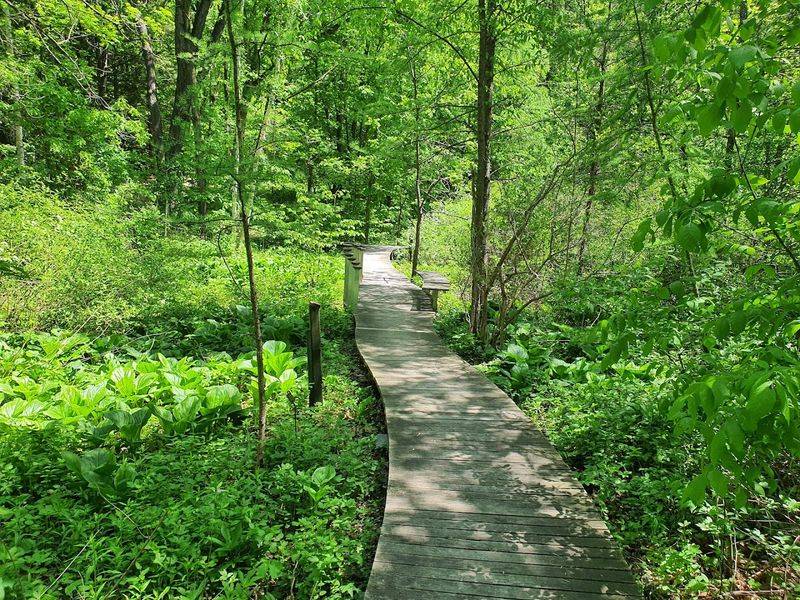
Wooden boardwalks keep your feet dry while you stare upward. Ferns tower over your head like green umbrellas in the sunlight.
You will feel small in the most delightful way possible here. Birds make noises you have never heard outside of nature documentaries.
The air smells different here, like earth and flowers and magic combined. You will leave wondering why you did not find this beautiful place sooner.
The Oldest Public Wildflower Garden in the United States
There is something quietly powerful about walking into a garden that has been open since 1907. Eloise Butler herself was a Minneapolis schoolteacher and botanist who fought hard to protect native Minnesota plants.
Her passion turned a small patch of wetland into something extraordinary.
The garden officially opened to the public on May 27, 1907. It holds the title of the oldest public wildflower garden in the entire country.
That history is not just trivia; you can feel it in the towering trees and the deep, layered landscape.
Volunteer naturalists and Minneapolis Park staff have carefully maintained the garden for over a century. Every trail, boardwalk, and planting bed reflects years of dedicated stewardship.
Visiting here means stepping into a living piece of American conservation history, one that still feels wild and alive today.
600 Plant Species Across Three Distinct Habitats
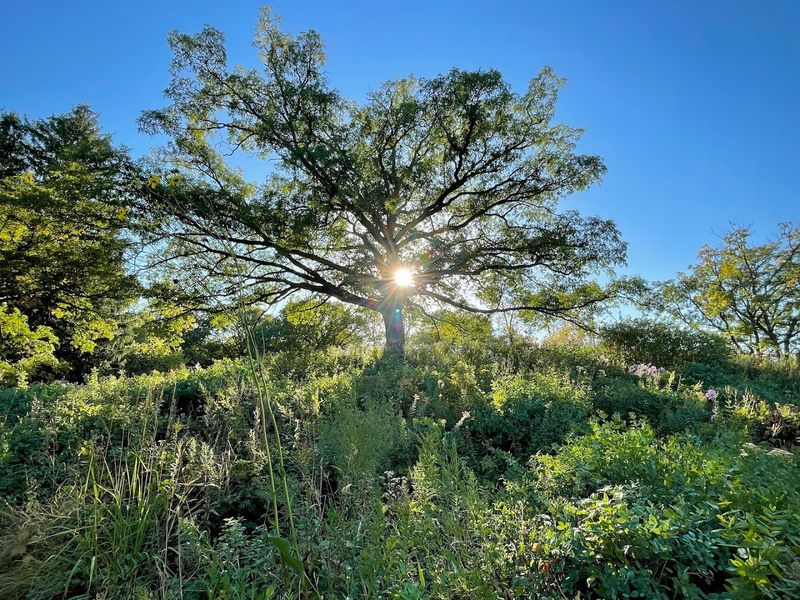
Walking this garden is like reading three completely different chapters of the same book. The woodland section is shaded and cool, with trillium, bloodroot, and wild ginger tucked beneath towering oaks.
Then the trail opens up into a sunny prairie meadow bursting with coneflowers and goldenrod.
The bog is where things get truly interesting. Sphagnum moss cushions the ground.
Carnivorous pitcher plants grow right alongside delicate bog orchids, and the whole scene feels genuinely surreal.
Over 600 plant species have been documented across these three zones. Each habitat blooms on its own schedule, so the garden looks dramatically different in April than it does in August.
Picking up a free map at the visitor center helps you navigate between habitats without missing the highlights. Many plants are labeled with small signs, making it easy to learn as you wander without feeling like you are back in a classroom.
The Narnia-Like Boardwalk Through the Bog
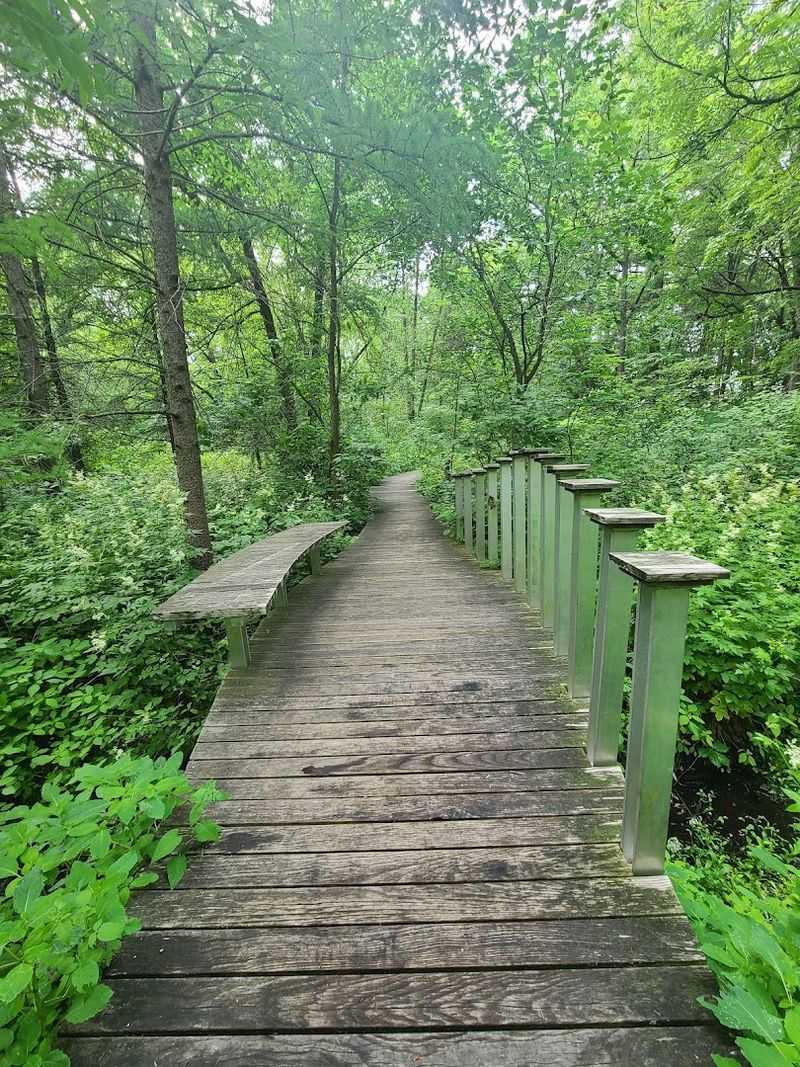
The boardwalk through the bog section stopped me in my tracks the first time I saw it. Wooden planks stretch out over dark, still water.
Ferns brush the edges of the path, and the air smells earthy and cool even on a warm summer afternoon.
Visitors with mobility concerns often mention this boardwalk as a favorite feature. It is flat, stable, and smooth underfoot.
The surface makes it easy to move through the wetland without any uneven ground to navigate.
The light filters through the tree canopy in long, soft beams that shift as clouds pass overhead. It genuinely looks like the kind of forest path you would find in a fantasy story.
Frogs call from somewhere under the surface, and dragonflies hover at eye level. Spending even ten quiet minutes here resets something in your brain that city noise tends to scramble.
The bog boardwalk alone is worth the entire trip.
Bird Watching in a Certified Sanctuary
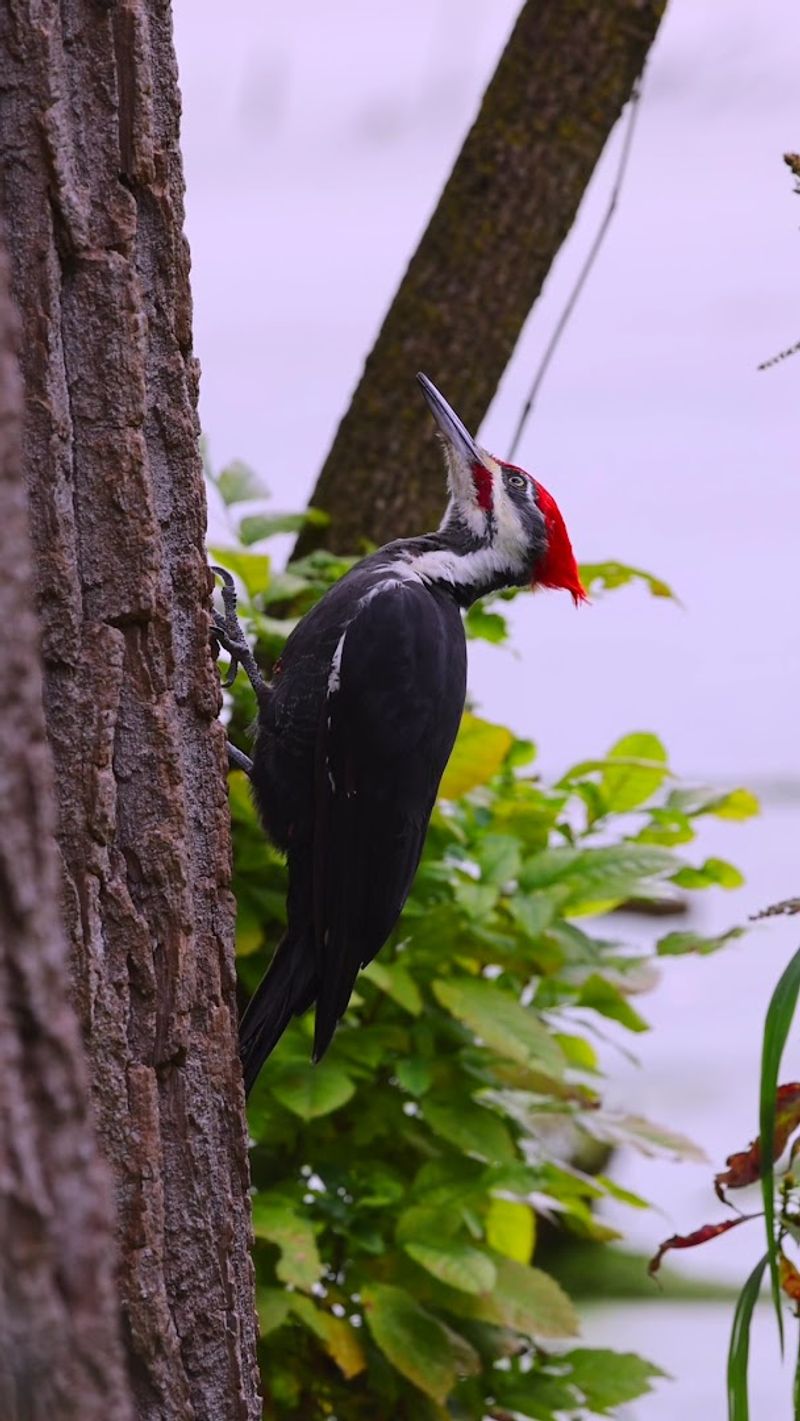
More than 130 bird species have been recorded inside this sanctuary. That number includes migratory visitors passing through during spring and fall, as well as year-round residents.
Early morning visits tend to reward the most patient watchers.
The garden hosts a Saturday Morning Early Birders program starting at 7:30 AM. It is a relaxed, informal way to meet other bird enthusiasts and get guided help spotting species you might otherwise miss.
Owls have been spotted here too, which sends a particular kind of happy thrill through your chest when it happens.
The dense native plantings create ideal nesting and feeding habitat. Because the garden avoids pesticides, insect populations thrive, and birds follow the food.
Bringing binoculars is worth the extra weight in your bag. Even visitors who do not consider themselves birders tend to pause and watch when a bright flash of color lands on a nearby branch.
The sanctuary earns its name in every season.
The Showy Lady’s Slipper: Minnesota’s State Flower
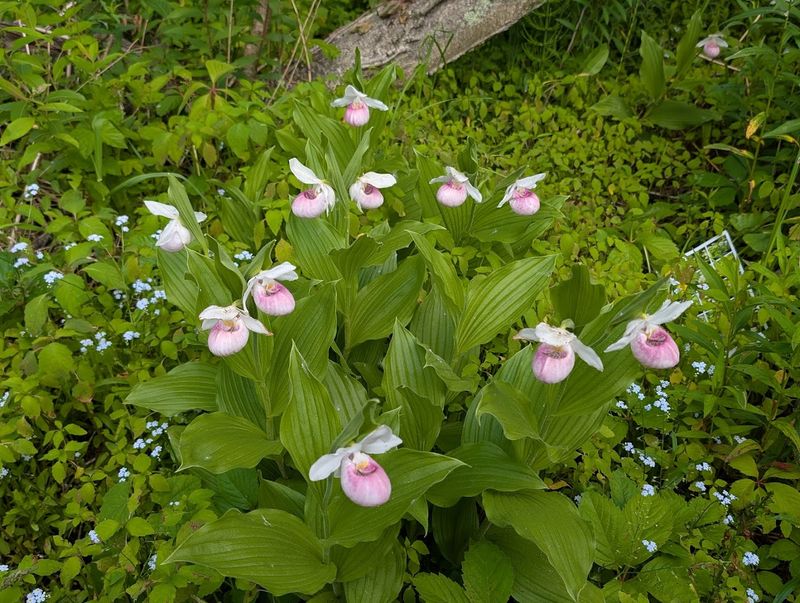
Spotting Minnesota’s state flower in the wild feels like finding a small treasure. The Showy Lady’s Slipper is a native orchid with pink and white petals that bloom in late spring, usually around late May into June.
It is rare in the wild, which makes the garden’s healthy population genuinely special.
Families with kids tend to turn the search into a mini adventure. Volunteer naturalists at the entrance gate are happy to point you toward the best spots.
Yellow Lady’s Slippers also grow here, adding a cheerful pop of color along the woodland paths.
These orchids take years to establish and do not transplant well, so seeing them thriving here reflects the quality of the garden’s care. Photographing them up close without stepping off the path is the respectful move.
The plants are delicate and easy to damage accidentally. Getting low with your camera and letting the forest light do the work usually produces something worth keeping on your phone for a long time.
Free Admission and Family-Friendly Trails
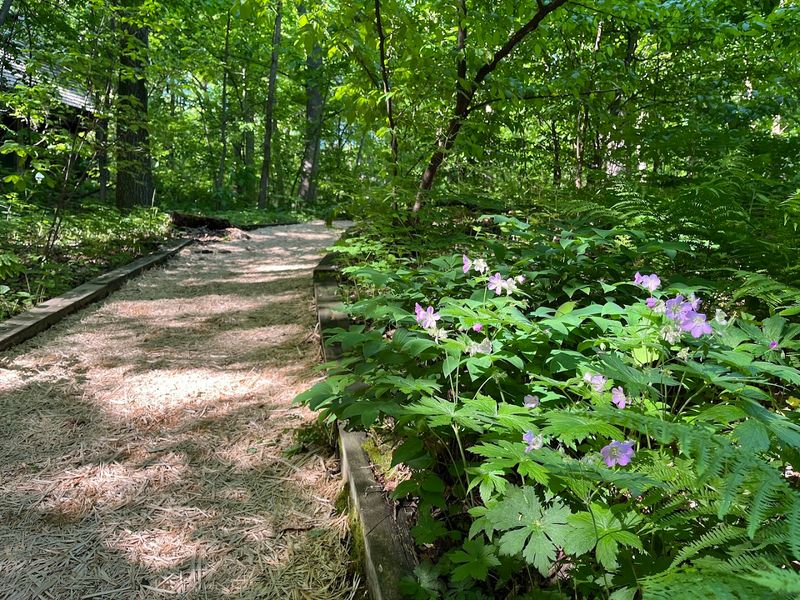
Free admission makes this one of the most generous green spaces in the Twin Cities. There is a small parking fee, but entry to the garden itself costs nothing at all.
That accessibility matters, and it shows in the mix of visitors you see on any given morning.
Toddlers manage the trails well because the paths are covered in soft wood chip mulch. There are no steep drops or tricky terrain on the main loop.
The whole loop measures about three-quarters of a mile, which is a manageable distance for most ages.
Benches are scattered throughout the garden at thoughtful intervals. Bathrooms and water fountains are available on the property.
A picnic area near the entrance makes it easy to pack lunch and turn the visit into a longer outing. The visitor center has hands-on activities for kids, including a seed collection station where children can take home milkweed seeds to plant.
It is a genuinely fun and educational stop for the whole family.
The Visitor Center and Volunteer Naturalists
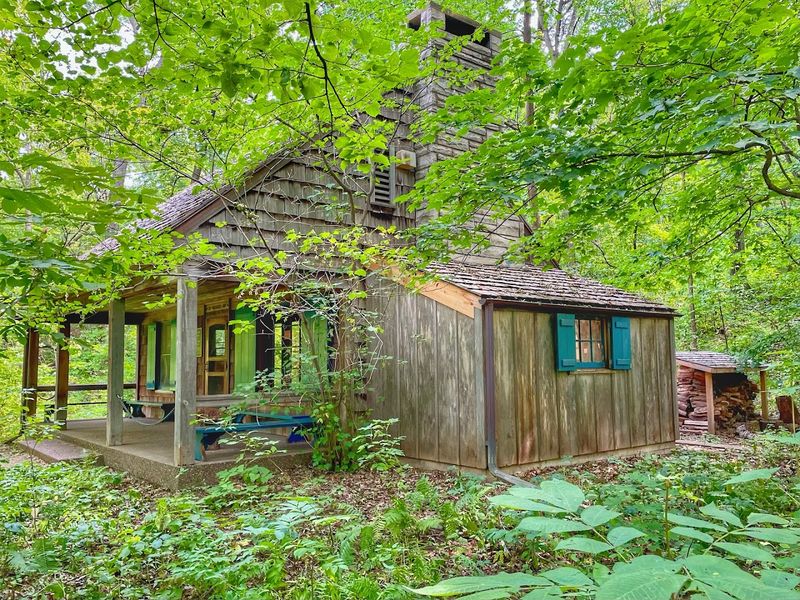
The visitor center sits in a small, charming cabin near the garden entrance. Inside, you will find plant identification guides, nature displays, and seasonal information about what is currently blooming.
The staff and volunteers there are genuinely knowledgeable and happy to talk.
Picking up a printed map here is one of the smartest moves you can make before heading out. The garden layout is not immediately obvious from the entrance.
A map helps you hit all three habitat zones and find the specific plants you came to see.
Volunteer naturalists lead guided tours on a regular schedule throughout the season. These tours are free and packed with information you would not find on the trail signs alone.
One visitor mentioned getting directions to the rare dwarf trout lily from a volunteer who knew exactly where to look. That kind of local knowledge transforms a pleasant walk into something much more memorable.
The cabin also collects milkweed seeds for visitors to take home and plant in their own gardens.
Seasonal Changes That Reward Repeat Visits
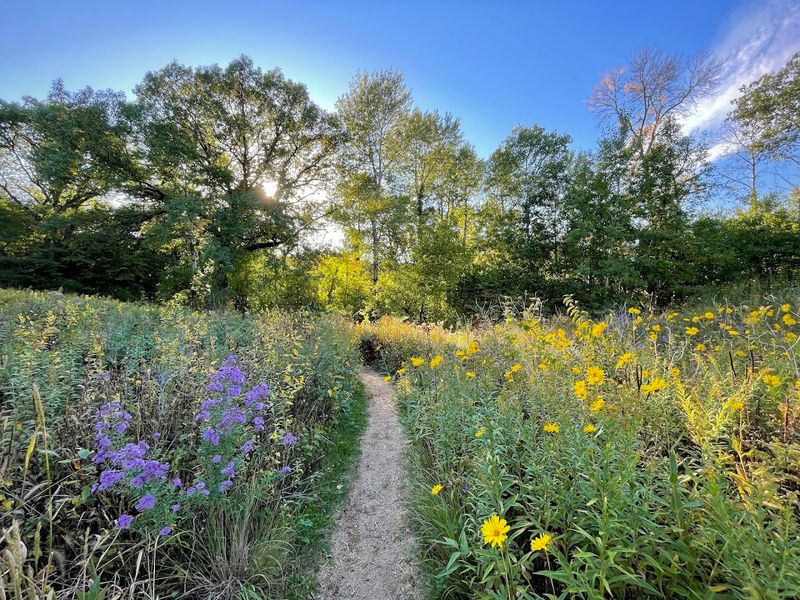
Returning to this garden across different months is not repetitive at all. Spring brings trout lilies and bloodroot pushing up through last year’s leaves.
Summer fills the meadow with coneflowers, sunflowers, and buzzing pollinators that make the whole prairie section feel alive and loud in the best way.
Fall shifts the palette toward warm golds and deep reds. Acorns drop onto the wood chip paths with satisfying little thuds.
The woodland canopy turns colors slowly, and the garden takes on a quieter, more contemplative mood that is completely different from the energetic summer peak.
Even the bog changes character with the seasons. Winter visits are not officially open, but the garden runs through fall until the gates close for the season.
Checking the Minneapolis Parks website before visiting helps you plan around seasonal highlights. The garden also hosts a beloved firefly event in July, where visitors gather at dusk to watch the meadow fill with soft, flickering light.
That event alone has become a summer tradition for many local families.
Native Pollinators and the Living Ecosystem
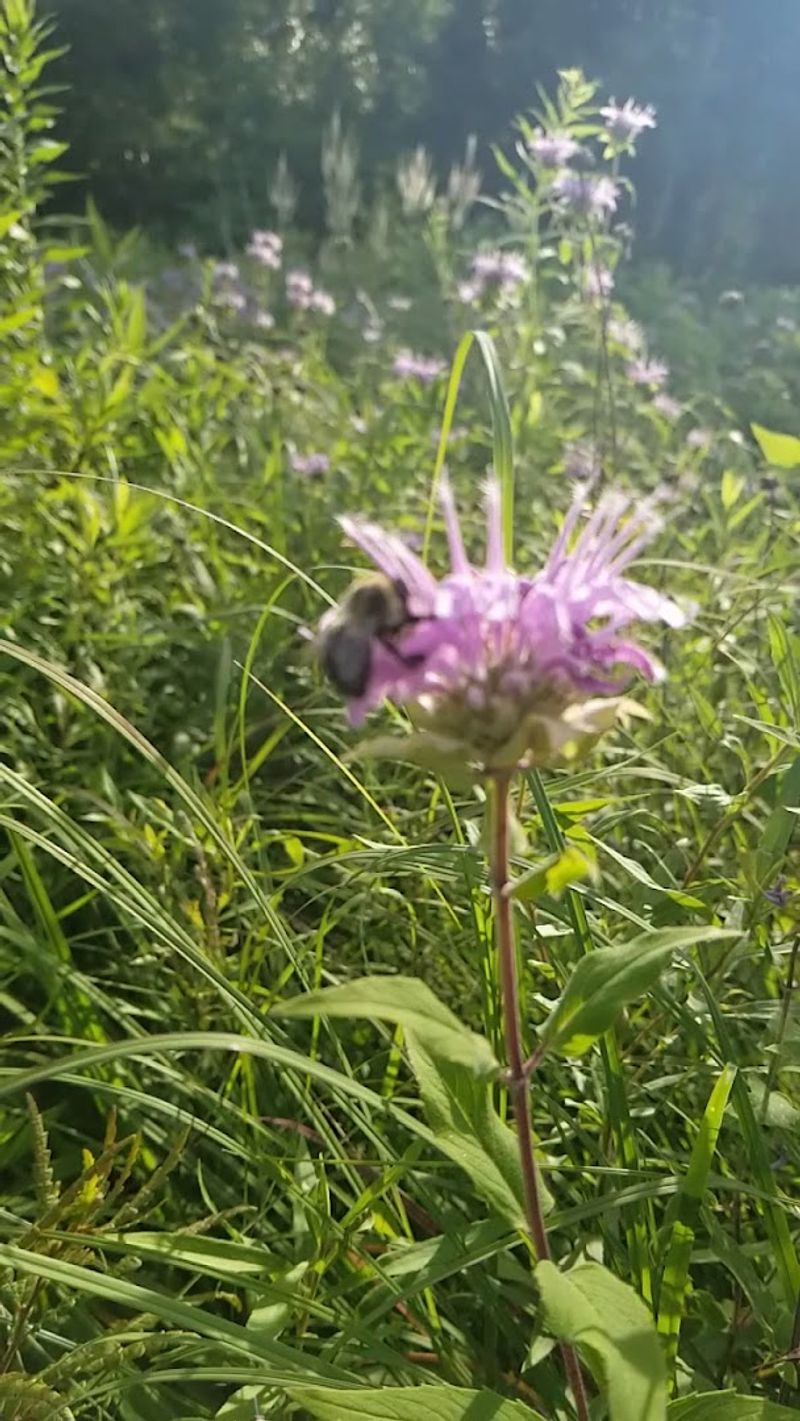
The buzz and flutter of pollinators here is constant and genuinely joyful to watch. Native bees, butterflies, and hoverflies move between flowers with focused energy.
Because the garden uses only native plants and avoids chemical treatments, the insect population is healthy and diverse.
Milkweed grows throughout the meadow section, attracting monarch butterflies during their migration. Watching a monarch land and slowly open its wings on a warm afternoon is one of those small moments that stays with you.
The visitor center even collects milkweed seeds for guests to take home.
The whole ecosystem here operates like a well-tuned machine. Plants feed insects, insects feed birds, and the cycle keeps rolling season after season.
Pollinators labeled as “Polly the Pollinator” are hidden throughout the garden as a scavenger hunt activity for younger visitors. Kids absolutely love searching for them.
Adults quietly enjoy it too, not that anyone needs to admit that out loud. The garden rewards curiosity at every age level.
Getting There and Planning Your Visit
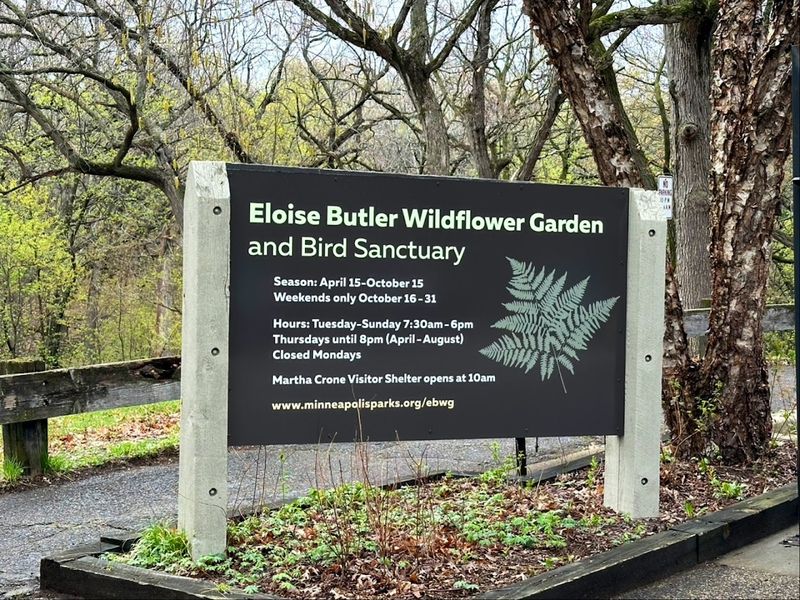
The garden sits inside Theodore Wirth Park at 1 Theodore Wirth Pkwy, Minneapolis, MN 55405. The parking lot is small, so arriving early on weekends makes a real difference.
Saturday mornings by 8:00 AM tend to offer a reasonable chance of finding a spot without circling.
Garden hours run Tuesday through Sunday, opening at 7:30 AM. Thursday hours extend to 8:00 PM, which is the best evening option for catching the garden in golden hour light.
The garden is closed on Mondays, so planning around that saves a wasted trip.
Dogs are not permitted inside the garden, which keeps the trails calm and protects the wildlife. The soft mulch paths are easy on joints and comfortable for long walks.
Wearing layers is smart because the shaded woodland sections stay noticeably cooler than the open meadow. Bringing a reusable water bottle is a good call too.
The garden connects to the broader Theodore Wirth Park trail system, so combining visits to both makes for a full and satisfying outdoor day.
