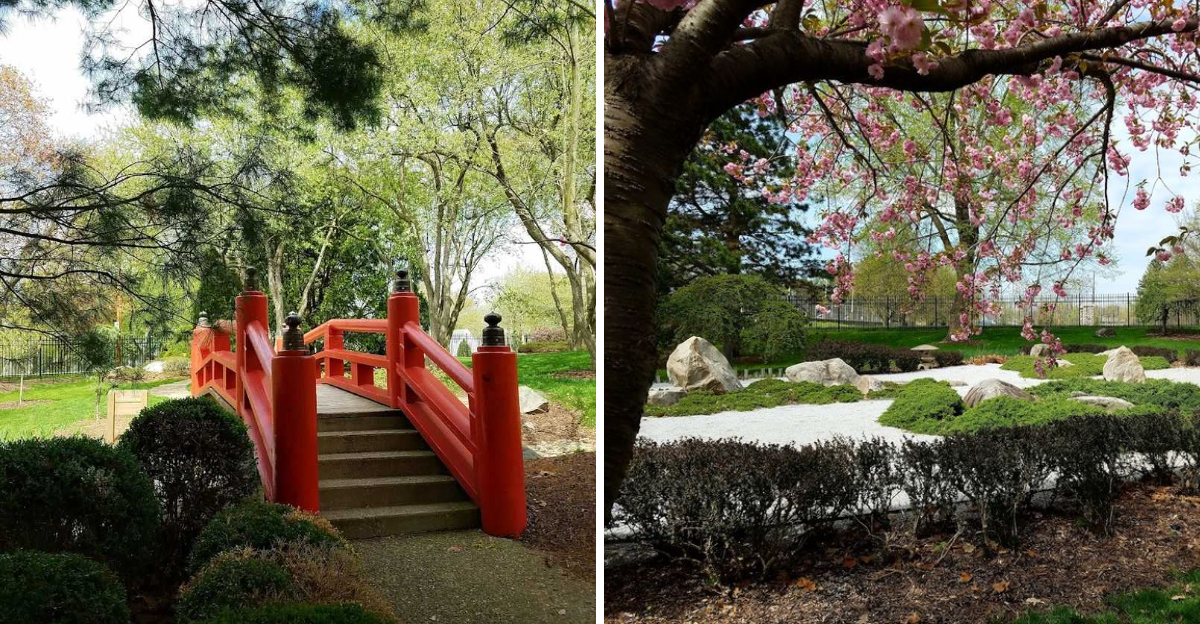
Most people drive right past Mishawaka, Indiana without knowing one of the most peaceful places in the state is waiting just off the road.
A 1.3-acre Japanese strolling garden built as a symbol of friendship between two sister cities offers a tranquil escape filled with carefully designed landscapes, winding paths, peaceful water features, and traditional elements that create a sense of harmony.
It feels completely different from anything else you will find in the region, and that contrast is exactly what makes it so worth visiting. Every corner invites you to slow down, take in the scenery, and appreciate the thoughtful details woven throughout the space.
Whether you are looking for a quiet afternoon, a beautiful place for reflection, or a genuinely unique experience, this hidden gem delivers something you will not easily forget.
Come See the Children’s Bronze Friendship Sculpture
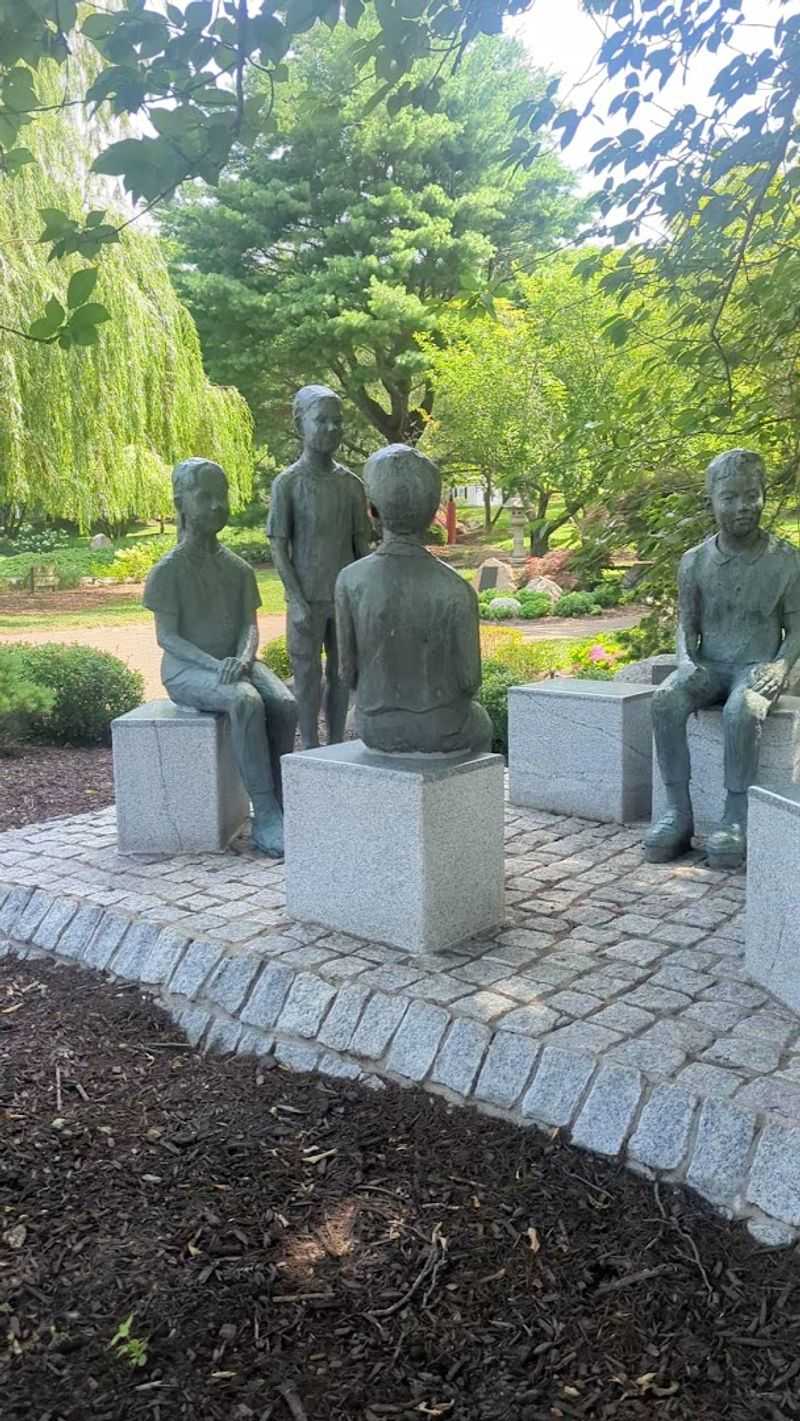
Long before you notice the stone paths or the carefully raked gravel, something else stops you at the entrance gate. A bronze sculpture of two American and two Japanese children stands right there, greeting every single visitor who arrives.
Artist Hidekazu Yokozawa created this piece, and the city dedicated it in 1992. It is not just decorative.
It carries real meaning rooted in decades of cross-cultural connection.
The friendship between Mishawaka and Shiojiri City in Japan actually began much earlier, in 1964, through a student pen pal exchange program. That small act of connection between kids writing letters to each other eventually grew into something much larger.
The sculpture honors that origin story in a way that feels personal rather than formal. You can see the warmth in the figures even before you push open the gate.
Shiojiri Niwa Garden is located at 450 N Niles Ave, Mishawaka, IN 46544, and the garden is open daily from 8 AM to 8 PM. Admission is completely free, which makes stopping here an easy decision for anyone passing through northern Indiana.
Starting your visit at this sculpture sets the right tone for everything inside. It reminds you that this garden exists because of genuine human connection, not just landscape design.
That context makes every step beyond the gate feel more intentional and more meaningful to anyone willing to slow down and pay attention.
Discover Authentic Design From a Master Landscape Architect
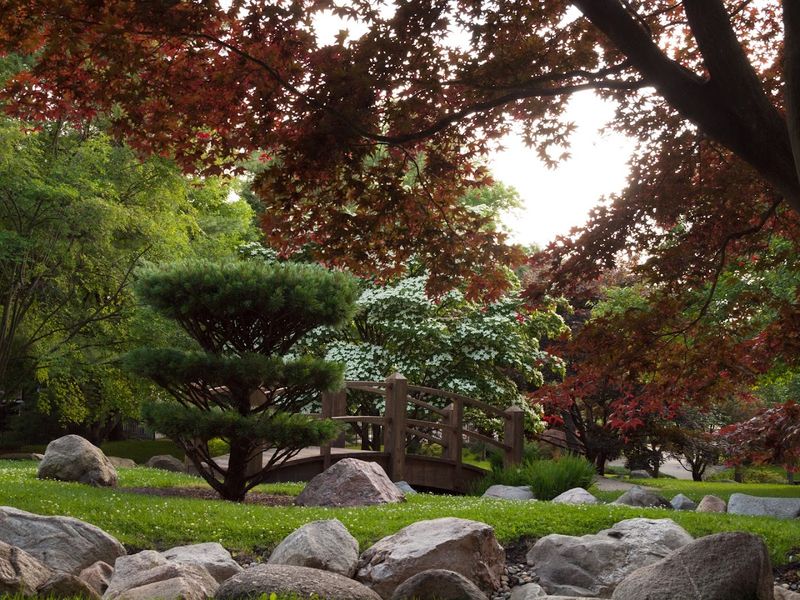
Not every Japanese-style garden in America actually feels Japanese. Many are imitations that borrow the look without understanding the philosophy behind it.
Shiojiri Niwa is different, and the reason comes down to who designed it. Shoji Kanaoka, a trained Japanese landscape architect, brought his full expertise and cultural knowledge to this Indiana suburb when he created the garden.
Kanaoka also contributed to the Japanese gardens at Disney’s Epcot Center in Florida, which gives you a sense of the level of skill involved. His work at Shiojiri Niwa follows a traditional design style called Chisen-Kaiyushiki, which translates roughly to a strolling garden centered around water.
The layout is intentional in every detail, guiding visitors from one carefully composed scene to the next as they walk the winding stone paths.
Every element you see, from the placement of boulders to the angle of a lantern, reflects deliberate choices rooted in Japanese garden philosophy. Nothing was placed randomly or just because it looked nice.
The design respects the idea that a garden should tell a story and create an emotional experience as you move through it. For visitors who appreciate craft and cultural authenticity, this garden offers something genuinely rare in the Midwest.
You are not looking at a theme park version of Japan. You are experiencing a space shaped by someone who grew up understanding what these gardens are truly meant to communicate to the people who walk through them.
Walk Across Four Unique Symbolic Bridges
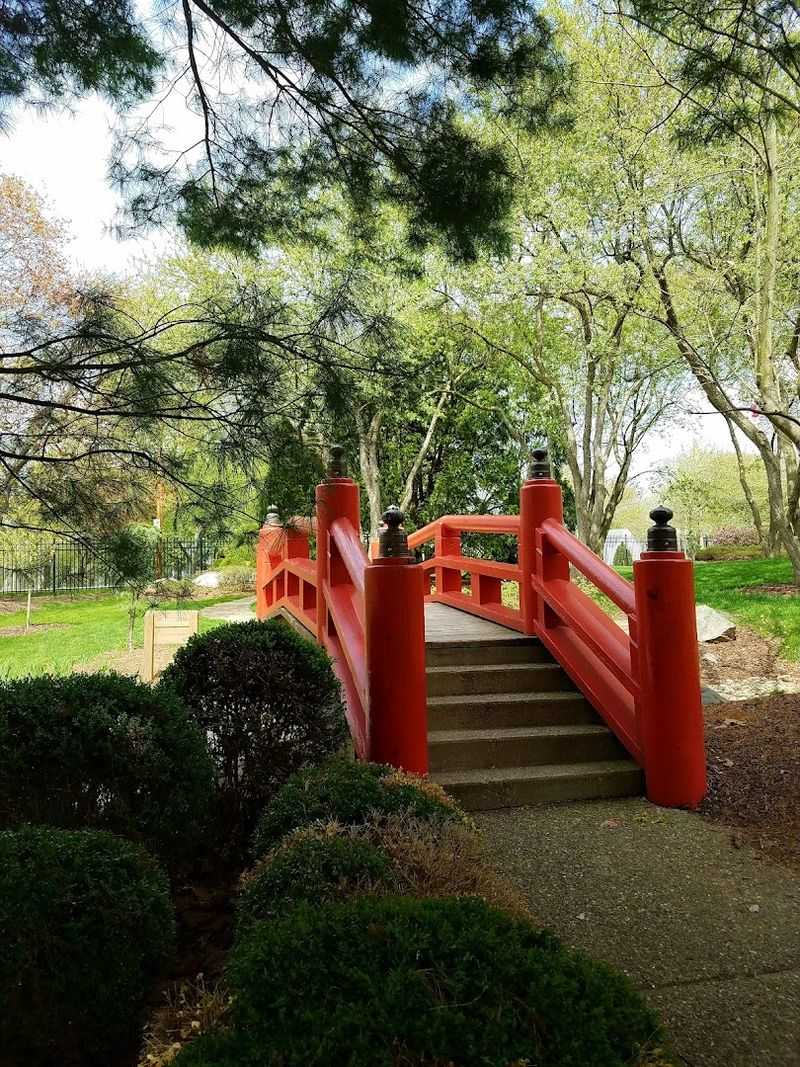
Four bridges cross through Shiojiri Niwa Garden, and each one looks and feels completely different from the others. That variety is not accidental.
Each bridge carries its own design and its own layer of symbolic meaning within Japanese garden tradition. Walking across all four is one of the most engaging parts of exploring this small but richly detailed space.
The largest and most striking is a red arched bridge inspired by the bridge leading to Matsumoto Castle, a famous landmark near Shiojiri City in Japan. Its steep curve is not just for looks.
In Japanese symbolism, that arch represents the difficult path of life, with the top of the curve standing for paradise. Crossing it feels like a small act of meaning rather than just getting from one side to the other.
One of the other bridges follows a deliberate zigzag pattern, which connects to a Japanese legend about evil spirits. According to the legend, evil spirits can only travel in straight lines, so a zigzag path confuses and stops them.
Walking that bridge feels a little playful once you know the story behind it. The garden packs a surprising amount of cultural depth into 1.3 acres.
Each bridge gives you a reason to pause, look around, and think about what you are actually standing on. For visitors who enjoy learning while they explore, these four crossings offer some of the richest moments the entire garden has to share.
Find Quiet Reflection at the Teahouse Pavilion
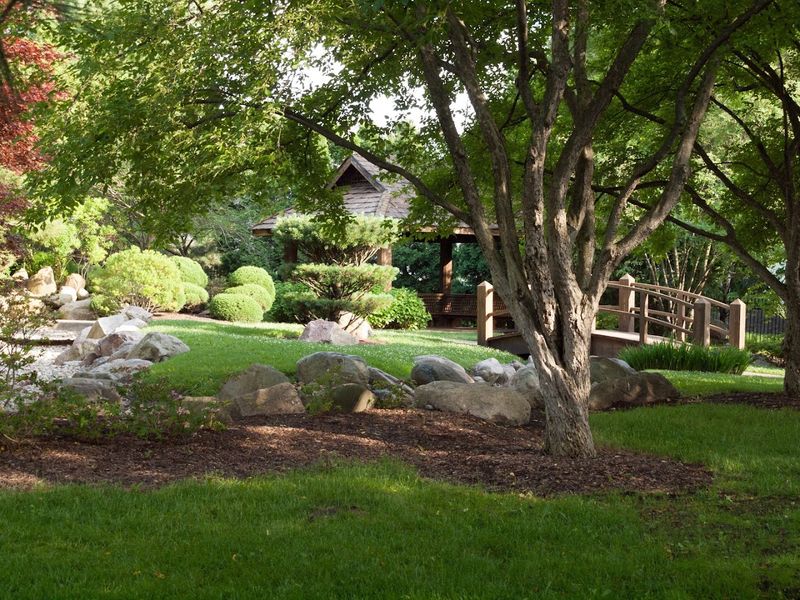
Somewhere near the center of the garden, elevated just enough to offer a view over the entire 1.3 acres, sits a traditional Japanese teahouse pavilion. It is one of those spots where you naturally stop moving and just look around.
The structure was designed by Phil Cartwright, and it captures the spirit of what a teahouse is meant to provide in Japanese culture.
In Japan, a teahouse is not simply a place to drink tea. It represents a dedicated space for mindfulness, quiet conversation, and stepping away from the noise of ordinary life.
The pavilion at Shiojiri Niwa carries that same intention, even in the middle of an Indiana suburb. Sitting there for a few minutes gives you a full view of the stone paths, bridges, and carefully arranged boulders below.
The teahouse has also become a popular location for weddings and special events, which makes sense when you see how beautifully it frames the garden around it. Couples have held ceremonies here, and prom groups regularly stop to take photos in and around the pavilion.
It photographs beautifully in almost any season, but spring brings an extra layer of color when the Kanzan cherry blossoms open nearby. These large double-bloom cherries are reportedly the only ones of their kind in the area, typically blooming between April 14 and April 22.
The teahouse gives you the best view of them when they peak.
Observe Ocean Waves in the Raked Gravel Patterns
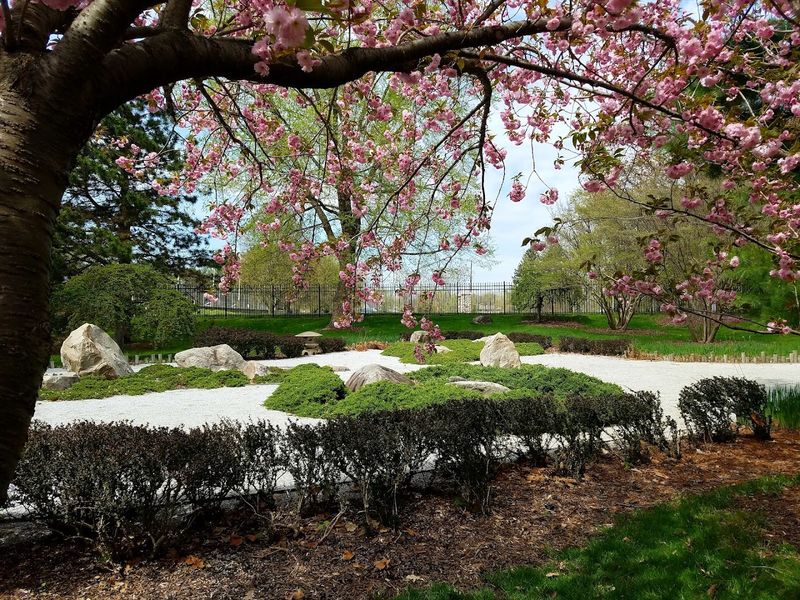
Here is something that surprises almost every first-time visitor. No actual flowing water runs through Shiojiri Niwa Garden, yet the entire space feels deeply connected to the idea of water.
That effect comes from one of the most distinctive features of traditional Japanese dry garden design, known as karesansui.
White gravel covers large sections of the garden floor, and it is raked into careful, sweeping patterns that represent ocean waves. The lines are precise and intentional, and they create a visual rhythm that feels almost meditative to stand and observe.
You are meant to stay off the gravel, just as you would not walk into actual water. That boundary quietly reinforces the illusion the design is creating around you.
Dry waterfalls built from stacked boulders also stand in for mountain cascades throughout the garden. When you look at these rock formations from the right angle, your brain genuinely interprets them as frozen water falling down a hillside.
The whole effect is a clever and culturally grounded way of representing nature without replicating it literally. Japanese garden designers have used this technique for centuries because it asks visitors to engage their imagination rather than just their eyes.
At Shiojiri Niwa, the raked gravel and dry stone features work together to create an atmosphere that feels calm and full at the same time. It is one of those design choices that sounds simple until you are actually standing in the middle of it.
Notice Ancient Meaning in Every Carefully Placed Boulder
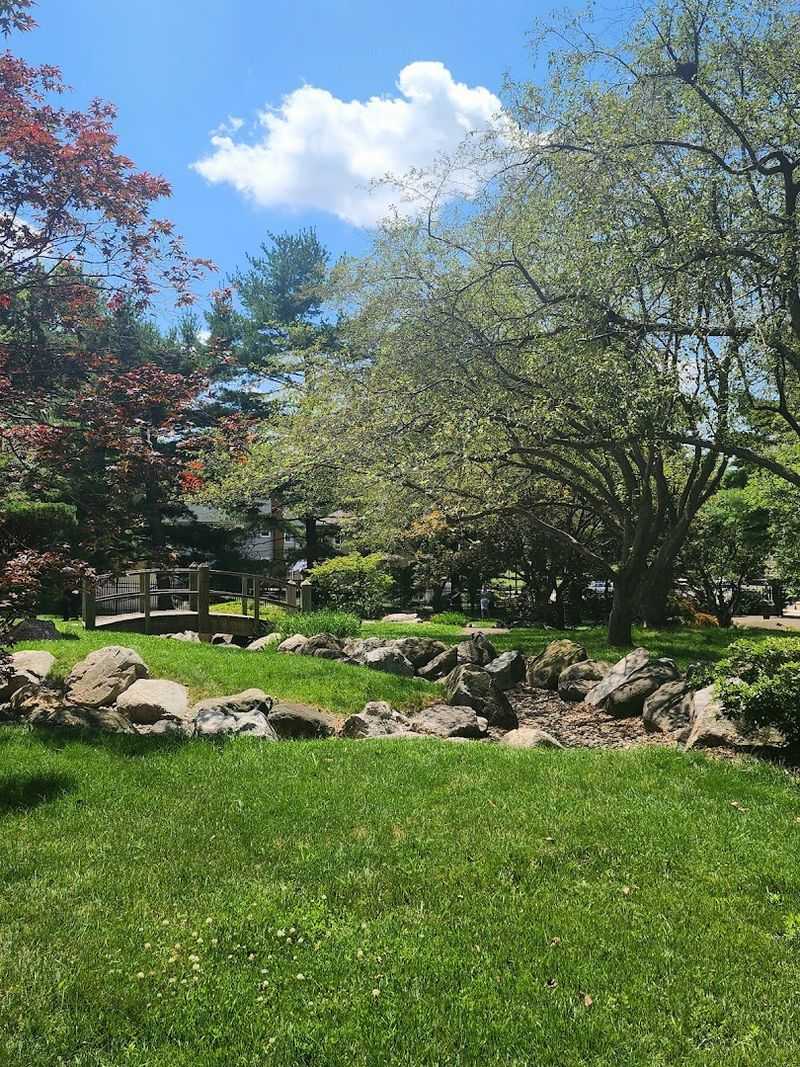
More than 200 large boulders fill Shiojiri Niwa Garden, and not a single one was placed without thought. That is one of those facts that changes how you look at the garden once you hear it.
What looks like a natural arrangement of rocks scattered across the landscape is actually a carefully engineered composition rooted in centuries of Japanese design philosophy.
Traditional Japanese garden design often calls for rocks to be grouped in odd numbers, with five being especially significant. Each group of five can represent the five universal elements recognized in Japanese philosophy: earth, water, fire, wind, and sky.
Walking through the garden with that knowledge turns a simple stroll into something closer to reading a language you are only beginning to understand.
Many of the boulders are also partially buried, which is another deliberate choice. Partially buried rocks appear rooted and permanent, as if they have been part of the landscape for hundreds of years.
That sense of age and stability adds to the overall feeling of calm the garden creates. Some visitors walk through without noticing any of this, and the garden still feels peaceful and beautiful.
But for those who take the time to look closely, the boulders reveal an entire layer of meaning that most outdoor spaces simply do not offer. It rewards curiosity in a way that feels quietly generous.
Every stone has a reason for being exactly where it is, and that level of care is genuinely rare to find anywhere in Indiana.
Plan a Visit and Feel Genuine Peace in Mishawaka
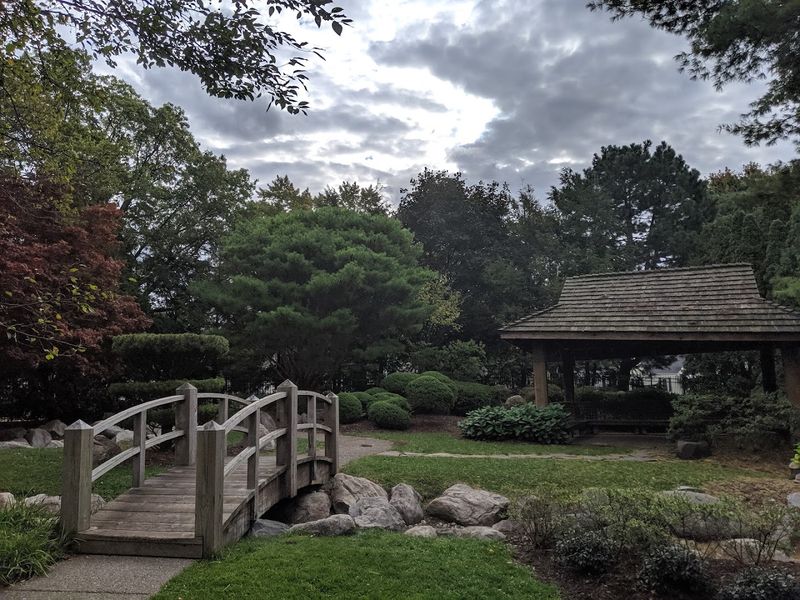
Some places look impressive in photos but feel ordinary once you actually arrive. Shiojiri Niwa Garden works the other way around.
The photos give you a preview, but the atmosphere you feel when you are physically inside the garden is something a camera cannot fully capture. The combination of natural textures, quiet sounds, and thoughtful layout creates a kind of stillness that genuinely slows you down.
You do not need any background in Japanese culture or garden design to appreciate what this space offers.
The garden is free to enter, open every day from 8 AM to 8 PM, and surrounded by Merrifield Park and Crawford Park, which offer additional outdoor space for families and visitors who want to extend their time outside.
Spring is an especially rewarding time to visit because the rare Kanzan cherry blossoms typically open between mid and late April, offering blooms twice the size of the more common Yoshino variety. Summer evenings are cool and quiet, making a late afternoon walk feel genuinely restorative.
This corner of Indiana holds something that most people in the state have never experienced. Visiting once is usually enough to make you want to come back, and that kind of staying power is the best thing any free public space can offer.
