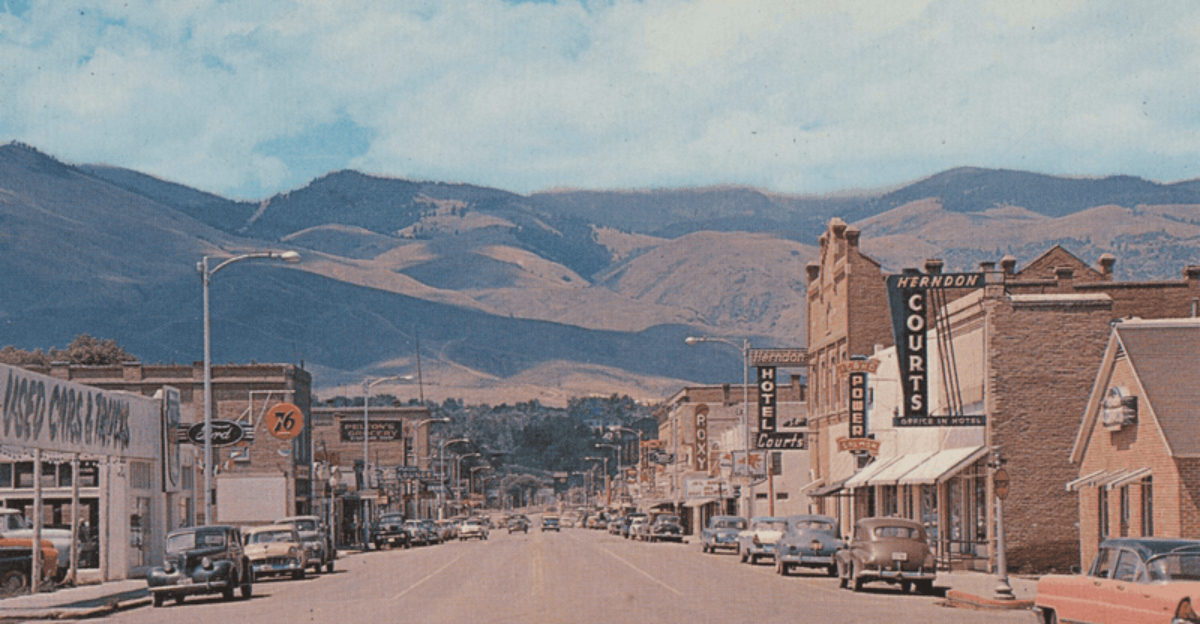
Idaho hides pockets of time where the streets feel quieter, the signage looks retro, and the days are measured by chores and church bells.
If you have ever wondered what small town America felt like before streaming screens and buzzwords, these places keep the rhythm steady.
The charm is subtle, the pace is gentle, and the textures of brick, timber, and neon glow softly at dusk.
Join me as I walk the sidewalks, linger in civic squares, and find the quiet beauty that still defines much of the Gem State.
1. Weiser
Weiser sits close to the Snake River, and the soundtrack is often a fiddle warming up in a practice room above a storefront. The historic brick blocks on State Street feel comfortable, not curated, and the pace asks you to match it. In this corner of Idaho, agriculture sets the schedule, and the town simply follows.
Step into the Weiser railroad district and you see hand-painted signs and sun-faded awnings that still earn their keep. During festival season, fiddles echo through the old facades, but even when stages are silent the music lingers in window displays and community posters. The effect is patient, not sleepy, with locals greeting you like a neighbor.
The Washington County Courthouse lawn offers a reliable gathering spot, dotted with benches and classic lampposts. A walk past the Vendome Event Center shows construction styles that favor function over flash. For travelers who appreciate authenticity, the most interesting thing about Weiser is how little it tries to impress, which is exactly why it does.
2. Grangeville
Grangeville functions like a front porch to Idaho’s backcountry, yet its main drag holds onto forms that worked long ago. There are tidy storefronts, weathered cornices, and signs that favor block letters over glossy fonts. The result is a center that feels steady, not frozen, perfect for a slow lap on foot.
Classic diners and family stores still anchor the core, their booths and counters arranged for conversation rather than spectacle. Walk a block off the highway and the traffic fades to a farm truck rolling past a broad curb. Window displays feature boots, maps, and practical gear, a reminder that this town services real work.
The Old Opera Theatre marquee and the White Bird Battlefield interpretive material nearby add layers of context. Locals fill the sidewalks during parades and school events, then return them to quiet. If you want understated Idaho, this is a measured lesson in how a gateway town can stay itself.
3. Arco
Arco earned a footnote in energy history, yet the streets feel mid century plain in the best way. Low-rise buildings keep the skyline to a single story, while retro lettering nudges your eye from one concrete facade to the next. Highway signs and roadside motels paint an open road picture, simple and honest.
The Number Hill backdrop brings a quirky landmark into view, chalked with graduating classes that have marked time for ages. Downtown, look for neon tubes that still glow at dusk, casting soft color across parking aprons. Sidewalks are wide, traffic is thin, and the town lets you notice the desert light change.
Nearby interpretive sites explain the Experimental Breeder Reactor story with modest exhibits. The feel, though, is more postcard than museum, and Arco seems content to remain practical. If small scale infrastructure and straight talking streets appeal to you, this is Idaho in uncomplicated form.
4. Rupert
Rupert keeps a square at its heart, framed by early storefronts that still host hardware, clothing, and civic offices. The Minidoka County Courthouse stands with quiet confidence, lending the scene a courthouse-step rhythm. You feel events here, from small markets to holiday gatherings, even when the calendar is empty.
Blocks radiating from the square carry brick patterns, bay windows, and old transoms that let the light through. Sidewalk planters and vintage lamps soften the edges, while a steady stream of local errands animates the corners. It reads like a working album of small town Idaho architecture.
The nearby historic theater marquee and preserved facades invite slow photography walks. Seating nooks sit under awnings that cast even shade during summer afternoons. In a state known for open spaces, Rupert offers a compact example of tradition that has simply kept going.
5. Council
Council sits in a valley where fields meet forest, and the town center never tries to outshine the landscape. Vintage facades line the compact grid, their paint a little sun bleached, their trim neatly maintained. New construction exists, but it is sparse, which leaves the old rhythm intact.
Farm traffic sets the tone, so mornings bring pickups and trailers, afternoons return to a hush. A walk past the Adams County Courthouse takes you by tidy lawns, modest porches, and shade from mature trees. The distance from big box bustle is the whole point.
Interpretive panels about the Weiser River Trail sit at the edge of town and hint at easy day rides. Benches at small pocket parks make good resting places for watching cloud shadows slide over the hills. Council does not court attention, and that is exactly why it feels like time slowed down.
6. Kellogg
Kellogg stretches along a narrow valley, with streets that hug the hills and storefronts that recall its mining past. Older motels and small lodges cluster near the gondola base area, their signs simple and serviceable. The scale stays human, and it makes casual wandering easy.
Mining heritage shows in murals, preserved equipment, and a few brick buildings with sturdy lines. Side streets carry clapboard homes with porches that look out on the Silver Valley ridgeline. Even with activity nearby, the architecture reads like a catalog of twentieth century habits.
Public plazas and trailheads offer places to sit and watch bikes glide by. The Silver Valley Historical mining displays provide context without overwhelming you. If you want an Idaho town where modern recreation and older bones coexist quietly, Kellogg gives you that balance without hurry.
7. Montpelier
Montpelier feels distant from the state’s louder growth corridors, and that suits its calm main street. Signage favors block fonts and muted colors, while storefronts keep big windows and low awnings. Traffic is light, which lets you hear the creak of a door and the squeak of a bicycle.
Historic districts near the Bear Lake valley show frame houses with tidy yards and wide porches. The sidewalks run straight and unhurried, lined with globe lights and concrete planters. It looks like a town that kept what worked and ignored the rest.
Local museums and visitor centers outline early settlement routes and regional ranching stories. Public spaces hold benches that catch afternoon shade, a small luxury on summer days. The effect is an Idaho snapshot where the present moves gently around a preserved center.
8. American Falls
American Falls edges the reservoir and keeps a civic core that feels purpose built, then carefully maintained. The relocated town site left a grid of sturdy buildings and a courthouse square that anchors community life. You sense continuity in the way people use the same doors, benches, and steps daily.
Wide streets meet storefronts with glassy fronts and old brick shoulders. The Falls Avenue corridor invites slow window shopping, followed by a pause in a shaded pocket park. The pace is easy, and the view of water just beyond town gives it a calm border.
Nearby interpretive signs recall the dam project and the move that shaped the current layout. Public art adds modest color without shouting over the muted palette. In an Idaho landscape known for dramatic peaks, this place delivers quiet order and small comforts.
9. St. Maries
St. Maries sits where rivers meet, and the timber story still guides its look and layout. Downtown blocks carry unvarnished storefronts, squared off and sturdy, with wood accents that make sense here. Mill history echoes in murals and the straightforward geometry of warehouses.
Rail spurs and river bends frame the scene, so the town feels tucked into its work. On the main street, displays show tools, maps, and outdoor gear, presented without fuss. Sidewalks are wide enough for conversations that pause and restart without stepping aside.
City parks along the water add lawns and shade, with benches facing passing boats. Old hotels and civic buildings keep their original proportions, practical and durable. For travelers chasing an Idaho that does not perform, St. Maries offers the real thing at regular volume.
10. Salmon
Salmon rests in a river valley that puts scenery at eye level and keeps the streets quiet. Outfitters operate from low-slung buildings with hand painted signs, and cafes show classic interiors with wood booths. Nothing feels hurried, and the mountains hold the horizon at a comfortable distance.
Main Street mixes brick and clapboard, with a courthouse lawn that doubles as a community landing spot. Outdoorsy shops arrange gear like museum pieces, organized and useful, but not precious. As evening comes, neon traces letters across windows and a hush falls on the blocks.
Historic walking routes tell of river crossings and early trade, marked by modest plaques. The absence of big city noise lets you hear footsteps and water moving past. In this part of Idaho, time behaves politely, and Salmon seems content to let it pass.
Dear Reader: This page may contain affiliate links which may earn a commission if you click through and make a purchase. Our independent journalism is not influenced by any advertiser or commercial initiative unless it is clearly marked as sponsored content. As travel products change, please be sure to reconfirm all details and stay up to date with current events to ensure a safe and successful trip.
