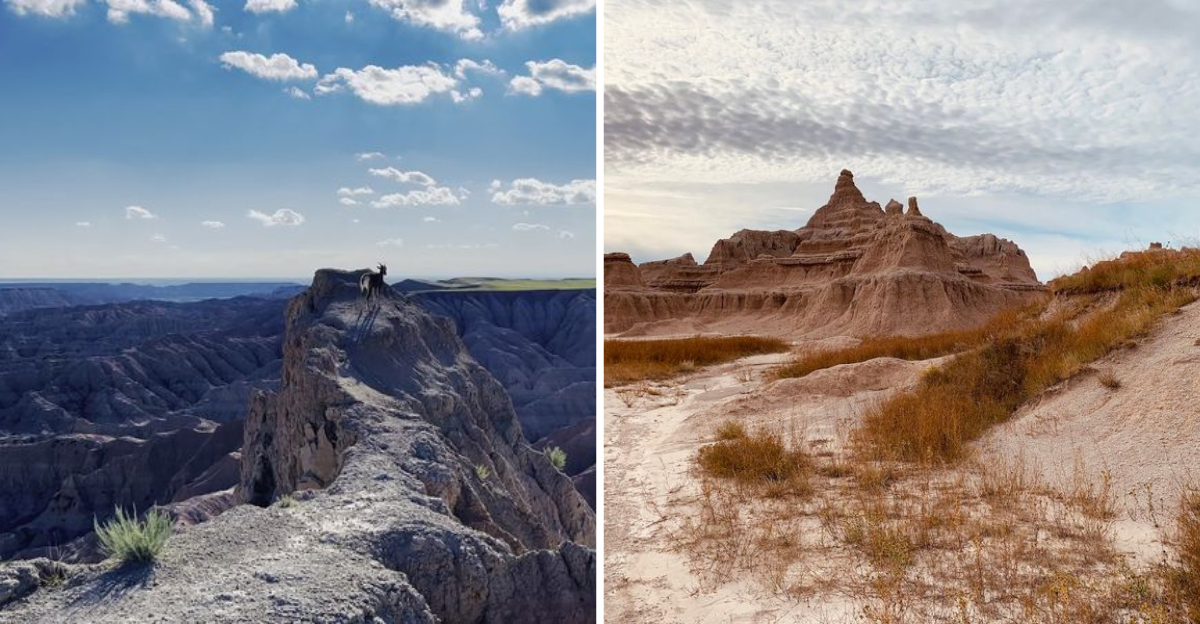
You feel it before you see anything. A heaviness in the air.
The kind of quiet that makes you lower your voice without thinking. This national park in South Dakota sits on land that local tribes consider cursed.
The story goes back generations. Something dark happened here, something the elders do not like to discuss. Visitors report strange noises after dark.
Shadows that move when no one is there. Equipment failing for no reason.
Some leave in the middle of the night. Others refuse to talk about their experience at all.
I walked those trails and something did not feel right. The park is beautiful during the day.
But when the sun goes down, the energy shifts. Whether it is a curse or just history pressing down, I could not tell you.
The Lakota Name That Warned Everyone First
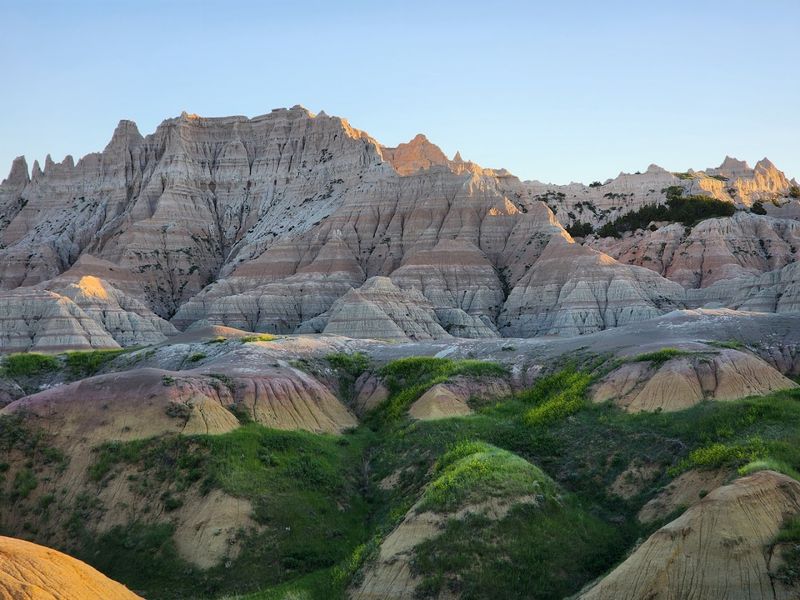
Long before any national park sign existed, the Lakota people had already named this place and meant every word of it. “Mako Sica” translates to “Bad Lands,” and that was not a casual label. The Lakota understood this terrain as something spiritually charged, a landscape that did not simply exist but actively pushed back against those who did not respect it.
The sharp ridges, unpredictable weather, and near-total lack of water made survival here nearly impossible. But beyond the physical danger, the Lakota saw the Badlands as a place where the boundary between the living world and the spirit world grew dangerously thin.
That belief was not superstition. It was accumulated wisdom passed down through generations of people who knew this land better than anyone.
Today, the South Unit of Badlands National Park is co-managed with the Oglala Lakota tribe, a recognition of their deep historical and cultural connection to the area. Visiting with that context in mind changes everything.
The rock formations stop looking like geology and start feeling like something older and more intentional. The name “Mako Sica” was always a warning.
Most people outside South Dakota just did not listen.
The Badlands Banshee and Her Chilling Cry
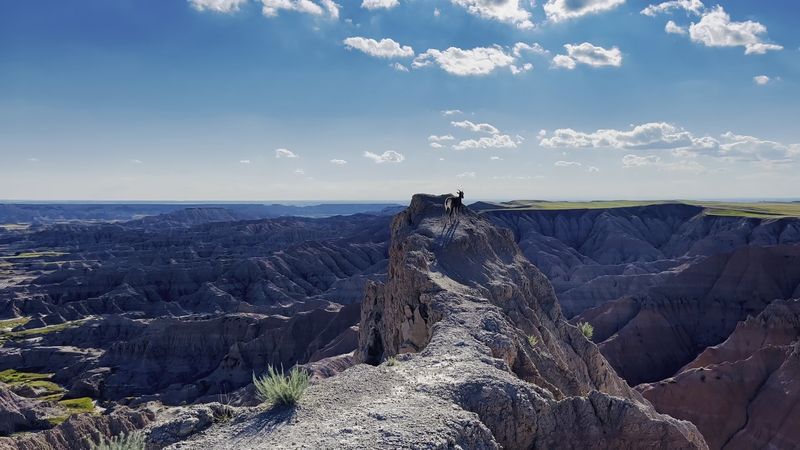
Few legends attached to Badlands National Park are as unsettling as the story of the Badlands Banshee. Visitors and locals alike have reported hearing a high-pitched wailing sound echoing through the rock formations after dark, a cry that does not match any known animal or natural wind pattern.
The sound is described as deeply human, yet completely wrong.
The Banshee is said to be the spirit of a woman, though her exact origin is debated. Some accounts connect her to a woman ended violently in the region, while others suggest she is a grieving spirit tied to the land’s violent history.
What most versions agree on is her behavior: she wails, she calls out, and some say she tries to lure unsuspecting visitors toward dangerous drop-offs in the dark.
She is sometimes described as appearing alongside a skeletal figure who carries a violin and wanders the ridgelines at night. That detail alone has kept more than a few campers inside their tents after sunset.
Whether the sounds are real or imagined, rangers have confirmed that the acoustics of the Badlands are genuinely strange. Sound travels in unexpected ways through those carved rock corridors, which only makes the legend harder to dismiss.
Walking Sam, the Soul-Collecting Specter
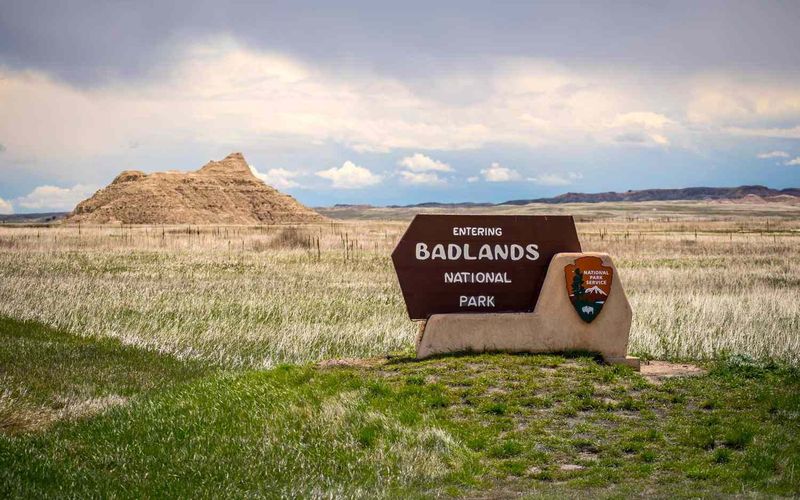
Not every haunting in the Badlands, South Dakota is tied to sound. Some are tied to sight, and the legend of Walking Sam is one of the most striking examples.
Described as a seven-foot-tall dark figure with no mouth, Walking Sam is said to roam the remote areas near the Badlands and the Pine Ridge Reservation, appearing suddenly and vanishing just as fast.
Associated with the Oglala Lakota of Pine Ridge, Walking Sam is not just a ghost story. He is believed to be a collector of souls, a being who seeks out those who are vulnerable or lost and draws them toward danger.
The legend has taken on a deeply serious cultural weight in the community, connected to conversations about grief, isolation, and loss among Indigenous youth.
For visitors to the Badlands, the legend adds a layer of unease to the park’s already otherworldly atmosphere. Hiking alone in the backcountry, especially near dusk, is when the story feels most present.
The terrain offers no comfort. Ridgelines drop without warning, and the silence is the kind that makes you aware of your own breathing.
Walking Sam may be folklore, but the feeling he represents, being watched by something unseen, is one nearly every solo hiker here has described at some point.
The Ghostly Woman in White at the Visitor Center
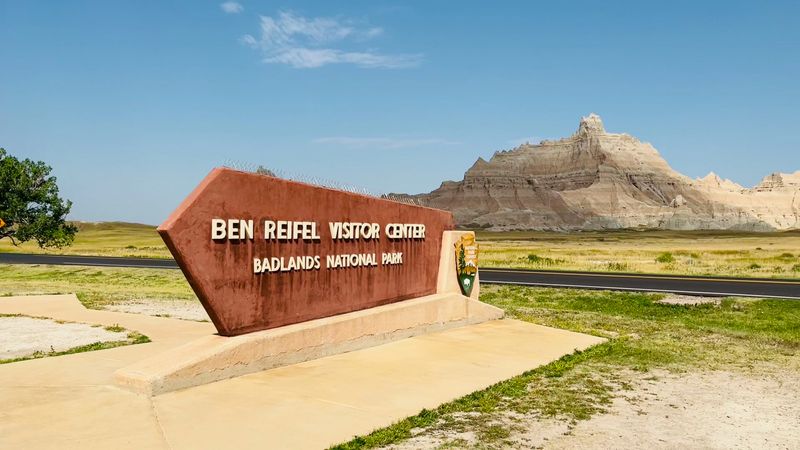
Most paranormal encounters at Badlands National Park happen out in the wilderness, but one recurring report keeps pulling people back to a more ordinary location: the visitor center. Multiple accounts describe a woman dressed in white appearing near the building, usually at dusk or just after closing hours when staff are wrapping up for the night.
She does not interact with anyone directly. She simply appears, lingers near the entrance or the parking area, and then fades.
Some who have seen her describe a calm, almost mournful presence rather than anything aggressive or threatening. That quiet sadness, oddly enough, makes the account feel more believable rather than less.
Park staff have reportedly experienced unexplained events inside the building as well, including objects moving on their own and sudden cold spots in rooms that have no drafts. Whether these events are connected to the woman in white or represent a separate presence entirely is unknown.
What makes this particular legend interesting is how grounded it feels. A visitor center is the last place you expect a haunting, which is exactly why this one sticks.
The Badlands does not limit its strangeness to the dramatic cliffsides. It apparently follows you all the way to the gift shop.
The Curse Tied to Stolen Sacred Land
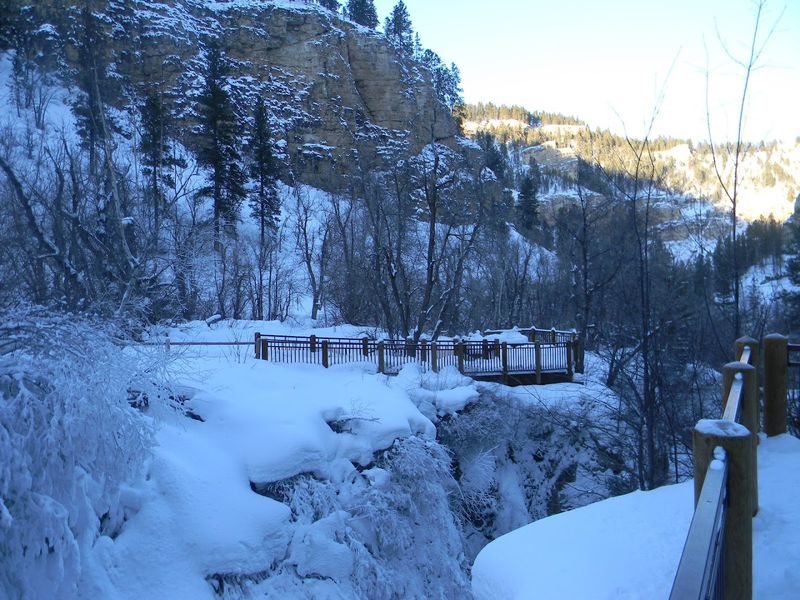
The history of the Black Hills and surrounding Badlands region is tangled with broken promises and land taken by force. After gold was discovered in the Black Hills in the 1870s, the U.S. government violated the Fort Laramie Treaty and seized land that had been guaranteed to the Lakota Sioux.
The Lakota have never accepted the loss. They refused a monetary settlement and continue to assert that the land was stolen, not sold.
That unresolved injustice has given rise to what many call the Curse of the Black Hills. Travelers passing through the region and discussing its troubled history have reported unusual runs of bad luck, from mechanical failures to sudden illness to a persistent and unexplained sense of dread.
Whether that constitutes a curse in the supernatural sense or simply the psychological weight of standing on contested, grieved-over land is something each visitor has to decide personally.
What is clear is that the spiritual significance the Lakota place on this landscape does not disappear because a boundary line changed on a map. The land still carries that meaning.
Many visitors describe feeling it without knowing the history at all, a pull toward something unresolved, something waiting. That feeling has a name.
The Lakota gave it one long ago.
The Badlands Yeti and Other Unexplained Creatures
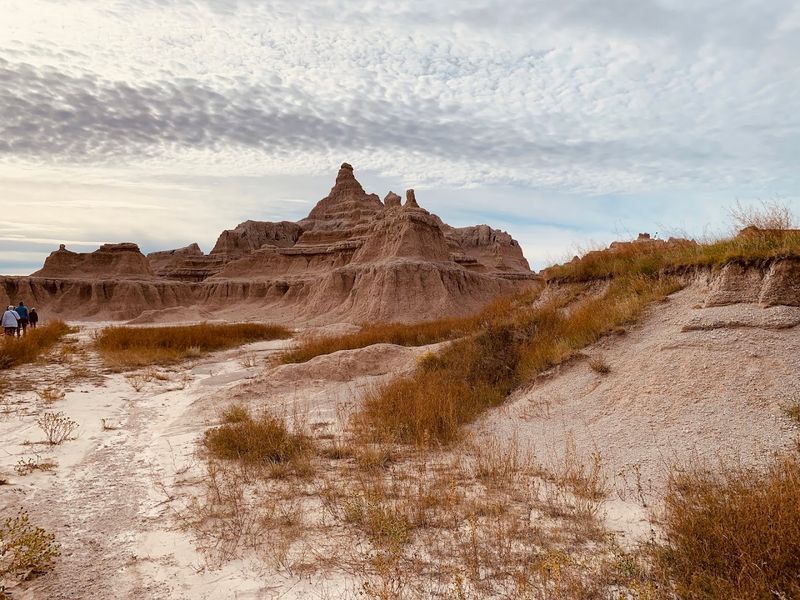
The Badlands is remote enough that strange creature sightings feel almost inevitable. The terrain is vast, visibility is unpredictable, and the landscape plays tricks on the eyes even in good lighting.
So it is not entirely surprising that reports of a so-called Badlands Yeti have circulated among hikers and backcountry campers for years.
Described as a large, dark, bipedal figure spotted moving along ridgelines or disappearing behind rock formations, the Badlands Yeti shares characteristics with Bigfoot-type legends found across North America. Some Indigenous traditions in the region include references to large, powerful beings associated with wild and spiritually significant places, which adds a cultural layer to what might otherwise be dismissed as overactive imaginations.
I am not personally convinced that a giant creature is roaming the Badlands. But I also cannot explain the consistent pattern of sightings reported over decades by people with no connection to each other.
The park covers nearly 244,000 acres, much of it wilderness that sees very few human visitors each year. If something unusual wanted to stay hidden out there, the Badlands would be an ideal place to do it.
The sheer scale of the landscape makes certainty in either direction feel a little premature. Strange things live in large, quiet places.
Why the Badlands Feels Different After Dark
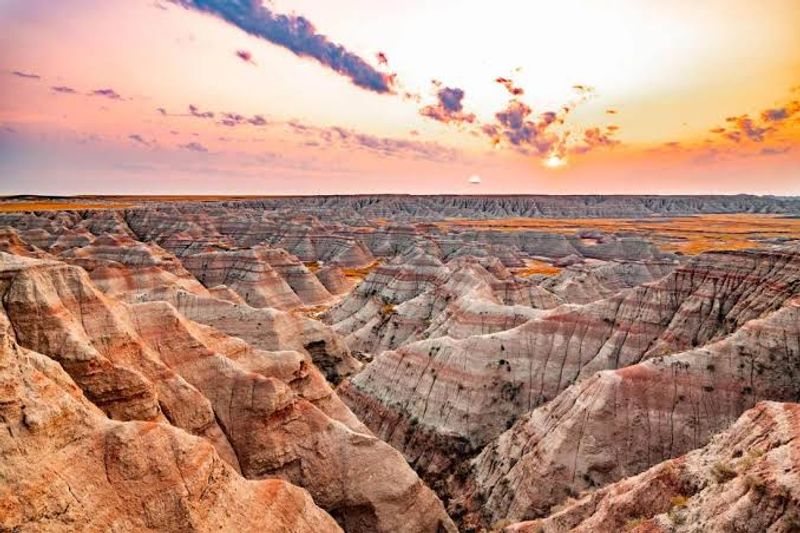
Daytime at the Badlands is already an experience that borders on surreal. After dark, the park transforms into something that is genuinely hard to describe.
The absence of light pollution means the sky opens up in a way that city dwellers rarely see, and the rock formations take on completely different shapes when lit only by starlight or moonlight.
Sounds carry strangely. A pebble rolling down a distant ridge can sound like footsteps nearby.
Wind through narrow rock channels produces tones that do not resemble wind at all. Rangers and frequent visitors have noted that the park’s acoustic environment is one of its strangest features, one that makes even skeptics pause and listen more carefully than they intended to.
Camping overnight in the Badlands backcountry is a legal and rewarding option, but it is not for the faint of heart. There are no marked campsites in the wilderness zone, and the darkness is total on moonless nights.
I stayed close to the Loop Road on my visit, which felt like the right call. The park is stunning and strange in equal measure, and the night version of it belongs to something older than tourism.
Badlands National Park is located at 25216 Ben Reifel Road, Interior, SD 57750.
