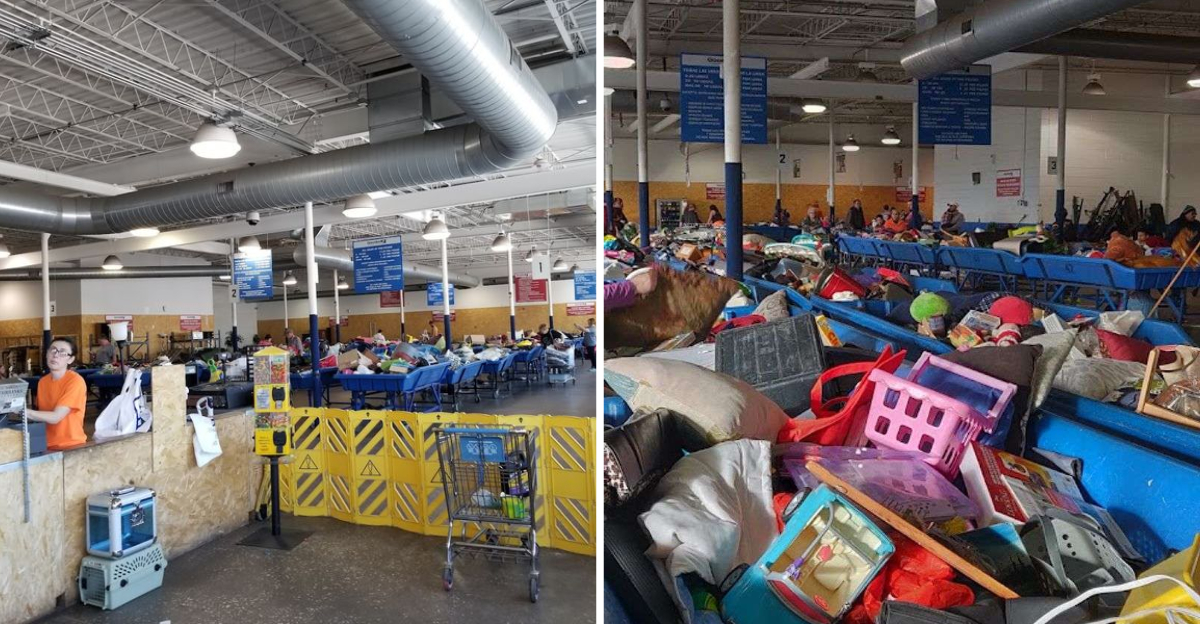
A certain Goodwill in the Midwest does not look like any thrift store you have walked into before. The moment you step through those doors, you notice yellow lines taped across the floor and shoppers lined up behind them like runners waiting for a starting pistol.
People wear rubber gloves. They clutch reusable bags.
Their eyes scan the room with the focused energy of someone who has done this a hundred times. I heard about this place from a friend who found a vintage leather jacket for almost nothing.
I did not believe her until I saw it myself. Then the bins roll out.
Massive blue carts dumped onto long tables. Shoppers rush forward.
Hands dig. Treasures appear.
A denim jacket here. A cast iron pan there.
Something weird and wonderful you cannot identify but absolutely need. The crowd is serious.
The energy is electric. The whole experience feels less like shopping and more like a treasure hunt with better odds.
If you have never tried bin style thrifting, this location is one of the most organized and fascinating places to start. Just bring gloves.
And courage.
What the Yellow Lines Are Actually For
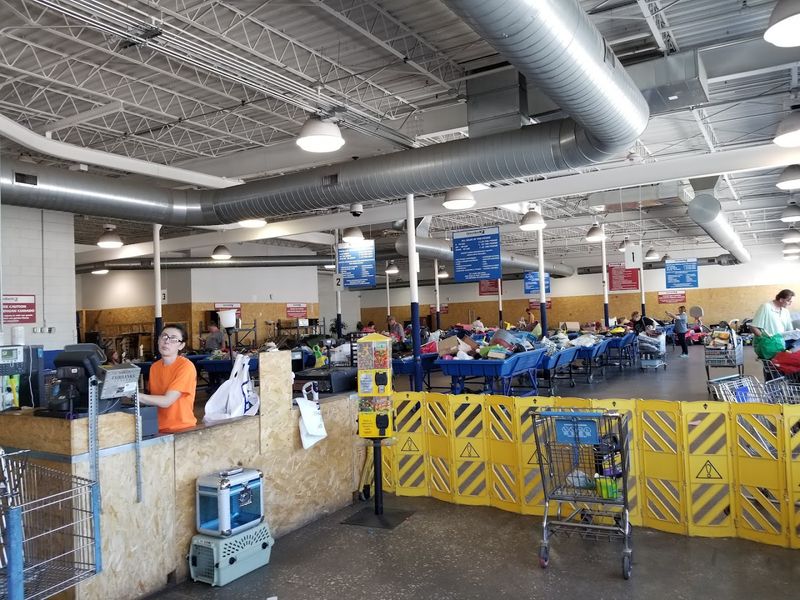
Most people walk in and immediately notice the yellow lines without knowing what they mean. They are not decoration.
Those lines mark the boundary between shoppers and the bins during a rotation, which is when workers roll out fresh carts of donated goods and dump them into the large blue containers.
During a rotation, everyone steps back behind the yellow line and waits. No one touches the bins until the workers give the signal.
It sounds strict, but honestly it makes the whole experience feel fair and surprisingly civil.
The system keeps things from turning into a chaotic free-for-all. Without those lines, faster or more aggressive shoppers would have an unfair edge over everyone else.
The yellow lines level the playing field. Every person, whether it is their first visit or their hundredth, gets the same shot at whatever lands in the bin.
Rotations happen throughout the day, and regulars know to pay attention to when the workers start moving carts. The anticipation before a fresh bin drop is genuinely exciting.
You never know if the next load will have electronics, clothing, books, or something completely unexpected sitting right on top.
Why the Gloves Are Not Optional
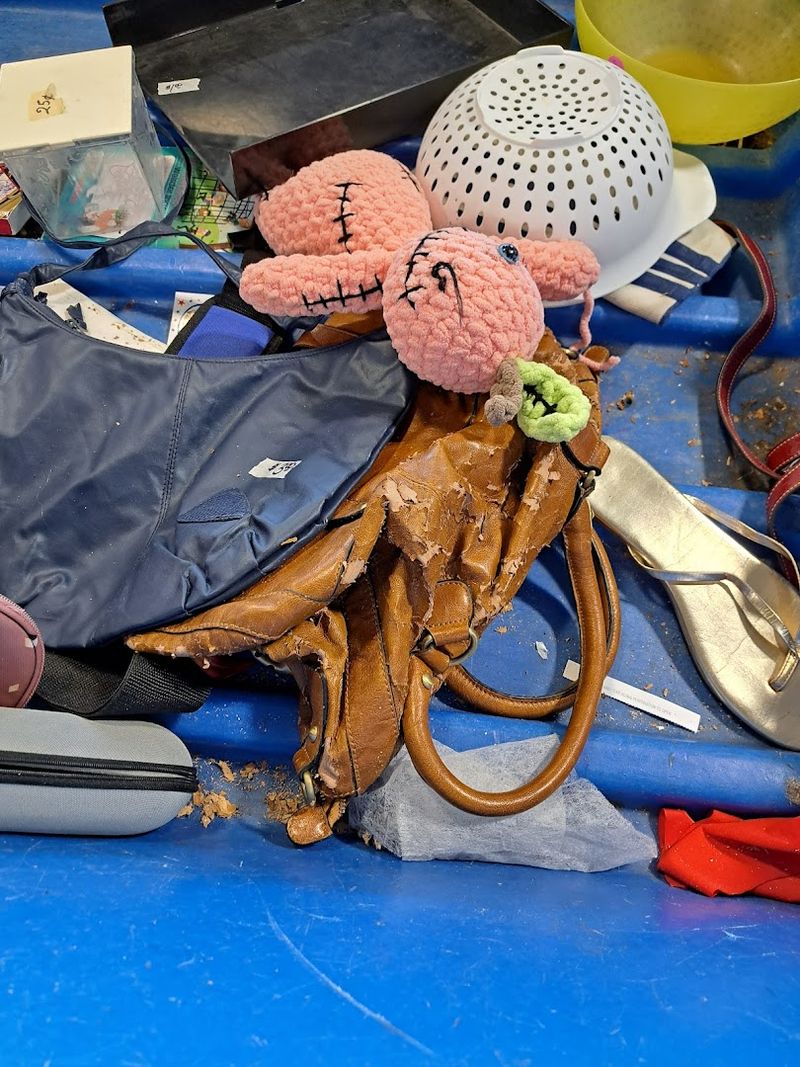
First-timers almost always skip the gloves, and they almost always regret it. The bins at the Omaha Goodwill Outlet are filled with a completely unpredictable mix of donated items, and not everything in there is soft and harmless.
Broken picture frames, loose screws, cracked plastic, and mystery sharp edges are all part of the deal.
Experienced shoppers show up with their own rubber or latex gloves, and some even bring thicker work gloves for extra protection. It might seem like overkill until you reach into a bin and feel something poke your finger.
That is usually the moment people decide gloves are worth it.
Beyond physical safety, gloves also keep your hands clean during a long digging session. You can spend a solid hour sorting through items, and by the end your hands would be filthy without protection.
It is a small habit that makes the whole trip more comfortable.
Bringing gloves also signals to other regulars that you know what you are doing. It is one of those small details that separates the occasional visitor from the seasoned bin shopper.
Pick up a cheap pack before your first visit and thank yourself later.
Shopping by the Pound Changes Everything
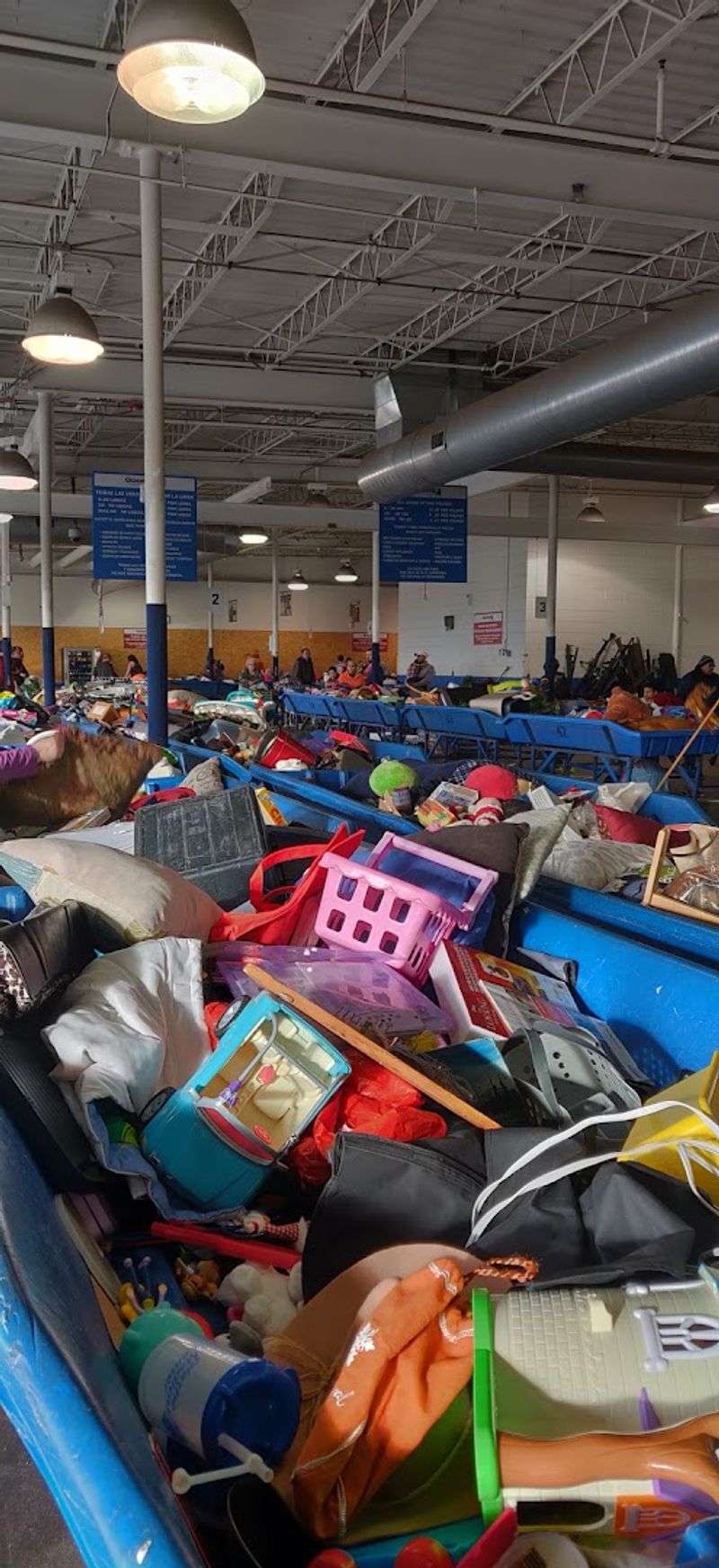
The pricing model here is one of the most unusual things about the Goodwill Outlet experience. Nothing has an individual price tag.
Instead, everything is sold by weight, which means a pile of clothes, a stack of books, or a box of kitchen tools all get weighed together at the register.
This setup creates a completely different mindset than regular thrift shopping. You stop thinking about individual item prices and start thinking about value per pound.
A heavy ceramic bowl might cost less than you expect, while a lightweight vintage jacket could be an incredible deal.
The weight-based system rewards people who take their time and think carefully about what they are grabbing. Tossing items into your bag without thinking can add up faster than expected.
Most experienced shoppers carry a tote or
How the Pricing System Keeps Regulars Coming Back
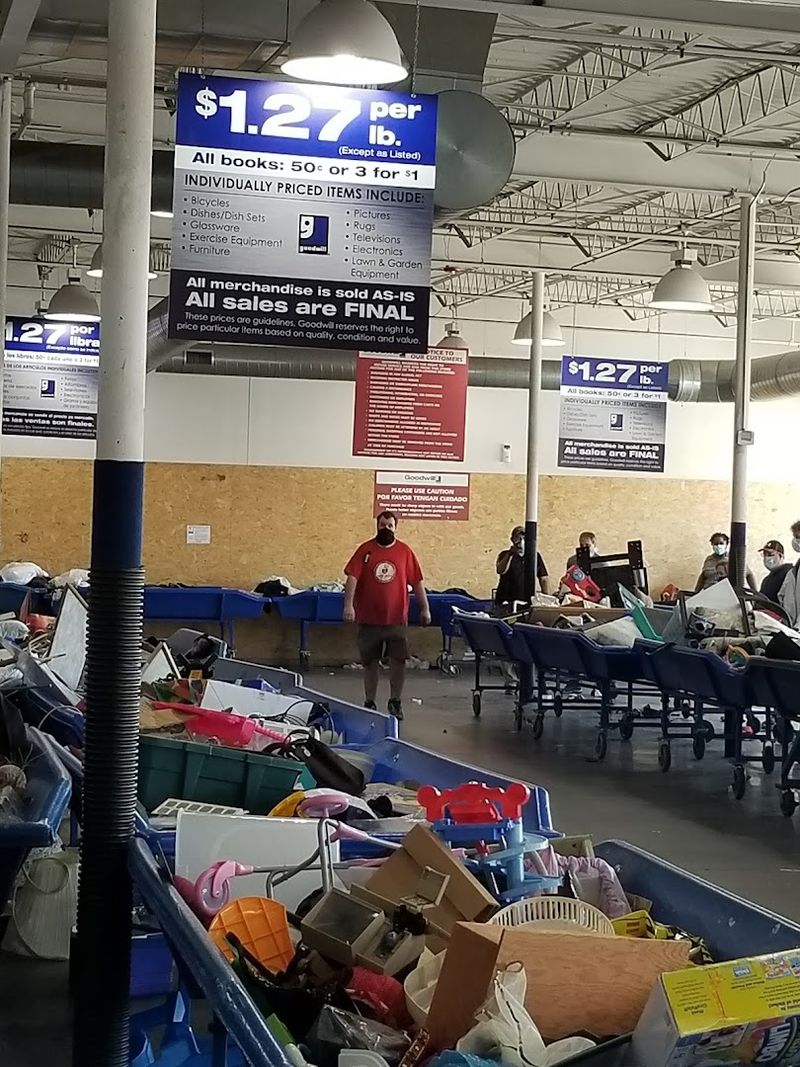
Pay-by-the-pound pricing sounds simple, but the strategy behind it is surprisingly clever. Regulars at the Nebraska Goodwill outlet know that timing their visits right can mean walking out with a full bag for just a few dollars.
The weight-based model removes price tags entirely, which keeps the checkout line fast and the competition fierce.
Seasoned shoppers learn quickly that lighter items, like clothing, offer the best value per haul. Heavier finds like books or kitchenware can add up fast on the scale.
Knowing what to grab and what to leave behind becomes a skill all its own.
What First-Timers Usually Get Wrong on Day One
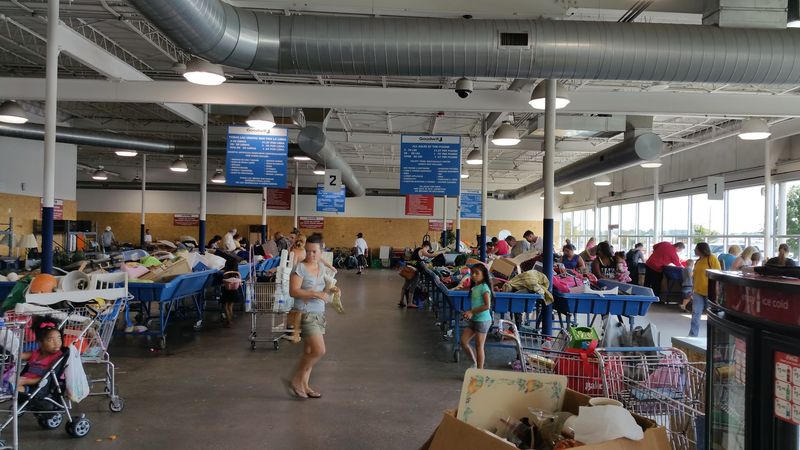
Walking into a Goodwill outlet for the first time without any preparation is a recipe for total overwhelm. The noise, the crowds, the bins, the gloves, none of it resembles a typical thrift store experience.
First-timers often make the mistake of showing up during a busy rotation without understanding the yellow line rules, which can create awkward standoffs with veteran shoppers.
Wearing old clothes is strongly recommended because bin-digging gets messy fast. Bringing your own gloves, a reusable bag, and a rough idea of what you want helps enormously.
A little homework before your first visit goes a long way.
Location: Goodwill Wearhouse, 4115 S 72nd St. Omaha.
