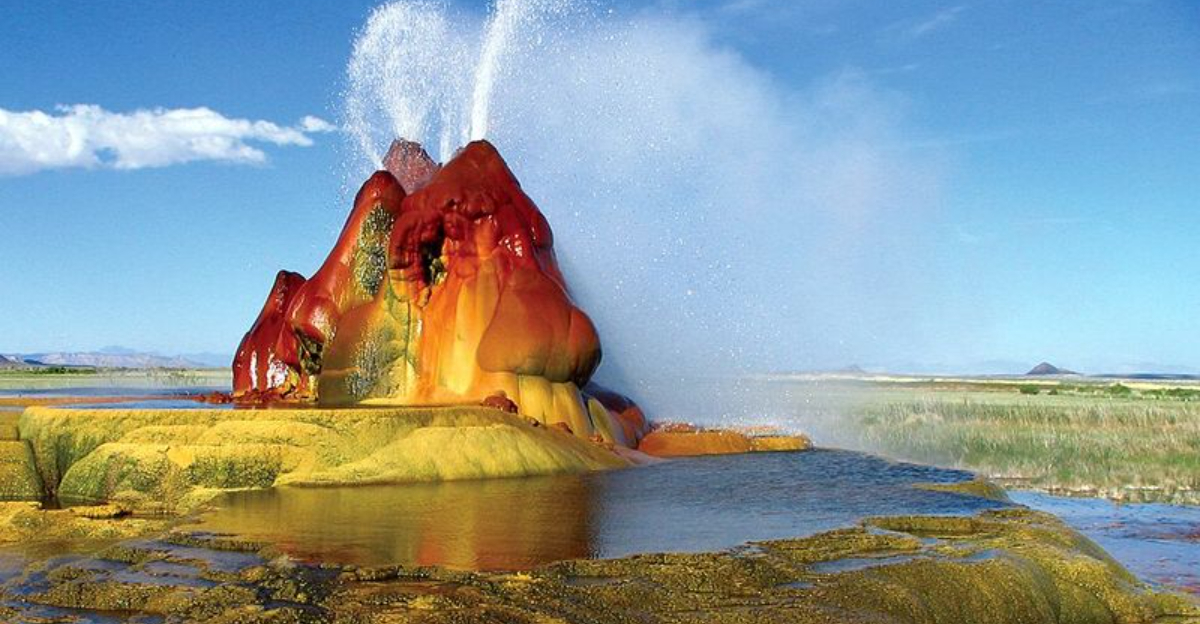
You have probably seen photos of rainbow terraces rising from a desert plain, and Fly Geyser Fly Ranch looks even more surreal in person.
Tucked near Gerlach in northern Nevada, this living geothermal sculpture seems like it teleported from a sci fi set.
The cones shimmer with mineral colors, steam drifts into the big sky, and quiet boardwalks lead you safely through wetlands.
If you plan well, you can visit on guided walks operated with stewardship in mind.
Let this guide help you see more, know more, and treat the site with the care it deserves.
What Fly Geyser actually is
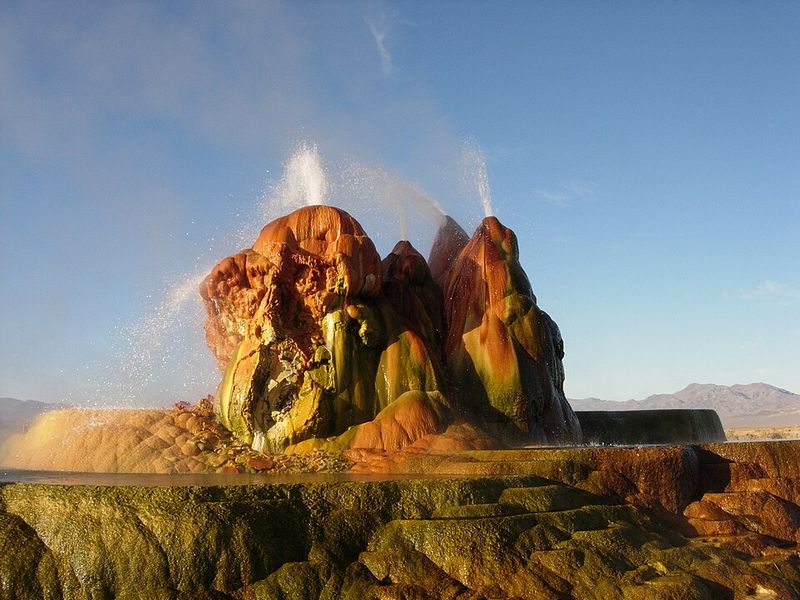
Fly Geyser is a mineral rich geothermal formation that grew from a 1960s well that tapped a hot aquifer and never fully sealed, allowing pressure to push silica and calcium carbonate to the surface where they hardened into cones.
Water continues to vent, building terraced pools that catch sunlight and shift hues with algae that thrive in the warm flow.
The result looks unreal at first glance, yet every vivid layer comes from patient geology and steady human stewardship today.
You will find the geyser on private land known as Fly Ranch, with access managed through guided nature walks that balance curiosity and care.
The route follows a simple boardwalk, and the hosts share context about geothermal processes, local ecology, and visitor etiquette.
This approach keeps fragile crusts intact while letting you experience the heat and color up close without damage.
Despite the cinematic look, Fly Geyser does not erupt like Old Faithful and instead vents continuously at a modest height with soft steam.
The steady flow builds travertine like formations that resemble coral, and each year adds ridges, lips, and drips.
You can spot multiple vents, with the tallest cone flanked by smaller chimneys that whisper and spatter.
Because the water is hot, the pool edges often glow green and red from heat tolerant algae.
Seasonal light changes the palette, and winter steam can be dramatic against a crisp Nevada sky.
Spring brings birds to the wetlands that formed naturally from the outflow, adding motion and sound to the scene.
The place sits near Gerlach and the Black Rock Desert, yet it feels contained and calm when you step onto the trail.
Cell service can be weak, so download directions and your ticket details in advance.
Respect the rules, stay on paths, and you will leave with photographs and a deeper sense of how water reshapes land.
How to visit responsibly
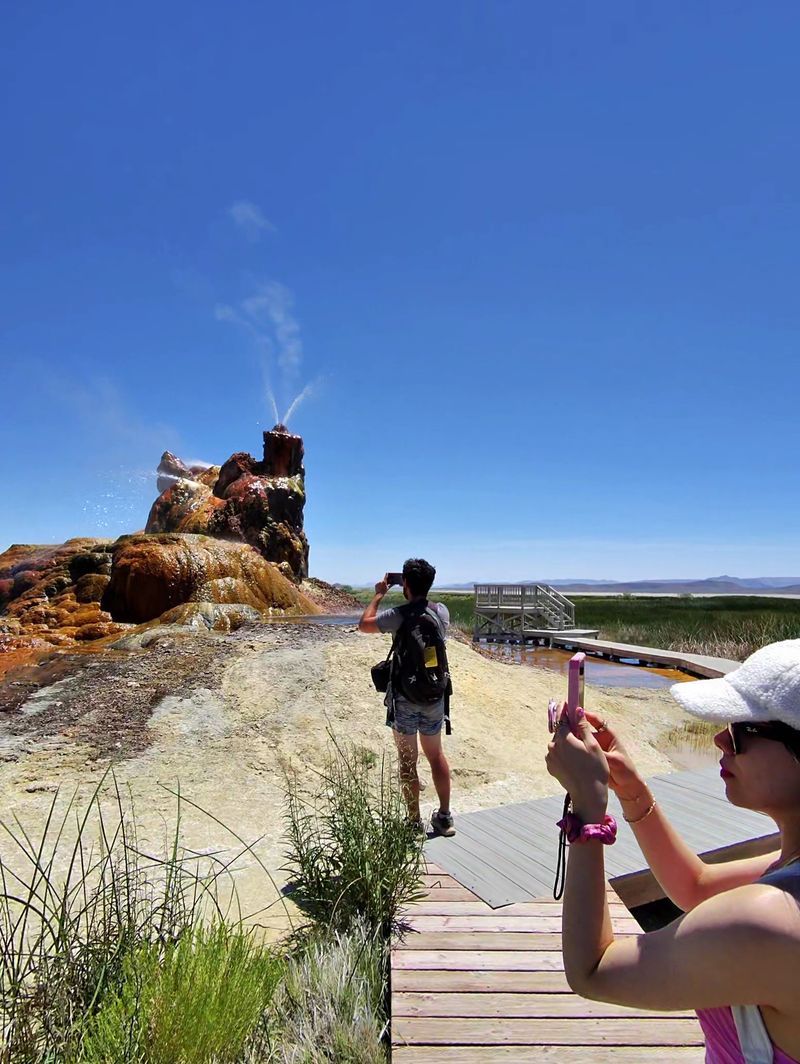
Visiting Fly Geyser means joining a guided walk booked in advance, which protects sensitive formations while giving you time for photos and questions.
Check current schedules on the official stewardship partner website, since dates vary with season and weather in Nevada.
Arrive a little early to meet your host and review guidelines that keep everyone safe and the site healthy.
You will walk on a designated boardwalk and packed paths, and stepping off crusts risks damage and personal injury.
Tripods are usually allowed, but drone flights are not permitted due to wildlife, privacy, and safety concerns.
Ask before bringing bulky gear, and leave pets at home to avoid stress on birds and geothermal areas.
Carry water, wear closed shoes, and bring layers because high desert temperatures can swing quickly.
Wind can rise in the afternoon, so secure hat brims and lens cloths to avoid losing them into pools.
Guides often pause to discuss geology and the history of the 1960s well, so listen carefully and keep voices low around wildlife.
Do not touch formations or water, since oils and sunscreen can harm delicate algae and soft mineral build up.
Pack out all trash, including tiny items like lens wipes and snack wrappers that blow easily.
Stay kind with photos and avoid blocking the view for others, since boardwalk space is shared.
If you post your images, avoid sharing precise off trail angles to prevent copycat trespass.
Weather can cancel tours, so keep plans flexible and know that refunds or rebookings follow posted policies.
Leave with gratitude for access, because careful behavior today keeps this Nevada treasure open tomorrow.
The science behind the colors
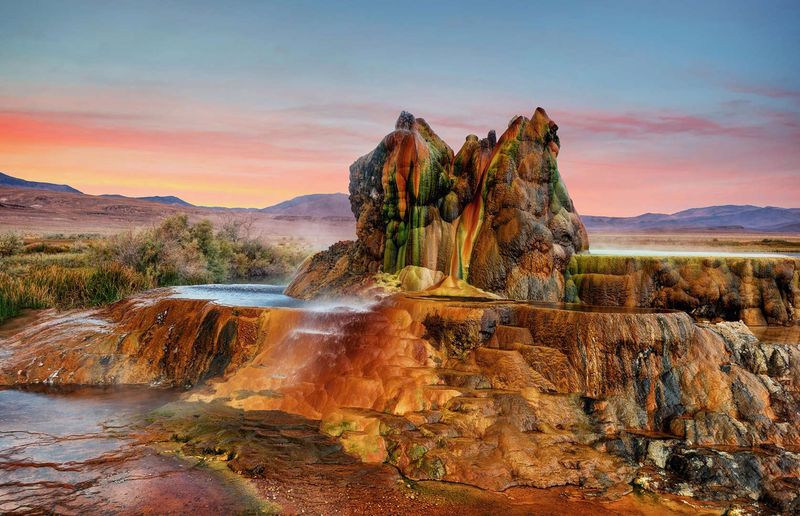
The color at Fly Geyser comes from minerals and thermophilic algae that thrive in warm water as it flows over fresh deposits.
Silica and calcium carbonate build the structure, while iron and other trace elements tint layers that catch the sun at different angles.
Green streaks often mark cooler edges where algae density rises, and warmer vents lean orange to red in photos.
As water escapes from the subsurface, it cools and precipitates minerals that form terraces with porous textures and tiny rills.
Microorganisms colonize those surfaces within hours, weaving thin mats that trap more particles and shift the tone.
Over months, the palette changes subtly, which explains why older images can look different from what you see today.
Winter light flattens harsh shadows and lets pastel hues appear, while summer sun intensifies glare and contrast.
Cloud cover acts like a giant softbox, helping details pop without harsh highlights on wet rock.
Polarizing filters can reduce reflection on pools, revealing algae bands and bubbles along the edges.
Guides will remind you that science here is active, not a frozen display, and each droplet carries new sediment.
The constant build up creates bulbous overhangs that can crumble if touched, so distance is essential.
Though it looks like paint, the sheen is living and growing, and micro life responds to slight temperature shifts.
In Nevada’s dry air, evaporation speeds deposition, adding crisp rims that resemble ceramic glaze.
That process repeats every day, carving scallops and channels that guide flow like miniature canyons.
Understanding the interplay of heat, minerals, and microbes adds depth to the wonder you will feel on the boardwalk.
Photography tips for the boardwalk
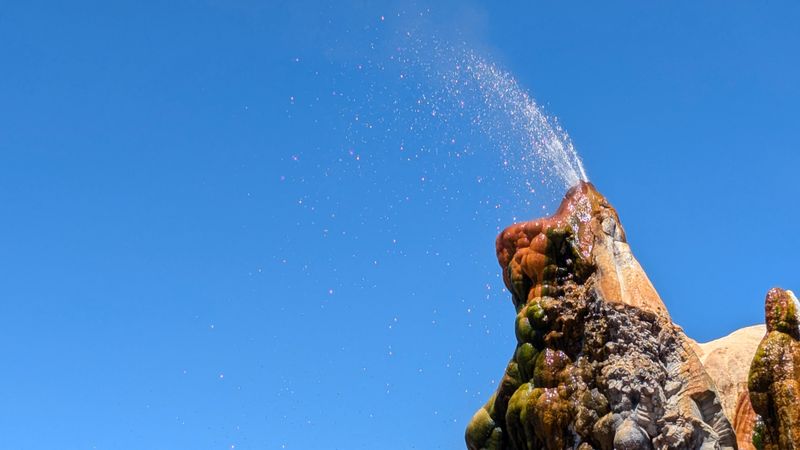
Soft morning light can flatter the terraces, so plan for early entry times when the sky glows and steam hangs low.
Use leading lines from the boardwalk rails to pull the eye toward the main cone without cutting off the steam plume.
Keep a mid range focal length ready to balance landscape context and the sculpted details on the geyser.
A circular polarizer helps tame glare on shallow pools and reveals algae texture without oversaturating the scene.
Bracketing exposures can manage high contrast, especially when bright clouds sit above deep toned terraces.
Tripods should fit within the boardwalk width, so extend legs carefully and yield when others need to pass.
Watch wind direction since steam can fog lenses quickly, and carry a soft cloth in a pocket for quick dabs.
Compose from different boardwalk angles rather than leaning out, because safety and preservation come first.
Turn for a wide frame that includes the sagebrush plain and distant ranges for a Nevada sense of place.
Then switch to detail shots of mineral lips and dripping beads that feel like abstract art.
Keep shutter speed high enough to freeze steam edges if you want structure, or slow down for a dreamy veil.
White balance can drift with mixed light, so set a custom value or shoot raw for flexible edits later.
Respect privacy if other visitors appear in your frame, and ask before featuring faces in close compositions.
Leave time to simply look without a camera, because memory often keeps the best color story.
End with a final check for lens caps and small trash so the boardwalk remains pristine for the next group.
When to go for the best conditions
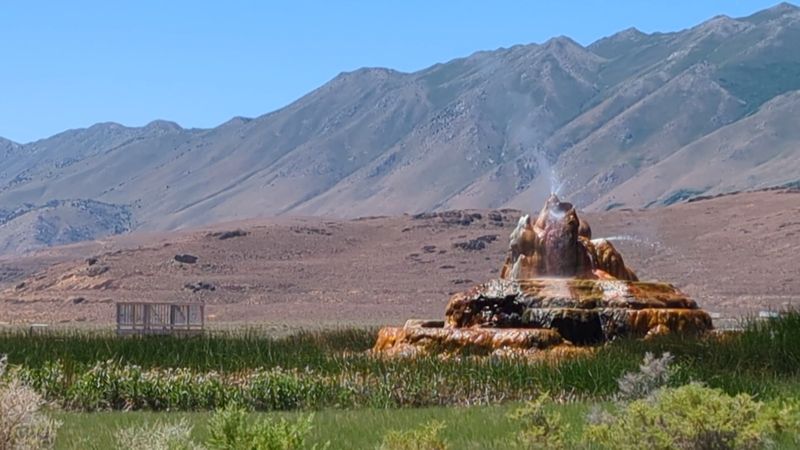
Spring often delivers mild temperatures, lively bird activity, and soft light that flatters the terraces without harsh shadows.
Wildflowers in nearby flats may bloom after wet winters, adding color to wide frames beyond the geyser itself.
Tours tend to increase in spring, so book early and keep an eye on weather systems moving across Nevada.
Summer brings long days with high sun, stronger heat shimmer, and more glare on wet surfaces at midday.
Early and late windows become prime for photography, with golden steam rising against pastel horizons.
Afternoons can be windy, which cools visitors but kicks dust that challenges lenses and eyes.
Fall gives crisp air, rich skies, and steady steam that reads clearly in cooler temperatures.
Colors feel saturated, and the boardwalk can be quieter outside holiday weekends.
Layers help at dawn and dusk, since temperatures swing quickly in the high desert.
Winter days are short but magical when cold air thickens steam and frost rims grass near the wetlands.
Tours may be less frequent, and road conditions can change fast after storms.
Always check updates before driving long distances, because service gaps are common in rural Nevada.
Avoid scheduling tightly with same day commitments, since weather or maintenance can adjust access.
The best time is the time you can go with patience, warm clothing, and a flexible plan.
Match your visit to your goals, whether that is soft color at dawn, quiet boardwalks, or dramatic winter breath.
What you will learn on the guided walk
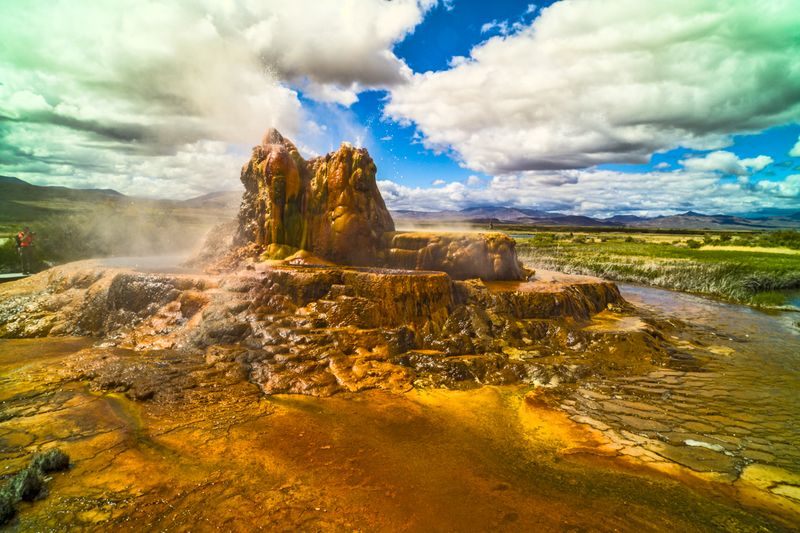
Guided walks cover geothermal basics, local ecology, and the human story behind a well that changed the landscape.
You will hear how pressure, heat, and minerals interact to create terraces that keep growing every season.
Leaders also talk about stewardship and how simple choices like staying on paths make a real difference.
The route highlights wetland plants that sprung from the outflow, along with birds that now use the habitat.
Expect notes on water chemistry, including why silica builds so quickly in this environment.
History sections frame ranching, exploration, and the shift toward conservation in modern Nevada.
Some guides share local anecdotes and labeled legends about early experiments, always noting what remains unverified.
You can ask practical questions about weather, footwear, and camera gear without slowing the group.
Time at the main cones allows quiet observation to hear the gentle sputter and watch bubbles rise.
You will notice how steam shapes the mood, thickening in cold air and vanishing in warm gusts.
The talk may include broader desert topics like water scarcity and invasive species management.
By the end, the geyser reads like a living classroom rather than a simple photo stop.
That understanding helps you share accurate facts when friends ask about the surreal pictures.
The program evolves with new research and site needs, so content can vary slightly by season.
You leave with context, appreciation, and tools to be a better guest at other fragile places across Nevada.
Essential logistics and getting there
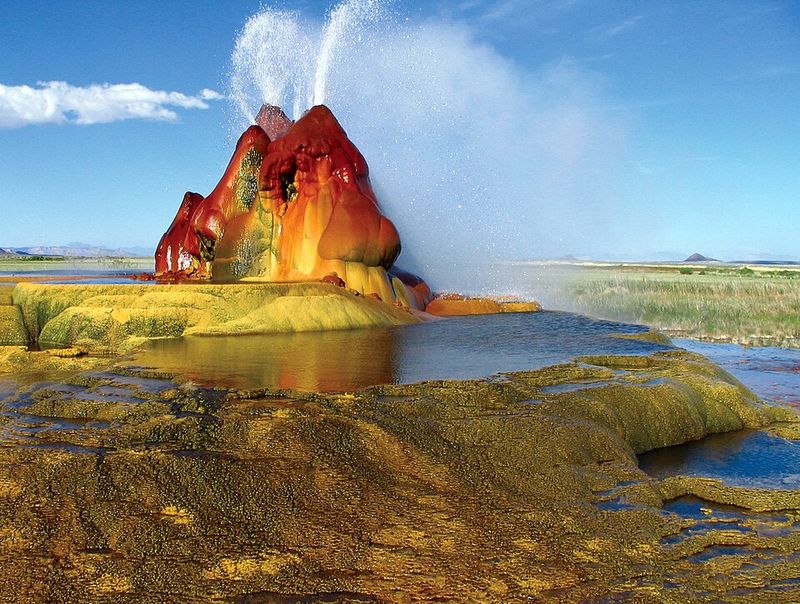
Gerlach sits in a remote corner of northern Nevada, so plan fuel and water before you head out.
Download confirmations and maps ahead of time in case cell service drops as you near the ranch.
Guided walks generally meet at a designated check in spot provided in booking materials.
Wear sturdy shoes for short walking on boardwalks and hard packed ground with occasional uneven patches.
Sun protection matters even on cool days, and a light wind layer helps when breezes rise.
Restrooms are limited, so take advantage of facilities before leaving town.
Respect private property signs along access roads and drive slowly to reduce dust near wildlife and neighbors.
Parking follows staff direction, and the group moves together so no one wanders off route.
Photography is welcome with common sense limits that your guide will outline before the walk starts.
Bring a sealed water bottle and keep snacks tidy to avoid litter and unwanted attention from animals.
Weather can change quickly, and rare storms can close dirt sections or alter timing.
If you have mobility questions, contact the organizers in advance for the latest boardwalk details.
Nearby services are sparse, so self reliance keeps the day smooth and stress free.
Remember that this is an experience on private land with access granted through care and trust.
Thoughtful planning helps you arrive calm, learn more, and leave the place just as beautiful for the next visitor.
Nearby stops to pair with your visit
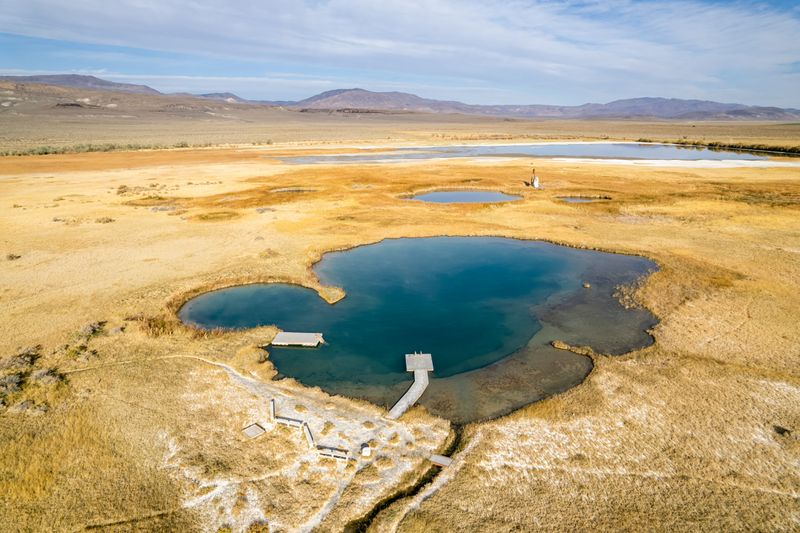
If you want more context, stop by Friends of Black Rock High Rock at 320 Main Street, Gerlach, NV 89412 for maps and current information.
The small center shares safety tips, local history, and orientation to public lands that stretch across this region of Nevada.
Staff can answer route questions, recent conditions, and recommended Leave No Trace practices for fragile playas and dunes.
Pairing the center with Fly Geyser deepens your understanding of geology, ecology, and stewardship models.
In town you will also find simple services and artist spaces that reflect the creative energy of the area.
If you explore further, research road status and carry extra water, since distances between stops are long.
Public lands nearby require self reliance, and you should avoid driving on wet playa to protect the surface.
Photography along highways can be rewarding, yet always pull fully off the road in a safe turnout.
Bring a paper map as a backup for when navigation apps lose signal.
Ask about seasonal events that may affect traffic or access, and plan around them when possible.
If you prefer a slower pace, enjoy dusk colors over distant ranges before returning to lodging.
The big sky invites unhurried moments that balance the visual thrill of Fly Geyser.
Respect private ranch gates and leave them as found, which is a long standing courtesy in rural communities.
With a thoughtful plan, you can craft a full day that blends learning, landscape, and quiet time.
End with gratitude for the people who maintain access so future visitors can meet this Nevada wonder.
Safety, weather, and accessibility notes
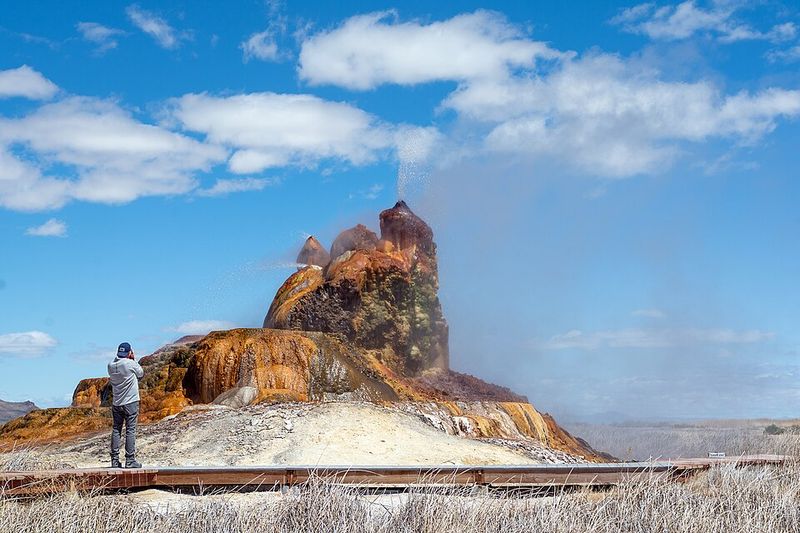
Safety at Fly Geyser begins with staying on the boardwalk and respecting guidance from hosts who know current conditions.
Hot water and thin crusts can be hazardous even when they look solid and inviting from the path.
Closed toe shoes improve footing on wood and compacted soil that may feel slick with fine dust.
Weather shifts quickly in the high desert, and wind can lower perceived temperatures despite bright sun.
Carry layers and secure loose items that might blow into wetlands where retrieval is not allowed.
Heat is real in summer, so drink water steadily and rest in shaded pauses when offered.
If storms approach, lightning protocol may pause or cancel tours for the safety of every guest.
Accessibility continues to improve, yet details vary, so contact organizers for current boardwalk widths and surface notes.
Some segments are flat and firm, with gentle grades suited to many mobility devices.
Service animals follow strict guidelines to protect wildlife, so ask in advance about requirements.
Cell coverage can be limited, and your guide carries radio or phone solutions for emergencies.
Follow group spacing so everyone can see and hear without crowding or jostling for rail space.
Steam can irritate sensitive eyes, so bring glasses if wind tends to bother you.
Most importantly, pace yourself and choose careful footing while you absorb the view.
Staying mindful keeps the experience calm, beautiful, and safe in this remarkable slice of Nevada.
Dear Reader: This page may contain affiliate links which may earn a commission if you click through and make a purchase. Our independent journalism is not influenced by any advertiser or commercial initiative unless it is clearly marked as sponsored content. As travel products change, please be sure to reconfirm all details and stay up to date with current events to ensure a safe and successful trip.
