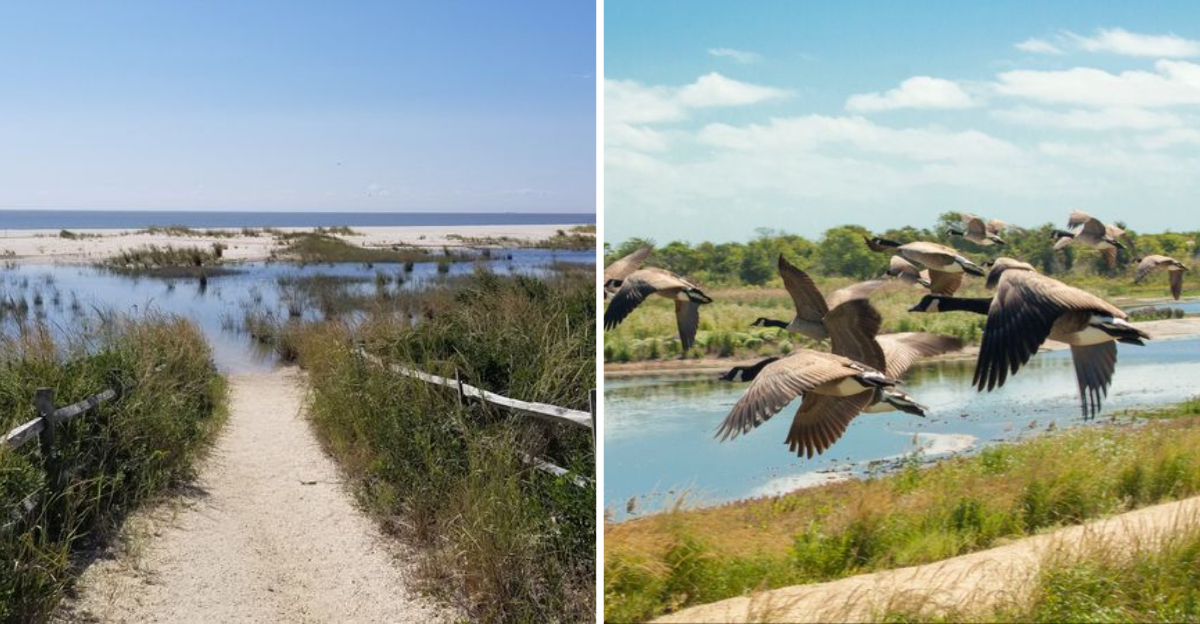
I didn’t realize New Jersey could make birdwatching feel like a real adventure.
One moment you’re just walking the beach, the next you’re spotting wings you’ve only seen in books.
The air feels crisp, the sand stretches wide, and suddenly you’re slowing down just to take it all in. I found myself scanning the horizon like I was searching for hidden treasure.
Locals say rare sightings happen all the time, which makes every visit feel like a surprise.
Would you stop and look twice if a rare bird flew right past you?
A Preserve Born From History and Resilience
Long before it became one of New Jersey’s most beloved birdwatching destinations, this land had a dramatic past. South Cape May Township once dreamed of becoming a grand seaside resort, complete with a lavish hotel and striking Mediterranean architecture.
Those ambitions crumbled under fierce Atlantic storms, including a devastating 1944 hurricane that submerged most of the town under water.
What rose from that wreckage is honestly something more remarkable than any resort could have been. The Nature Conservancy transformed the storm-ravaged land into a 200-acre coastal sanctuary, and the decision paid off in ways that are hard to overstate.
Today, the preserve sits at the intersection of freshwater wetlands and open ocean, a combination that is genuinely rare along the Jersey Shore.
That unique geography is exactly why so many bird species stop here. Walking the trails, you get a real sense of how nature reclaimed something that humans abandoned, and it did a spectacular job.
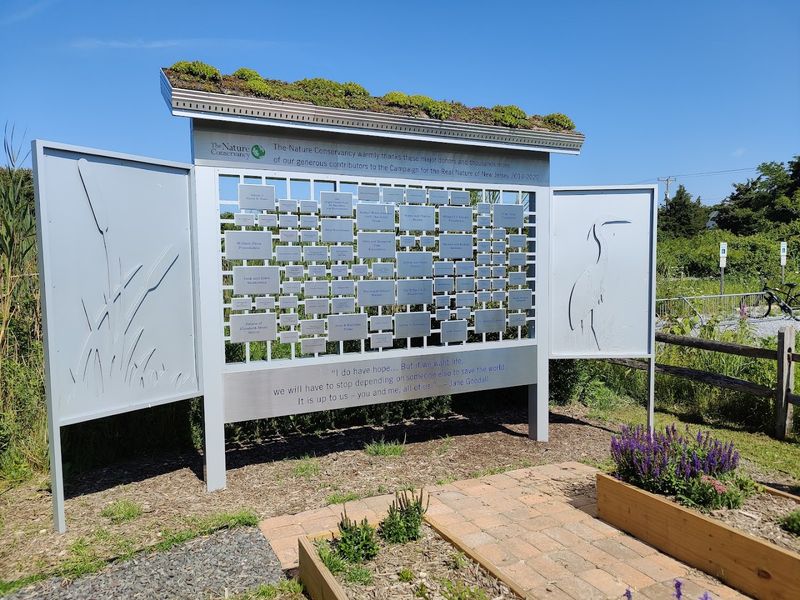
The interpretive signage near the welcome center fills in the historical gaps beautifully. It is the kind of backstory that makes every step on the trail feel a little more meaningful.
The Atlantic Flyway: Nature’s Busiest Highway
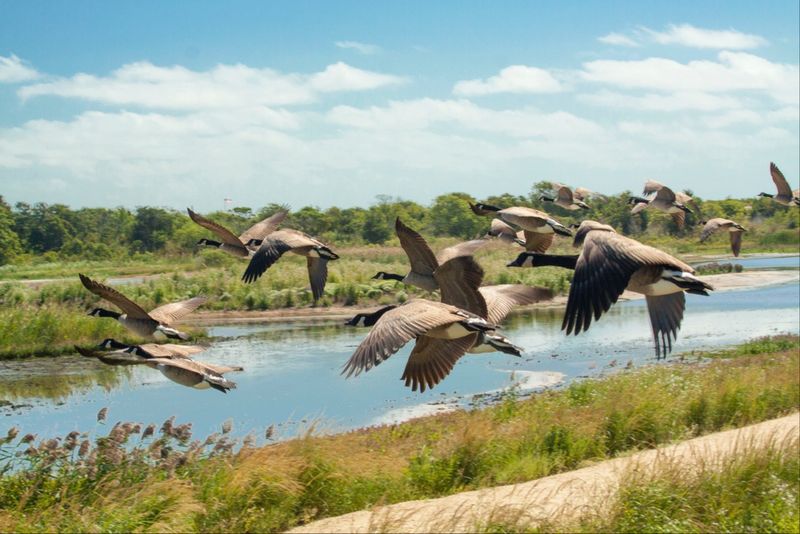
Picture the world’s busiest airport, except instead of delayed flights and overpriced snacks, you have millions of birds moving through the sky with absolutely perfect timing. That is essentially what the Atlantic Flyway is, and South Cape May Meadows sits right in the middle of it.
Every spring and fall, the skies above this preserve fill with shorebirds, raptors, songbirds, and waterfowl all making their epic journeys north or south.
The geography of Cape May acts like a natural funnel. Birds traveling down the Eastern Seaboard hit the tip of the peninsula and concentrate here before crossing the Delaware Bay.
That concentration effect turns an already impressive preserve into something truly extraordinary during peak migration weeks.
Late September and early October are particularly wild. Peregrine falcons and merlins cut through the air hunting smaller birds, and the energy in the meadows feels electric.
Even if you have never held a pair of binoculars in your life, standing here during migration season is an experience that genuinely stops you in your tracks. The sheer volume of wildlife moving through is something that sticks with you long after you drive home.
Shorebirds That Will Make Your Jaw Drop
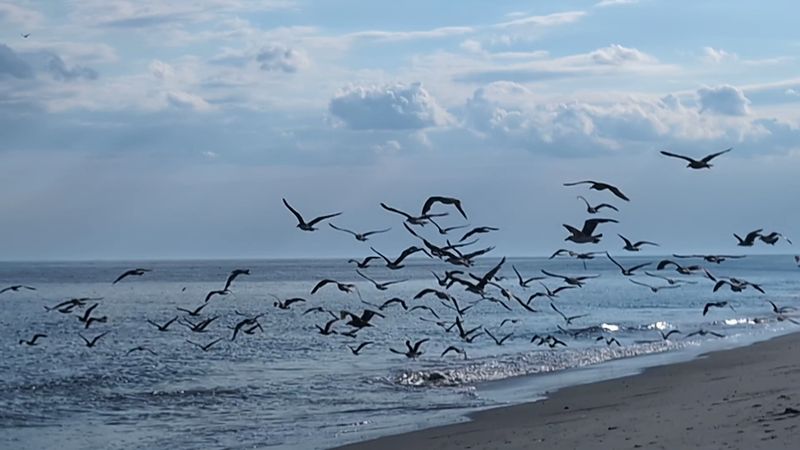
There is something almost comedic about how a bird as small as a white-rumped sandpiper can travel thousands of miles and look completely unfazed about it. South Cape May Meadows hosts an impressive lineup of shorebirds during migration, and the variety is genuinely staggering.
Black-bellied plovers, greater and lesser yellowlegs, dowitchers, and multiple sandpiper species all make regular appearances here.
The freshwater ponds and tidal flats give these birds exactly what they need to refuel. Watching them probe the mud with their bills is oddly satisfying, like seeing a tiny, feathered professional at work.
The flat, open terrain around the wetlands makes spotting them surprisingly easy, even for beginners.
The preserve’s beach section is equally productive. Piping plovers, a federally threatened species, actually nest on the protected beach here every year.
Least terns and American oystercatchers also breed on site, which makes this place genuinely important for conservation, not just recreation. Roped-off nesting zones keep the birds safe while still allowing visitors to observe from a respectful distance.
Seeing a species fight back from the edge of extinction, right there in front of you, is something no photograph fully captures.
The Bird Blind and Observation Platforms
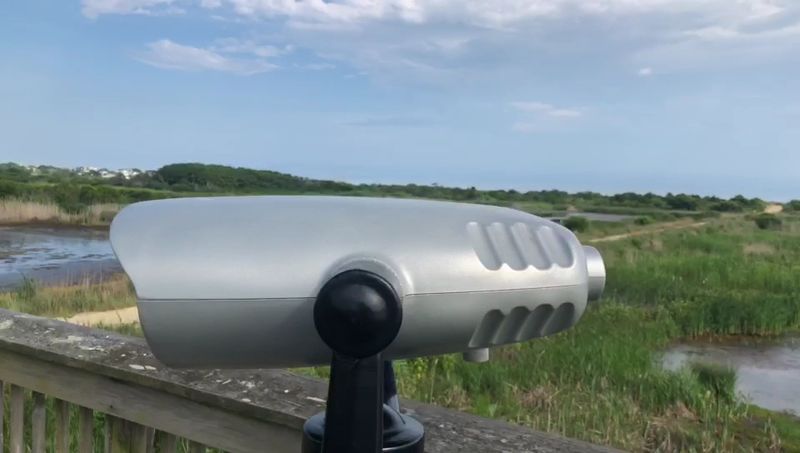
Good birdwatching is partly about knowing where to stand, and the preserve’s infrastructure makes that surprisingly easy to figure out. The 80-foot floating bird blind is one of the most impressive features on the property.
It sits directly beside the freshwater pond, giving visitors an unobstructed, close-up view of herons, egrets, ducks, and shorebirds without disturbing them in the slightest.
The blind is designed so that birds cannot see you, which changes the whole dynamic of the visit. Animals behave naturally, going about their business completely unbothered, and you get to watch it all unfold from just a few feet away.
It feels a little like having a secret window into another world.
Elevated observation platforms are positioned at strategic points throughout the preserve as well. Some even offer free mounted binoculars, which is a genuinely thoughtful touch for visitors who forgot to pack their own.
The platforms provide sweeping views over the wetlands and meadows that are hard to replicate from ground level. Catching a great blue heron gliding low over the water from one of those platforms, right at golden hour, is the kind of moment that makes you understand why people drive hours to come here.
Trails Through Dunes, Meadows, and Wetlands
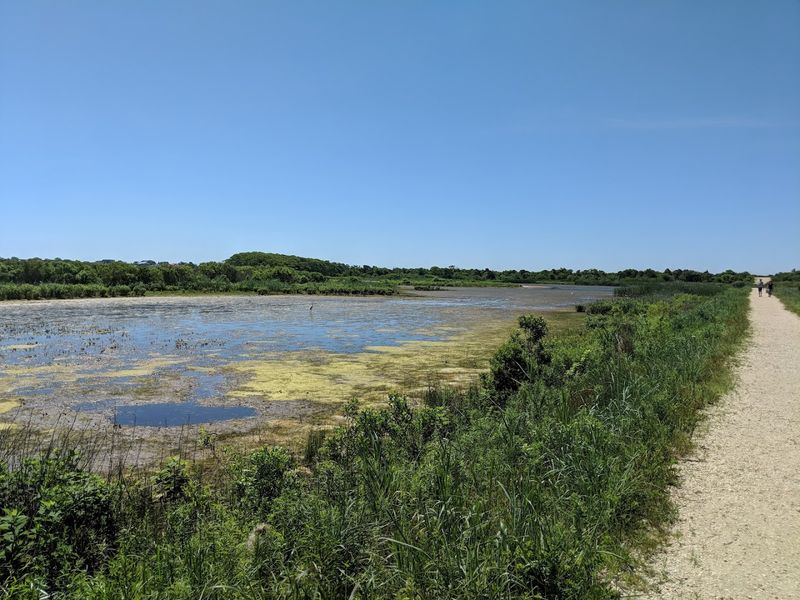
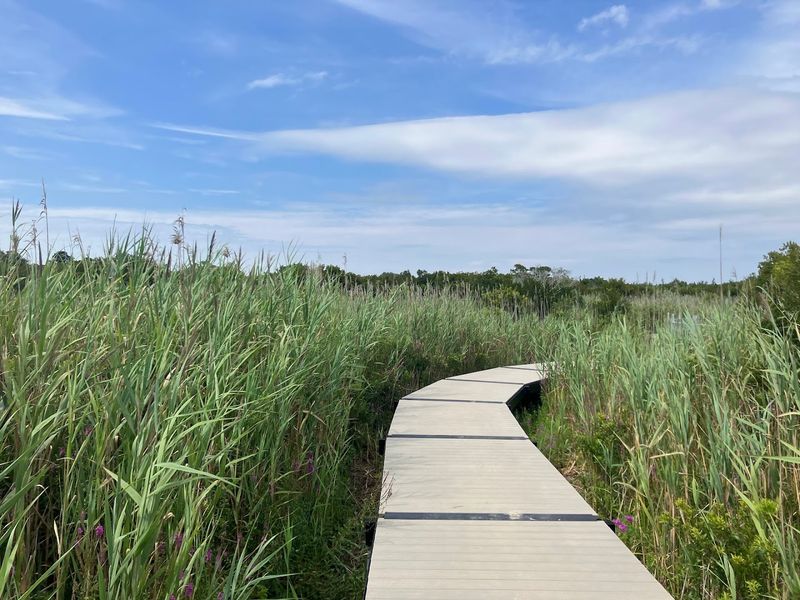
Two miles of flat, well-maintained trails connect the preserve’s wildly different ecosystems, and the transitions between them are genuinely surprising. One minute you are walking through open meadow with tall grasses swaying around you, and the next you are stepping onto a boardwalk over a freshwater pond with turtles sunning themselves below.
The variety keeps every walk feeling fresh, even if you have visited a dozen times before.
The trail system is thoughtfully laid out for all experience levels. A connector trail links the preserve to Cape May Point State Park, which extends the adventure considerably for those who want a longer outing.
The main loop is about a mile and stays accessible and easy to navigate throughout.
Each season brings something completely different to the trails. Spring means blooming wildflowers and returning nesting birds.
Summer turns the meadows lush and buzzing with insects that feed the entire food chain above them. Fall is migration season, which needs no further selling.
Winter strips back the vegetation and reveals a stark, beautiful landscape where waterfowl linger on the open ponds. The interpretive signs posted along the route do a fantastic job of explaining what you are seeing at each stop, making the walk educational without feeling like a lecture.
The ADA-Accessible Boardwalk and Inclusive Design
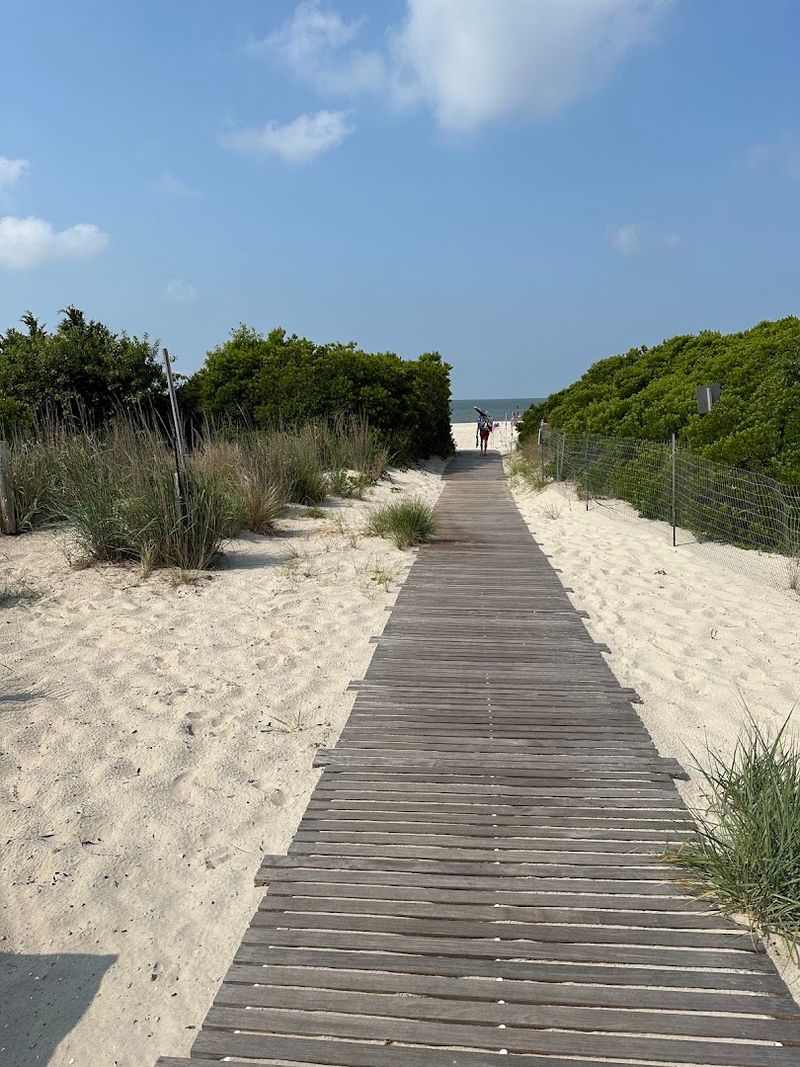
One of the most genuinely impressive things about South Cape May Meadows is how seriously the preserve takes accessibility. The ADA-compliant boardwalk trail means that visitors using wheelchairs or mobility aids can experience the wetlands up close, not just from the parking lot.
That kind of intentional design makes a real difference for a lot of families and individuals who might otherwise miss out on places like this.
The elevated aluminum boardwalk that was added in recent years extends the accessible route and offers views that even seasoned trail walkers stop to appreciate. Benches are placed at regular intervals, which makes the walk comfortable for older visitors or anyone who simply wants to pause and soak everything in.
Sitting quietly on one of those benches with the pond stretched out in front of you is its own kind of reward.
Interpretive signage along the boardwalk covers everything from the preserve’s ecological history to the specific bird species you might expect to see at different times of year. The welcome center kiosk adds another layer of information for visitors who want to go deeper.
Thoughtful, inclusive design combined with genuinely rich natural content makes this place work for almost every kind of visitor, regardless of age or physical ability.
Guided Birding Programs and Educational Events
Knowing that a bird is technically a shorebird and actually being able to identify one in the field are two very different skills. The guided programs offered at South Cape May Meadows bridge that gap in a way that no field guide can fully replicate.
The Nature Conservancy and Cape May Bird Observatory run regular events here, including two-hour naturalist-led walks that cover herons, terns, migrant shorebirds, ducks, and more.
The Birding the Meadows program is a local favorite for good reason. Walking with someone who can spot a bird by its call alone, before it even comes into view, completely changes how you experience the preserve.
Suddenly the whole landscape becomes layered with information you were previously missing.
Educational programs here cater to a wide range of experience levels, from complete beginners to people who already have a life list running into the hundreds. The whiteboard near the entrance, updated regularly with recent sightings sourced from eBird, gives every visitor a head start before they even hit the trail.
Checking that board before a walk is one of those simple habits that dramatically improves your chances of seeing something special. It is the kind of low-key, practical resource that makes a big difference on any given morning.
Planning Your Visit to South Cape May Meadows
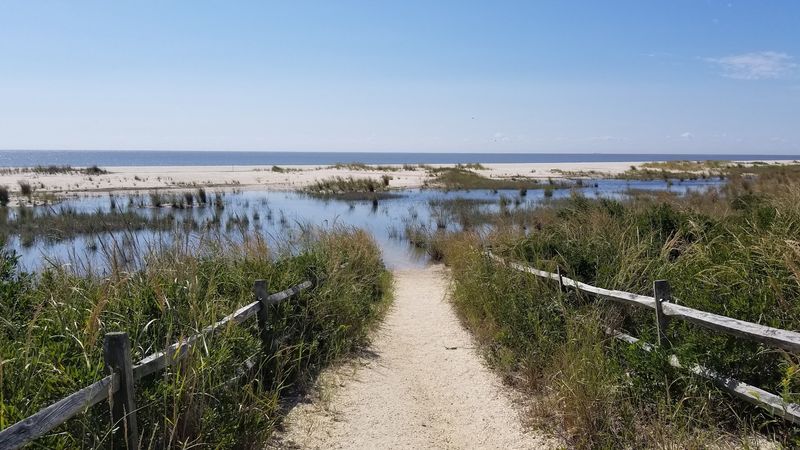
Getting the most out of a visit to South Cape May Meadows comes down to timing, preparation, and a few simple habits. The preserve opens at 6 AM every day of the week, which makes early morning visits entirely possible, and early morning is genuinely the best time for birdwatching.
The light is better, the birds are more active, and the trails are quieter before the rest of the world wakes up.
Pets are not permitted inside the preserve, which protects the wildlife and keeps the experience peaceful for everyone. Staying on marked trails is equally important, both for visitor safety and for protecting sensitive habitat.
Bugs can be intense during summer months, so packing a good insect repellent is a practical move that makes the whole experience considerably more enjoyable.
Binoculars are worth bringing even if you consider yourself a casual visitor. The free mounted binoculars on the observation platforms are helpful, but having your own gives you flexibility to look wherever the action is happening.
Fall migration season, roughly late September through early November, offers the most dramatic wildlife viewing. Spring visits reward early risers with nesting activity and returning songbirds.
No matter when you go, the preserve delivers something genuinely worth the trip.
Address: 692 Sunset Blvd, Cape May, NJ
Dear Reader: This page may contain affiliate links which may earn a commission if you click through and make a purchase. Our independent journalism is not influenced by any advertiser or commercial initiative unless it is clearly marked as sponsored content. As travel products change, please be sure to reconfirm all details and stay up to date with current events to ensure a safe and successful trip.
