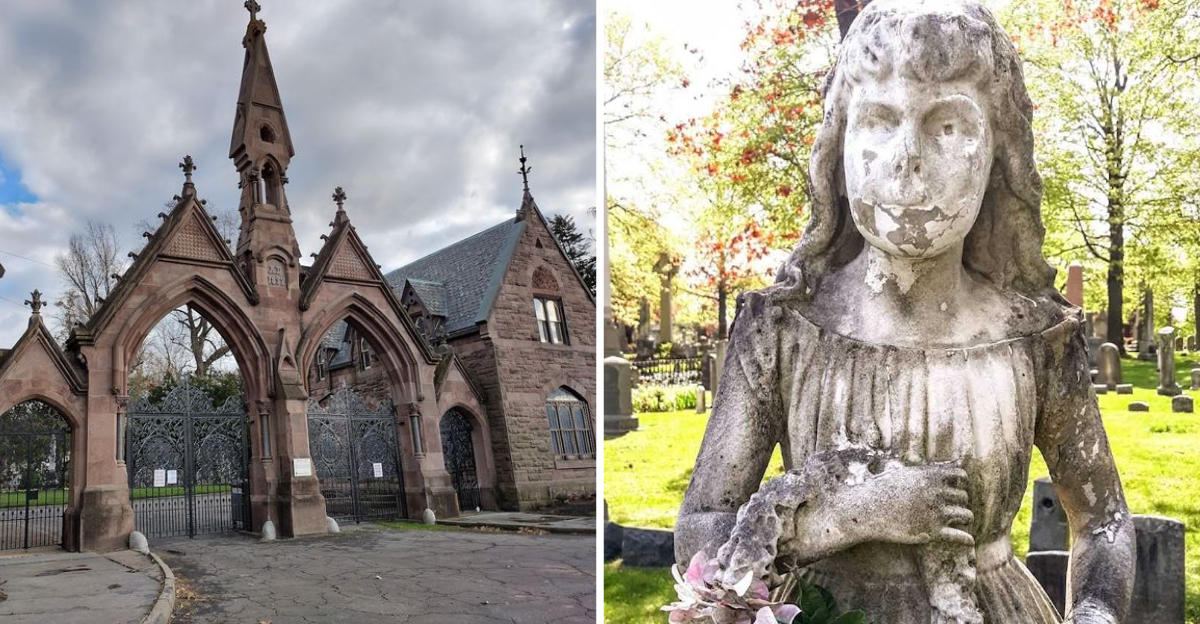
New Jersey has a cemetery that feels more like a scene from a gothic novel than a quiet resting place. The paths are lined with old stones that seem to whisper stories if you linger long enough.
At the heart of it all stands an angel statue that’s both beautiful and unsettling, the kind of figure that makes you stop in your tracks.
Depending on the light, it can look protective one moment and haunting the next.
The mix of history, artistry, and atmosphere makes wandering here strangely captivating.
Personally, I find it less spooky than inspiring; it’s a reminder that even in places of silence, imagination can run wild.
The Eerie Angel Statue That Started It All
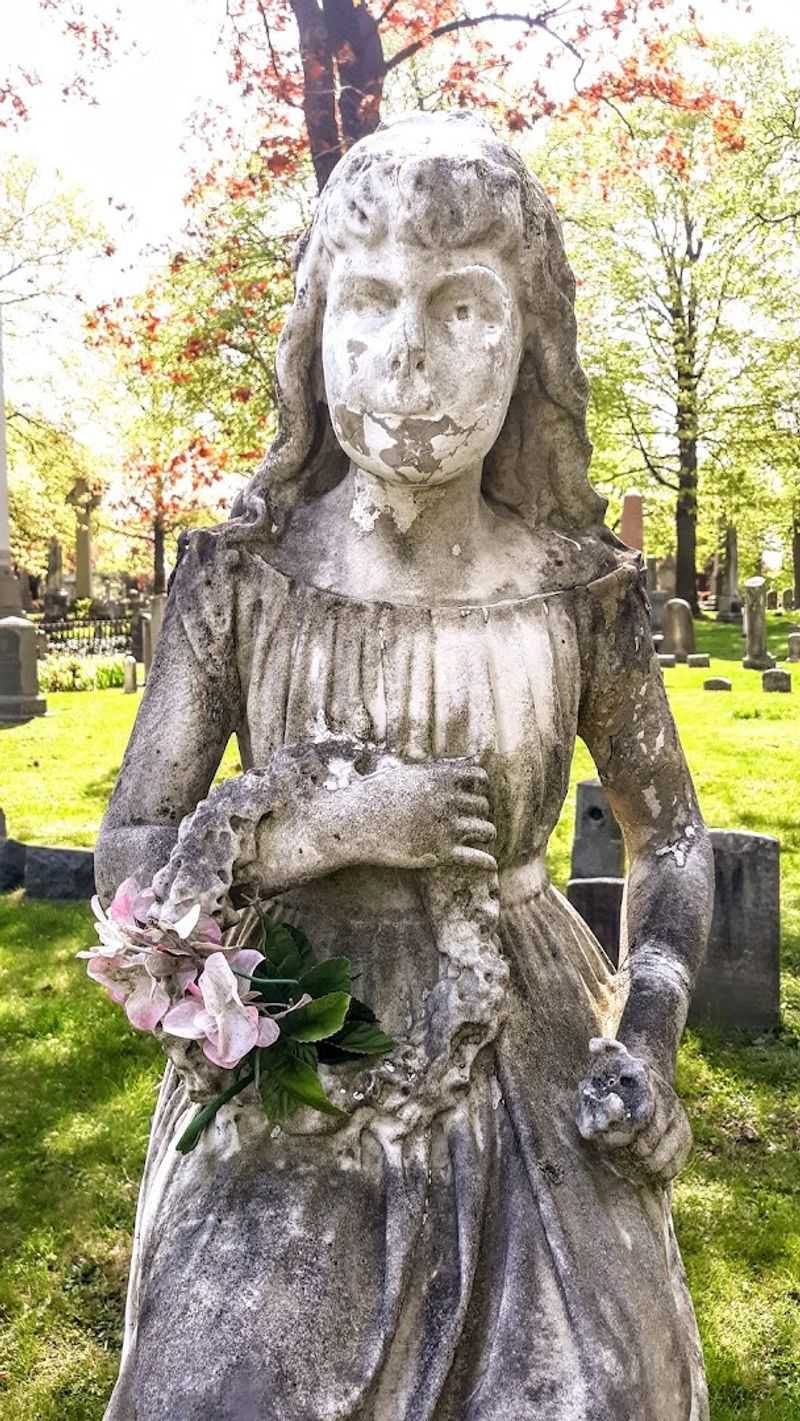
Some statues just have a presence about them, and the angel at Mount Pleasant Cemetery is exactly that kind of sculpture. Standing among the older sections of the grounds, it carries a weight that is hard to explain until you are standing right in front of it.
The stone is worn in a way that only decades of New Jersey weather can produce.
The wings are broad and slightly asymmetrical, giving the figure an almost restless quality, like it is mid-motion rather than frozen still. Many visitors find themselves circling it more than once, trying to figure out exactly where the eyes are looking.
It is the kind of artwork that changes depending on the light and the angle.
On cloudy days, the figure takes on a genuinely haunting quality that makes for unforgettable photographs. On sunny afternoons, it looks almost peaceful, which somehow makes it stranger.
The contrast is part of what makes this statue such a memorable feature of the cemetery’s landscape. It is not just a grave marker.
It is a conversation starter carved in stone, and it has been quietly compelling visitors for generations.
A Cemetery With Serious Historical Credentials
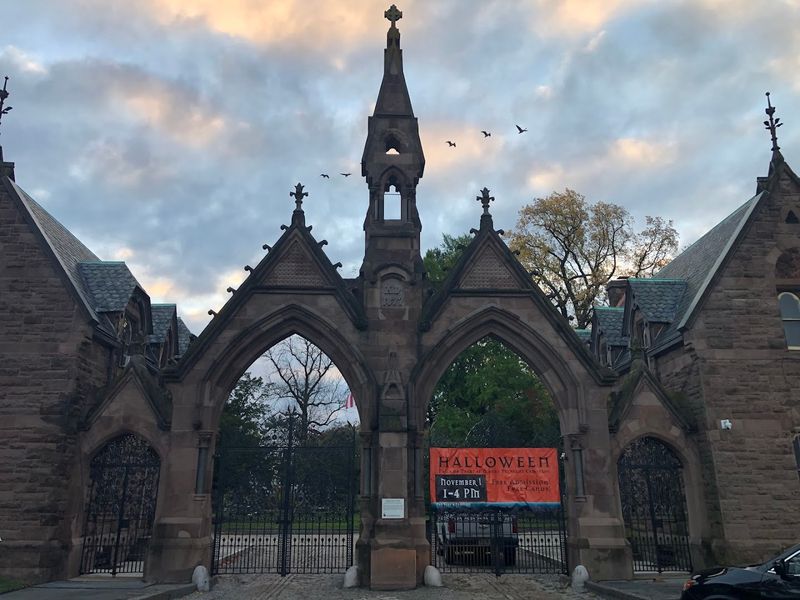
Established in 1844, Mount Pleasant Cemetery did not just happen by accident. It was thoughtfully designed by Horace E.
Baldwin as a rural cemetery, a style that was popular in the 19th century for blending nature with remembrance. The result is a landscape that feels more like a park than a traditional burial ground.
Being listed on both the New Jersey and National Registers of Historic Places is not something every cemetery can claim. That recognition reflects the genuine architectural and cultural value packed into these 40 acres.
Every path you walk here has a story underneath it.
The grounds were carefully laid out with winding paths, mature trees, and open green spaces that give the whole place a sense of calm dignity. The design was intentional, meant to offer the living a peaceful place to reflect.
Walking through it today, that original intention still comes through clearly. It feels respectful and thoughtful in a way that modern cemeteries rarely manage to replicate.
For anyone interested in 19th-century landscape design or American history, this place is genuinely worth the trip to Newark.
The Dryden Mausoleum: A House for the Ages
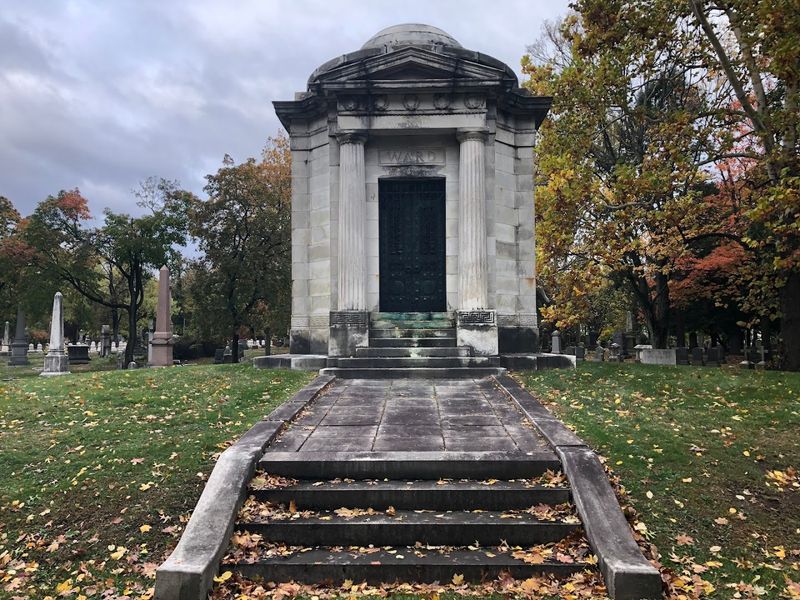
If you have ever walked past a building and thought, that is way too grand for one person, then the Dryden Mausoleum is going to stop you in your tracks. Built for John Fairfield Dryden, the founder of Prudential Financial, this structure is genuinely massive.
It is the kind of architectural statement that makes you understand exactly how much influence one person can accumulate in a lifetime.
The marble is pristine in comparison to many of the older grave markers nearby, which only adds to its commanding presence. Neoclassical in style, it features columns and detailed stonework that would not look out of place on a government building.
Visiting it feels like stumbling onto a small monument in the middle of a quiet neighborhood.
Dryden himself was a significant figure in American business and political history, and the mausoleum reflects that status without apology. It is one of the most photographed features of the cemetery for good reason.
Standing beside it gives you a real sense of scale, and a healthy appreciation for the ambitions of the Gilded Age. It is bold, beautiful, and impossible to walk past without pausing.
Notable Residents Who Shaped New Jersey
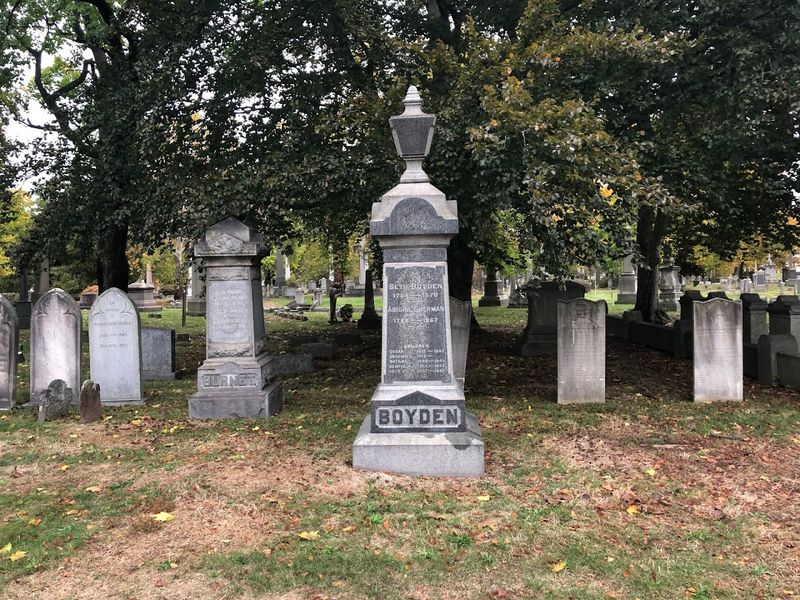
Mount Pleasant Cemetery reads like a who’s who of New Jersey history, and that is not an exaggeration. Marcus Lawrence Ward, the 21st Governor of New Jersey, rests here alongside Seth Boyden, the inventor of patent leather.
Those two names alone represent enormous contributions to American civic life and industry.
Seth Boyden in particular is a fascinating figure. His development of patent leather in the 1820s changed American manufacturing in ways that rippled far beyond New Jersey.
Finding his grave marker and standing there for a moment feels strangely grounding, like touching a thread that runs through history.
The cemetery also holds the graves of Thomas Edison’s son and Mary Stilwell, which adds another layer of connection to one of America’s most celebrated inventors. Ray Liotta, the beloved actor, also chose this cemetery as his final resting place, bringing a more contemporary layer of significance to the grounds.
The mix of eras represented here makes every visit feel like a compressed history lesson. Each name carved into stone carries a weight of story that rewards a slow, curious walk through the grounds.
The Grounds: 40 Acres of Unexpected Beauty
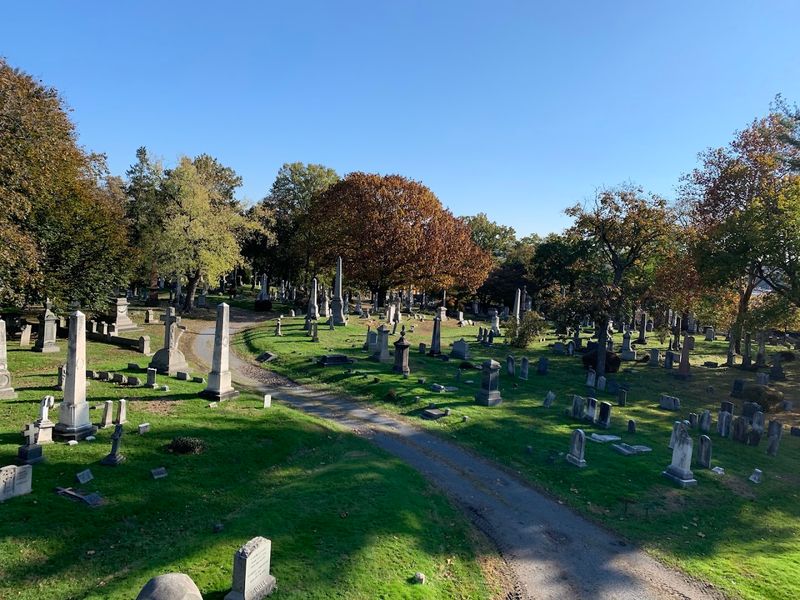
Forty acres sounds like a lot until you are actually walking through it, and then it starts to feel like a generous gift in the middle of a busy city. The grounds at Mount Pleasant Cemetery are genuinely well-maintained, with grass that stays trimmed and paths that are easy to navigate.
It is the kind of place where you can forget for a moment that Newark is humming away just outside the gates.
The mature trees are a big part of what makes this place so visually striking. Some of them look old enough to have been here since the cemetery first opened, their roots weaving around the oldest sections of the grounds.
In autumn, the whole place transforms into something that looks almost painted.
Summer visits have their own appeal, with long afternoon light filtering through the canopy and casting everything in a warm, golden tone. Even on a grey winter day, the landscape has a spare, elegant quality that is worth experiencing.
The combination of natural beauty and historical architecture makes the grounds feel curated in the best possible way. This is not a place you rush through.
It rewards slow walking and genuine attention.
Architecture and Stonework Worth Studying
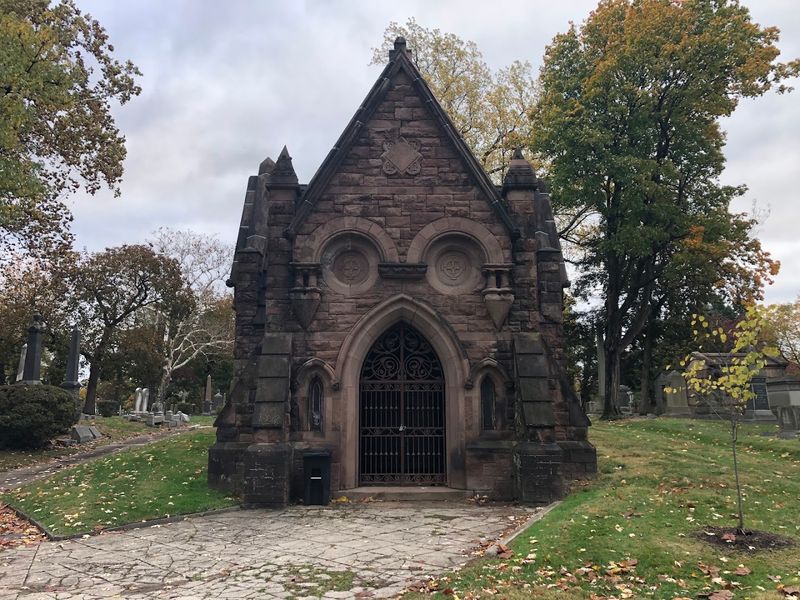
Anyone with even a passing interest in 19th-century architecture will find Mount Pleasant Cemetery endlessly interesting. The variety of styles represented across the grounds is remarkable, from simple carved granite markers to elaborate neoclassical mausoleums with columns and decorative friezes.
Each era of interment brought its own aesthetic sensibility.
The obelisks are particularly striking. Several of them rise well above the surrounding trees, visible from a distance and commanding attention up close.
They were a popular choice among wealthy families of the Victorian era, symbolizing permanence and aspiration in equal measure.
The craftsmanship on display throughout the cemetery reflects a time when stonecutters and sculptors were genuinely celebrated for their work. Details that might seem excessive on a modern building feel entirely appropriate here, where the goal was to create something that would endure for centuries.
Running your hand along a carved marble surface and knowing it has been there since the 1880s is a quietly profound experience. The cemetery functions as an open-air museum of funerary art, and unlike most museums, admission is just a walk through the gate.
Every corner reveals something worth a second look.
Photography Opportunities Around Every Corner
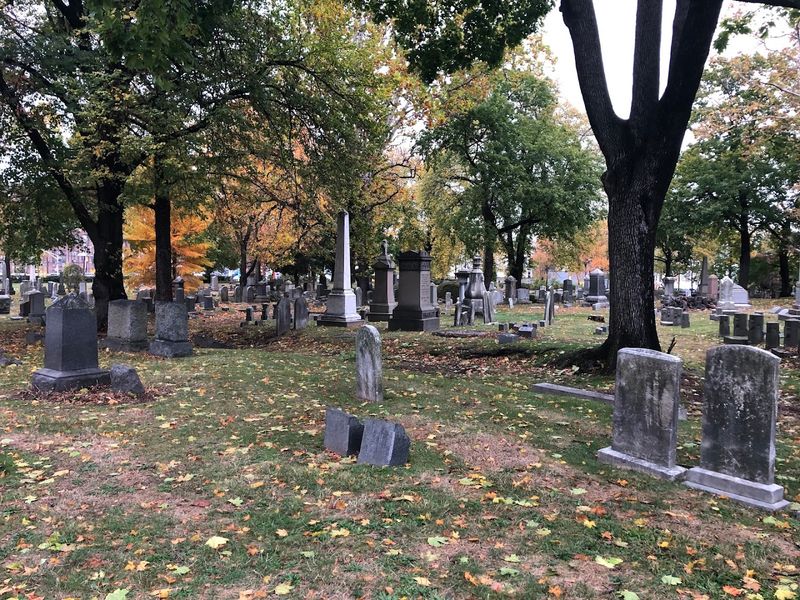
Mount Pleasant Cemetery is the kind of place that makes you wish you had brought a better camera. The combination of aged stone, mature trees, dramatic monuments, and shifting light creates photographic opportunities that change by the hour.
Morning visits offer soft, diffused light that is flattering to the older stonework.
The angel statue alone is worth a dedicated visit with a camera. Depending on where you stand and what the sky is doing, it can look serene, foreboding, or somewhere fascinatingly in between.
Photographers who appreciate texture and shadow will find the worn surfaces of the older markers particularly rewarding to shoot.
Autumn is widely considered the peak season for cemetery photography here, and it is easy to understand why. The combination of turning leaves and historic stone creates a color palette that almost photographs itself.
But even in the flat grey of February, the cemetery has a starkness that makes for compelling images. The grounds are open during daylight hours on weekdays, which gives you plenty of time to work the light at different points in the day.
Bring extra memory card space. You will almost certainly use it before you are ready to leave.
How to Plan Your Visit to Mount Pleasant Cemetery
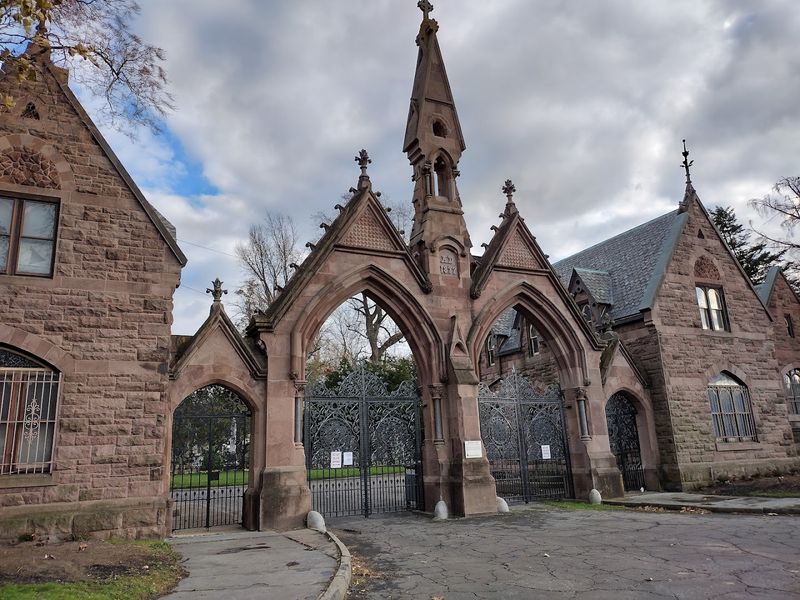
Planning a visit to Mount Pleasant Cemetery is straightforward, but a little preparation makes the experience significantly better. The cemetery is open Monday through Friday from 8 AM to 5 PM, so weekday visits are the way to go.
It is closed on weekends, which is worth noting before you make the trip.
The address is 375 Broadway in Newark, easily accessible by car or public transit. Street parking is available nearby, and the entrance is clearly marked.
Arriving in the morning gives you the best chance of having the grounds largely to yourself, which makes the whole experience feel more personal and unhurried.
Comfortable walking shoes are a genuine necessity. The grounds cover 40 acres, and the paths vary in surface and slope.
Bringing water is a good idea, especially during warmer months when the sun can be strong in the more open sections of the cemetery. A printed or downloaded map of notable graves can help you navigate toward specific points of interest without wandering in circles.
The cemetery’s website offers additional resources for visitors. Going in with a loose plan and an open mind tends to produce the most satisfying visits.
There is always something unexpected to find.
Why Mount Pleasant Cemetery Deserves More Recognition
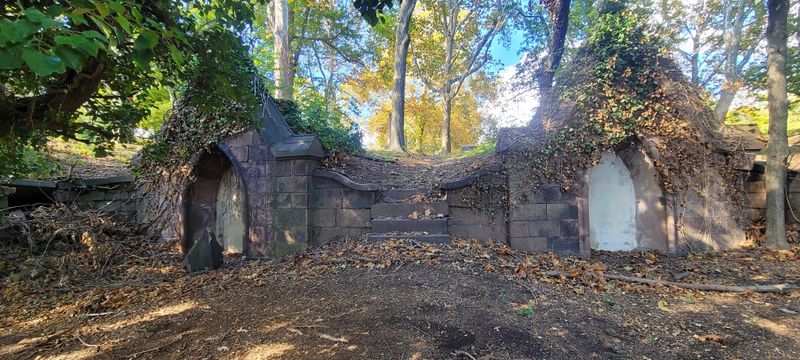
There is a certain kind of place that does everything right and somehow still flies under the radar, and Mount Pleasant Cemetery fits that description perfectly. It has the history, the architecture, the natural beauty, and the atmosphere.
What it lacks is the kind of widespread attention it genuinely deserves.
Part of the appeal is exactly that low profile. Visiting here does not feel like checking a tourist box.
It feels like discovering something real, something that has been quietly doing its job for nearly 180 years without needing much fanfare. That authenticity is increasingly rare and worth seeking out.
The cemetery holds stories that connect directly to the foundations of American industry, politics, and culture. The people buried here helped shape New Jersey and, in many cases, the broader country.
Walking among their monuments is a reminder that history is not something that happened somewhere else to other people. It happened here, on these 40 acres in Newark, and the evidence is still standing.
Mount Pleasant Cemetery earns every bit of its four-star reputation and then some. Give it an afternoon, and it will give you something genuinely worth remembering.
Address: 375 Broadway, Newark, NJ.
Dear Reader: This page may contain affiliate links which may earn a commission if you click through and make a purchase. Our independent journalism is not influenced by any advertiser or commercial initiative unless it is clearly marked as sponsored content. As travel products change, please be sure to reconfirm all details and stay up to date with current events to ensure a safe and successful trip.
