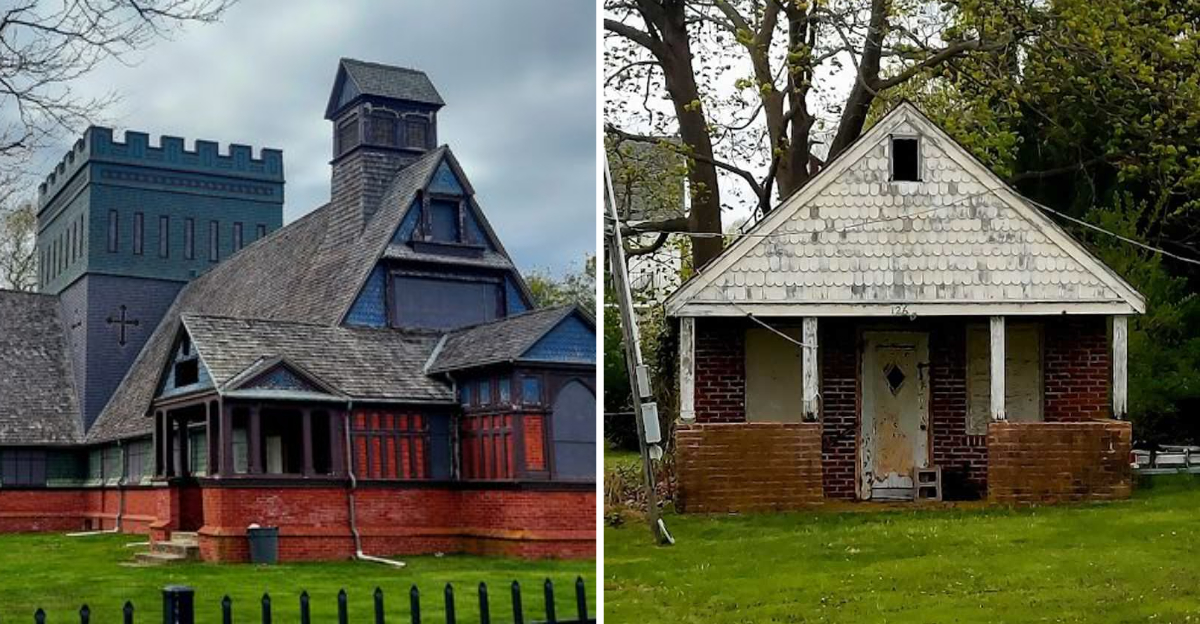
New Jersey has plenty of churches, but few can brag about hosting seven presidents under one roof. Imagine the pews creaking as history itself sat down for Sunday service.
Doesn’t it make you wonder what those sermons must have sounded like with so much political weight in the room?
The building itself is a quirky Carpenter Gothic gem, all pointed arches and wooden charm that feels more storybook than statehouse.
I’ll admit, the first time I saw it, I half expected it to be the set of a period drama instead of a real place.
That’s the beauty of Jersey, you stumble on history in the most unexpected corners, and sometimes it looks like a fairy tale with presidential footnotes.
A Church That Earned Its Presidential Nickname
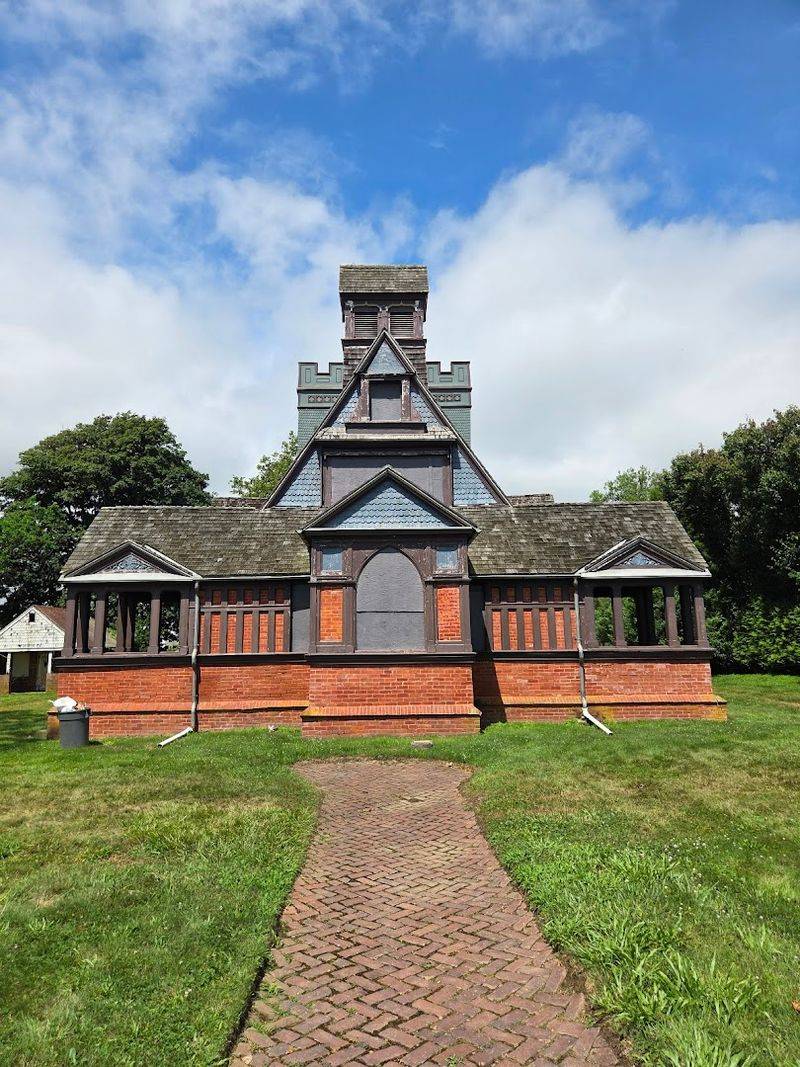
Not every church gets a nickname, but then again, not every church hosts seven presidents. Presidents Church, formally known as St. James Episcopal Chapel, earned that title the hard way, one commander-in-chief at a time.
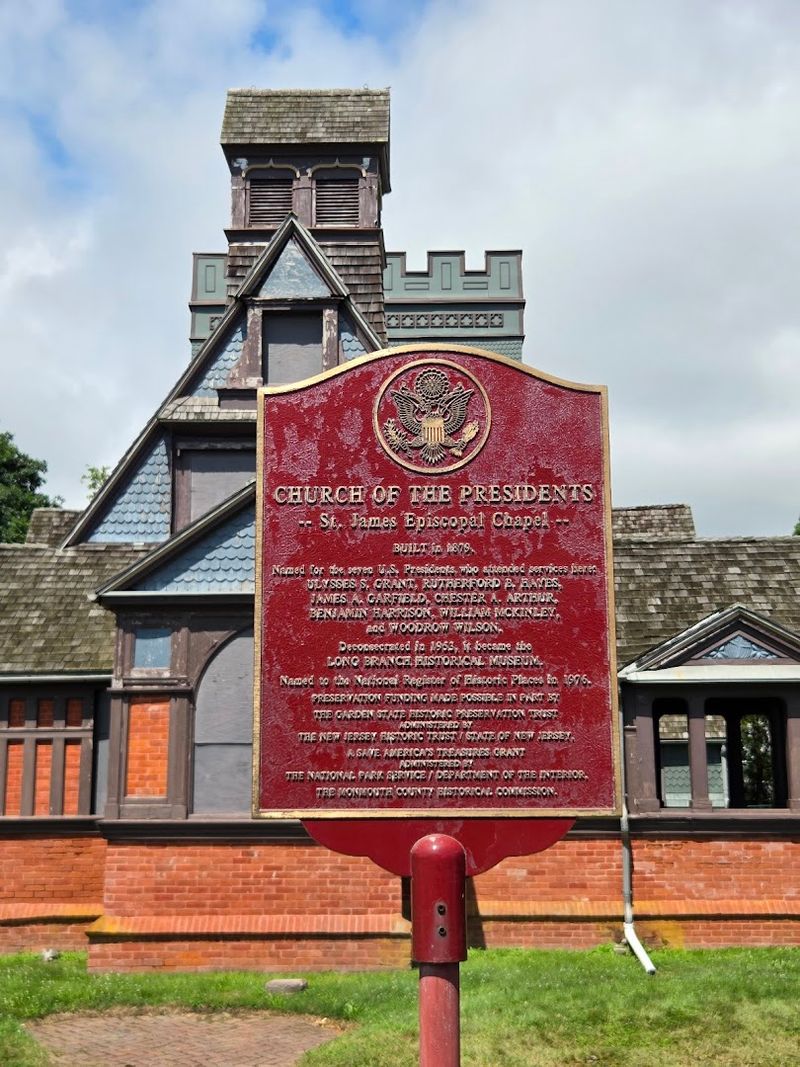
Ulysses S. Grant, Rutherford B. Hayes, James A. Garfield, Chester A. Arthur, Benjamin Harrison, William McKinley, and Woodrow Wilson all attended services here during their summer stays in Long Branch.
Long Branch was basically the Hamptons of the Gilded Age, a breezy coastal retreat where the nation’s most powerful figures came to escape Washington heat. The church sat right in the middle of that world, welcoming the elite and the powerful through its modest wooden doors.
What makes it even more remarkable is that all of those presidents except Grant were actually in office during their visits.
That detail alone changes how you look at the building. Imagine sitting in a pew while a sitting president prays a few rows away.
The church was consecrated in 1879 and designed by the respected New York architectural firm of William Appleton Potter and Robert Henderson Robertson. It carries that history in every plank and beam.
Carpenter Gothic Architecture Done Right
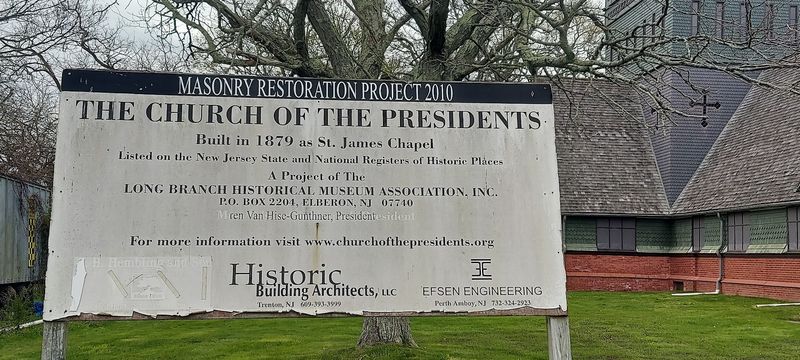
Carpenter Gothic is one of those architectural styles that sounds modest but looks anything but. It takes the soaring, pointed drama of Gothic stone cathedrals and translates it into wood, relying on skilled craftsmen rather than massive masonry budgets.
The result is something that feels both humble and breathtaking, which describes Presidents Church almost perfectly.
The building features the hallmark vertical board-and-batten siding, steeply pitched rooflines, and pointed arched windows that define the style. Every decorative detail was shaped by hand, giving the structure a warmth that cold stone simply cannot replicate.
There is something almost storybook about it, like a place that belongs equally in a Victorian novel and a National Register of Historic Places listing, which, by the way, it earned in 1976.
The firm of Potter and Robertson brought serious credentials to this project. William Appleton Potter was known for his ecclesiastical designs, and that expertise shows in every carefully proportioned element of the chapel.
Walking around the exterior, you keep finding new details to appreciate, a carved bracket here, a delicate window tracery there. It rewards slow, attentive looking in a way that modern buildings rarely do.
The Cedar Shake Roof and Spanish Mahogany Quatrefoils
Some buildings are interesting from a distance. Presidents Church gets better the closer you get.
The cedar shake roof is one of those details that rewards a second look, its weathered texture giving the chapel a naturally aged quality that feels earned rather than manufactured. Cedar shakes were a practical and beautiful choice for a coastal New Jersey building, handling moisture and salt air far better than many alternatives.
Then there are the quatrefoils. Those four-lobed decorative shapes, crafted from Spanish mahogany, add a layer of visual richness that elevates the whole structure.
Mahogany was a prestige material, and using it for decorative elements signaled that this was not just a functional building but a carefully considered piece of design. The contrast between the rough cedar shakes and the refined mahogany carvings creates a satisfying visual tension.
These are the kinds of details that architectural historians get genuinely excited about, and honestly, once you know to look for them, you will too. Every material choice tells a story about the craftsmanship values of the 1870s, when skilled woodworkers took real pride in their trade.
Standing close to the facade, you can almost feel the care that went into each carved piece.
The 1895 Crenellated Tower Addition
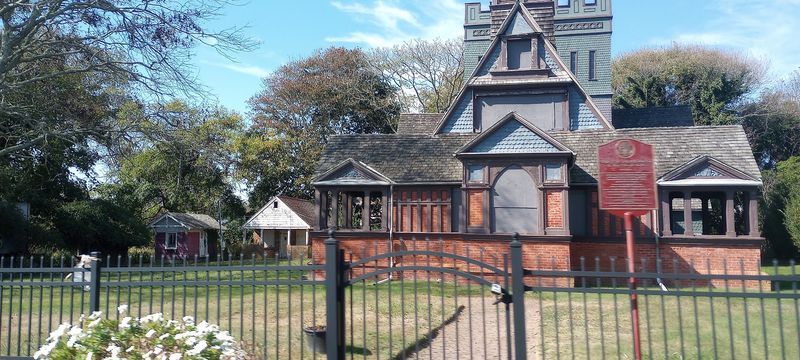
Good architecture sometimes gets even better with age, especially when the additions are thoughtful. In 1895, a crenellated tower was added to Presidents Church, and it changed the silhouette of the building in the best possible way.
Crenellations are those distinctive battlements you associate with medieval castles, and seeing them on a modest New Jersey chapel creates a wonderfully unexpected visual moment.
The tower deepened the Gothic character of the building considerably. Where the original 1879 structure had a quiet, almost delicate presence, the tower gave it genuine architectural authority.
It announced itself on the Ocean Avenue streetscape in a way that made passersby stop and look, which is exactly what good public architecture should do.
From a historical perspective, the addition also reflects the continued investment in the building during a period when Long Branch was still thriving as a summer destination. The community cared enough about this church to expand and improve it, which says something meaningful about the role it played in local life.
Today, the tower remains one of the most photographed features of the building, and it is easy to understand why. It turns a beautiful chapel into something that feels genuinely grand.
The Garfield Tea House and Its Extraordinary Origin Story
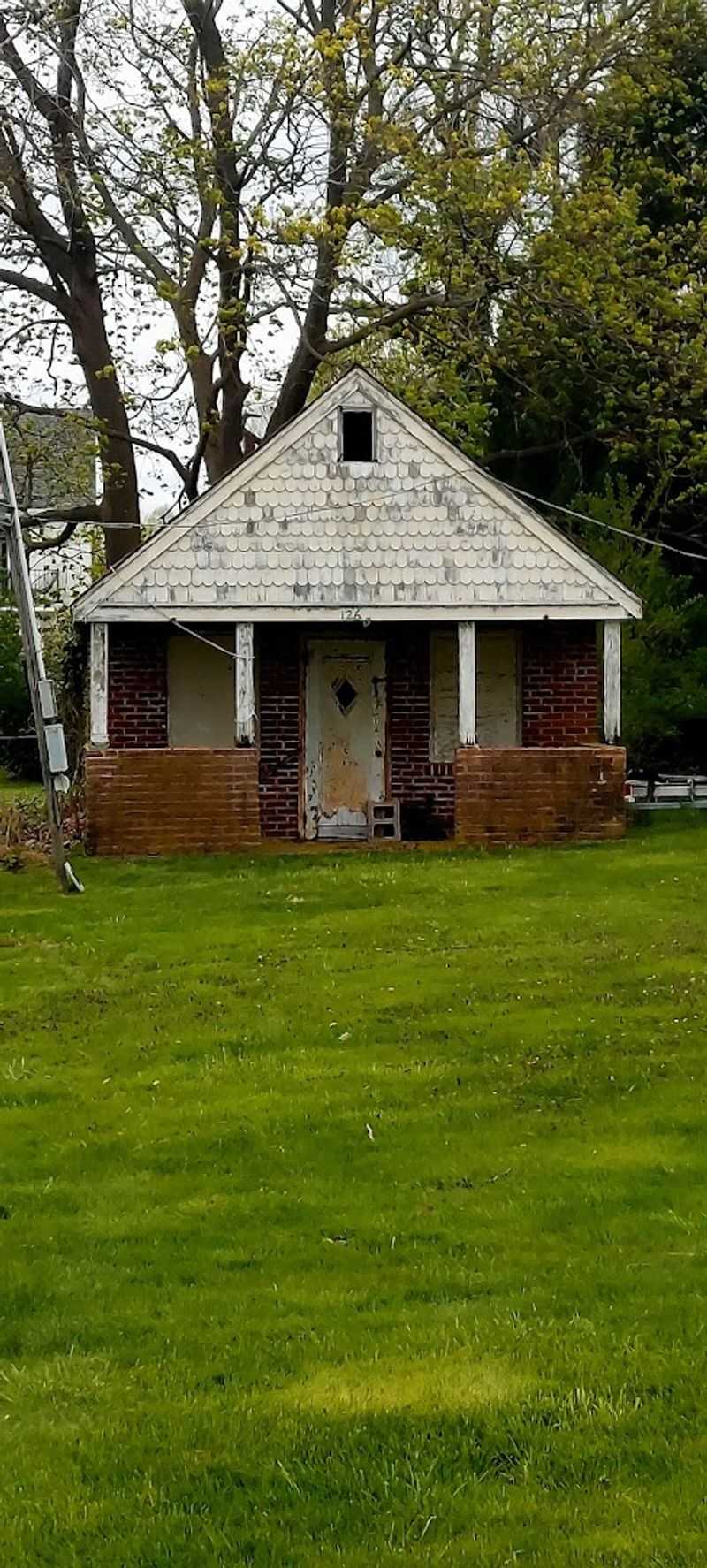
Right next to the chapel stands one of the most quietly remarkable small structures in New Jersey. The Garfield Tea House was built from the actual railroad ties used to transport President James A.
Garfield after he was shot in 1881. That detail stops people cold, and it should.
These were not symbolic materials or commemorative reproductions. They were the real ties, repurposed into a building.
Garfield was brought by train from the Elberon station to the nearby Francklyn cottage in Long Branch, where doctors hoped the sea air would help him recover. He died there twelve days later, making Long Branch an unlikely but permanent part of one of American history’s most tragic episodes.
The tea house stands as a physical remnant of that journey.
There is something deeply moving about a building that carries that kind of weight so quietly. From the outside, it looks like a simple garden structure.
Knowing its history transforms it into something closer to a memorial. Visiting Presidents Church without walking over to the tea house feels like reading only half a story.
Together, the two structures form a small but genuinely powerful complex that rewards anyone curious enough to look closely at what New Jersey history actually contains.
From Active Chapel to Historical Museum
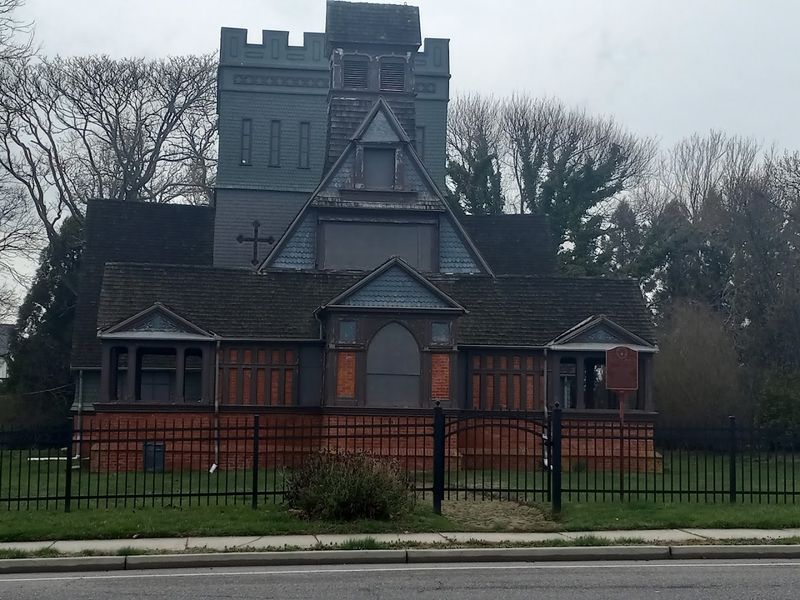
By 1953, the Episcopal Diocese had deconsecrated Presidents Church, closing a chapter that had lasted over seven decades. Two years later, in 1955, the building found a new purpose as the Long Branch Historical Museum, a transformation that felt fitting given everything the chapel had witnessed.
A place so saturated with American history was a natural home for the artifacts and stories of the region.
The conversion preserved the essential character of the building while opening it up to a broader audience. Visitors could walk through the same space where presidents had prayed, surrounded now by exhibits connecting Long Branch’s past to the wider sweep of American life.
The wooden interior, with its warm tones and careful proportions, made for an unusually atmospheric museum setting.
The building’s listing on the National Register of Historic Places in 1976 formalized what locals had long understood, that this was not just a pretty old building but a genuinely significant piece of the national story. The museum years added another layer to an already layered history.
Every era of the building’s life, chapel, museum, and ongoing restoration project, reflects the community’s enduring commitment to keeping this remarkable structure alive and accessible for future generations.
Preservation Efforts and the Road to Reopening
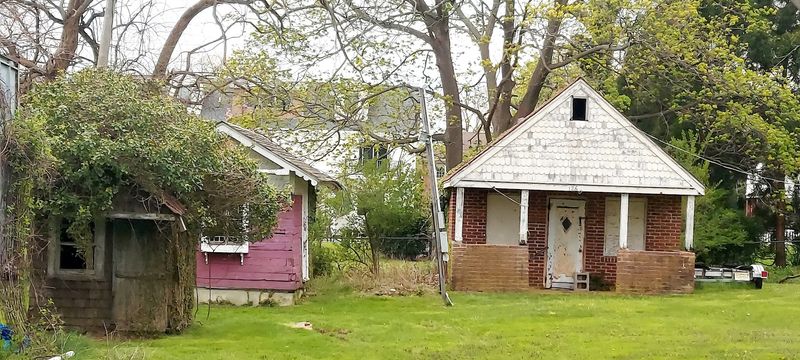
Keeping a 140-plus-year-old wooden building standing is not a passive activity. Presidents Church has required serious preservation work over the years, and as of 2023, the building remains closed to the public while structural repairs and renovations are ongoing.
The Long Branch Historical Museum Association has been working hard to fundraise and push the project forward, and the dedication involved is genuinely admirable.
Wood is a demanding material for historic preservation. It breathes, expands, contracts, and eventually deteriorates without consistent care.
The coastal New Jersey environment adds another layer of challenge, with salt air and humidity creating conditions that accelerate wear on any building, let alone one approaching its 150th birthday. Every dollar raised for the restoration goes toward keeping an irreplaceable piece of American history intact.
Preservation NJ has recognized the church as one of the state’s most significant endangered historic sites, which has helped raise the profile of the fundraising effort. The goal is not just to stabilize the structure but to eventually reopen it to the public as a fully functioning museum.
When that day comes, and there is real optimism that it will, visitors will finally be able to step inside a building that has been waiting patiently to share its stories again.
Planning Your Visit to Presidents Church Today
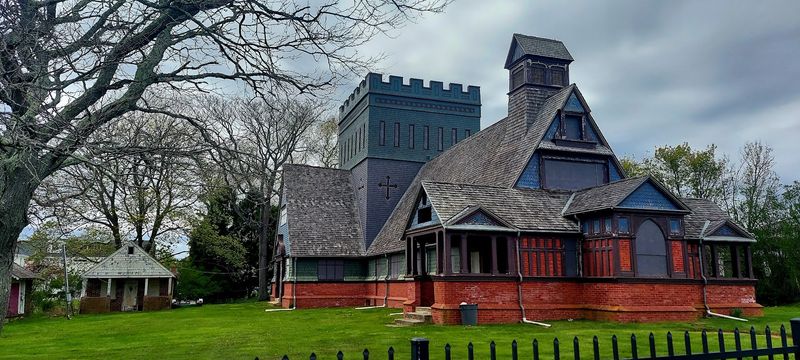
Getting to Presidents Church is straightforward. The address is 1260 Ocean Ave N, Long Branch, NJ 07740, and it sits right on Ocean Avenue, making it easy to spot from the road.
The exterior is visible and worth seeing even when the building itself is not open for tours, which is currently the case while restoration work continues. Bring a camera, because the facade rewards close attention from multiple angles.
The surrounding area has plenty to offer while you are in Long Branch. The shore is close, and the neighborhood retains enough of its historic character to make a walking exploration genuinely rewarding.
Combining a visit to Presidents Church with a meal at one of the local spots nearby turns a quick stop into a full afternoon well spent.
Keep an eye on the Long Branch Historical Museum Association for updates on the reopening timeline. When the restoration is complete and the doors open again, this will be one of New Jersey’s most compelling historic destinations.
Coming here, even just to stand outside and absorb the history, feels like time genuinely well spent.
Address: 1260 Ocean Ave N, Long Branch, NJ
Dear Reader: This page may contain affiliate links which may earn a commission if you click through and make a purchase. Our independent journalism is not influenced by any advertiser or commercial initiative unless it is clearly marked as sponsored content. As travel products change, please be sure to reconfirm all details and stay up to date with current events to ensure a safe and successful trip.
