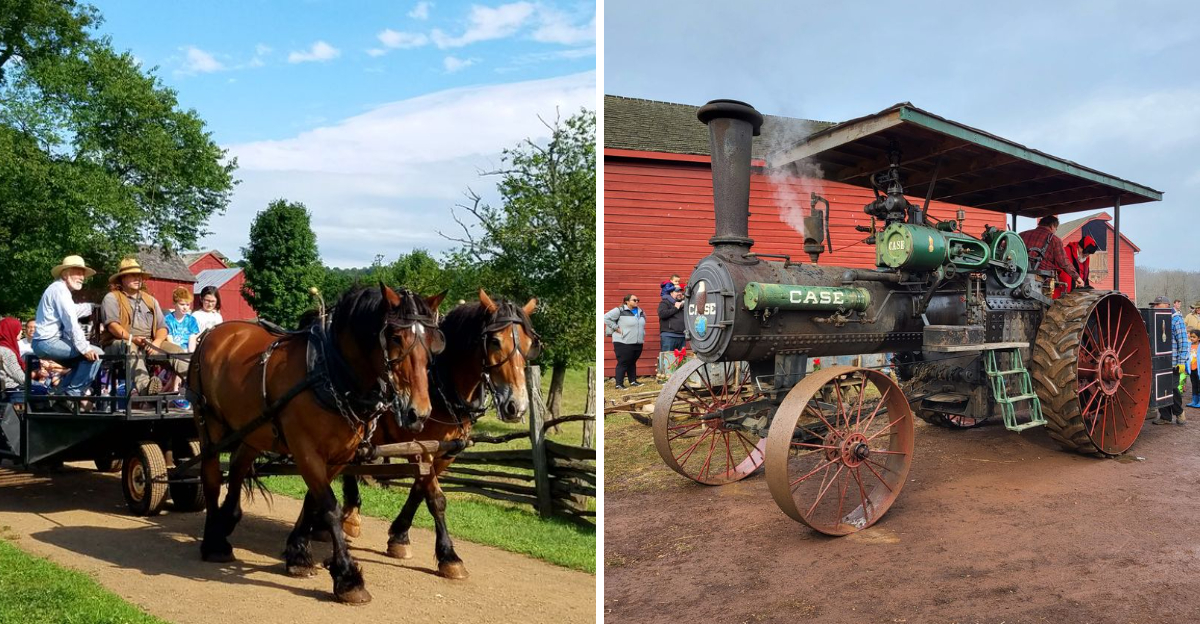
Out in the rolling countryside of Hunterdon County, I found a place where time slows down and history feels alive.
Howell Living History Farm in Lambertville isn’t just a museum; it’s a working farm that carries me straight back to the late 1800s and early 1900s.
I watched draft horses plow the fields, butter churned by hand, and heritage livestock cared for with tools that look like they belong in another century.
It reminded me of Amish-style traditions, though here the focus is broader – a glimpse into the agricultural heritage that shaped rural America.
Walking across its 130 acres along the Delaware River, I couldn’t help but wonder: what was life like when families grew their own food and neighbors leaned on each other through harvest?
Inside the blacksmith shop, glowing iron rang under the hammer. In the barn, wool was carded the old?fashioned way.
And in the gardens, heirloom vegetables grew just as they did for generations before us.
Every corner felt like a doorway into the past.
Step Back Into Agricultural History at This Working Museum
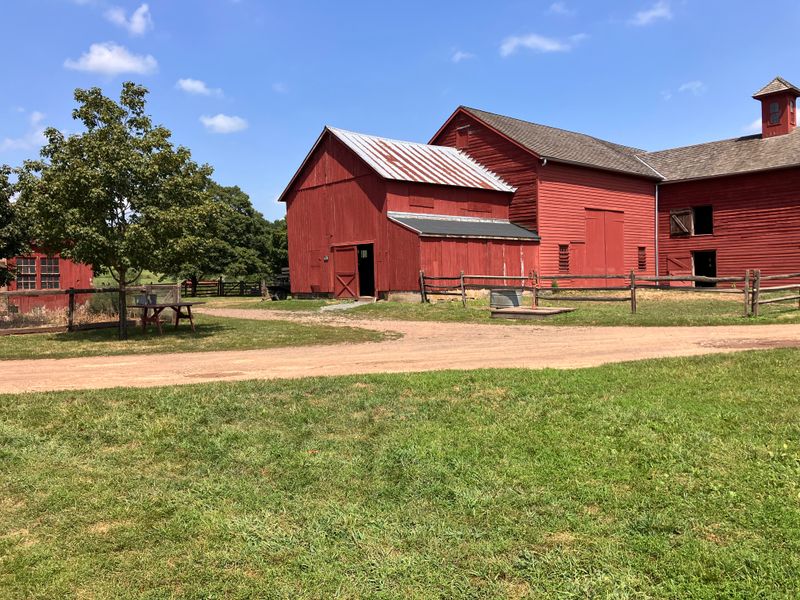
Howell Living History Farm operates as something far more engaging than a static display of old farming equipment behind velvet ropes. Every Saturday from 10 AM to 4 PM, this 130-acre working farm brings the period between 1890 and 1910 to vivid life through authentic agricultural practices.
Costumed interpreters don’t just talk about history; they live it, using vintage tools and techniques to cultivate heirloom crops and care for heritage livestock breeds that were common on New Jersey farms more than a century ago.
The farm’s dedication to historical accuracy means visitors witness genuine farming operations rather than theatrical performances. Draft horses pull plows through fields where heirloom corn, wheat, and vegetables grow according to seasonal cycles.
Chickens scratch in the barnyard while sheep graze in pastures enclosed by split-rail fencing crafted using traditional methods.
Located at 70 Woodens Ln, Lambertville, NJ 08530, this Mercer County Park Commission property sits along the scenic Delaware River valley. The farm’s mission focuses on preserving and demonstrating agricultural heritage for modern audiences who’ve grown disconnected from food production.
Children especially benefit from seeing where their meals actually originate, long before grocery store shelves enter the picture.
Unlike rushed tourist attractions, Howell encourages leisurely exploration. Wander between buildings at your own pace, ask interpreters detailed questions about their craft, and observe seasonal activities that change throughout the year.
Spring planting looks entirely different from autumn harvest, and winter brings its own set of essential farm chores that kept historical families constantly occupied through cold months.
Watch Draft Horses Power the Farm Like Engines on Four Legs
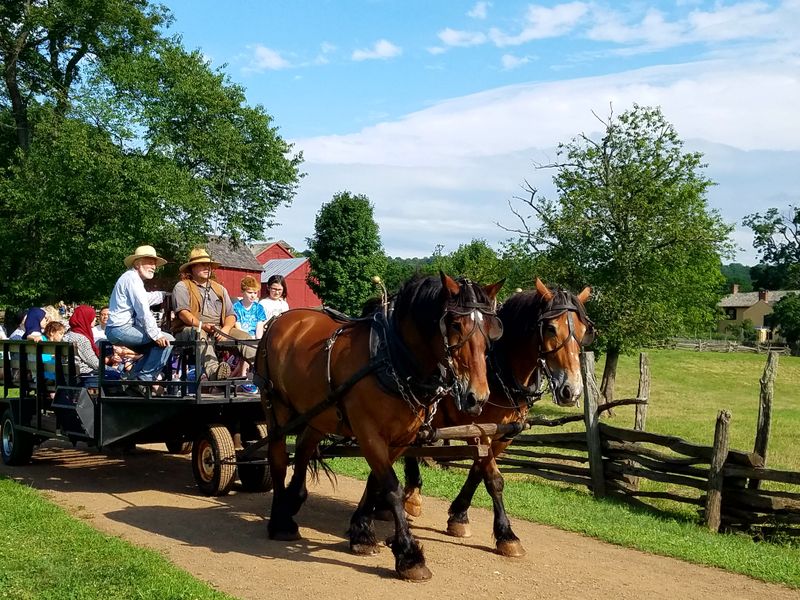
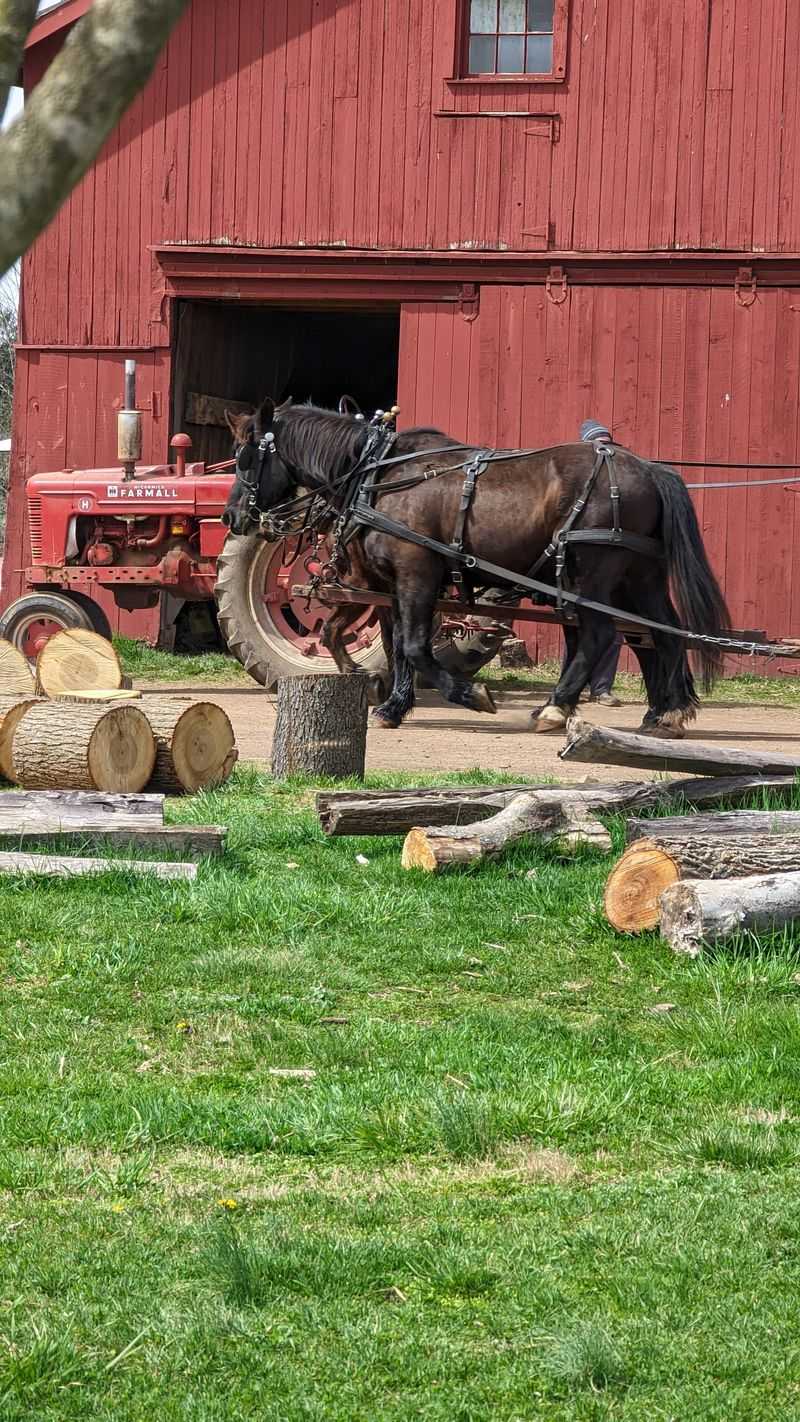
Before internal combustion engines revolutionized agriculture, farmers relied on the incredible strength and intelligence of draft horses to power their operations. At Howell Living History Farm, these magnificent animals remain the primary source of field power, just as they were during the farm’s interpreted time period.
Watching a team of draft horses pull a plow through rich New Jersey soil creates an unforgettable connection to our agricultural past.
The farm maintains several draft horses, typically breeds like Percherons or Belgians, known for their gentle temperament despite their imposing size. These animals can weigh over a ton yet respond to subtle voice commands and rein signals from experienced teamsters.
The bond between farmer and horse becomes immediately apparent as they work together, the horses leaning into their collars while the farmer guides the implement behind them.
Visitors often gather along fence lines to observe plowing, harrowing, or hay-making operations that showcase equine power. The rhythmic clopping of massive hooves, the jingle of harness hardware, and the earthy smell of freshly turned soil create a sensory experience impossible to replicate through photographs or videos.
Children particularly love these gentle giants, whose calm presence allows for up-close observation.
The farm’s commitment to draft horse power extends beyond nostalgia. These living tractors demonstrate sustainable agriculture that doesn’t depend on fossil fuels, compacts soil less than heavy machinery, and creates natural fertilizer as a byproduct.
Interpreters explain how farmers selected, trained, and cared for their horses, which represented major investments requiring daily attention and considerable expertise to maintain in working condition.
Meet Heritage Livestock Breeds That Time Almost Forgot
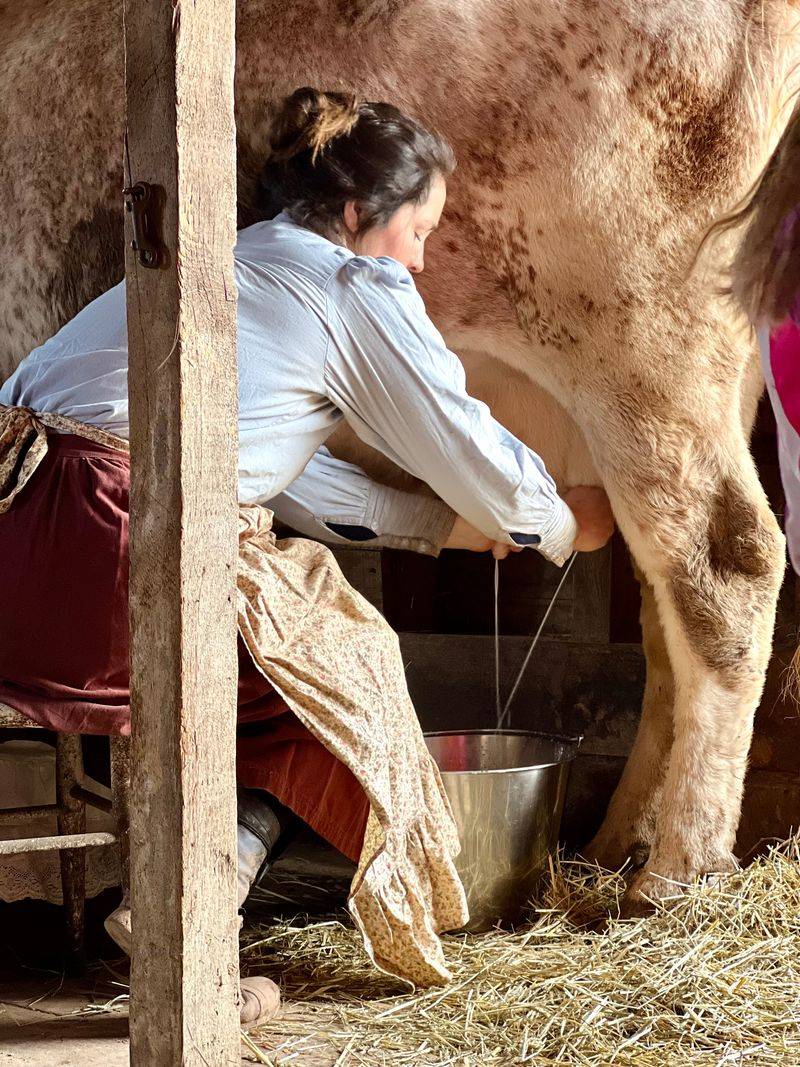
Modern industrial agriculture has narrowed livestock genetics to just a handful of highly specialized breeds, but Howell Living History Farm maintains heritage animals that were common on turn-of-the-century New Jersey farms. These rare breeds possess genetic diversity, hardiness, and multi-purpose qualities that made them invaluable to historical farmers.
Seeing them today offers both a history lesson and a glimpse at agricultural biodiversity worth preserving.
The farm’s barnyard typically houses breeds like Dominique chickens, one of America’s oldest chicken varieties with distinctive barred plumage. These dual-purpose birds provided both eggs and meat for farm families, unlike modern chickens bred exclusively for one purpose.
Sheep breeds represented might include Southdown or similar heritage varieties valued for both wool and meat production.
Heritage pigs, often breeds like Gloucestershire Old Spots or similar varieties, root through pastures as they were bred to do. Unlike confined industrial hogs, these animals exhibit natural behaviors that historical farmers encouraged, including foraging abilities that reduced feed costs.
Their slower growth rates and higher fat content suited a time before modern refrigeration and lean-meat preferences.
Interpreters share fascinating details about how farmers selected breeding stock, managed animal health without modern veterinary medicine, and integrated livestock into the farm’s overall economy. Every animal served multiple purposes, from providing labor and food to generating manure for fertilizing fields.
Nothing went to waste in an era when self-sufficiency meant survival.
The Livestock Conservancy recognizes many heritage breeds as endangered, making Howell’s breeding programs important for genetic preservation. These animals represent living agricultural history, adapted to regional climates and management systems over generations before industrial agriculture changed everything.
Experience Seasonal Farm Activities That Follow Nature’s Calendar
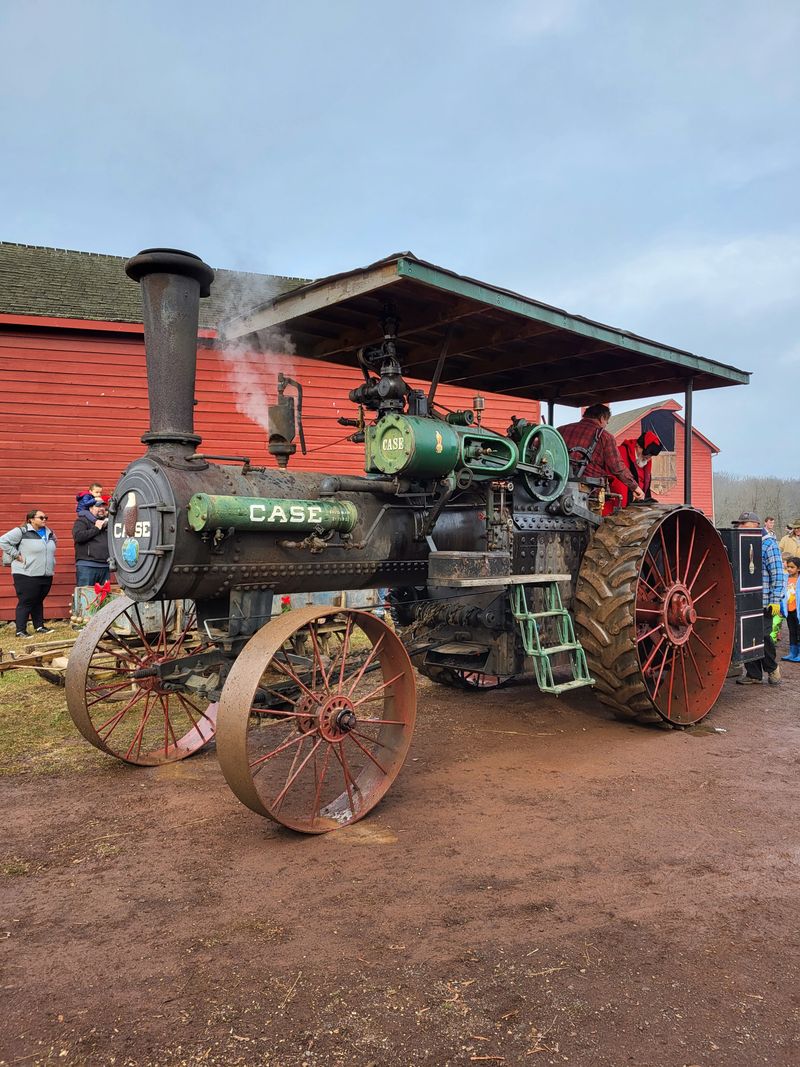
Historical farms operated according to nature’s rhythms rather than artificial schedules, and Howell Living History Farm faithfully recreates this seasonal cycle. Each visit offers different activities depending on when you arrive, from spring planting through winter preparations.
This changing landscape of farm work helps visitors understand how completely agricultural families depended on timing, weather, and seasonal transitions.
Spring brings plowing, harrowing, and planting as interpreters prepare fields for crops like corn, wheat, oats, and various vegetables. Visitors might observe seed selection, soil preparation, and planting techniques that required understanding local conditions and frost dates.
The farm awakens from winter dormancy with new lambs, chicks, and other baby animals that delight young visitors.
Summer focuses on cultivation, with interpreters hoeing weeds, tending growing crops, and beginning early harvests of vegetables and herbs. Haying operations showcase the labor-intensive process of cutting, drying, and storing winter feed for livestock.
The farm buzzes with activity as every daylight hour gets utilized for essential tasks.
Autumn transforms the farm into a harvest celebration, with corn picking, apple pressing, and preservation activities like canning and pickling. Interpreters demonstrate food storage techniques that allowed families to survive winter months without fresh produce.
Fields are cleared, and preparations begin for cold weather.
Winter might seem quiet, but essential chores continue year-round. Animals require daily care regardless of temperature, equipment needs repair and maintenance, and planning for the next growing season occupies indoor hours.
Ice harvesting, when conditions permit, demonstrates how farms stored perishables before electric refrigeration. Each season at this New Jersey treasure reveals different aspects of historical farm life’s complexity and rhythm.
Learn Traditional Skills From Expert Interpreters in Period Clothing
Howell’s interpreters aren’t actors reading scripts; they’re skilled practitioners who’ve mastered historical techniques through years of hands-on practice. Dressed in period-appropriate clothing from the 1890s-1910s era, these knowledgeable guides demonstrate and explain traditional skills while answering questions with impressive depth.
Their expertise transforms casual visits into genuine educational experiences.
Blacksmithing demonstrations showcase how farms maintained and repaired their own tools before hardware stores existed on every corner. Watch as interpreters heat iron in a coal-fired forge, then shape glowing metal on an anvil using hammers and specialized tools.
They create everything from horseshoes to gate hinges, explaining metallurgy concepts and problem-solving approaches that made blacksmiths essential community members.
Textile arts receive regular attention, with spinning, weaving, and wool processing demonstrations showing how farms produced their own fabric. Interpreters card raw wool, spin it into yarn using spinning wheels, and sometimes weave finished cloth.
These time-consuming processes help modern visitors appreciate the revolution that ready-made clothing represented.
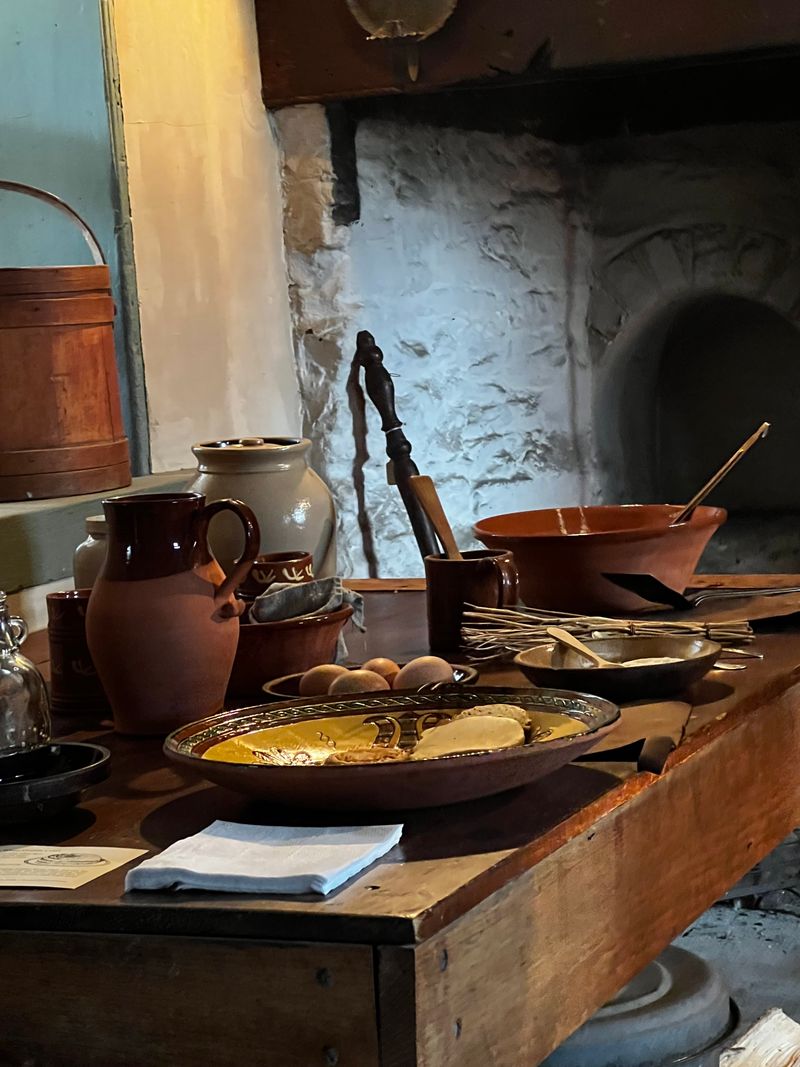
Cooking demonstrations in the farmhouse kitchen reveal how meals were prepared using wood-fired stoves, cast iron cookware, and ingredients grown or raised on the property. Bread baking, butter churning, and seasonal preservation techniques like jam-making connect food directly to agricultural production in ways that grocery shopping never could.
Carpentry, coopering, and other woodworking skills appear during special programs, showing how farmers crafted barrels, furniture, and building components. Interpreters encourage questions and often invite visitors to try simple tasks themselves, creating memorable hands-on connections to historical craftsmanship.
Their passion for preserving these dying arts makes every demonstration engaging and informative beyond typical museum experiences.
Explore Authentic Buildings That House Period-Appropriate Equipment
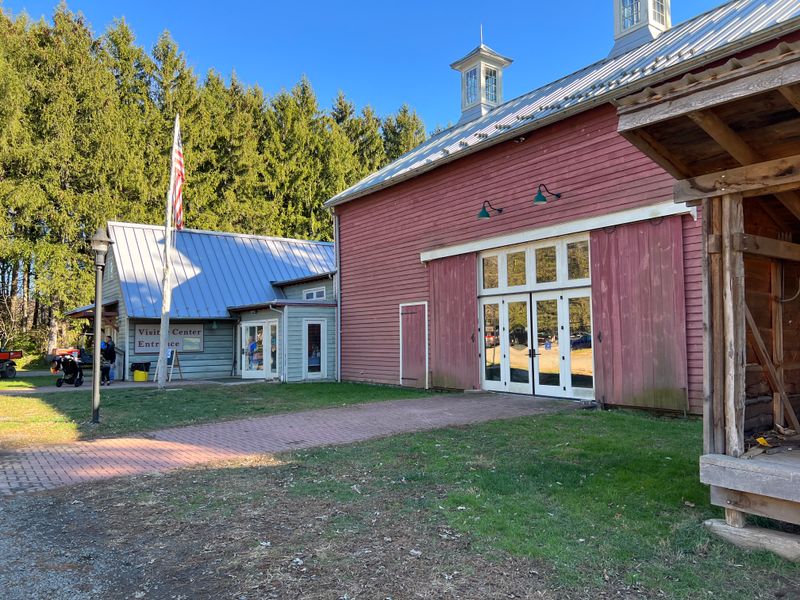
Architecture tells stories, and Howell Living History Farm’s collection of historic structures provides authentic settings for demonstrating period farm life. Unlike reconstructed theme park buildings, these genuine agricultural structures showcase the practical design principles that governed farm construction during the interpreted era.
Each building serves specific functions that visitors can observe and understand through active use.
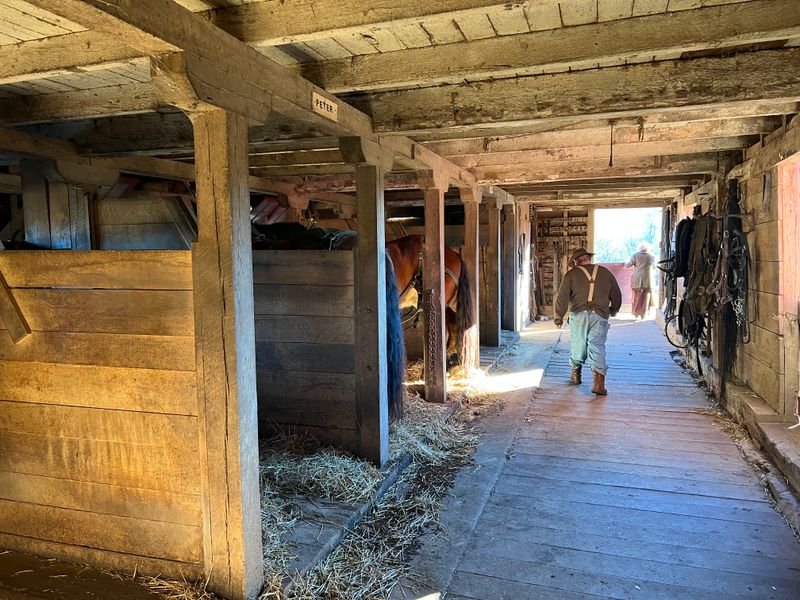
The main barn dominates the farmyard with its classic Pennsylvania-style design, featuring massive hand-hewn beams and a layout that efficiently accommodates livestock on the ground level with hay storage above. Visitors can explore the interior when animals aren’t being worked, examining stalls, feeding systems, and tool storage that reflect historical management practices.
The barn’s architecture maximizes natural ventilation while providing weather protection for valuable animals and equipment.
The farmhouse represents domestic life, furnished with period-appropriate items that show how families lived amid their agricultural operations. The kitchen, parlor, and bedrooms contain furniture, household tools, and decorative items typical of rural New Jersey homes during the early 20th century.
Interpreters sometimes work inside, demonstrating domestic tasks like cooking, cleaning, or textile production.
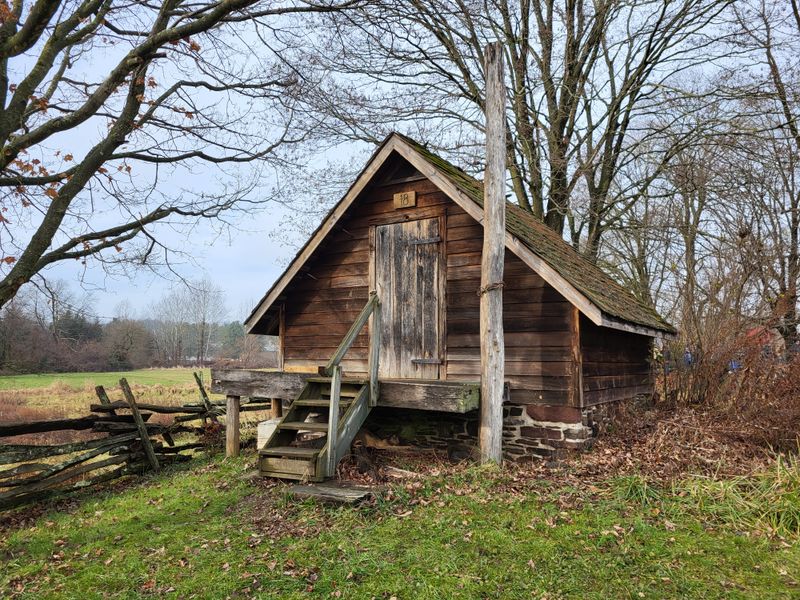
Outbuildings include structures for specific purposes: a springhouse that used cold water for refrigeration, a corn crib with slatted walls for air-drying harvested corn, and various sheds housing equipment and supplies. Each building’s design reflects ingenious solutions to storage and preservation challenges before modern technology.
The blacksmith shop, wagon shed, and other specialized structures demonstrate how farms functioned as nearly self-sufficient operations. Walking between buildings reveals the complex infrastructure required for successful agriculture, with each structure playing essential roles in the farm’s yearly cycle of production, preservation, and preparation.
Discover Heirloom Crops and Heritage Garden Varieties
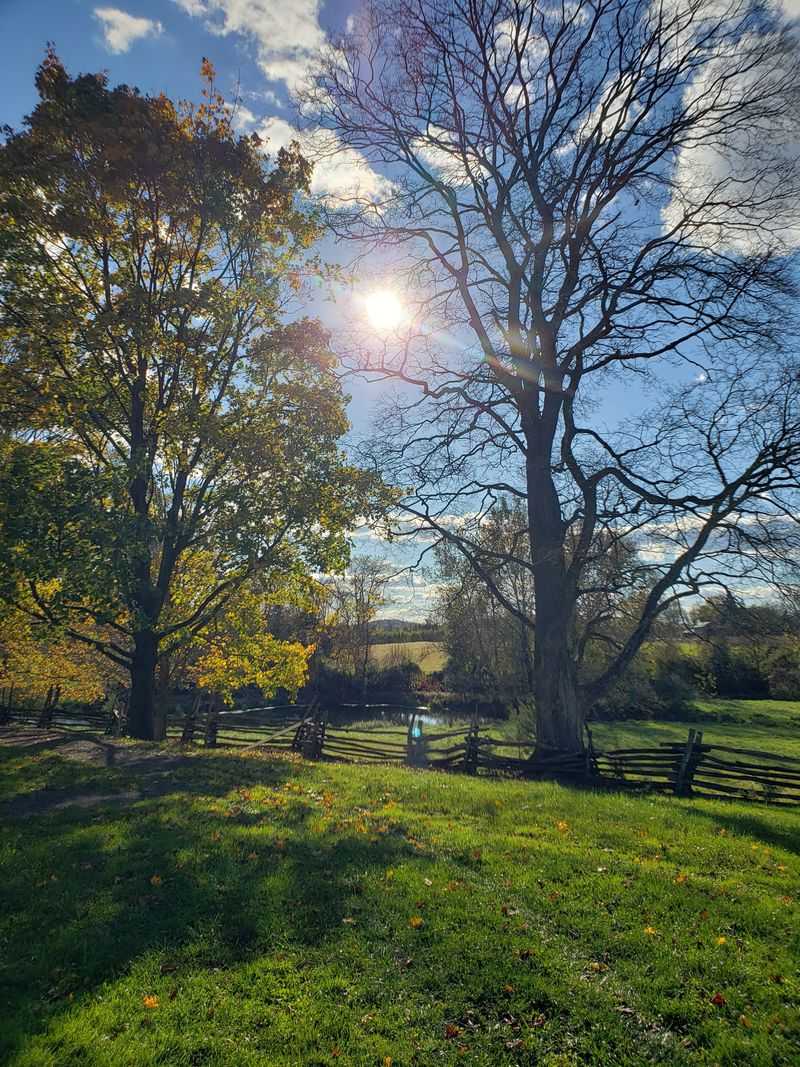
Supermarket produce represents just a tiny fraction of agricultural diversity that once flourished across American farms. Howell Living History Farm cultivates heirloom crop varieties that were common during the 1890s-1910s period, offering visitors a taste of flavors and plant characteristics that modern industrial agriculture has largely abandoned.
These heritage plantings serve both educational and preservation purposes.
The farm’s vegetable gardens showcase varieties with names like Stowell’s Evergreen sweet corn, Mortgage Lifter tomatoes, and Moon and Stars watermelon. These open-pollinated varieties allowed farmers to save seeds from year to year, unlike modern hybrid varieties that don’t breed true.
Interpreters explain seed-saving techniques and the importance of maintaining genetic diversity in food crops.
Field crops include heritage grains like Turkey Red wheat, brought to America by Mennonite immigrants, and various corn varieties used for different purposes. Flint corn for grinding into cornmeal differs significantly from sweet corn eaten fresh, and dent corn served as livestock feed.
Understanding these distinctions helps visitors appreciate the sophistication of historical agricultural knowledge.
Herb gardens contain medicinal and culinary plants that farm families depended on before modern pharmacies and extensive spice selections. Interpreters share traditional uses for herbs like horehound, comfrey, and various mints, connecting plant knowledge to health care and food preservation practices.
The farm participates in seed preservation networks, growing out rare varieties to maintain their viability and genetic integrity. This conservation work extends beyond nostalgia, as climate change and evolving agricultural challenges make genetic diversity increasingly valuable.
Visitors leave understanding that every tomato variety represents generations of selection and adaptation worth preserving for future food security throughout New Jersey and beyond.
Participate in Special Events That Celebrate Agricultural Traditions
Beyond regular Saturday operations, Howell Living History Farm hosts special events throughout the year that highlight specific aspects of agricultural heritage and seasonal celebrations. These programs offer expanded activities, additional demonstrations, and opportunities for hands-on participation that create memorable family experiences.
Event calendars typically fill months in advance as the farm’s reputation for quality programming spreads.
Plowing matches in spring showcase the skill required to create straight furrows using draft horses, with interpreters demonstrating techniques that were once competitive events at county fairs. Visitors learn about soil preparation, crop rotation planning, and the physical demands of field work before mechanization.
Harvest festivals in autumn transform the farm into a celebration of agricultural abundance, with apple pressing, corn grinding, and preservation demonstrations. Families can participate in activities like husking corn, sorting apples, or helping with other harvest tasks.
These events often include period music, games, and foods that recreate community gatherings that marked the farming year’s culmination.
Sheep shearing days in late spring demonstrate the entire process from fleece removal through cleaning and preparation for spinning. Visitors witness the remarkable skill required to remove a sheep’s entire fleece in one piece, then watch as raw wool transforms through various stages into usable fiber.
Holiday programs like old-fashioned Thanksgiving celebrations or winter solstice observances show how agricultural communities marked special occasions with traditions tied to their farming lifestyle. Decorations, foods, and activities all reflect resources available on working farms.
Educational programs for school groups bring New Jersey history curricula to life through immersive experiences. Children participate in age-appropriate farm chores, learning through doing rather than just observing.
Check the farm’s website at howellfarm.org for current event schedules and registration requirements.
Understand Sustainable Practices That Modern Farms Are Rediscovering
Historical farming methods weren’t called sustainable in their time because alternatives didn’t exist yet, but many practices that Howell Living History Farm demonstrates align perfectly with modern organic and regenerative agriculture movements. Watching these techniques in action reveals that some old ways deserve reconsideration as solutions to contemporary agricultural challenges.
The farm unintentionally serves as a research laboratory for sustainable food production.
Crop rotation, a cornerstone of historical farming, naturally replenishes soil nutrients and breaks pest cycles without chemical inputs. Interpreters explain how farmers planned multi-year rotations that included nitrogen-fixing legumes, soil-building cover crops, and cash crops in sequences that maintained fertility.
Modern industrial monoculture has abandoned these practices, often with problematic environmental consequences.
Integrated pest management happened naturally when farms maintained diverse ecosystems. Beneficial insects, birds, and other predators controlled pest populations without pesticides.
Hedgerows, diverse plantings, and tolerance for some crop damage created balanced systems where catastrophic pest outbreaks rarely occurred. The farm’s biodiversity demonstrates these principles in action.
Animal integration provided natural fertilizer, converted crop residues and pasture into valuable products, and created closed-loop nutrient cycling. Manure from livestock fed the fields that grew their feed, eliminating the waste disposal problems and synthetic fertilizer dependence that plague modern separated crop and livestock operations.
Water conservation through careful site selection, gravity-fed systems, and drought-tolerant crop varieties shows how farmers worked with natural resources rather than against them. The farm’s springhouse and water management systems demonstrate ingenious low-tech solutions.
Visitors often leave recognizing that historical farming knowledge contains valuable insights for addressing climate change, soil degradation, and food system resilience. These aren’t primitive practices but sophisticated systems developed through generations of observation and adaptation throughout agricultural regions like New Jersey.
Plan Your Visit to This Hidden Hunterdon County Treasure
Maximizing your Howell Living History Farm experience requires some planning, as this authentic operation follows schedules dictated by agricultural needs rather than tourist convenience. The farm opens Saturdays from 10 AM to 4 PM year-round, except major holidays, with admission completely free thanks to Mercer County Park Commission support.
This generous policy makes historical education accessible to everyone regardless of economic circumstances.
Located at 70 Woodens Ln, Lambertville, NJ 08530, the farm sits in scenic Hunterdon County along the Delaware River valley. From Route 29, watch for directional signs leading to the property.
Parking areas accommodate typical visitor volumes, though special events may require overflow parking in designated fields. The rural setting means limited nearby services, so plan accordingly with snacks, water, and weather-appropriate clothing.
Comfortable walking shoes are essential, as you’ll explore 130 acres with uneven terrain, gravel paths, and potentially muddy conditions depending on recent weather. The farm remains an active agricultural operation where cleanliness takes second place to authenticity.
Children should wear clothes that can get dirty from petting animals or trying hands-on activities.
Photography is encouraged, and the property offers countless picture opportunities from pastoral landscapes to close-up animal portraits. The changing seasons provide dramatically different visual experiences, making repeat visits worthwhile for capturing spring blossoms, summer abundance, autumn colors, or winter’s stark beauty.
Restroom facilities and limited covered areas exist, but the farm lacks modern amenities like cafés or gift shops. This absence enhances the historical atmosphere while keeping operational costs minimal.
Contact the farm at 609-737-3299 with specific questions about accessibility, special programs, or group visits. The staff’s dedication to historical agriculture education shines through every interaction, making this New Jersey gem worth discovering and supporting.
Dear Reader: This page may contain affiliate links which may earn a commission if you click through and make a purchase. Our independent journalism is not influenced by any advertiser or commercial initiative unless it is clearly marked as sponsored content. As travel products change, please be sure to reconfirm all details and stay up to date with current events to ensure a safe and successful trip.
