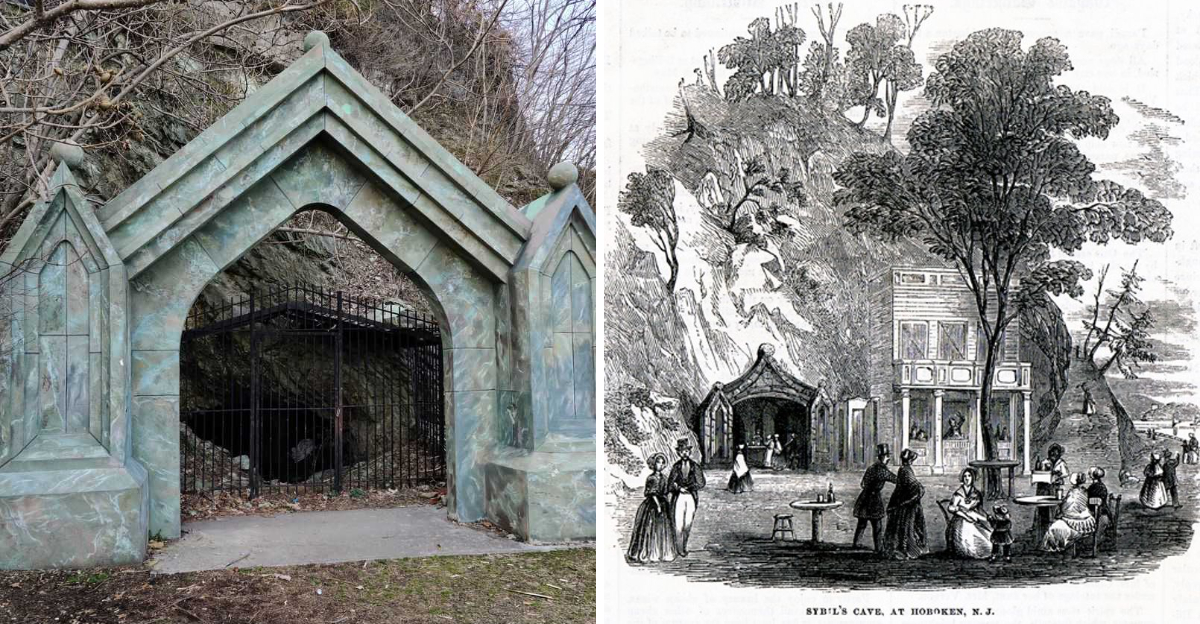
Along the Hudson River waterfront in Hoboken, New Jersey, sits a mysterious stone archway that marks one of the strangest chapters in American history.
Sybil’s Cave isn’t really a natural cave at all, but rather an excavated grotto built in the 1830s by the wealthy Stevens family to capitalize on a natural spring they believed had healing powers.
Visitors once traveled from miles around to taste the supposedly magical waters and stroll through the romantic Gothic entrance.
Then in 1841, a young woman named Mary Rogers was found dead in the river nearby, and suddenly this charming tourist spot became the center of a murder mystery that would inspire Edgar Allan Poe himself.
Want to visit a place where history, mystery, and waterfront views collide in the most dramatic way possible? This quirky piece of New Jersey history is calling your name!
The Gothic Arch That Started It All
Back in 1832, the Stevens family decided to turn a natural spring into cold, hard cash by excavating what they marketed as a mystical cave. They hired workers to dig deep into the rocky hillside along the Hudson, creating an artificial grotto that would become one of the region’s hottest tourist destinations.
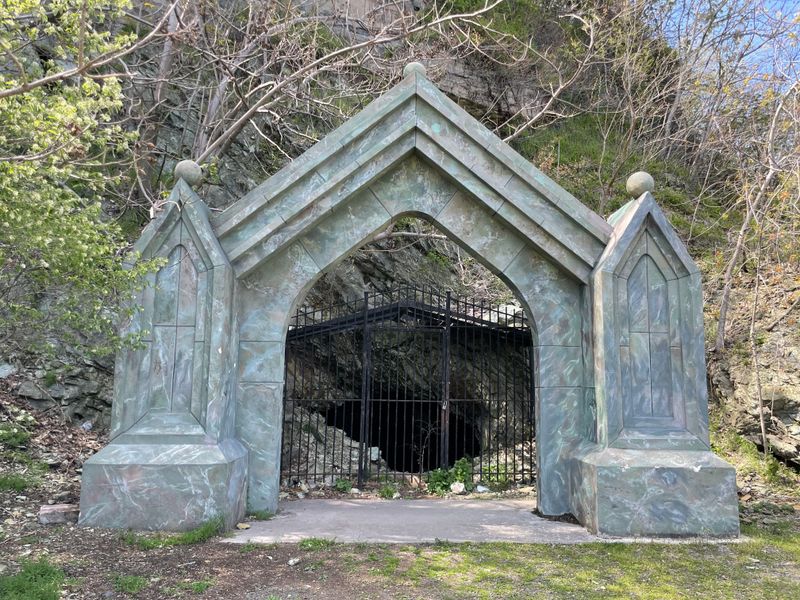
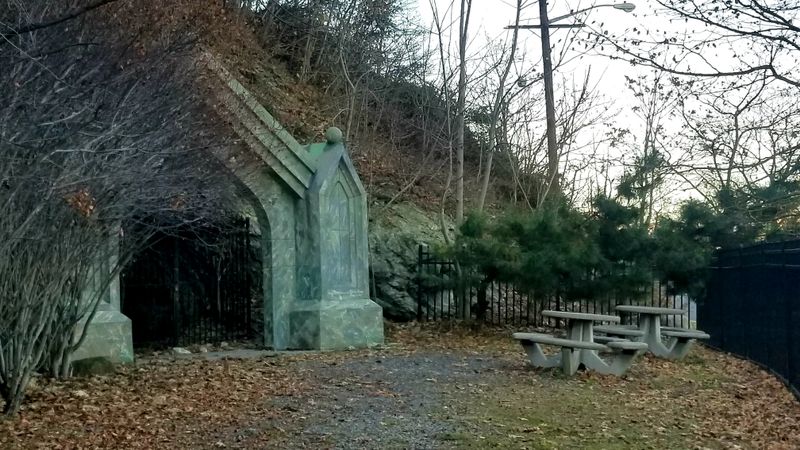
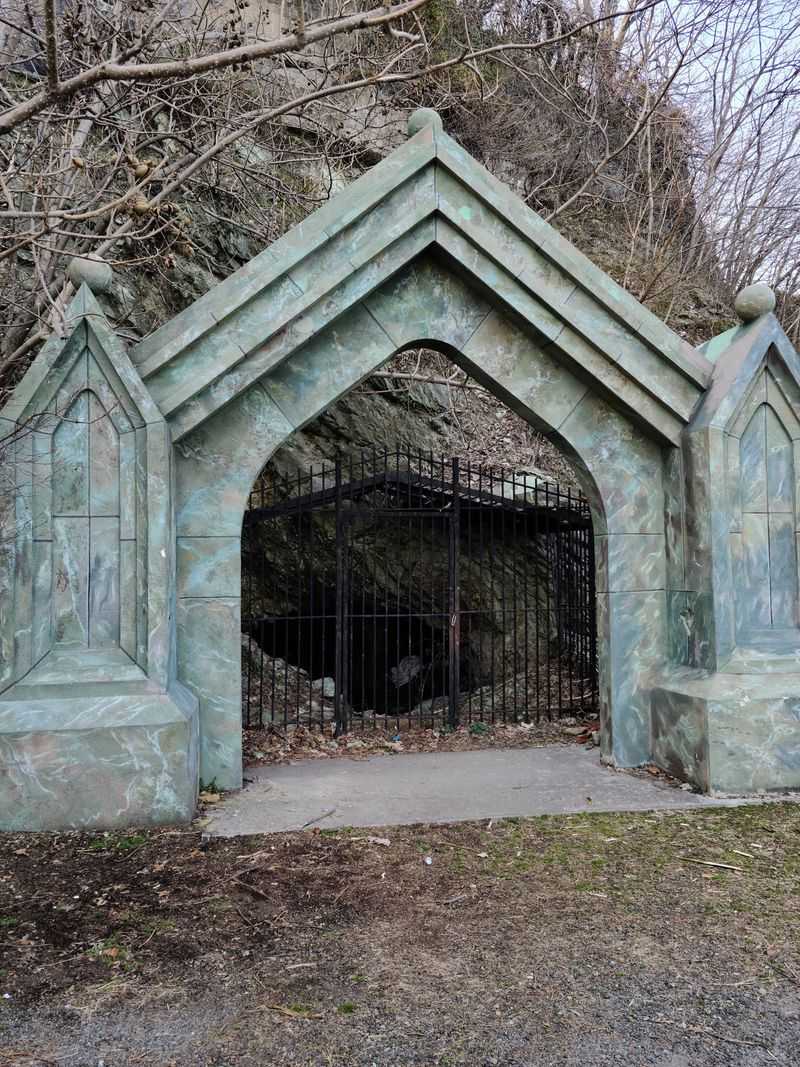
The pièce de résistance was a stunning neogothic archway they built at the entrance, complete with romantic carved stonework that made visitors feel like they were stepping into a fairytale.
Today, that arch still stands at Frank Sinatra Drive in Hoboken, greeting curious visitors with its weathered but beautiful stone facade. The romantic design reflects the era’s obsession with Gothic revival architecture, when anything medieval or mysterious was considered the height of fashion.
You can walk right up to it during park hours, which run from 7 AM to 9 PM daily, and snap photos of this remarkable survivor from the 1830s.
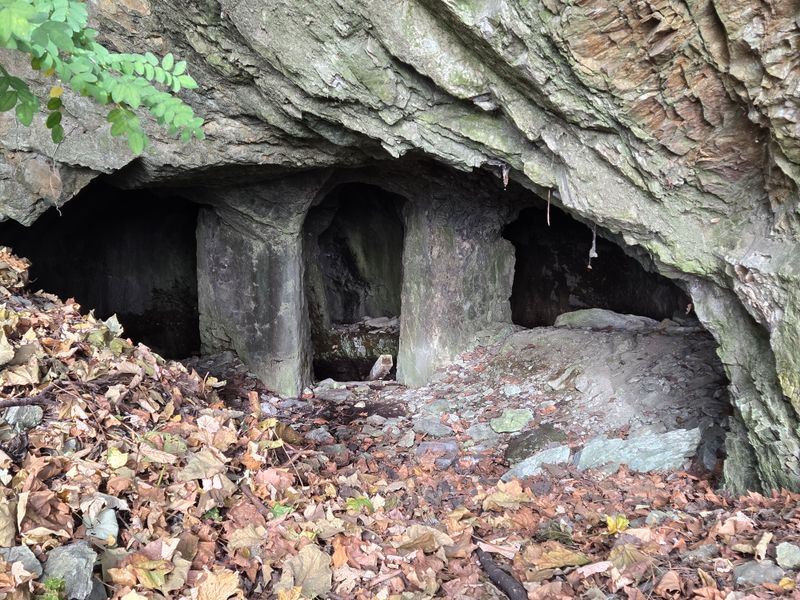
The arch frames what’s left of the excavated space behind it, though don’t expect a deep cavern with stalactites and stalagmites. What you’ll find instead is a shallow carved-out area that once housed the famous spring.
The stonework shows its age beautifully, with moss and weathering adding character to every carved detail. Standing before this gateway, you’re looking at the same view that thousands of 19th-century tourists paid good money to experience, back when Hoboken was the go-to destination for New Yorkers seeking adventure and supposed health benefits from natural spring water.
The Spring Water Scam That Fooled Thousands
Imagine paying actual money to drink water from a hole in the ground because someone told you it had magical healing properties. That’s exactly what happened at Sybil’s Cave throughout the 1830s and 1840s, when the Stevens family convinced visitors that the spring water bubbling up inside their excavated grotto could cure everything from digestive troubles to general malaise.
People lined up to purchase cups and bottles of this “salubrious” water, believing they were drinking from nature’s own pharmacy.
The natural spring was real enough, fed by underground water sources that flowed through the rocky terrain. What wasn’t real were the supposed health benefits that promoters claimed would transform your life with every sip.
Still, in an era before modern medicine and FDA regulations, people were willing to believe just about anything that promised better health. The water trade became so profitable that entrepreneurs built an entire tourist infrastructure around this single spring.
Today, if you peer through the gate at the site, you might still see dampness and evidence of water seepage, though nobody’s drinking it anymore. One reviewer noted the cave remains “a damp little hole,” which is probably the most honest description of what the spring situation looks like now.
The water that once made the Stevens family wealthy now just creates muddy patches and contributes to the generally unkempt condition of the interior space, a far cry from its glory days as New Jersey’s answer to European spa towns.
The Mary Rogers Murder That Changed Everything
On July 28, 1841, the body of Mary Cecilia Rogers washed ashore near Sybil’s Cave, transforming this tourist attraction into the epicenter of one of America’s most famous unsolved murders. Mary was a beautiful 21-year-old tobacco shop clerk from Manhattan whose disappearance three days earlier had already made headlines.
When her battered body was discovered floating in the Hudson River near the cave, the case exploded into a media sensation that gripped the entire nation.
Newspapers couldn’t get enough of the story, publishing wild theories about what happened to the young woman. Some claimed she’d been murdered by a gang of ruffians, others suggested a botched abortion, and still more pointed fingers at various men in her life.
The New York police investigation went nowhere, with leads drying up and witnesses changing their stories. Edgar Allan Poe became so fascinated by the case that he wrote “The Mystery of Marie Rogêt,” a detective story that transplanted the events to Paris but clearly drew from Mary’s unsolved murder.
The connection between Mary Rogers and Sybil’s Cave has kept both names alive in local legend for nearly two centuries. Visitors today often come specifically because they’ve heard about the murder mystery, hoping to stand where this tragic chapter of American crime history unfolded.
The case remains officially unsolved, adding an eerie dimension to what might otherwise be just another historic site along the New Jersey waterfront.
The Restaurant That Fed Curious Tourists
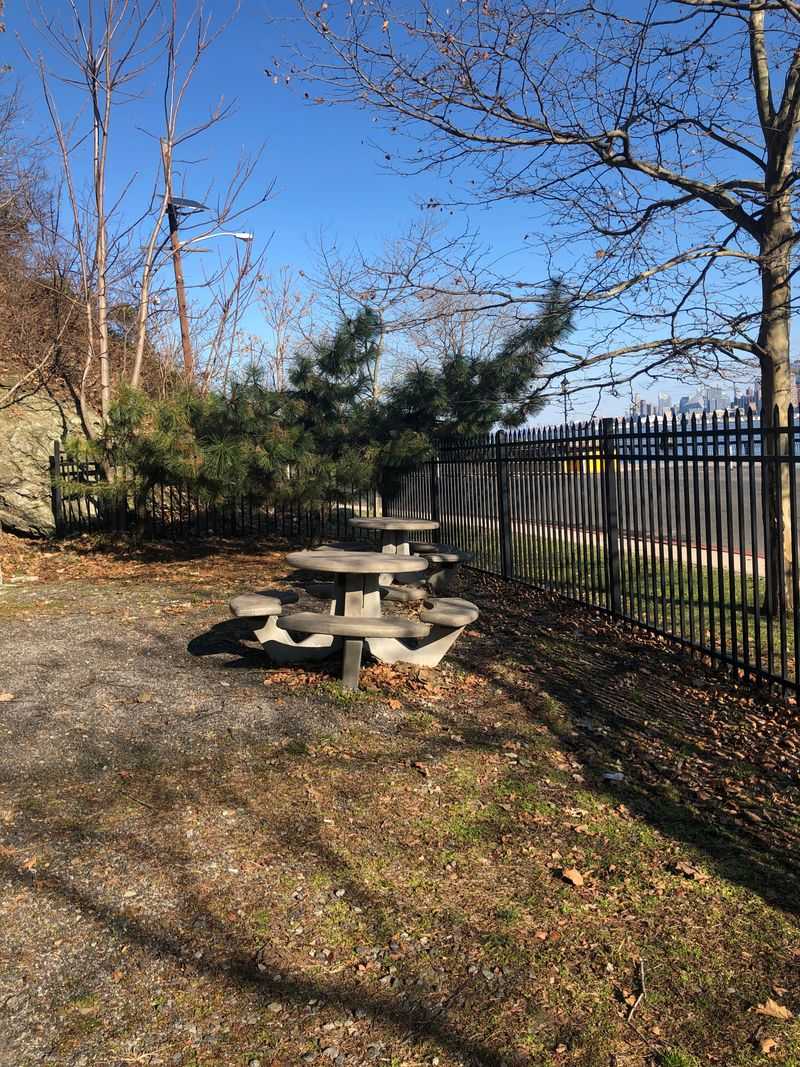
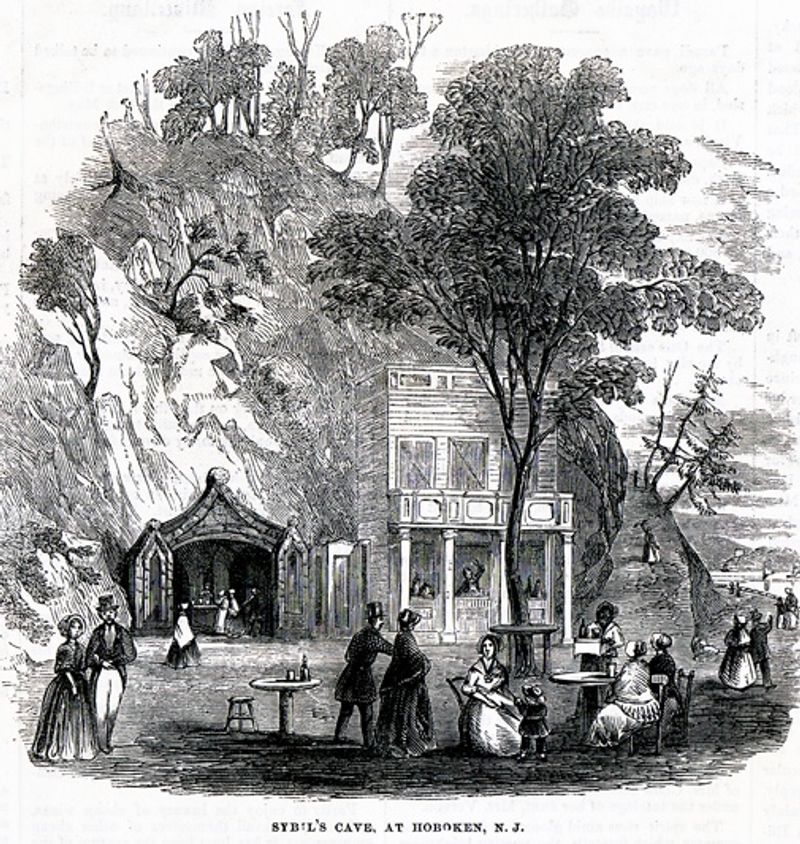
Capitalizing on the steady stream of visitors coming to see the cave and taste the spring water, entrepreneurs eventually built a restaurant right at the site. This wasn’t just any eatery but rather an upscale establishment that catered to well-heeled tourists from Manhattan and beyond who made the trip across the Hudson.
Diners could enjoy their meals while taking in spectacular river views and discussing the latest theories about the Mary Rogers case, which had turned Sybil’s Cave into a must-see destination for true crime enthusiasts of the Victorian era.
Historical drawings show the restaurant as an elegant structure that complemented the romantic Gothic architecture of the cave entrance. Families would spend entire afternoons at the site, combining a meal with their cave visit and waterfront stroll.
The restaurant added legitimacy to the whole operation, transforming what was essentially a spring water sales scheme into a proper tourist destination with amenities. For a time, Sybil’s Cave rivaled other popular day-trip locations around New York City.
Like the spring water business itself, the restaurant eventually faded from existence as public interest waned and other attractions captured tourists’ attention. Today, no trace of the dining establishment remains, though picnic tables near the site offer a distant echo of those days when visitors could sit down for a proper meal.
The waterfront area still provides stunning views of Manhattan, the same panorama that restaurant patrons enjoyed nearly two centuries ago while munching on whatever passed for fine dining in the 1840s.
The Waterfront Park That Surrounds the Mystery
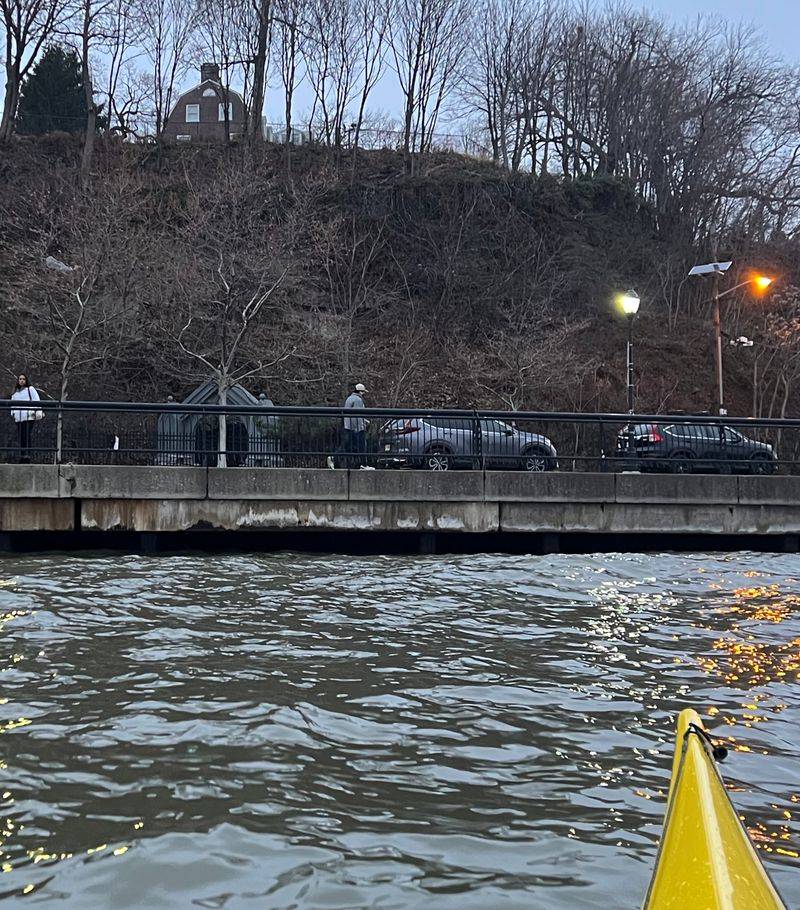
Sybil’s Cave sits within a larger waterfront park system that stretches along Frank Sinatra Drive, offering locals and visitors a gorgeous spot for walking, jogging, and taking in million-dollar views of Manhattan. The park provides the perfect context for the historic cave, allowing you to combine your dose of 19th-century mystery with fresh air and exercise.
During pleasant weather, you’ll find the pathways filled with people pushing strollers, walking dogs, and pausing at benches to watch boats glide past on the Hudson.
The surrounding green space features trees, flowering vines, and landscaping that create a pleasant buffer between the busy street and the waterfront attractions. Several reviewers mention the “lush greenery” and wild vines that add natural beauty to the historic site, though others note that maintenance can be inconsistent.
On a good day, the park feels like an urban oasis where you can escape the hustle of nearby streets. On a less-maintained day, you might encounter overgrown grass and the occasional piece of litter that detracts from the experience.
What makes this park special is how it blends recreation with history, giving you multiple reasons to visit beyond just checking out an old cave entrance. You can make an afternoon of it by walking the entire waterfront, stopping at Sybil’s Cave for photos and history, then continuing your stroll with the New York City skyline as your backdrop.
The breezes off the Hudson provide natural air conditioning during hot summer days, making this a popular spot for Hoboken residents seeking relief from the heat.
The Gate That Keeps You Out
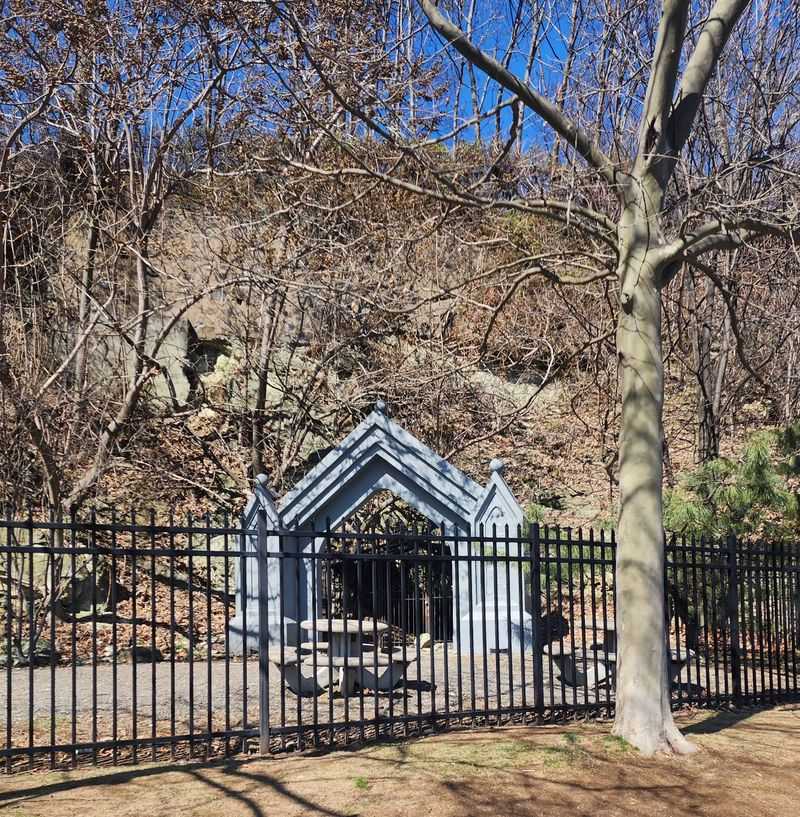
Here’s the disappointing reality that many visitors discover upon arrival: you can’t actually go inside Sybil’s Cave anymore. A metal gate blocks the entrance, keeping curious explorers from venturing into the excavated space behind that beautiful Gothic arch.
Multiple reviewers express frustration about this, with one noting they “walked all the way from Newport to this place hoping for an adventure” only to find it locked up tight. The gate situation has become one of the most consistent complaints in recent visitor feedback.
The reasons for keeping the cave gated are probably practical, ranging from safety concerns to preventing vandalism and unauthorized camping. Several reviews mention evidence of homeless individuals using the space when accessible, along with trash and debris accumulating inside.
One visitor described finding “all his trash and an unidentified piece of soiled clothing” left by someone who’d slept there the night before. Given these realities, city officials apparently decided that keeping the gate closed was the lesser of two evils.
Some reviewers report that the gate has occasionally been open, allowing them to walk through and peek inside, but this seems inconsistent and shouldn’t be counted on. Your best bet is to appreciate the site from outside the gate, where you can still photograph the Gothic archway and read the informational plaque.
Bringing a flashlight, as one reviewer suggests, might help you see a bit more through the bars, though don’t expect any grand interior revelations. The real attraction here is the history and the waterfront setting, not spelunking adventures into a damp excavated hole.
The Informational Plaque That Tells Half the Story
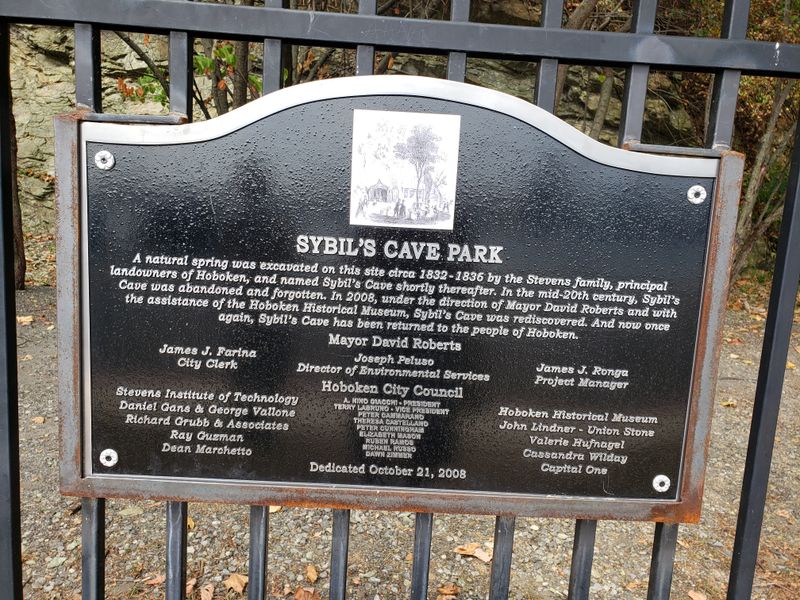
Near the cave entrance, you’ll find an informational plaque that provides basic facts about the site’s history. However, as one reviewer points out, “the plaque doesn’t tell much of the history,” leaving visitors to Google the really interesting details about the murder mystery and the spring water business.
The plaque covers the basics about excavation dates and the Stevens family’s involvement, but it skips the juicy stuff that makes Sybil’s Cave genuinely fascinating rather than just another old structure along the waterfront.
This is where doing a bit of homework before your visit really pays off. Understanding the Mary Rogers connection, the Edgar Allan Poe link, and the whole spring water phenomenon transforms your experience from “looking at a gated hole” to “standing at the site of a legendary American mystery.” The plaque serves as a starting point, confirming you’re at the right location and providing dates for context, but it’s really just the tip of the historical iceberg.
You’ll want to read up on the full story to appreciate what you’re seeing.
The Hoboken Museum website offers more comprehensive information, and you can access it before or during your visit using your smartphone. Think of the physical plaque as a teaser and your phone as the rest of the book.
This combination of on-site marker and digital research gives you the complete picture of why this seemingly modest site along Frank Sinatra Drive deserves its place in American history. The plaque might be brief, but the story it points toward is anything but shallow.
The Manhattan Skyline View That Steals the Show

Let’s be honest: for many visitors, the best part of coming to Sybil’s Cave isn’t the cave itself but rather the absolutely spectacular view of Manhattan across the Hudson River. Multiple reviewers mention this as the highlight of their visit, with phrases like “gorgeous view of Manhattan” and “great view of Midtown” appearing repeatedly in feedback.
Standing along Frank Sinatra Drive at this spot gives you an unobstructed panorama of one of the world’s most iconic skylines, completely free of charge and accessible any time the park is open.
The waterfront location means you’re getting prime real estate views without paying prime real estate prices. Photographers love this vantage point, especially during golden hour when the setting sun lights up the glass towers across the river.
The view provides context for why wealthy 19th-century New Yorkers would make the trip to Hoboken for entertainment and refreshment. Even without spring water to sell, this spot would be worth visiting purely for the scenery.
Smart visitors treat Sybil’s Cave as one stop on a longer waterfront walk that maximizes these views. The park system extends for quite a distance along the shore, offering different perspectives on the Manhattan skyline as you stroll.
Benches positioned at intervals let you sit and soak in the scene, making this an ideal spot for a peaceful break from urban intensity. Whether the cave gate is open or closed, whether the grass is trimmed or overgrown, that skyline view remains consistently stunning and reason enough to make the trip to this historic New Jersey location.
The Parking Nightmare Nobody Warns You About
Before you hop in your car and head to Sybil’s Cave, brace yourself for what multiple reviewers describe as a significant parking challenge. One visitor notes there’s “almost never any space to park your car,” which is a polite way of saying you might spend more time circling for parking than actually looking at the historic site.
Hoboken’s waterfront is wildly popular, especially on nice weather days, and the parking infrastructure hasn’t kept pace with demand. Street parking fills up fast, and nearby lots charge premium rates or have time restrictions.
Your best strategy is to use public transportation if possible. New Jersey Transit and PATH trains serve Hoboken, and from the station, it’s a reasonable walk to the waterfront where Sybil’s Cave is located.
This approach eliminates parking stress entirely and lets you enjoy the walk through Hoboken’s charming streets. If you must drive, consider arriving early in the morning when park hours begin at 7 AM, before the waterfront crowds descend.
Weekday visits typically offer better parking prospects than weekends.
Another option is to park in a lot or garage farther from the waterfront and treat the walk as part of your adventure. Hoboken is a compact, walkable city with plenty of cafes and shops to explore en route to your destination.
The parking situation might seem frustrating, but it’s really just a reflection of how desirable this area has become. Everyone wants to enjoy these waterfront views and historic sites, so you’ll need patience and flexibility with your parking expectations when visiting this corner of New Jersey.
The Best Time to Visit This Historic Oddity
Timing your visit to Sybil’s Cave can make the difference between a pleasant historical outing and a frustrating encounter with crowds, locked gates, and parking chaos. The park officially opens at 7 AM daily, and early morning visits offer the best chance of finding parking and enjoying the site without hordes of joggers and dog walkers.
Early light also provides excellent conditions for photography, especially if you want to capture that Gothic archway without random strangers photobombing your shots.
Weekday visits generally provide a calmer experience than weekends, when locals flood the waterfront for recreation. If you’re specifically interested in the history and want time to read the plaque and contemplate the murder mystery in peace, Tuesday through Thursday mornings are your sweet spot.
The park stays open until 9 PM, so sunset visits are also possible and offer dramatically different lighting that makes the Manhattan skyline glow. Just be aware that you’ll be competing with couples on romantic evening strolls and sunset photographers claiming prime spots.
Weather matters more than you might think for a site like this. Visit during pleasant spring or fall days when temperatures are comfortable and you can truly enjoy the waterfront setting.
Summer can be sweltering, though the river breezes help, while winter visits require bundling up against cold winds whipping off the Hudson. Avoid visiting immediately after heavy rain, when the already damp cave area becomes even muddier and less appealing.
Check the Hoboken Museum website or call the park information line at 201-656-2240 if you want to confirm current conditions before making the trip to this quirky slice of New Jersey history.
Dear Reader: This page may contain affiliate links which may earn a commission if you click through and make a purchase. Our independent journalism is not influenced by any advertiser or commercial initiative unless it is clearly marked as sponsored content. As travel products change, please be sure to reconfirm all details and stay up to date with current events to ensure a safe and successful trip.
