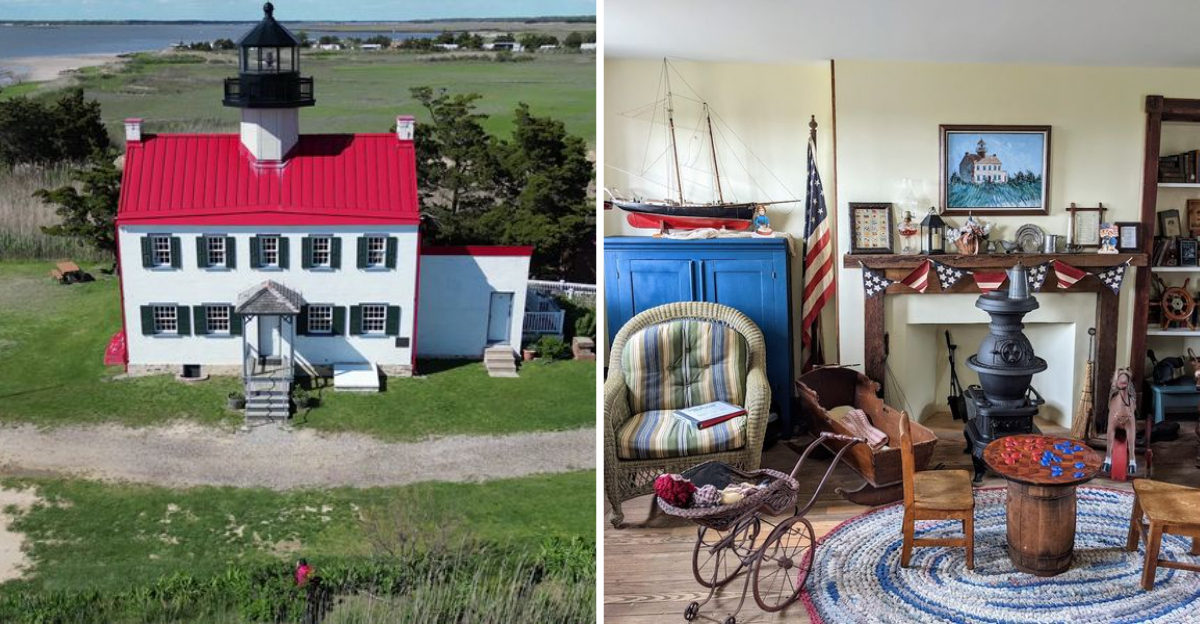
Ever stood at the edge of New Jersey and thought, “Wow, this view could swallow me whole”? The ocean stretches out like it’s showing off, and the horizon feels endless.
Imagine climbing up a lighthouse and suddenly seeing the world in widescreen… wouldn’t you feel like the star of your own adventure?
The salty breeze hits, the waves crash, and you start wondering how many sailors once relied on this beacon.
It’s not just a tower; it’s a storyteller, holding centuries of maritime secrets.
And honestly, doesn’t that make you want to visit just to see what tales the sea might whisper to you?
A Lighthouse Built to Last: The 1849 Construction Story
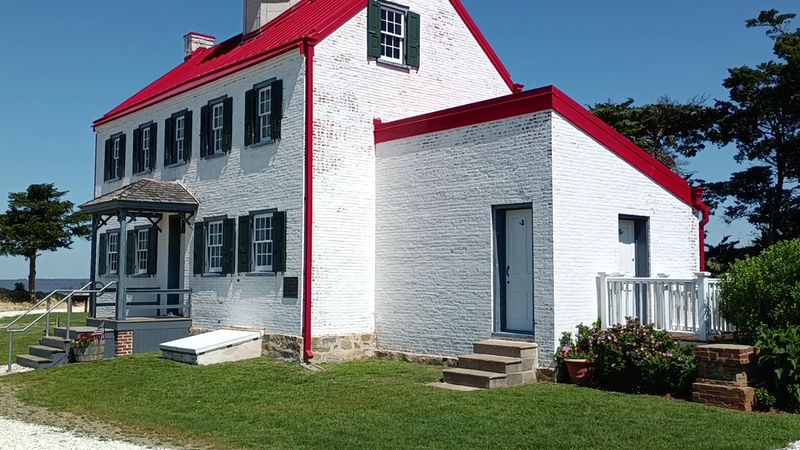
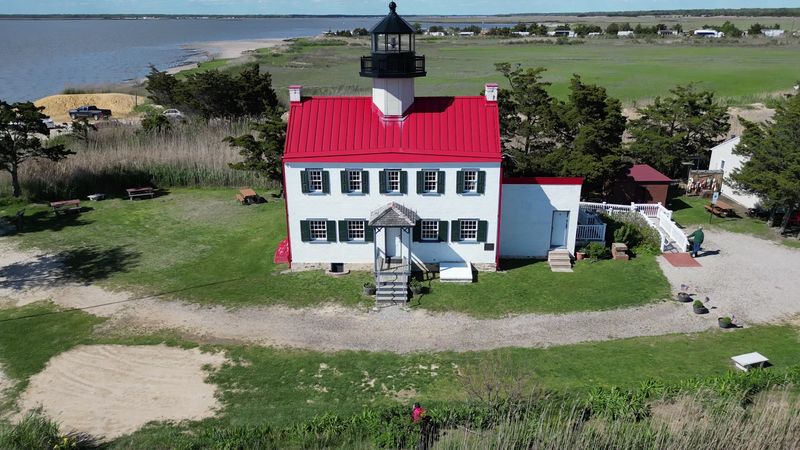
Standing in front of East Point Lighthouse feels like flipping back to a chapter of American history that most textbooks skip. Constructed in 1849, the lighthouse was designed in a Cape Cod style, which means the keeper’s dwelling and the tower were built as one unified structure.
That was actually pretty unusual for lighthouses of that era.
The two-story brick building with its red roof and lantern room sits at the mouth of the Maurice River, right where it meets the Delaware Bay. The location was chosen deliberately, because ships needed a reliable guide through those tricky, shallow waters.
It became the oldest lighthouse in the Delaware River and Bay area.
What makes the construction even more impressive is how well it has held up over time. Brick by brick, this building weathered storms, fires, and decades of coastal erosion.
The original design still stands today, largely intact, which is a testament to 19th-century craftsmanship. Visiting here gives you a real sense of how seriously early Americans took their infrastructure, especially when sailors’ lives depended on it.
The Only Working Lighthouse on Delaware Bay
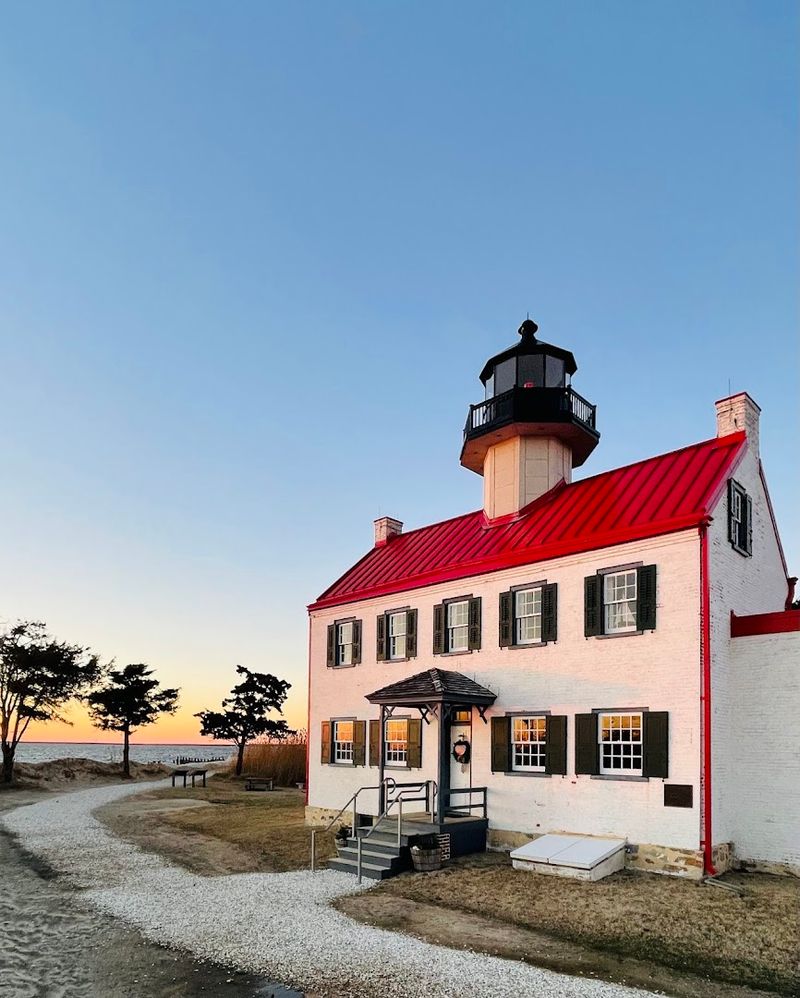
Most lighthouses you visit today are retired, turned into museums or bed-and-breakfasts with very photogenic staircases. East Point Lighthouse is different.
It is the only operational lighthouse on the Delaware Bay, which means that light in the lantern room is not just decorative.
The Coast Guard recommissioned the lighthouse on July 2, 1980, after it had been sitting dark since 1941. Getting that light back on was a big deal for the local maritime community.
Commercial fishermen and recreational boaters still rely on it as a navigational reference point along this stretch of coast.
There is something quietly powerful about standing near a lighthouse that is still doing its job after 175 years. The bay stretches wide and flat in front of you, and when the light catches the water at just the right angle, you understand immediately why this beacon matters.
It is not a relic. It is a working piece of coastal infrastructure wrapped in gorgeous historic architecture.
For anyone who loves lighthouses, knowing this one is still active makes the visit feel genuinely meaningful rather than just a scenic detour.
Panoramic Views That Stop You Mid-Sentence
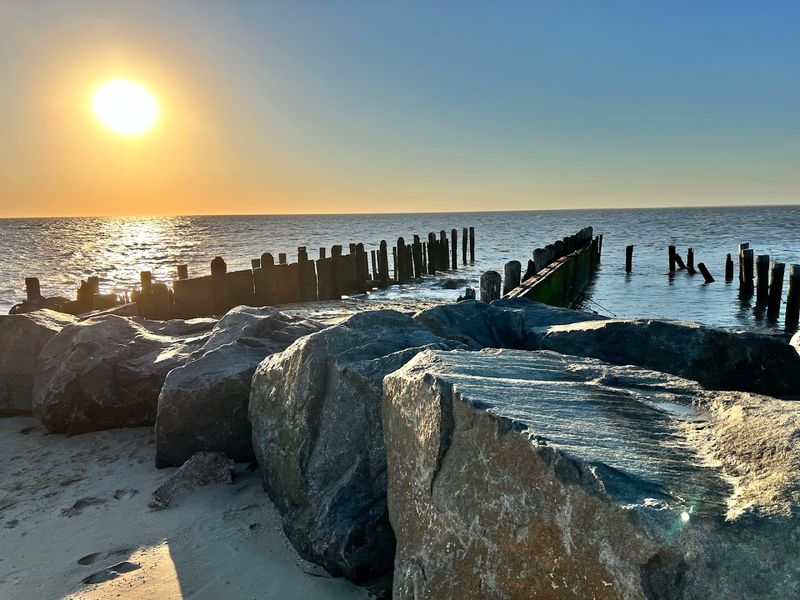
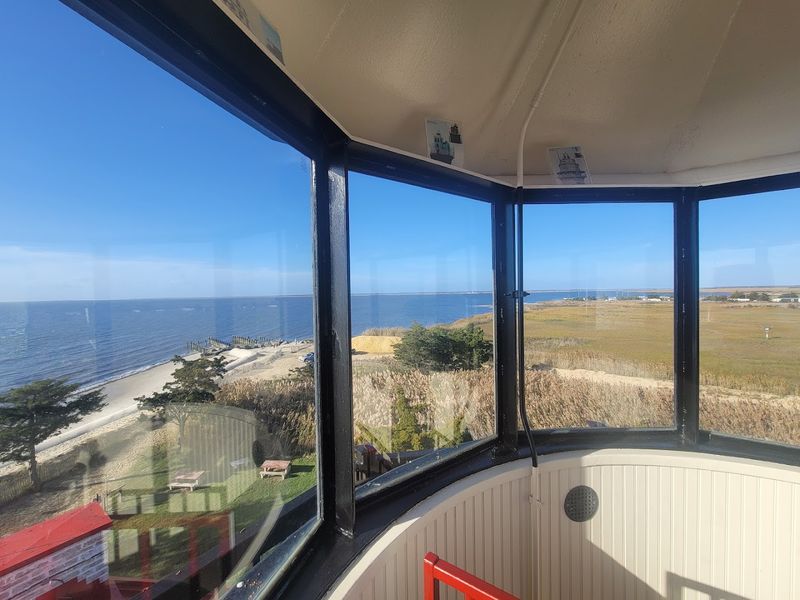
The views from East Point Lighthouse are the kind that make you forget whatever you were about to say. The Delaware Bay opens up in front of you with almost no interruption, just water, sky, and the occasional fishing boat cutting a slow line across the horizon.
On a clear day, the visibility stretches so far it almost feels unreal.
The surrounding marshlands add another layer to the scenery. Miles of tall grass ripple in the bay breeze, and the whole landscape has this quiet, untouched quality that is increasingly rare along the East Coast.
Shorebirds drift overhead, and the air smells like salt and wet earth in the best possible way.
Getting up into the lantern room, when the lighthouse is open, gives you an elevated perspective that makes everything even more dramatic. The Maurice River curves behind you, the bay spreads out ahead, and the marsh fills in every direction in between.
It is the kind of view that photographers plan entire road trips around. Even on an overcast day, the light over the bay has a moody, cinematic quality that is honestly hard to look away from.
The 1971 Fire and the Community That Rebuilt It
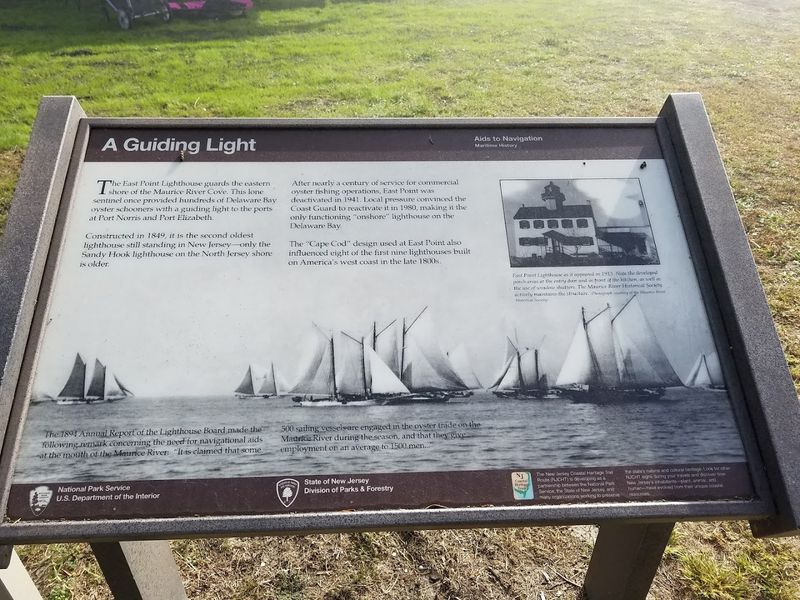
Not every historic building gets a second chance, but East Point Lighthouse did, thanks to a community that refused to let it disappear. In 1971, a fire tore through the structure, destroying the roof and the lantern room.
It was a devastating blow to what was already a beloved landmark.
The Maurice River Historical Society stepped in and took on the enormous task of rebuilding. By the mid-1970s, they had restored the roof and reconstructed the lantern room, essentially giving the lighthouse a new life.
That kind of grassroots preservation effort is rare and worth celebrating.
Knowing this history changes how you experience the building when you visit. Every restored beam and every carefully replaced brick represents real community effort.
People raised money, showed up, and worked hard because they believed this lighthouse was worth saving. That kind of dedication is woven into the walls of the place now, and you can feel it.
The story of the fire and the rebuilding is one of the most compelling chapters in the lighthouse’s long history, and it makes the current structure feel even more precious than it would otherwise.
Fresh Seafood and the Flavors of Maurice River Country
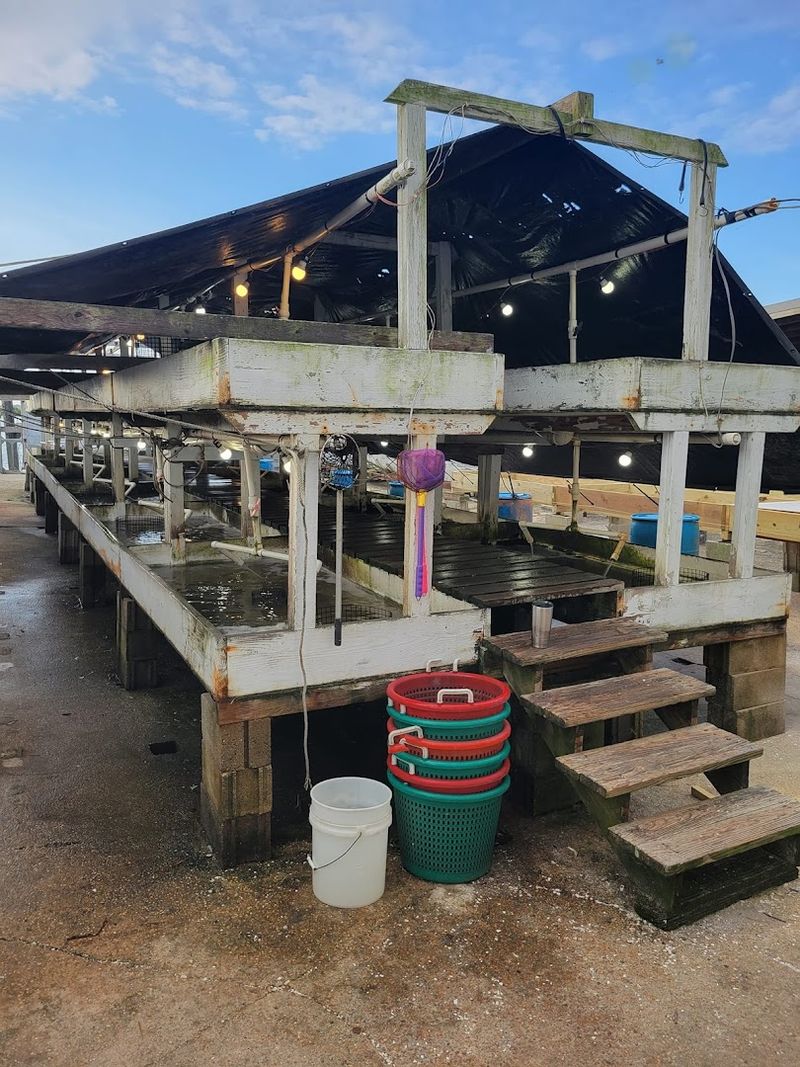
The area around Heislerville and the Maurice River is serious seafood territory, and visiting East Point Lighthouse without exploring the local food scene would be a missed opportunity. The Delaware Bay and its tributaries have supported fishing communities here for centuries, and that heritage shows up directly on local menus.
Blue crabs are the regional specialty, and you will find them steamed, picked, and served in everything from sandwiches to soups at nearby spots along the South Jersey shore. Clams and oysters pulled from the bay are another highlight, often served simply so the briny freshness can do all the talking.
The oysters from this stretch of coast have a reputation that reaches well beyond New Jersey.
Eating seafood this close to where it was caught just tastes different. There is a directness to it, a freshness that no amount of overnight shipping can replicate.
Grabbing a crab cake or a bowl of clam chowder after a long walk around the lighthouse grounds feels like the natural conclusion to the whole experience. The food here is not fancy.
It is honest, local, and deeply connected to the landscape you just spent an afternoon exploring.
Coastal Erosion and the Fight to Save the Shoreline
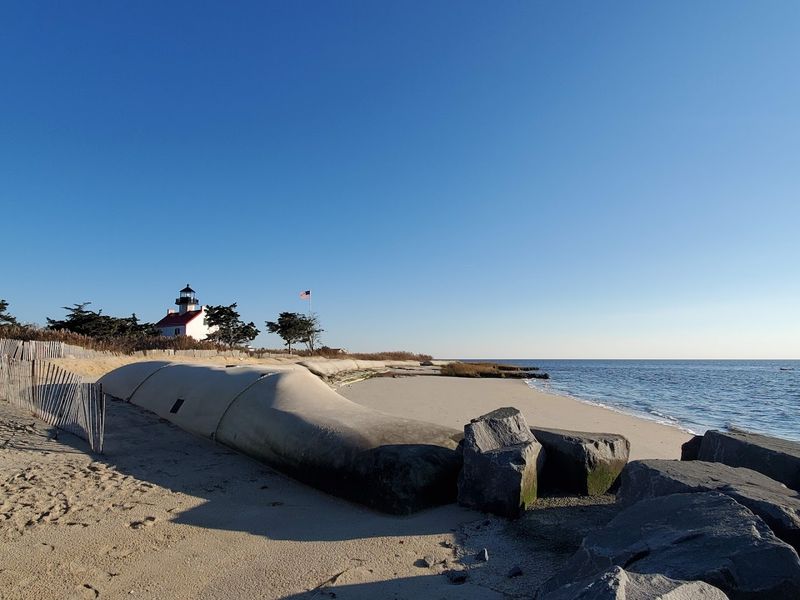
One of the most sobering parts of visiting East Point Lighthouse is learning how close the bay has crept to the building itself. The shoreline now sits roughly 120 feet from the lighthouse, a distance that sounds comfortable until you realize how quickly coastal erosion can close that gap.
The lighthouse is genuinely vulnerable.
In 2019, crews installed geotextile tubes along the shoreline in an effort to slow the erosion and stabilize the bank. It was a practical, engineering-focused solution to a problem that is becoming increasingly common along low-lying coastal areas.
The tubes act as a kind of reinforced barrier between the water and the land.
Seeing the erosion up close gives the lighthouse visit a layer of urgency that most historic sites do not carry. This is not just about preserving a pretty building.
It is about holding onto a piece of living coastal history before the bay swallows it. The preservation challenges here are real, ongoing, and tied directly to larger conversations about climate and coastline management.
Visiting now, while the lighthouse is still standing strong, feels like a small act of appreciation for everyone working to keep it that way.
The 2017 Interior Restoration: A Museum Comes to Life
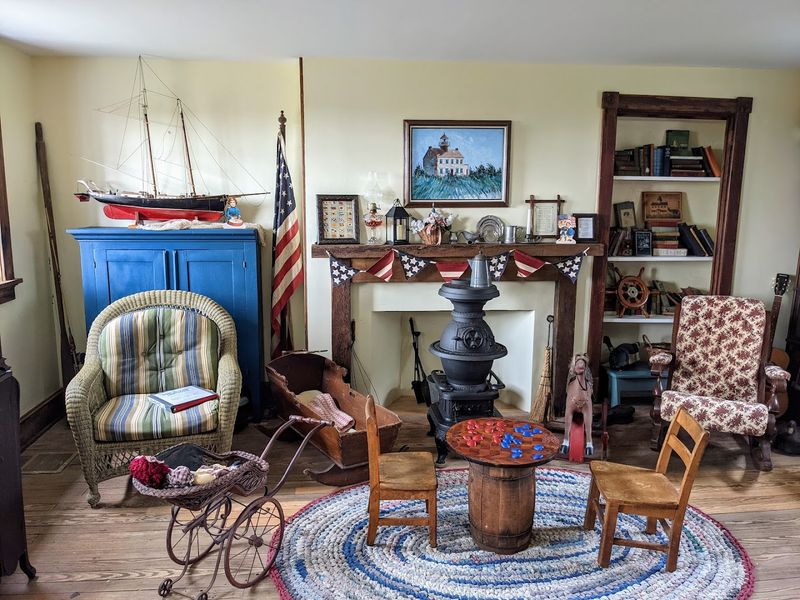
Walking inside East Point Lighthouse after the 2017 interior restoration is a completely different experience from what visitors would have encountered just a decade earlier. The restoration included structural repairs, new roofing, and even HVAC installation, which transformed the lighthouse from a seasonal curiosity into a genuine year-round museum.
The exhibits inside tell the story of the lighthouse, the Maurice River, and the maritime communities that depended on both for their livelihoods. Artifacts, photographs, and interpretive displays give context to what you are seeing when you stand in those rooms.
The keeper’s dwelling, once a functional home, now offers a window into what daily life looked like for the people who maintained the light.
The quality of the restoration is evident in the details. The work was done carefully, with respect for the original architecture and materials.
Winning a historic preservation award in 2017 was well-deserved recognition for a project that required both technical skill and genuine commitment to historical accuracy. The lighthouse now functions as both an educational resource and a community gathering point, which is exactly what a building this significant deserves to be.
Birdwatching and Wildlife Along the Maurice River Marshes
The marshlands surrounding East Point Lighthouse are not just scenic backdrop. They are a functioning ecosystem that draws serious birdwatchers from across the Mid-Atlantic region.
The Maurice River corridor is actually recognized as a National Wild and Scenic River, which tells you something about the quality of the natural environment here.
During spring and fall migration, the area around the lighthouse becomes a staging ground for thousands of shorebirds. Dunlins, sandpipers, and red knots gather along the bay shore in numbers that can be genuinely breathtaking.
The horseshoe crab spawning season in late May brings an especially dramatic wildlife spectacle, when crabs emerge by the thousands and shorebirds descend to feed.
Even outside of peak migration periods, the marshes are alive with herons, egrets, ospreys, and a rotating cast of waterfowl. Bringing binoculars is strongly recommended, and a field guide to shorebirds will make the experience significantly richer.
The combination of the lighthouse, the bay views, and the wildlife makes this one of the more rewarding nature destinations in South Jersey, even if it takes a little effort to find your way here.
Getting There and Making the Most of Your Visit
Finding East Point Lighthouse requires a little commitment, which honestly makes arriving there feel even more rewarding. The lighthouse sits at the end of Lighthouse Road in Heislerville, a small community tucked into the rural southwestern corner of New Jersey.
The drive itself is part of the experience, cutting through flat farmland and marsh before the bay suddenly opens up ahead of you.
Plan to spend at least a couple of hours. The grounds around the lighthouse are worth exploring slowly, and if the museum is open, the exhibits inside add real depth to what you are seeing.
Wear comfortable shoes because the terrain near the shoreline can be uneven, and bring layers since the bay wind has opinions regardless of what the weather app says.
Pack a picnic if you can. There are not many food options immediately near the lighthouse, but eating lunch with that bay view in front of you is an experience worth planning around.
Local bakeries and seafood markets in nearby Millville or Bridgeton are worth a stop on the way. The whole outing, from the drive to the views to the food, adds up to one of those genuinely memorable South Jersey days.
Address: 10 Lighthouse Rd, Heislerville, NJ
Dear Reader: This page may contain affiliate links which may earn a commission if you click through and make a purchase. Our independent journalism is not influenced by any advertiser or commercial initiative unless it is clearly marked as sponsored content. As travel products change, please be sure to reconfirm all details and stay up to date with current events to ensure a safe and successful trip.
