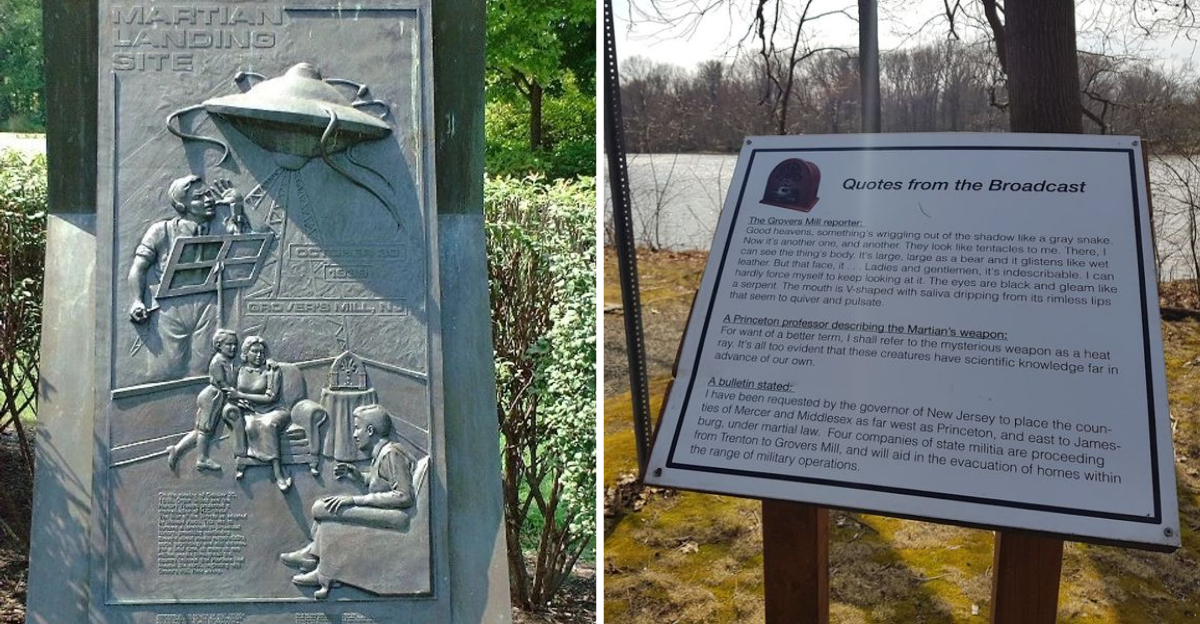
A quiet pond in suburban New Jersey is the last place you would expect to find proof of a Martian invasion, but the plaque on the rock says otherwise.
Back in 1938, Orson Welles broadcast a radio drama that sent thousands of terrified listeners into the streets, convinced that aliens had actually landed.
The show claimed a “huge flaming object” crashed on a local farm, and New Jersey has never lived down the joke since.
Today, a small memorial marks the spot where fictional Martians supposedly emerged from a cylinder with heat rays blazing.
Go take a photo with the flying saucer sculpture and try not to flinch when a plane flies overhead.
The Broadcast That Broke America’s Brain
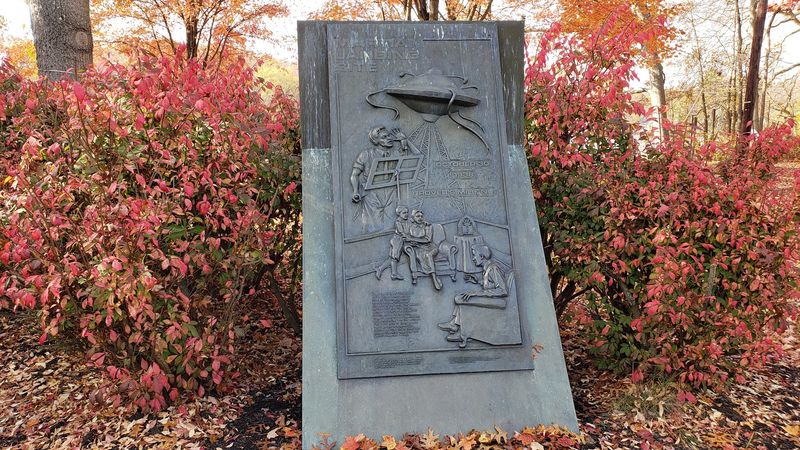
On October 30, 1938, Orson Welles and his Mercury Theatre on the Air aired a radio adaptation of H.G. Wells’ science fiction novel that turned the country upside down.
The broadcast was framed as a series of breaking news bulletins interrupting a regular music program. That format felt terrifyingly real to listeners who tuned in mid-show.
People genuinely believed Martians had landed in New Jersey. Some packed their cars and fled.
Others called police stations, hospitals, and newspaper offices in full panic mode. The power of that single broadcast is hard to wrap your head around today, but standing in the park where it all supposedly happened makes it feel surprisingly vivid.
This moment changed how media, government, and the public think about the relationship between storytelling and responsibility. It sparked serious conversations about broadcast ethics that still echo today.
Visiting this site is a reminder that words, delivered convincingly, carry enormous weight.
Grovers Mill Pond: Surprisingly Peaceful for a “Martian Invasion Zone”
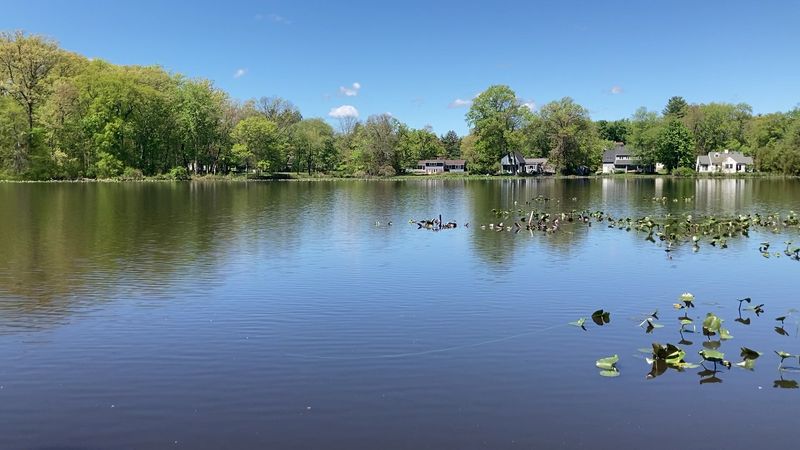
Grovers Mill Pond sits at the heart of Van Nest Park with a quiet confidence that feels completely unbothered by its wild reputation. The water is still, the trees lean in close, and on a warm afternoon, the whole scene looks more like a watercolor painting than a historic panic site.
It is genuinely gorgeous in a low-key, tucked-away way.
Families bring fishing rods, kids chase each other near the playground, and dogs trot along the path like they own the place. The pond itself offers a lovely backdrop for a slow walk, especially when the light hits the water just right in the late afternoon.
You almost forget you are standing at the fictional epicenter of an alien apocalypse.
The contrast between the peaceful setting and the dramatic history is part of what makes this place so unexpectedly charming. Bring snacks, find a bench near the water, and let the calm wash over you.
It earns every bit of its appeal.
The Bronze Monument That Steals Every Photo
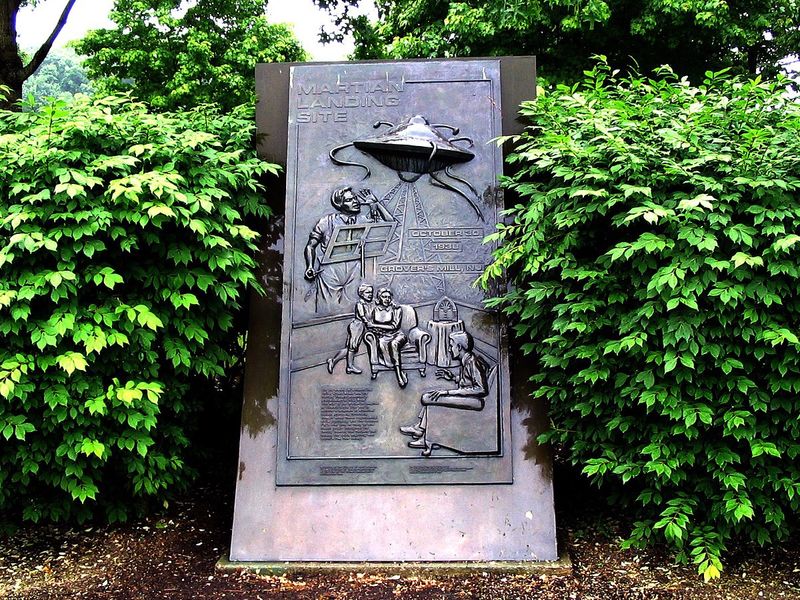
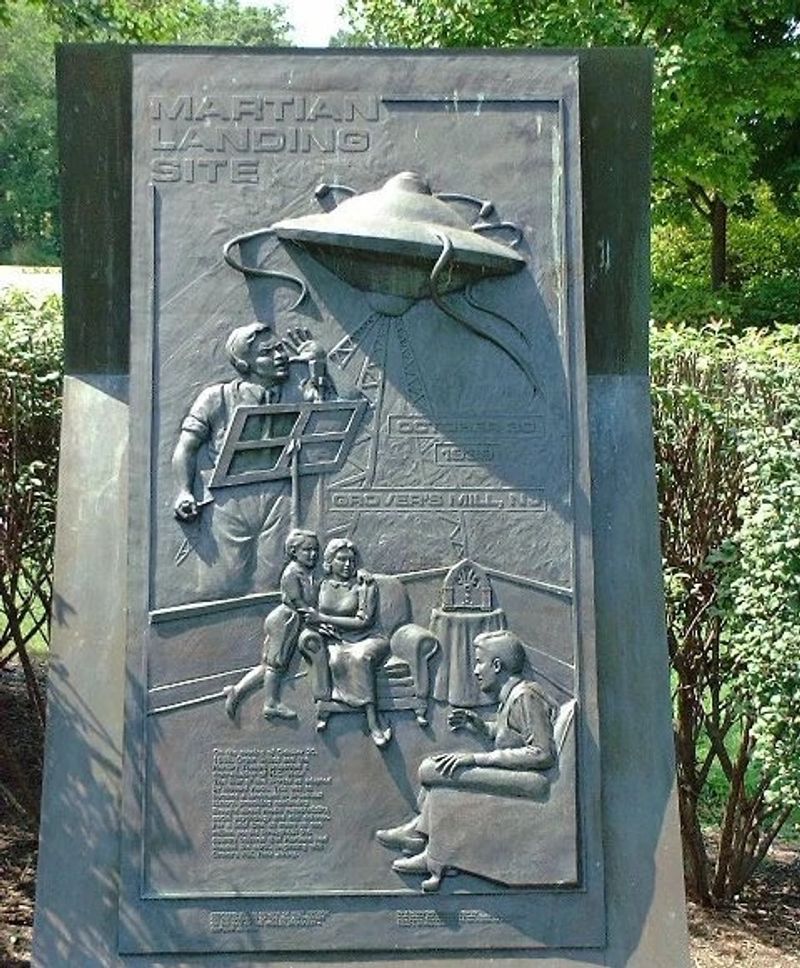
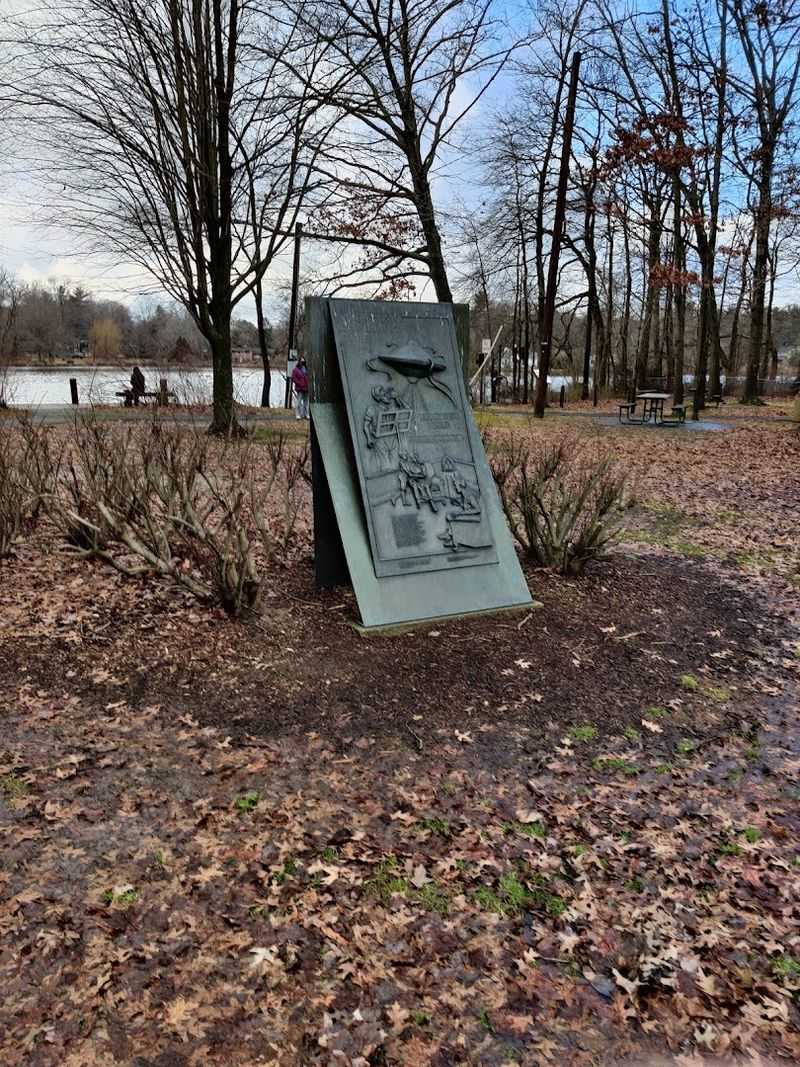
Standing about 7.5 feet tall and packed with storytelling detail, the Martian Landing Site Monument is the kind of public art that actually stops you mid-step.
Unveiled in 1988 to mark the 50th anniversary of the broadcast, it captures Orson Welles mid-performance at a microphone, a terrified family huddled around their radio, and a looming Martian war machine modeled after the local water tower.
The craftsmanship is genuinely impressive. Every expression on every face tells a story, and you can almost hear the crackling static of a 1938 radio broadcast just by looking at it.
It sits near the back of the park, close to the pond, which gives it a dramatic, slightly cinematic setting.
Getting a photo here is basically mandatory. The monument photographs well from every angle, and the surrounding trees frame it beautifully depending on the season.
Plan to spend a few extra minutes here because it rewards a slow, curious look rather than a quick glance.
The Eagle Scout Trail That Tells the Whole Story
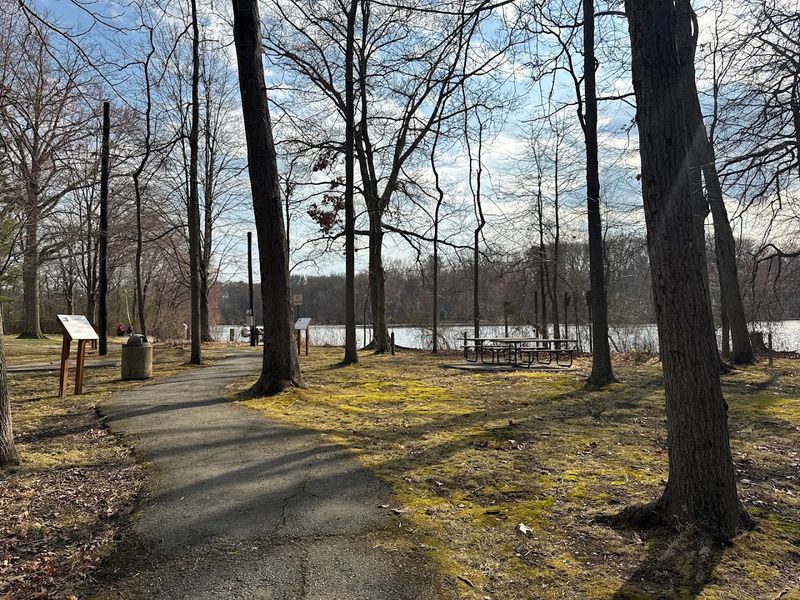
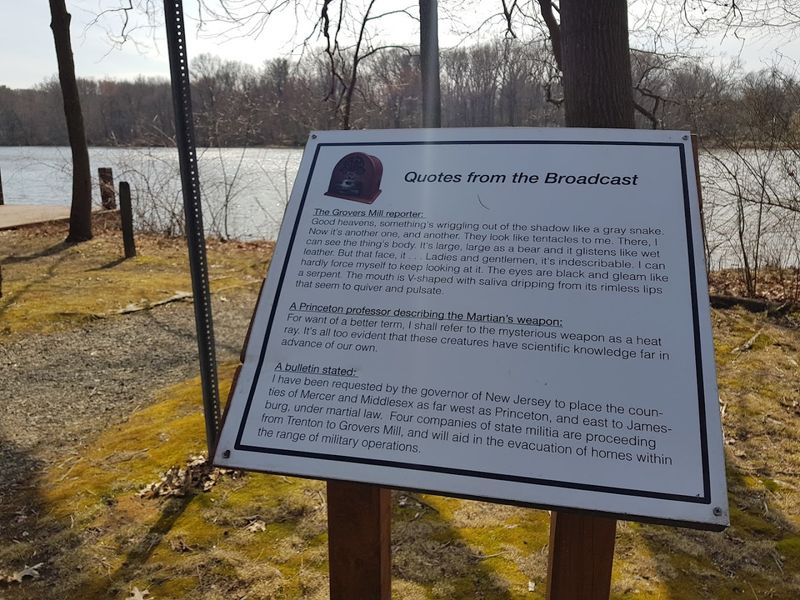
One of the most thoughtful additions to Van Nest Park came from an Eagle Scout project that placed a series of informational signs along a walking path through the park. Each sign breaks down a piece of the War of the Worlds story, from the original H.G.
Wells novel to the 1938 broadcast and its cultural aftermath. It is genuinely well done.
The path makes the visit feel like a guided experience without being stuffy or overwhelming. You move at your own pace, stop when something catches your eye, and piece together the full picture of what happened here.
For history fans, it is an unexpectedly satisfying way to absorb the story.
Kids especially seem to respond well to the format because it breaks information into digestible chunks spread across a pleasant walk rather than dumping it all at once. Even if you already know the broad strokes of the broadcast, the signs offer details and context that add real depth to the visit.
It is a small touch that makes a big difference.
Van Nest Park: Way More Than Just a History Stop
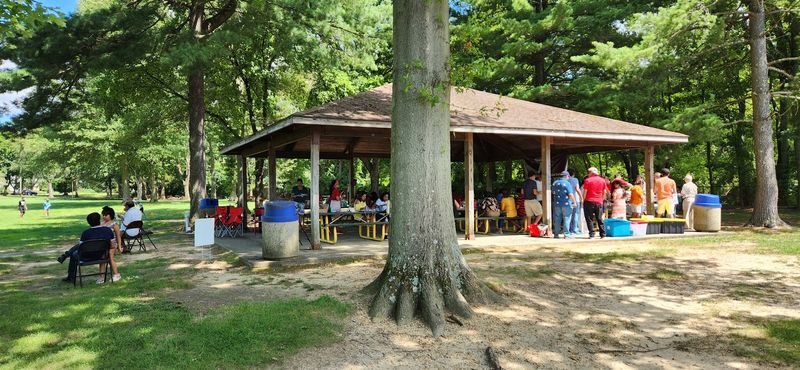
Van Nest Park pulls double duty as both a living piece of American media history and a genuinely enjoyable neighborhood park.
There is a playground that keeps younger visitors busy, a gazebo perfect for shade on warm days, and enough open lawn space to toss a frisbee or set up a picnic without bumping elbows with anyone.
Public restrooms are available on site, which is always a welcome detail on a longer visit. The combination of practical amenities and historical significance makes it an easy stop whether you are a dedicated history enthusiast or just someone looking for a pleasant outdoor afternoon.
It handles both crowds gracefully.
Picnic tables scattered near the water make it easy to pack lunch and turn the whole visit into a relaxed half-day outing. The park has a welcoming, lived-in feel that suggests locals genuinely love spending time here.
That kind of community warmth is hard to fake, and Van Nest Park has it in abundance.
Fishing at the Pond: A Surprisingly Chill Way to Time Travel
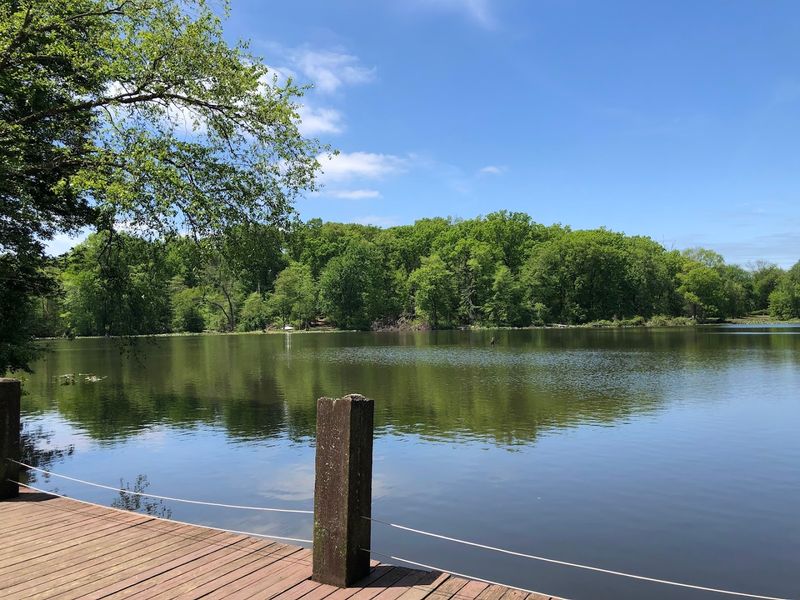
Fishing at Grovers Mill Pond is one of those simple pleasures that sneaks up on you. You show up expecting a quick look at a monument, and next thing you know you are eyeing the water and wishing you had packed a rod.
The pond is calm, accessible, and has a small pier that makes casting easy for anglers of any skill level.
The setting is quiet enough that even non-fishers enjoy hanging around the water’s edge just to decompress.
There is something about the combination of still water, open sky, and the faint awareness that you are sitting at a fictional alien landing site that makes the whole experience feel oddly cinematic. In the best possible way.
Families who visit often mention that the fishing element turns what could be a quick monument stop into a full afternoon adventure. Bring your gear, find a good spot near the water, and let the hours do whatever they want.
The pond seems perfectly content to host you for as long as you stay.
The Water Tower That Inspired a Martian War Machine
Here is a detail that turns a regular park visit into something a little more surreal: the Martian war machine depicted on the bronze monument was deliberately modeled after the local water tower, which is visible from the parking lot.
Orson Welles reportedly chose Grovers Mill partly because of how that tower could be described in the broadcast to sound appropriately alien and threatening.
Standing in the parking lot and looking up at it now, you can absolutely see the connection. It has that looming, long-legged silhouette that reads as vaguely mechanical and strange when you are primed to think about it.
Context changes everything.
That detail alone transforms the water tower from background infrastructure into a supporting character in one of the most famous media events of the 20th century.
It is the kind of quirky, specific local knowledge that makes a place feel layered and worth exploring slowly.
Do not skip the parking lot view before heading into the park.
What the 1938 Panic Actually Tells Us About Media Trust
The War of the Worlds panic is often treated as a punchline, a story about gullible people who could not tell fiction from reality. But spending time at this site invites a more generous and more interesting reading of what actually happened.
People were not foolish. They were living in a world already crackling with real anxiety.
In 1938, global tensions were at a peak, and radio was the most immediate and authoritative news source available. When a broadcast sounded exactly like breaking news, the instinct to believe it was not stupidity.
It was a reasonable response to a deceptive format. That distinction matters.
The monument and the interpretive signs here gently push visitors toward that more nuanced understanding. Media literacy, the ability to question sources and formats, is as relevant now as it was in 1938.
Walking through this park, you leave with more than just a cool photo. You leave thinking differently about how information shapes belief.
Why This Quirky Little Park Deserves a Spot on Your List
Some places earn their reputation through scale or spectacle. This one earns it through sheer specificity.
There is nowhere else on Earth where you can stand at the fictional landing site of a Martian invasion, read signs written by Eagle Scouts, watch someone fish from a pier, and feel genuinely moved by a piece of bronze art all within about twenty minutes.
The combination of history, humor, and genuine natural beauty makes Van Nest Park the kind of stop that sticks with you long after you have driven away. It does not try too hard.
It just exists, quietly confident in how strange and wonderful its story actually is.
Whether you are a science fiction fan, a history buff, or just someone who appreciates a good weird detour, this park delivers something memorable. Pack a lunch, bring the kids or the dog, and give yourself more time than you think you need.
You will probably want it.
Address: 218 Cranbury Rd, West Windsor Township, NJ
