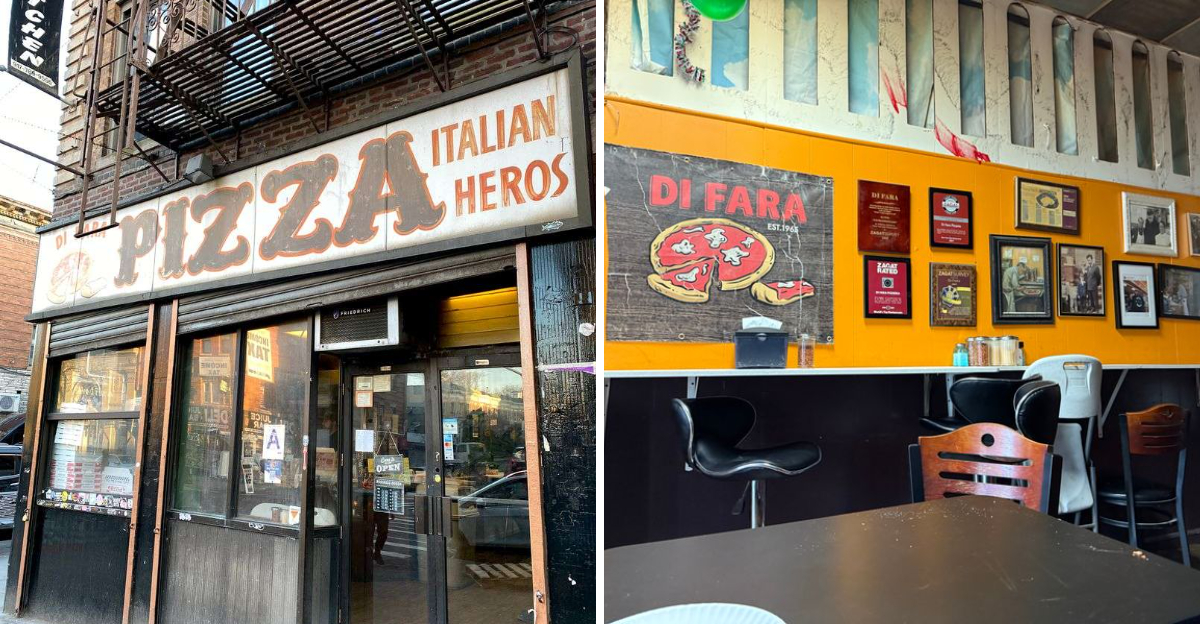
Tucked away in the Midwood neighborhood of Brooklyn, Di Fara Pizza has been drawing travelers and pizza lovers from around the world since 1964.
This small, unassuming storefront on Avenue J doesn’t look like much from the outside, but step inside and you’ll understand why people wait in long lines for a taste of what many consider the best pizza in New York City.
What makes Di Fara special isn’t just the pizza itself, but the story behind it and the dedication to craft that has remained unchanged for decades.
Whether you’re a serious food traveler or simply someone who appreciates exceptional pizza, this legendary pizzeria offers an experience that will change how you think about every slice you’ve ever eaten.
A Family Legacy Built Slice by Slice
Domenico DeMarco arrived in Brooklyn from the Italian province of Caserta in 1959 with dreams and skills passed down through generations.
Five years later, he opened Di Fara Pizza, naming it after his hometown, and began a journey that would transform this neighborhood pizzeria into a pilgrimage site for food enthusiasts.
For over five decades, Dom personally crafted nearly every pizza that left his kitchen, treating each one as if it were destined for his own family table.
His children now help run the operation, maintaining the same exacting standards their father established.
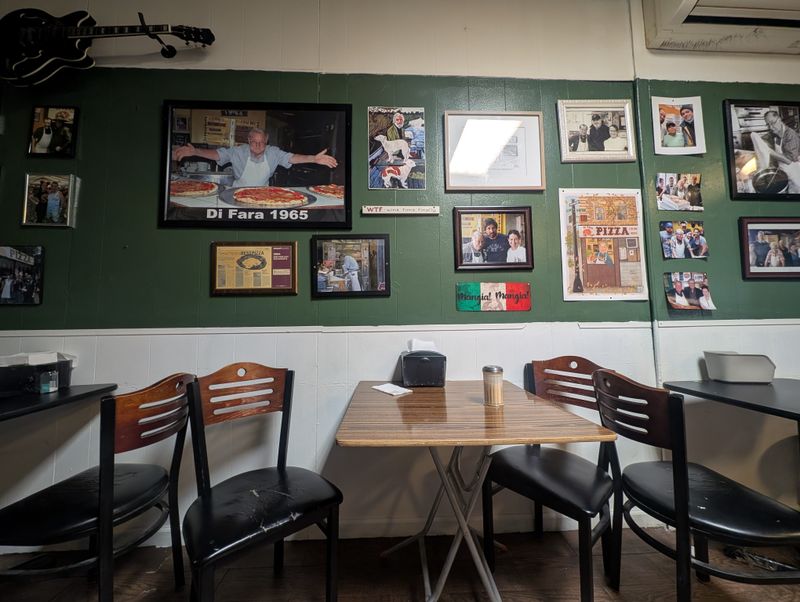
Walking into Di Fara means stepping into a place where tradition isn’t just respected but lived daily.
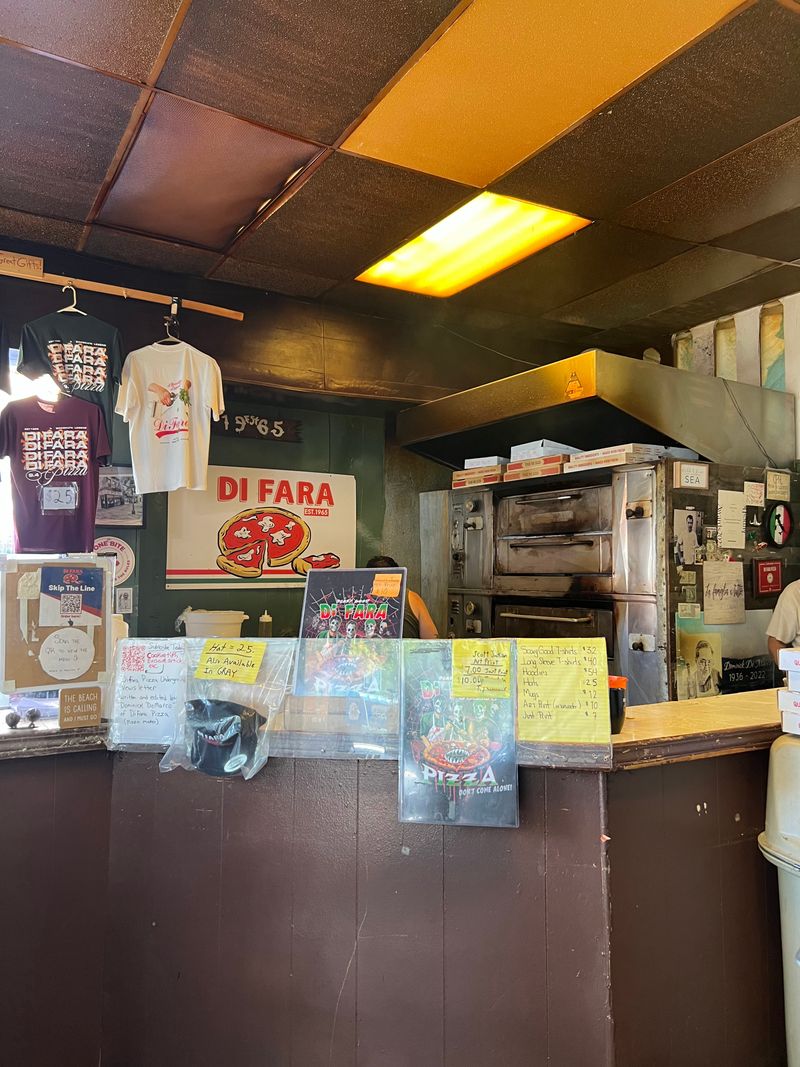
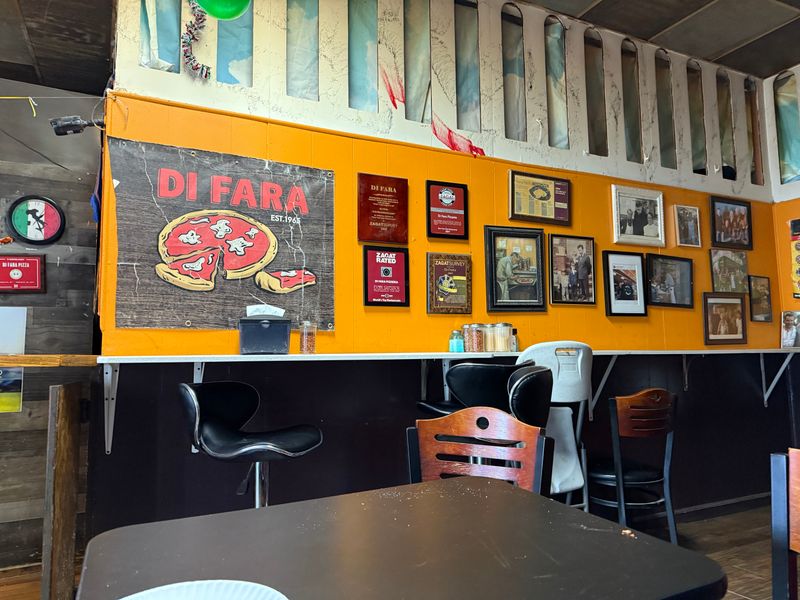
The walls display decades of newspaper clippings, photos, and awards that tell the story of how a small Brooklyn pizzeria became internationally famous.
Yet despite all the recognition, the DeMarco family has never compromised on quality or rushed the process to serve more customers.
Every pizza still receives the same careful attention, from the hand-stretched dough to the final drizzle of olive oil.
This commitment to craft over convenience explains why people travel from across continents to taste what dedication truly means.
The family’s approach reminds visitors that great food isn’t about speed or efficiency but about respecting ingredients and honoring tradition.
When you bite into a Di Fara slice, you’re tasting more than pizza.
You’re experiencing a family’s unwavering dedication to perfection that has spanned generations and continues to inspire pizza makers worldwide.
The Ingredients That Make All the Difference
Quality begins long before the oven heats up at Di Fara.
Dom DeMarco built his reputation by sourcing the finest ingredients, many imported directly from Italy to ensure authentic flavor in every bite.
The tomatoes come from the volcanic soil near Mount Vesuvius, where San Marzano tomatoes develop their distinctive sweet taste and low acidity.
These aren’t just any canned tomatoes but a specific variety protected by designation of origin laws in Italy.
The mozzarella combines both fresh and aged varieties, creating a texture and flavor profile that mass-produced cheese simply cannot replicate.
Fresh basil gets snipped with scissors directly onto each finished pizza, releasing aromatic oils that fill the small shop with an irresistible fragrance.
Perhaps most notably, Dom finishes each pie with a generous drizzle of extra virgin olive oil from his family’s preferred suppliers.
This final touch adds richness and ties all the flavors together in a way that makes each bite memorable.
The flour used for the dough receives equal scrutiny, chosen for its protein content and ability to create the perfect crust texture.
Many pizzerias cut corners with cheaper ingredients to maximize profits, but Di Fara has always taken the opposite approach.
The higher cost of premium ingredients gets reflected not in compromised quality but in a pizza that tastes distinctly superior.
Travelers who appreciate the farm-to-table movement or artisanal food production will recognize this philosophy immediately.
Every ingredient serves a purpose and contributes to the overall harmony of flavors that has made Di Fara legendary among pizza connoisseurs worldwide.
The Art of the Perfect Crust
A great pizza lives or dies by its crust, and Di Fara has mastered this fundamental element through decades of refinement.
The dough gets mixed fresh daily using a recipe that balances hydration, fermentation time, and handling technique to achieve ideal texture.
Unlike many modern pizzerias that rely on machines, Di Fara still hand-stretches each dough ball, allowing for subtle variations that give the crust character.
The fermentation process cannot be rushed, as the dough needs time to develop complex flavors and the proper structure for baking.
When the pizza enters the oven, the high heat creates those distinctive charred spots that add a slight bitterness to balance the sweet tomato sauce.
The bottom achieves a crispy texture while the edges puff up into airy, chewy borders that provide textural contrast.
This isn’t the cracker-thin crust of Neapolitan pizza nor the thick, bready base of Chicago deep dish.
Di Fara’s crust occupies a perfect middle ground, substantial enough to support generous toppings yet light enough to fold New York style.
The undercarriage shows leopard spotting where the intense oven heat has caramelized the dough in irregular patterns.
Each bite offers multiple sensations, from the crispy exterior to the tender interior with its complex fermented flavor.
Many customers find themselves savoring the crust ends, which often get discarded at lesser pizzerias.
At Di Fara, even these edge pieces taste delicious thanks to the quality dough and careful baking technique.
Understanding crust quality helps explain why pizza experts consider Di Fara among the absolute best, as this foundation supports everything else that makes the pizza exceptional.
Why the Wait is Part of the Experience
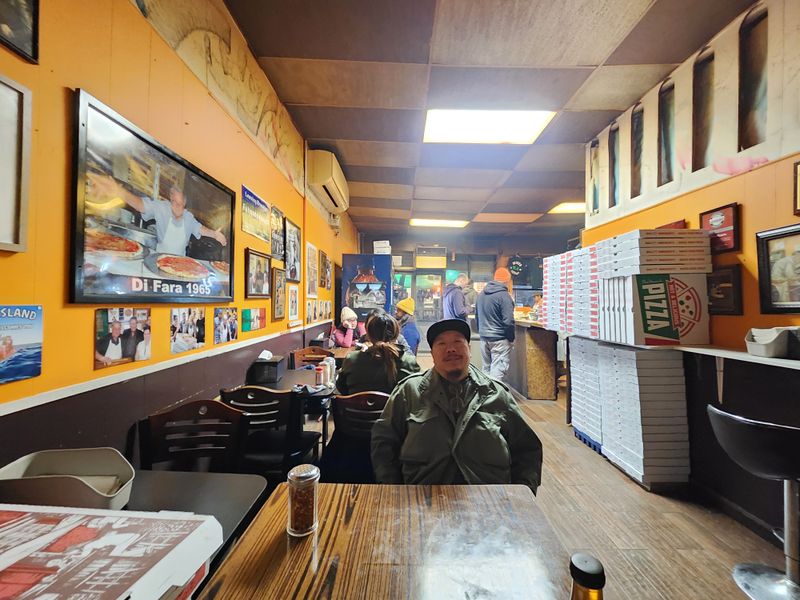
First-time visitors often express surprise at the lengthy wait times at Di Fara, sometimes extending beyond an hour during peak periods.
This isn’t due to poor planning or inefficiency but rather a deliberate choice to maintain quality over quantity.
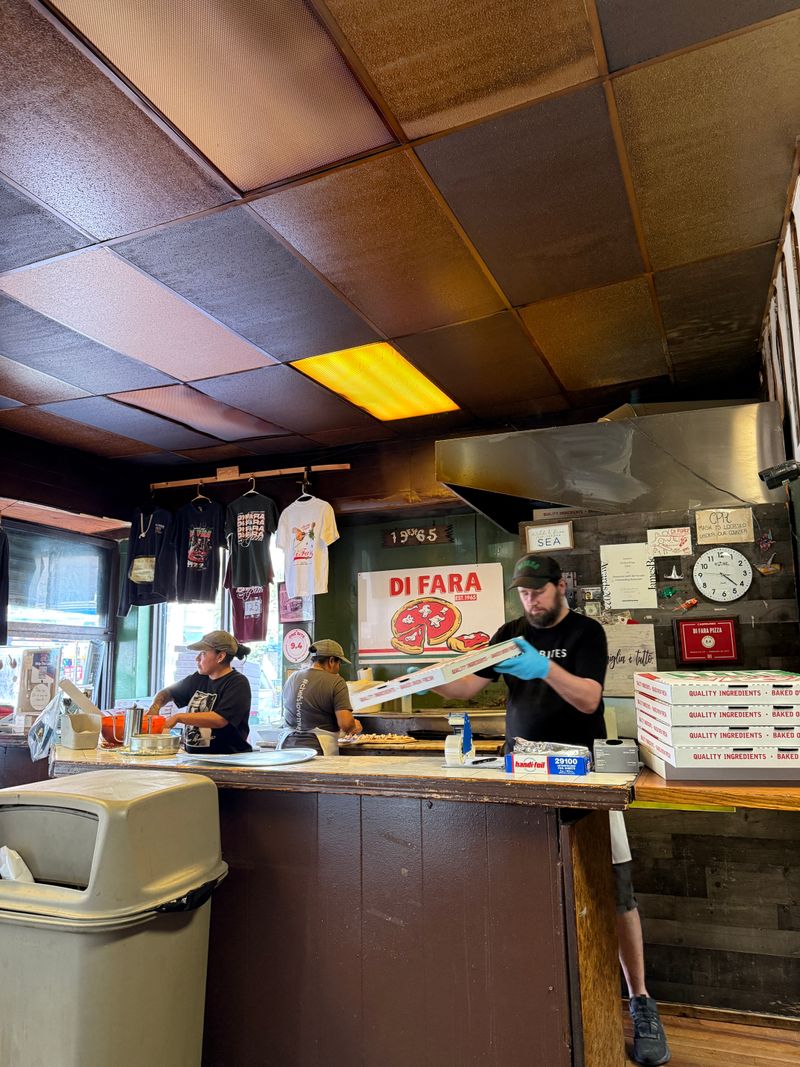
Each pizza receives individual attention from start to finish, with no shortcuts taken to speed up the process.
The small oven can only accommodate a limited number of pies at once, creating a natural bottleneck that cannot be rushed.
Dom DeMarco famously worked at his own pace, often pausing to perfect details that other pizza makers might overlook.
His family continues this tradition, understanding that their reputation depends on consistency rather than volume.
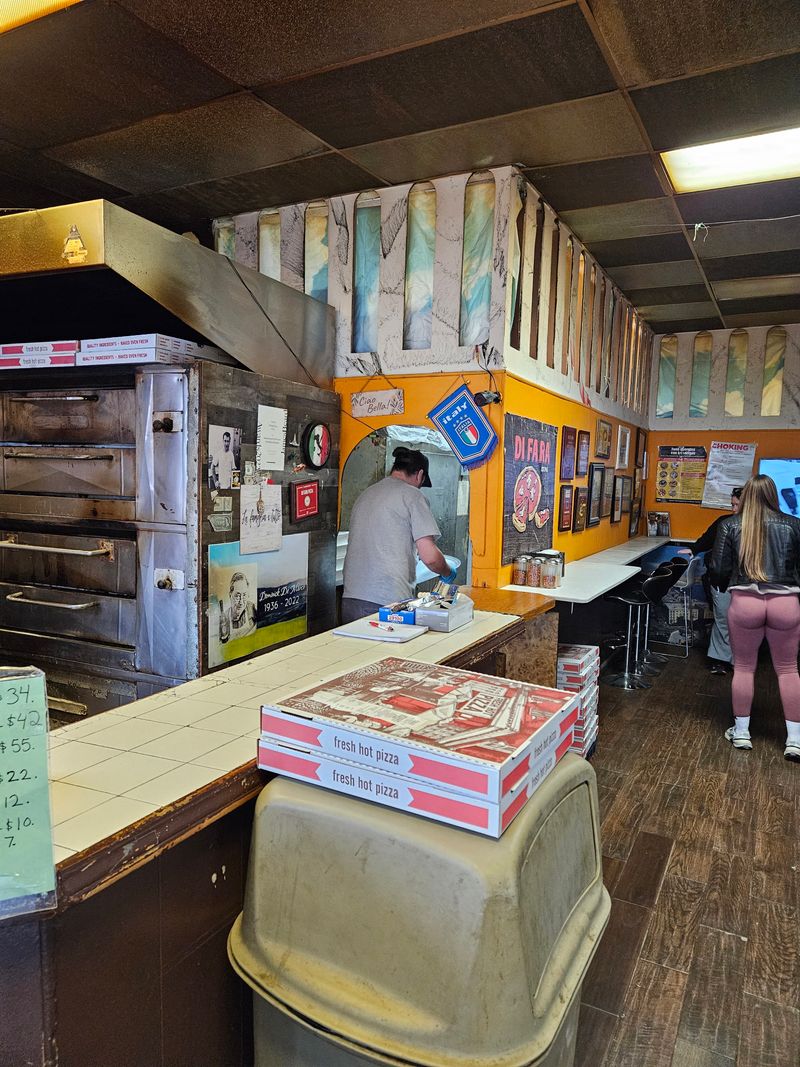
Savvy travelers treat the wait as an opportunity to observe the pizza-making process, watching skilled hands transform simple ingredients into culinary art.
The small shop allows customers to see everything, from dough stretching to the final drizzle of olive oil.
This transparency builds anticipation and helps visitors appreciate the craftsmanship involved in their meal.
Many customers strike up conversations while waiting, sharing travel stories and pizza opinions with fellow enthusiasts from around the world.
The diverse crowd often includes local Brooklyn residents alongside tourists from Japan, Italy, and everywhere in between.
This international gathering of pizza lovers creates a unique atmosphere found in few other restaurants.
Rather than viewing the wait as an inconvenience, regular customers consider it confirmation that they’ve chosen something truly special.
Places that can serve you instantly rarely offer anything worth remembering, while those that make you wait often deliver experiences that justify every minute spent in line.
The Square Slice Revelation
While the round pies get most of the attention, Di Fara’s square slices represent an equally impressive achievement in pizza making.
This Sicilian-style pizza features a thicker, focaccia-like crust that provides a completely different textural experience from the classic rounds.
The dough gets pressed into rectangular pans and allowed to rise, creating an airy interior with a crispy, almost fried bottom.
Cheese often extends all the way to the edges, where it caramelizes against the hot pan to form crispy, flavorful corners that many consider the best part.
The sauce-to-cheese ratio differs from round pies, with the thicker crust able to support more substantial toppings without becoming soggy.
Some customers prefer the square slices precisely because they offer more of that addictive crust that makes Di Fara special.
The squares also travel better than traditional slices, maintaining their structure even when carried for several blocks.
Travelers often order one of each style to compare and contrast the different approaches to pizza making.
The square slices showcase versatility and skill, proving that Di Fara’s excellence isn’t limited to a single pizza style.
Many New Yorkers grew up eating square slices at school cafeterias or neighborhood pizzerias, but Di Fara elevates this humble format to gourmet status.
The same premium ingredients and careful technique applied to round pies also benefit the squares.
Fresh basil, quality olive oil, and perfectly balanced sauce transform what could be ordinary into something memorable.
Visitors who only try the round pizza miss out on understanding the full range of what Di Fara can accomplish with dough, sauce, and cheese.
Midwood Brooklyn: A Neighborhood Worth Exploring
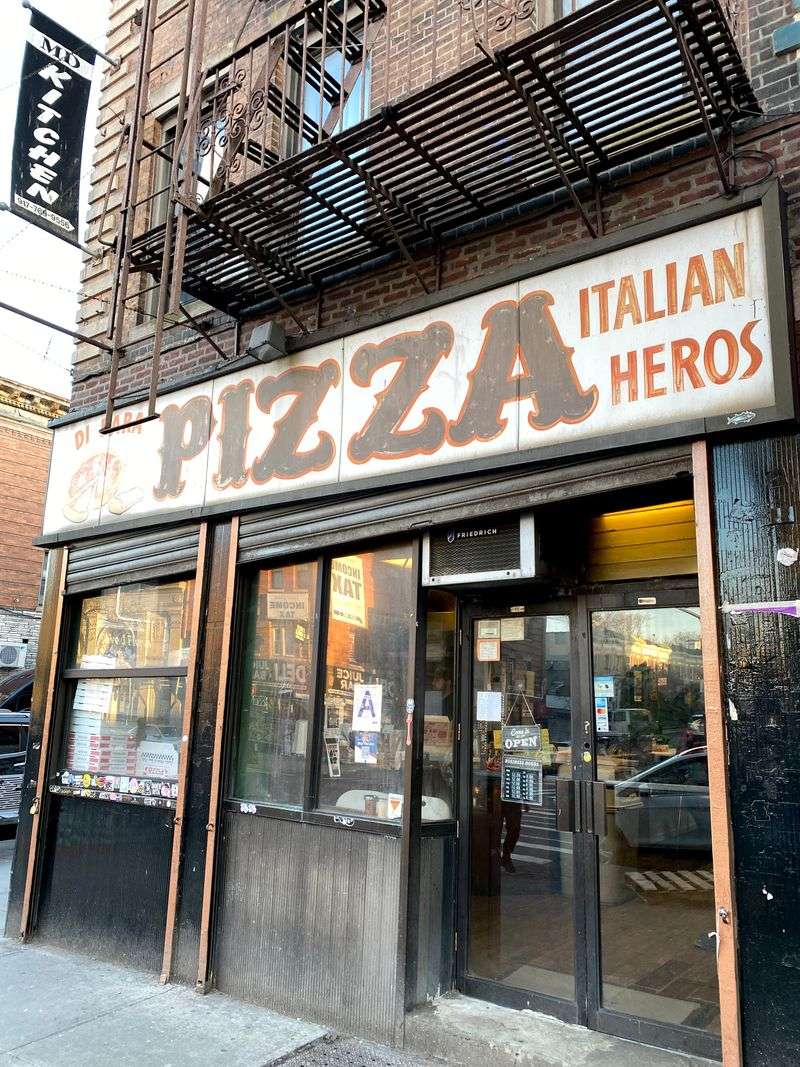
Di Fara’s location in Midwood places it far from the typical tourist routes through Manhattan or trendy Brooklyn neighborhoods like Williamsburg.
This residential area offers travelers a glimpse of authentic Brooklyn life, where families have lived for generations and local businesses serve the community.
Avenue J features a mix of shops, markets, and restaurants reflecting the neighborhood’s diverse population.
The area has strong Orthodox Jewish roots, visible in the kosher bakeries and synagogues that dot nearby streets.
Tree-lined blocks showcase beautiful early 20th-century architecture, with brick apartment buildings and single-family homes that give the neighborhood a settled, comfortable feeling.
Unlike the glass towers sprouting in other Brooklyn areas, Midwood retains a human scale that makes walking pleasant.
Visitors waiting for their Di Fara pizza often explore the surrounding blocks, discovering small parks and interesting storefronts.
The neighborhood offers a counterpoint to the rapid gentrification transforming much of Brooklyn, maintaining its character despite outside pressures.
This stability helps explain why Di Fara has thrived here for six decades, serving generations of the same families.
Food travelers interested in authentic urban neighborhoods rather than manufactured tourist districts will appreciate Midwood’s genuine character.
The subway ride from Manhattan takes about 45 minutes, giving visitors time to decompress from the city’s intensity.
Emerging from the train into this quieter area feels like discovering a secret that most tourists never learn.
The journey to Di Fara becomes part of the adventure, requiring commitment that filters out casual diners and ensures that those who arrive truly want to be there.
The Sensory Experience of Your First Bite
After waiting patiently and watching your pizza emerge from the oven, that first bite delivers a sensory explosion that justifies the journey.
The initial sensation comes from the temperature, as the pizza arrives hot enough to require a moment of cooling or strategic folding to avoid burning your mouth.
As you bite down, the crust provides resistance before giving way to reveal its tender interior structure.
The cheese stretches in long, satisfying strings that demonstrate its fresh quality and proper melting point.
Sweet tomato sauce balances the rich cheese, while fresh basil adds a bright, herbal note that cuts through the heavier flavors.
That final drizzle of olive oil coats your palate, adding a fruity richness that lingers after each bite.
The charred spots on the crust contribute a subtle bitterness that sophisticated eaters recognize as essential to the overall flavor profile.
Texture plays an equally important role, with the contrast between crispy bottom and chewy interior keeping your attention throughout the slice.
Many people close their eyes during that first bite, overwhelmed by how different this tastes from every other pizza they’ve encountered.
The quality of ingredients becomes immediately apparent, as fresh mozzarella tastes nothing like the pre-shredded cheese used by most pizzerias.
Each subsequent bite reveals new details, from the complex fermented notes in the dough to the way salt and sweet balance perfectly.
Some customers report that eating Di Fara pizza actually ruined other pizzerias for them, setting a standard that few can match.
This transformative experience explains why people return repeatedly, sometimes traveling across the country just to taste these flavors again.
What Pizza Experts Say About Di Fara
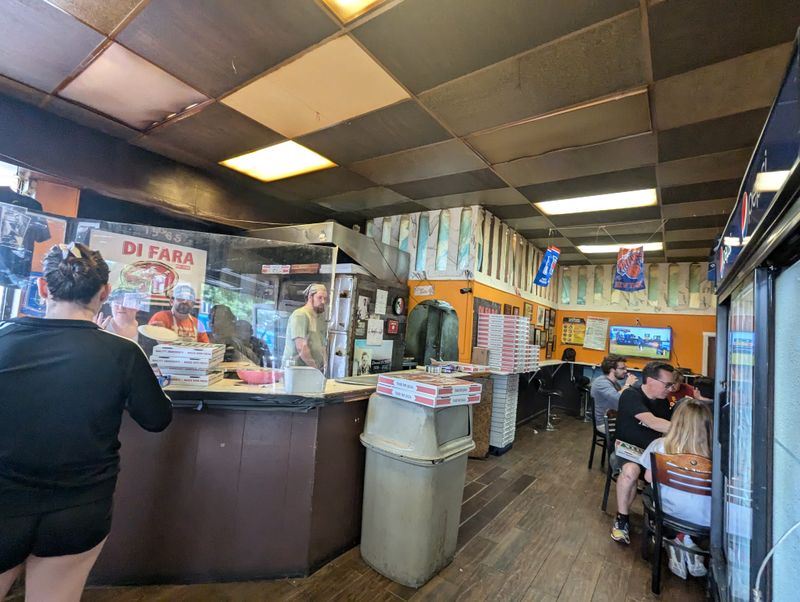
Food writers, critics, and pizza experts have showered Di Fara with praise for decades, often placing it at the top of best pizza lists.
The late Anthony Bourdain featured Di Fara on his shows, introducing the pizzeria to audiences who might never have discovered it otherwise.
Major publications including The New York Times, Bon Appetit, and Food & Wine have published glowing reviews highlighting Dom DeMarco’s dedication to craft.
Pizza pilgrims who maintain blogs and social media accounts dedicated to finding the world’s best pies consistently rank Di Fara among the absolute elite.
What impresses experts isn’t just the taste but the consistency maintained over so many years.
Many restaurants experience quality decline as they become famous, but Di Fara has resisted this common trajectory.
Critics note the balance of flavors, the quality of ingredients, and the technical skill required to produce such excellent results repeatedly.
Some pizza authorities consider Di Fara the best example of New York-style pizza, representing the pinnacle of what this regional style can achieve.
The pizzeria has influenced countless other pizza makers who studied Dom’s techniques and ingredient choices.
Several successful pizzerias around the country were started by people who worked at Di Fara or spent time studying the operation.
This influence extends beyond New York, affecting pizza culture in cities across America and even internationally.
Expert consensus matters because these individuals have tasted thousands of pizzas and developed refined palates capable of detecting subtle differences.
When such discriminating eaters consistently praise Di Fara, it provides validation for regular customers who might wonder if the pizza truly deserves its legendary status.
The Cultural Impact of a Pizza Shop
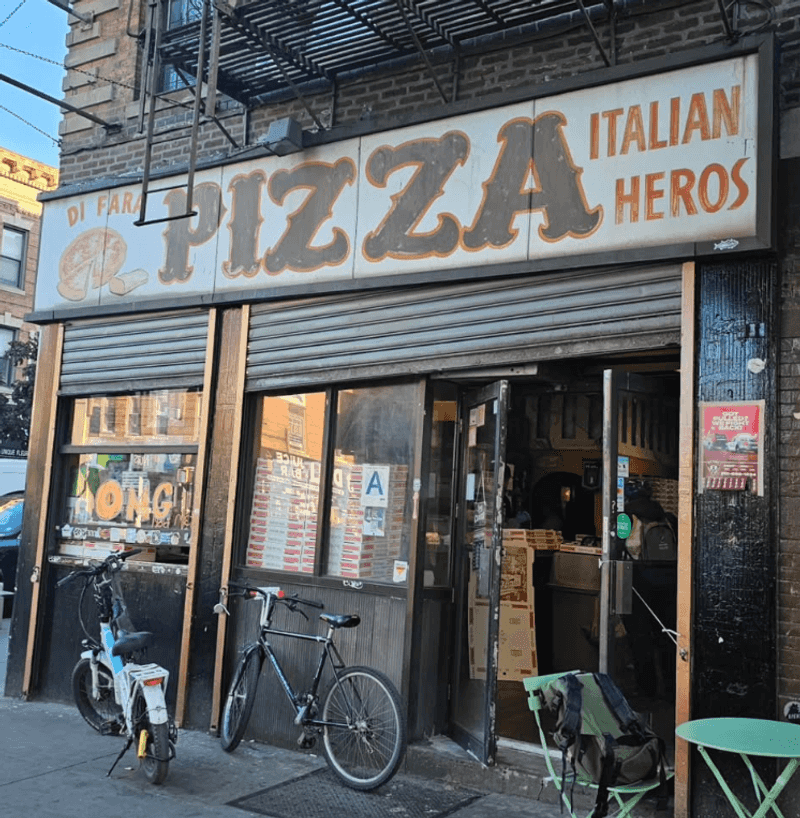
Di Fara represents something larger than a successful restaurant, serving as a cultural touchstone that connects food, immigration, and community.
Dom DeMarco’s story embodies the immigrant experience, arriving with skills and determination to build something lasting in his adopted country.
The pizzeria demonstrates how food traditions can be both preserved and adapted, maintaining Italian authenticity while becoming distinctly New York.
For the Midwood community, Di Fara has served as a gathering place where neighbors meet and relationships form over shared meals.
The shop’s fame has brought attention to the neighborhood, introducing outsiders to an area they might otherwise never visit.
This cultural exchange benefits everyone, as tourists gain authentic experiences while the local economy receives support from visitors.
Di Fara also highlights the value of craftsmanship in an era of mass production and corporate chains.
Watching someone dedicate their entire life to perfecting a single craft inspires respect and reflection on what truly matters.
The pizzeria has become a symbol of resistance against the homogenization of food culture, proving that independent operations can thrive without compromising values.
Young chefs and food entrepreneurs cite Di Fara as inspiration, showing that quality and dedication can build a lasting legacy.
The emotional connection people feel toward this pizzeria goes beyond taste, touching on deeper themes of tradition, family, and excellence.
Social media has amplified Di Fara’s cultural reach, with customers sharing photos and stories that inspire others to make the pilgrimage.
This organic, grassroots popularity feels more authentic than marketing campaigns, as real people genuinely want to share their discovery with others.
Planning Your Visit to Di Fara Pizza
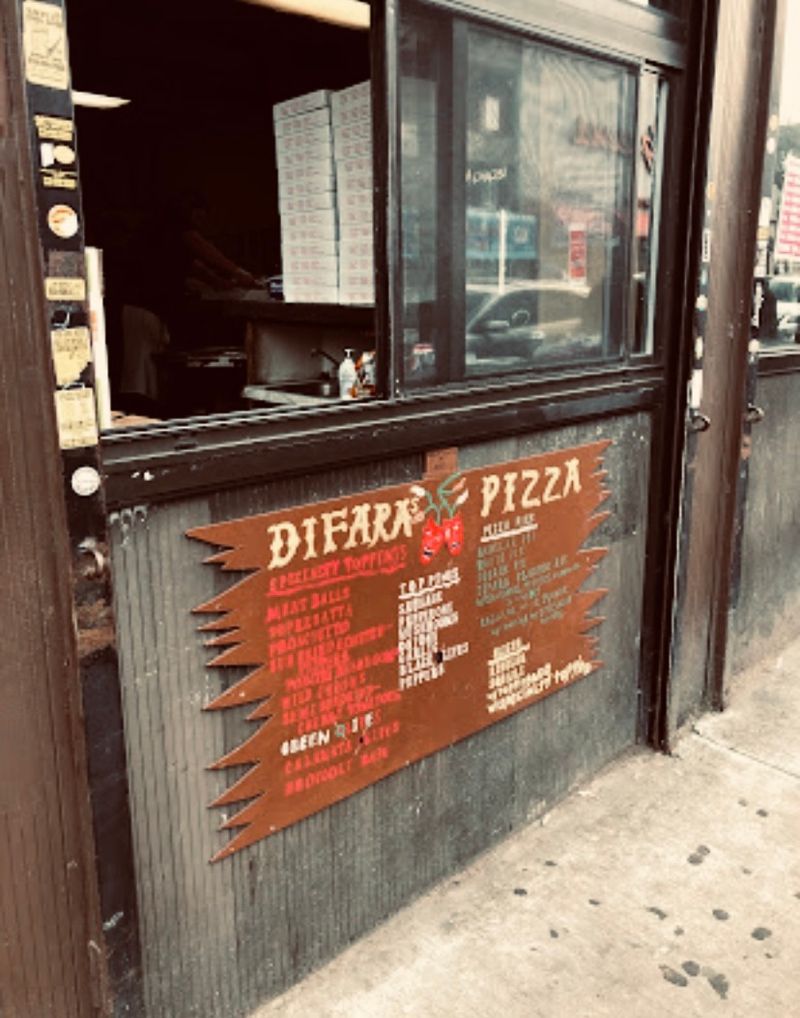
Successfully experiencing Di Fara requires some planning, as this isn’t a place where you can simply walk in and expect immediate service.
The pizzeria opens at noon Tuesday through Sunday, with slightly shorter hours on Monday when it closes at 5 PM.
Arriving right when doors open gives you the best chance of shorter wait times, though dedicated fans often line up before opening.
Weekend afternoons typically see the longest waits, sometimes extending to 90 minutes or more during peak periods.
Take the Q train to Avenue J station, then walk a few blocks to reach the pizzeria at 1424 Avenue J.
The storefront looks modest and could be easily missed if you weren’t specifically looking for it.
Inside, the space remains small and often crowded, with limited seating that fills quickly.
Many customers take their pizza to eat outside or in nearby parks when weather permits.
Bring cash if possible, though the shop now accepts cards after years of being cash-only.
Don’t arrive starving, as the wait combined with the intoxicating smell of baking pizza can make patience difficult.
Consider making Di Fara part of a larger Brooklyn exploration rather than a rushed single-destination trip.
The neighborhood offers other food options if you want to sample multiple cuisines during your visit.
Check the restaurant’s social media or website before traveling, as occasional closures do happen.
Address: 1424 Avenue J, Brooklyn, NY 11230.
Dear Reader: This page may contain affiliate links which may earn a commission if you click through and make a purchase. Our independent journalism is not influenced by any advertiser or commercial initiative unless it is clearly marked as sponsored content. As travel products change, please be sure to reconfirm all details and stay up to date with current events to ensure a safe and successful trip.
