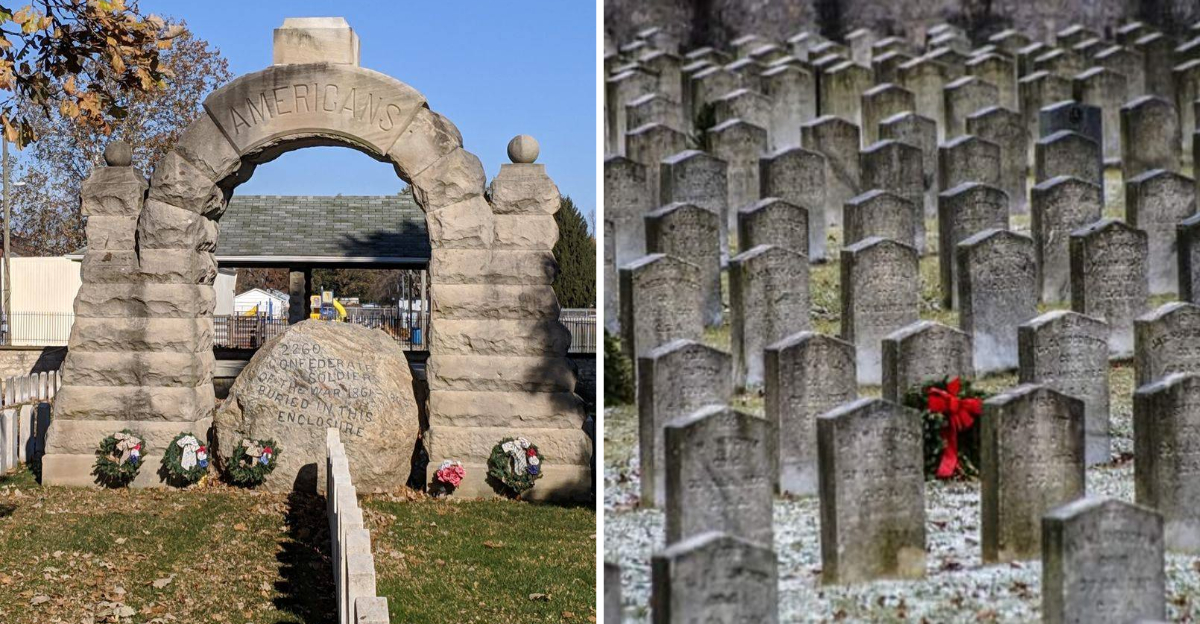
A low stone wall on a loud Ohio street, a hair salon on one side and an ice cream shop on the other, and behind it all, a quiet that drops over you the second the gate closes. That is what I found when I pulled over expecting nothing more than a quick stop.
Rows of small white headstones run in tight lines under old trees, more than two thousand of them, and a heavy stone arch stands watch near the middle.
The cemetery holds the remains of Confederate soldiers who died in a nearby prisoner-of-war camp during the Civil War, and the grounds have been maintained by locals for generations.
People around here have been telling stories about this patch of ground for well over a century, from the weeping Lady in Gray to faint sounds drifting through the grass after dark. I went for the history and stayed because the place genuinely gets under your skin.
The gate groans when you push it open, and the wind through the trees sounds like it is carrying something you cannot quite make out.
Travel stops with a little goosebump attached tend to earn their reputation, and this one certainly does.
A Civil War Camp Hiding in Plain Sight on the West Side
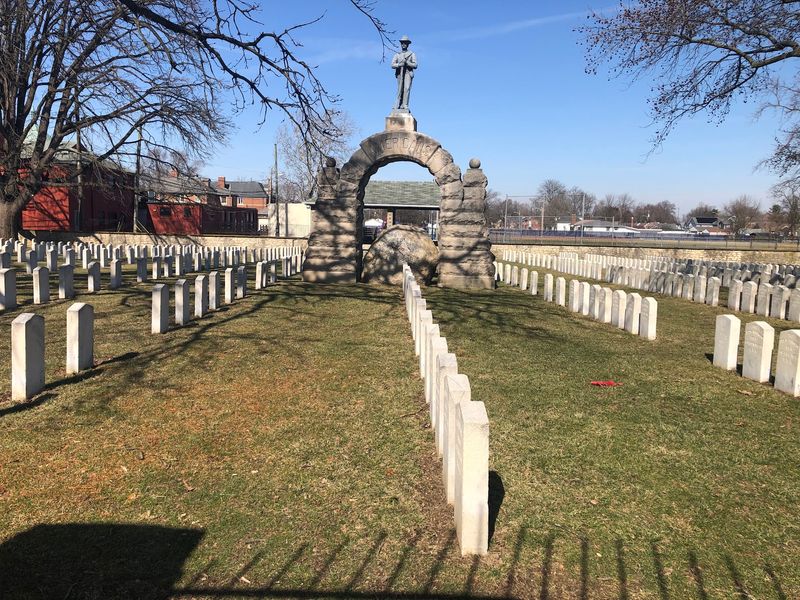
Most people driving down Sullivant Avenue have no idea what sits behind that stone wall. I nearly missed it myself, and I was looking for it.
Camp Chase started in May 1861 as a training ground for Union recruits, named after Salmon P. Chase, the former Ohio governor who became Lincoln’s Treasury Secretary.
Before long the camp shifted roles and became a prison for captured Confederate soldiers.
By 1863 the population had swollen to around 8,000 men, packed into wooden barracks on land that once sat well outside the city limits.
Overcrowding brought sickness, and a smallpox outbreak in late 1864 pushed the toll higher still. When the war ended in 1865, the camp buildings were pulled down and the lumber reused elsewhere, which is why nothing military remains above ground today.
What survived is the burial ground, established in 1863, now under two acres of what was once a sprawling site. Standing among those markers, it hit me how completely a place can vanish and still leave a mark.
Columbus grew right up to the wall and kept going, and somehow that makes the cemetery feel even more separate from everything around it.
The Stone Arch That Anchors the Whole Place
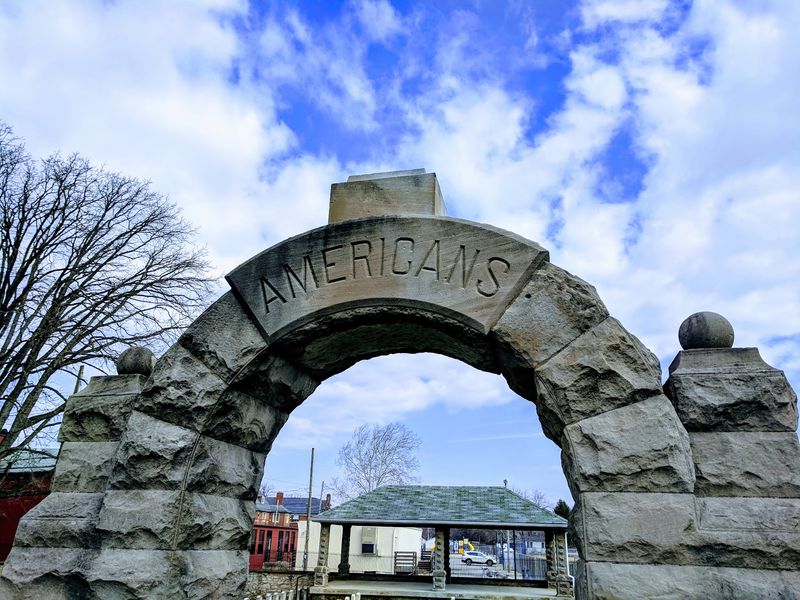
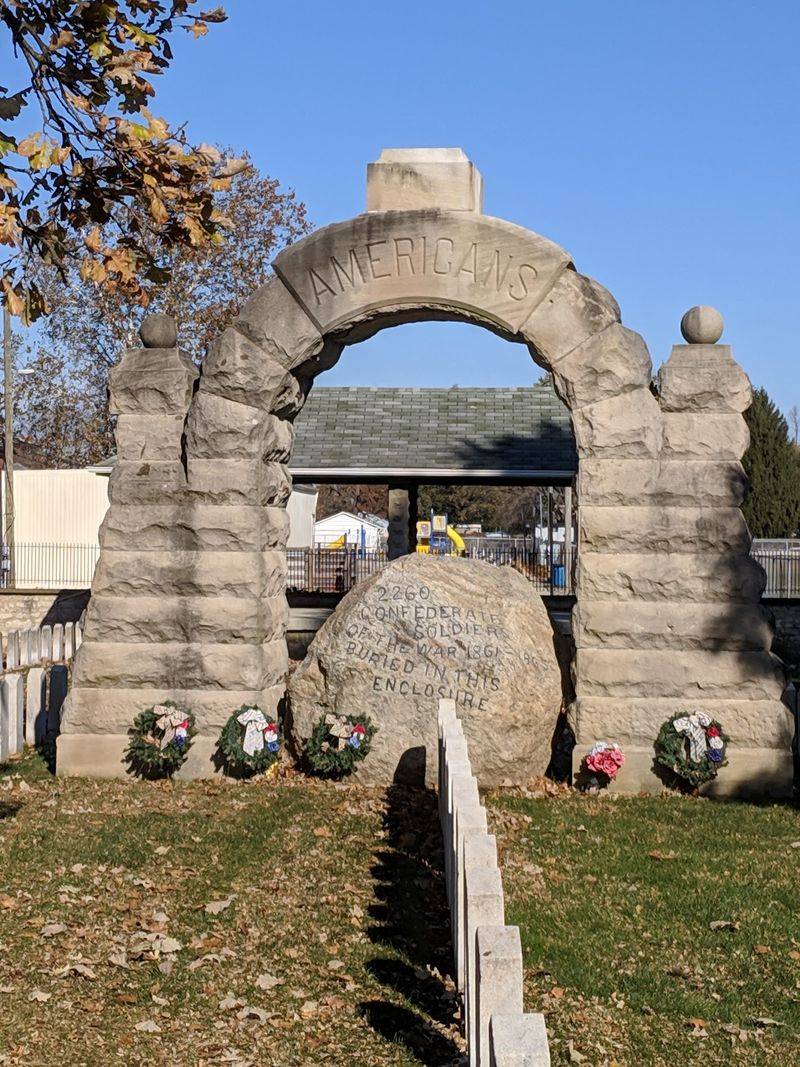
You see the arch before you see anything else, even from the sidewalk. It rises about seventeen feet, built from rough stone blocks that look almost like they were stacked by hand yesterday.
A bronze figure of a Confederate soldier was placed atop it when the arch went up in 1902, replacing an earlier wooden version that had weathered badly.
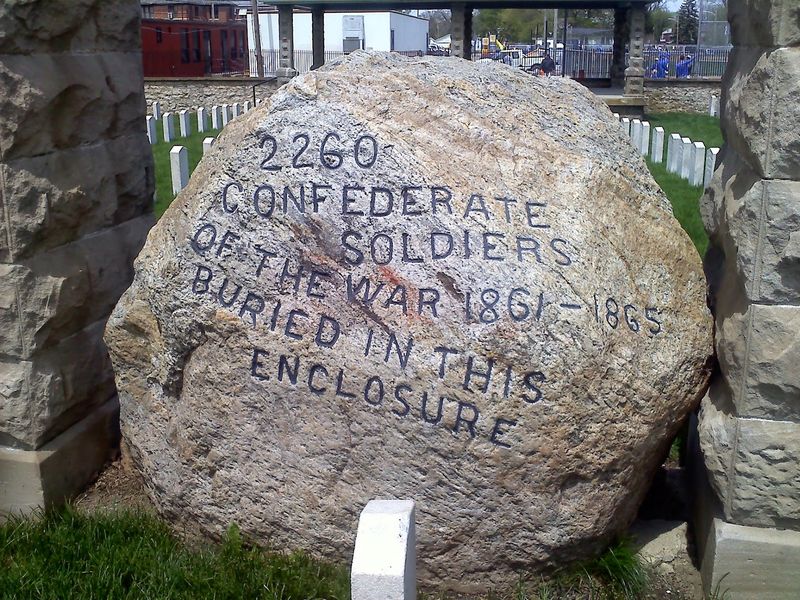
Underneath sits a large boulder carved with a short inscription noting that 2,260 Confederate soldiers of the war between 1861 and 1865 are buried inside the enclosure. Reading a number like that carved into rock lands differently than reading it on a screen.
I circled the arch twice, mostly because the light kept changing through the tree branches and the stone shifted color with it.
Visitors sometimes notice the bronze figure is not always where they expect, and the monument has seen its share of attention over the years. Even so, the arch remains the emotional center of the grounds, the thing everyone photographs and the thing everyone stands quietly beneath.
Give yourself a few minutes here before wandering the rows. It sets the tone for the rest of the visit.
Midnight Music and the Legend That Refuses to Fade

Here is where the whispers come in. Locals have passed around accounts of strange sounds at this cemetery for generations, and the stories tend to arrive after dark.
Neighbors have described hearing what sounds like soldiers marching, faint and rhythmic, drifting from behind the wall when the street finally goes quiet.
Others report crying, soft and unmistakably human, which many connect to the cemetery’s most famous apparition. During one Civil War re-enactment, witnesses said weeping was heard, immediately followed by a sudden strong gust of wind through the grounds.
Re-enactors have also claimed to see ghostly Confederate figures moving in time to their music, which is the detail that stuck with me longest.
Whether you take those accounts literally or file them under folklore, the reputation is real and it has outlasted more than a hundred years of retelling. Paranormal investigators have brought recorders here hoping to capture voices, with results that vary wildly from visit to visit.
I visited in daylight and still caught myself listening harder than usual. Sound behaves oddly inside those walls, muffled and close, and that alone explains a lot of the legend’s staying power.
Looking for the Lady in Gray
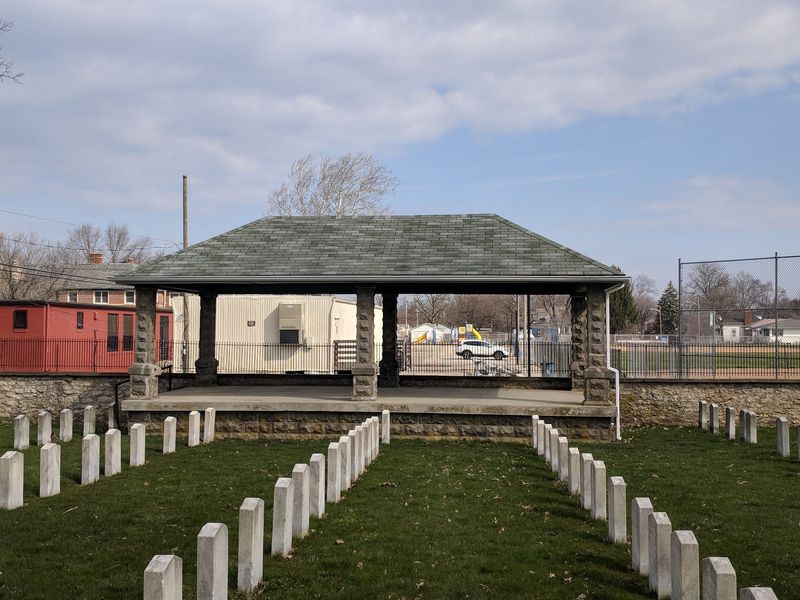
Ask anyone in Columbus about ghosts at this cemetery and one figure comes up before all others. She is known as the Lady in Gray, sometimes called the Veiled Lady, and descriptions of her are remarkably consistent.
Witnesses talk about a young woman in a gray Civil War era traveling suit, head bowed as though she is weeping, standing quietly among the graves.
Some believe she is Louisiana Ransburgh Briggs, a woman who was known for placing flowers on Confederate graves in the years after the war. People say she tends to appear near the marker of an Unknown Soldier and near the grave of Benjamin F.
Allen of the 50th Tennessee Volunteers.
Fresh flowers turning up on Allen’s tombstone have long been credited to her.
She reportedly vanishes when anyone walks toward her, which is a very inconvenient habit for photographers. I found Allen’s stone without much trouble, and there is something tender about a legend built around someone bringing flowers rather than scaring people.
That is the part I keep coming back to. The most famous ghost here is remembered for kindness, not for fright.
Rows of Names, Shoulder to Shoulder
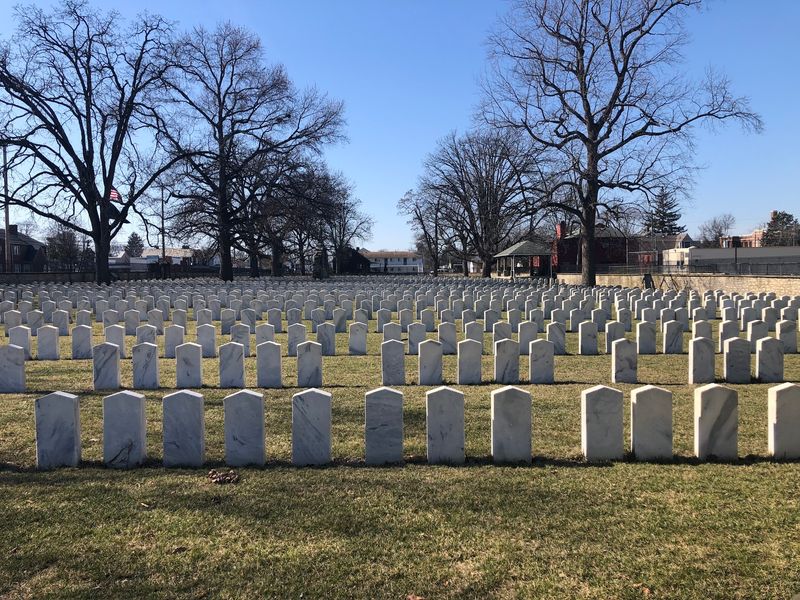
Walk the rows slowly and the scale stops being abstract. The headstones sit close together, closer than in most cemeteries, and they run in long straight lines across the small lot.
Over 2,200 Confederate soldiers who died at Camp Chase are buried here, along with some who died at Camp Dennison near Cincinnati.
Many stones carry a name, a unit, and nothing else. Plenty are marked unknown.
Reading unit designations from Tennessee, Alabama, Virginia and the Carolinas while standing in central Ohio is a strange geography lesson that no textbook delivers quite the same way.
There are no footpaths inside the enclosure, so you walk on the grass between markers and step carefully.
I found myself doing the math on how far these men were from home, which is probably the single heaviest thought the place offers. Bring reading glasses if you need them, because weathering has softened some of the carving.
Take your time. The whole enclosure is under two acres, so there is no rush, and moving slowly is honestly the only way this stop makes sense.
The Union Veteran Who Made Sure Nobody Forgot
Not every preservation story starts where you would expect. This one began with William H.
Knauss, a Union veteran wounded during the war, who took an interest in a neglected burial ground full of former enemies.
Starting in 1895, he organized yearly memorial services here, clearing the grounds and drawing attention to graves that had been left to grow over.
His efforts led directly to the arch going up in 1902 and to the cemetery being cared for rather than forgotten. Knowing that detail changed how I looked at the place.
It reframes the whole site from a war relic into something closer to a reconciliation project.
The cemetery was added to the National Register of Historic Places in 1973, which locked in its protection for the long haul.
Today the grounds are overseen by Dayton National Cemetery, and the grass and stones are kept in genuinely good shape. Visitors regularly comment on how tidy it is, and they are right.
A man who fought on the other side spent his later years making sure these graves had flowers. That is the kind of history that sticks with you on the drive home.
Planning Your Visit Without the Headaches
A few practical notes will save you some circling. The only entrance is on Sullivant Avenue, and the gate has steps with no ramp, so mobility access is limited inside the enclosure.
Street parking along Sullivant is technically allowed but not much fun, since traffic moves steadily and the shoulder is tight.
Most visitors I noticed parked at the ice cream shop just east of the front entrance and walked the short distance over. Go during daylight for the best experience, when you can actually read the markers and see the inscription on the boulder beneath the arch.
Late afternoon light through the trees is lovely, and dusk gives the grounds that hushed quality people always mention.
Plan on thirty to forty five minutes unless you are searching for a specific ancestor’s stone. There is no visitor center, no staff on site, and no gift shop, which honestly suits the place.
Bring water, wear shoes you do not mind getting grass-stained, and treat the grounds respectfully since families still visit relatives buried here.
Address: 2850 W Broad St, Columbus, Ohio
