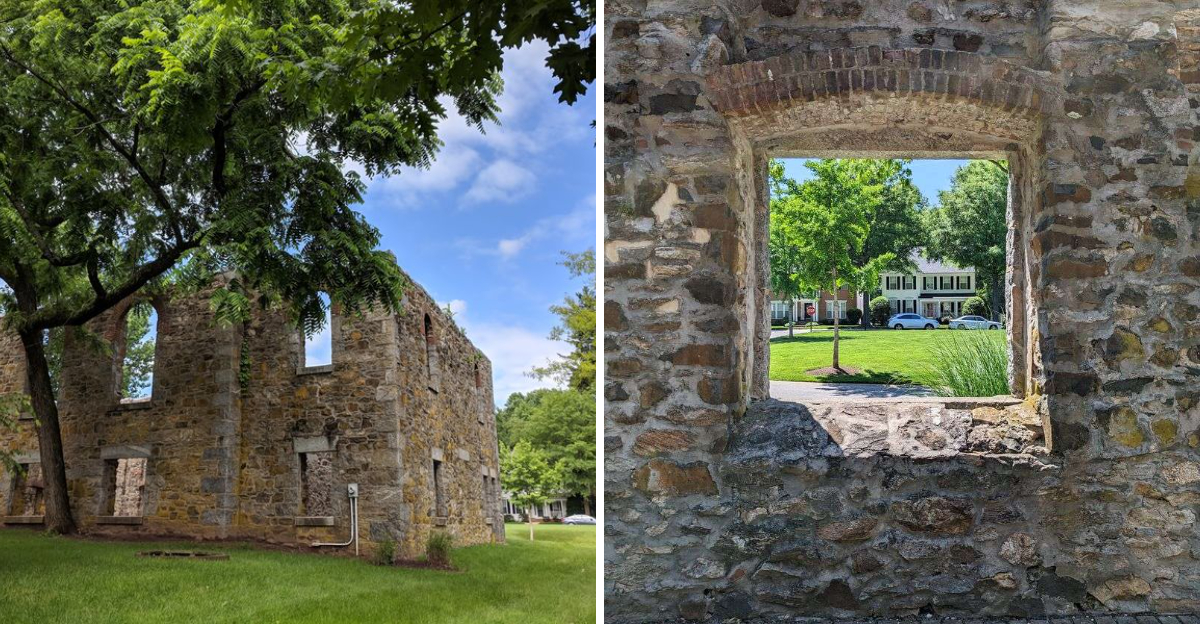
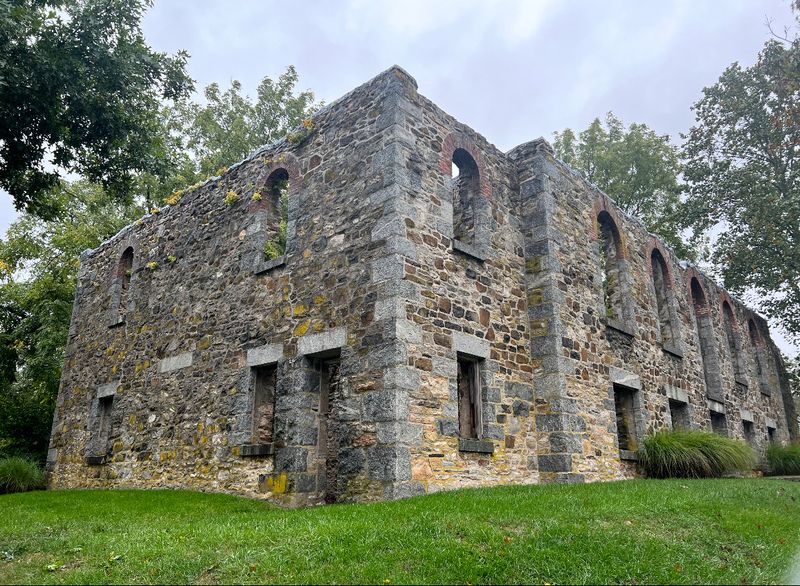
Nothing prepares you for seeing roofless stone walls and tall arched openings sitting in the middle of an otherwise modern Maryland neighborhood.
These stabilized ruins are what remain of an early 20th-century assembly hall connected to a college whose history stretches back to the 1800s, after a devastating 1911 fire destroyed the main complex.
The surviving walls are made from rubble stone with granite details, and their weathered openings look far more like the remains of an old European estate than something surrounded by suburban homes.
That unexpected contrast is exactly what makes the site so fascinating, because there is no remote wilderness setting announcing that a piece of history is about to appear.
Maryland is full of old places, but very few manage to look this delightfully out of place.
A Neighborhood That Hides Something Ancient Looking
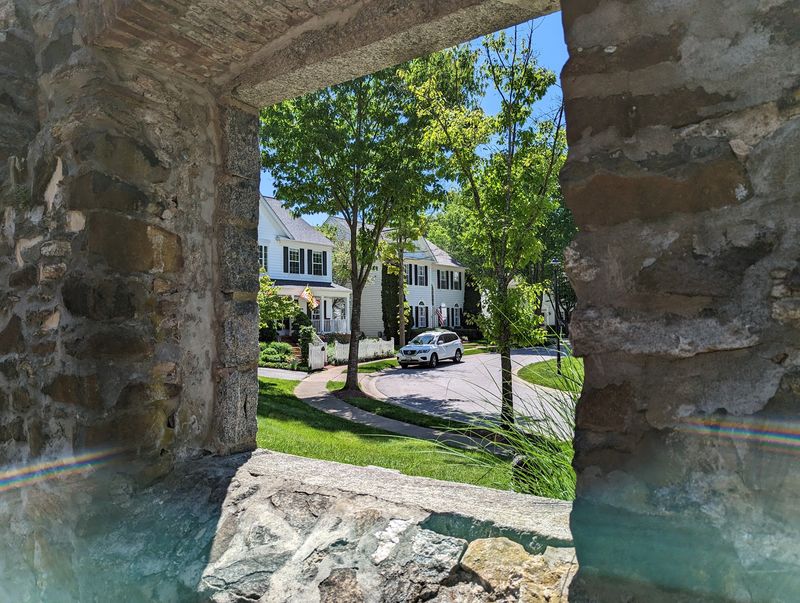
Suburban streets do not usually come with ruins attached. That is exactly what makes the arrival here so much fun.
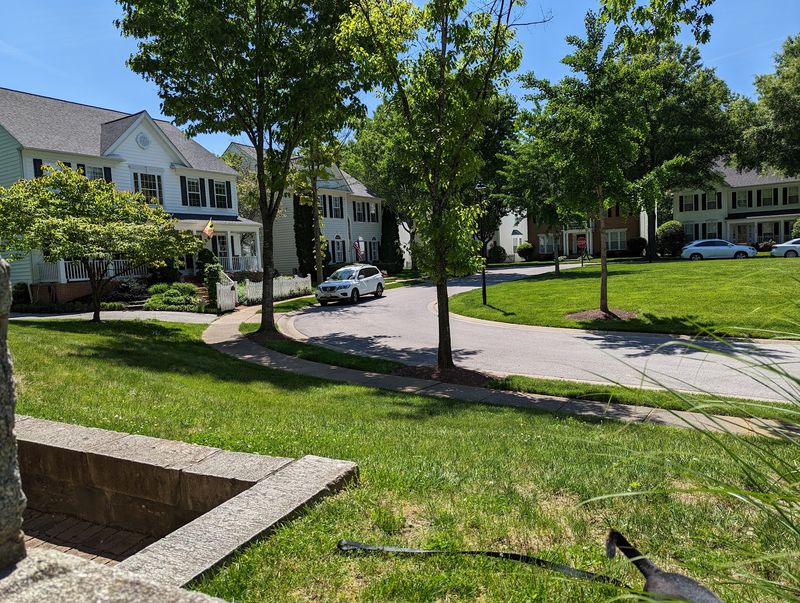
The drive in feels completely ordinary. Split-level homes, trimmed hedges, a stroller or two on the sidewalk, and then a green clearing opens up with weathered granite walls rising out of the grass.
My brain took a second to catch up.
Because the ruins sit inside a residential pocket of Ellicott City, there is no trail to hike and no entrance gate to pass through. Parking happens along the street, and the walk from car to arches takes under a minute.
For anyone traveling with small kids or grandparents, that easy access is a real gift.
The contrast is the whole charm. Old stone framed by vinyl siding and driveways creates a visual mismatch that photographs beautifully and feels a little surreal in person.
Keep in mind that people actually live here. Voices carry, car doors echo, and someone’s kitchen window probably looks right at the site.
Speaking softly and parking considerately goes a long way.
Visitors who arrive expecting a museum setup will be surprised by how casual it all is. There is no ticket booth, no gift shop, and no guide waiting with a clipboard.
What exists instead is a quiet clearing where history simply stands there, unbothered, letting anyone wander close enough to touch the stone and wonder how it survived.
The Story of St. Charles College Behind the Stones
Every stone here belonged to a school with a very specific purpose. St. Charles College opened as a preparatory institution for young men studying toward the Catholic priesthood.
Construction started in 1831, and the campus grew in stages over the following decades. Wings were added, buildings multiplied, and for generations the property functioned as a working academic community rather than a curiosity.
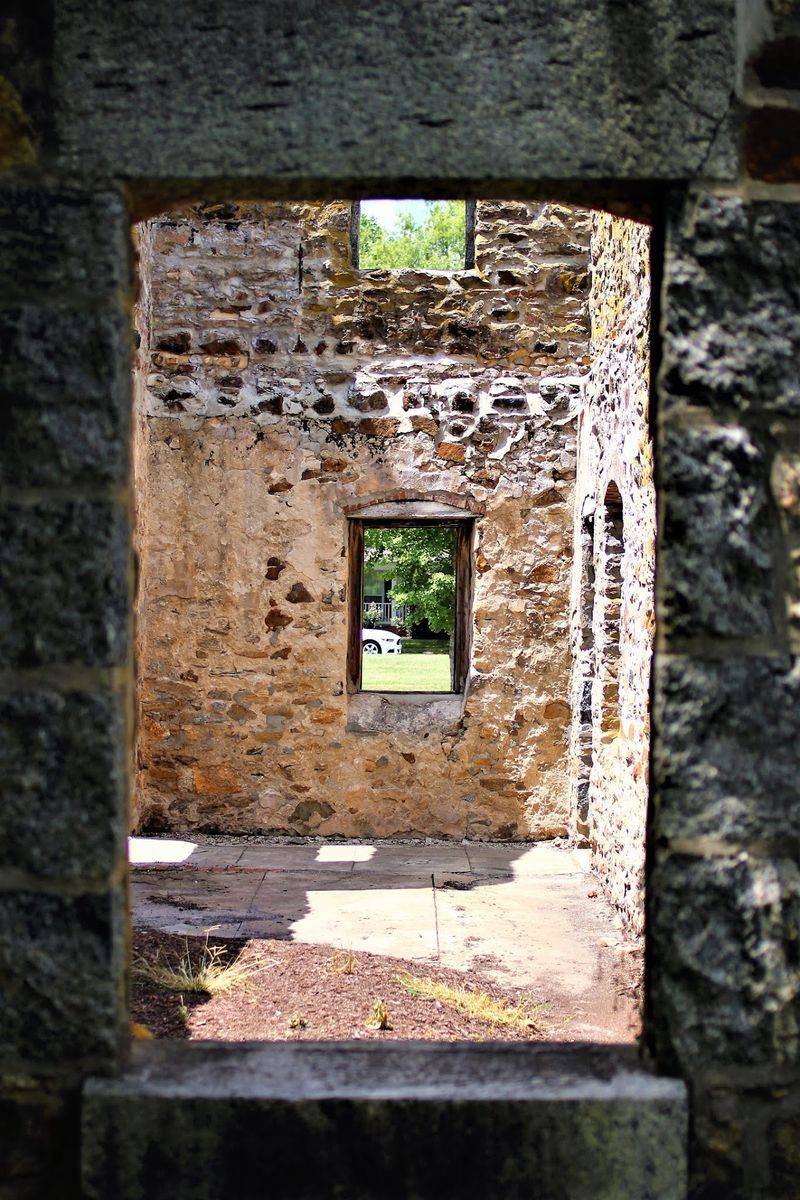
Learning that timeline changed how the site felt to me. Those arches were not built as decoration; they framed hallways where students walked to class.
The recreation hall, finished in 1906, is the structure whose remains still stand. Local granite formed the walls, and cut stone trimmings added the finer detail that still catches the eye today.
Recreation hall is a wonderfully modest name for a building this handsome. It suggests games, downtime, and noise, which makes the current silence feel even more noticeable.
Because the college was designed for a small, focused student body, the campus never sprawled the way modern universities do. The scale of what is left reflects that, intimate rather than monumental.
Reading up on the history before visiting is worth the ten minutes. Knowing that 1831 start date makes the walls read differently once you are standing beside them.
For anyone who enjoys Maryland history, the site connects to a much larger story about education, faith, and how quickly a place can vanish from daily life while its bones stay put.
March 1911 and the Fire That Changed Everything
March 16, 1911 is the date that explains why arches stand where classrooms used to be. Fire broke out in the furnace room of the main building.
Strong winds did the rest. Flames moved through the structure quickly, and the college was largely destroyed in a single devastating event.
Standing near the surviving walls, that story lands hard. Stone this thick suggests permanence, yet a spark and a gust undid decades of construction.
Afterward, salvageable materials were hauled to Catonsville, where the college was rebuilt. So pieces of this property literally traveled across the county and started a second life.
I find that detail oddly comforting. Nothing was simply abandoned; the institution kept going, just somewhere else.
What stayed behind became the ruins visitors see now. Empty window openings, roofless walls, and the outlines of rooms that no longer have ceilings above them.
Photographers tend to gravitate toward those gaps, especially when light passes through one opening and lands on the opposite wall. Late afternoon does that trick particularly well.
It helps to walk slowly and look for construction details rather than treating the site as a single backdrop. Mortar lines, corner blocks, and stair remnants all hint at how the hall was assembled.
Fire stories usually end with nothing left. Here the ending is different, and that partial survival is exactly what makes the clearing worth visiting on a quiet weekday morning.
Arches, Granite, and Details Worth Slowing Down For
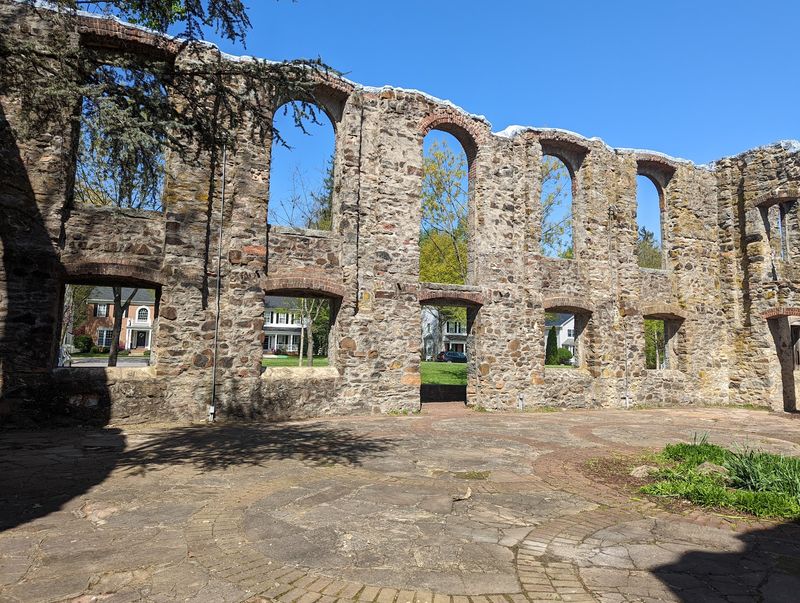
Masonry nerds will be very happy here. The arches are the headline feature, and they hold up remarkably well against time and weather.
Local granite gives the walls a grey and rust-flecked texture that shifts depending on the light. Cut stone trimmings outline the openings with surprising precision for a building meant mostly for recreation.
Running a hand along the stone, the surface feels cool and gritty. Small patches of moss fill the seams where moisture collects.
Two stories once rose from this footprint, and you can still read that height in the wall segments and upper openings. Imagining a roof overhead takes very little effort.
What struck me most was the craftsmanship in places nobody would have photographed in 1906. Corners, sills, and joints all show care.
Photographers get generous options without any special gear. Frame an arch straight on for symmetry, or shoot at an angle so multiple openings stack behind each other.
Overcast days flatten the shadows and bring out stone color, while bright afternoons create strong contrast through the openings. Both work, just differently.
Footing deserves a mention. Grass, uneven ground, and loose stone mean sneakers beat sandals every time.
Climbing on the walls is a bad idea for obvious reasons, and it also chips away at something irreplaceable. Admiring from ground level keeps the ruins intact and keeps ankles happy.
Bring a wide lens if you have one. The arches reward width.
How the Name Terra Maria Fits the Place
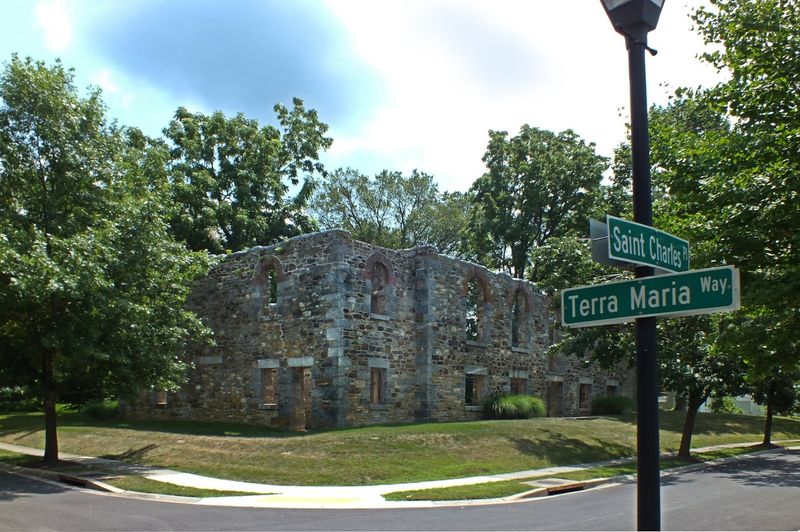
Terra Maria roughly translates to Maryland, which is a fitting label for ruins built from Maryland granite. The name has a formal ring that suits the arches.
Locals use it as shorthand for the site, and it appears in the surrounding development’s identity as well. Searching the name is usually the fastest way to find directions.
Naming matters more than it seems at a place like this. Without a name, the ruins risk becoming just a vacant lot with old stone in it.
The Maryland Historical Trust lists the site under inventory number HO-993. That designation recognizes the historical value of what survived the 1911 fire.
Seeing an official inventory number attached always makes me look closer. It signals that someone studied the walls carefully and decided they were worth documenting.
Recognition also shapes visitor behavior in a good way. A documented historic site invites respect rather than casual carelessness.
For travelers building an Ellicott City itinerary, the name is useful when explaining the stop to companions. Ruins in a subdivision sounds implausible until the name gives it weight.
Small connections like this make a short visit feel more meaningful. A Latin-flavored name, local stone, and a state history all overlapping in one clearing.
Say it out loud once while standing there. Terra Maria has a nice rhythm to it, and it sticks in memory long after the drive home.
Photo Sessions, Portraits, and Golden Hour Light
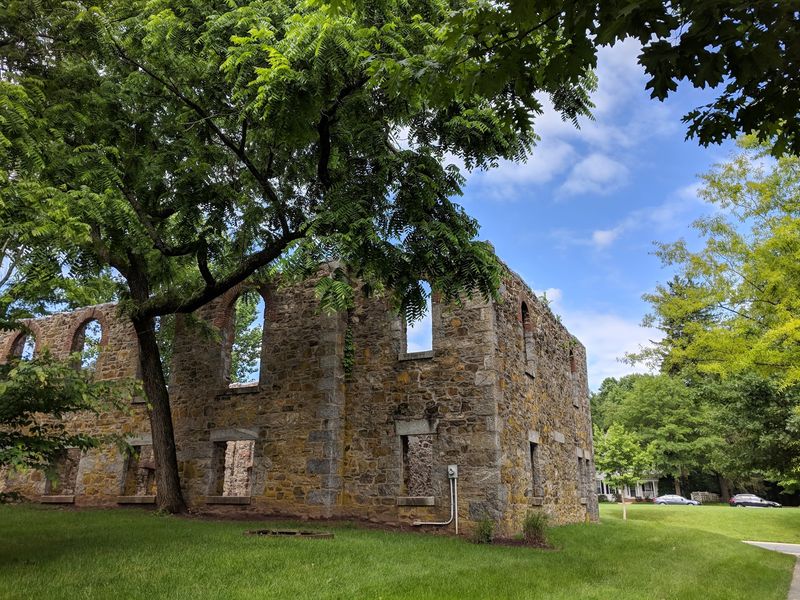
Cameras show up here constantly, and it is easy to see why. Rustic stone arches make a backdrop that costs nothing and looks expensive.
Portrait sessions, engagement photos, senior pictures, and family shots all suit the setting. The stone reads warm in soft light and dramatic in strong sun.
My favorite window is the hour before sunset. Light slides sideways through the openings and paints the granite in honey tones.
Early morning has its own advantage. Fewer people, cooler air, and dew on the grass that catches light nicely in wide shots.
Practical tip for anyone planning a shoot: keep gear compact. There is no parking lot, so hauling large kits from the street gets awkward fast.
Also worth remembering that neighbors live steps away. Keeping sessions short, quiet, and free of blocked driveways keeps the site welcoming for everyone who comes next.
Composition ideas come quickly once you start circling the walls. Shoot through an arch to frame a subject, or step back and let the full height of the ruin dominate the frame.
Black and white treatments suit the texture beautifully. Color works too, especially in autumn when nearby trees turn.
Phone cameras handle this place just fine. Portrait mode against a stone arch produces results that look far more planned than a spontaneous roadside stop deserves.
Leave the drone at home and enjoy the ground-level angles instead.
Neighbors Who Keep the Ruins Cared For
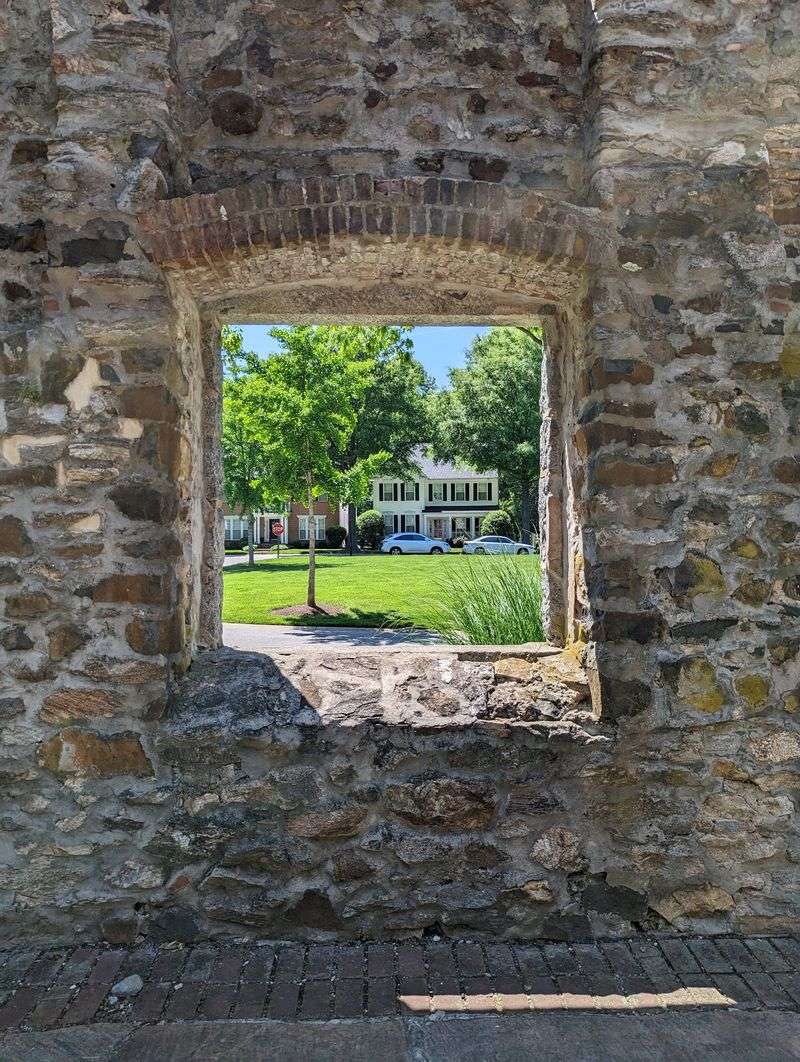
Someone clearly looks after this place. The grass around the walls stays trimmed, and the clearing feels tended rather than forgotten.
Neighborhood residents contribute to maintaining the ruins, and that effort turns a historic curiosity into a genuine community gathering spot. The site functions as shared open space as much as a landmark.
Knowing that changes how a visit should go. Guests are welcome, but the space belongs to the people around it in a very practical, daily sense.
Simple courtesy covers nearly everything. Carry out any trash, skip the graffiti entirely, and keep noise at a conversational level.
Pets on leashes, kids supervised near uneven stone, and cars parked without blocking mailboxes all fall under the same idea. Leave the clearing exactly as it was found.
I appreciate how unpolished the arrangement is. No fencing, no turnstile, just trust that visitors will behave well.
That kind of open access is rare for a documented historic site, and it only continues if people honor it. Respect is the actual admission fee here.
Visits work best when kept brief. Twenty or thirty minutes covers the walls, the arches, a few photos, and a slow lap around the perimeter.
Daylight hours are the right call. Lingering after dark in a residential area serves nobody.
Small courtesies keep places like this open for the next curious traveler who takes a wrong turn and finds something wonderful.
Pairing the Ruins With a Day in Ellicott City
A stop this short begs to be paired with something bigger. Historic Ellicott City sits close by, and Main Street makes an easy follow-up.
That district brings steep hills, stone storefronts, independent shops, and a railroad history that runs deep. Comfortable shoes matter there even more than at the ruins.
Sequencing the day helps. Morning light at Terra Maria, then breakfast or coffee downtown, then browsing at a relaxed pace.
Howard County also offers plenty of green space for anyone wanting to stretch the outing further. Trails and parks sit within a short drive in most directions.
What I like about combining stops is the contrast. Silent ruins first, lively street second, and both tell Maryland stories from different angles.
Weather shapes the experience more than expected. Spring and fall bring the best mix of comfortable temperatures and good light, while summer humidity makes the shaded Main Street sidewalks more appealing.
Winter has its own appeal at the ruins. Bare branches open up sightlines, and frost on granite looks striking.
Plan roughly half a day for the pairing. Rushing either half wastes the trip.
For visitors coming from Baltimore or Washington, the drive is manageable and the payoff is a spot most people have never heard of. Few detours deliver quite this much surprise for so little effort.
Address: 3160 St Charles Pl, Ellicott City, MD 21042
