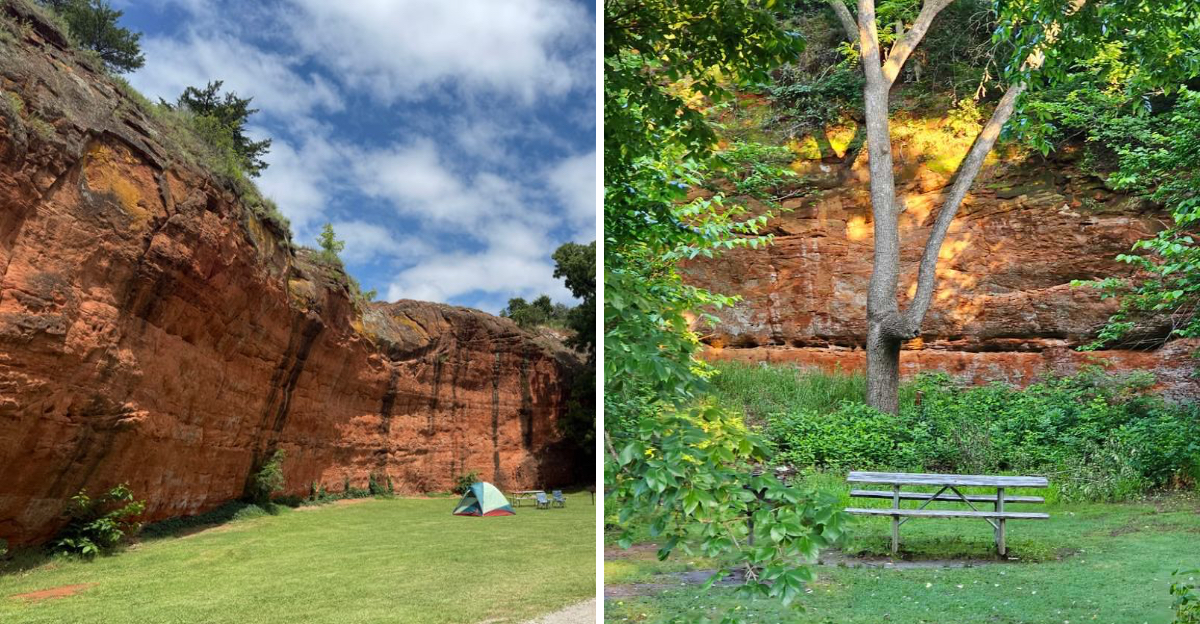
Red Rock Canyon sits just outside Hinton, Oklahoma, carved into the earth like a secret chapter of American history. The rust-colored sandstone cliffs rise dramatically from the surrounding plains, creating a landscape that once served as a crucial passage for pioneers heading west during the 1800s.
I visited this remarkable place expecting scenic views and hiking trails, but what I found was something far more profound. The canyon walls still bear wagon ruts from the countless families who passed through, their wheels grinding into the soft stone as they pursued dreams of new beginnings.
Walking these same paths more than a century later, I felt the weight of their journeys in every step.
Wagon Ruts Carved in Stone Tell Pioneer Stories
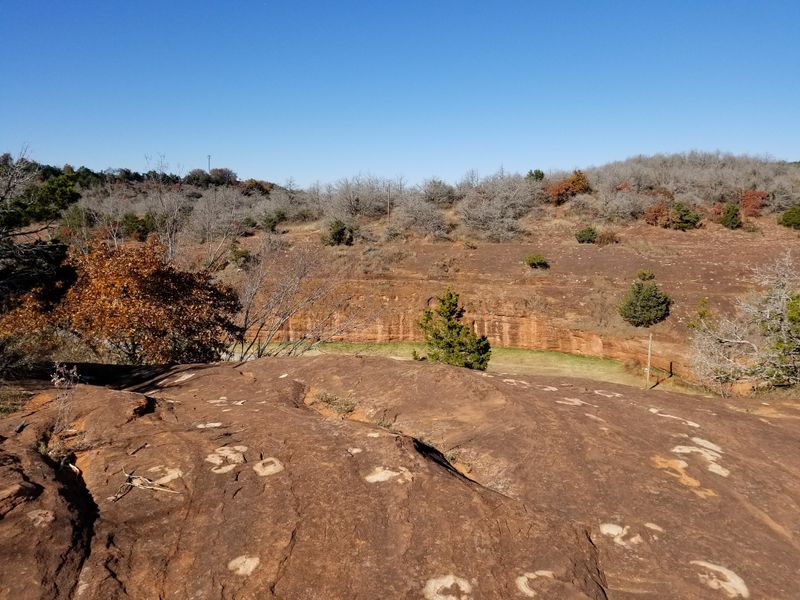
Walking along the canyon floor, I noticed something that stopped me in my tracks. Deep grooves cut through the red sandstone, running parallel like ancient train tracks.
These weren’t natural formations. They were wagon ruts, carved by thousands of pioneer families who passed through Oklahoma during westward expansion.
The soft sandstone proved both blessing and curse for travelers. It provided easier passage than harder rock, but it also captured their journey permanently in stone.
I ran my fingers along one of the grooves, feeling the smooth surface worn by countless wooden wheels. Each rut represents families seeking new lives, carrying everything they owned.
The park staff told me some ruts measure over a foot deep. That kind of erosion doesn’t happen overnight.
It took decades of continuous traffic to carve these marks. Standing there, I imagined the creaking wagons, the tired oxen, the hopeful faces looking westward.
The canyon served as a natural corridor through otherwise challenging terrain. Pioneers followed these paths because they offered protection from harsh weather and easier navigation.
Today, these ruts remain one of the most tangible connections to America’s westward expansion, preserved in the very landscape that witnessed it all.
Red Sandstone Cliffs Rise Like Ancient Sentinels
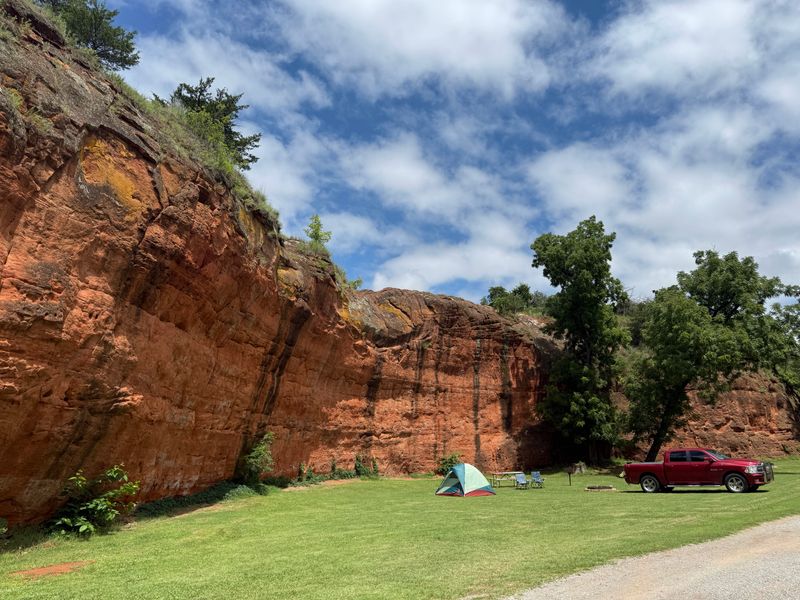
The first glimpse of Red Rock Canyon takes your breath away. You’re driving across flat Oklahoma prairie when suddenly the earth opens up.
The canyon drops into a hidden valley where massive red sandstone cliffs tower overhead. These formations didn’t appear overnight.
They’re the result of millions of years of geological processes. The distinctive rust color comes from iron oxide in the sandstone, essentially rust on a massive scale.
I spent hours exploring different vantage points, watching how the light changed the cliffs throughout the day. Morning sun made them glow orange, while afternoon shadows brought out deeper crimson tones.
The sandstone layers tell their own story, each stratum representing a different era in Earth’s history. Some layers formed when this area was covered by ancient seas.
Erosion continues shaping these cliffs today, though much slower than the dramatic changes that created them. Rain, wind, and temperature fluctuations gradually wear away the softer layers.
For pioneers traveling through, these cliffs served as unmistakable landmarks. They could spot them from miles away, guiding their journey westward.
Now they serve a different purpose, drawing visitors who want to experience Oklahoma’s unexpected geological drama firsthand.
Historic Trails Wind Through Canyon Passages
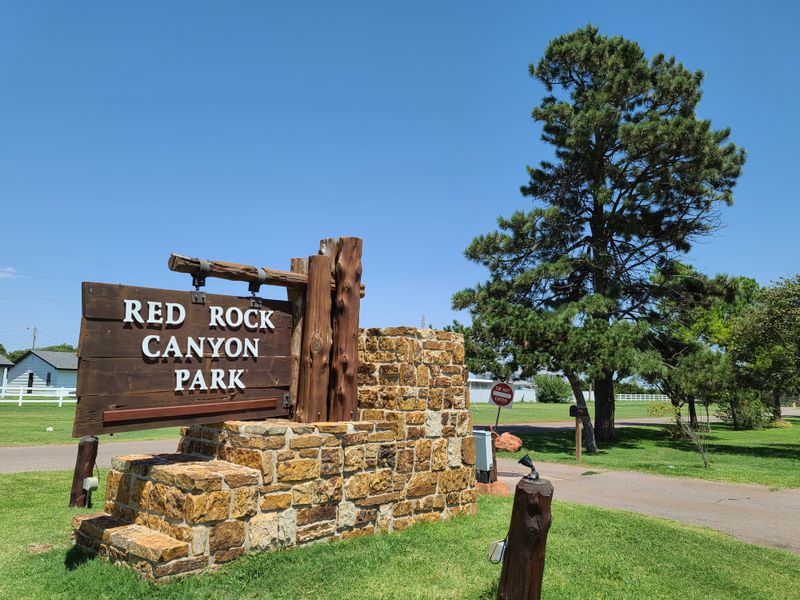
Red Rock Canyon offered westward travelers something precious: a relatively protected route through challenging territory. The trails winding through the canyon weren’t randomly chosen.
They followed the path of least resistance, carved initially by water and wildlife, then widened by countless wagon wheels. I hiked several of these historic trails during my visit.
What struck me most was how practical the routes were. Pioneers needed gradual grades for their heavy wagons and access to water sources.
The canyon provided both. Springs bubbled up in various locations, offering crucial water for people and animals.
Modern trail maps at Red Rock Canyon Adventure Park overlay current hiking paths with historical routes. You can literally walk in pioneer footsteps.
Some trails climb to canyon rims, offering the same sweeping views that scouts would have used to survey the land ahead. Others stay low, following the protected valley floor.
The park maintains these trails carefully, balancing preservation with accessibility. Wooden markers indicate points of historical significance.
During my hikes, I encountered families, solo adventurers, and history enthusiasts all drawn to these paths. The trails connect us to a time when travel meant months of hardship, not hours of comfort.
Natural Springs Sustained Countless Westward Journeys
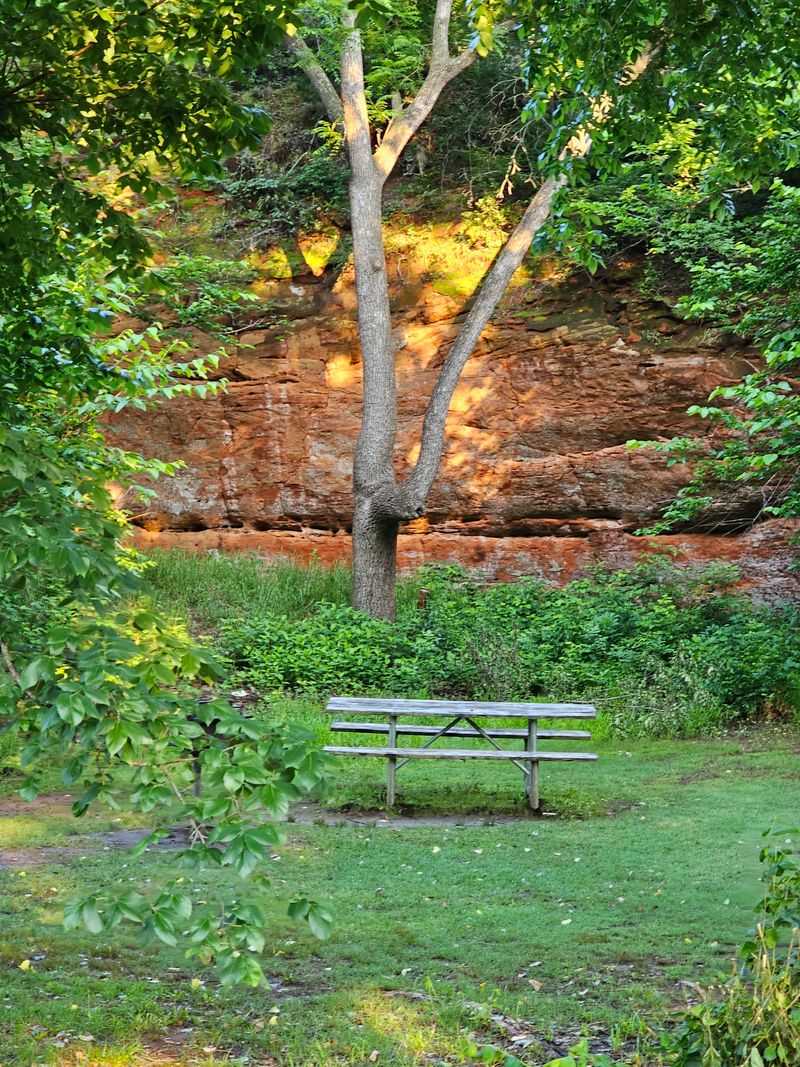
Water determined everything for westward pioneers. Without reliable sources, entire wagon trains could perish in the harsh Oklahoma climate.
Red Rock Canyon became a crucial stopping point because of its natural springs. These water sources bubbled up through the sandstone, creating oases in otherwise dry terrain.
I located several spring sites during my exploration. Some still flow today, though others have diminished over the decades.
The park staff explained how these springs formed. Water percolates through porous sandstone layers until it hits impermeable rock, then emerges at the surface.
For pioneers, finding a spring meant the difference between continuing their journey or turning back. They would camp near these water sources, resting their animals and refilling barrels.
Historical accounts describe wagon trains waiting days for their turn at popular springs. Competition for water could cause tensions between traveling groups.
The springs also attracted wildlife, making the canyon a hunting ground. Pioneers supplemented their dwindling supplies with game drawn to the same water sources.
Today, these springs remind us how precious water remains. Oklahoma experiences periodic droughts, and the springs respond by flowing less vigorously.
Standing beside one active spring, I filled my water bottle and thought about the thousands who had done the same thing generations before me.
Canyon Walls Protected Travelers From Prairie Elements
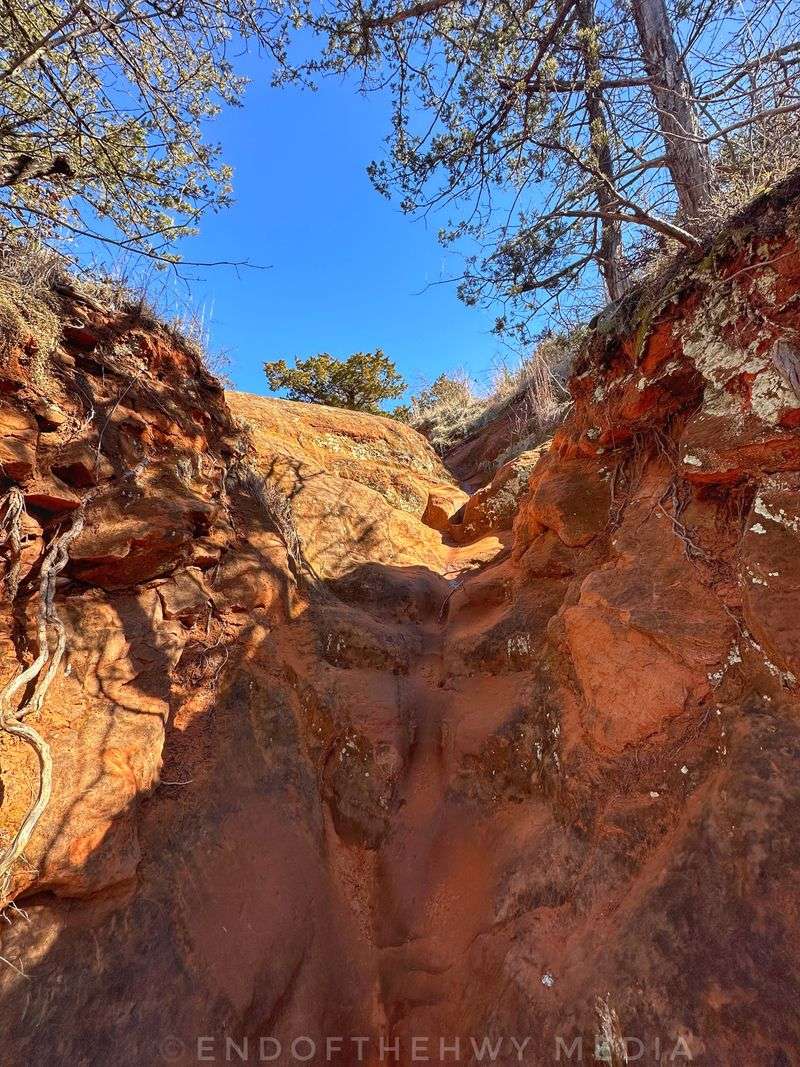
Prairie weather could turn deadly without warning. Thunderstorms, tornadoes, and brutal temperature swings threatened every wagon train crossing Oklahoma territory.
Red Rock Canyon offered something invaluable: shelter. The high sandstone walls blocked wind and provided shade during scorching summer days.
I experienced this protection firsthand during an unexpected storm. Rain swept across the plains, but the canyon walls deflected the worst winds.
Pioneers would have sought the same refuge. Historical records describe wagon trains huddling in the canyon during violent weather.
The sandstone also radiates heat absorbed during the day, moderating nighttime temperatures. This thermal mass effect made camping more comfortable than exposed prairie locations.
During my visit, I noticed how the canyon creates its own microclimate. Temperatures inside ran several degrees cooler than the surrounding flatlands.
Vegetation grows more lushly here too, thanks to the protected environment and water availability. Trees and shrubs that struggle on open prairie thrive in the canyon.
For exhausted travelers, this green refuge must have seemed miraculous after weeks crossing barren grasslands. They could rest, repair wagons, and gather strength for the journey ahead.
The canyon’s protective qualities made it more than just a route. It became a sanctuary, a place where travelers could recover before continuing their westward push.
Horseshoe Trail Climbs to Panoramic Canyon Views
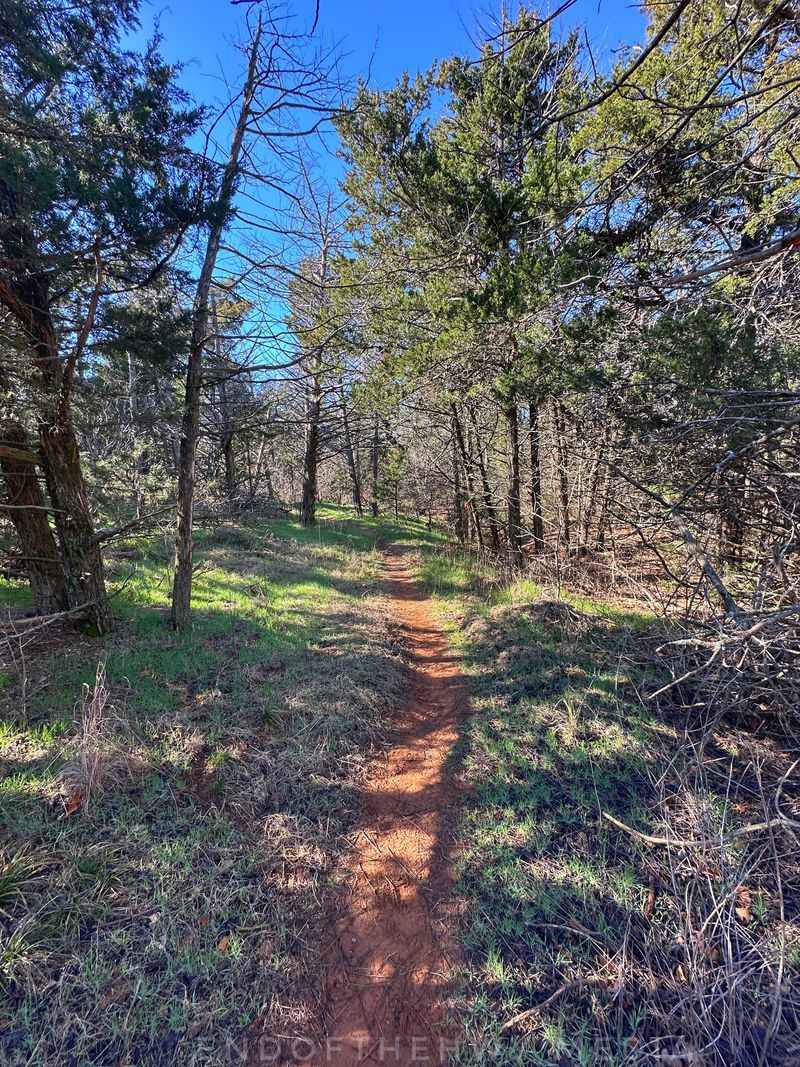
Several visitors mentioned the Horseshoe Trail during my check-in, describing it as challenging but rewarding. They weren’t exaggerating.
This trail climbs steeply from the canyon floor to the rim, gaining elevation quickly through switchbacks carved into the sandstone. The name comes from its curved path that loops back on itself.
I started the hike mid-morning, giving myself plenty of time. The initial section follows relatively flat ground, lulling you into false confidence.
Then the climbing begins. The trail narrows as it ascends, with the canyon wall on one side and increasing drops on the other.
This isn’t a walk. It requires attention, decent fitness, and proper footwear.
I watched families turn back after realizing the difficulty exceeded their expectations.
But those who persist reach spectacular viewpoints. From the rim, the entire canyon spreads below like a three-dimensional map.
I could see the campground, the winding road, and trails snaking through the red rocks. Beyond the canyon, Oklahoma prairie stretched to the horizon.
Pioneers would have sent scouts up these same slopes to survey the route ahead and watch for potential dangers. The strategic value of high ground hasn’t changed in 150 years.
The descent proved almost harder than the climb, requiring careful foot placement on loose sections.
Privately Owned Park Preserves State History
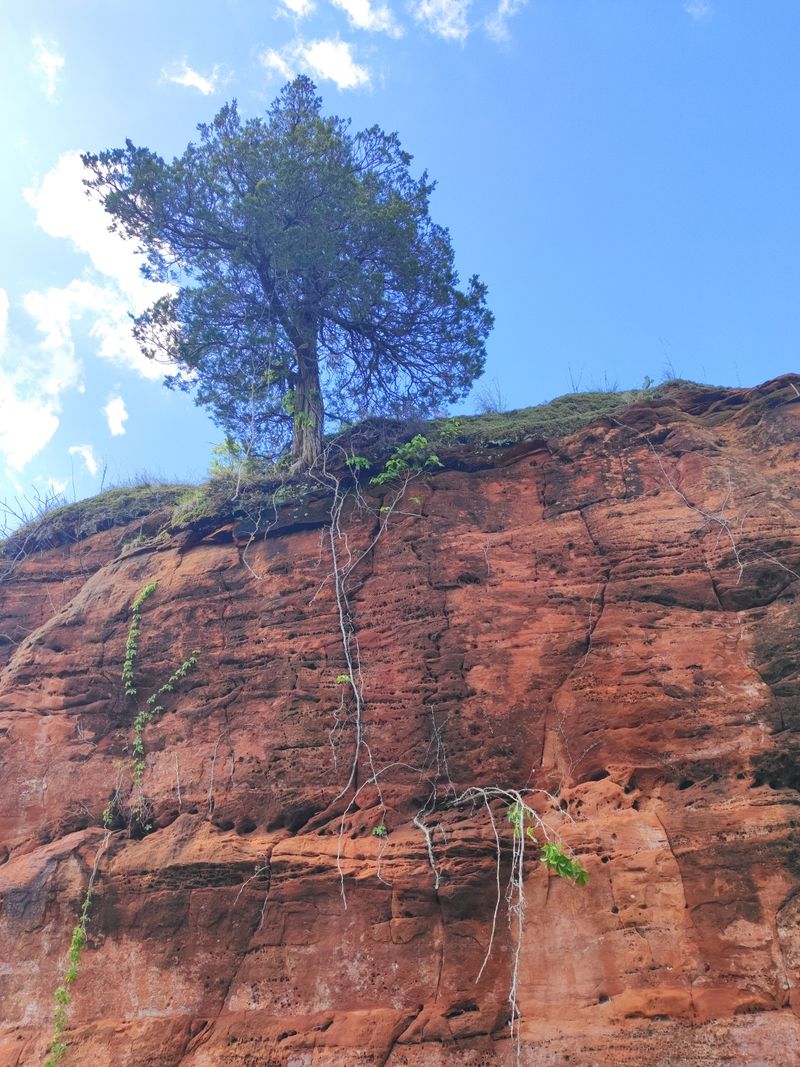
Red Rock Canyon operated as a state park for decades before budget cuts forced its closure. The site sat neglected until private ownership breathed new life into it.
The current owners purchased the property about two years before my visit. They’ve invested heavily in restoration and improvements.
I spoke with the owner during my stay, hearing firsthand about the challenges of preserving a historic site. Balancing public access with conservation requires constant effort and significant resources.
The transition from state to private management changed some aspects. There’s now a daily entrance fee of ten dollars for day visitors.
Camping costs more than typical state park rates, though the facilities justify the price. Everything appears well-maintained, from bathrooms to trails.
Some longtime visitors expressed mixed feelings about privatization. They missed the lower state park fees but acknowledged the improved conditions.
The owners have added amenities that didn’t exist before: glamping tents, a coffee shop, and enhanced trail maintenance. They’ve also worked to document and preserve the site’s pioneer history.
This model raises interesting questions about heritage preservation. Can private ownership protect historic sites as effectively as public stewardship?
Based on what I observed, the answer seems to be yes, at least in this case. The canyon looks better cared for than many struggling state parks.
Wildlife Thrives in Protected Canyon Ecosystem
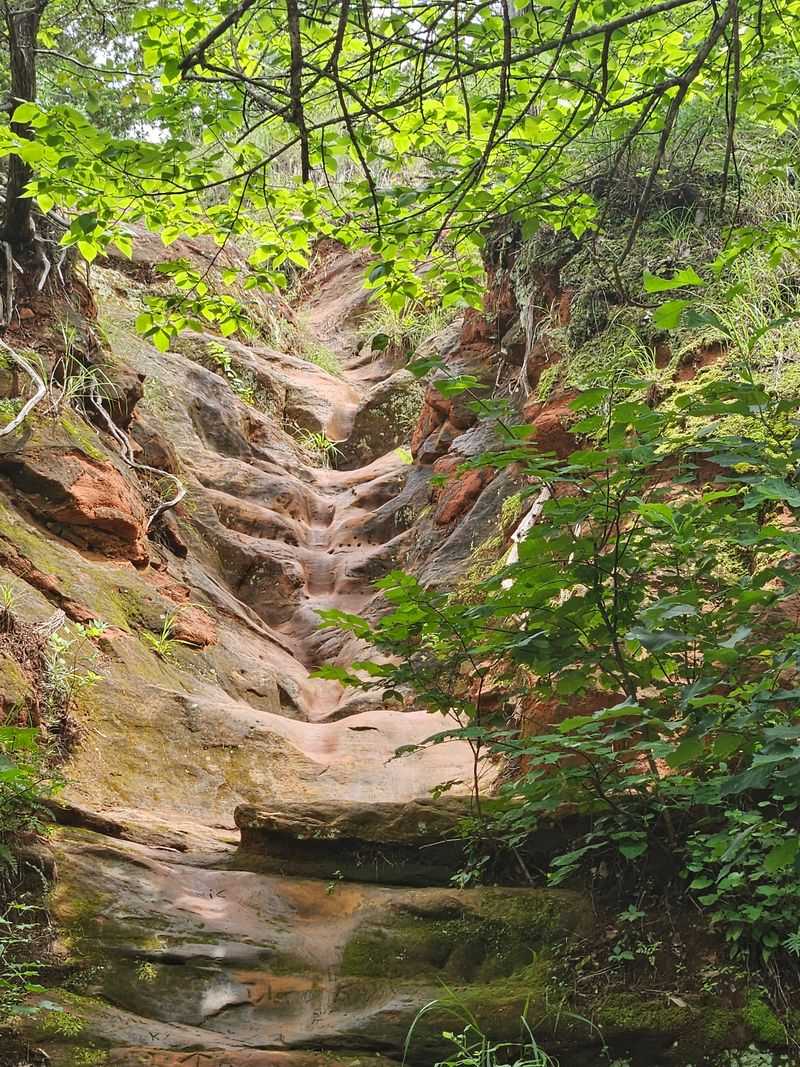
Red Rock Canyon supports diverse wildlife populations drawn to its water, shelter, and vegetation. The protected environment creates habitat that vanished from surrounding farmland.
During my stay, I spotted deer, numerous bird species, and signs of other animals. One reviewer mentioned seeing extensive wildlife on the trail system.
The canyon’s microclimate supports plants that provide food and cover for animals. Trees and shrubs grow more densely here than on exposed prairie.
Early morning proved the best time for wildlife observation. I watched deer moving through the campground, completely comfortable with human presence.
Bird activity peaked at dawn and dusk. I’m no expert birder, but even I recognized the variety of species calling and flying through the canyon.
For pioneers, this wildlife concentration meant hunting opportunities. They could supplement their provisions with fresh game attracted to the same water sources they depended on.
The park asks visitors to respect wildlife by maintaining distance and not feeding animals. This policy protects both people and creatures.
I found it remarkable how quickly nature rebounds when given protection. The canyon ecosystem demonstrates what Oklahoma landscapes looked like before extensive agricultural development.
Watching wildlife move through the same spaces that hosted wagon trains created a powerful connection between past and present natural history.
Day Trips Connect Oklahoma City to Pioneer History
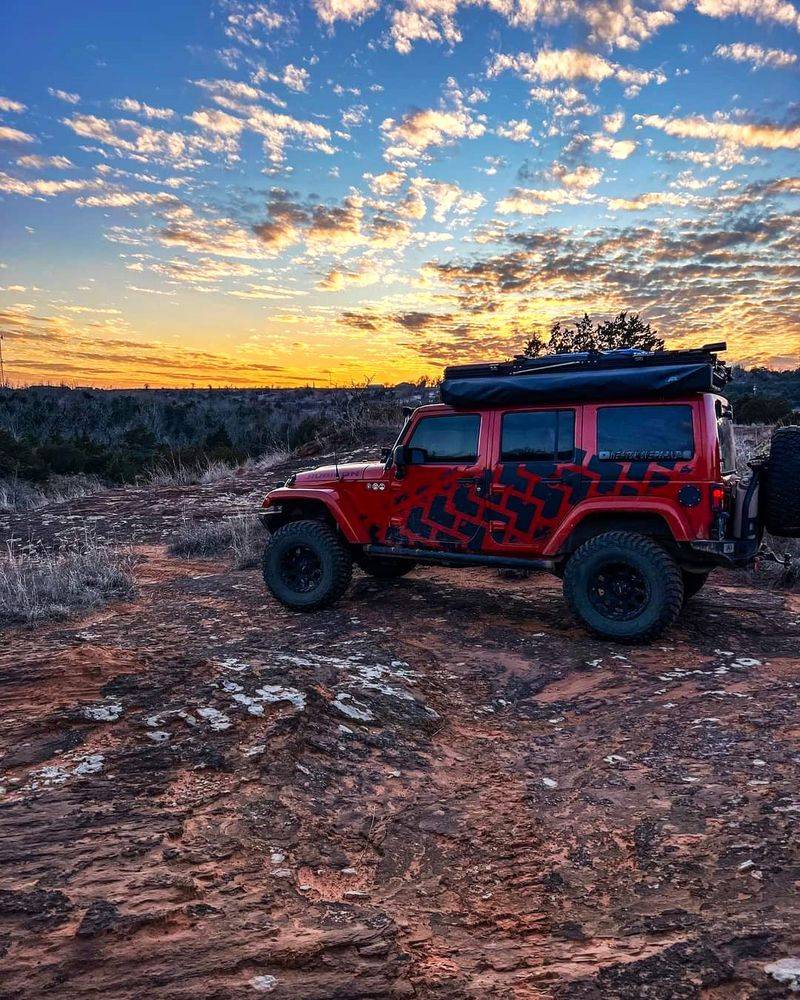
Red Rock Canyon sits roughly an hour from Oklahoma City, making it perfect for day trips. You can leave the metro area after breakfast and be hiking by mid-morning.
This accessibility means more people can experience this historic site without extensive planning. Several reviews mentioned quick visits from the city.
I met an Oklahoma City family who makes regular day trips to the canyon. They pack lunch, hike for a few hours, and return home by dinner.
The park charges ten dollars for day use, which grants access to all trails and facilities except camping areas. The pool requires an additional fee during summer months.
The proximity to Interstate 40 helped make this canyon significant during westward expansion. It lay along a natural travel corridor that remains important today.
Modern visitors follow essentially the same route pioneers took, just much faster and more comfortably. The journey that took weeks now takes an hour.
For Oklahoma residents, Red Rock Canyon offers an easy escape from urban environments. You can be surrounded by nature and history without extensive travel.
Day visitors should arrive early, especially on weekends. The park can get busy, and popular trails become crowded by afternoon.
Morning light also photographs better on the red rocks, capturing that distinctive color that gives the canyon its name and character.
Dear Reader: This page may contain affiliate links which may earn a commission if you click through and make a purchase. Our independent journalism is not influenced by any advertiser or commercial initiative unless it is clearly marked as sponsored content. As travel products change, please be sure to reconfirm all details and stay up to date with current events to ensure a safe and successful trip.
