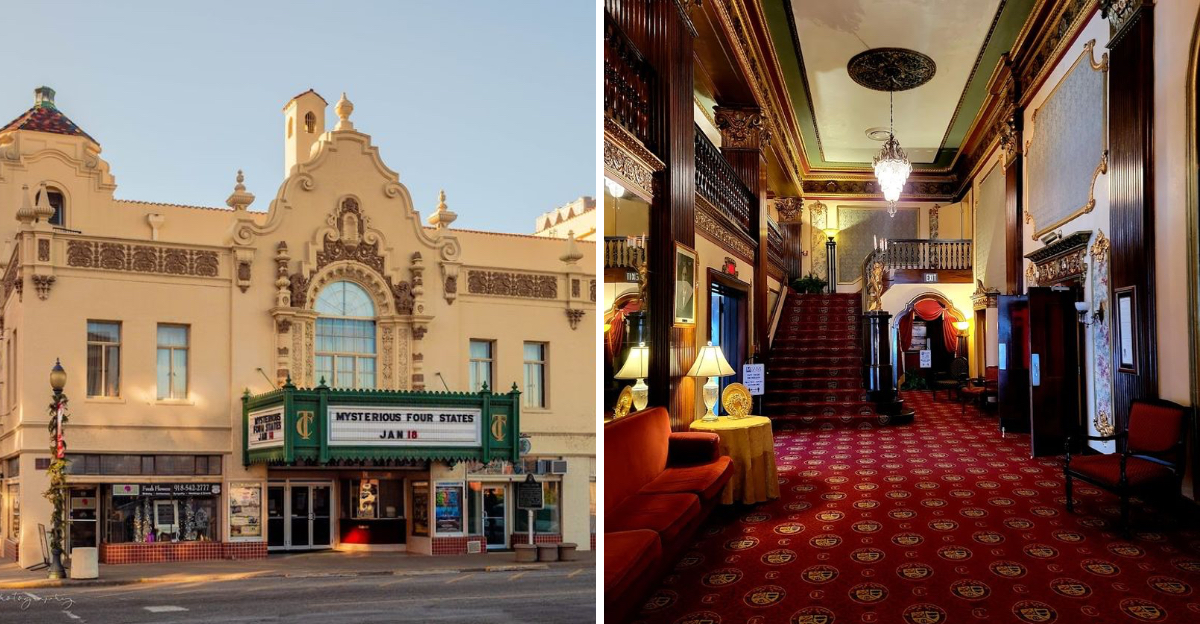
You’re walking down a quiet Main Street in a small Oklahoma town, and then suddenly you stop, doing a double take because nothing about it fits the setting around it.
Right in front of you stands a building so wildly ornate, so boldly beautiful, that you genuinely wonder if someone picked it up from Seville and dropped it here by accident.
Gold details, carved stonework, arched windows, and a facade that looks like it belongs on a movie set rather than a Route 66 pit stop.
This is one of those rare places where history, architecture, and pure theatrical magic collide in a way that makes you feel lucky just to be standing there.
A Facade So Dramatic It Stops You Cold
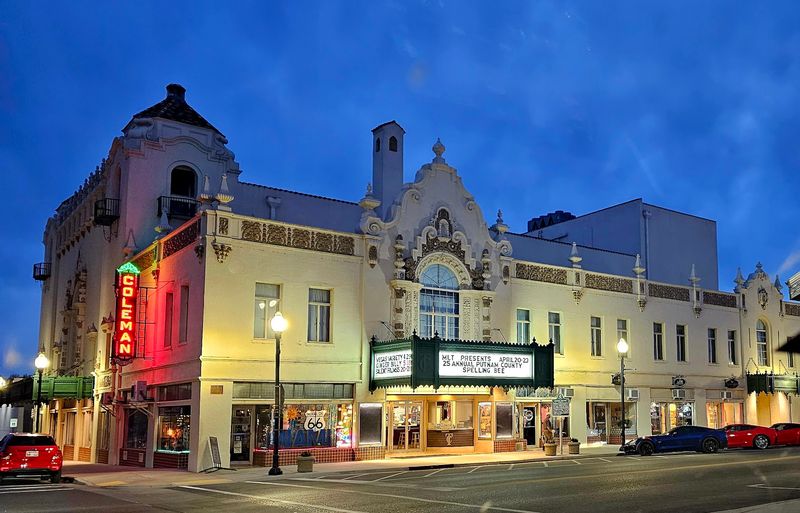
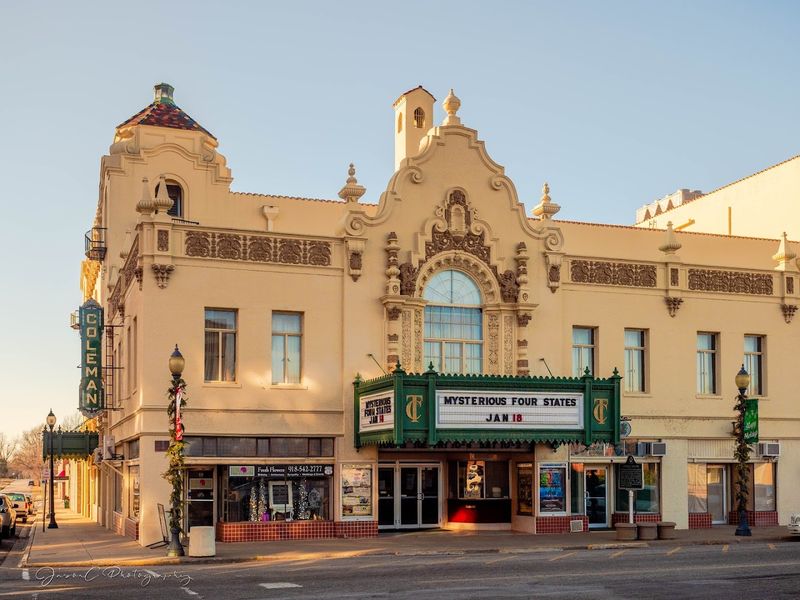
You round a corner, and your jaw just drops. The exterior of this 1929 theater hits you like a scene from a film you never expected to be in.
The Mission Spanish Colonial Revival-style facade is layered with carved details, decorative stonework, and a grandeur that feels almost impossible for a small Oklahoma town.
The building stands proud on North Main Street, wearing its history openly. Arched elements frame the entrance, and ornamental details climb the facade in ways that feel almost theatrical before you even step inside.
It is the kind of architecture that makes you slow your walk to a shuffle just so you can take it all in.
For Route 66 travelers, spotting this building mid-drive is a full stop moment. You pull over, step out, and spend a good ten minutes just staring upward.
Even the exterior alone justifies the detour. People who only stop for photos still leave feeling like they experienced something rare and completely unexpected in northeastern Oklahoma.
Stepping Inside Feels Like Time Travel
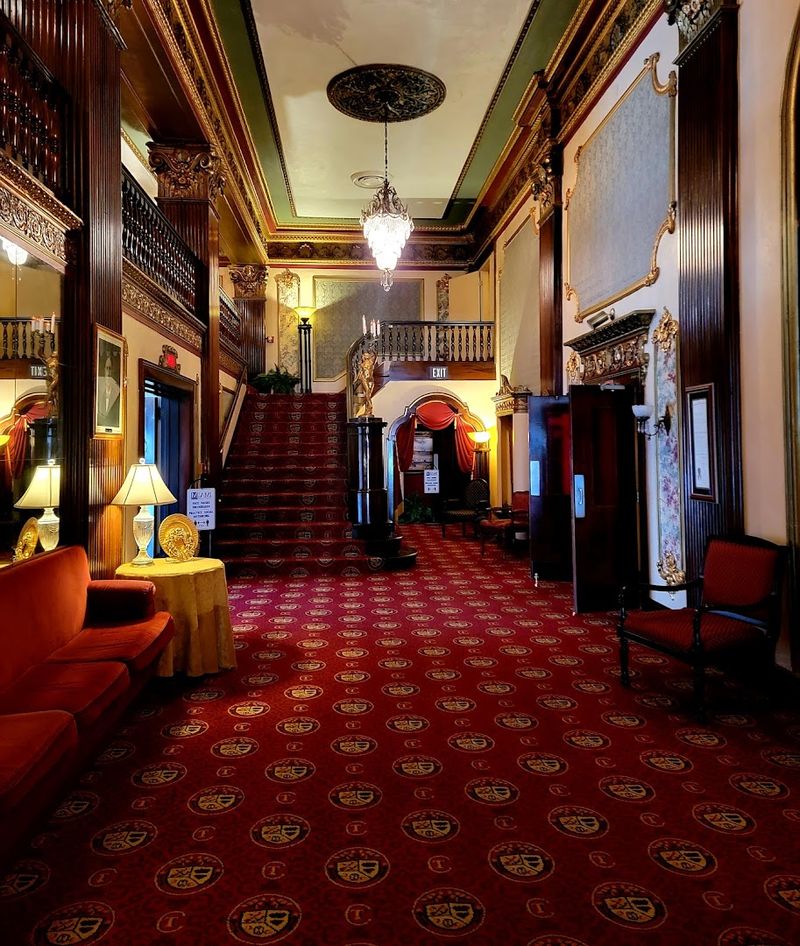
The moment you push through those doors, the outside world completely disappears. The lobby wraps around you in layers of gold, carved wood, and warm light that makes everything feel slightly dreamlike.
It is not just old, it is old in the best possible way, like every surface has a story it is eager to share.
Custom carpets run underfoot in rich, detailed patterns. Gold-gilded accents catch the light from every angle.
The ceiling overhead is ornate in ways that make you crane your neck and forget entirely what you came here to do. This is the kind of interior that makes modern buildings feel lazy by comparison.
What strikes you most is how intentional everything feels. Nothing here was accidental.
The designers of this space wanted you to feel like you had entered somewhere extraordinary, and nearly a century later, that intention still lands perfectly. The restoration work done by the community preserved not just the structure but the soul of the place.
You feel that soul the second you step inside Coleman Theatre Oklahoma and let your eyes adjust to all that golden light.
The Mighty Wurlitzer Organ Earns Its Name
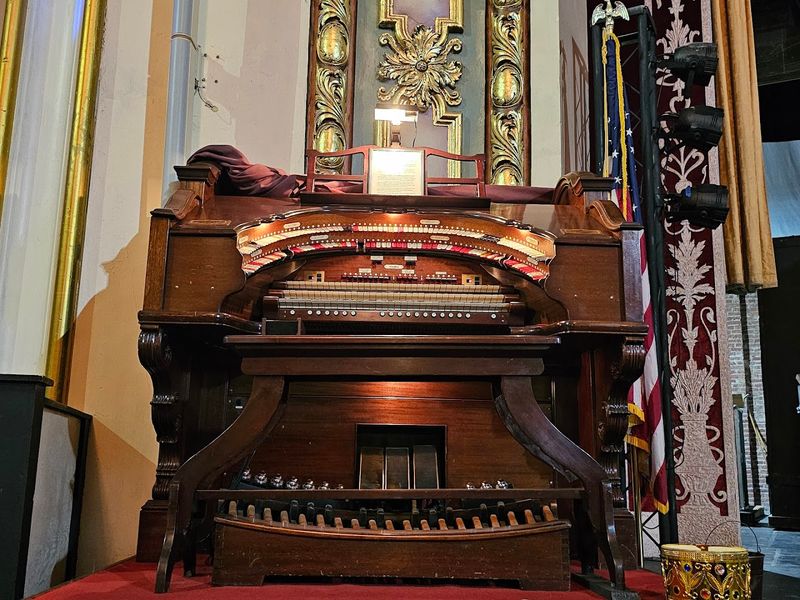
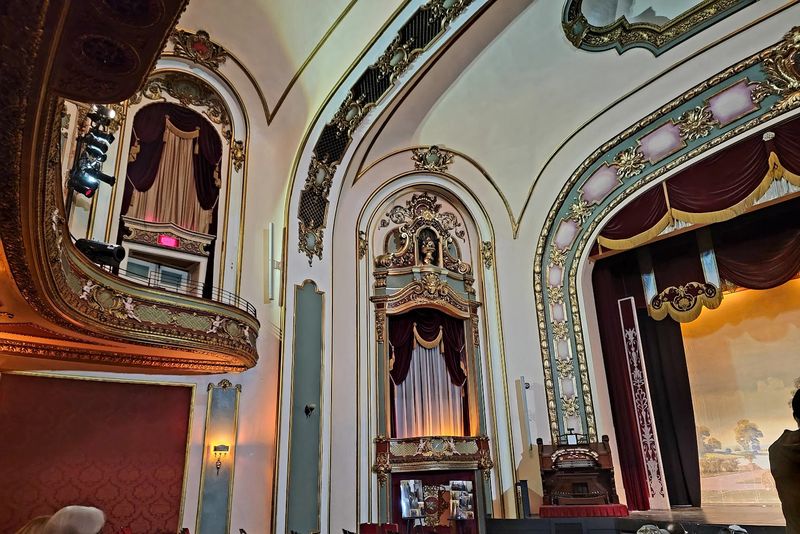
There is something almost magical about hearing a pipe organ fill an old theater. The Mighty Wurlitzer at this venue is not just a relic on display, it is a fully functional, beautifully restored instrument with pipes hidden on either side of the stage behind what appear to be decorative box seats.
Nobody expects that reveal, and it gets everyone every time.
Tour guides have been known to fire it up mid-tour, and when those first notes roll out across the auditorium, the room changes completely. The sound is enormous, warm, and old-fashioned in a way that feels like a privilege to experience.
You are not just hearing music, you are hearing what entertainment sounded like before multiplexes and streaming took over everything.
Silent film screenings with live Wurlitzer accompaniment still happen here, which is a combination so wonderfully specific that it almost defies belief.
Watching a Buster Keaton film with a live organist performing the score in real time inside a 1929 theater is an experience that no app, no screen, and no modern venue can replicate.
If you only do one thing here, make it this. Let the Mighty Wurlitzer do what it has been doing for nearly a hundred years.
Gold Details Cover Every Corner You Look At
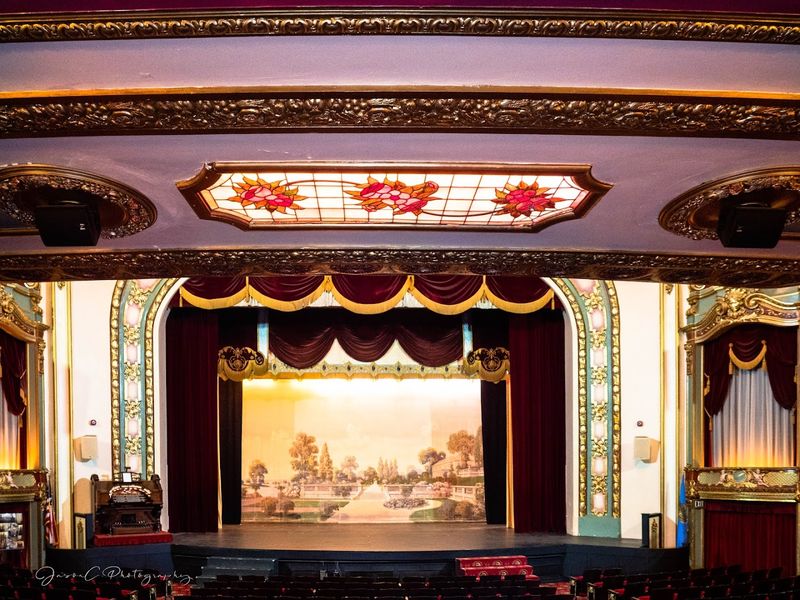
Gold is usually reserved for palaces and fancy hotels. Here, it coats the walls, the ceilings, the moldings, and the decorative trim in a way that should feel excessive but somehow feels just right.
Every surface seems to have been given careful, loving attention by craftsmen who took their work seriously.
The carved woodwork alone is worth studying up close. Intricate patterns repeat across doorframes, balcony edges, and ceiling panels.
You keep finding new details the longer you look, which is the mark of truly great decorative architecture. Most buildings reveal themselves quickly.
This one rewards patience and a slow, wandering eye.
What makes it even more impressive is knowing that much of this was restored rather than replaced. The community fought hard to bring this space back to its original condition, and the results speak for themselves in every gilded corner.
Running your eyes along a single wall inside Coleman Theatre Oklahoma is like reading a sentence written in a language made entirely of beauty. You do not need to understand every detail to feel the weight of the craftsmanship behind it.
You just need to stop, look, and let it sink in properly.
Stained Glass Glows Like a Secret Kept for Decades
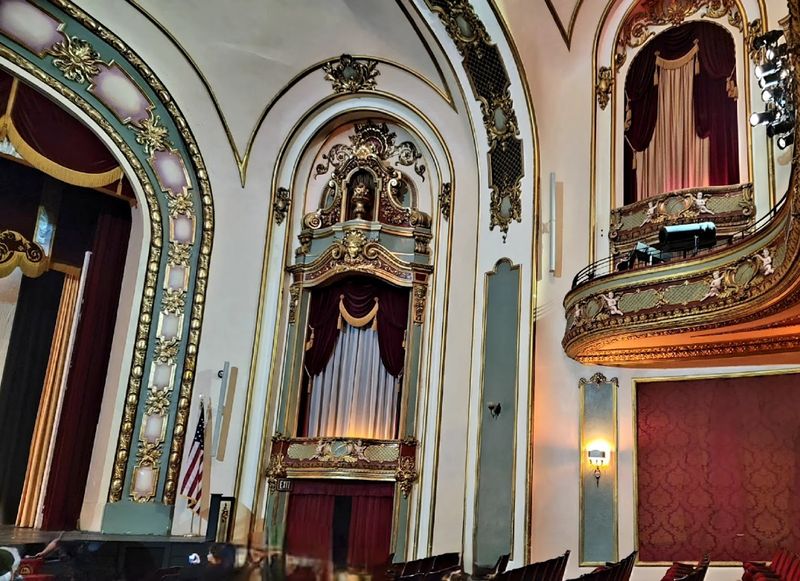
Most people walk past the stained glass the first time without fully registering it. Then someone points it out, and suddenly it is all you can see.
Positioned under the balcony and backlit to showcase the colors, these panels glow with a quiet intensity that stops conversations mid-sentence.
The colors are deep and rich, the kind that remind you why humans have been using stained glass in important buildings for centuries. There is something about colored light filtering through glass that bypasses your brain and goes straight to your feelings.
It is warm, sacred, and a little bit surprising in a theater context, which makes it even better.
Details like this are what separate a merely old building from a genuinely moving one. The stained glass here was not added for show, it was part of the original vision for a space meant to feel special from every angle.
Seeing it lit from behind in a darkened corner of the auditorium is one of those quiet, personal moments you carry home with you. It does not shout for your attention the way the chandeliers do.
It just waits patiently for you to find it, and when you do, it rewards you completely.
Free Tours Make This Place Even More Generous
Here is something that catches most visitors completely off guard. Tours of this extraordinary space are offered free of charge, with donations welcomed but never required.
For a building this spectacular, that kind of open-door generosity feels almost radical. Most places this impressive charge you just to look at the lobby.
The guides bring real depth to the experience. They walk you through the history of the building, explain the architectural choices, point out the hidden organ pipes, and share the story of how the community rallied to save and restore this landmark.
You leave knowing not just what you saw but why it matters, which is a rare and valuable thing.
Even stopping by unannounced can lead to unexpected moments. People have been invited in during closing time, given impromptu organ demonstrations, and treated to small personal tours by staff who clearly love the place they work in.
That warmth is not a policy, it is a culture. Visiting Coleman Theatre Oklahoma feels less like attending a tourist attraction and more like being welcomed into something a community genuinely treasures.
Bring a few dollars for the donation box, because after everything you experience here, leaving empty-handed feels like the wrong response.
Route 66 History Runs Right Through This Building
Route 66 is full of roadside attractions, but most of them are novelties. This is something different entirely.
The theater sits right along the Mother Road in Miami, Oklahoma, and it is one of the few stops on the entire route where history, architecture, and living culture all exist in the same place at the same time.
The building opened in 1929, right at the tail end of a decade defined by ambition and spectacle. It was built to impress, and it succeeded so completely that nearly a century of change has not dulled it even slightly.
For Route 66 travelers collecting stamps on the official Oklahoma passport, this is a required stop. But even without a passport, this building earns a detour all on its own.
There is something deeply satisfying about standing inside a space so rooted in American history while Route 66 traffic rolls past just outside the front doors. The theater and the road share a spirit, both built during an era when people believed in doing things boldly and beautifully.
Stopping here does not feel like checking a box on a road trip itinerary. It feels like finding the heart of the whole journey, right there on a quiet main street in northeastern Oklahoma.
Performances Still Fill the Seats Regularly
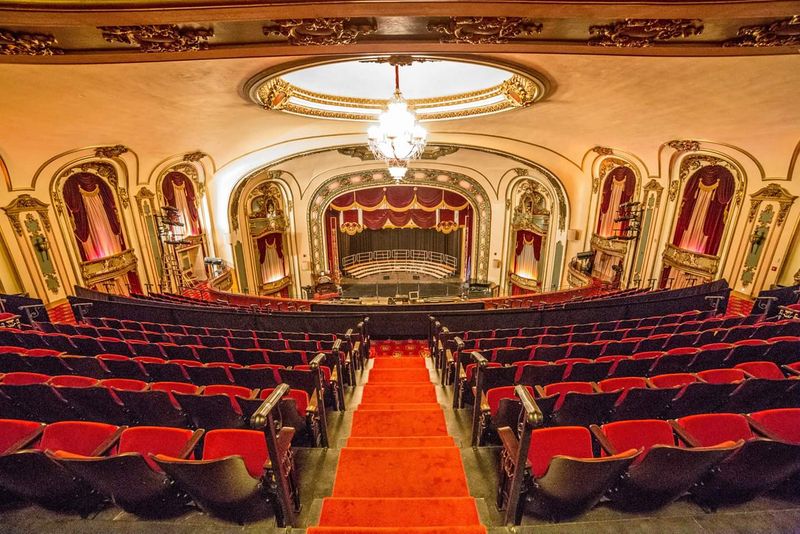
A beautiful old building is one thing. A beautiful old building that still hosts live performances, films, and concerts on a regular basis is something else entirely.
This theater did not become a museum, it stayed alive. Musicals, plays, silent films, and concerts all continue to grace this stage, drawing audiences from across the region.
The size of the venue works in your favor as an audience member. It is intimate enough that no seat feels far from the action, yet grand enough that the experience never feels small.
Performers on that stage are framed by nearly a century of theatrical tradition, which adds a layer of weight and atmosphere you simply cannot manufacture in a newer venue.
Checking the events calendar before visiting is a smart move. Catching a live show here transforms the experience from sightseeing into something much more personal.
The acoustics are excellent, the seating is comfortable, and the setting makes even a modest production feel like a major event. Being part of an audience inside Coleman Theatre Oklahoma, with all that gold and history surrounding you, is the kind of evening you describe to friends for weeks afterward.
It earns its place in your memory long after the curtain comes down.
A Community Saved This Place and It Shows
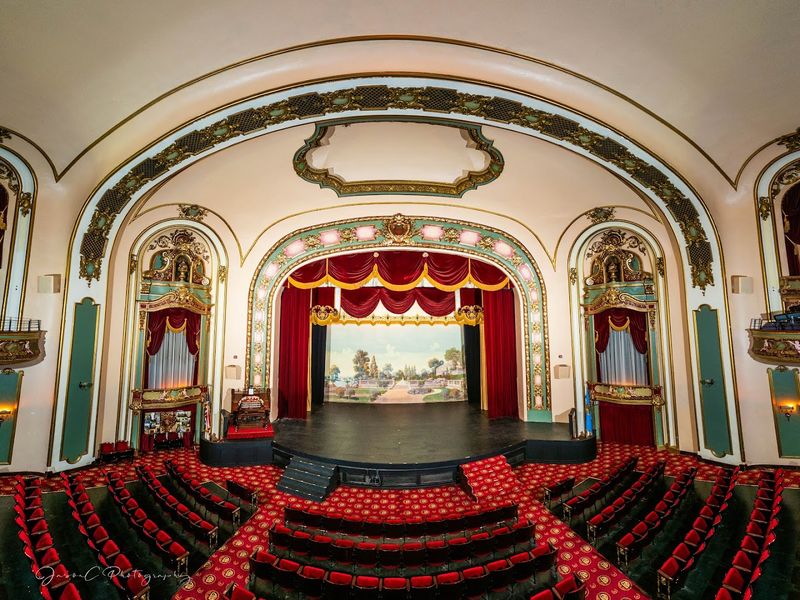
Buildings like this do not survive by accident. The Coleman Theatre exists in its current form because the people of Miami, Oklahoma decided it was worth saving and then did the hard work of actually saving it.
That kind of community commitment leaves a mark on a place, and you can feel it the moment you walk through the door.
The restoration brought back original details that could have easily been lost or modernized away. Carpets were recreated to match original designs.
Architectural elements were repaired rather than replaced. The pipe organ was recovered and restored.
Every decision pointed toward authenticity over convenience, which is a rare and admirable choice in any era.
There is an emotional quality to a space that has been fought for and loved by the people around it. This building carries that quality in every restored corner and every carefully preserved detail.
Visitors feel it even when they cannot name it. It is the difference between a historic site and a living landmark.
Coleman Theatre Oklahoma, located at 103 N Main St, Miami, OK 74354, is firmly in the second category, and the community that saved it deserves every bit of recognition they get for making sure it is still here for the rest of us to discover.
Dear Reader: This page may contain affiliate links which may earn a commission if you click through and make a purchase. Our independent journalism is not influenced by any advertiser or commercial initiative unless it is clearly marked as sponsored content. As travel products change, please be sure to reconfirm all details and stay up to date with current events to ensure a safe and successful trip.
