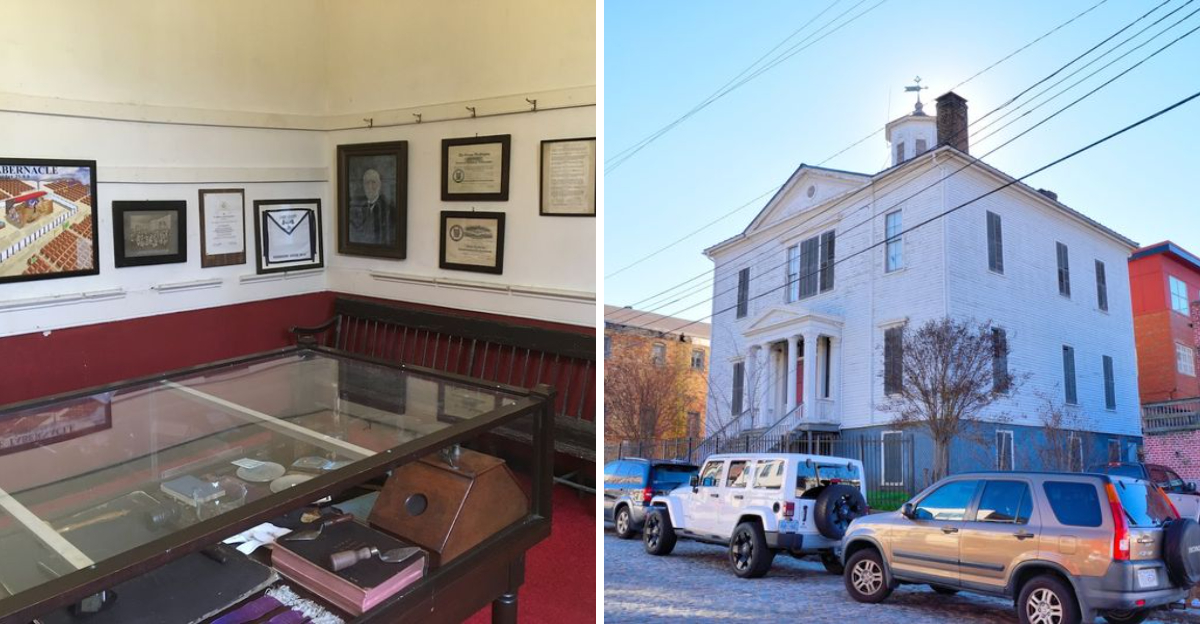
Blink and you will miss one of Richmond’s most remarkable pieces of history. In Church Hill stands a building that quietly carries centuries of stories, older than much of the nation around it.
While America was still taking shape, Virginia’s Freemasons were creating something lasting within these walls. This is where the first U.S.
Attorney General once met, where a famed French war hero was honored, and where the spirit of early democracy still feels close. Many people pass by without noticing, which makes discovering it even more rewarding.
History enthusiasts, architecture fans, and curious explorers all find themselves drawn in. This spot is not just another stop in Richmond.
It is a place that leaves a lasting impression.
A Building That Predates Almost Everything You Know
Most historic sites in America come with an asterisk. Masons’ Hall does not.
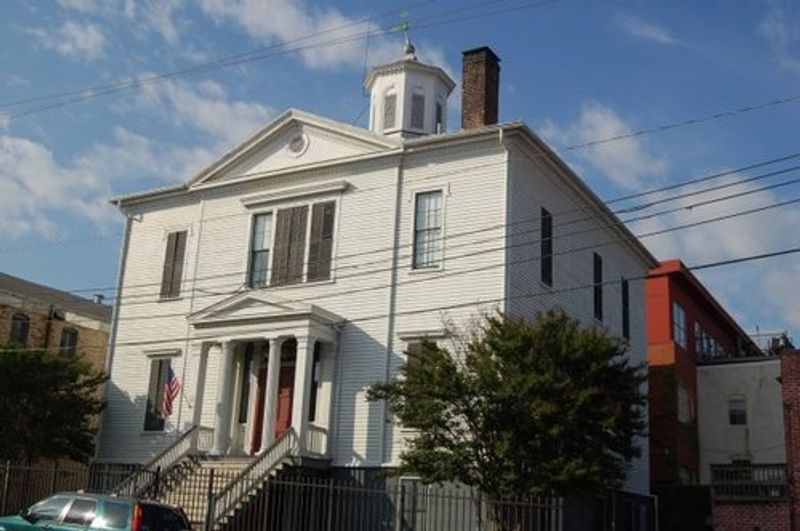
Construction began in 1785, making it the oldest building in the United States built specifically for Masonic use, and it has been in continuous operation ever since.
That is not a small detail. That means while other buildings were torn down, repurposed, or simply forgotten, this one kept showing up to work every single decade for well over two centuries.
Virginia has always had a flair for producing firsts, and this building fits that tradition perfectly. It was completed by Richmond Lodge No. 13, which was later renumbered to No. 10, and it now serves as the home of Richmond Randolph Lodge No. 19.
Walking up to the entrance, you immediately sense that something serious happened here. The brick facade carries the weight of generations, and the architectural details speak to a craftsmanship that modern construction rarely attempts.
It is not flashy or oversized. It is precise, purposeful, and quietly magnificent, which, when you think about it, is a pretty accurate description of the Masonic tradition itself.
The Famous Faces Who Walked Through That Door
Few buildings in America can casually name-drop the way Masons’ Hall can. Edmund Randolph, the very first U.S.
Attorney General and a Governor of Virginia, was directly connected to this lodge. That alone would be enough to earn landmark status.
Then there is John Marshall, the longest-serving Chief Justice in the history of the United States Supreme Court. His association with this hall adds another layer of constitutional gravitas to an already impressive guest list.
My personal favorite chapter, though, involves the Marquis de Lafayette. In 1824, the celebrated French military hero visited Masons’ Hall and was made an honorary member of the lodge.
Imagine the atmosphere in that room on that particular evening.
Virginia has a remarkable habit of placing itself at the center of pivotal American moments, and Masons’ Hall is one of the clearest examples of that pattern. These were not peripheral figures in American history.
They were architects of the republic, and they chose this building as a gathering place. That says everything about what this hall meant to the founding generation, and what it still means today.
More Than Just a Lodge Room: A Venue for History Itself
Here is something most people do not expect: Masons’ Hall was not always exclusively a Masonic space. Throughout its long life, this building has worn several hats, and each one is more fascinating than the last.
During the War of 1812, the hall served as a hospital, opening its doors to wounded soldiers when the city needed space and the lodge had it to give. That kind of civic generosity is easy to overlook when you are staring at the ornate lodge room upstairs, but it matters enormously to the full story of this place.
Richmond City Courts and the Richmond City Council also held meetings here at various points in the building’s history. So yes, local government, military medicine, and Masonic ceremony have all shared the same address on East Franklin Street.
Virginia’s history is layered in ways that constantly catch you off guard, and Masons’ Hall is a perfect example of that complexity. A single building can hold multiple stories simultaneously, and this one holds more than most.
Every room feels like it has a secret it is just barely willing to share with curious visitors who take the time to look carefully.
The Architecture Tells Its Own Riveting Story
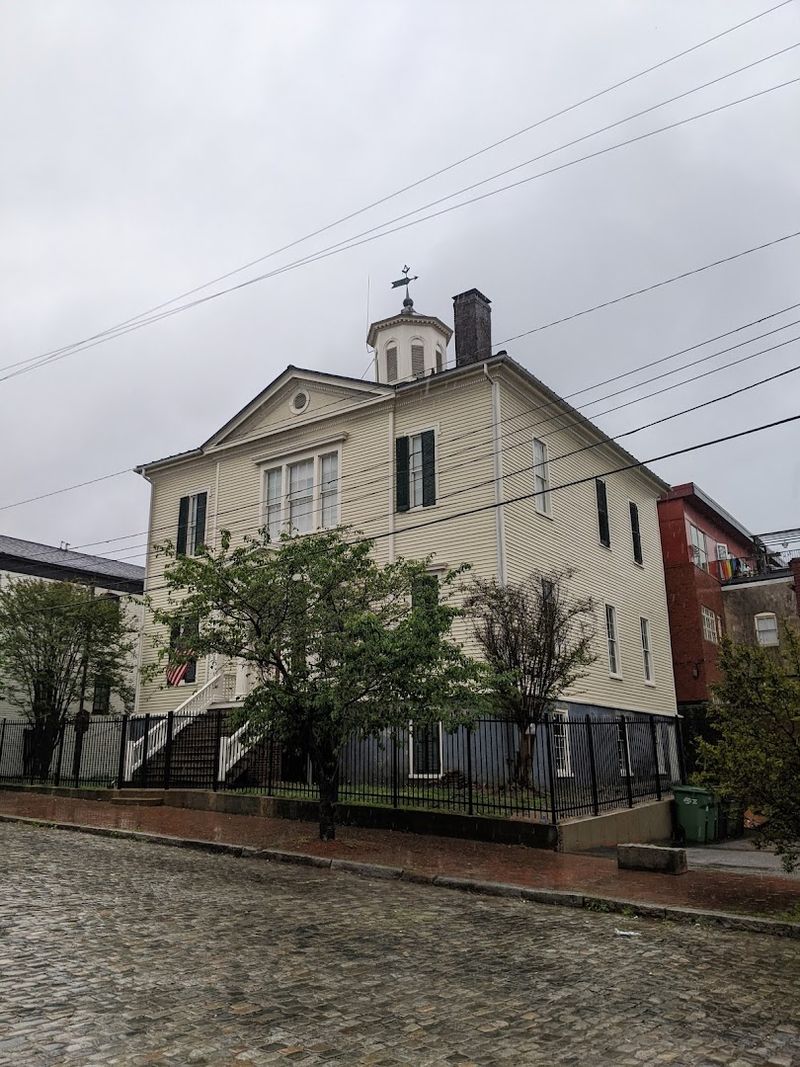
Colonial-era architecture in Virginia tends to be quietly spectacular, and Masons’ Hall is a textbook example of that understated excellence. The building does not shout for attention.
It earns it slowly, detail by detail.
The brick construction reflects the building traditions of late 18th-century Richmond, when craftsmen took immense pride in the permanence of their work. Every element was built to last, and the fact that the structure still stands in active use today is proof that they succeeded spectacularly.
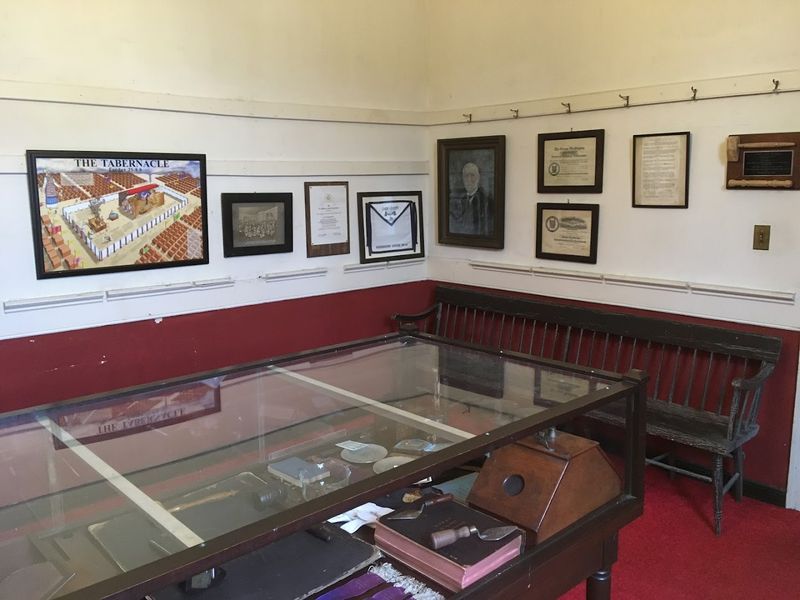
Inside, the third-floor lodge room is the crown jewel. Masonic symbols, period furnishings, and carefully preserved architectural features create an atmosphere that feels genuinely transported from another era.
It is the kind of space that makes you instinctively lower your voice out of respect.
Compared to the grand, purpose-built civic monuments that came later in American history, Masons’ Hall feels intimate and human-scaled. That intimacy is actually part of its power.
You can stand in the same room where Edmund Randolph once stood, and the scale of the space makes that connection feel real rather than abstract. Architecture, at its best, does exactly that.
National Recognition That Was Long Overdue
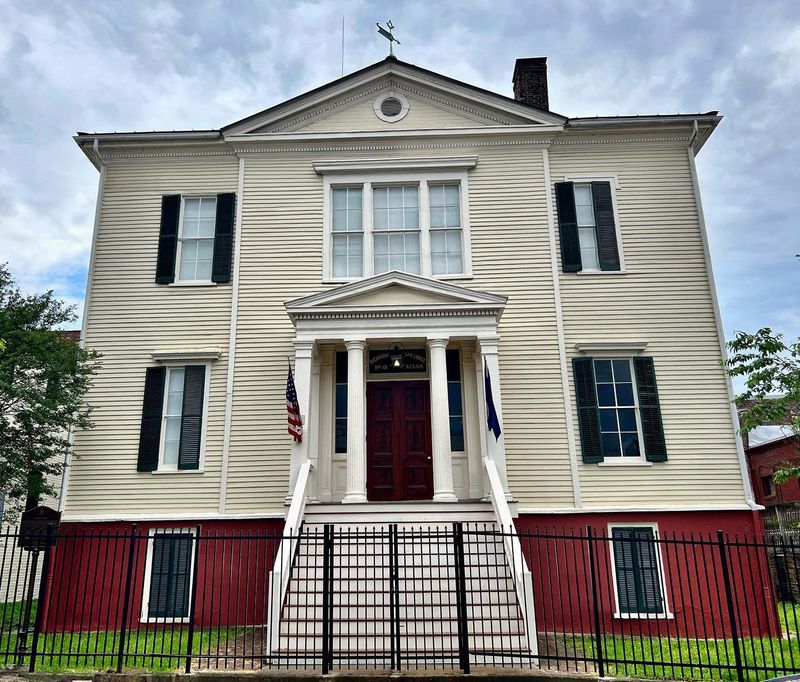
Some places earn their official recognition quickly. Others wait patiently for the world to catch up.
Masons’ Hall falls firmly into the second category, and thankfully, recognition did eventually arrive in a meaningful way.
The building is listed on the National Register of Historic Places, which is the United States government’s official acknowledgment that a site carries exceptional historical, architectural, or cultural significance. For Masons’ Hall, that designation is not honorary.
It is earned.
Virginia also designated the hall as a Virginia Historic Landmark, adding a state-level layer of protection and recognition to complement the federal listing. Both designations help ensure that this extraordinary building receives the care and attention it deserves going forward.
What makes these recognitions particularly satisfying is that they validate something locals and Masons have known for generations. This is not a building that needs a plaque to feel important.
The plaque simply makes it official for everyone else. Standing in front of those designations, you get a clear sense that American history is not just stored in textbooks or museums.
Sometimes it is still operating, still meeting, still very much alive on a quiet Richmond street corner.
Yes, You Can Actually Go Inside
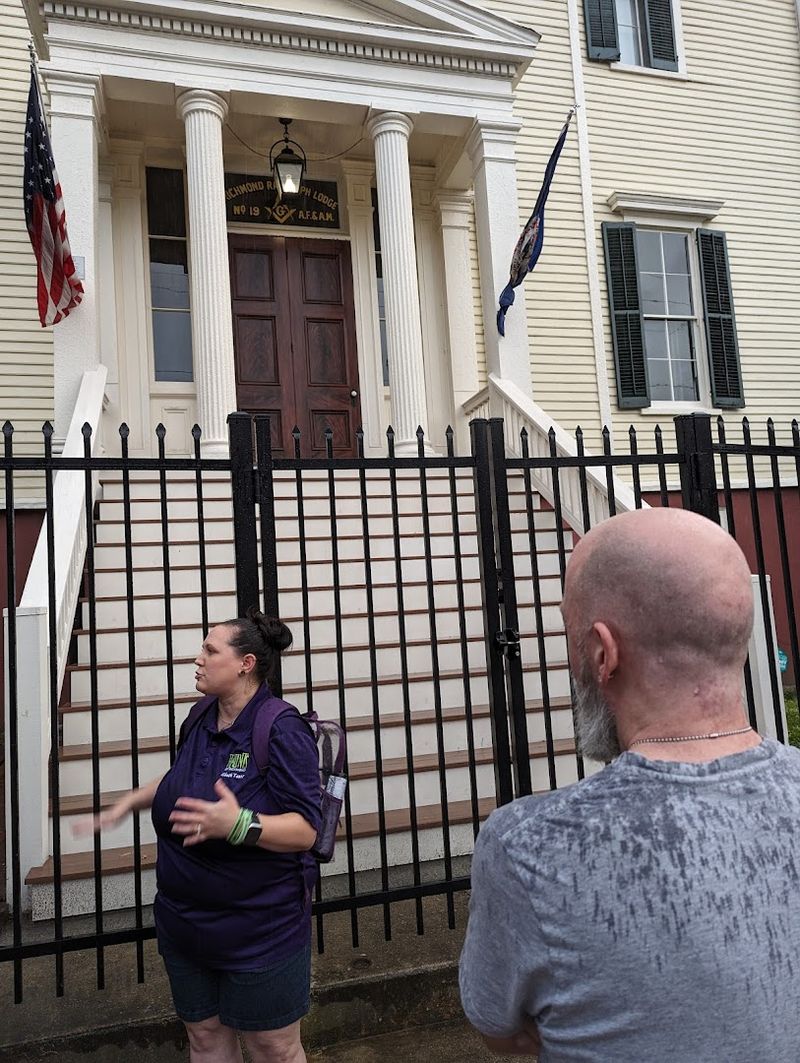
Let me be very clear about something that surprises a lot of people: Masons’ Hall is open to the public. You do not need to be a Freemason, a history professor, or a Virginia native to get through that door.
Public tours are available by appointment throughout the year, giving curious visitors a genuine chance to explore the interior of one of America’s most significant pre-19th-century buildings. The lodge’s official website at www.masonshall1785.org is the best place to check upcoming tour dates and make arrangements.
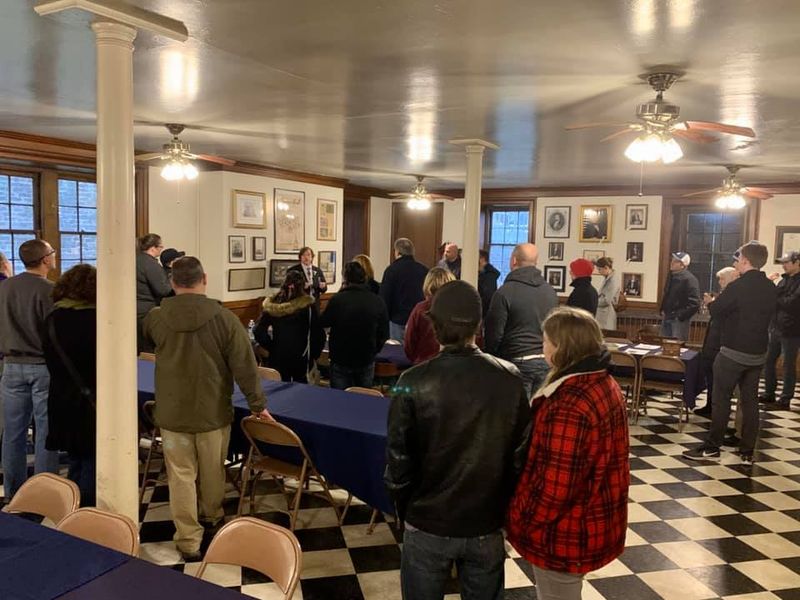
During special community events like Richmond’s Winter Wander, the hall has also opened its doors for free public access, which is a fantastic way to experience the space if you happen to be in the city during one of those occasions.
Virginia rewards the travelers who do a little homework before they arrive, and Masons’ Hall is a prime example of that principle. A quick visit to the website, a simple appointment, and suddenly you are standing inside a building that most Americans have never heard of but absolutely should visit.
Do not leave Richmond without making this happen. Seriously, it is that good.
Richmond Randolph Lodge No. 19: Still Very Much Alive
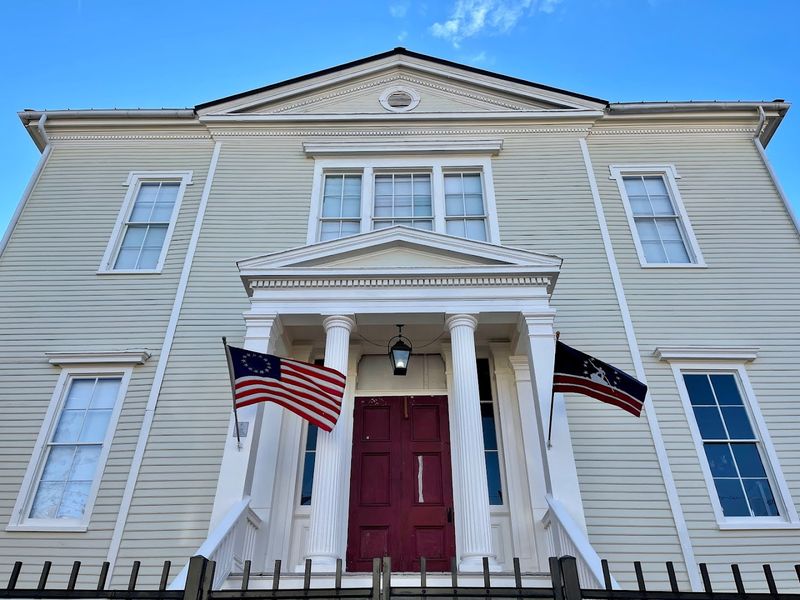
One of the most remarkable things about Masons’ Hall is that it is not a museum frozen in amber. Richmond Randolph Lodge No. 19 still meets here regularly, making this one of the rare historic landmarks in America that has never stopped being used for its original purpose.
Regular lodge meetings take place in the third-floor lodge room, the same space that has hosted Masonic gatherings for well over two centuries. That continuity is genuinely rare in the American historic preservation landscape, and it gives the building an energy that purely preserved museums often lack.
There is something quietly powerful about knowing that the rituals, traditions, and fellowship practiced in this room today are connected in an unbroken line to the founding era of the United States. The lodge is not performing history.
It is living it.
For visitors, this active status adds an extra dimension to any tour of the space. You are not just walking through a relic.
You are stepping into a living institution that has outlasted wars, economic upheavals, and the complete transformation of American society. That kind of staying power deserves genuine admiration, and Masons’ Hall has earned every bit of it.
The Lafayette Connection That Still Gives Me Chills
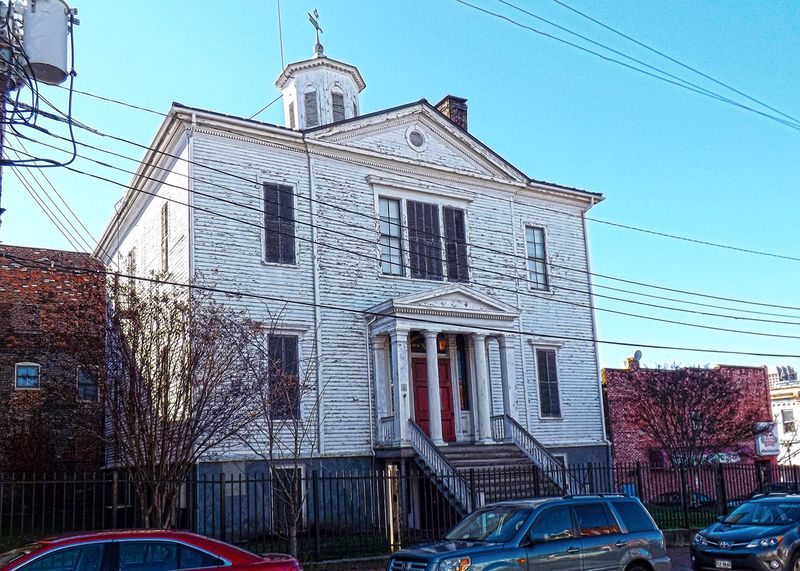
Of all the stories attached to Masons’ Hall, the Lafayette chapter is the one that hits differently. In 1824, the Marquis de Lafayette, the French military hero who played a pivotal role in the American Revolution, made a celebrated return tour of the United States.
Richmond was on his itinerary, and Masons’ Hall was one of his stops. The lodge made him an honorary member during that visit, a gesture that carried enormous symbolic weight at a time when the revolutionary generation was beginning to pass from living memory into legend.
Standing in the lodge room today, knowing that Lafayette stood in that same space, transforms the experience from a simple tour into something genuinely moving. Virginia has a gift for producing these kinds of tangible connections to the founding era, but even by Virginia’s high standards, this one is special.
Lafayette’s visit was part of a national farewell tour that drew enormous crowds wherever he traveled, and the fact that Masons’ Hall was significant enough to be included on that itinerary tells you exactly how important this building was considered to be, even in the 19th century. Some legacies age very, very well.
Church Hill: The Neighborhood That Sets the Perfect Stage
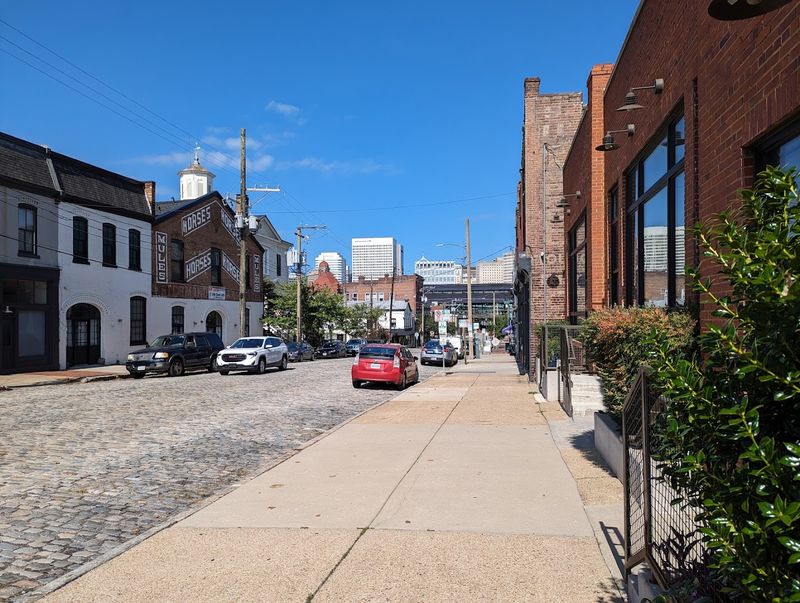
Masons’ Hall does not exist in isolation. It sits in Church Hill, one of Richmond’s oldest and most architecturally rich neighborhoods, and the surrounding streetscape makes the whole experience feel even more immersive.
Church Hill is perched on one of Richmond’s famous hills, offering sweeping views of the city and the James River below. The neighborhood is packed with beautifully preserved 19th-century rowhouses, independent shops, and a general atmosphere that rewards slow, unhurried walking.
Spending a morning exploring Church Hill before or after your Masons’ Hall tour is a genuinely excellent way to spend a few hours in Virginia’s capital city. The neighborhood feels lived-in and authentic in ways that more heavily touristed areas sometimes do not.
Patrick Henry’s famous “Give me liberty, or give me death” speech was delivered at St. John’s Church, which is also in Church Hill, just a short walk from Masons’ Hall. So if you are going to make the trip, you might as well turn it into a full-on historic walking tour of one of the most significant square miles in American history.
Your feet will thank you eventually.
Plan Your Visit: Everything You Need to Know
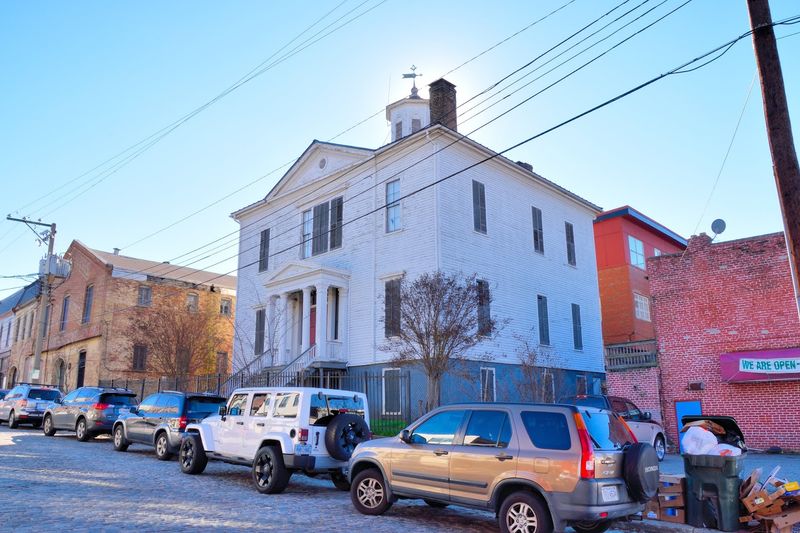
Getting to Masons’ Hall is straightforward, and planning ahead makes the experience significantly better. The hall is located at 1807 E.
Franklin Street, Richmond, Virginia 23223, right in the heart of Church Hill.
Tours are available by appointment, so visiting the official website at www.masonshall1785.org before your trip is the smartest first step. The lodge also has a phone number available for direct inquiries, and the team is genuinely helpful when it comes to scheduling.
Parking in Church Hill is manageable, and the neighborhood is very walkable once you arrive. Combining a Masons’ Hall tour with a stroll through the surrounding streets gives you a full afternoon of genuinely memorable sightseeing in one of Virginia’s most historically dense neighborhoods.
My honest advice: do not treat this as a quick checkbox on a Richmond itinerary. Give it the time it deserves.
Walk slowly through the rooms, ask questions on your tour, and let the weight of the history settle around you properly. Virginia has no shortage of historic sites, but Masons’ Hall occupies a category almost entirely its own.
Pack comfortable shoes, bring your curiosity, and go see it before another year slips by without you making the trip.
Dear Reader: This page may contain affiliate links which may earn a commission if you click through and make a purchase. Our independent journalism is not influenced by any advertiser or commercial initiative unless it is clearly marked as sponsored content. As travel products change, please be sure to reconfirm all details and stay up to date with current events to ensure a safe and successful trip.
