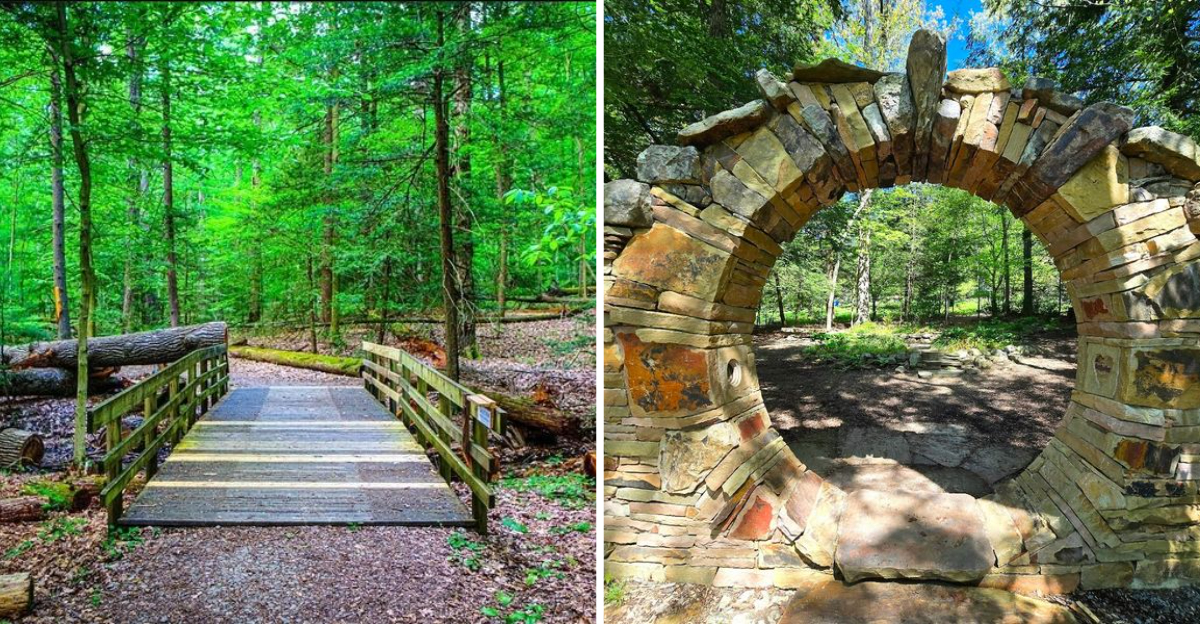
A troll hiding under a stone bridge. A fairy door tucked into a tree root. A winding path that leads to a pond where dragonflies hover like tiny helicopters.
This is not a children’s book illustration.
It is an actual garden you can visit without spending a single dollar.
Trails meander through old farm fields and along a babbling creek that once powered a 19th century mill.
You will find native wildflowers, peaceful benches, and the kind of quiet that makes you lower your voice without thinking.
Have you ever wandered somewhere that felt secretly magical?
This West Virginia treasure is exactly that.
Pack a picnic, bring the kids or just your own curiosity, and explore for hours.
The only thing you have to pay is attention. And maybe a compliment to the volunteer gardeners. They deserve it.
The Only Botanic Garden in the Entire State
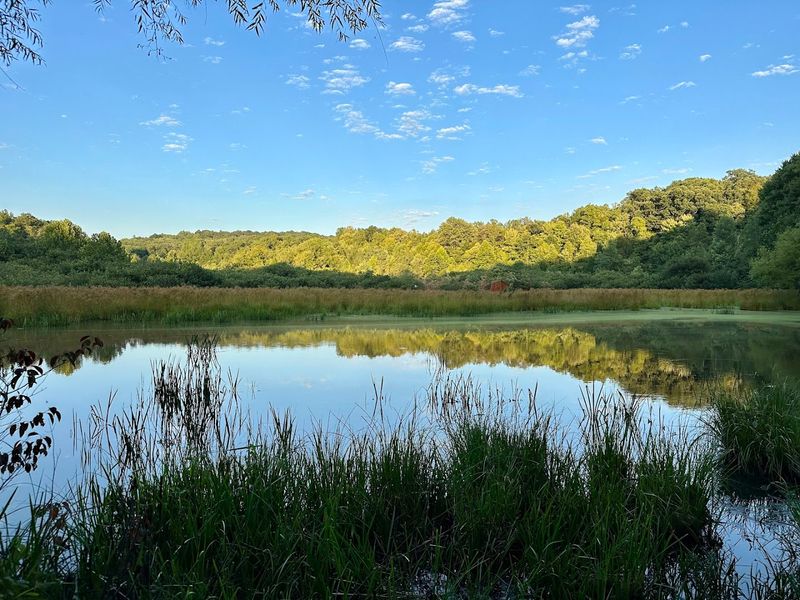
West Virginia has one botanic garden, and this is it. That single fact carries a lot of weight when you actually stand inside the place and feel just how much ground it covers.
Stretching across roughly 85 acres near Morgantown, the West Virginia Botanic Garden is a living, breathing showcase of Appalachian plant life in all its layered, textured glory.
Founded in 1983 by George Longenecker, a professor at West Virginia University, the garden grew from a passionate volunteer effort into something truly remarkable. It sits on the former site of the Tibbs Run Reservoir, which once supplied water to Morgantown until 1969.
That history adds a quiet depth to every trail you walk.
Eight distinct gardens spread across the property, each with its own personality and purpose. From the Rhododendron Garden to the Eclectic Garden, every corner reveals something worth slowing down for.
Being the only one of its kind in the state makes this place feel both rare and quietly proud of what it has become.
Free to Explore, Every Single Day of the Year
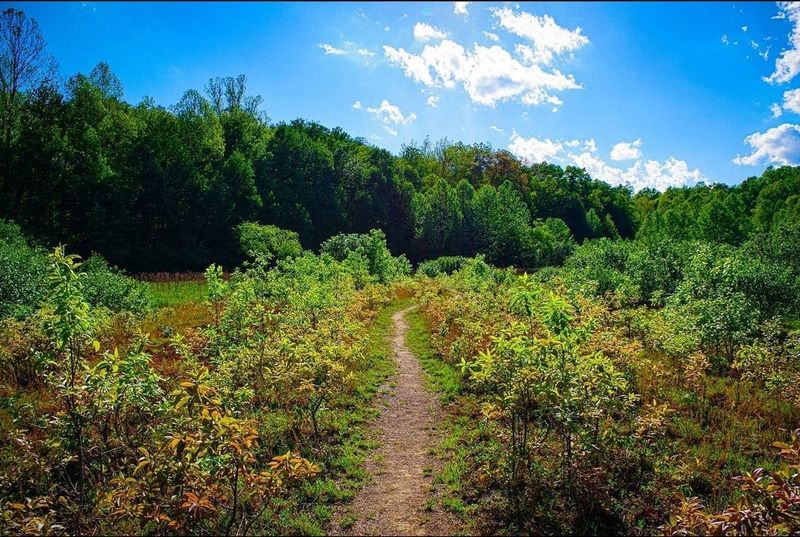
Free admission and open 365 days a year, from dawn to dusk. That combination is genuinely rare, and it makes this place feel like a gift the community keeps giving itself.
A suggested donation of five dollars per adult visitor is mentioned at the kiosk near the lower parking lot, but it is completely optional.
Whether you show up on a crisp January morning or a golden October afternoon, the gate is open and the trails are yours. Leashed pets are welcome too, which turns a solo hike into a full family outing without any extra planning.
Maps are available right at the entrance kiosk, so you can figure out your route before your boots even hit the gravel.
There is something deeply generous about a place that asks nothing from you except your curiosity. The garden runs on community support and volunteer energy, which makes every visit feel like a small act of gratitude just by showing up.
Accessibility matters here, and the Reservoir Loop Trail is fully ADA accessible for visitors of all mobility levels.
The Imagination’s Garden That Feels Like a Hobbit’s Backyard
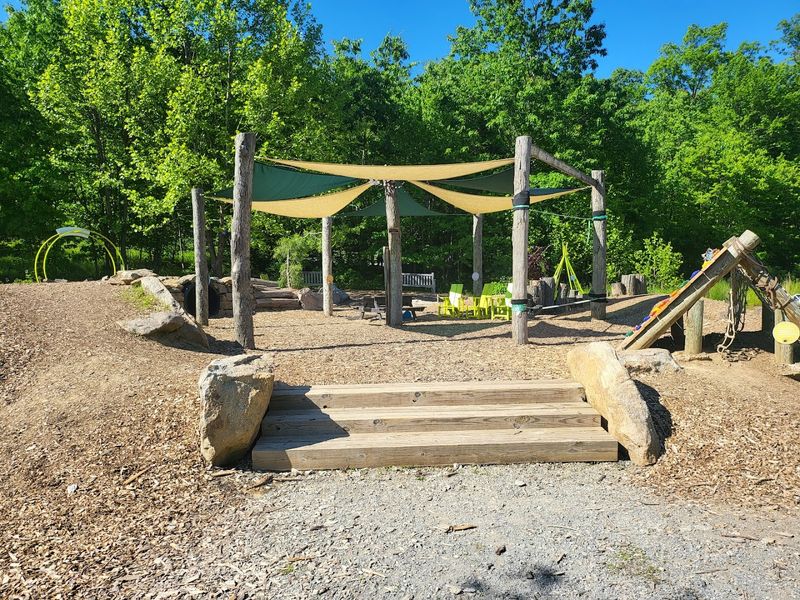
Some corners of this garden feel like they were designed by someone who grew up reading fantasy novels and never quite stopped. The Imagination’s Garden is a children’s play space that leans fully into that energy, described as evoking the feeling of shires and hobbits.
It encourages unstructured nature play, which basically means kids get to run wild in the best possible way.
There are no plastic slides or rubber mats here. The play is rooted in the natural world, with textures, shapes, and spaces that spark creativity rather than direct it.
Little ones can wander, build, and discover without a single screen in sight.
Adults tend to linger here too, partly to keep an eye on the kids and partly because the space genuinely charms everyone who steps into it. It has the kind of quiet magic that is hard to manufacture and impossible to fake.
Families visiting with young children consistently point to this area as a standout highlight of the whole visit, and it is easy to understand why once you see a child completely lose track of time inside it.
The Secret Garden With a Stone Moon Gate
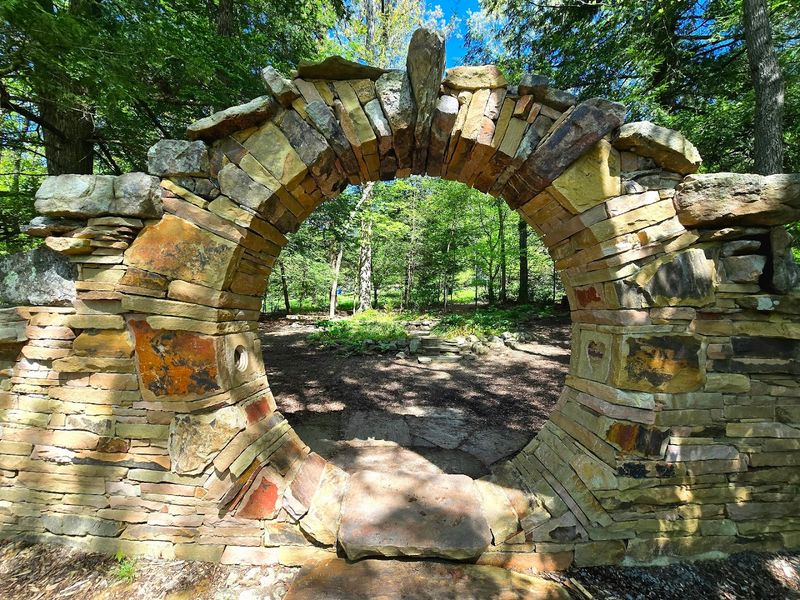
A circular stone moon gate tucked inside a sprawling Appalachian landscape sounds like something out of a period drama, but here it is, completely real and completely worth finding.
The Secret Garden is one of those spots that rewards visitors who take their time rather than rushing the trail loop.
Slow down, and it reveals itself.
The moon gate frames a view that changes with every season. Spring brings soft blooms pressing close to the stone edges.
Summer fills the surrounding beds with color. Autumn turns the whole scene into something almost theatrical, with warm tones pressing in from every direction.
Finding it feels like a small personal victory, which is part of what makes it so satisfying. The garden does not advertise itself loudly or place giant arrows pointing toward every feature.
Instead, it trusts that curious visitors will explore and discover. That trust pays off beautifully in places like this one.
Bring a camera, or just stand there for a moment and take it in, because this is exactly the kind of scene that gets remembered long after the drive home.
Seven Trails Through Wetlands, Meadows, and Ancient Hemlock Forest

Seven marked trails crisscross the property, and each one feels noticeably different from the last. Together they cover about four to four and a half miles, which is enough walking to feel genuinely refreshed without completely destroying your legs.
Every trail is under a mile long, making it easy to mix and match depending on your energy level that day.
The habitats shift as you move through the garden. Wetlands give way to open meadows, which then fold into patches of virgin hemlock forest that feel ancient and hushed in a way that is hard to put into words.
The boardwalk through the wetland section is a particular favorite, letting you walk above the water and look down into a whole separate ecosystem.
Trail signage is clear and consistent, so getting genuinely lost is unlikely even for first-time visitors. Identification markers on trees and plants turn the walk into an informal education, especially for anyone curious about native Appalachian species.
The Overlook Trail adds a bit of elevation and a rewarding view at the top for those who want a slightly more physical challenge mixed into their visit.
The Butterfly Garden and the Life That Fills It
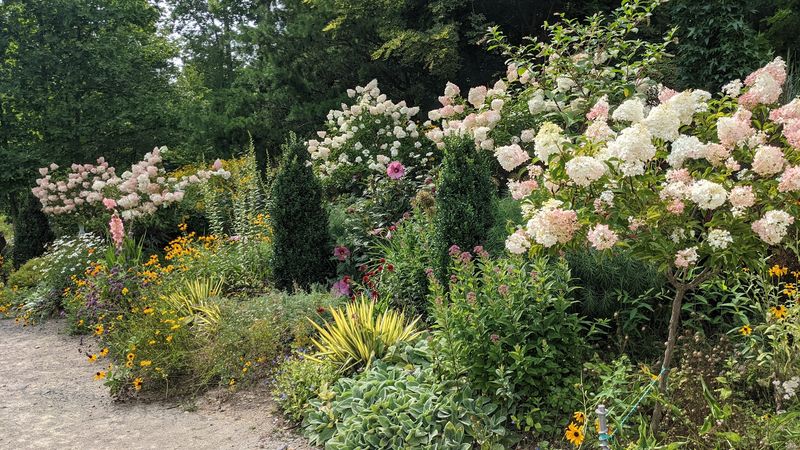
Walking into the Butterfly Garden on a warm afternoon is one of those experiences that makes you stop mid-sentence if you happen to be talking to someone. Wings everywhere, color everywhere, and a kind of gentle, industrious energy that feels almost celebratory.
It is one of eight distinct gardens on the property, and it earns its reputation effortlessly.
The plantings are chosen specifically to support pollinators native to the Appalachian region. That means the butterflies you see here are not passing through by accident.
They are drawn by design, and the result is a garden that feels genuinely alive rather than just pretty to look at. Hummingbirds have also been spotted here, adding another layer of movement and color to the whole scene.
Visiting during peak bloom in summer gives you the fullest version of this experience. But even in early spring, when plants are just beginning to wake up, the garden holds a quiet promise of what is coming.
For families with children, this spot tends to produce a lot of spontaneous running and pointing, which is really just the highest possible compliment a garden can receive.
Hammock Haven, Where Time Actually Slows Down
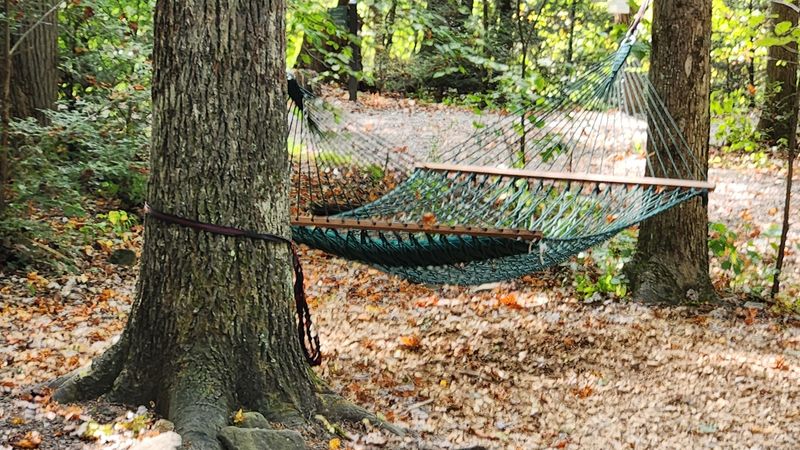
Somewhere along the trails, there is a section called Hammock Haven, and the name does not oversell it at all.
Public hammocks are strung between trees, available for any visitor to use, and the whole setup sits inside a canopy of shade that makes the air feel about ten degrees cooler than everywhere else.
It is the kind of spot that turns a two-hour visit into a three-hour one without any complaint.
Lying in a hammock and staring up through layers of leaves is an underrated activity that most adults quietly abandon sometime around age twelve. This place gives you full permission to reclaim it.
There is no timer, no reservation system, just an open hammock and a forest ceiling doing its best work.
Visitors consistently describe this area as one of their favorite surprises on the property. It fits perfectly with the garden’s overall approach of creating spaces that invite you to actually rest inside nature rather than just move through it.
Whether you bring a book, close your eyes, or simply listen to whatever the trees are doing that afternoon, Hammock Haven delivers exactly what it promises.
The Meditation Labyrinth and the Quiet It Carries
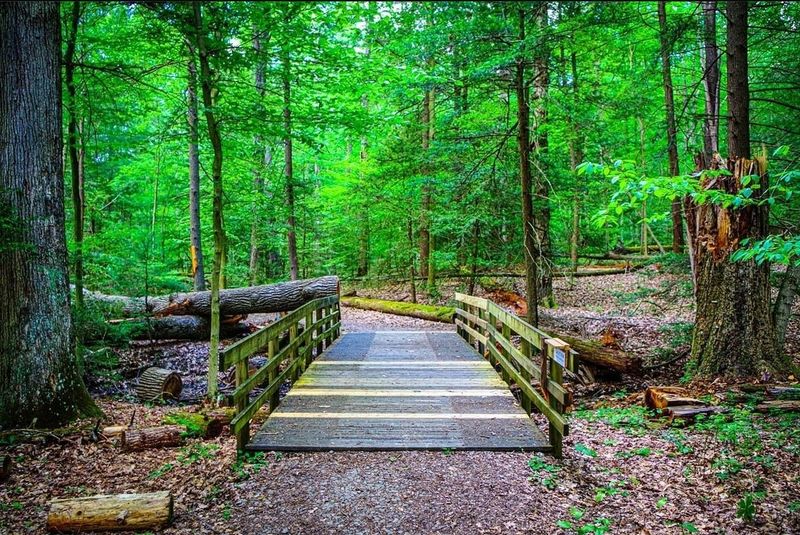
A meditation labyrinth might sound like something you stumble across in a wellness retreat catalog, but at the West Virginia Botanic Garden it feels completely at home.
Set into the landscape with the same care as everything else on the property, it is the kind of feature that catches you off guard and then holds your attention longer than expected.
Walking a labyrinth is not the same as navigating a maze. There are no dead ends and no tricks.
The path winds inward and then back out again, and the act of following it quietly is more calming than it sounds. It works especially well in a place this peaceful, where the surrounding environment already does half the work.
Visiting on a weekday morning in the off-season, you might have it entirely to yourself. Even on busier days, the garden spreads visitors out enough that solitude is always findable somewhere.
The labyrinth sits as a small, thoughtful addition to a property that clearly values the full spectrum of how people experience the outdoors, not just physically but mentally and emotionally as well.
What to Know Before Your First Visit
Showing up prepared makes a real difference here. The garden is open daily from 10 AM to 7:30 PM, which gives you a solid window to explore without rushing.
Comfortable walking shoes are a strong recommendation since the trails are gravel and some sections include noticeable elevation changes. Bring water, especially during summer visits when the shade only does so much.
Maps are available at the kiosk near the lower parking lot, and there is a small gift shop near the visitor center at the upper entrance area.
Leashed dogs are welcome on all trails, making this a genuinely dog-friendly destination that does not just tolerate pets but actually accommodates them well.
Parking is available at multiple spots on the property.
The garden hosts workshops and seasonal events throughout the year, so checking the website before your visit is worth a few minutes of planning.
Recent improvements in 2023 included repaved roads, new signage, and updated boardwalks, with a full visitor center planned for 2024.
Whether it is your first visit or your fifth, something always feels new here.
Address: 1061 Tyrone Rd, Morgantown, WV
