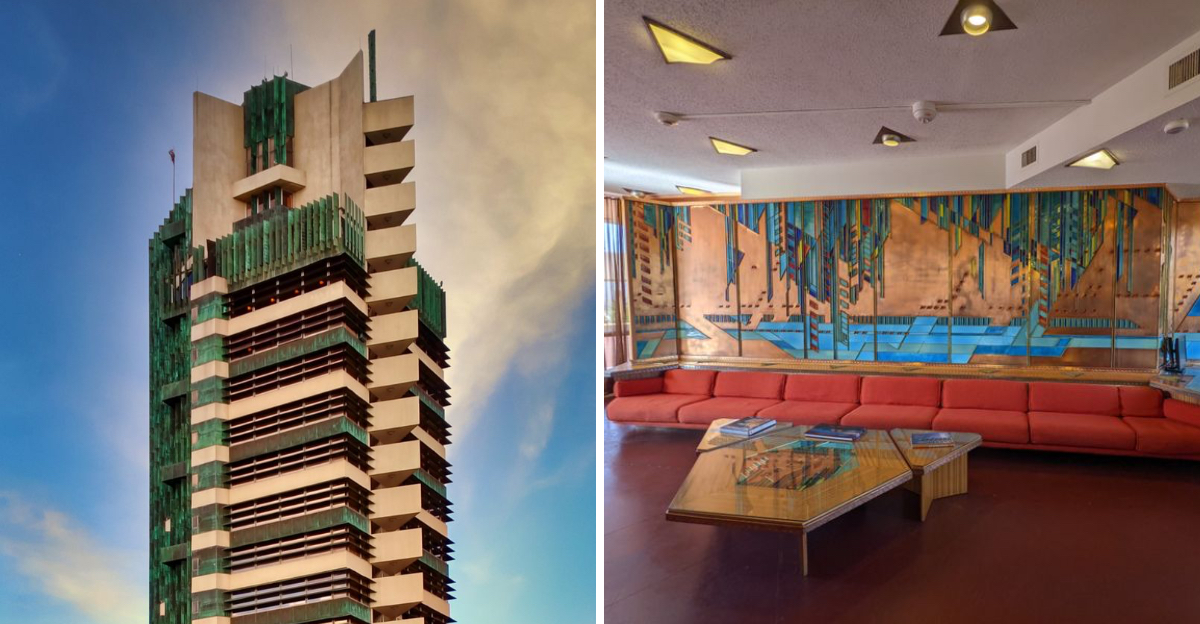
Tucked into the quiet streets of Bartlesville, Oklahoma, stands a structure that defies the flat prairie skyline with angular grace and copper-clad ambition. Price Tower rises nineteen stories above the oil-rich landscape, a testament to one architect’s dream of vertical living wrapped in geometric beauty.
Designed by Frank Lloyd Wright in 1956, this building remains his only realized skyscraper, a rare fusion of residential and commercial space that Wright himself called “the tree that escaped the forest.”
Bartlesville may not be a household name among American cities, but this small northeastern Oklahoma community holds a treasure that architecture enthusiasts travel across continents to witness. The tower’s cantilevered floors, copper louvers, and triangular motifs embody Wright’s organic architecture philosophy, blending art with function in ways that still feel revolutionary decades later.
Yet despite its global significance, most travelers pass through Oklahoma without ever knowing it exists.
Visitors who do make the pilgrimage find more than a static monument. They discover a living museum where visitors can tour Wright-designed spaces and experience the building’s architecture from the inside.
The experience is intimate, unusual, and utterly unlike any standard hotel stay. From the world’s smallest elevators to hexagonal bathrooms and walls of windows that open to the prairie breeze, every detail reflects Wright’s uncompromising vision.
This is architecture you can inhabit, not just admire from afar.
A Skyscraper Born from a Rejected Dream
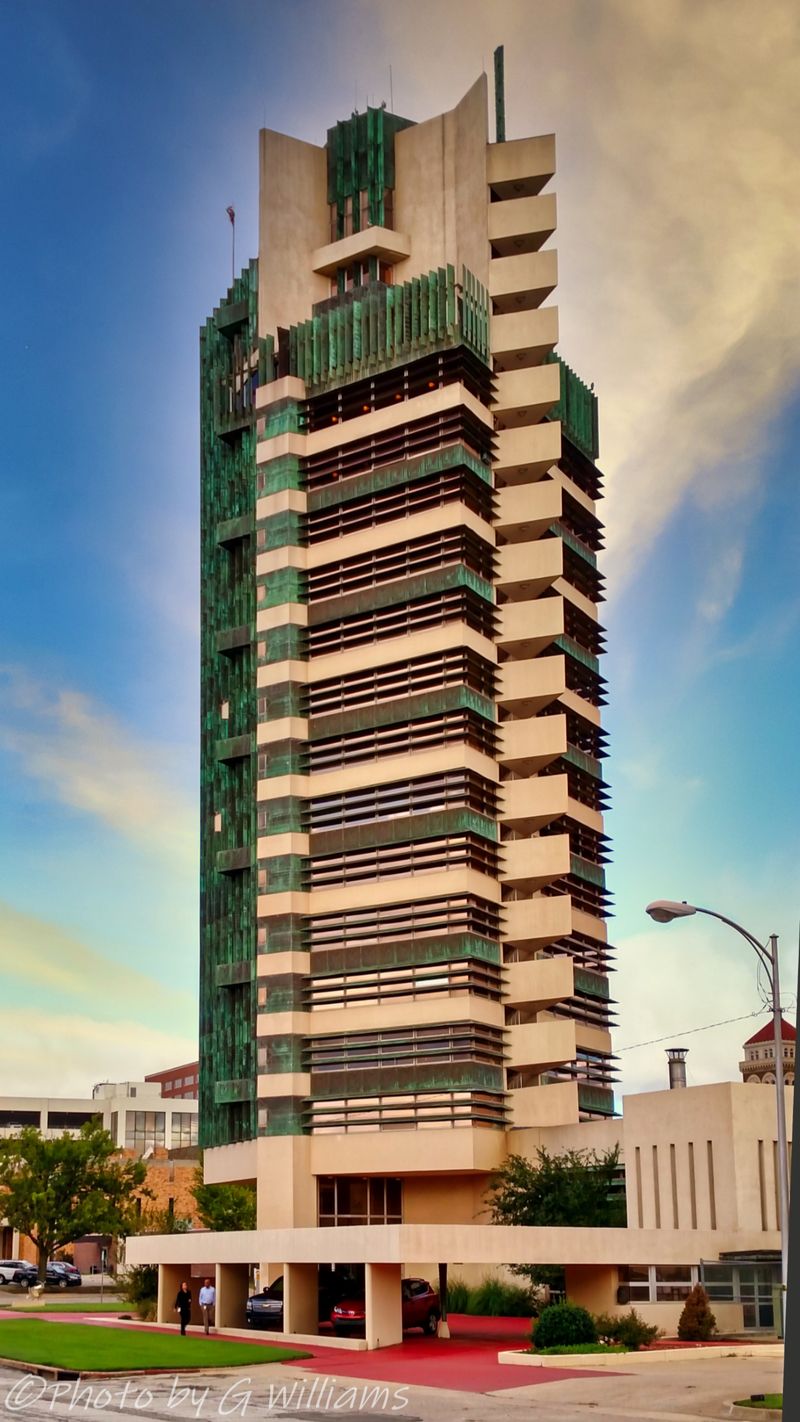
Price Tower began its life as an idea meant for New York City. Wright originally designed a similar structure in 1929 for St. Mark’s Tower in Manhattan, but the Great Depression crushed those plans before construction could begin.
The concept sat dormant for over two decades until Harold Price, an Oklahoma oil pipeline executive, commissioned Wright to create something extraordinary for Bartlesville. Wright dusted off his St. Mark’s drawings and adapted them into what would become his only completed high-rise building.
The resulting structure broke ground in 1952 and opened its doors in 1956, standing as a bold statement in a town better known for oil derricks than architectural innovation.
Wright envisioned the tower as a multipurpose space where apartments and offices could coexist vertically, each floor cantilevered from a central concrete core like branches extending from a tree trunk.
This organic metaphor guided every design decision, from the building’s asymmetrical footprint to its copper and glass exterior that glows golden in the Oklahoma sunset.
What makes this origin story remarkable is how a scrapped New York project found perfect expression in small-town Oklahoma. The Price family’s willingness to embrace Wright’s radical vision gave the world a building that challenges conventional ideas about urban architecture.
Today, the tower stands not as a consolation prize but as proof that great architecture can flourish anywhere, even in places most travelers overlook.
Address: 510 Dewey Ave, Bartlesville, Oklahoma
Geometry That Defies Convention
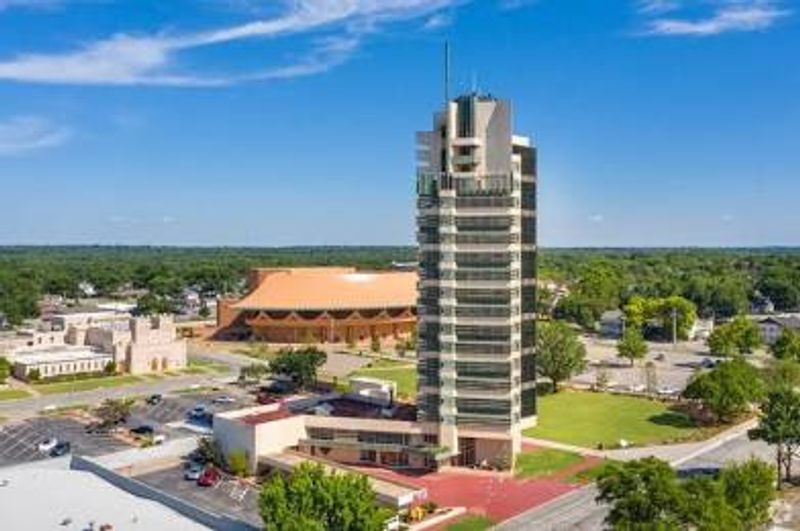
Walking through Price Tower feels like entering a three-dimensional puzzle where right angles have been banished. Wright based the entire structure on a diamond module, creating spaces that flow in unexpected directions.
Rooms are shaped like parallelograms and triangles rather than rectangles. Hallways narrow and widen as you move through them.
Even the furniture follows these angular principles, with tables, chairs, and built-in cabinetry echoing the building’s geometric language.
This commitment to non-orthogonal design extends to every surface and detail. Light fixtures are triangular.
Carpets feature repeating diamond patterns in earthy greens and copper tones. Windows wrap around corners at angles that maximize natural light while providing views in multiple directions simultaneously.
Wright believed that varied geometry creates visual interest and psychological stimulation, preventing the monotony he associated with standard rectangular buildings.
The effect can be disorienting at first, especially when combined with the building’s compact scale. Elevators are famously tiny, barely accommodating two people comfortably.
Bathrooms are hexagonal pods with fixtures arranged to maximize the unusual space. But these quirks serve Wright’s larger philosophy about human-scaled architecture that responds to how people actually move and live rather than conforming to construction industry standards.
Visitors often note the building’s surprising sense of quiet, the unconventional geometry begins to feel natural, even preferable to typical hotel layouts.
The angled walls and varied ceiling heights create intimate spaces that feel cozy rather than cramped, proving that Wright’s geometric experiments weren’t just artistic exercises but thoughtful responses to human comfort and spatial experience.
Copper Cladding That Ages with Grace
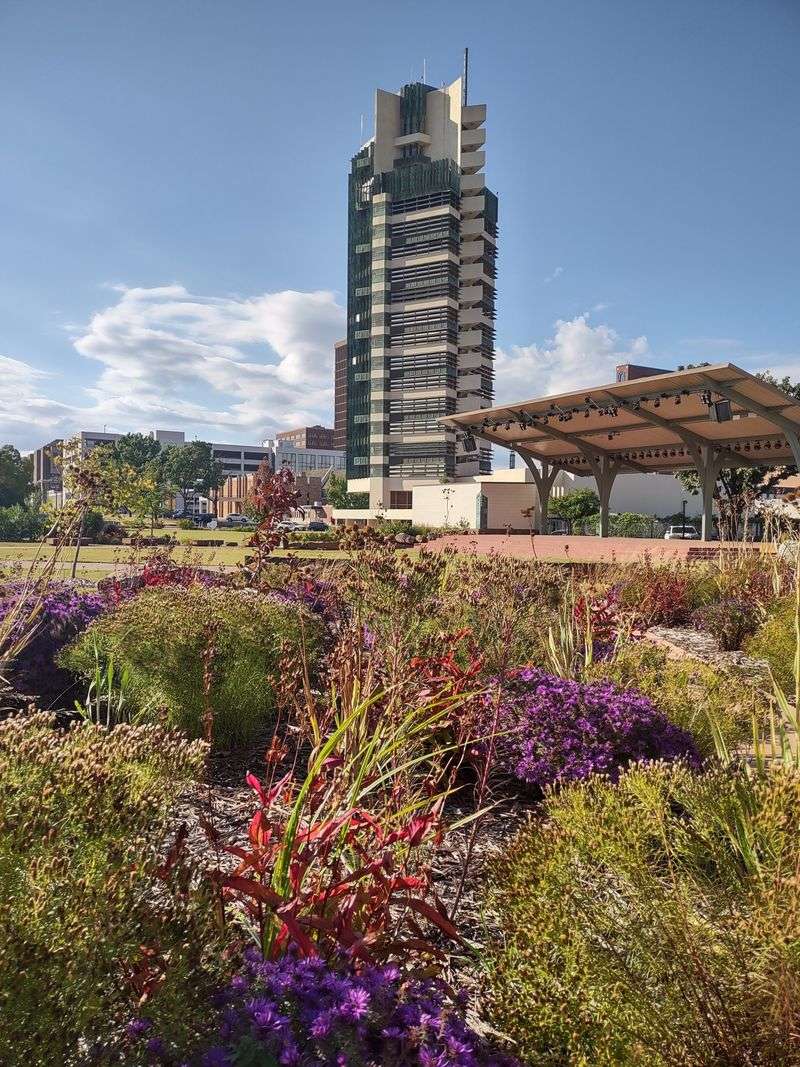
Price Tower’s exterior skin tells a story of time and weather. Wright chose copper as the primary cladding material, covering the building’s facade with panels and louvers that have gradually transformed from bright metallic orange to deep verdigris green.
This patina developed naturally over decades of Oklahoma weather, creating a living finish that changes subtly with each passing season. The copper serves both aesthetic and practical purposes, providing solar shading while giving the tower its distinctive appearance against the prairie sky.
Wright designed the copper louvers as part of an integrated climate control system, long before energy efficiency became a mainstream architectural concern. The angled metal blades block harsh southern and western sun during summer months while allowing natural ventilation when windows are opened.
This passive cooling approach reflects Wright’s belief that buildings should work with their environment rather than relying entirely on mechanical systems. The copper’s thermal properties help regulate interior temperatures, reducing the need for artificial climate control.
Maintaining these copper elements presents ongoing challenges for the building’s caretakers. Some panels have been replaced over the years, creating a patchwork of different patina stages across the facade.
Purists debate whether new copper should be artificially aged to match surrounding panels or left to weather naturally, creating visible evidence of the tower’s ongoing evolution. These discussions highlight the complex relationship between historic preservation and living architecture.
From street level, the copper-clad tower catches light differently throughout the day, shifting from warm amber at sunrise to cool green at dusk. This dynamic quality makes the building feel alive, responsive to its surroundings in ways that static materials cannot achieve.
Hotel Rooms Where Architecture Becomes Experience
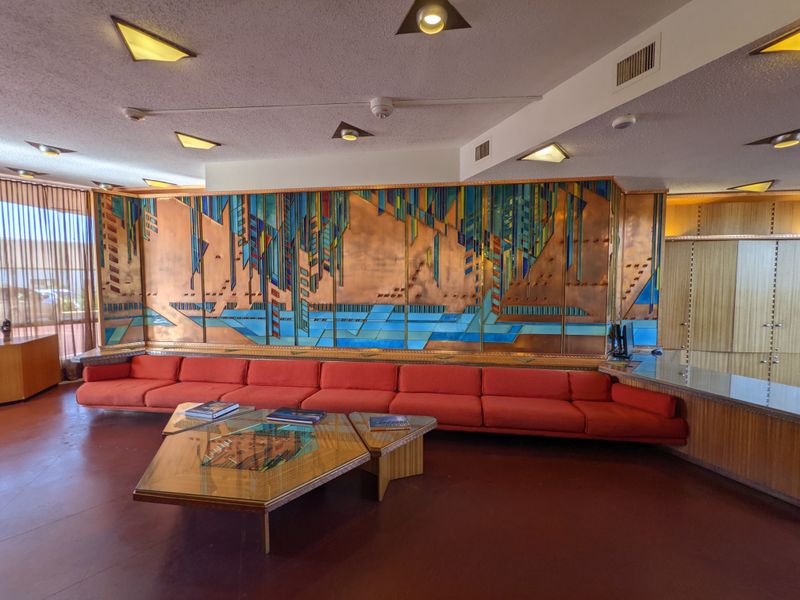
Exploring Price Tower transforms architectural tourism into an immersive experience. Upper floors contain former hotel and office spaces that preserve Wright’s original design intent.
The Inn at Price Tower has closed, and the building is now under new ownership. Overnight accommodations are no longer available.
Price Tower continues to function as a historic landmark with public access focused on tours, exhibitions, and preservation efforts, rather than hotel operations.
Each space features built-in furniture, custom textiles, and that signature geometric vocabulary that makes every corner photogenic. Some upper-level spaces retain dramatic two-story layouts, with bedrooms perched above living areas and windows wrapping multiple walls to create the sensation of floating above Bartlesville.
These rooms challenge conventional hotel expectations in ways that delight some guests and perplex others. Bathrooms are compact hexagonal pods where every inch serves a purpose, with no wasted space for purely decorative elements.
Showers are snug enough that taller guests might find them cozy. Climate control relies partly on those operable windows that invite prairie breezes inside, though modern air conditioning supplements Wright’s original ventilation strategy.
The beds are comfortable, but positioned according to spatial logic rather than standard hotel formulas.
What makes staying here special is the opportunity to inhabit Wright’s vision rather than simply touring it. You experience how morning light filters through angled copper louvers, how the geometric furniture actually functions in daily use, and how the building’s compact scale creates unexpected intimacy.
The experience isn’t for everyone. Those expecting conventional visitor amenities will be disappointed.
But for guests who appreciate architecture as more than backdrop, sleeping in Price Tower offers rare access to a master’s work, making Bartlesville an essential stop on any Wright pilgrimage through Oklahoma.
Windows That Open to the Prairie
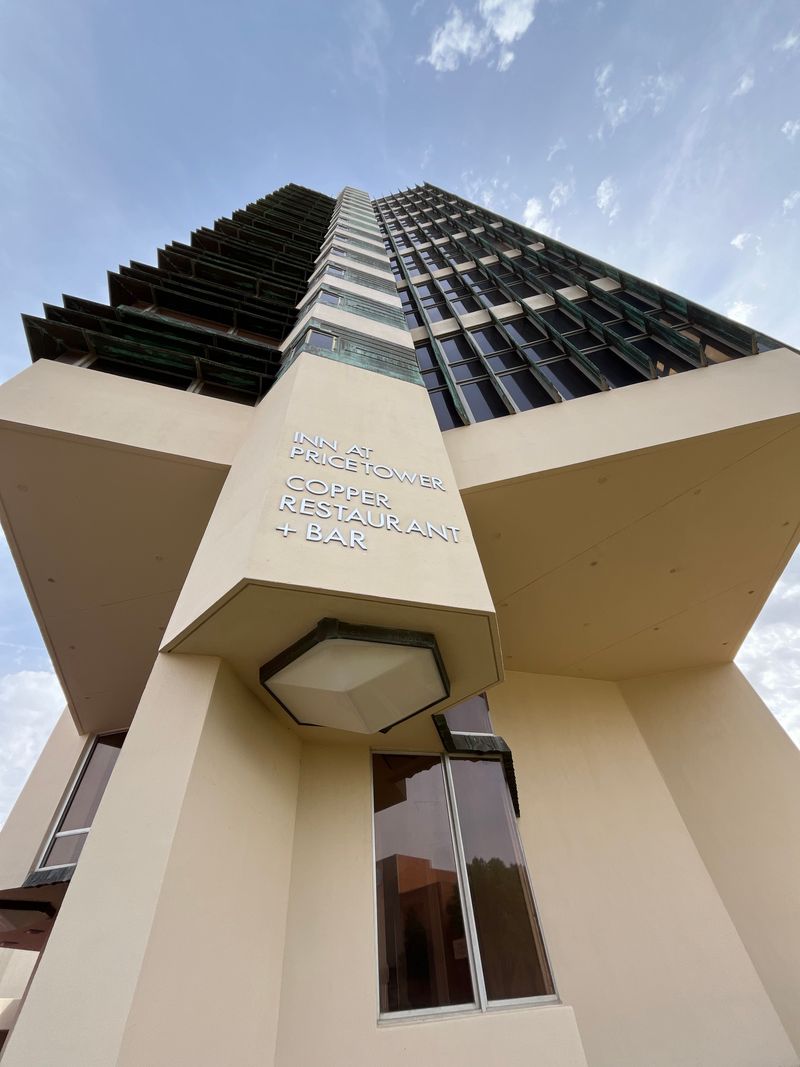
In an age of sealed buildings and artificial climates, Price Tower offers a radical alternative: windows that actually open. Not just crack open slightly, but swing wide to admit Oklahoma breezes and the sounds of the street below.
Wright designed the tower with eighteen operable windows in some rooms, allowing guests to control their environment through natural ventilation rather than relying solely on mechanical systems. This feature connects occupants directly to the prairie climate and weather patterns in ways that modern hotels deliberately prevent.
The abundance of windows serves Wright’s broader belief that buildings should dissolve barriers between interior and exterior spaces. Even when closed, the tower’s extensive glazing creates visual connections to the surrounding landscape.
From upper floors, views extend across Bartlesville’s rooftops toward distant horizons where the Great Plains stretch toward Kansas. At sunset, the western sky becomes a theatrical backdrop, with light pouring through those angled copper louvers to paint interior walls in shifting patterns of amber and shadow.
Opening windows changes the experience of being inside the tower. Cool air flows through rooms, carrying the subtle sounds of a small Oklahoma town settling into evening.
This sensory connection to place feels increasingly rare in an era of hermetically sealed accommodations. Visitors frequently mention the sensory impact of natural ventilation.
The windows also pose preservation challenges. Original hardware requires careful maintenance, and the building’s historic status limits options for replacement.
But these operable windows remain central to the Price Tower experience, offering guests agency over their environment in ways that honor Wright’s original vision of responsive, human-scaled architecture.
A Museum Hidden Inside a Working Building
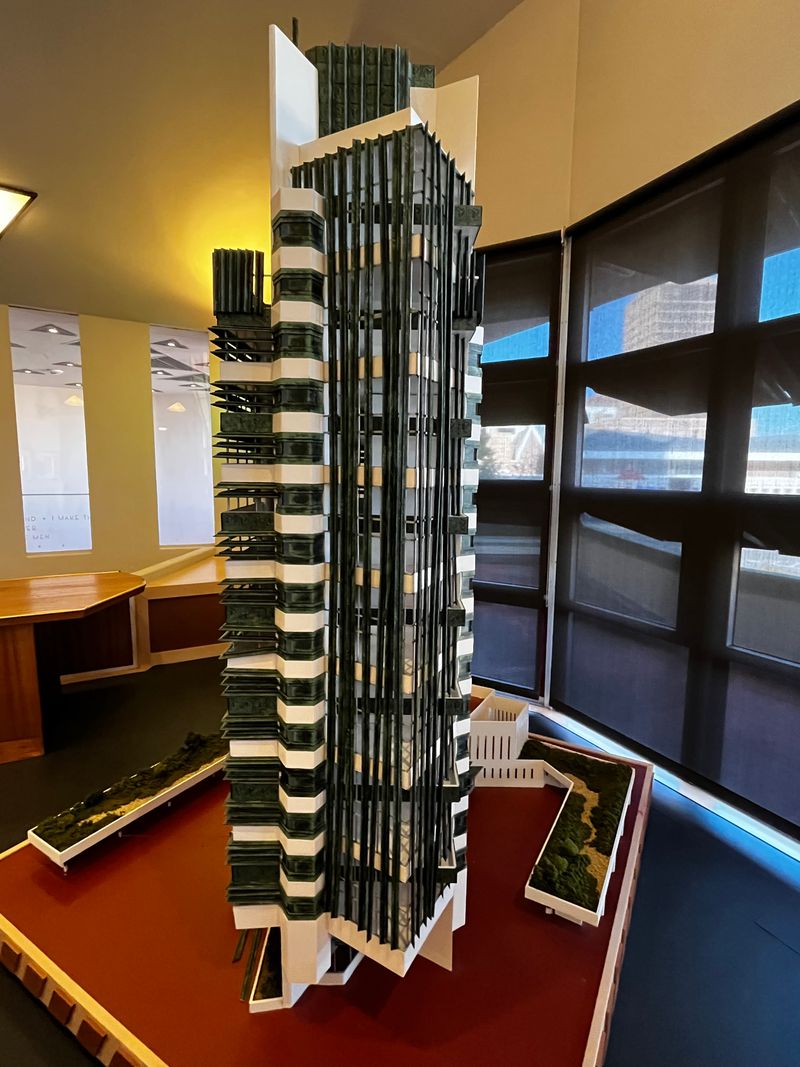
Price Tower functions as a museum and mixed-use landmark, with the ground floor dedicated to interpreting Wright’s architectural legacy. Public spaces house rotating exhibitions and interpretive displays focused on the tower’s history and design.
Visitors can tour spaces that reveal Wright’s creative process, view original drawings and correspondence, and examine furniture and decorative objects that demonstrate his total design approach. This museum component makes the tower accessible to visitors without overnight accommodations.
Guided tours provide the deepest understanding of Wright’s intentions and the building’s technical innovations.
Knowledgeable docents lead visitors through spaces not otherwise accessible, explaining how the cantilevered floor structure works, why Wright chose specific materials, and how the building fits within his broader career.
These tours often include anecdotes about Harold Price and his family, the construction challenges faced in 1950s Oklahoma, and the tower’s evolution from private commission to public landmark. The stories bring the architecture to life, transforming abstract design principles into human narratives.
The arts center also hosts temporary exhibitions that extend beyond Wright and Price Tower, showcasing regional artists and exploring themes related to architecture, design, and Oklahoma culture. This programming keeps the building vital as a cultural venue rather than freezing it as a period piece.
Lectures, concerts, and special events activate the ground-floor spaces, drawing locals and visitors into ongoing dialogue about art and architecture.
For serious Wright enthusiasts, the museum offers research resources and archival materials that illuminate the architect’s working methods. Scholars can examine construction documents, correspondence, and photographs that reveal how theoretical designs became physical reality.
This research dimension adds intellectual depth to the visitor experience, positioning Price Tower as both artifact and active learning environment.
Bartlesville Context and the Woolaroc Connection
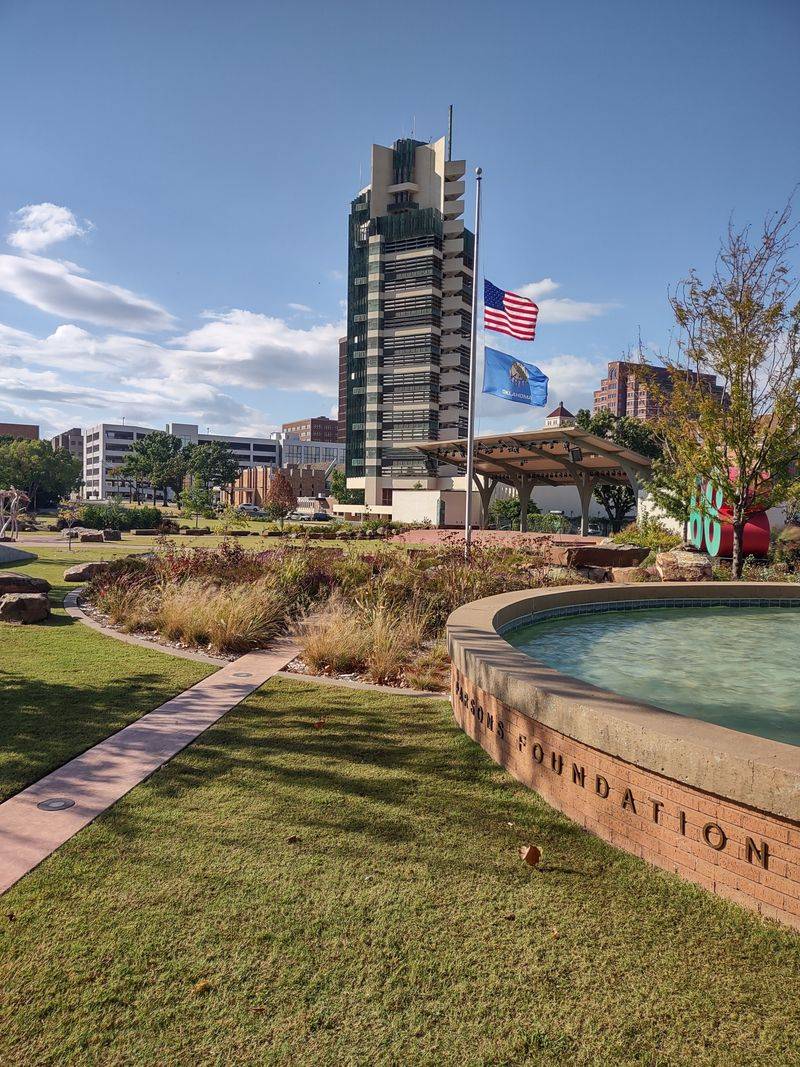
Understanding Price Tower requires understanding Bartlesville, a city of around thirty-five thousand people in northeastern Oklahoma where oil wealth shaped twentieth-century development.
The Phillips Petroleum Company called Bartlesville home for decades, creating prosperity that allowed civic ambitions like commissioning a Frank Lloyd Wright skyscraper.
Harold Price made his fortune in oil pipeline construction, and his decision to build in his hometown rather than a major metropolis gave Bartlesville an architectural treasure far beyond what cities of similar size typically possess.
The town itself offers limited tourist infrastructure beyond Price Tower, a reality that some visitors find disappointing while others appreciate for its authenticity. Downtown Bartlesville retains a small-town character with local businesses and historic buildings, though the restaurant scene is modest.
This context makes the tower’s sophistication even more striking, a cosmopolitan gesture planted in prairie soil. Visitors planning extended stays should set expectations accordingly, treating Bartlesville as a destination for focused architectural pilgrimage rather than diversified entertainment.
About twelve miles west of town, the Woolaroc Museum and Wildlife Preserve offers a compelling complement to Price Tower. This sprawling ranch property belonged to oilman Frank Phillips and now houses an eclectic museum featuring Western art, Native American artifacts, and natural history specimens.
The contrast between Wright’s modernist tower and Woolaroc’s rustic lodge architecture illustrates the diverse ways Oklahoma’s oil wealth expressed itself culturally. Together, these sites paint a fuller picture of the region’s unique heritage.
Green Country, as this corner of Oklahoma is known, provides pleasant driving through rolling hills and scattered lakes. The area lacks dramatic topography but offers a gentle landscape that helps visitors understand the context for Wright’s vertical gesture.
Price Tower rises from these prairies as a deliberate counterpoint to horizontal sprawl, making its architectural statement all the more powerful.
Dear Reader: This page may contain affiliate links which may earn a commission if you click through and make a purchase. Our independent journalism is not influenced by any advertiser or commercial initiative unless it is clearly marked as sponsored content. As travel products change, please be sure to reconfirm all details and stay up to date with current events to ensure a safe and successful trip.
