South Carolina holds quiet public spaces where nature, design, and wildlife overlap in ways that feel unexpectedly rare. Across a broad stretch of cypress-lined water, a 150-acre garden unfolds with reflective lakes, seasonal blooms, and slow-moving wildlife that defines the atmosphere more than any structure does.
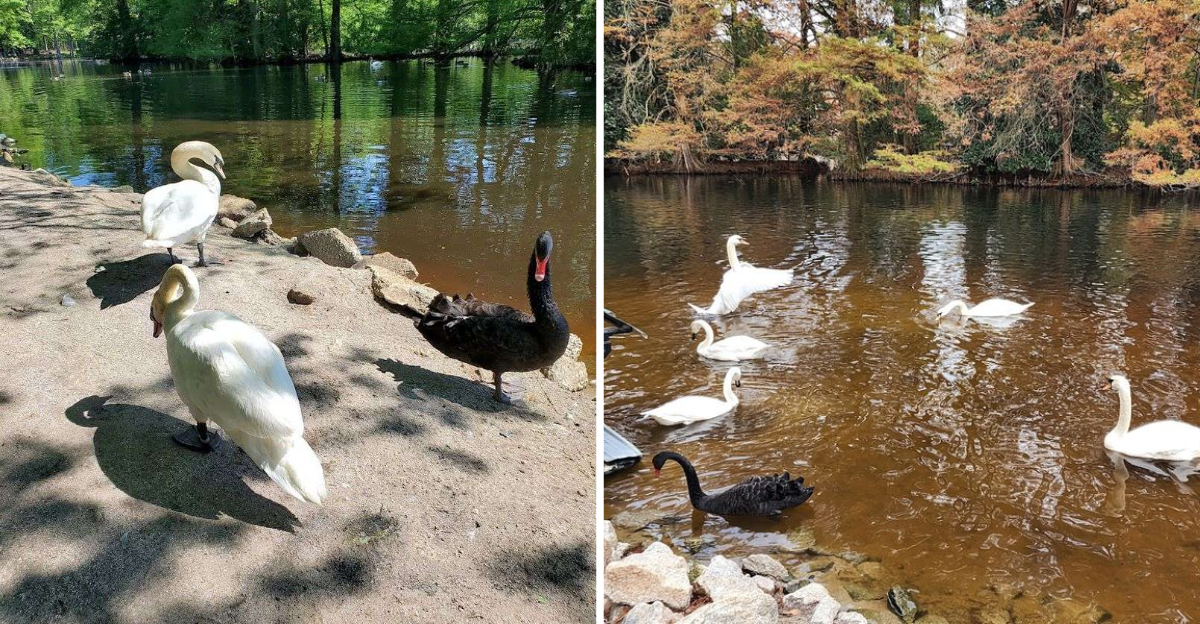
The setting is known for something unique in the United States: multiple swan species living freely within a single public landscape, adding motion and elegance to still waters and flower-lined banks.
Japanese irises bring seasonal bursts of color, while mirrored surfaces shift with light and wind. This South Carolina public garden with multiple swan species and iris-lined lakes creates a setting that lingers long after leaving.
The Remarkable Story Behind How Swan Lake Iris Gardens Came to Be
Back in 1927, a local businessman named Hamilton Carr Bland had a simple idea: turn a swampy stretch of land into a private fishing retreat. He ordered Japanese irises to be planted near his home, but they failed miserably.
Frustrated, he told workers to dump them in the boggy, low-lying area nearby.
Nobody expected much from that decision. But the following spring, those discarded irises burst into bloom in a way nobody had seen coming.
The swampy soil turned out to be the perfect environment for them to thrive.
Over time, Bland and the Heath family gradually deeded the land to the City of Sumter, and by 1949, it officially became a public park. That happy accident of tossed-aside irises turned into one of South Carolina’s most beloved natural spaces.
The garden now holds over 120 varieties of Japanese iris and has grown into a 150-acre Level II Arboretum with 172 plant species total. What started as a failed planting project became something genuinely rare and worth traveling hours to experience.
Few origin stories in American horticulture are quite this satisfying.
All Eight Swan Species in One Place, and Why That Matters
There is no other public garden in the United States where you can see all eight known species of swans in a single visit. That fact alone is worth pausing on.
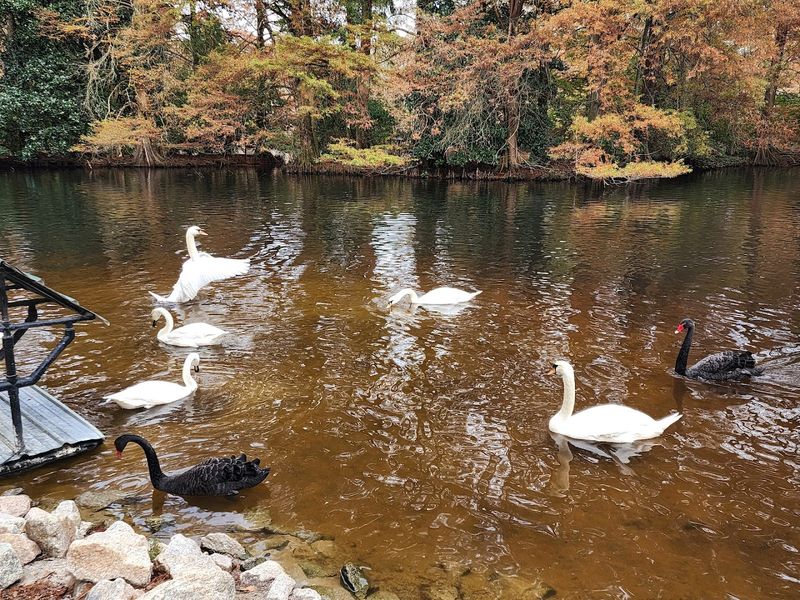
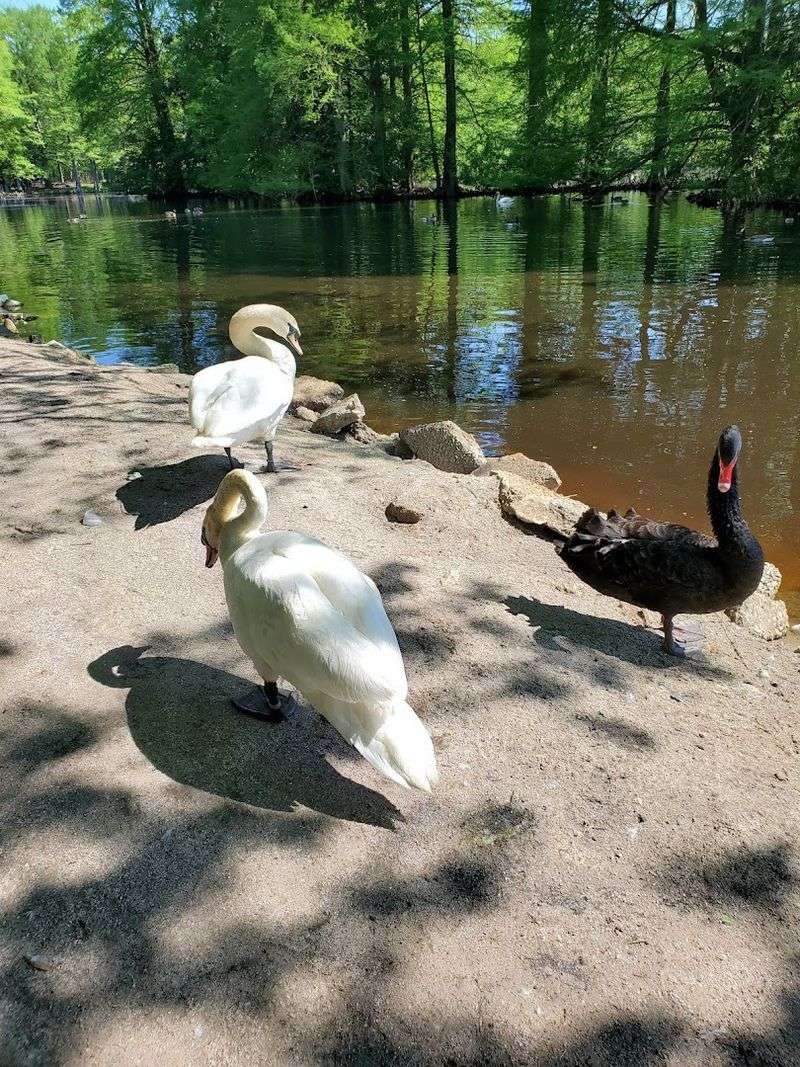
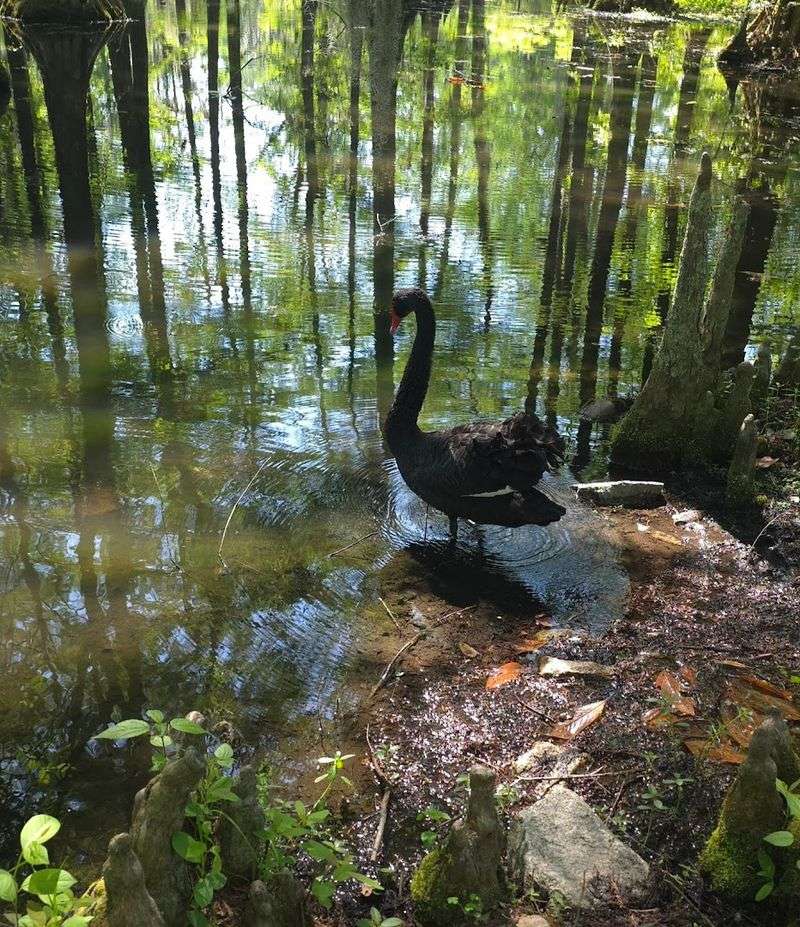
The eight species found here are Royal White Mutes, Black Necks, Coscorobas, Whoopers, Black Australians, Whistlers, Bewicks, and Trumpeters.
Each species has a distinct personality, size, and look. Watching a jet-black Australian swan glide past a snow-white Whooper is a genuinely striking visual contrast that photographs cannot fully capture.
Eight informational stations are placed throughout the gardens, each dedicated to one species, so you actually learn something as you walk. The park also provides year-round care for the swans, including sheltered structures called Swan-dominiums, used for young, sick, or weather-vulnerable birds.
This level of commitment to the animals shows in how healthy and calm the swans appear. They are not skittish or distant.
They drift close to the banks with an almost relaxed confidence, as if they know exactly how impressive they are. For bird lovers, wildlife photographers, or simply curious visitors, this collection is genuinely world-class and surprisingly accessible.
Japanese Irises That Blanket the Water in Color Every Spring
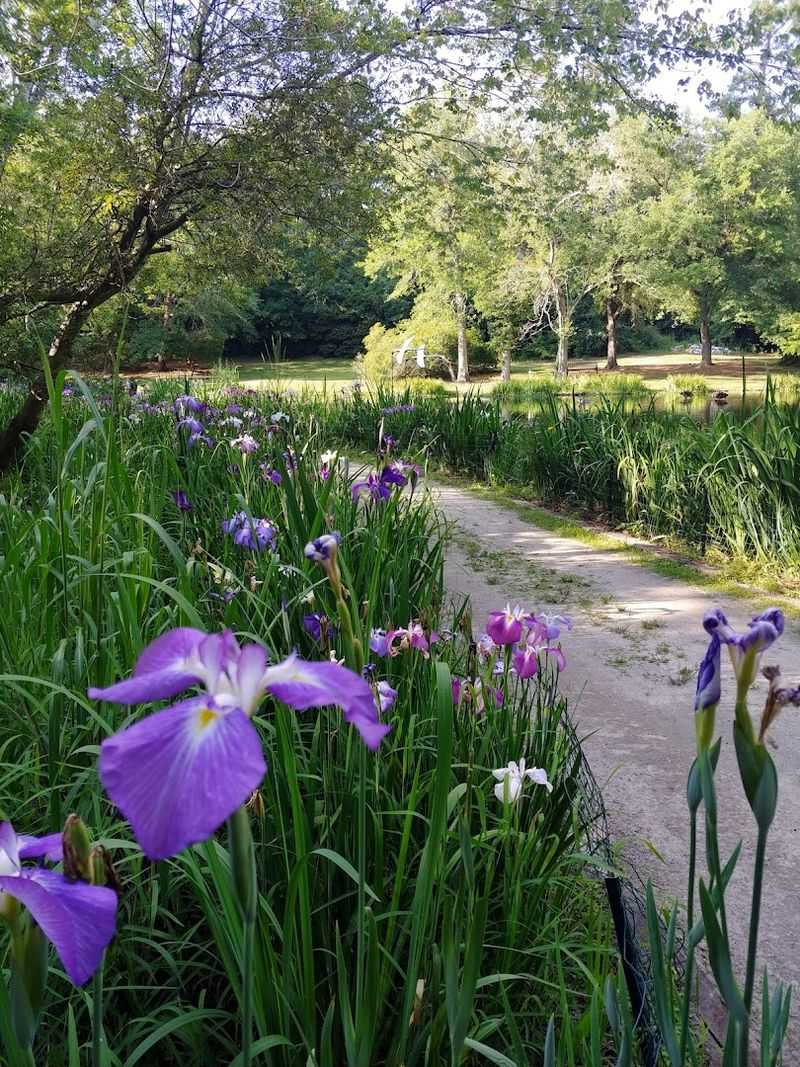
Mid-May through early June is when Swan Lake Iris Gardens shifts into something almost surreal. Over 120 varieties of Japanese iris bloom across the grounds during this stretch, and the color is relentless in the best possible way.
Purple, violet, white, blue, and deep burgundy petals fan out along the water’s edge and garden beds throughout the park. The blooms are dense and low to the ground, which makes the reflections in the lake especially dramatic on calm mornings.
Japanese irises prefer wet, acidic soil, which is exactly why Bland’s discarded bulbs thrived here when they failed elsewhere. The gardens are recognized as having some of the most intensive Japanese iris plantings in the entire country.
If you time your visit right, the combination of blooming irises, cypress trees draped in Spanish moss, and swans drifting across the water creates a scene that feels almost painted. The annual Iris Festival, held every Memorial Day weekend, is South Carolina’s oldest festival and draws visitors from across the Southeast.
Even if you miss peak bloom, the gardens hold beauty in every season. But spring here is genuinely something else.
A 150-Acre Arboretum Full of Surprises Beyond the Swans
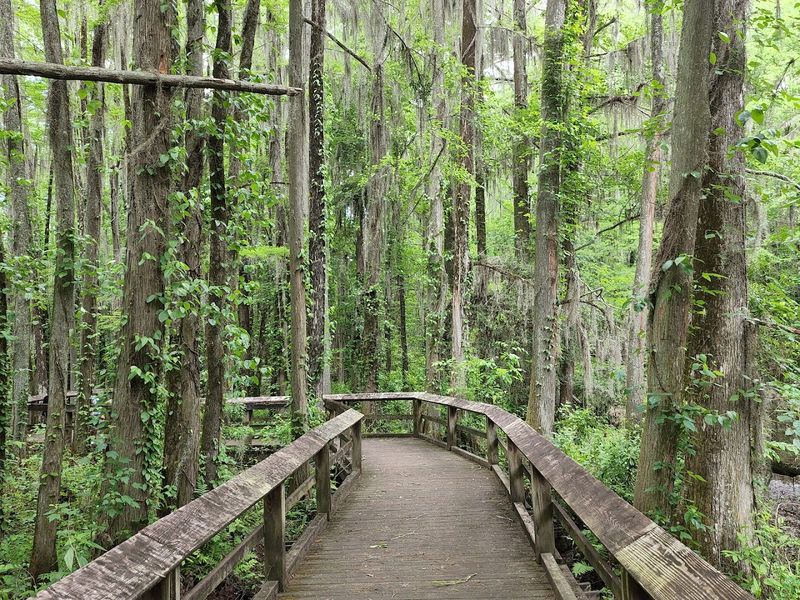
Most visitors come for the swans and stay because of everything else. The gardens cover 150 acres and hold over 100 species of trees, making it a certified Level II Arboretum.
That is a designation that takes serious botanical diversity to earn.
Camellias, azaleas, daylilies, and Japanese magnolias add layers of seasonal color throughout the year. There is a dedicated Rose Garden, an Azalea Garden, a Butterfly Garden, and one of the most unexpectedly charming features anywhere: a Chocolate Garden, where the plants actually smell like chocolate.
Beyond the flora, the park is a genuine birdwatcher’s destination. Great Blue Herons, egrets, geese, ducks, and turtles share the lake with the swans, turning every walk into an impromptu wildlife encounter.
The 0.75-mile trail around the lake is flat and easy, with plenty of shaded benches along the way. A pedestrian overpass connects the two sides of the park across the road, so you never have to cut your walk short.
Free picnic areas, a children’s playground with a vintage fire truck, and clean restroom facilities make this a genuinely complete outing for any group or age.
Accessibility, Sensory Trails, and Art That Make the Garden Inclusive
One of the quieter but more meaningful things about Swan Lake Iris Gardens is how genuinely accessible it is. The flat, easy trail makes it welcoming for visitors with mobility concerns, and the park goes further than most with a dedicated Sensory Trail featuring Braille signage designed for visually impaired guests.
There is also a Talking Tree Trail, which adds an interactive, educational layer that works especially well for kids and curious adults. These thoughtful additions make it clear the garden was designed with everyone in mind, not just the most physically able visitors.
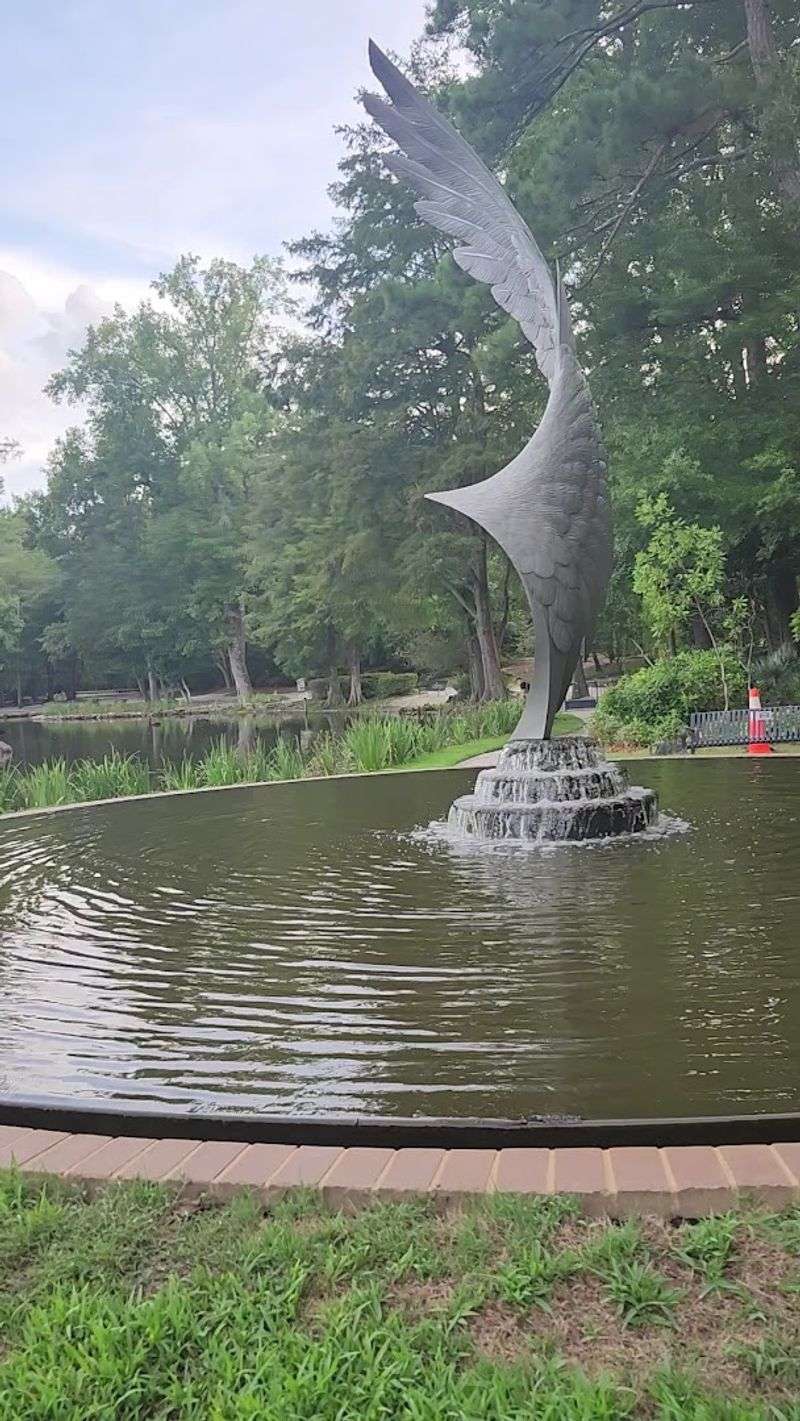
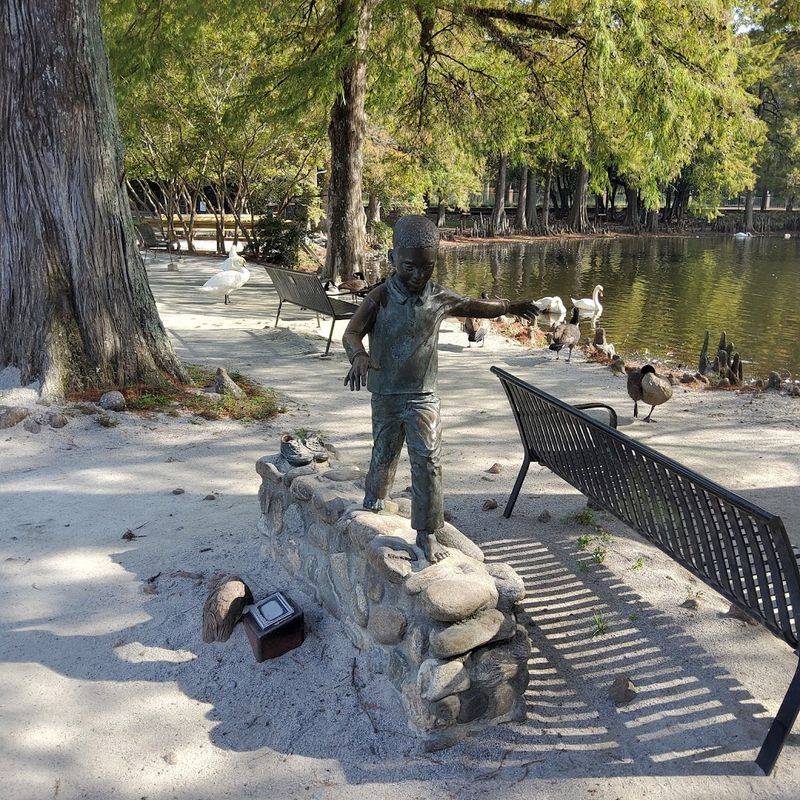
The art throughout the park adds another unexpected dimension. Sculptures by recognized artists, including Zan Lee Wells and Grainger McKoy, are placed throughout the grounds.
The most striking piece is an 18-foot wing sculpture called Recovery, which commands attention near the water. It is the kind of public art that earns a long look rather than a quick glance.
The combination of accessible trails, sensory experiences, educational signage at each swan station, and meaningful artwork makes this garden feel layered and considered. It rewards slow walkers and curious minds more than it does anyone rushing through.
Free Admission, Year-Round Events, and Why This Place Never Gets Old
Completely free admission is one of those things that sounds too good to be true for a park this well-maintained. No entry fee, no parking charge, no catch.
The gardens are open daily from 7:30 a.m. until sunset, giving you a solid window to explore at whatever pace suits you.
The calendar of events throughout the year gives the park a lively rhythm that changes with the seasons. The Iris Festival on Memorial Day weekend is the flagship event and holds the distinction of being South Carolina’s oldest festival.
Earth Day celebrations, Easter egg hunts, and the Taste of the Gardens event all bring the community together around this space.
December brings Fantasy of Lights, when the gardens are strung with holiday displays that visitors can walk through or drive past. Reviewers consistently mention how magical the park feels during this event, with light reflecting across the lake and the swans still present along the water’s edge.
The on-site Sumter Visitor’s Center is open weekdays and offers additional local travel information. Whether you visit during iris season, a crisp winter morning, or a summer evening, the garden manages to feel fresh and worth returning to.
That consistency is rare.
Practical Tips for Getting the Most Out of Your Visit to Sumter
Timing your visit can make a real difference here. Mid-May through early June is peak iris season, and the Memorial Day weekend Iris Festival draws larger crowds, so arriving early in the morning gives you calmer conditions and better light for photos.
Weekdays tend to be quieter overall.
Wear comfortable shoes you do not mind getting a little dirty. The trail is flat and easy, but waterfowl are everywhere, and the ground near the lake reflects that.
Layers are smart in cooler months since the open water creates a breeze even on mild days.
The Gift Shop and Visitor Center are only open Monday through Friday, so plan accordingly if you want to pick up something or grab local travel resources. Vending machines and clean restrooms are available on weekends.
Bringing a picnic is a genuinely good idea since free picnic areas are spread throughout the grounds and the setting makes any meal feel more relaxed than it probably deserves. The Shot Pouch Greenway, accessible through a gate on the boardwalk side of the park, extends your walking options nicely if you want more trail time after finishing the main loop.
Address: 822 W Liberty St, Sumter, SC 29150
