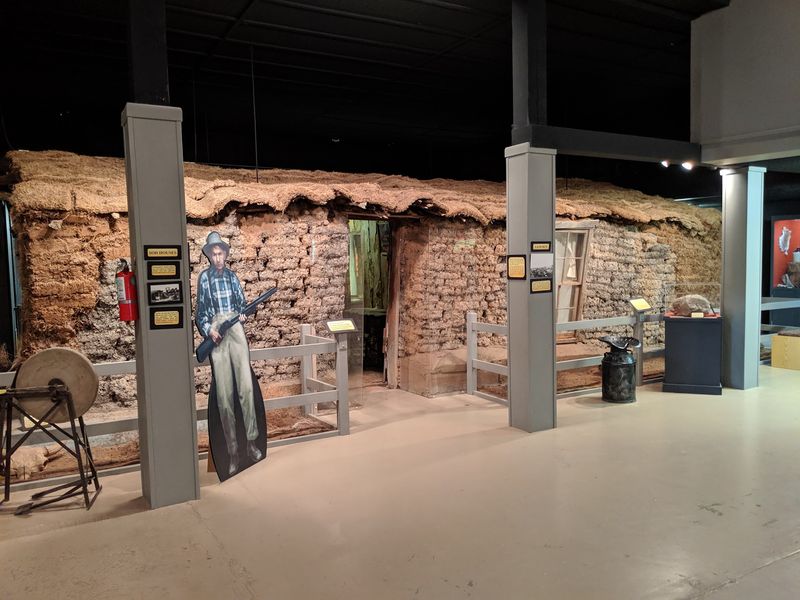
Some of the best stops in Oklahoma announce themselves with nothing more than a small highway sign and a gravel parking lot. You slow down out of curiosity, pay a few dollars at a counter that takes cash only, and forty minutes later you are standing inside a house built from grass and dirt that somebody actually raised a family in.
It has been sitting on the same patch of prairie since 1894, and it is the last one of its kind in the entire state. That kind of surprise sticks with you a lot longer than a fancy day trip ever could.
A Prairie Landmark On Highway 8
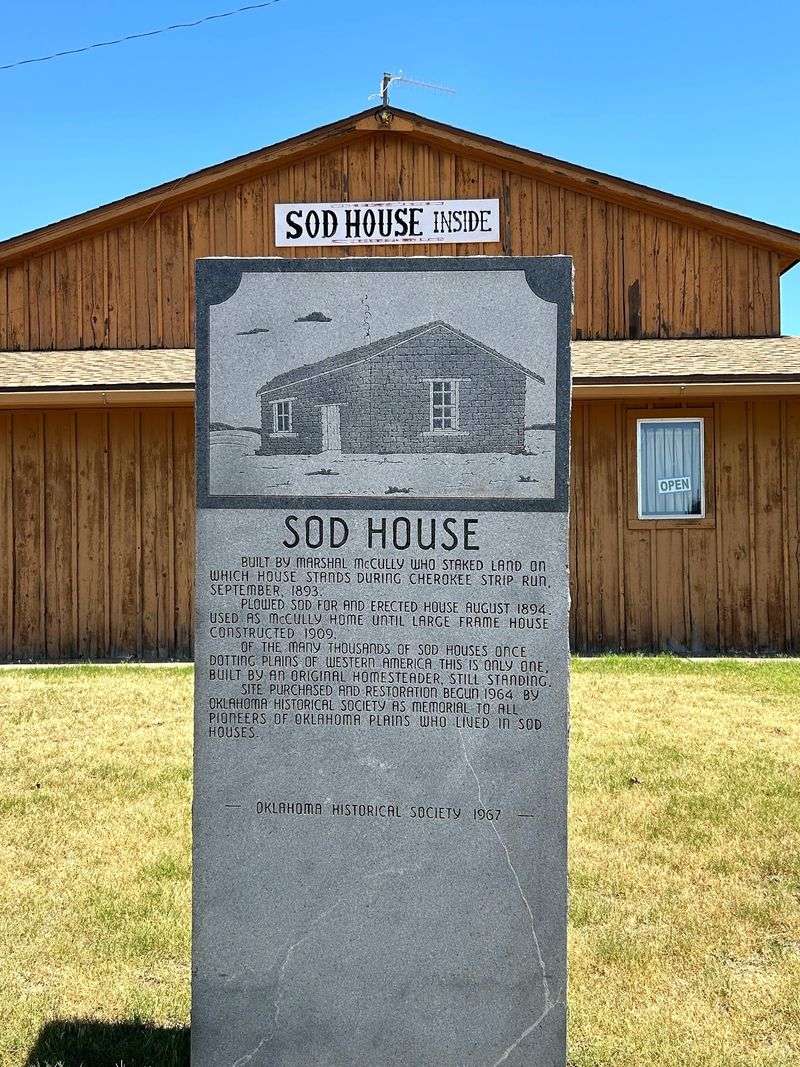
Roughly two hours northwest of Oklahoma City, out where the wheat fields run flat to the horizon, sits a modest building at 4628 OK-8 near Aline in Alfalfa County. Nothing about the exterior shouts for attention.
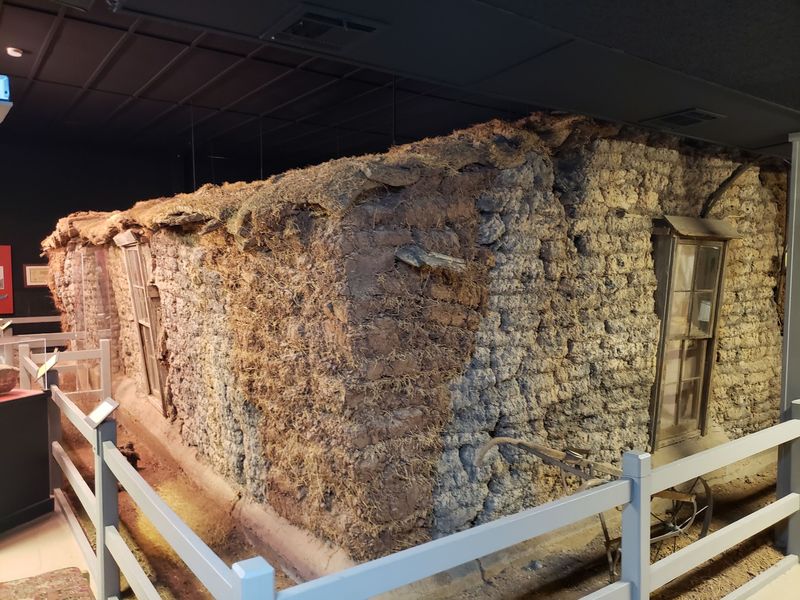
Inside that plain shell stands the only original sod house left in Oklahoma, still resting on the exact homestead where it was built. Not moved, not rebuilt from scratch, not a replica assembled for tourists.
The Oklahoma Historical Society runs the site as the Sod House Museum, and the whole operation is built around protecting one two-room dwelling that early settlers called a soddy. A modern cover structure was raised over the original walls to shield them from wind, rain, and the hard freezes that come through this part of the state.
Visitors routinely mention spotting the place by accident while driving past, then pulling in and being glad they did. It is the kind of stop that fits neatly between Gloss Mountain State Park and the salt plains, or works as a destination on its own for anyone curious about how homesteaders actually lived out here.
Marshal McCully And The 1893 Land Run
September 1893 brought one of the largest land runs in American history when the Cherokee Outlet opened to settlement. Thousands of hopefuls lined up, and among them was a man named Marshal McCully.
He staked his claim, and by August 1894 he had a house standing on it. Timber was almost nonexistent on that stretch of prairie, so lumber was a luxury most homesteaders simply could not afford to haul in.
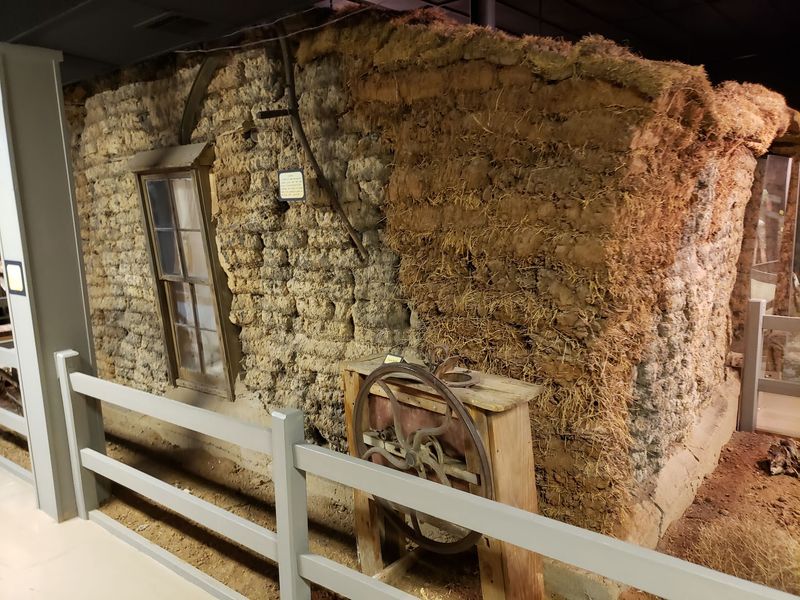
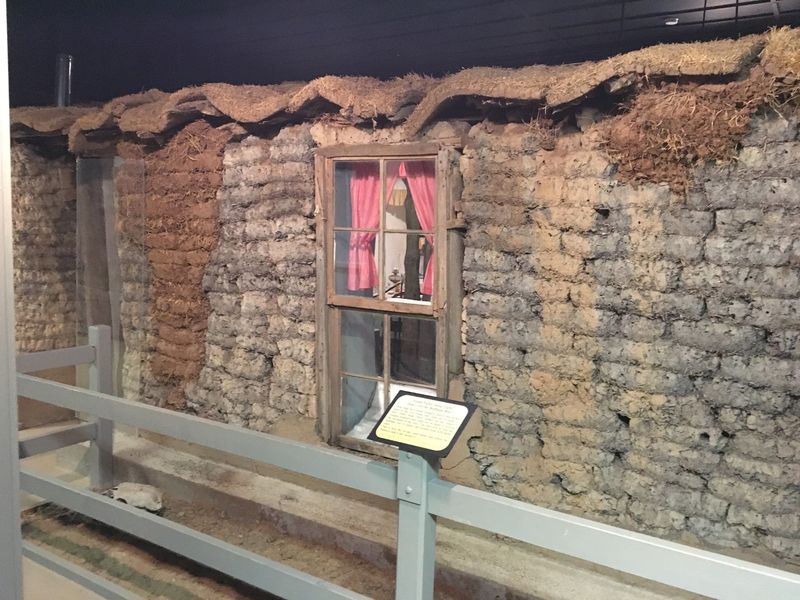
What McCully had in abundance was grass, or more precisely the dense root-bound buffalo grass sod underneath it. He cut it into thick blocks and stacked them like bricks, building walls that would outlast nearly every other soddy on the plains.
The McCully family lived there from 1894 until 1909, when they finally moved into a frame house on the property. The old sod home was demoted to a storage building and quietly kept doing its job until 1963.
One tour guide over the years has even had family ties to McCully himself, which is the sort of detail that turns a history lesson into a neighborhood story.
How You Build A House Out Of Dirt
Stacking dirt into walls sounds like a recipe for a collapsed roof, yet the engineering behind a soddy is smarter than most people expect. McCully cut sod blocks thick enough that the tangled buffalo grass roots held everything together like natural rebar.
For the roof, he gathered poles from trees along nearby creeks and laid them as rafters, then piled twelve inches of sod on top. Heavy, yes, but it shed rain and blocked the wind that never really stops out here.
His cleverest move was the interior finish. He plastered the inside walls with alkali clay, a technique that helped discourage insects from setting up shop in the dirt.
Flour sacks were tacked across the ceiling to catch whatever crumbled loose from above, sparing the family a steady sprinkle of soil and the occasional visiting critter at supper.
Thick earthen walls also delivered something modern builders still chase, which is real insulation. Soddies stayed noticeably warmer through January and cooler through the brutal Oklahoma summer than any thin-walled wooden shack could manage.
Walking Through The Two Rooms
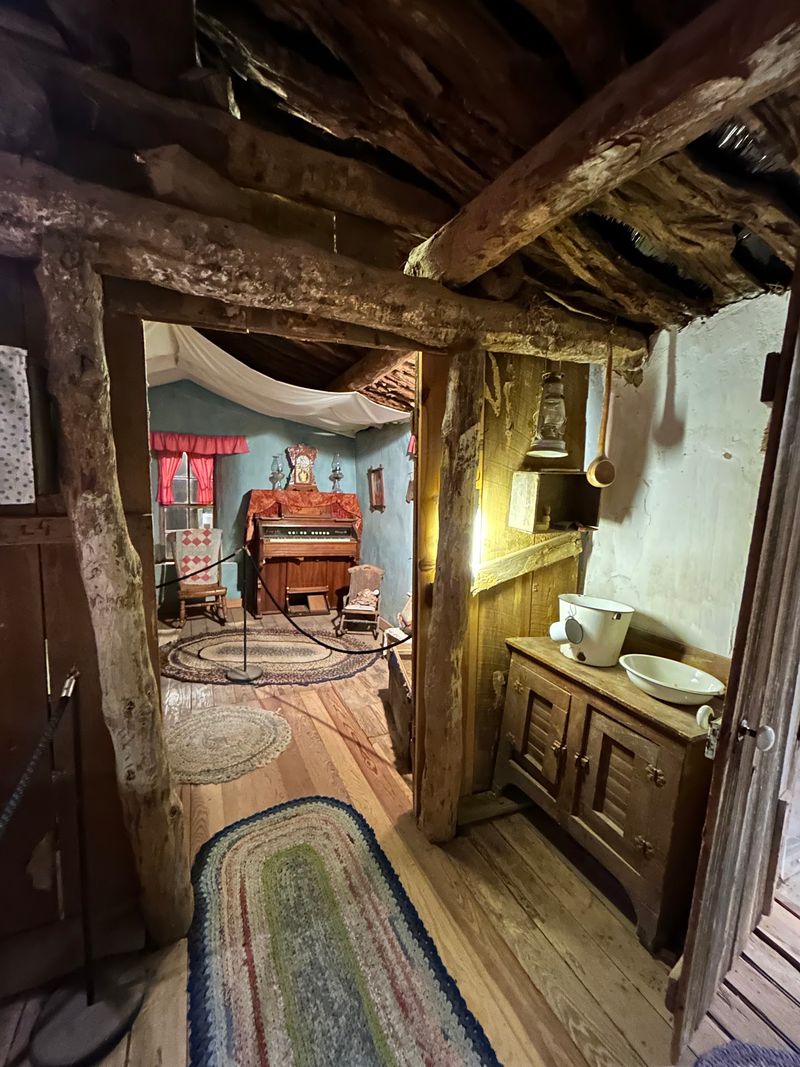
Step through the doorway and the first thing that registers is the quiet. Earth walls swallow sound in a way drywall never does, and the temperature shifts the moment you cross the threshold.
Both rooms are furnished the way the McCully family would have kept them, with period pieces arranged for daily living rather than display. A cookstove, simple bedding, kitchenware, and the small practical objects of a household that had no store around the corner.
Guests often come out talking about how much labor a single ordinary day required. Hauling water, feeding a fire, preparing food from scratch, and sleeping on a pallet on the floor when the beds ran out.
Kids tend to have the strongest reaction, especially when a guide explains the morning chores that came before breakfast. It makes the modern complaint about loading a dishwasher land a little differently.
Standing in a room where people spent fifteen years of their lives has a weight to it that photographs cannot pass along, which is exactly why the drive is worth making.
The Root Cellar You Can Climb Down Into
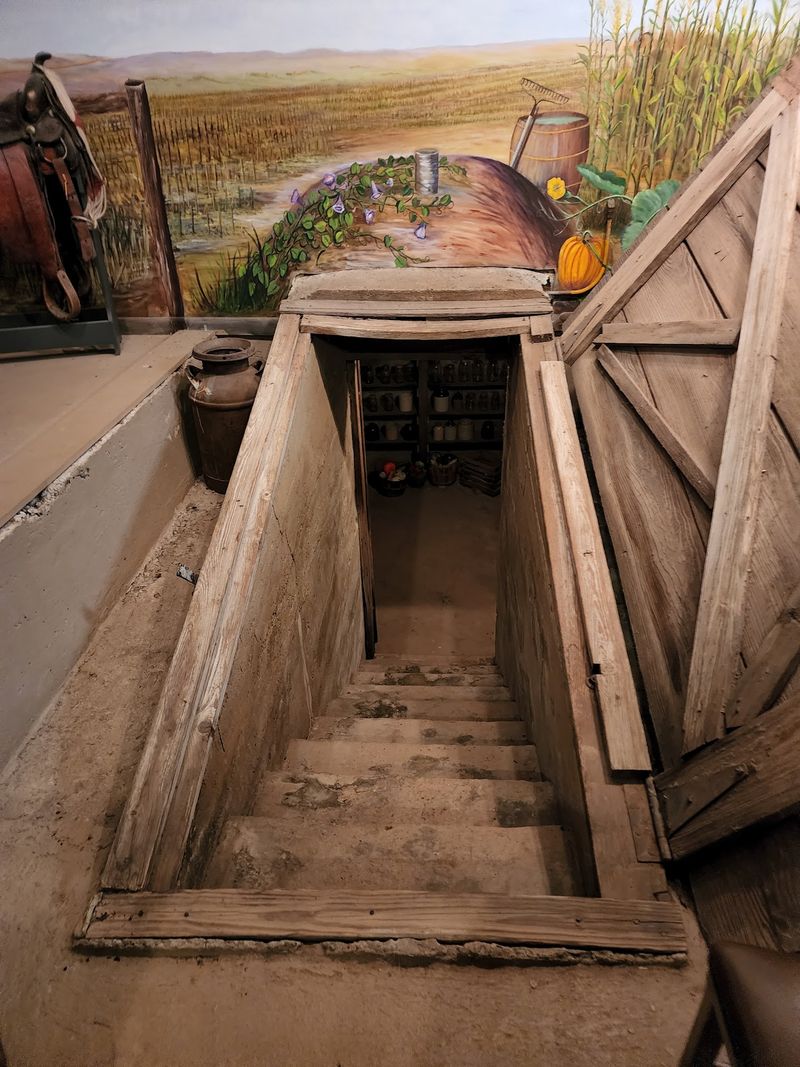
Plenty of museums keep you behind a rope. Here, you can walk down into the root cellar yourself, and that short descent turns out to be one of the most talked-about parts of the visit.
The temperature drop hits you around the third or fourth step. On a hot afternoon it feels like opening a refrigerator door, which explains precisely why settlers dug these things in the first place.
Before electricity reached rural Alfalfa County, a cellar was the difference between eating well in February and not eating much at all. Vegetables, canned goods, and anything needing cool storage went underground.
Cellars served double duty, too, offering shelter when the sky turned green and storm season rolled across the plains. Anyone who grew up in Oklahoma understands that arrangement without needing it explained.
Visitors mention the cellar more often than almost any other feature, partly because it engages more than your eyes. You feel the cool air, smell the earth, and suddenly the whole homestead operation makes practical sense.
Watch your footing on the steps, especially with little ones in tow.
Artifacts From The Homesteading Years
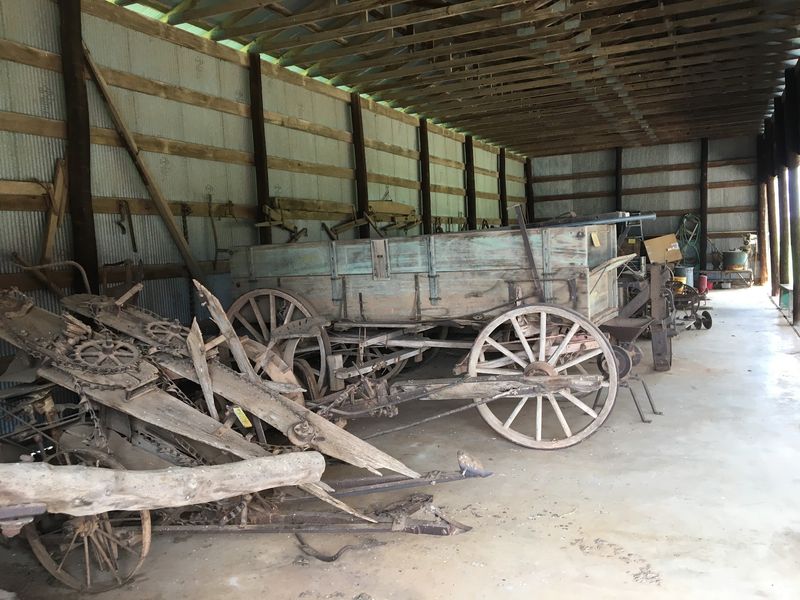
Surrounding the soddy is a collection that covers pioneer and agricultural life from 1893 through about 1920, and it is denser than the building’s modest footprint suggests.
A sod plow anchors the farm equipment displays, alongside a pioneer carriage, horse-drawn implements, and the assorted tools that turned raw prairie into cropland. Rusted, worn, and clearly used hard.
Household items fill out the rest. Cooking utensils, kitchenware, washing gear, and the small domestic objects that visitors of a certain age recognize instantly from a grandmother’s kitchen.
Photographs from the land run era line the walls and put faces to the names, which keeps the whole thing from feeling like a warehouse of old metal.
Staff members get consistent praise for knowing the story behind nearly every piece. Ask about something odd-looking and you will usually get a full explanation, occasionally with a family connection attached.
Exhibits are laid out well enough that you can move through at your own pace without feeling herded. Most people report spending around an hour, though history buffs have been known to stretch it considerably longer.
Guides Who Actually Know The Story
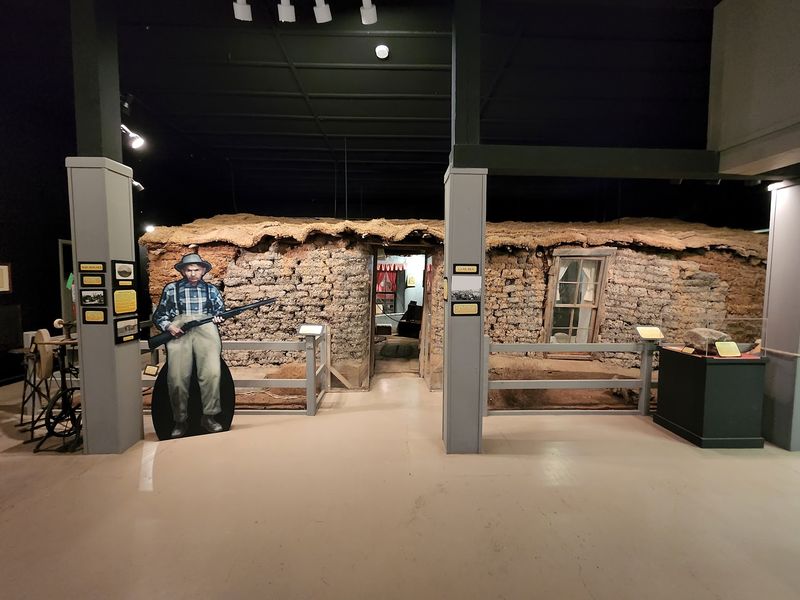
Knowledgeable staff comes up in conversation about this place more than any other single topic, and that is not an accident. The people working the front counter treat the museum like something they personally care about.
Tours are typically given one-on-one or in small groups, which means questions get answered properly instead of being deferred to a plaque. Guides walk you through the construction, the McCully family timeline, and the progression from soddy to frame house.
Curators here have a long reputation for pouring genuine effort into the collection, and repeat visitors notice the upkeep from one trip to the next.
There is a visitor log by the entrance worth signing. It costs nothing and it helps a small rural site show that people are still coming.
Seasonal programming pops up throughout the year, including educational programs, guided tours for school groups, and holiday events. Past December visits have included live Christmas music with cookies and something warm to drink.
For a museum this size in a county this quiet, the level of hospitality catches a lot of first-timers off guard in the best way.
Hours, Admission, And Getting There
Admission runs $7 for adults, $5 for seniors age 62 and older, and $4 for students. Children under 5 get in free, as do Oklahoma Historical Society members.
Bring cash. The museum has been cash or check only, so a card in your wallet will not do you much good once you reach the counter.
Doors are open Tuesday through Saturday from 9 a.m. to 5 p.m., with Sunday and Monday closed. Hours can shift around holidays, so a quick call to 580-463-2441 before a long drive is a reasonable precaution.
Parking is free and sits right at the building, with room for roughly ten standard vehicles plus three mid-sized RVs. That last detail matters if you are traveling in something larger.
The site is about two hours from Oklahoma City and a bit more from Tulsa, an easy pairing with Gloss Mountain State Park or the Great Salt Plains. Summer heat and prairie wind are real factors out here, so plan water and a hat if you linger outside.
Why This Short Stop Sticks With You
An hour. That is roughly what it takes to see everything, and it is one of the better returns on sixty minutes you will find in northwest Oklahoma.
What makes the place land is the improbability of it. A house built from grass and soil in 1894 was never meant to last five years, much less survive into a second century on its original ground.
Families do well here because the displays are tangible and the guides tell stories rather than recite dates. Grandparents spot kitchen items they grew up with, and kids get a vivid lesson in what chores used to mean.
Nobody is going to call it flashy, and that is the appeal. It is modest, affordable, carefully kept, and staffed by people who clearly want it to be there for the next generation.
If a road trip through Alfalfa County is anywhere in your plans, or if you simply want proof that Oklahoma holds things worth the drive, this qualifies. Sign the log, ask a question or two, and take the steps down into the cellar before you go.
