Time stopped in one North Dakota town, and nobody came back to restart it. Seven miles west of Bowman along Highway 12, crossing the railroad tracks and stepping onto that stretch of bare earth, the silence hits you like a wall.
Not the peaceful kind of silence you find in a forest, but the kind that carries weight, the kind that makes you feel like the land itself is holding its breath.
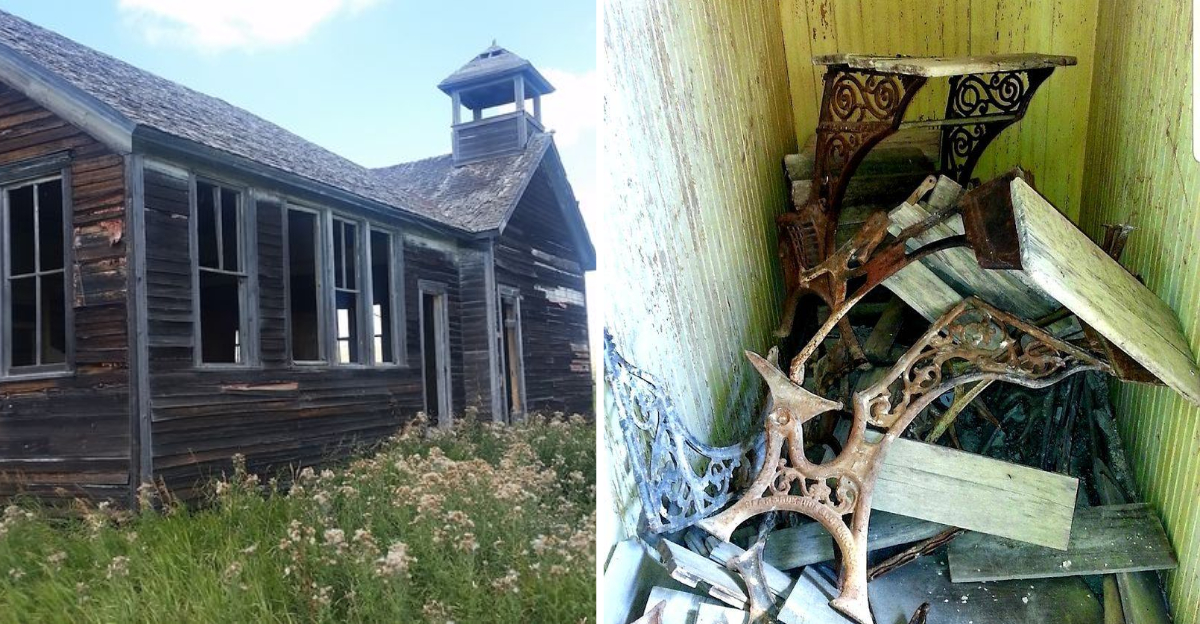
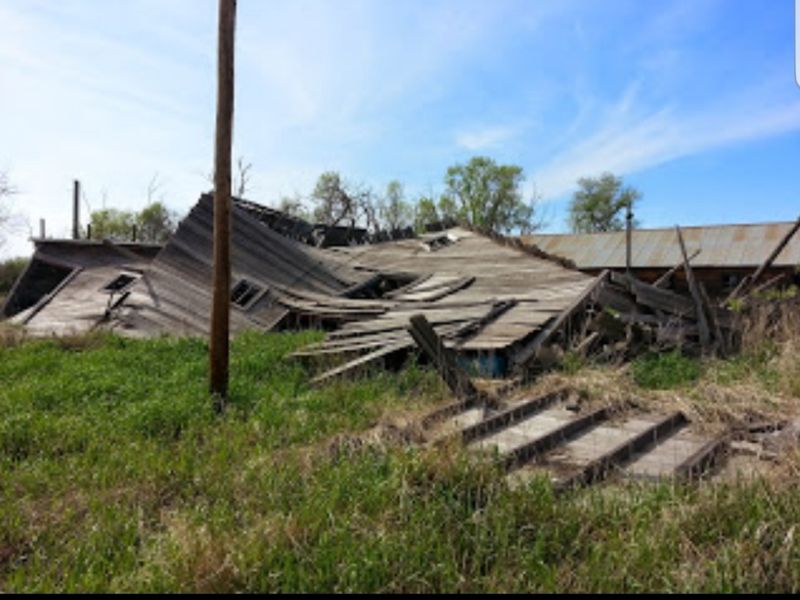
Broken structures lean against the sky, a schoolhouse bell tower tilts at an angle, and somewhere nearby a grain elevator stands like the last soldier of a long-forgotten army.
I walked through that abandoned town on a windy afternoon, the only sound the creak of old wood and the rustle of grass, and felt a strange sense of peace mixed with loss. Raw, honest, and surprisingly moving to visit.
How Griffin Went from Cattle Hub to Crumbling Silence
Griffin did not start out quiet. Back in the 1890s, this stretch of Bowman County land was alive with the energy of cattle drives, railroad construction, and the particular ambition of people who believed the Great Plains were full of promise.
The town was first called Atkinson, named after its founder William Atkinson, and it wore that name until February 10, 1908, when it was officially renamed Griffin in honor of Henry T. Griffin, the Assistant General Passenger Agent for the Milwaukee Road railroad.
That railroad connection was everything. Griffin grew as a Milwaukee Road town, which meant its heartbeat was tied directly to freight schedules, cattle shipments, and the movement of grain.
Some of the largest stockyards in all of Bowman County operated here, drawing cowboys from across the region. By 1911, the town had a general store, a lumberyard, several grain elevators, a railroad depot, and section houses where railroad workers lived.
A wool merchant set up shop. A creamery opened.
The local social scene apparently revolved around square dances held year-round. Griffin even sat near the Yellowstone Trail, America’s first transcontinental automobile highway, established in 1912 and stretching from Plymouth, Massachusetts all the way to Seattle, Washington.
That route passed about two miles north of town, marked in places by three-foot-tall yellow painted stones.
Population peaked at 67 residents in 1930, which sounds modest but felt significant for this corner of the plains. Then the post office closed that same year, and the slow unraveling began.
The Drought That Emptied the Streets for Good
The post office closing in March 1930 was not just an administrative change. It was a signal, the kind communities feel in their bones before they fully understand what it means.
When a post office shuts down, people start making other plans. Mail is personal, and losing the ability to send and receive it locally told Griffin’s residents something uncomfortable about their future.
Then 1936 arrived. The drought that year was punishing across the northern Great Plains, and Bowman County felt every degree of it.
Crops failed. Wells ran low.
The economic pressure that had been building since the Great Depression now had a physical, environmental partner working against anyone who stayed. Families packed what they could and moved toward places that offered work, water, and a fighting chance.
Griffin did not collapse overnight. That is one of the things that makes ghost towns like this one feel so different from disaster sites.
The departure was gradual, almost polite, one family at a time, one empty building at a time. The last inhabited house in Griffin reportedly burned down just a few years ago, which means someone was holding on until very recently.
That detail is the one that stays with you. Somewhere in the recent past, a real person woke up in Griffin every morning, made coffee, and looked out at those same broken structures.
Now even that last thread is gone. The town is truly empty, and the prairie is slowly, patiently taking it back.
The Atkinson Schoolhouse Still Reaches for the Sky
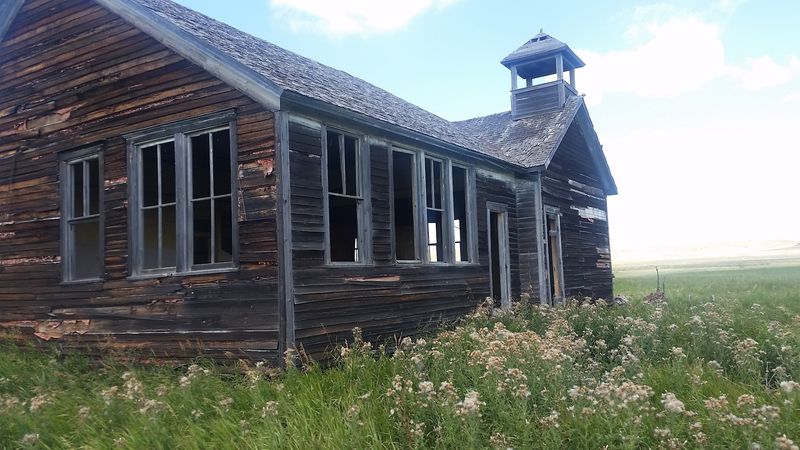
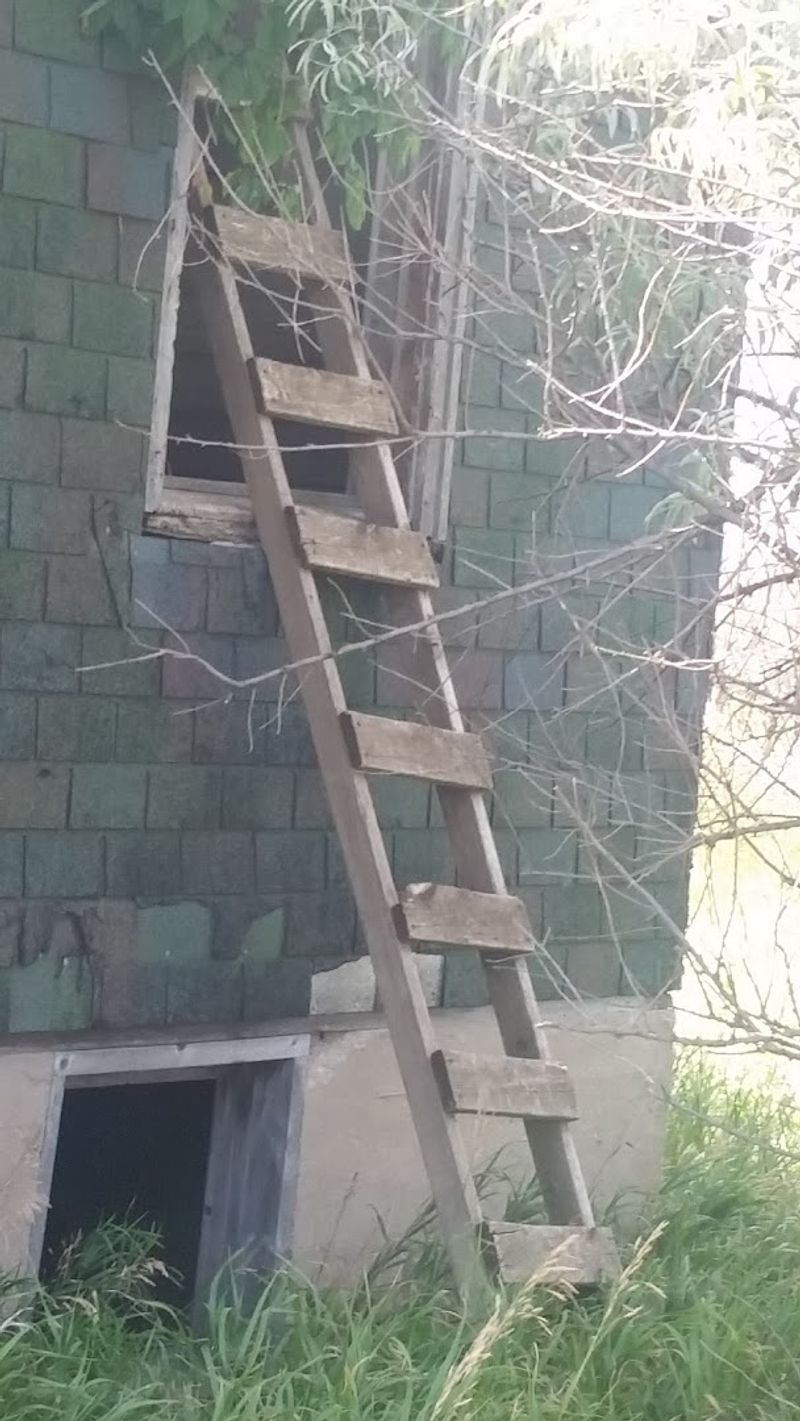
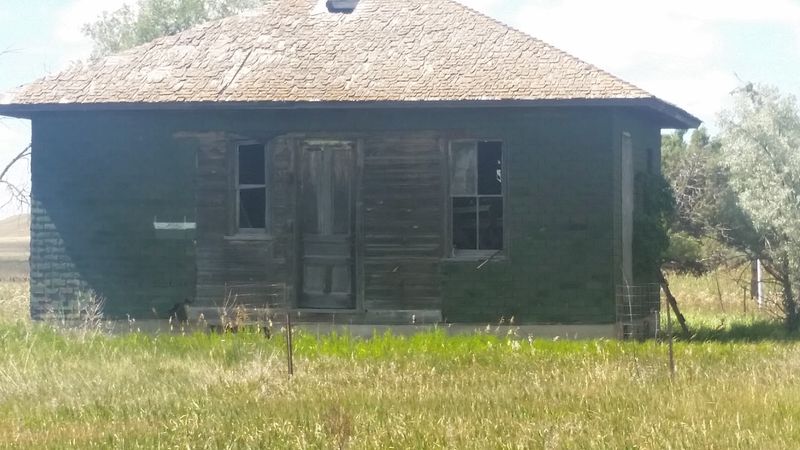
Of all the structures still standing in Griffin, the old Atkinson Schoolhouse is the one that stops you mid-step. It is the tallest thing out there, and its bell tower, though listing slightly to one side, still points upward with a kind of stubborn dignity.
You get the sense that this building has seen everything this town went through and simply refused to fall completely.
Originally, the schoolhouse sat two miles north of town. During the 1960s it was moved to its current location in Griffin proper, reportedly with plans to refurbish it and give it a new purpose.
Those plans never came together. The building ended up staying exactly as it was moved, slowly weathering in place, its potential quietly fading alongside the town itself.
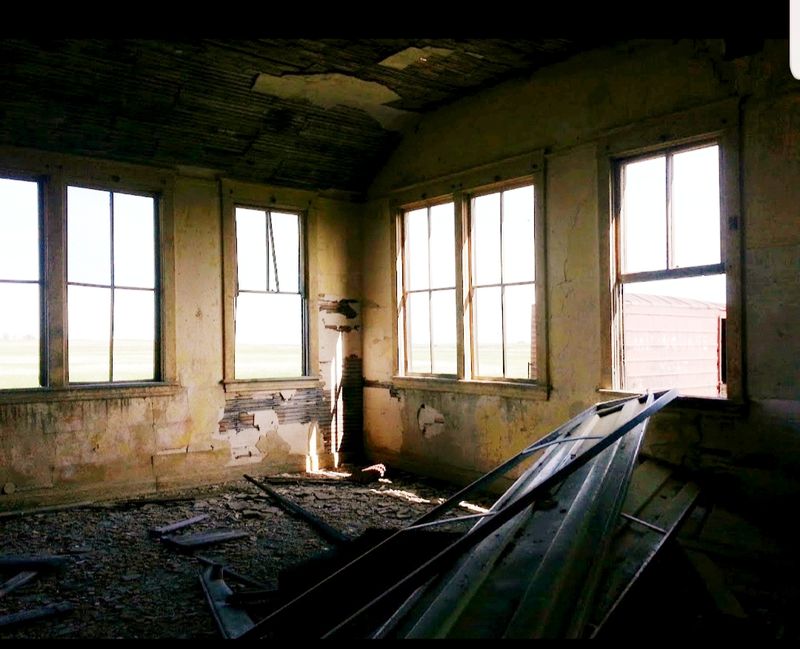
Inside, fragments of a chalkboard are still visible. That detail is oddly affecting.
Someone once wrote lessons on that board, and children sat in rows and copied down words or numbers, completely unaware that decades later a stranger would peer through a broken window and feel something hard to name. The building is not safe to enter, and that boundary should absolutely be respected.
Looking at it from outside is enough. The peeling paint, the warped wood, the bell tower catching the prairie wind, it all communicates something that no historical marker could fully capture.
Griffin’s story is poorly documented, which makes physical remnants like this schoolhouse even more important as proof that real lives were lived here.
A Milwaukee Road Boxcar and the Bones of Commerce

Not far from the schoolhouse, a Milwaukee Road boxcar sits in the grass like a punctuation mark at the end of a very long sentence. It is one of those details that feels almost too perfectly placed, a literal piece of the railroad that built this town, now left behind just like everything else.
Rust has done its slow work on the metal, and the surrounding grass has grown tall around its base.
Griffin’s commercial life was never elaborate, but it was real. A general store handled the everyday needs of farmers and railroad workers.
A lumberyard supplied the raw material for buildings that have since collapsed. Grain elevators, including the last and largest one still partially visible today, processed the harvests that once gave this land its economic identity.
There may have also been a gas station at some point, which would have made sense given the town’s proximity to the Yellowstone Trail.
What strikes me about these remnants is how ordinary they were. Griffin was not trying to be a famous place.
It was just trying to function, to give people what they needed to live and work. The barn still standing near the boxcar carries that same quality, practical, undecorated, built for purpose rather than appearance.
A few newer but abandoned trailer houses dot the landscape too, a reminder that Griffin kept trying to be inhabited well into more recent decades. Even in its decline, someone kept showing up.
That persistence feels worth acknowledging when you walk the grounds.
What the Prairie Is Quietly Reclaiming
Nature does not wait for permission. Across Griffin’s grounds, wildflowers push through cracks in old concrete with cheerful indifference to the history underfoot.
Birds have made nests in the eaves of the abandoned structures, and their songs are one of the few sounds that break the wind. The prairie is not mourning Griffin.
It is simply absorbing it, the way it has absorbed countless other human attempts to put down roots in this part of the world.
There is something genuinely beautiful about watching that process happen. The tall grass moves in long waves when the wind picks up, and on a clear day the sky above Bowman County stretches so wide it feels almost theatrical.
The light out here has a particular quality, especially in late afternoon, when it turns everything golden and softens the hard edges of decay into something almost picturesque.
The best time to visit is between late spring and early autumn. Roads are more accessible then, and the wildflowers are at their most expressive.
Bringing water and good walking shoes matters more than any guidebook, because Griffin is not set up for visitors in any conventional sense. There are no signs, no parking lots, no interpretive panels.
You park near the railroad tracks and walk in. That short walk across active tracks should be done carefully and with full attention.
Once you are on the other side, the town opens up in front of you, and the wind does exactly what the name of this place promises. It moves through every broken window without apology.
Visiting Griffin Today and Why It Still Matters
Griffin sits about a quarter-mile north of Highway 12, across active railroad tracks that still see regular use. The road that once crossed those tracks has been removed, so reaching the town means a short walk on foot.
That small inconvenience actually works in Griffin’s favor. It filters out casual passersby and leaves the place to people who came specifically to see it.
Bowman County is not a heavily visited part of North Dakota, which means Griffin rarely feels crowded. Most days, you might be the only person out there.
That solitude is part of what makes the experience register so deeply. There is no crowd noise to hide behind, no tour guide narrating the significance of each structure.
Just you, the wind, and whatever you bring to the experience.
Respecting the site is genuinely important. The buildings are fragile and dangerous to enter.
Leaving everything exactly as you found it protects the experience for the next person who makes the trip, and it honors the people who once called this place home. Griffin’s history is considered poorly documented, which means every physical piece of it carries extra weight as historical evidence.
Ghost towns like Griffin have a way of reframing ordinary life. You leave thinking about resilience, about how communities rise and fall, about the gap between ambition and outcome.
The drive back toward Bowman on Highway 12 feels different after spending time in Griffin. The landscape looks the same, but something in how you read it has shifted.
Address: Marion Township, North Dakota 58651
