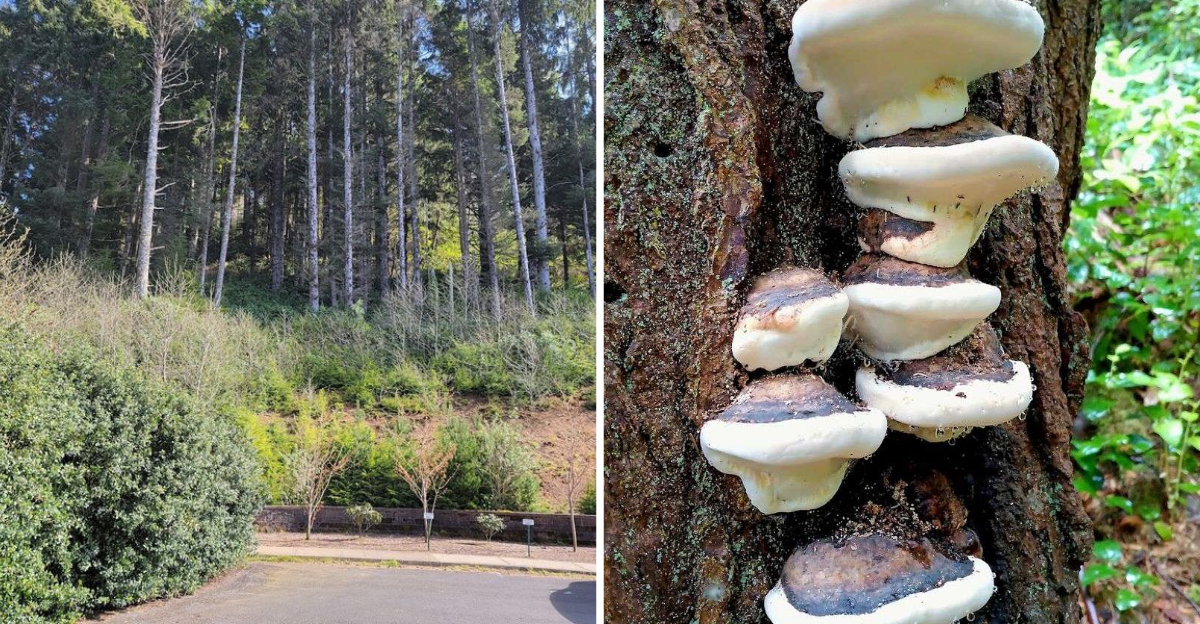
Most people drive right past that trailhead in Oregon without a second glance. Tucked behind an apartment complex near the coast, I almost missed it entirely the first time I went looking.
That trail is only about a mile long, but it packs in more wonder per step than trails three times its length.
Ancient Sitka spruce rise overhead like cathedral columns, the air smells of damp earth and cedar, and the forest floor is absolutely covered in fungi during the fall and winter months.
I walked that path on a misty morning, the only sound my own footsteps on the soft ground, and felt like I had stumbled into something the guidebooks missed. Mushroom hunters, casual hikers, and curious nature lovers have quietly been discovering that gem for years.
If you are searching for chanterelles, chasing spring blooms, or simply craving a quiet walk through a moss-draped forest, that trail delivers in a way that feels almost secret.
The Trail That Honors the Ya’Xaik People
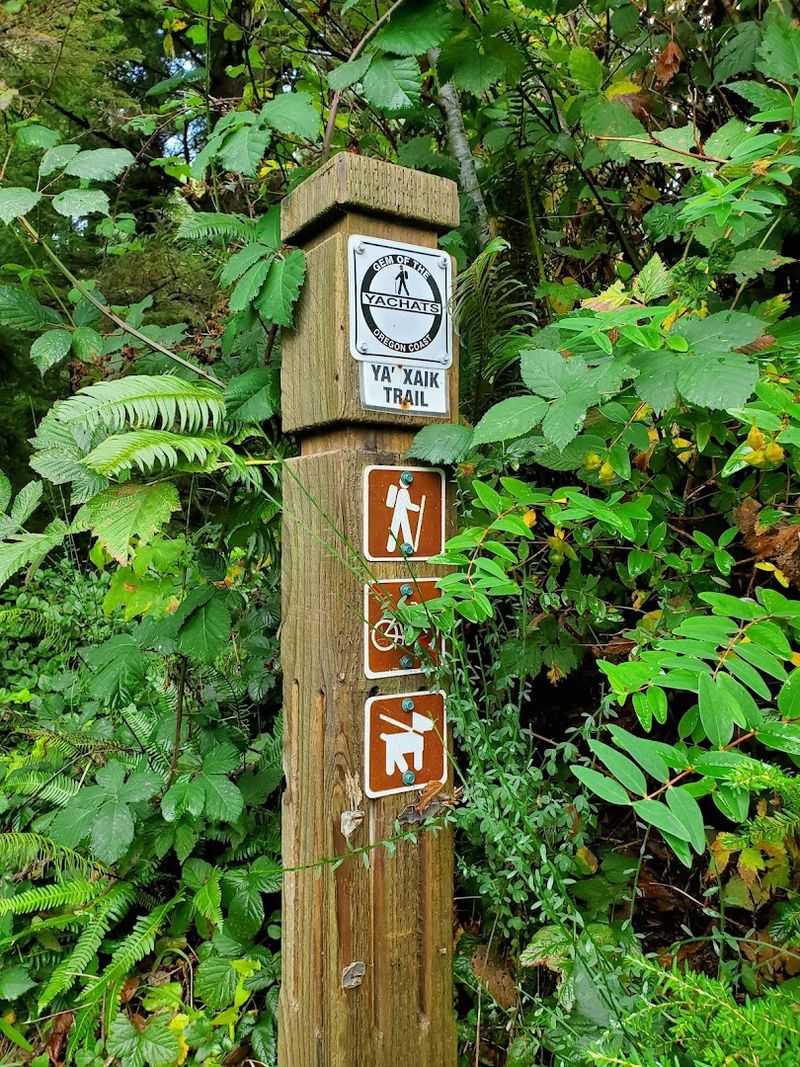
Before you even take your first step into the forest, a sign at the trailhead stops you in your tracks. It tells the story of the Ya’Xaik people, a band of the Alsea Tribe who lived along this stretch of the Oregon coast for at least 7,000 years.
That number is hard to wrap your head around, honestly.
The trail itself was created as a living tribute to them, honoring their deep relationship with this land and the forests they called home.
More interpretive posts appear along the route, sharing pieces of their history, including the painful chapter of how they were displaced.
It gives the hike a weight and meaning that most short trails simply do not have.
Knowing that people thrived here for millennia, fishing the rivers and gathering from these very forests, changes how you look at the trees around you.
The old-growth stumps you pass are not just landscape features.
They are reminders of what was here before logging, and what the Ya’Xaik people knew and protected long before that.
The trail name is a respectful acknowledgment of that history. Taking a few minutes to read each sign along the way is genuinely worth it.
The information is presented clearly and thoughtfully, making it accessible for kids and adults alike. This is not just a nature walk.
It is a small but meaningful history lesson woven into every quarter mile of the path.
What the Forest Actually Looks and Feels Like
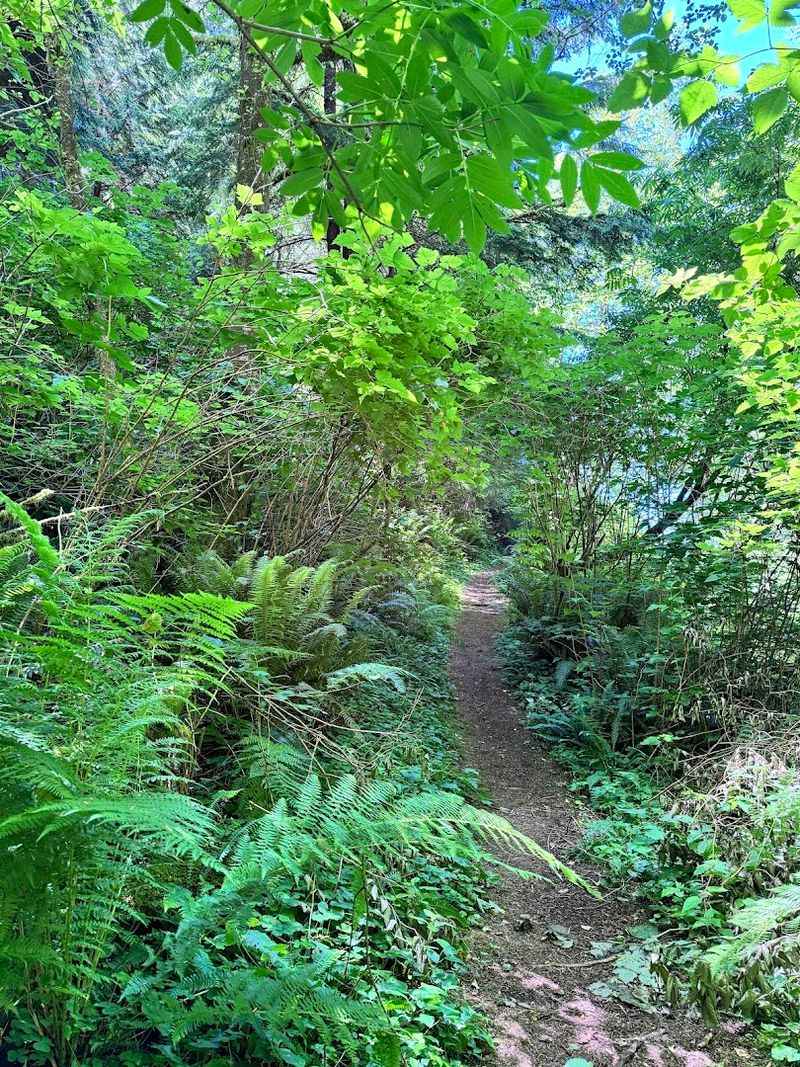
The moment you pass the trailhead and step under the canopy, the temperature drops a few degrees and the noise of Highway 101 fades completely.
It is the kind of forest that makes you exhale without realizing you were holding your breath.
Towering Sitka spruce and Western hemlock stretch upward, their roots gripping the hillside with impressive confidence.
The ground is thick with sword ferns, salal, and mosses that seem to glow green in the filtered coastal light. Alders lean over the path in spots, and salmonberry and elderberry shrubs crowd the edges.
In spring, trillium blooms appear along the trail like little white stars scattered across the forest floor.
One section of the trail has been described as cathedral-like, and that word really does fit. The canopy closes in overhead, the light goes soft and golden, and the only sounds are birdsong and the faint trickle of Mitchell Creek somewhere below.
It has a stillness that feels rare.
The path itself is a mix of soft mulch, natural root steps, and some installed wooden stairs on the steeper sections.
It can get muddy and rooty during the rainy season, so waterproof boots are a smart choice from October through March.
The trail is mostly shaded year-round, which keeps it cool in summer and damp in winter. There are no viewpoints at the top, but honestly, the forest itself is the destination.
Every step of this trail earns its place.
Why Mushroom Hunters Love This Trail So Much
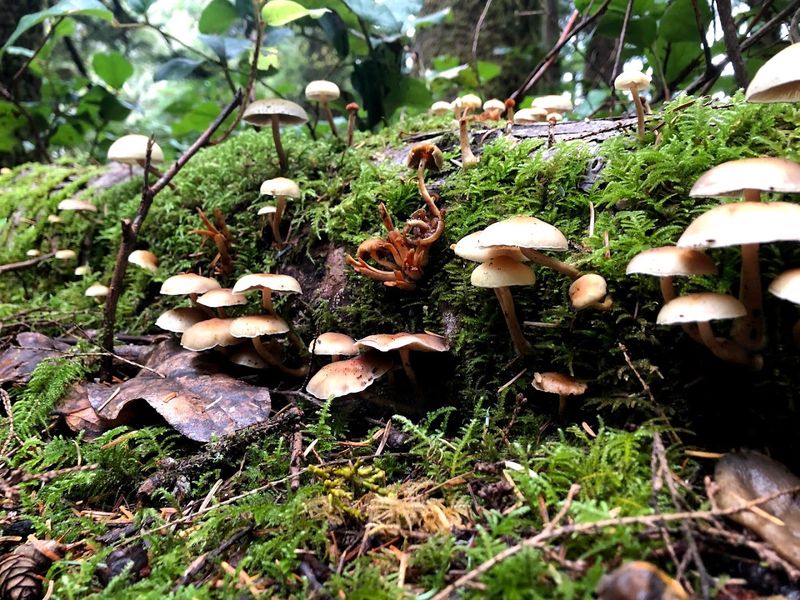
Fall and early winter turn the Ya’Xaik Trail into something of a fungi wonderland.
The damp, moss-rich environment is exactly the kind of habitat that mushrooms thrive in. Hikers regularly report spotting a wide variety of species growing along the path and on the old nurse logs scattered throughout the forest.
Yachats itself takes mushrooms seriously enough to host a Mushroom Festival each year, drawing enthusiasts from across the Pacific Northwest.
The town sits in a region well known for its mycological diversity, and the trail’s second-growth coastal forest provides ideal conditions for fungi to flourish.
You do not need to be an expert to enjoy what you find here.
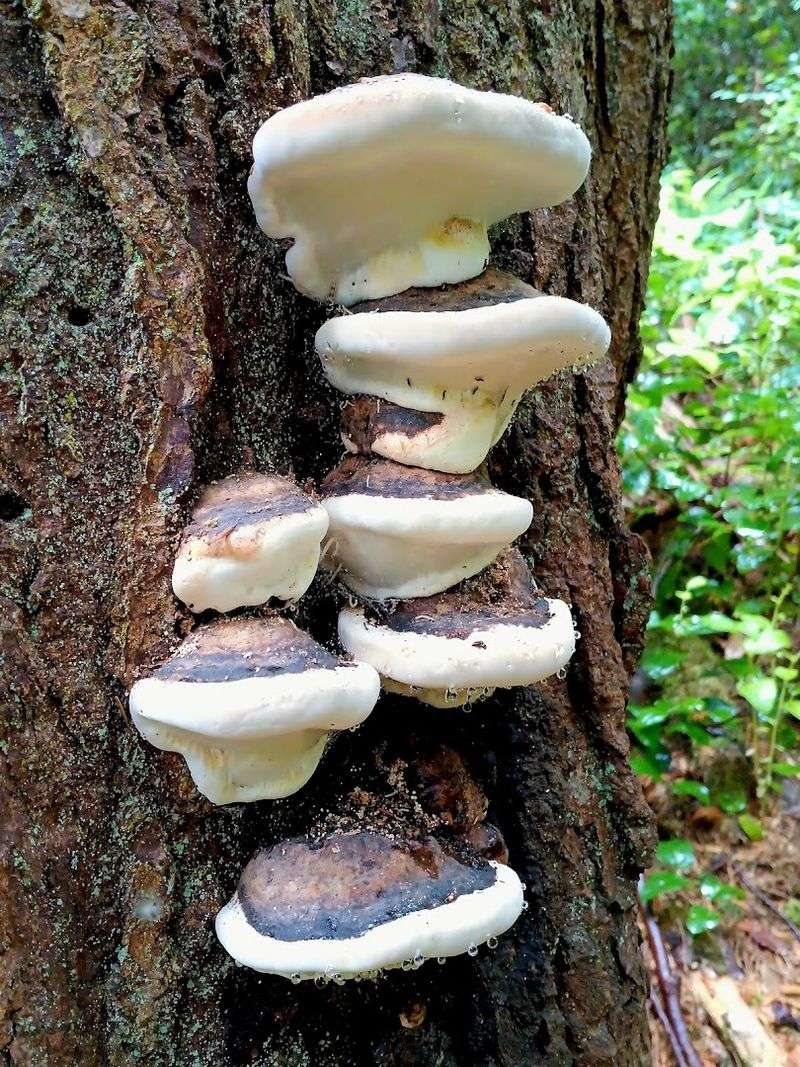
Even if you are not a forager, spotting a cluster of bright orange chanterelles or a delicate shelf fungus clinging to a fallen spruce is genuinely exciting.
One visitor summed it up simply by noting the trail has lots of fungi and other interesting plants, which is an understatement if you visit after a good rain.
Organized mushroom walks in the Yachats area focus on identification rather than harvesting, and they are a fantastic way to learn what you are looking at before heading out solo.
There is also a charming winter tradition where local artists hide handmade mushroom sculptures along accessible trails, including the Ya’Xaik Trail.
These small treasures, crafted from glass, soap, or crochet, are tucked along the path for hikers to discover. It makes an already magical trail feel a little bit enchanted.
Getting There and Navigating the Trailhead
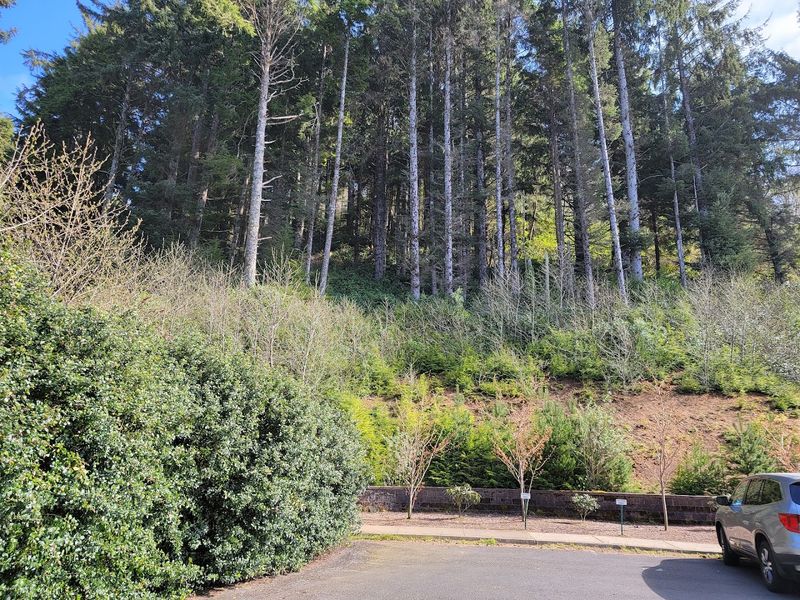
Finding the trailhead is half the adventure. The Ya’Xaik Trail begins at the east end of Diversity Drive, located on the northern edge of Yachats.
Parking is available behind the Fisterra Gardens Townhomes, directly across Highway 101 from the Fireside Hotel. It is a small lot, so arriving early on weekends is a genuinely good idea.
The trail starts with an uphill climb that catches some people off guard. It is not a brutal ascent, but it is steep enough to get your heart rate up within the first few minutes.
Natural root steps and some installed wooden stairs help manage the incline, and the steepest section is blessedly short.
Navigation mid-trail is straightforward, but the end of the loop can get confusing. Some hikers have ended up in a residential driveway or walking along Highway 101 to get back to their starting point, which is not ideal.
The safest and most recommended option is to hike in, enjoy the forest and the Gerdemann Botanic Preserve connection, and then simply turn around and retrace your steps back to the parking area.
Dogs are welcome on the Ya’Xaik Trail itself and must be kept on a leash. However, they are not allowed inside the Gerdemann Botanic Preserve, so keep that in mind if you are hiking with a pet.
The trail is open 24 hours a day, but morning visits offer the best light filtering through the canopy and the highest chance of spotting wildlife before the day gets busy.
The Gerdemann Botanic Preserve Connection
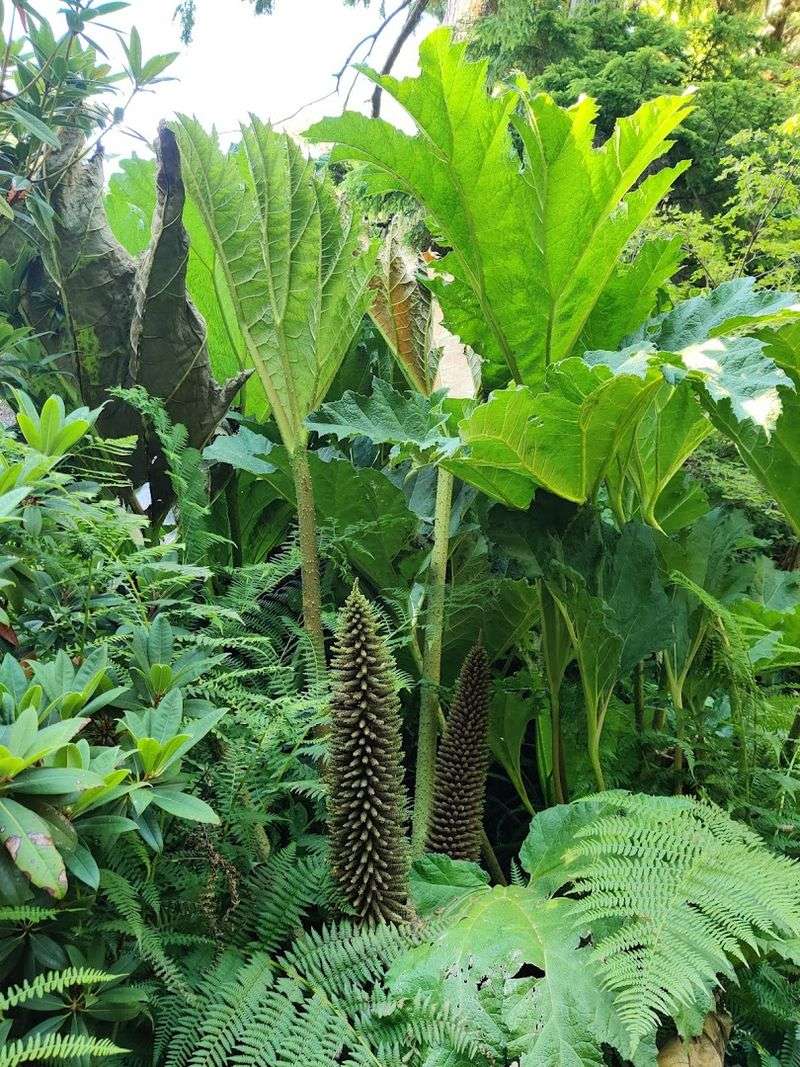
At the far end of the Ya’Xaik Trail, a wooden gate opens into a completely different world.
The Gerdemann Botanic Preserve is a tranquil collection of both native and exotic plant species, and it feels like stepping into someone’s incredibly well-tended private garden, because in a way, it is.
The preserve is private but has a public footpath that connects to the Ya’Xaik Trail.
Inside the preserve, massive rhododendrons crowd the path in the most spectacular way. Some of the plants here are enormous, with leaves bigger than a dinner plate and root systems that look ancient.
A small creek winds through the property, adding a soft soundtrack to the walk that pairs perfectly with the mossy, green-filtered light.
Spring is the showiest time to visit, when the rhododendrons bloom in deep pinks and purples. But even in the gray months of winter, the preserve has a quiet beauty that is hard to describe without sounding dramatic.
The combination of native ferns, towering Sitka spruce, and exotic ornamentals creates a layered, almost surreal landscape.
Remember that dogs are not permitted inside the preserve, even if they are allowed on the main trail.
The preserve also operates by appointment for private visits, though the public footpath remains accessible when connected via the Ya’Xaik Trail.
Combining both the trail and the preserve makes for a richer experience overall. Together, they offer a surprisingly varied walk through coastal forest, creek-side greenery, and curated botanical beauty all within a very short distance.
Wildlife, Seasons, and the Best Time to Visit
The Ya’Xaik Trail is alive in a way that changes completely depending on when you show up. One hiker spotted a banana slug and a snake on the same visit, which is honestly a solid wildlife double feature for a trail under a mile long.
Deer have been seen moving quietly through the understory, and songbirds fill the canopy with noise from the moment you start climbing.
Spring brings trillium blooms and the first flush of bright new ferns pushing up through the damp soil. Summer keeps the trail shaded and cool, making it a welcome escape from beach crowds.
Fall is arguably the most exciting season for anyone interested in fungi, as the rain returns and mushrooms begin appearing on logs, in the soil, and along the creek banks.
Winter has its own kind of magic here. The moisture-rich atmosphere turns everything a deeper shade of green, and the forest feels hushed and intimate.
This is also when the trail gnome tradition kicks off, with local artists hiding handmade mushroom sculptures along the path for hikers to find. It sounds whimsical because it is, and it makes a winter hike feel genuinely playful.
Year-round, the trail is open 24 hours and is free to access. Early morning visits tend to reward patience with better wildlife sightings and softer light.
Weekdays are quieter than weekends, especially in summer. Bringing waterproof shoes, a light layer, and a camera is always the right call on the Oregon coast, regardless of what the forecast says.
