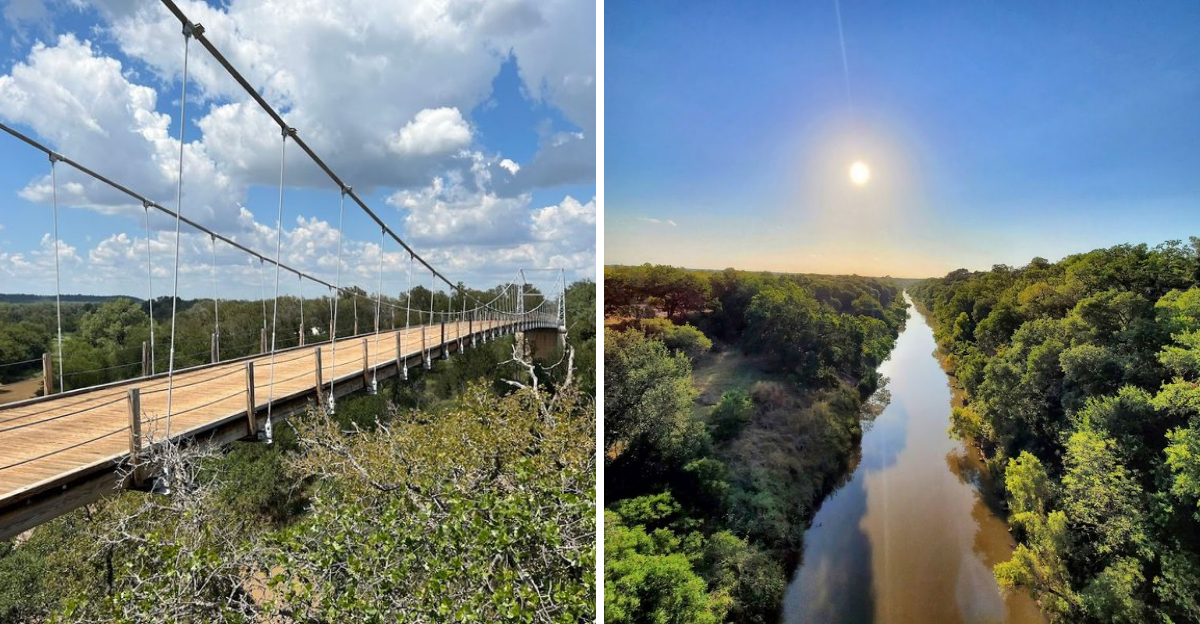
It looks narrow from a distance, and somehow even narrower once you are on it.
Wooden planks, a single lane, and just enough room to make you second-guess the decision halfway across. Every movement of the bridge adds to the experience, turning a simple crossing into something you actually feel.
It is quick, but it does not feel quick while you are doing it. Texas has plenty of scenic drives, but very few come with this kind of built-in adrenaline.
A Bridge That Has No Business Still Standing (But Here We Are)
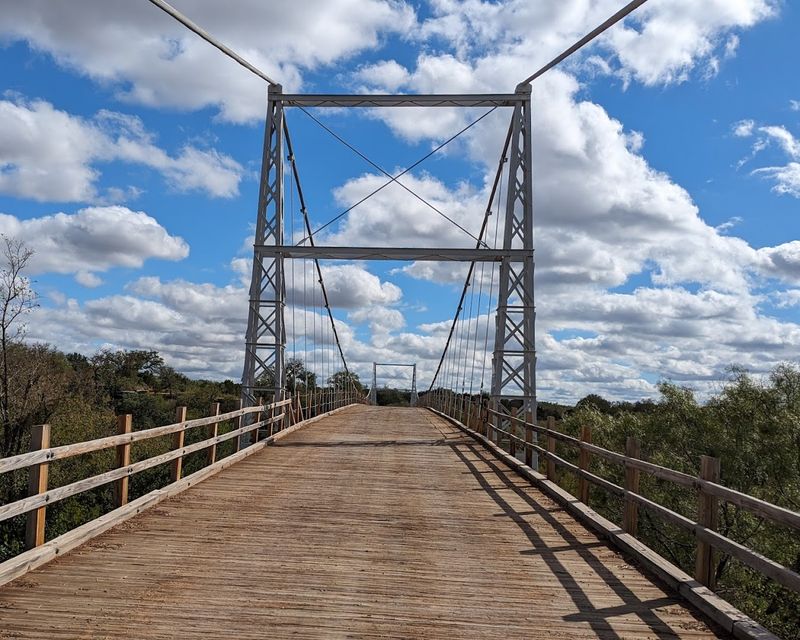
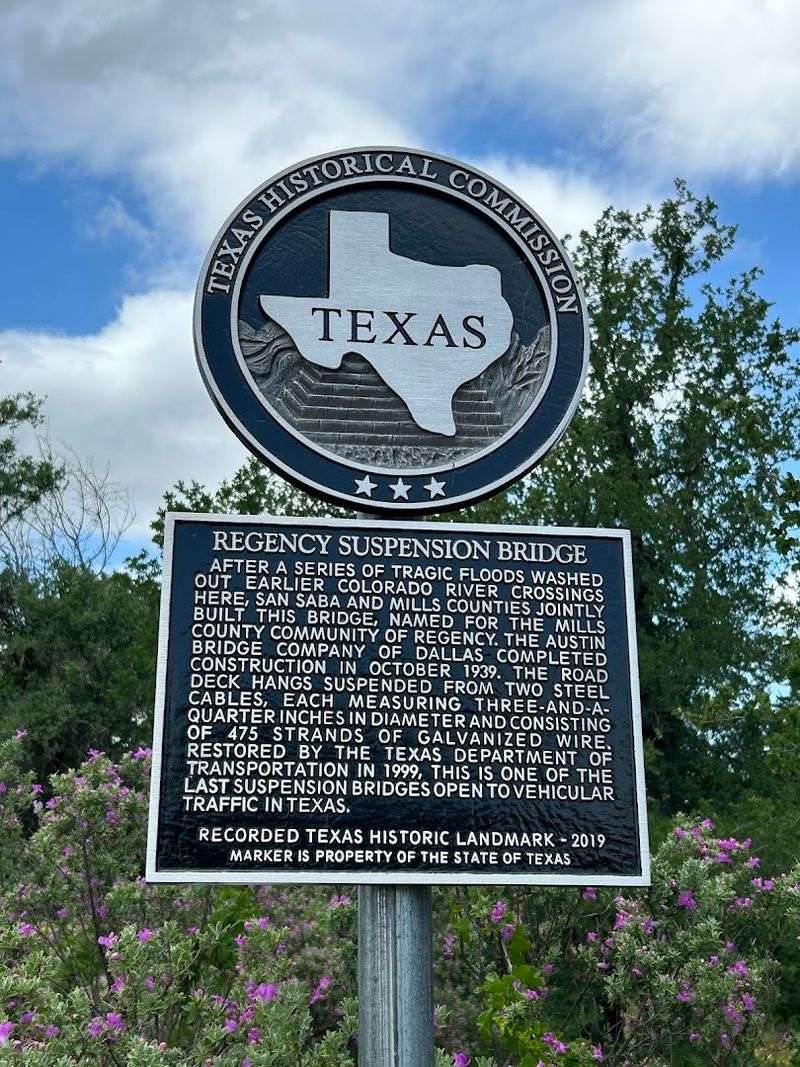
Built in 1939 by the Austin Bridge Company, the Regency Suspension Bridge was never meant to be famous. It was designed to solve a practical problem: connecting San Saba and Mills counties across the Colorado River after earlier crossings kept getting wiped out by floods.
The engineers built it to last, and somehow, nearly nine decades later, it has.
The main span stretches 343 feet, with a total length of 403 feet. For a structure that was built during the Great Depression era, that is a genuinely impressive feat of engineering.
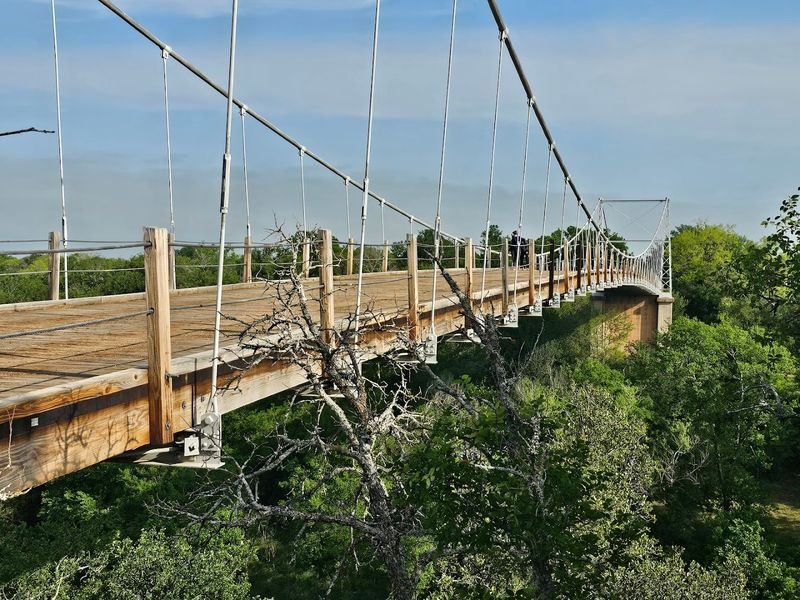
The wooden deck is 16 feet wide, which sounds reasonable until you are actually sitting in your car on it, looking at the river below through the gaps.
It has survived floods, a fire in 2003, and structural damage in 2020. Each time, efforts were made to restore and reopen it.
There is something almost stubborn about this bridge, like it simply refuses to quit. That resilience is part of what makes driving across it feel meaningful rather than just adventurous.
You are crossing a piece of Texas history that fought hard to still be here.
The Narrowness Is Real and It Will Make You Grip the Wheel
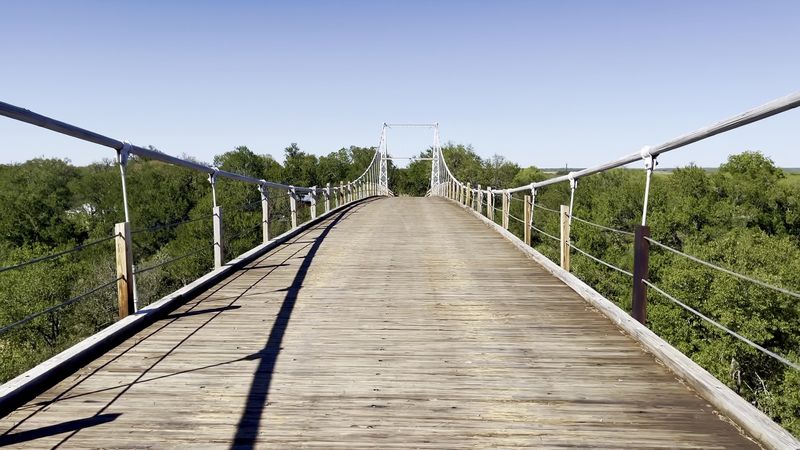
Sixteen feet sounds fine on paper. Then you pull your car up to the entrance and realize there is maybe a foot of clearance on each side of a standard vehicle.
The wooden guardrails are low, the cables are close, and the river is right there below you. It is the kind of narrow that makes even confident drivers slow to a crawl.
One vehicle crosses at a time, full stop. There is a small waiting area on each side, and the unwritten rule is simple: if someone is already on the bridge, you wait.
It is a surprisingly polite system that seems to work entirely on mutual respect and shared nerves.
Larger trucks and wide-body vehicles should approach with caution and measure their width before committing. Most standard cars fit just fine, but the experience feels much tighter than the numbers suggest.
Part of that is psychological. When you can see the river through the deck boards and feel the whole structure shift slightly under your tires, your brain starts questioning every decision that led you here.
That is not a bad thing. That is exactly the kind of alive feeling that makes road trips worth taking.
That Sway Is Not Your Imagination
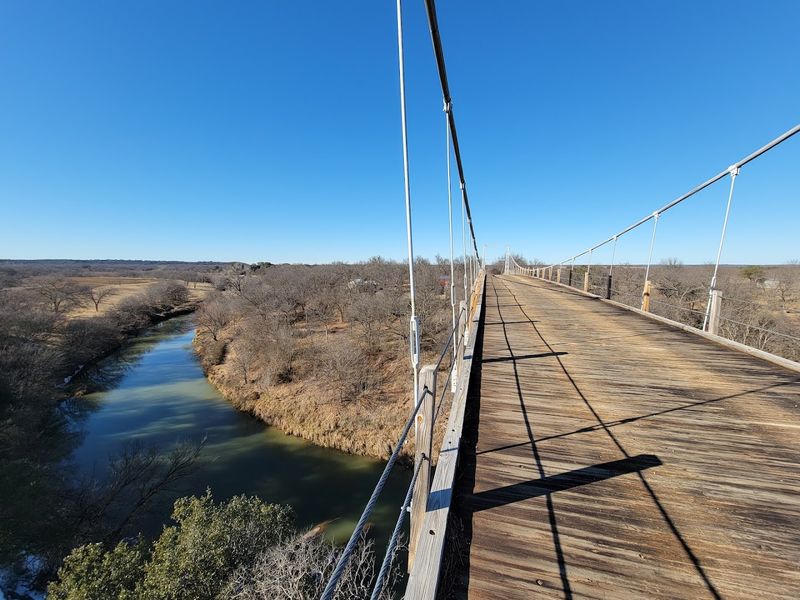
The bridge moves. Not in a terrifying, structural-failure kind of way, but in a gentle, rhythmic sway that reminds you this is a suspension bridge doing exactly what suspension bridges do.
The cables absorb the weight and distribute it, and that process creates a subtle motion you can feel through your tires and your seat.
First-time visitors often describe a moment of hesitation right in the middle of the span. The water below is visible, the bridge is swaying softly, and the whole experience feels genuinely surreal for a public road in Texas.
It is not scary so much as deeply unusual.
Engineers designed suspension bridges to flex rather than resist, which is actually what makes them so durable over long spans. The Regency Bridge is a working example of that principle, and you feel it in real time as you cross.
Some people stop in the middle to get out and look around, which is a perfectly reasonable thing to do. The view of the Colorado River from the center of the span is worth a pause.
Just make sure no one else is waiting to cross before you linger too long.
The Colorado River View From the Middle of the Span
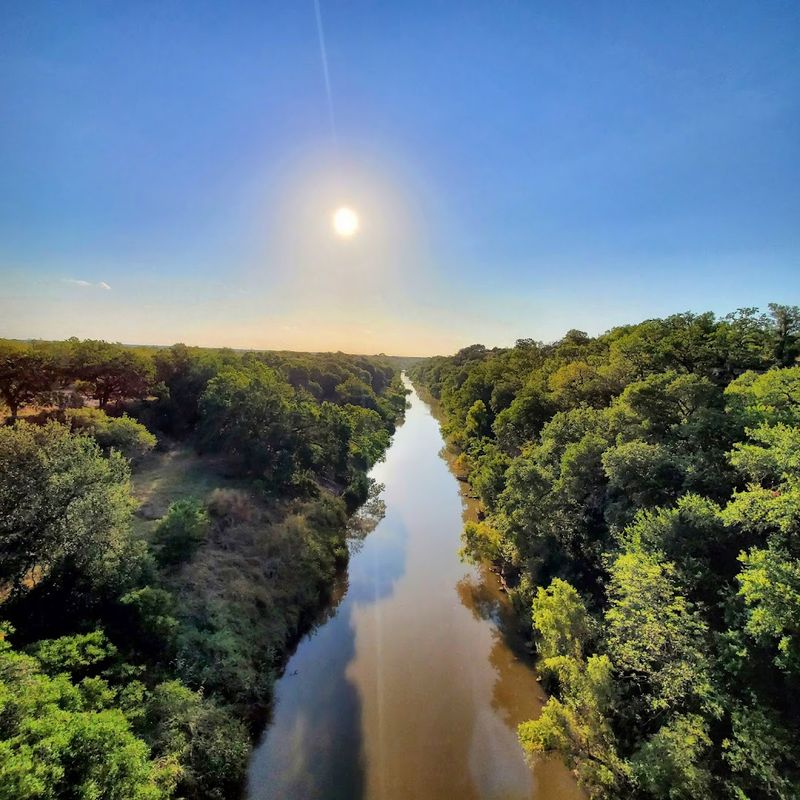
From the middle of the Regency Bridge, the Colorado River opens up in both directions and it is genuinely beautiful. The water runs green and clear in dry seasons, reflecting the cypress trees and limestone banks that line the edges.
It feels remote in the best possible way, like a river that does not know anyone is watching.
Looking upstream, the river bends gently through low hills covered in cedar and live oak. Downstream, the water stretches flat and calm before disappearing around a curve.
On a quiet morning, the only sounds are the wind through the cables and the occasional bird call from the riverbank below.
This is one of those views that makes you put your phone down for a second and just look. The Hill Country light hits the water differently depending on the time of day.
Early morning gives you a soft, misty quality, while late afternoon turns everything golden and warm. Either way, the river is the real show here.
The bridge just happens to put you right in the middle of it, suspended between two counties with nothing but water and sky around you.
Getting There Is Part of the Adventure
The drive to Regency Bridge is not something you stumble onto by accident. County Road 137 winds through some of the quieter parts of the Texas Hill Country, past ranches, cedar breaks, and stretches of road where you might not see another car for miles.
That isolation is a feature, not a bug.
The nearest town with any real services is Richland Springs, which is a small community in San Saba County. Filling up on gas and grabbing snacks before heading out is a smart move.
Cell service gets spotty in this area, so downloading offline maps or noting the directions ahead of time saves a lot of frustration.
The road conditions can vary depending on recent weather, especially if there has been heavy rain in the area. Checking local road conditions before you head out is always worth the extra five minutes.
The drive itself, once you are out on those back roads with the windows down and the cedar-scented air coming through, feels like the trip has already started delivering on its promise.
Arriving at the bridge after that drive makes the whole experience feel earned in a way that a roadside attraction off the highway never quite does.
The History Behind the Structure Is Surprisingly Fascinating
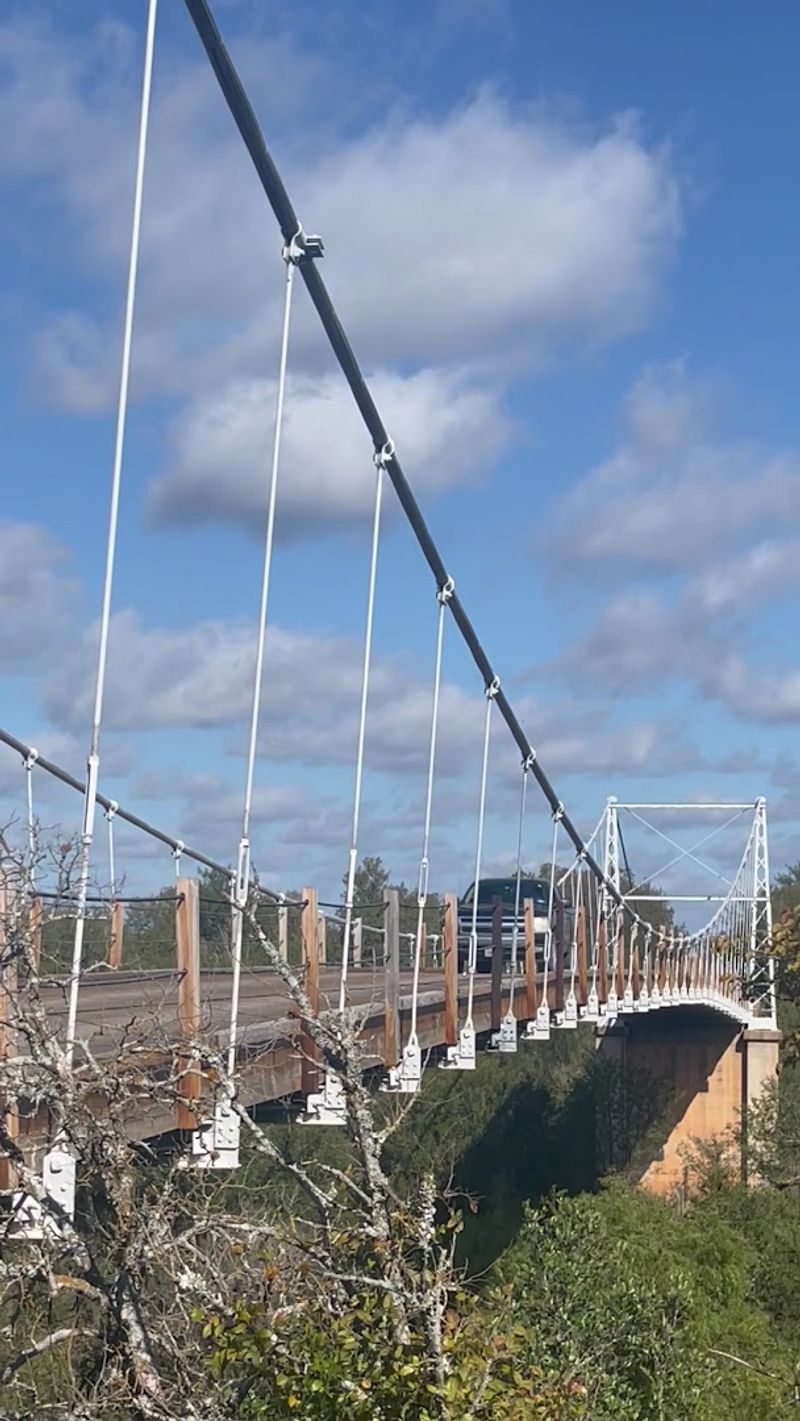
Before the current bridge existed, crossings at this location had a rough history. Floods on the Colorado River repeatedly destroyed earlier structures, leaving the communities on both sides disconnected and frustrated.
When the Austin Bridge Company completed this span in 1939, it was meant to be the definitive solution to a problem that had plagued the area for years.
The bridge connects San Saba and Mills counties, two rural Texas counties that still have relatively small populations today. For decades, this crossing was a genuine lifeline for ranchers, farmers, and families moving between the two communities.
It was not a tourist destination; it was infrastructure.
Over time, as newer roads and bridges were built elsewhere, traffic on the Regency Bridge decreased. That reduced load is actually part of why the structure has survived as long as it has.
The 2003 fire damaged the wooden deck significantly, and restoration work brought it back. The 2020 structural damage prompted further repairs.
Each restoration effort has been driven partly by community attachment and partly by recognition that this is the last drivable suspension bridge in all of Texas. That title carries real weight in a state that takes its history seriously.
What To Expect When You Actually Cross It
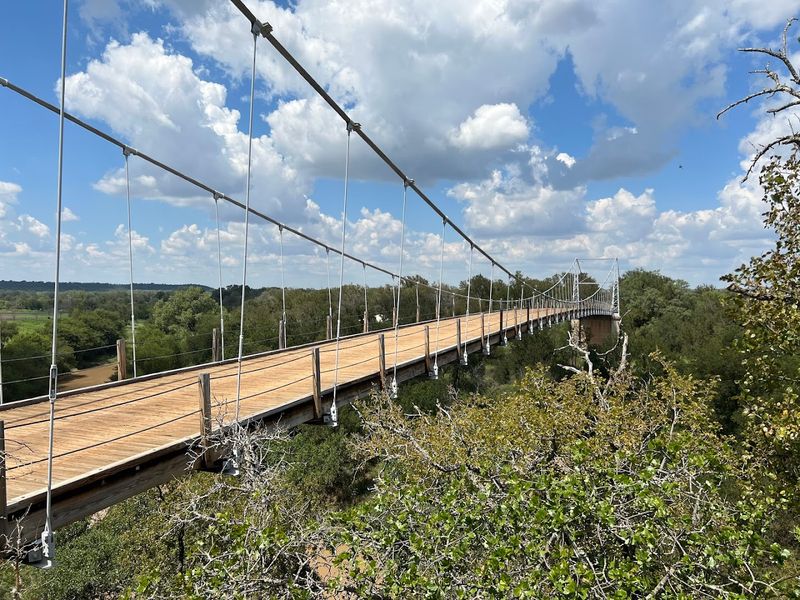
Pull up to the entrance and take a breath. If no one is coming from the other side, you are clear to go.
The approach is straightforward, but the moment your front tires hit the wooden planks, the sound changes completely. The hollow thump of wood under rubber is immediate and distinctive, nothing like asphalt or concrete.
Keep your speed slow and steady, somewhere around a walking pace feels right. The bridge responds to sudden movements, so smooth and calm is the way to go.
Windows down is highly recommended because the sound of the cables and the river below adds a lot to the experience.
Halfway across, the sway becomes most noticeable. Some people find this unsettling; others find it oddly satisfying.
By the time you reach the other side and your tires hit solid ground again, there is usually a moment of genuine relief mixed with the urge to immediately turn around and do it again. That mix of mild adrenaline and historic atmosphere is hard to replicate anywhere else in Texas.
Most visitors do cross it more than once, just to make sure the first time was real.
Why This Bridge Deserves a Spot on Your Texas Road Trip List
Texas has no shortage of things to see, but most of the well-known stops come with crowds, parking fees, and gift shops. The Regency Bridge is none of those things.
It is free, quiet, and completely unpretentious. You drive across a piece of living history on wooden planks over a beautiful river and then you go on with your day, slightly changed.
There is something refreshing about a destination that does not ask anything of you except attention. No entrance fee, no guided tour, no curated experience.
Just a bridge, a river, and the strange joy of doing something that feels a little bit daring even though it is completely safe.
For anyone building a Texas road trip route through the Hill Country, adding County Road 137 to the itinerary is an easy yes.
The detour is not long, the reward is genuinely memorable, and the story you get to tell afterward, about the bridge that sways and shakes and still carries cars across the Colorado River like it has since 1939, is one of the better ones in the state.
Address: 987 County Rd 137, Richland Springs, TX 76871
Dear Reader: This page may contain affiliate links which may earn a commission if you click through and make a purchase. Our independent journalism is not influenced by any advertiser or commercial initiative unless it is clearly marked as sponsored content. As travel products change, please be sure to reconfirm all details and stay up to date with current events to ensure a safe and successful trip.
