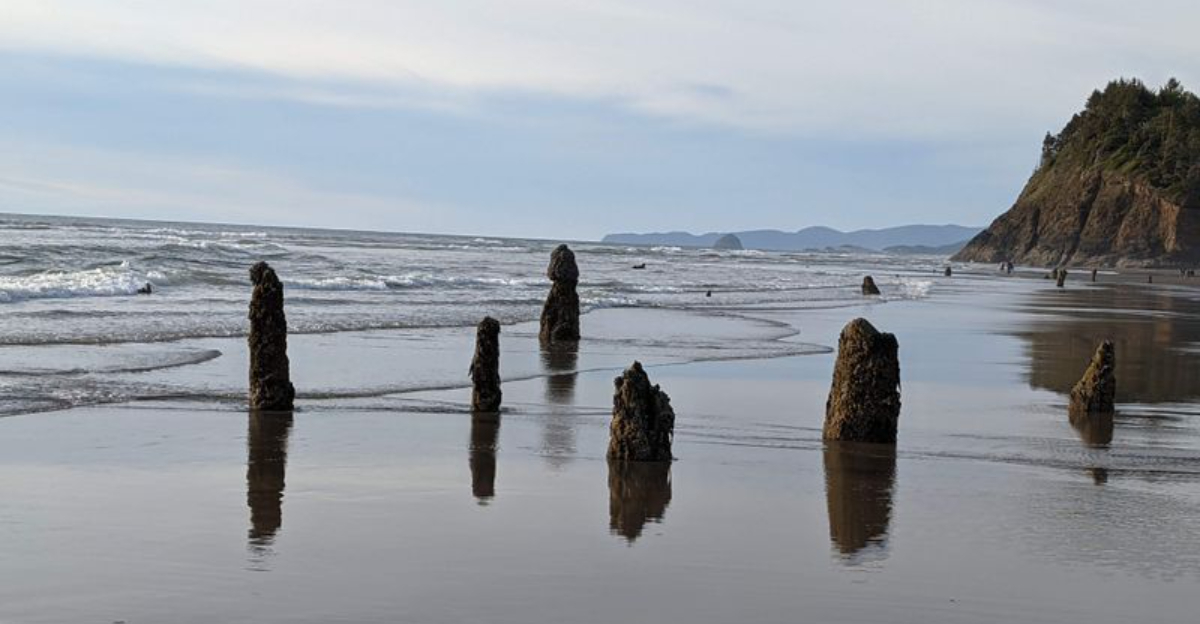
Along Oregon’s rugged coastline lies a mysterious sight that looks like something straight out of a spooky movie or ancient legend.
The Neskowin Ghost Forest stands as a haunting reminder of nature’s power, with ancient tree stumps rising from the sand like silent guardians of forgotten secrets.
These weathered stumps, estimated to be around 2,000 years old, only appear during low tide, creating an eerie landscape that has captured the imagination of visitors for decades.
What makes this place even more intriguing is that scientists believe these trees might hold clues to major geological events, tsunamis, and climate changes that shaped the Pacific Northwest, making this forest far more than just a collection of old stumps on the beach.
Ancient Tsunami Evidence Written in Wood
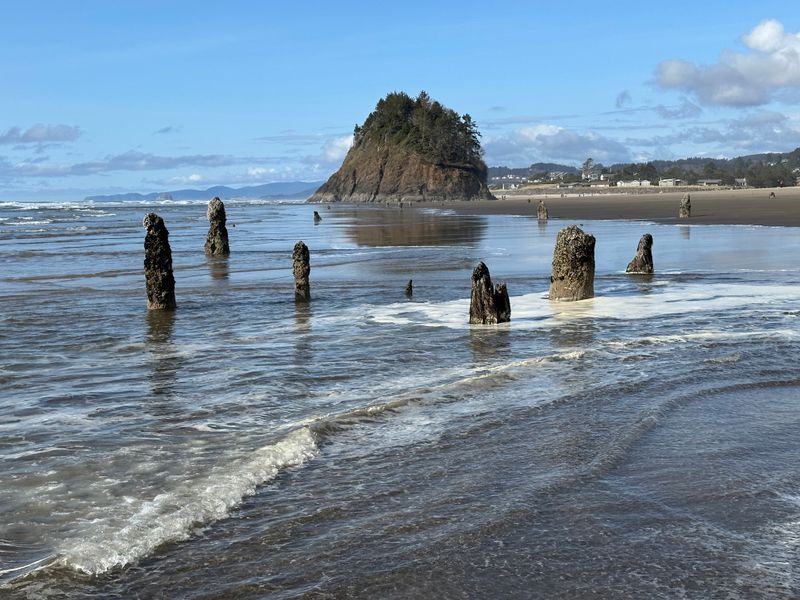
Scientists have studied the Neskowin Ghost Forest extensively and discovered something truly remarkable about these ancient stumps.
The trees tell a story of a massive earthquake and tsunami that struck the Oregon coast approximately 2,000 years ago, burying an entire Sitka spruce forest beneath sand and sediment.
When the ground suddenly dropped during this catastrophic event, seawater rushed in and killed the trees where they stood.
Over centuries, the stumps remained preserved under layers of sand, acting like a time capsule of geological history.
What makes this evidence so valuable is that it helps researchers understand the Cascadia Subduction Zone, a fault line capable of producing earthquakes measuring 9.0 or higher on the Richter scale.
The stumps themselves show signs of sudden death rather than gradual decline, which supports the theory of a catastrophic event.
By studying the tree rings and examining the soil layers around the stumps, scientists can piece together exactly when this disaster occurred and how powerful it must have been.
This information is crucial for communities along the Pacific Northwest coast who need to prepare for future seismic events.
The Ghost Forest serves as a natural warning system, reminding us that major earthquakes and tsunamis have happened before and will likely happen again.
Walking among these stumps feels like standing in a library where the books are written in wood and sand, each telling chapters of Earth’s violent yet fascinating geological story.
A Forest That Plays Hide and Seek With the Ocean
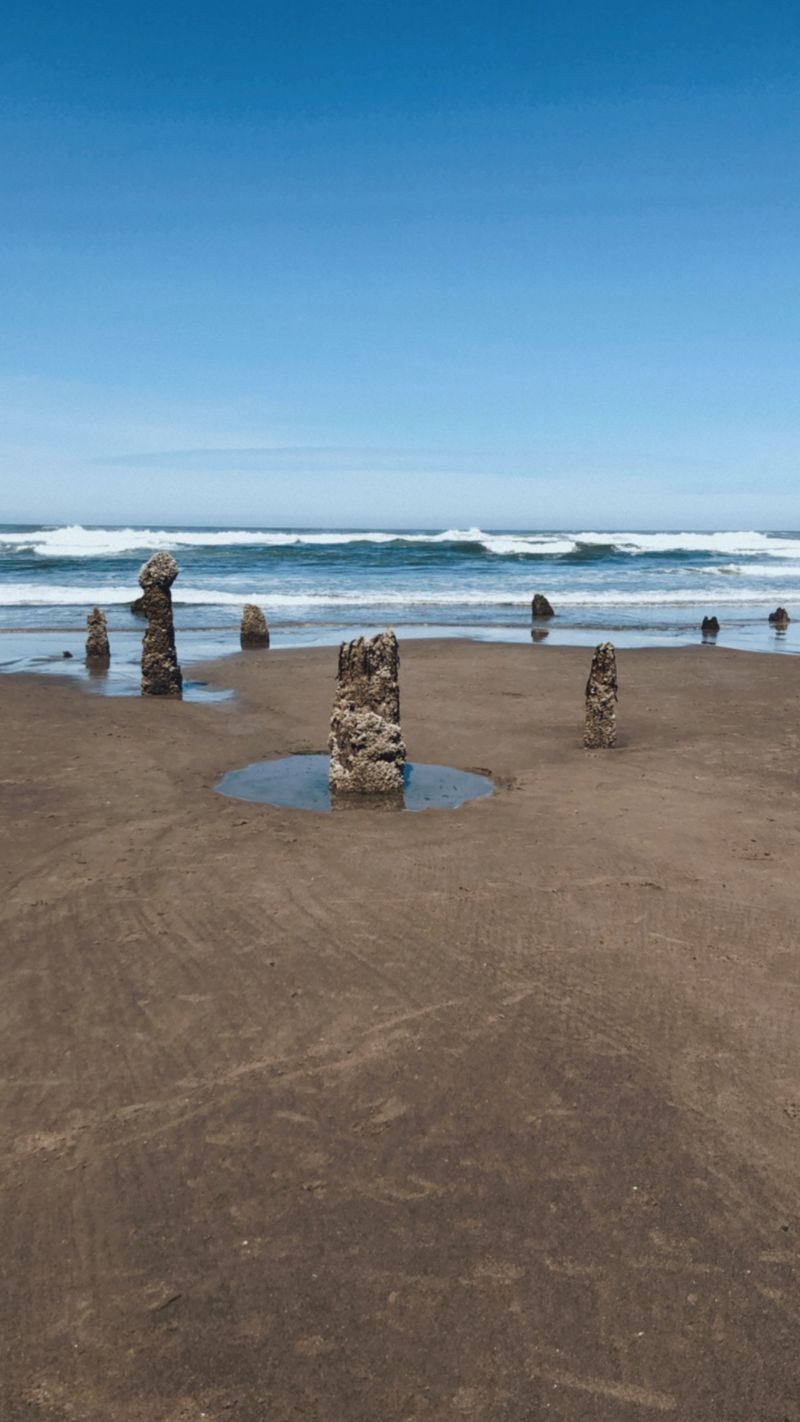
One of the most magical aspects of the Neskowin Ghost Forest is its disappearing act that happens twice daily.
During high tide, the ocean completely swallows the stumps, hiding them beneath several feet of water and making them invisible to visitors.
When the tide retreats, the stumps gradually emerge from the sand like ancient sentinels waking from a long slumber, creating an otherworldly landscape that photographers and nature lovers find irresistible.
The best time to witness this phenomenon is during extreme low tides, especially during winter months when tides can drop significantly lower than summer levels.
Planning your visit requires checking tide charts carefully because the window of opportunity to see the stumps can be surprisingly short.
Some visitors arrive at the beach only to find the stumps completely submerged, while others time their trip perfectly and get to walk among dozens of weathered stumps jutting from the wet sand.
The stumps themselves vary in height, with some standing several feet tall while others barely poke above the surface.
Their gnarled, twisted shapes have been sculpted by centuries of wave action, creating natural sculptures that look almost deliberate in their artistic arrangement.
The contrast between the dark, aged wood and the light-colored sand creates stunning visual compositions, especially during golden hour when the setting sun casts long shadows across the beach.
This hide-and-seek game with the tides adds an element of adventure to any visit, making each trip to the Ghost Forest feel like a treasure hunt where nature controls whether you find the prize.
Mysterious Legends and Native American Stories
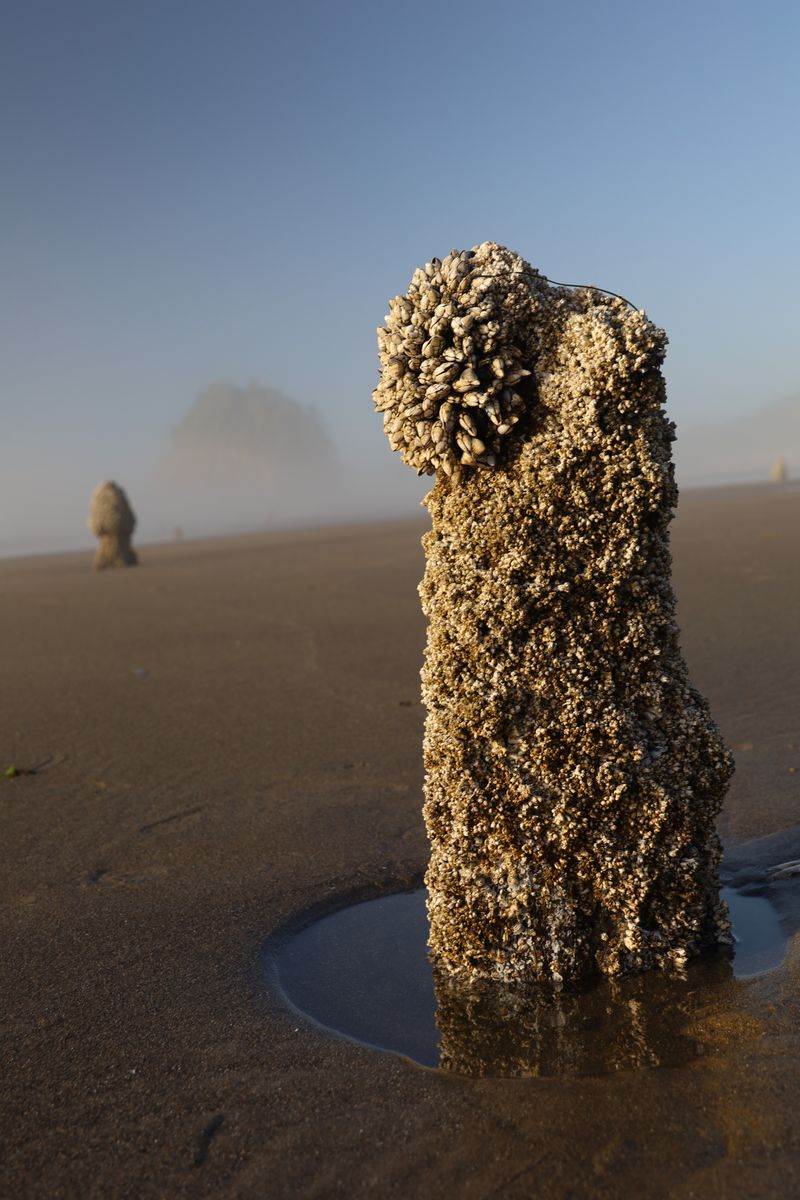
Long before scientists offered geological explanations, the Ghost Forest inspired stories and legends among people who lived along this stretch of coastline.
Native American tribes of the Pacific Northwest have oral traditions that speak of great floods and ground-shaking events that changed the landscape forever.
Some of these stories, passed down through generations, describe how the earth shook violently and the ocean rose up to swallow villages and forests in a single night.
These oral histories align remarkably well with scientific evidence of the massive earthquake and tsunami that created the Ghost Forest around 2,000 years ago.
Local folklore has also grown around the stumps over the years, with some people claiming the forest has an eerie energy or presence, especially during foggy mornings when mist rolls in from the ocean.
The name itself, Ghost Forest, reflects the haunting quality of these remnants standing like specters from another time.
Visitors often report feeling a sense of reverence when walking among the stumps, as if stepping into a sacred space where the boundary between past and present grows thin.
Photographers are particularly drawn to the forest during dawn or dusk when the light creates an ethereal atmosphere that enhances the mysterious quality of the scene.
Whether you believe in legends or prefer scientific explanations, there is something undeniably captivating about standing among these ancient witnesses to catastrophic change.
The Ghost Forest reminds us that landscapes hold memories, and sometimes those memories speak to us through wood and stone rather than words.
A Living Laboratory for Climate Change Research
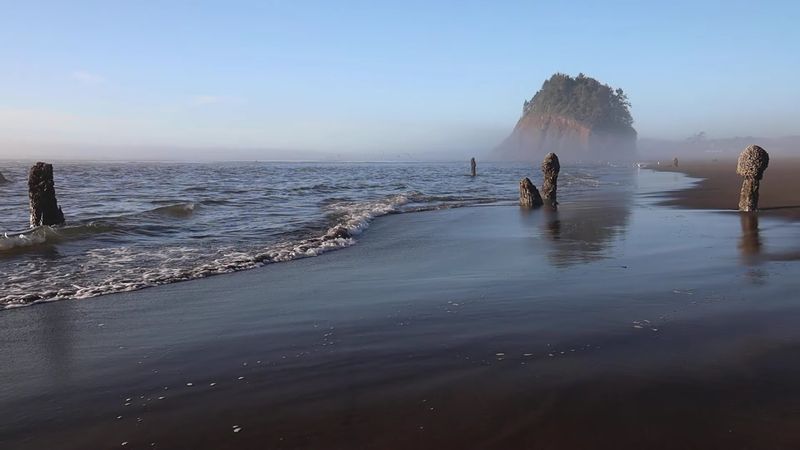
Beyond its value as tsunami evidence, the Neskowin Ghost Forest provides researchers with important data about climate patterns and environmental changes over the past two millennia.
The preserved tree rings in some of the better-maintained stumps contain information about rainfall, temperature fluctuations, and growing conditions that existed before the catastrophic event.
By analyzing these rings, scientists can reconstruct climate conditions from 2,000 years ago and compare them to current patterns.
This type of research helps us understand how climate has changed naturally over long periods and provides context for the rapid changes we are experiencing today.
The stumps also serve as markers for studying coastal erosion and sediment movement, as researchers monitor how much sand accumulates or washes away around the stumps from year to year.
Changes in the visibility and condition of the stumps can indicate shifts in beach dynamics and ocean behavior.
Universities and research institutions regularly send students and professors to study the Ghost Forest, making it an outdoor classroom where theories meet tangible evidence.
The site demonstrates how natural disasters can create unexpected opportunities for scientific discovery, turning tragedy into knowledge that benefits future generations.
For visitors interested in environmental science, the Ghost Forest offers a hands-on example of how scientists piece together Earth’s history using clues left behind in the landscape.
Educational programs and interpretive signs near the site help explain the scientific significance of the stumps, making complex geological and climate concepts accessible to people of all ages and backgrounds.
Spectacular Photography Opportunities Year-Round
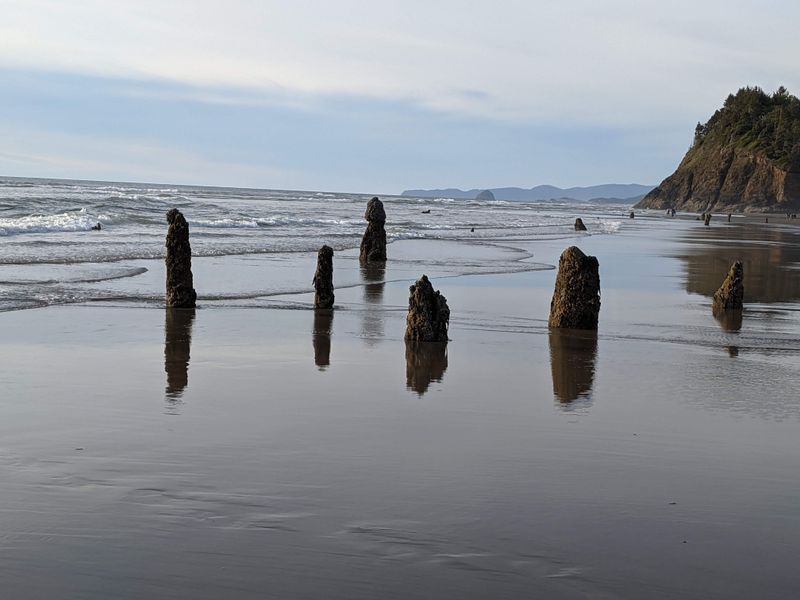
Photography enthusiasts consider the Neskowin Ghost Forest one of Oregon’s most photogenic locations, offering endless creative possibilities regardless of the season.
Winter storms create dramatic scenes with waves crashing around the stumps, sending spray high into the air while dark clouds gather overhead.
Spring brings clearer skies and vibrant sunsets that paint the stumps in warm golden and orange hues, creating postcard-perfect images.
Summer offers long days with excellent light for capturing the texture and detail of the weathered wood, while autumn fog adds an element of mystery and atmosphere.
The stumps themselves provide strong compositional elements, their vertical lines contrasting beautifully with the horizontal expanse of beach and ocean.
Photographers can experiment with different perspectives, shooting from low angles to emphasize the height of the stumps or from elevated positions to show the pattern they create across the sand.
Long exposure techniques work wonderfully here, smoothing the ocean into a silky blur while keeping the stumps sharp and detailed.
Sunrise and sunset sessions are particularly rewarding, as the changing light creates constantly evolving scenes that look different from minute to minute.
The location’s accessibility makes it possible to bring substantial camera equipment without requiring long hikes, though the soft sand can be challenging to navigate with heavy gear.
Many professional photographers return to the Ghost Forest repeatedly, finding that the combination of changing tides, weather conditions, and light ensures that no two visits produce identical images.
For amateur photographers, the site offers an excellent opportunity to practice landscape photography techniques in a setting that practically guarantees interesting results.
Accessible Adventure for Families and Beach Explorers
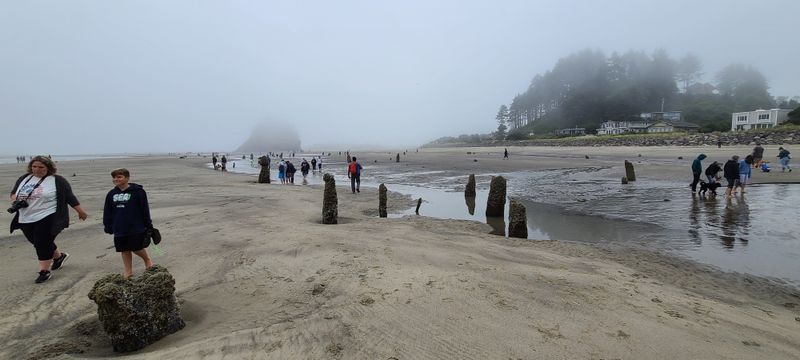
Unlike many natural wonders that require strenuous hikes or specialized equipment to reach, the Neskowin Ghost Forest offers an accessible adventure that families with young children can easily enjoy.
The stumps are located directly on Neskowin Beach, which has convenient parking areas and a short, easy walk from the car to the sand.
Once on the beach, visitors can explore at their own pace, walking among the stumps when tide conditions allow.
Children find the Ghost Forest particularly fascinating, as the stumps spark imagination and provide natural climbing opportunities for adventurous youngsters under parental supervision.
The site makes an excellent educational destination where kids can learn about geology, history, and natural science in an engaging outdoor setting rather than a classroom.
Parents appreciate that the beach offers more than just the stumps, with tide pools, shells, and sand for building castles providing additional entertainment when the tide is too high to see the forest.
The small community of Neskowin nearby has basic amenities including restrooms, a small market, and a few restaurants, making it easy to plan a comfortable day trip.
Visitors should wear appropriate footwear since the sand can be soft and wet, and the stumps themselves can have sharp edges or slippery surfaces.
The area is dog-friendly, allowing families to bring their four-legged companions to explore the beach alongside them.
Because the Ghost Forest is a natural and unmodified site, it offers an authentic experience without commercialization, fences, or entry fees that sometimes diminish the appeal of popular attractions.
A Reminder of Nature’s Power and Resilience
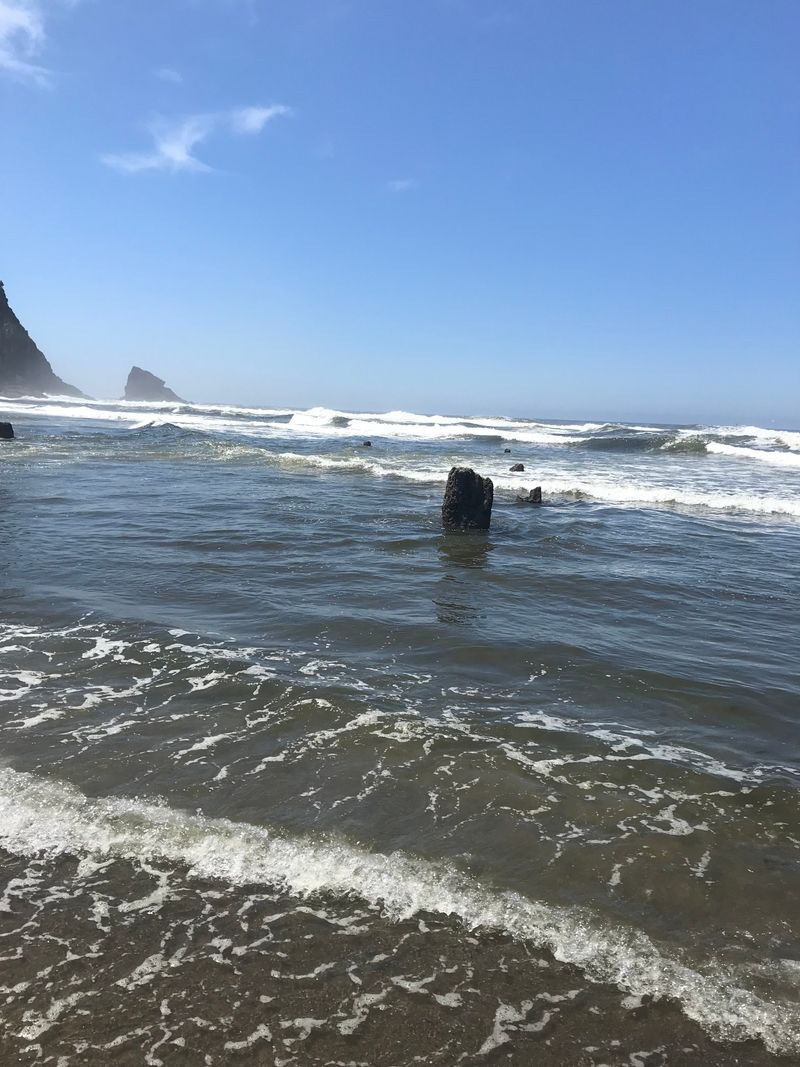
Perhaps the most profound reason to visit the Neskowin Ghost Forest is the perspective it offers on the relationship between destruction and persistence.
The stumps stand as monuments to a forest that was destroyed in moments but has endured for two thousand years afterward.
They remind us that catastrophic events, while devastating, also create new landscapes and opportunities for understanding our planet’s dynamic nature.
The forest was killed by the very event that preserved it, turning living trees into lasting testimonies that teach us about geological forces we cannot control but must respect.
Walking among the stumps encourages reflection on human timescales versus geological timescales, helping us appreciate how brief our individual lives are compared to the deep time represented by these ancient witnesses.
The Ghost Forest also demonstrates nature’s cycles of change, showing how landscapes transform dramatically over centuries and millennia.
What was once a thriving forest became a buried secret, then emerged again as a tourist attraction and scientific resource, proving that nothing in nature remains static.
For residents of the Pacific Northwest, the stumps serve as a sobering reminder that the region sits atop an active subduction zone capable of producing another major earthquake and tsunami.
Rather than inspiring fear, however, the Ghost Forest encourages preparedness and respect for the natural forces that shape our world.
Ultimately, these weathered stumps teach us that while nature’s power can be destructive, it also creates beauty, knowledge, and connections between past and present that enrich our understanding of the world we inhabit.
Dear Reader: This page may contain affiliate links which may earn a commission if you click through and make a purchase. Our independent journalism is not influenced by any advertiser or commercial initiative unless it is clearly marked as sponsored content. As travel products change, please be sure to reconfirm all details and stay up to date with current events to ensure a safe and successful trip.
