What if the most breathtaking view in Oregon isn’t on any brochure, but hidden behind a rusted gate that locals barely acknowledge? I heard a whisper about a secluded ridge while waiting for coffee, and the promise of an untouched panorama sparked a sudden urge to explore.
The trail is modest – just enough to feel like an adventure without demanding a marathon – yet it leads to a plateau where wildflowers bow to the horizon and the air tastes faintly of cedar.
There’s a quirky piece of history etched into a stone cairn that most hikers skip, and it’s the kind of detail that makes the whole experience feel like a private invitation.
Want to know the oddball shortcut that bypasses the parking lot jam and lands you straight into the quiet? I’ll spill the beans, plus a tip that guarantees you’ll be the first in your group to discover the view that locals reluctantly keep to themselves.
The Steens Mountain Loop Road: Oregon’s Highest Drive
Most scenic drives in Oregon come with guardrails and gift shops. The Steens Mountain Loop Road has neither, and that is exactly the point.
This 52-mile dirt road climbs from the tiny town of Frenchglen all the way to nearly 9,700 feet in elevation.
The road is washboard gravel for long stretches. Take your time and enjoy it.
Pullouts appear regularly, each one offering a view more dramatic than the last.
The road typically opens around July 4th each year. It closes when the first snow arrives in October.
That short window makes visiting feel even more special. You are catching something rare.
A high-clearance vehicle is recommended but not always required. Most passenger cars handle it fine with careful driving.
Just skip the sports car and bring plenty of water. The road earns its reputation as the most spectacular drive in all of Oregon, and it delivers every single time.
Kiger Gorge: The Canyon That Stops You Cold
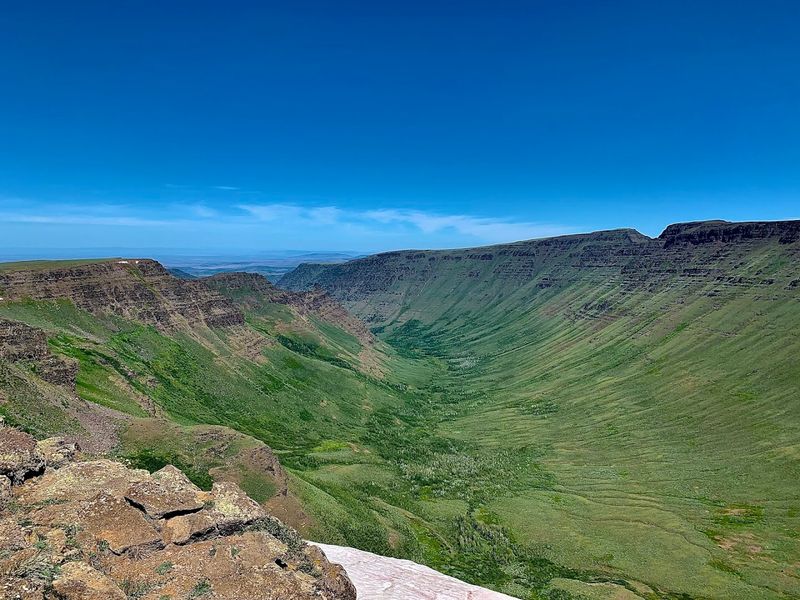
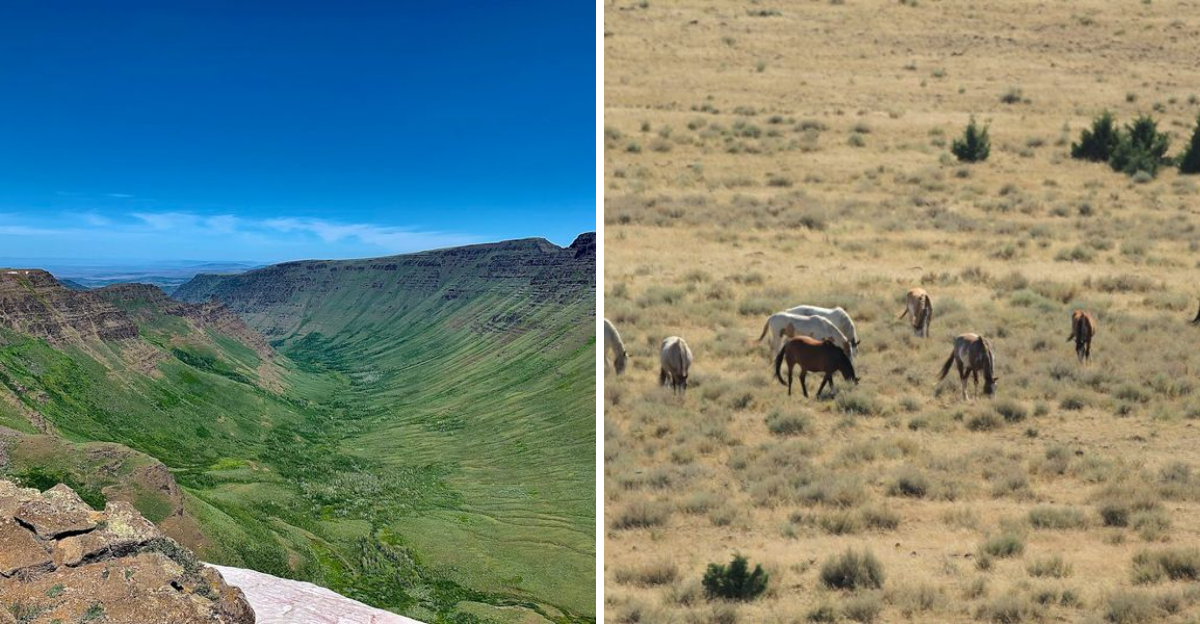
Standing at the Kiger Gorge overlook felt like looking at something ancient and alive at the same time. The canyon drops away in a massive U-shape, carved by glaciers thousands of years ago.
It is one of the most jaw-dropping geological features in the entire Pacific Northwest.
The basalt walls rise sharply on either side. The valley floor below stretches wide and flat, a patchwork of greens and browns.
Photographs simply do not do it justice.
A short trail leads to the main viewpoint from the parking area. The hike is easy and quick.
Even on a busy summer day, crowds stay thin out here. Peace is practically guaranteed.
Kiger Gorge also sits within the territory of the famous Kiger mustang herd. These wild horses have roamed this area for centuries.
Spotting them near the gorge rim is the kind of moment that stays with you for years after the trip ends.
Wild Horses of Steens Mountain: Untamed and Unforgettable
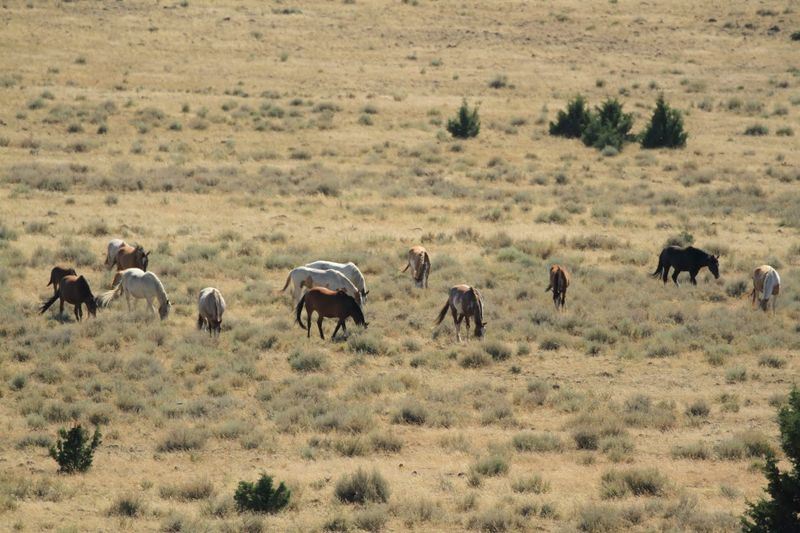
Nobody told me the horses would be this close. I pulled off the road near the south end of the loop, and there they were, a small band of mustangs grazing not 50 yards away.
They looked up, sized me up, and went right back to eating.
Steens Mountain is home to several wild horse herds, including the celebrated Kiger mustangs. These animals are believed to carry strong Spanish Colonial bloodlines.
The Bureau of Land Management monitors the herds carefully to maintain healthy population numbers.
Early mornings offer the best viewing opportunities. Bring a zoom lens if you have one.
Horses near the south entrance are often visible from the road without even stepping out of your vehicle.
Please keep your distance and never attempt to feed them. Wild horses are just that: wild.
Watching them move freely across the open landscape, manes catching the wind, is a reminder that some things are still beautifully uncontrolled out here in eastern Oregon.
Wildhorse Lake: The Hidden Alpine Gem at 9,500 Feet
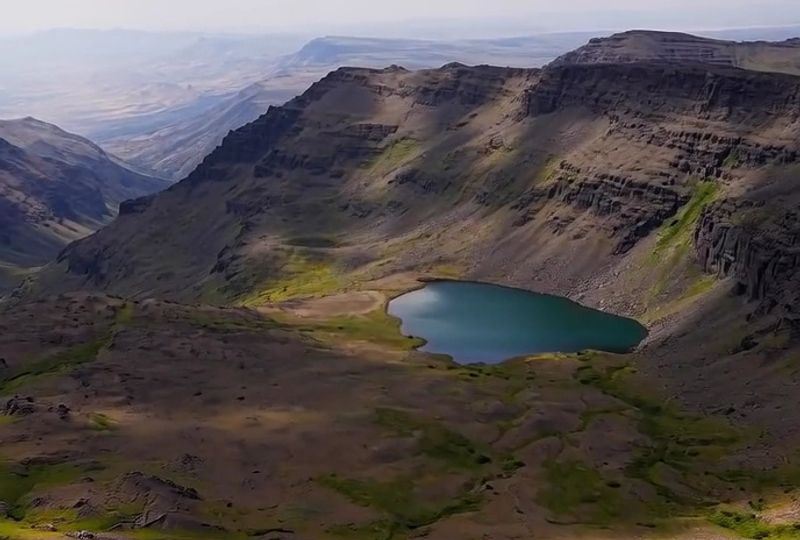
Getting to Wildhorse Lake requires earning it. The trail drops 1,100 feet over just 1.2 miles, zigzagging down a jagged rock face that keeps you paying attention.
It is steep and rocky, and every step downward reminds you that you will need to climb back up.
The lake itself sits in a wide open basin like something out of a painting. A small sandy beach lines one edge.
Wildflowers bloom around the shoreline in mid-summer, splashing color across the otherwise rugged terrain.
Backcountry camping is allowed near the lake. No campfires are permitted, so pack a stove.
The alpine setting means weather can shift fast. Always bring layers, even in July.
The silence up there is different from anywhere else. No traffic noise, no crowds, no cell signal.
Just wind, water, and the occasional bird call echoing off the rock walls. Wildhorse Lake rewards every hiker who makes the effort to reach it with something genuinely unforgettable.
The East Rim Overlook: A Mile-High Drop to the Desert
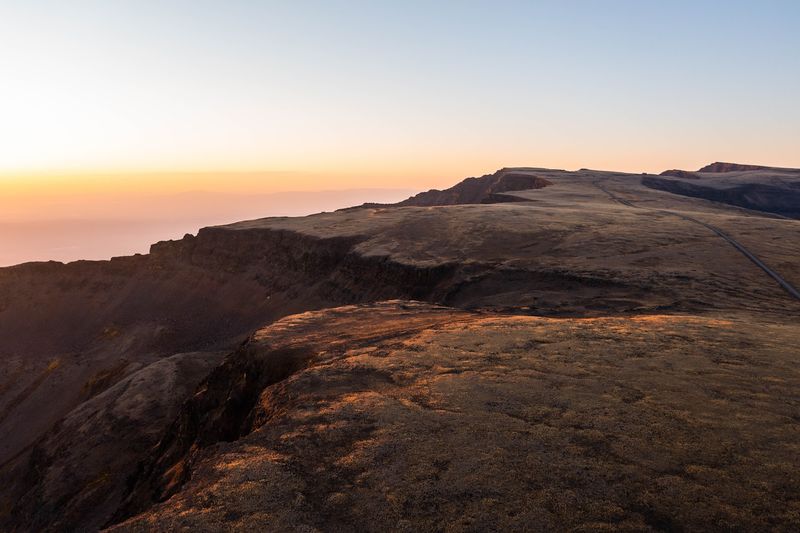
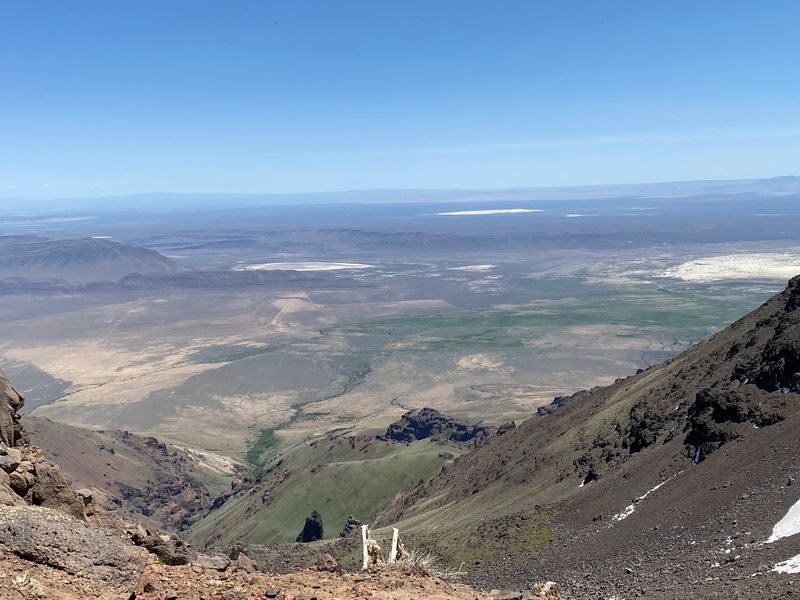
The East Rim overlook is the kind of place that makes your stomach do a small flip the moment you approach the edge. The mountain drops more than a vertical mile straight down to the floor of the Alvord Desert.
It is one of the most dramatic elevation changes in North America.
On a clear day, the view stretches for hundreds of miles. The Alvord Desert playa shimmers white far below.
The contrast between the rocky summit and the flat desert floor is almost surreal.
Wind hits hard at the rim. Brace yourself.
The gusts can be strong enough to make you step back instinctively. That raw exposure is part of what makes the experience feel so real.
Sunsets from the East Rim are legendary among those who know. The light turns the desert gold and the sky goes through colors you cannot name.
Getting there before dusk, even if it means a slow drive on washboard roads, is absolutely worth the effort.
The Alvord Desert: Oregon’s Forgotten Playa
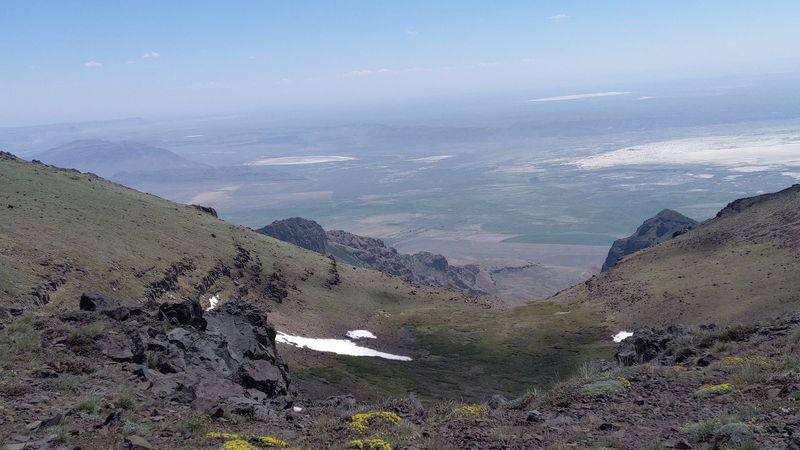
Most people do not picture a desert when they think of Oregon. The Alvord Desert sits in the rain shadow of Steens Mountain, receiving almost no precipitation each year.
It is dry, flat, and completely otherworldly.
The playa stretches across a wide basin at the base of the mountain’s eastern face. When dry, the cracked white surface feels like walking on the moon.
After rare rain events, a thin layer of water creates a mirror-like reflection of the mountain above.
Driving onto the playa is actually permitted when conditions allow. Many visitors park in the middle of the flat expanse and just stand there.
The silence and scale are disorienting in the best possible way.
Camping near the Alvord is rustic and remote. Facilities are minimal.
Stargazing from the playa floor on a moonless night is extraordinary. The absence of light pollution makes the Milky Way visible with the naked eye, arching directly over the dark silhouette of Steens Mountain above.
Frenchglen: The Tiny Town That Starts the Adventure
Frenchglen has a population that could fit inside a single city bus, and it is all the better for it. This tiny ranching community at the base of Steens Mountain serves as the traditional starting point for the Steens Mountain Loop Road.
It feels like stepping back about 80 years.
The Frenchglen Hotel is a historic landmark in the area. Built in 1924, it has hosted travelers and ranchers for a century.
Staying there adds a layer of authentic western character to any Steens Mountain visit.
A small store near the hotel carries basic supplies. Stock up before heading up the mountain.
Services disappear quickly once you leave the pavement behind.
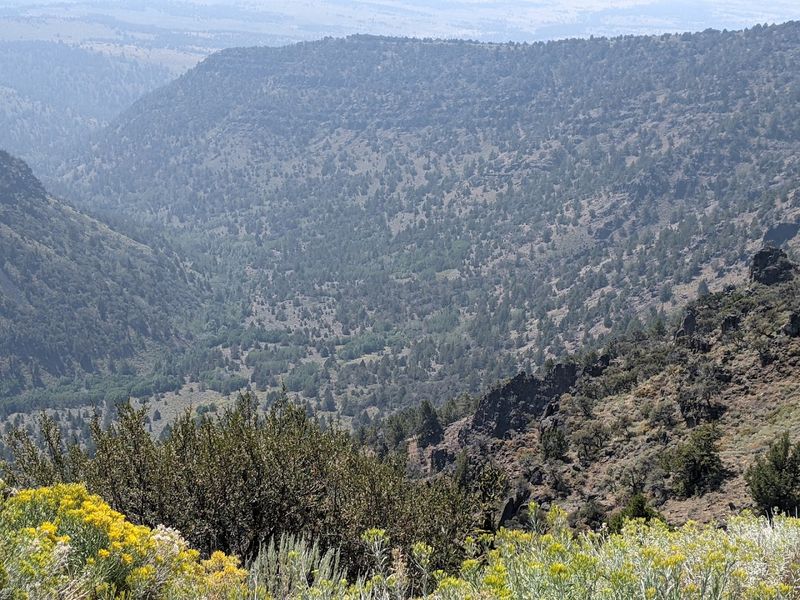
The surrounding Blitzen Valley is lush and wildlife-rich, especially in spring and fall. Sandhill cranes, great blue herons, and pronghorn antelope are common sights near Frenchglen.
The town is small, but the landscape surrounding it is enormous. It sets the mood for everything that comes next on the mountain above.
Camping on Steens Mountain: Sleeping Under an Enormous Sky
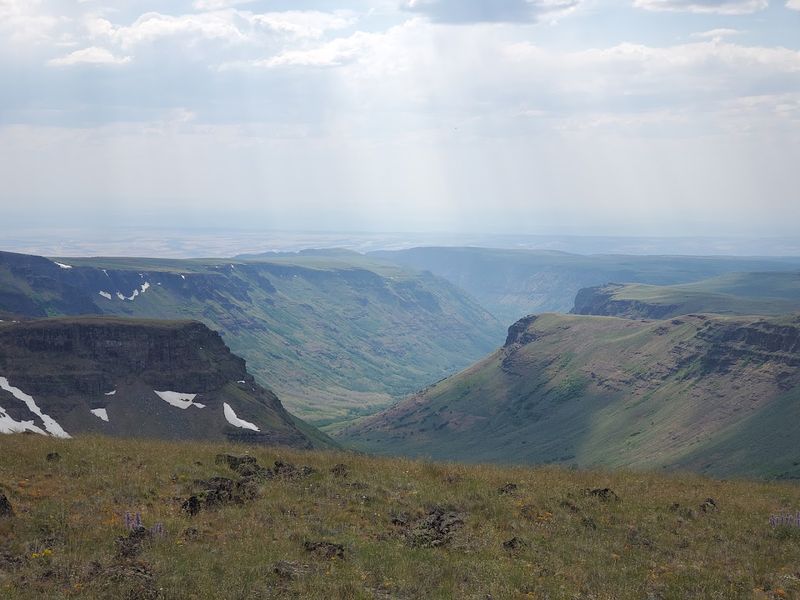
Camping on Steens Mountain is not glamping. There are no electrical hookups, no swimming pools, and no camp store selling overpriced marshmallows.
What you get instead is something far better: total immersion in one of Oregon’s most remote landscapes.
Several campgrounds dot the loop road, including Page Springs, Fish Lake, Jackman Park, and South Steens. Each one has a different character.
Page Springs sits along the Donner und Blitzen River and stays green all summer long.
Fish Lake campground offers cooler temperatures and shade. Jackman Park sits higher up and feels more exposed and rugged.
South Steens campground is the gateway for exploring the southern end of the loop.
Nights on the mountain get cold, even in August. Bring a proper sleeping bag rated below 30 degrees Fahrenheit.
The payoff is a sky so full of stars it almost feels fake. Waking up to mule deer grazing outside your tent is the kind of morning that makes all the drive worth it.
Wildlife Watching: More Than Just Wild Horses
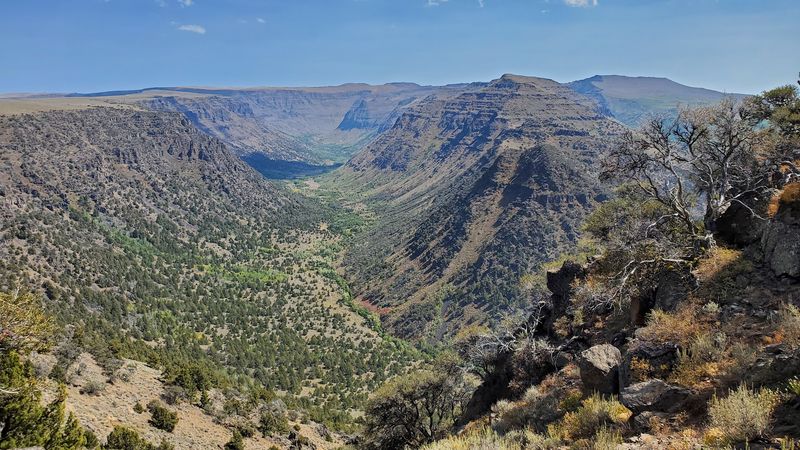
Steens Mountain is not just about the views. The wildlife here is astonishing in variety and volume.
Pronghorn antelope sprint across open flats at speeds that make your jaw drop. Mule deer appear at dusk near almost every campground on the loop.
Raptors circle constantly overhead. Golden eagles, red-tailed hawks, and prairie falcons are all regular sights along the ridge lines.
Watching a golden eagle hunt from the East Rim is a moment that belongs in a nature documentary.
A bobcat sighting near the road was reported by a visitor just last year. Coyotes are heard almost every night.
The Blitzen Valley below the mountain attracts enormous flocks of migratory birds each spring and fall.
Binoculars are essential gear for any Steens trip. A zoom camera lens helps too.
The animals here are wild and unpredictable, which makes every encounter feel earned rather than staged. Patience is the only ticket required, and the mountain rewards it generously and often.
Big Indian Gorge: The Trail Less Taken on Steens
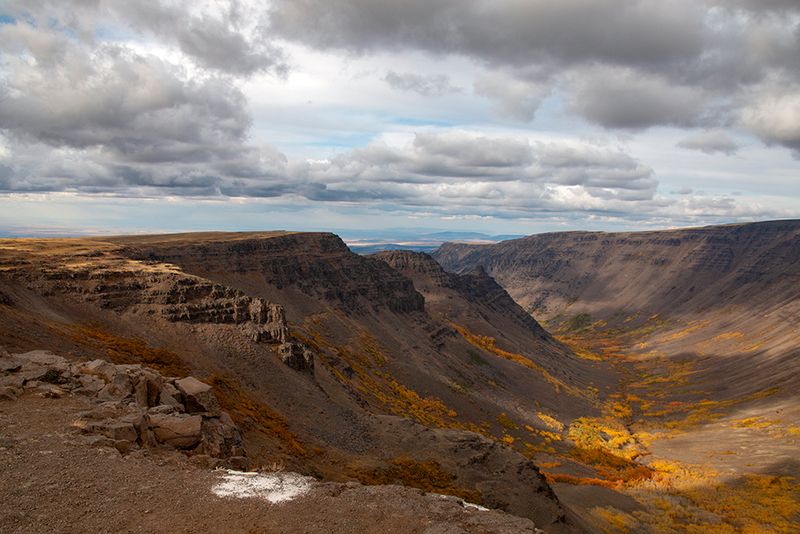
Big Indian Gorge does not get nearly as much attention as Kiger or Wildhorse Lake, and that is exactly why it deserves a spot on this list. The trail here drops into a wide, dramatic canyon that feels completely separate from the rest of the mountain.
It is quieter, wilder, and more remote.
The hike follows a creek down into the gorge floor. Willows and cottonwoods line the water in summer.
The contrast between the lush creek corridor and the dry canyon walls above is striking.
This trail is better suited for hikers with some backcountry experience. The terrain is uneven and the trail markings are minimal in places.
A good map and solid footwear are both necessary.
Backpackers sometimes use Big Indian Gorge as an overnight destination. Solitude is almost guaranteed after the first mile.
The gorge walls block the wind and create a sheltered, peaceful atmosphere. It is the kind of hidden corner that makes Steens Mountain feel endlessly deep and worth returning to again and again.
Dear Reader: This page may contain affiliate links which may earn a commission if you click through and make a purchase. Our independent journalism is not influenced by any advertiser or commercial initiative unless it is clearly marked as sponsored content. As travel products change, please be sure to reconfirm all details and stay up to date with current events to ensure a safe and successful trip.
