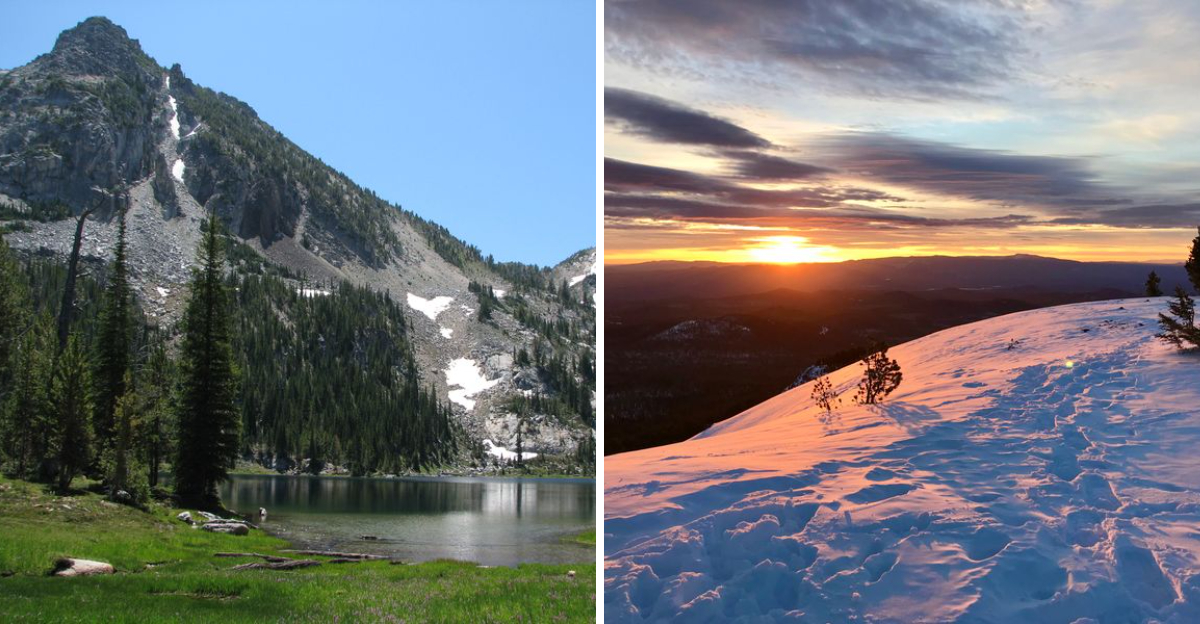
You think you know Oregon, then a quiet trail bends through fir and suddenly a whole new skyline opens just for you.
Locals chase that feeling, choosing wild ridges and smaller trailheads over crowded parking lots and noisy overlooks.
These peaks reward patience with lava-studded paths, alpine meadows, and summits where the wind feels like a private concert.
The state shows a different face from these angles, crisp and untamed, with room to breathe between each step.
Come off the beaten path with me, and you will see why these mountains keep Oregon hearts loyal.
1. Wallowa Mountains, Eagle Cap Wilderness
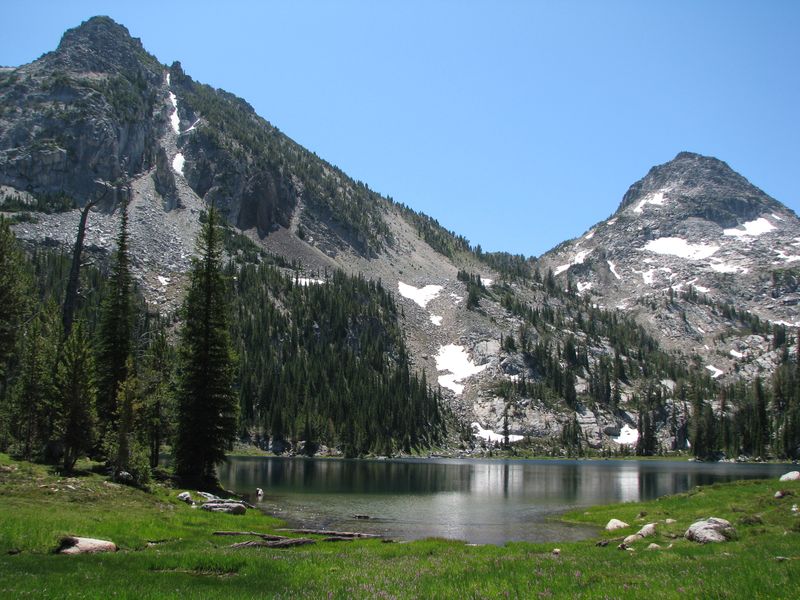
The Wallowa Mountains feel like a secret chapter of Oregon, spread wide with granite bowls and green meadows.
Trailheads out of Enterprise and Joseph lead into the Eagle Cap Wilderness, where switchbacks climb to high lakes rimmed with pale rock.
At Hurricane Creek Road, Enterprise, OR 97828, you step into an amphitheater of cliffs and wildflower benches.
Lakes like Mirror and Eagle sit under bright ridgelines, and dawn turns the stone rosy and quiet.
Mountain goats sometimes trace the skyline, while pikas whistle from talus like tiny trail keepers.
Backpacking here feels spacious, with long traverses that link basins without seeing many people.
Late summer usually clears snow on classic loops, though storms can surprise any month at elevation.
Maps and real navigation matter, because junction signs can be weathered and distances stretch.
The air carries pine and cold water, and every pass gives a new window toward Hells Canyon country.
When clouds roll in, the granite reads dramatic and blue, then flips to silver the moment sun returns.
Camp spots near established sites protect fragile meadows, keeping the alpine resilient for the next hiker.
Keen eyes find ancient moraines, and creek crossings change character as melt rises and falls.
Locals love the rhythm, big climbs, big silence, and the way the stars crowd the night.
It is a landscape that rewards patience more than speed, and curiosity more than bravado.
Come ready for long miles, quick weather turns, and the kind of views that reset your mood entirely.
2. Steens Mountain
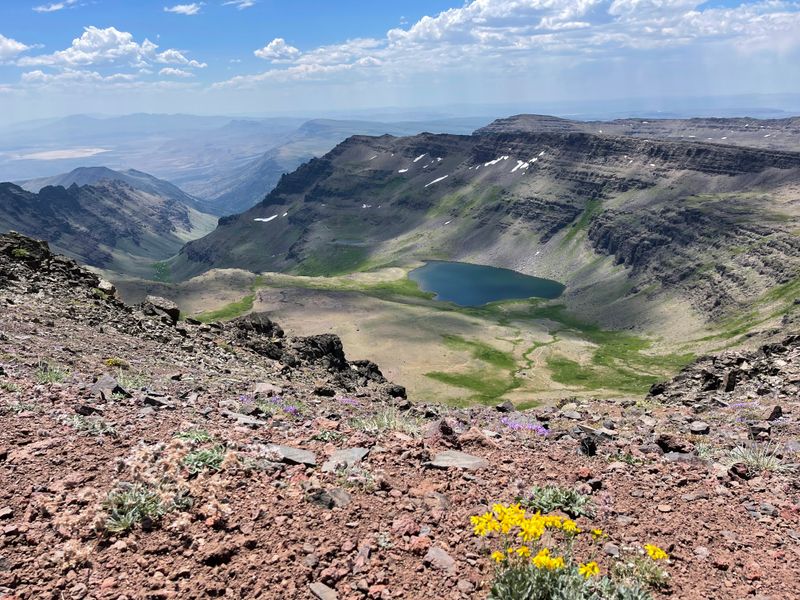
Steens Mountain rises like a sleeping wall over the Oregon desert, a single massive ridge with sheer east faces.
The high road, when open, threads along the spine and teases out overlooks into Big Indian, Kiger, and Little Blitzen canyons.
Steens Mountain Loop, Frenchglen, OR 97736, is your gateway to that wind-polished skyline and raw space.
From the rim, light pours across basalt shelves and curls into the gorges with painterly shadows.
Wildlife can appear without warning, pronghorn skimming sage and hawks working thermals over the drop.
Hiking routes feel scrappy and real, often cross-country, guided by cairns and careful map checks.
Snow can linger in pockets, and nights turn cold even when the valley shimmers with heat.
When storms build, the horizon looks endless, yet thunder sounds close enough to touch.
Leaves from aspen groves flutter like coins along creeks, marking water in a thirsty land.
The quiet is a presence, not an absence, and it settles in the moment the car door shuts.
Views reach deep into Nevada country, reminding you how broad the interior West truly runs.
The gravel has washboard stretches, so tire checks and a calm pace protect your day.
Photographers love sunrise at the rim, when canyons glow and the desert floor turns rose.
Locals favor shoulder seasons for crisp skies and more solitude on the overlooks.
Bring layers, a good map, and time to watch how the light redraws everything, minute by minute.
3. North Sister and Middle Sister
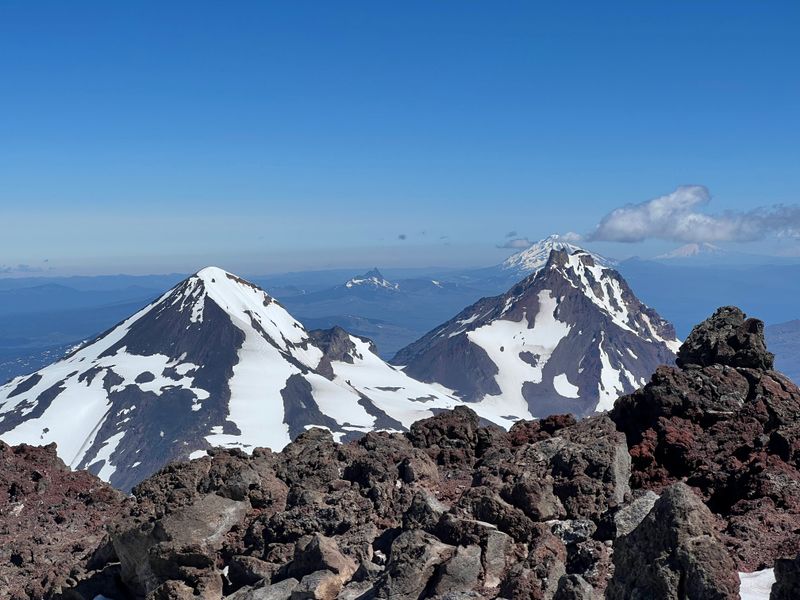
North Sister and Middle Sister feel wilder than their southern sibling, with broken lava and steep slopes shaping every step.
Routes here demand sure footing and a head for exposure, drawing locals who enjoy a technical day.
Trail access via Pole Creek Trailhead, Forest Road 15, Sisters, OR 97759, sets you on a path into rugged country.
Moraine fields spread like frozen waves, and sickle ridges point toward summits that hold snow late.
Views sweep to Jefferson and the distant spine of the Oregon Cascades, layered like folded paper.
On clear mornings, the light cuts sharp edges on the buttresses and ragged towers.
Loose rock and summer ice patches advise helmets and an unhurried pace on steeper sections.
Even the approach feels adventurous, weaving through burn scars that open airy windows to peaks.
When wind rises, grit skitters across slabs and the air turns brisk and clean.
Camps sit on durable surfaces near meltwater flows, tucked away from delicate alpine plants.
Navigation matters, with faint boot paths that split and rejoin across black pumice.
Afternoons can breed weather, so early starts keep travel safer and views clearer.
The grandeur here is spare, brutal, and beautiful, perfect for climbers who like honest terrain.
From ridges, you can trace glacial carvings and the history written into each dike and dome.
Respect closures, seasonal fire restrictions, and the fragile crust that makes this landscape unique in Oregon.
4. South Sister
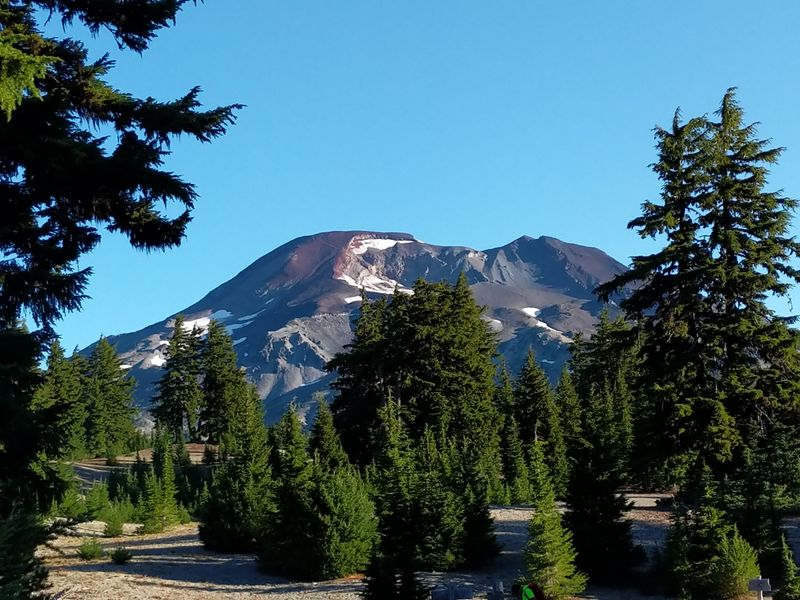
South Sister stays popular for a reason, yet locals still slip in early to catch quiet light and open switchbacks.
The climb stacks steady gain on cinder paths, rewarding patience with a crater rim and vast mountain views.
Trail begins at Devils Lake Trailhead, Cascade Lakes Hwy, Bend, OR 97707, a busy access point with early morning calm.
Footing can be sandy, so poles help on the steeper pitches up high.
From the rim, the panorama stretches to Jefferson, the Sisters, and desert basins far east in Oregon.
Snowfields linger into warmer months, painting white arcs across red cinder.
A later start meets heat and crowds, while sunrise gifts solitude and gentler temperatures.
Wind often races along the crest, so layers make the summit stay more comfortable.
Photographers love the wide crater and the clean line to Broken Top.
Even with traffic, the mountain holds a generous feeling, with room to breathe and look around.
The descent rides scree in playful slides, though knees will notice the grade.
Keep water topped off, and stash snacks where they are easy to grab above treeline.
Respect permits, trail etiquette, and the fragile alpine crust that sets this place apart.
Smoke or storms can change visibility quickly, and decisions should match conditions.
When the day clears, the summit becomes a compass, orienting you to the wider Oregon range.
5. Mount Jefferson
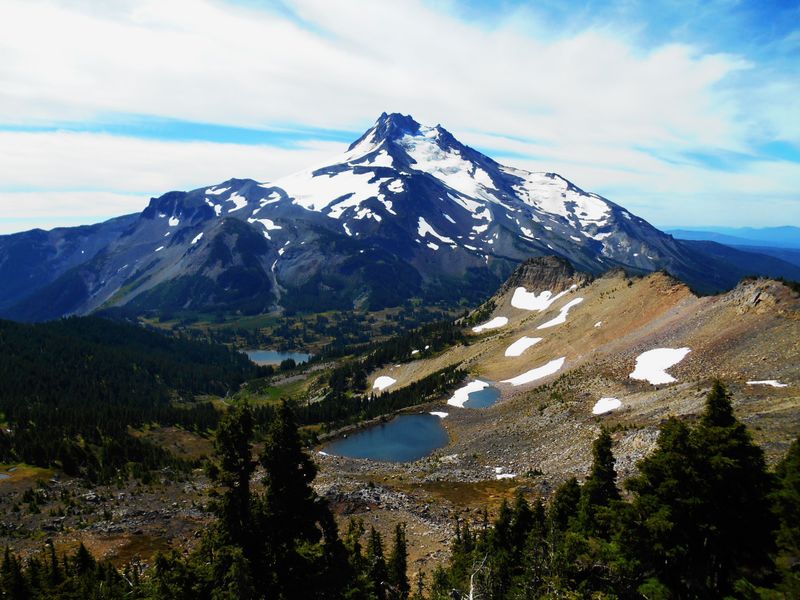
Mount Jefferson looks stern from every angle, a pyramid of ice and rock that dominates the Central Cascades.
Trails into Jefferson Park provide a gentler portal, offering meadows and lakes with the peak filling the frame.
Access commonly begins at Whitewater Trailhead, NF-2243, Detroit, OR 97342, leading to classic views.
The grade climbs steadily under fir, then breaks into open benches where water mirrors the summit.
Late snow can persist near the park, lingering on shaded slopes and narrow gullies.
When the wind is quiet, reflections sit flawless, and dragonflies stitch patterns across the ponds.
On blustery days the mountain grows a cowl of cloud and feels even taller.
Travel beyond the park becomes more technical, with gullies, crevasses, and exposed traverses.
Backpackers time trips for clear windows, knowing visibility makes or breaks the experience.
Wildflowers bloom in waves that move upslope as summer advances across Oregon.
Camps rest on hardened spots to protect lush meadows and the crisp water sources.
Strong shoes and patience help on rocky tread that slows the usual pace.
Evenings paint alpenglow across the peak, and the lakes darken to deep glassy blue.
Respect closures tied to fire activity, which can affect access roads and trailheads.
Jefferson rewards those who watch the weather, start early, and let the landscape set the tempo.
6. Mount McLoughlin
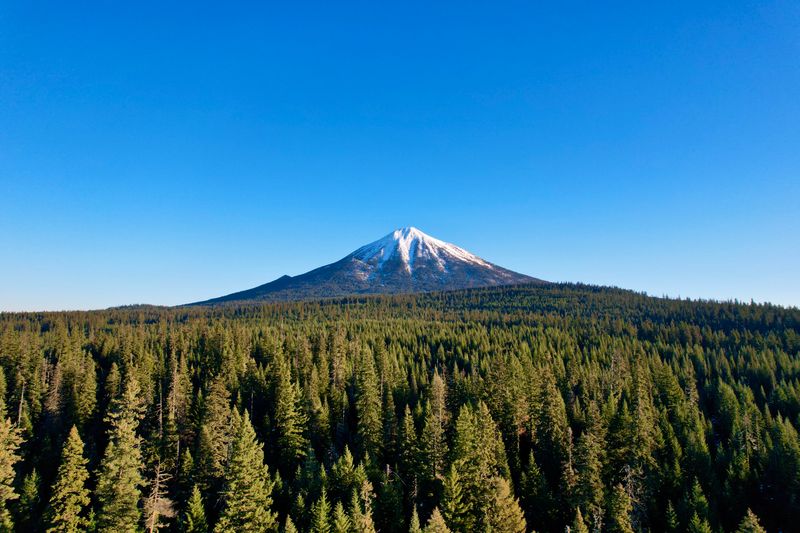
Mount McLoughlin stands alone in Southern Oregon, a clean cone that invites a straightforward, satisfying climb.
The route tours forest shade, then breaks onto a ridge of lava blocks with sweeping views.
Trail access from Mount McLoughlin Trailhead, Hwy 140, Sky Lakes Wilderness, Prospect, OR 97536, keeps directions simple.
Footing turns rocky high up, and hands sometimes steady balance on blocky steps.
On clear days, the panorama reaches Crater Lake rims and blue reservoirs glittering among pines.
Afternoons can bring gusts that scrape sound from the ridge and sharpen the horizon.
Early starts make the grade feel kinder and the summit moments quieter.
Scree sections on the descent reward careful steps and a relaxed cadence.
Water is scarce along the route, so begin topped off and plan your break points.
Flowers thread the lower forest when snow retreats, dotting the switchbacks with color.
Navigation remains obvious, yet a map helps when clouds pull over the cone.
The summit offers a wide cap with room to sit and trace nearby lakes by shape.
Locals appreciate its balance, athletic but approachable, and close to classic Southern Oregon forests.
Expect temperature swings and bring layers even on warm mornings.
You leave with a clean sense of scale, the cone behind you and the day well spent.
7. Tumalo Mountain
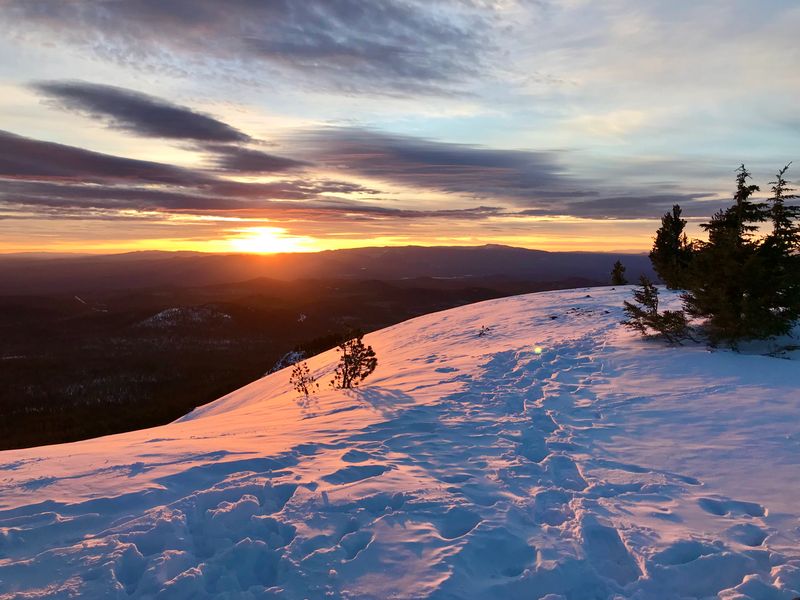
Tumalo Mountain gives outsized views for a compact climb, perfect when time is tight but you crave a summit.
The trail rises steadily from Dutchman Flat, trading shade for sun as trees thin and the world opens.
Start from Dutchman Sno-Park, Cascade Lakes Hwy, Bend, OR 97703, across from the ski area access.
The top is broad and friendly, with plenty of space to sit without losing the horizon.
South Sister, Broken Top, and Bachelor arrange themselves in a satisfying arc across the sky.
Sunrise here can glow pink on cinder and snow, then turn bright and clear by midmorning.
Windbreaks of low rock help on breezier days, especially in shoulder seasons.
Because the route is simple, it works for visiting friends who want an Oregon view without a marathon.
In winter, the snow route follows a similar line, though traction becomes the main strategy.
Summer dust softens each step on the descent, easy on knees and easy to love.
Keep to the main path to protect delicate plants that anchor the shallow soils.
Clouds can roll fast from the west, changing the light and temperature in minutes.
Locals time this hike between bigger objectives, using it as a sunrise or sunset reset.
It is also a handy spot to study weather moving across the Cascades before committing elsewhere.
Simple plan, large payoff, and a postcard sweep of Central Oregon in every direction.
8. Paulina Peak, Newberry National Volcanic Monument
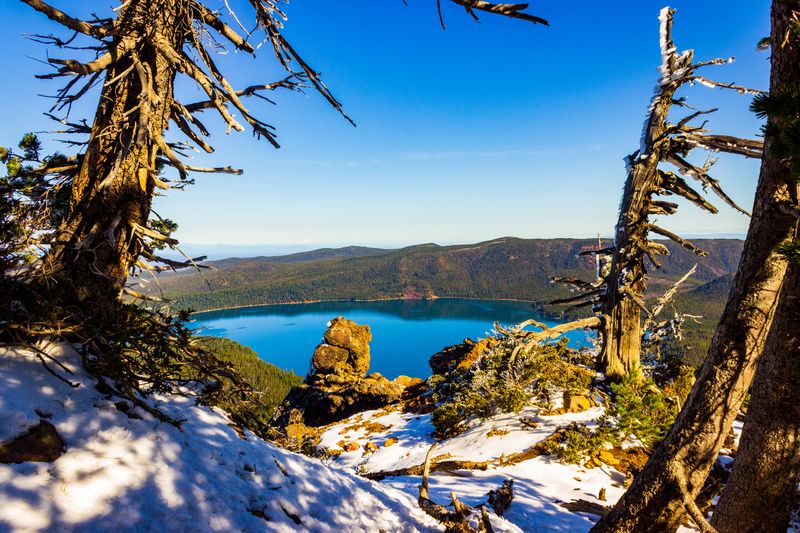
Paulina Peak overlooks the Newberry caldera, a wide volcanic bowl holding twin lakes and miles of lava history.
When the gate is open, a short road climbs to a lookout where the view sprawls for counties.
Access via Paulina Peak Road off Paulina Lake Road, La Pine, OR 97739, inside Newberry National Volcanic Monument.
From the summit area, you see glassy Paulina Lake and East Lake set against dark cinder and bright pumice.
Interpretive signs explain eruptions, vents, and the scale of Oregon volcanism beneath your feet.
Hikers can skip the drive and take steep trails that weave through lodgepole and loose ash.
Wind often slides over the ridge, so a light jacket makes lingering more pleasant.
Photographers chase afternoon color when shadows model the caldera walls and forest texture.
The lookout area remains compact, so patience helps when others gather at the railing.
On clear days, far peaks line the horizon, anchoring the landscape in every direction.
The road is gravel and rutted in places, so slow travel keeps things easy.
Do not trample the pumice slopes, which heal slowly and hold the story of the monument.
Bring binoculars to spot obsidian flows and the broad arc of the Big Obsidian area.
Sunsets paint pastel bands that fade across the lakes, calm and steady.
It is an accessible way to understand Oregon geology in one sweeping glance.
9. Lookout Mountain near Sisters
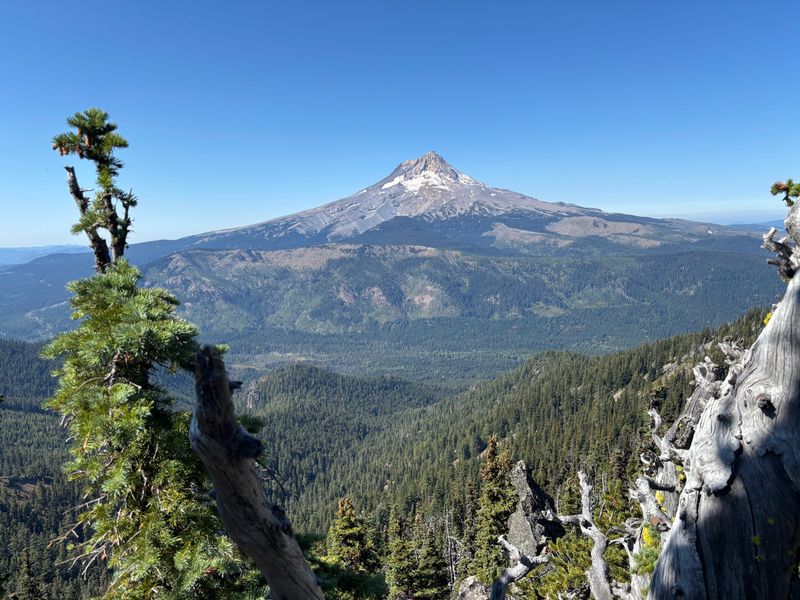
Lookout Mountain near Sisters flies under the radar, yet it lines up a clean angle on the Three Sisters.
The climb moves through pine and grassy openings, with steady grades and little fuss.
Common access is via Lookout Mountain Trailhead, NF-1030, Sisters, OR 97759, off forest roads east of town.
Open patches frame peaks like portraits, changing with each bend and small rise.
Birdsong carries through the trees, and the breeze keeps the forest scent fresh and resinous.
Footing stays friendly, making this an easy choice for mellow days with strong views.
The summit area holds space to sit, scan the range, and trace old cinder cones by shape.
Late light turns the Sisters warm and dimensional, perfect for unhurried photos.
Locals like the reliable quiet here, a contrast to busier spots closer to highways.
Wildflowers dapple the meadows seasonally, bringing color without hiding the long lines of the range.
Clouds slide fast across the crest, giving the view a fresh look every few minutes.
Even in heat, pockets of shade collect along the trail and make breaks pleasant.
Maps help with the network of side tracks, keeping the outing simple and direct.
Tread lightly around fragile soils that anchor the grasses and keep erosion in check.
Leave with a calmer mind, an Oregon skyline in memory, and dust on your boots.
10. Larch Mountain near Mount Hood
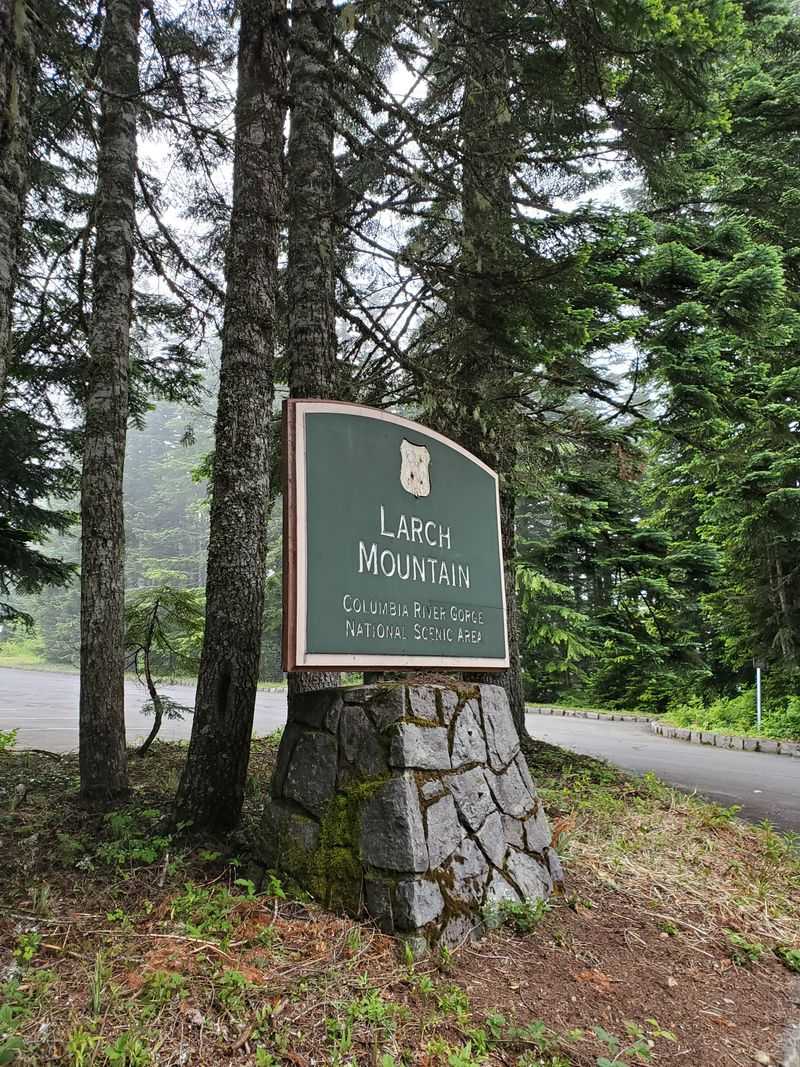
Larch Mountain sits in deep forest east of Portland, giving a different perspective on Mount Hood and the Columbia landscape.
The old road leads to a short path, then stone steps lift you to a viewpoint with a wide horizon.
Access via Larch Mountain Road, Corbett, OR 97019, brings you to the summit area and Sherrard Point.
Morning fog often pools in the lower valleys, while the high ridges break into clear light.
The viewpoint platform frames Hood cleanly, and on lucky days other Cascade peaks line up faintly.
Crowds ebb compared to main Hood trailheads, especially on weekdays and off-peak hours.
Forest scents mix cedar and fir, and the air feels cool even in warm spells.
Short trails loop nearby, easy to stitch into a relaxed morning circuit.
Rock railings and narrow steps invite careful footing, particularly when damp.
Bird calls echo from the trees, giving the lookout a steady, pleasant soundtrack.
Photographers time visits for alpenglow or the first clear break after weather.
The platform concentrates people, so patience and sharing space keep the mood good.
When clouds clear, Hood looks close enough to touch, bright and sharply faceted.
It is an accessible taste of Oregon high country without committing to a long hike.
Bring a layer, breathe deep, and let the forest settle your thoughts.
Dear Reader: This page may contain affiliate links which may earn a commission if you click through and make a purchase. Our independent journalism is not influenced by any advertiser or commercial initiative unless it is clearly marked as sponsored content. As travel products change, please be sure to reconfirm all details and stay up to date with current events to ensure a safe and successful trip.
