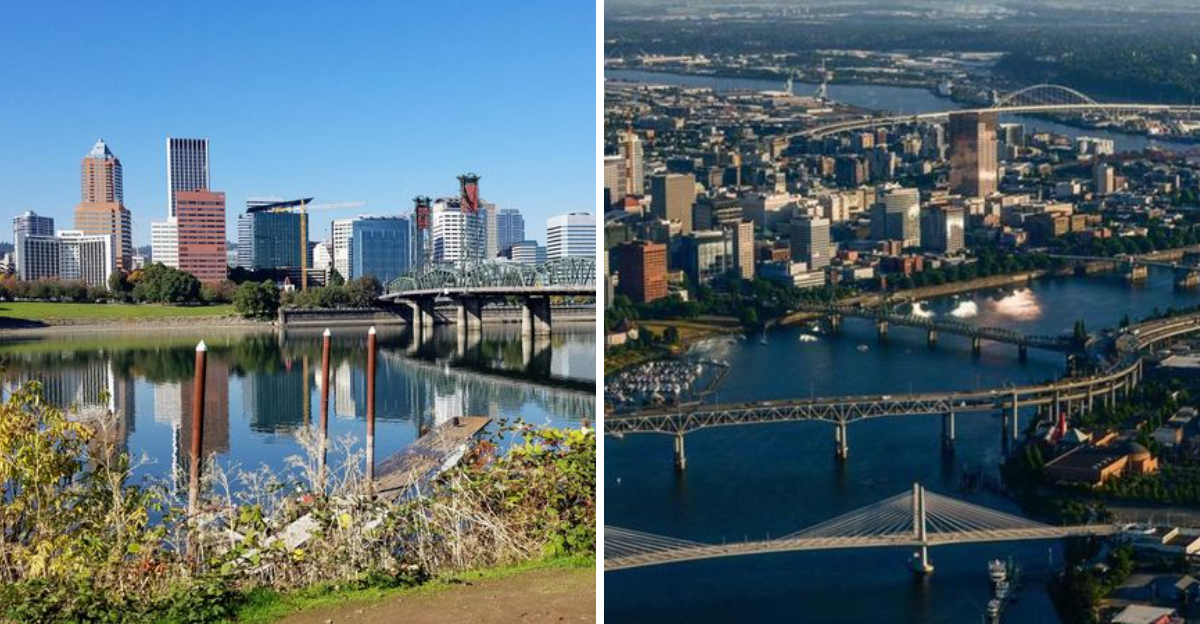
Portland, Oregon is a city that rarely inspires indifference. Known for its outspoken protest culture, fiercely independent spirit, and ongoing struggles with homelessness and public safety, this Pacific Northwest hub invites strong opinions from nearly everyone who spends time here.
Some see Portland as a progressive haven driven by creativity and civic engagement, while others focus on the visible challenges that have reshaped parts of the city in recent years.
What’s undeniable is that Portland continues to evolve in full view, sparking conversations that spill far beyond city limits.
Love it or criticize it, Portland keeps people talking – and these are the top ten aspects of the city that fuel the debate.
The “War Zone” vs. Peaceful Reality
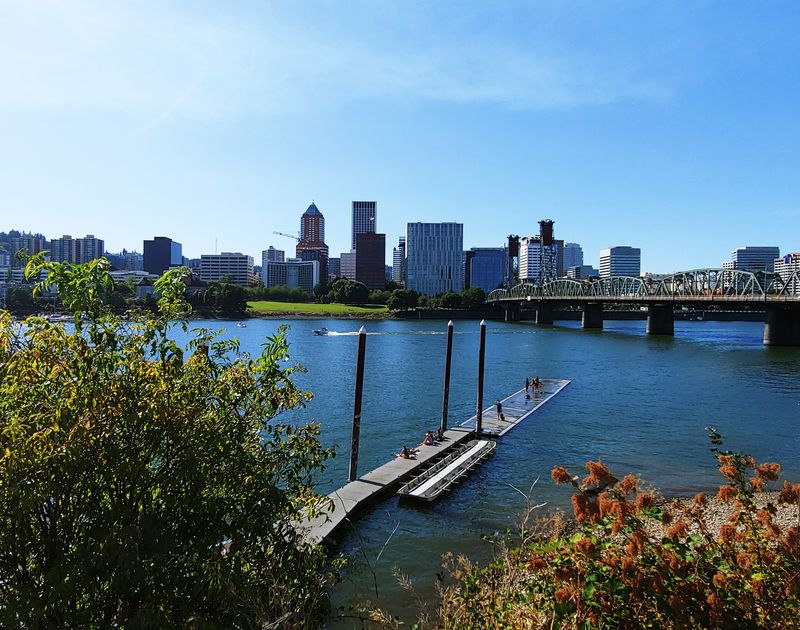
National media coverage painted Portland as a city engulfed in chaos during recent years, particularly following federal characterizations of the area as anarchic. This portrayal emerged from ongoing protests near federal facilities, creating a narrative that alarmed people across the country.
Yet locals tell a completely different story.
Most neighborhoods remain quiet, family-friendly, and welcoming. Residents go about their daily lives without incident, enjoying coffee shops, parks, and local businesses.
The disconnect between perception and reality has become a major talking point.
Some believe the exaggerated coverage damaged tourism and business investment. Others argue the attention brought necessary focus to important social issues.
Visitors often express surprise at how normal and pleasant the city feels compared to what they’ve heard.
Walking through downtown Portland reveals a vibrant, if imperfect, urban landscape rather than a war zone.
Unique Protest Culture
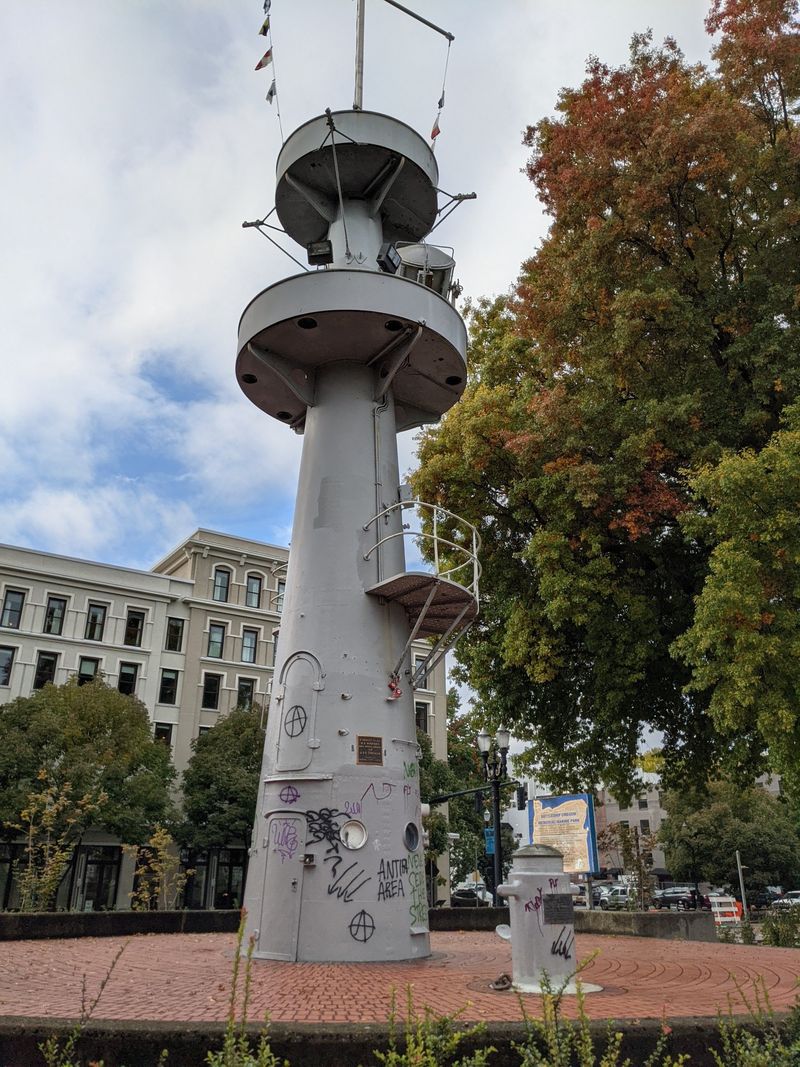
Inflatable costumes became unexpected symbols of resistance in Portland, with the “Portland Frog” leading the charge. These whimsical displays brought color and creativity to demonstrations, turning serious political action into something uniquely Portland.
Supporters view this approach as brilliant.
The costumes diffuse tension, attract media attention, and make protests more accessible to families and people who might otherwise feel intimidated. It’s peaceful resistance with a sense of humor.
Critics see something different entirely.
They argue that quirky costumes trivialize serious issues and create a performative atmosphere that distracts from meaningful change. Some call it a way to make uncomfortable truths more palatable.
This debate reflects broader questions about effective activism.
Does creativity enhance the message or dilute it?
Portland’s approach to protest remains as divisive as the issues themselves.
Public Camping and Sweeps
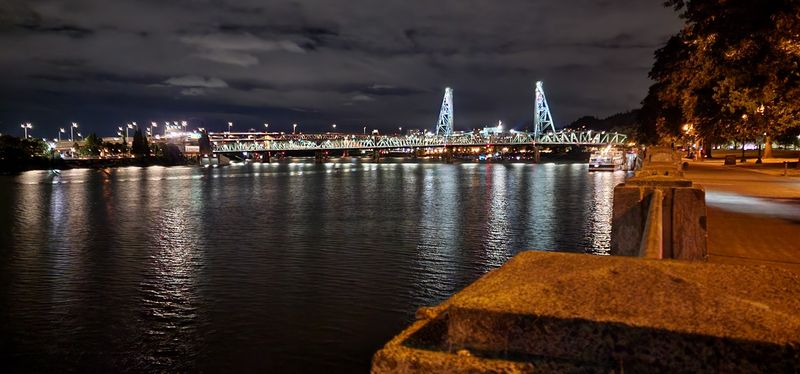
Few issues divide Portland residents more sharply than the question of public camping. The city banned unsanctioned camping while establishing designated sites, creating an ongoing battle over how to address homelessness humanely.
Advocates for unhoused individuals argue that sweeps simply move people around without solving underlying problems.
They point out that many lack access to mental health services, affordable housing, or stable employment. Forcing them to relocate feels cruel and ineffective.
Other residents counter that public camping creates safety hazards, sanitation problems, and makes parks unusable for families.
They believe designated sites with services offer a more organized, dignified solution that benefits everyone.
This tension plays out daily across Portland, Oregon.
Both sides care deeply about their community, yet they envision drastically different paths forward.
Portland Nice
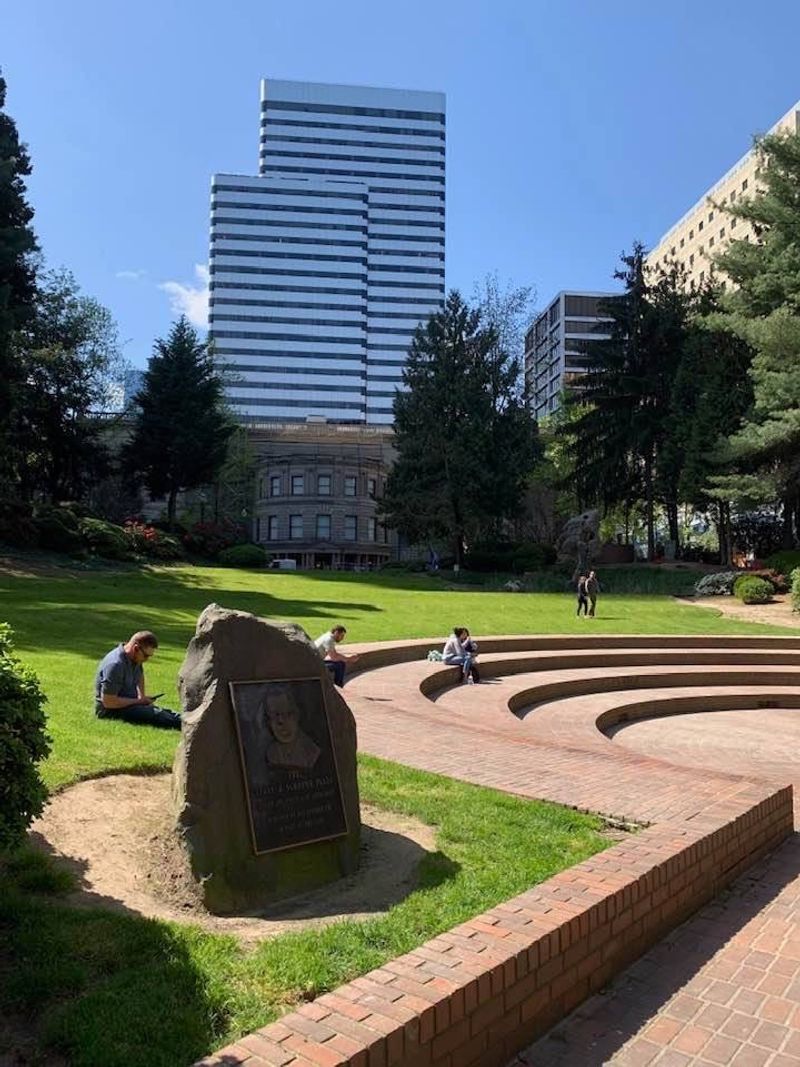
Visitors often comment on the overwhelming politeness they encounter in Portland. Strangers hold doors, offer directions, and go out of their way to help.
This “Portland nice” culture has become part of the city’s identity.
But is niceness enough? Some community leaders now argue that excessive politeness has replaced effective action.
They suggest that avoiding conflict and prioritizing pleasantness over results has allowed problems to fester.
The debate intensified when officials began calling for tougher governance approaches. Should the city maintain its reputation for kindness, or does the current situation demand more assertive leadership?
This question reveals a deeper cultural tension.
Portland residents value compassion and community connection, yet they also want functional city services and solutions to complex challenges.
Finding the balance remains elusive.
Sanctuary Status
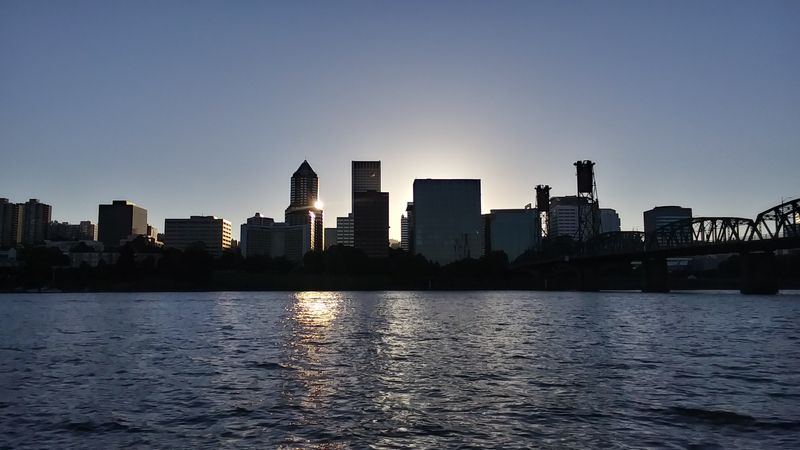
Portland proudly maintains its sanctuary city status, with Oregon as a sanctuary state. This means local law enforcement does not assist federal immigration authorities with enforcement actions, a policy rooted in values of inclusion and protection.
For many residents, this represents Portland at its best.
They believe protecting vulnerable community members reflects the city’s progressive values and creates a safer environment where everyone can access services without fear.
Others view sanctuary policies as problematic. They argue these rules create conflict with federal agencies and become flashpoints during elections.
The issue has sparked heated debates and high-profile confrontations.
As midterm elections approach, sanctuary status remains a volatile topic.
It encapsulates broader questions about local versus federal authority, immigration policy, and what it means to be a welcoming community in a divided nation.
The Cost of “Beervana”
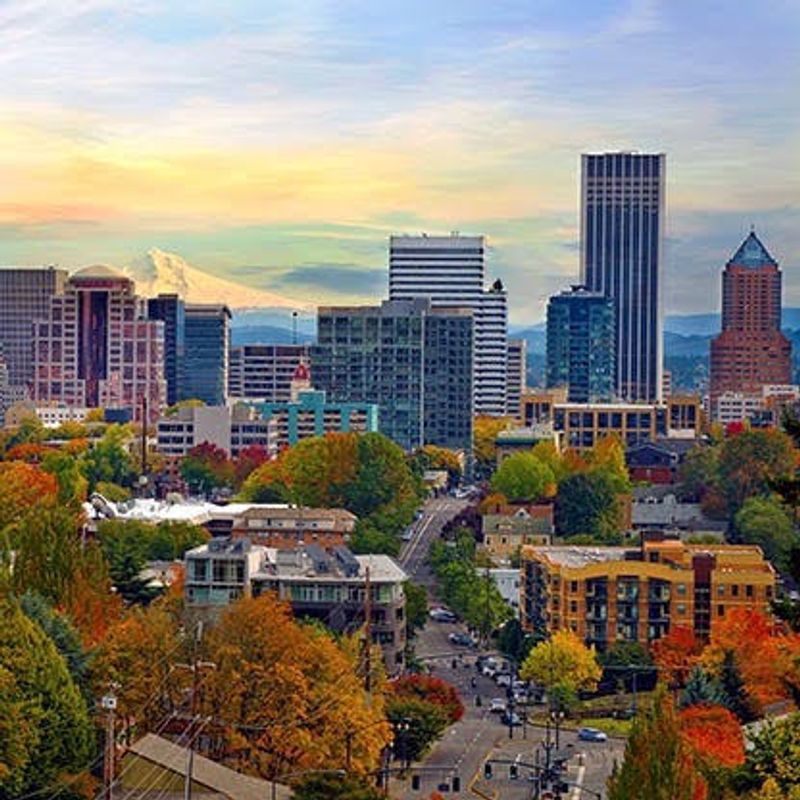
Portland earned its “Beervana” nickname through an incredible culinary and craft scene. The city offers world-class restaurants, innovative food carts, and countless breweries that draw enthusiasts from around the globe.
However, enjoying this foodie paradise comes with a price tag.
Housing costs have skyrocketed, with many residents spending half their income on rent or mortgages. This financial pressure has changed who can afford to live here.
Some still consider Portland a bargain compared to Seattle or San Francisco.
They point to the vibrant culture and natural beauty as worth the investment. Others feel priced out of the very neighborhoods that made the city special.
This affordability debate affects everyone from young professionals to longtime residents.
Is Portland still accessible, or has it become another expensive West Coast city?
Tax-Free Shopping vs. High Income Tax
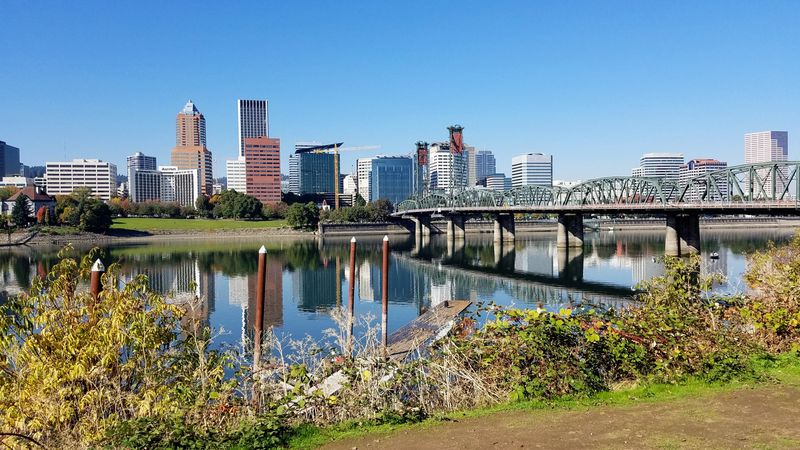
Shopping in Portland feels like getting a discount. Oregon has no sales tax, which means the price you see is the price you pay.
This attracts shoppers from neighboring states and makes everyday purchases more straightforward.
But the tax situation isn’t quite as simple as it seems. Oregon compensates with some of the highest state income taxes in the nation.
Portland residents also pay additional local taxes, including the controversial Art Tax that costs every household annually.
Opinions split sharply on whether this system works. Some appreciate knowing exactly what they’ll pay at checkout and believe income taxes are fairer than sales taxes.
Others feel overtaxed and frustrated by fees that seem to multiply.
The debate continues every tax season.
Does the lack of sales tax truly benefit residents, or do other levies erase those savings?
Environmental Leadership vs. Infrastructure
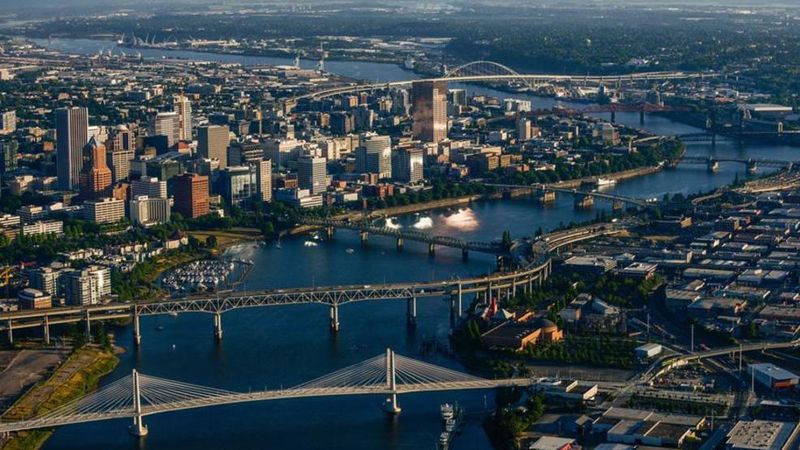
Portland has earned recognition as one of America’s greenest cities. Over seventeen thousand people commute by bicycle daily, an impressive achievement that reflects the city’s commitment to sustainable transportation and environmental stewardship.
Yet this green reputation faces challenges.
The transportation budget shows a massive funding gap, threatening the very infrastructure that makes eco-friendly commuting possible. Bike lanes need maintenance, roads require repairs, and public transit needs investment.
City officials must decide between steep service cuts or finding new revenue sources.
Neither option appeals to residents already feeling financially stretched. Can Portland maintain its environmental leadership without adequate funding?
This dilemma highlights the gap between values and practical realities.
Everyone supports sustainability in theory, but paying for it proves more complicated.
The outcome will shape Portland’s future for years to come.
Downtown “Revitalization”
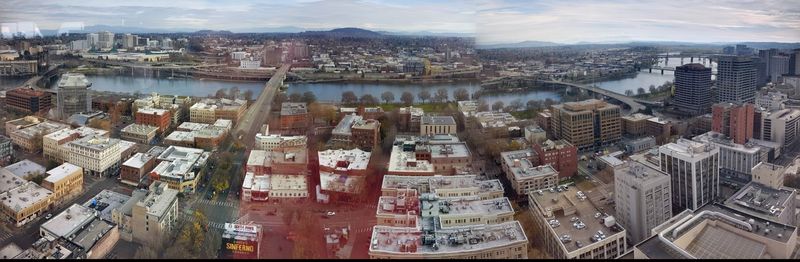
Downtown Portland faces an identity crisis. Vacant storefronts have prompted creative solutions, including a proposed “punk rock mall” concept that would transform empty spaces into alternative retail venues and artistic hubs.
Supporters see innovation and opportunity.
They believe unconventional approaches match Portland’s quirky character and could attract visitors looking for unique experiences. Why follow traditional retail models when creativity is the city’s strength?
Skeptics worry about a “doom loop” where declining investment leads to further deterioration.
They question whether punk rock malls can generate the economic activity needed to sustain a healthy downtown. Real estate values continue dropping, concerning property owners and city planners.
The stakes are high.
A thriving downtown benefits everyone, but achieving that goal requires consensus on the path forward.
Can Portland reinvent urban retail, or do traditional approaches work better?
Lack of Racial Diversity
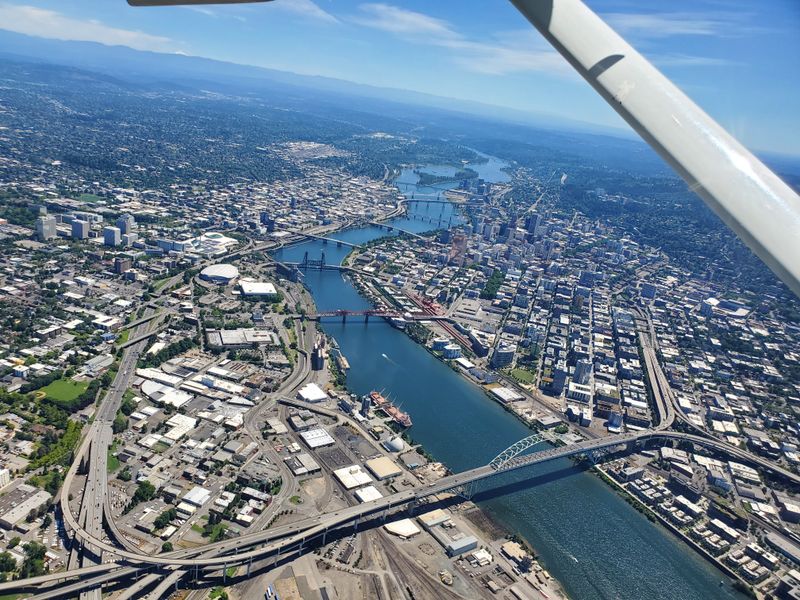
Portland’s progressive reputation stands in stark contrast to its demographics. Despite being a major American city, Portland remains one of the least racially diverse urban areas in the country, a fact that troubles many residents.
Historical policies actively excluded communities of color, creating patterns that persist today. While the city has slowly become more diverse in recent years, progress feels painfully slow to those advocating for change.
Some residents point to incremental improvements and efforts to address historical wrongs. Others argue that without dramatic action, Portland’s homogeneity represents a fundamental failure that undermines claims of inclusivity.
This uncomfortable truth forces difficult conversations. How can a city claim progressive values while remaining so demographically uniform?
The question challenges Portland to confront its past and reimagine its future as a truly welcoming place for everyone.
Many newcomers are surprised by this gap between Portland’s ideals and its lived reality, especially when compared to other cities of similar size. Community groups continue to push for housing equity, economic access, and representation, but systemic change proves difficult to achieve.
For many residents, acknowledging this disconnect is a necessary first step toward making Portland’s progressive identity more than just a reputation.
Dear Reader: This page may contain affiliate links which may earn a commission if you click through and make a purchase. Our independent journalism is not influenced by any advertiser or commercial initiative unless it is clearly marked as sponsored content. As travel products change, please be sure to reconfirm all details and stay up to date with current events to ensure a safe and successful trip.
