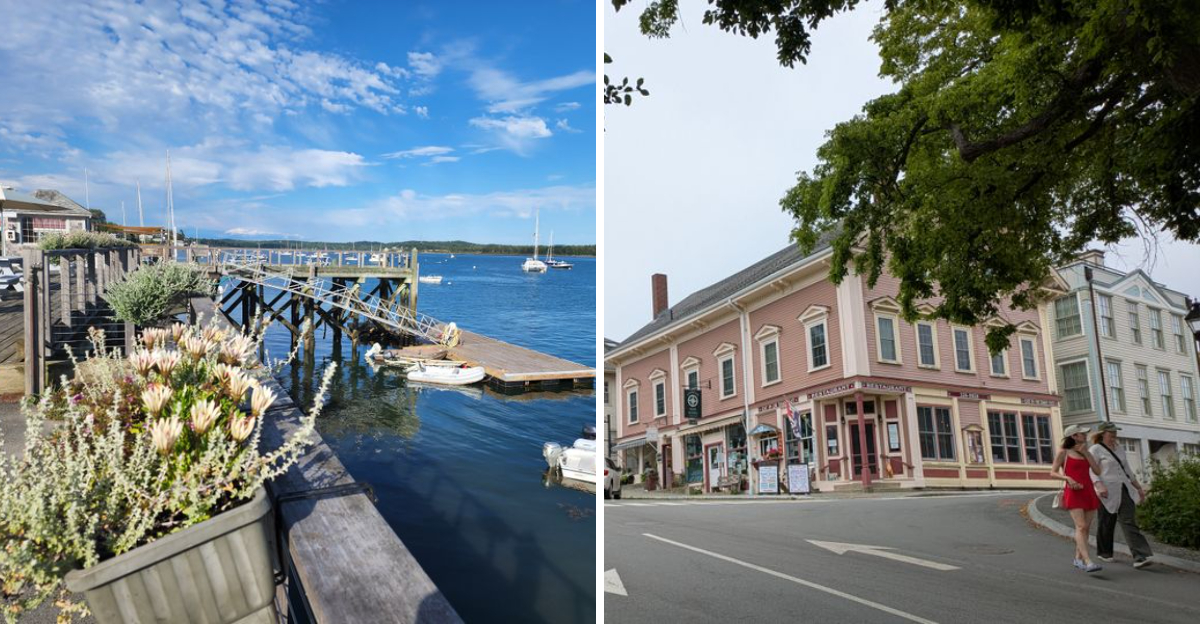
Have you ever wondered what it feels like to step into one of the oldest towns in New England?
Castine, Maine, was first settled in the early 1600s and has been claimed by French, Dutch, British, and American forces over the centuries.
Today it’s a harbor village of just over 1,300 residents, tucked quietly into Penobscot Bay.
The town’s motto, “Under the Elms and By the Sea,” comes alive as you stroll shaded streets lined with historic homes.
Castine Harbor remains a working waterfront, where lobster boats and dinghies share space with visiting yachts.
Maine Maritime Academy anchors the community, training cadets while adding energy to the shoreline.
History buffs can explore Fort George and Fort Madison, remnants of Revolutionary War and War of 1812 battles.
The Wilson Museum and Castine Historical Society showcase artifacts that connect the town to centuries of maritime trade.
Unlike busier destinations like Bar Harbor, Castine’s location keeps crowds small and the pace unhurried.
For travelers who make the trip, Castine offers a rare blend of history, scenery, and calm that feels like a secret worth keeping.
Castine Harbor Stroll on Water Street
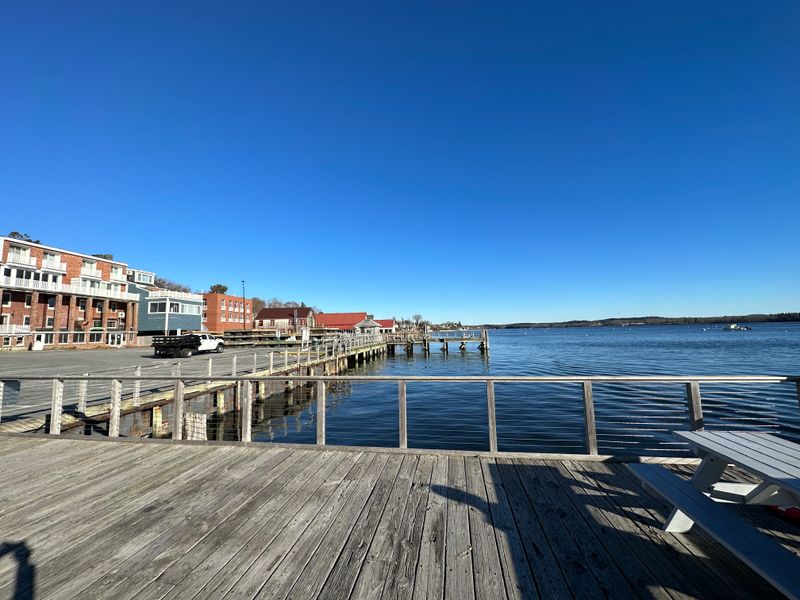
You can begin on the working waterfront where lobster boats bob beside wooden dinghies at Castine Town Dock, 93 Water Street, Castine, ME 04421.
The harbor opens like a quiet amphitheater of ripples, gull calls, and the metallic tap of halyards against masts.
Morning light spreads across the bay and you feel the breeze lift salt and pine through the air as you wander the pier.
Benches along Water Street give you a front row seat to Penobscot Bay while small crews reset traps and chart their day.
It feels calm yet purposeful and the rhythm of casting off and coming home sets the tone for exploring the rest of town.
Look back toward the hillside and you see steeples and academy buildings watch over the cove like friendly sentries.
Castine Harbor has been an active port since the 1600s, reflecting its long maritime history.
The town dock is used by both commercial fishermen and recreational boaters.
Seasonal festivals often highlight the harbor with parades of boats and music.
The waterfront is part of the town’s historic district listed on the National Register of Historic Places.
Maine Maritime Academy Waterfront

Follow the shoreline to the Maine Maritime Academy Waterfront, 32 Pleasant Street, Castine, ME 04421.
You will see the training ship and small craft lined neatly along the floats where cadets practice seamanship on the protected cove.
Signals clink, lines coil, and the campus hums with purposeful motion that still feels laid back.
Interpretive signs outline navigation, engineering, and local marine ecology in clear, welcoming language.
The water smells clean and briny and the view across to Cape Rosier gives you a wide horizon to breathe into.
You can linger on the promenade and watch students chart courses while gulls drift over the masts.
The academy was founded in 1941 and is one of six state maritime academies in the U.S.
Its training ship, the T/S State of Maine, is central to student education.
Programs include marine engineering, logistics, and international business.
The campus hosts public events and waterfront tours during summer months.
Wilson Museum on Perkins Street
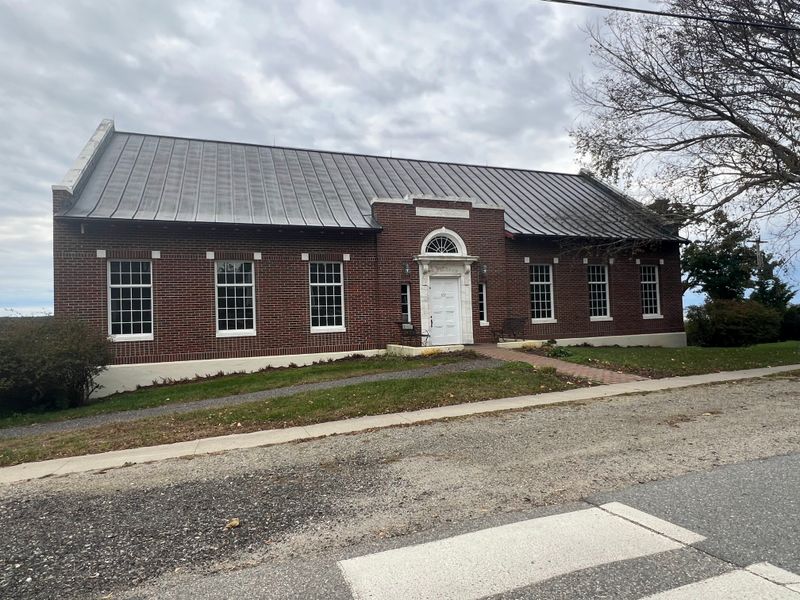
Step into hands-on history at the Wilson Museum, 120 Perkins Street, Castine, ME 04421.
Galleries showcase Maine geology, early tools, and maritime artifacts that anchor Castine to centuries of coastal trade.
You move from glinting stone specimens to ship models that still seem to hold wind in their sails.
Docents offer friendly context about quarrying, homestead life, and the town’s seafaring roots.
The campus includes a blacksmith shop that sometimes offers demonstrations and the smell of coal and iron lingers in memory.
It is a small museum with big texture and you leave with the sense that every cobble on Perkins Street has a story.
The museum was founded in 1921 by Dr. John Howard Wilson.
Its collections include artifacts from around the world, not just Maine.
Educational programs are offered for local schools and visitors.
The museum grounds include historic buildings relocated to the site.
Fort George Earthworks
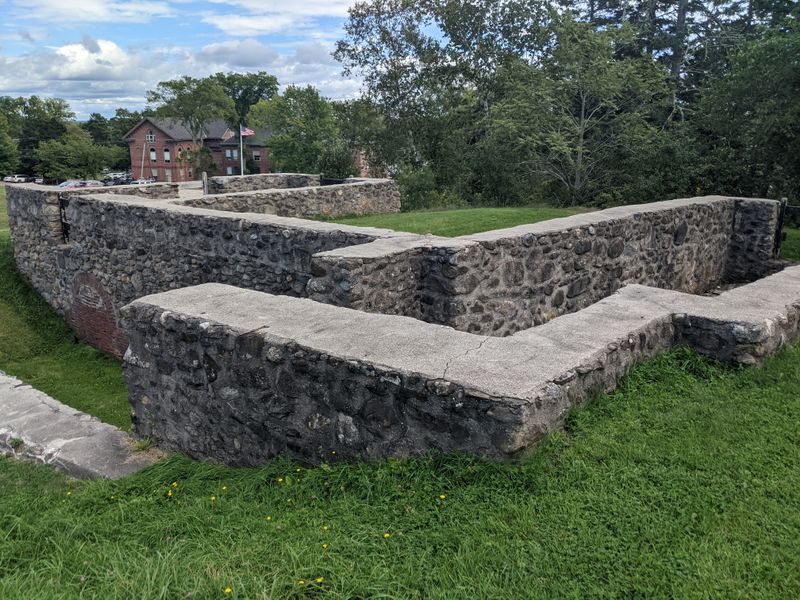
Stand on the quiet ridge of Fort George, 1 Battle Avenue, Castine, ME 04421.
Grassy ramparts curve above the harbor and the wind moves through the trees while interpretive panels outline the fort’s Revolutionary War era story.
You walk the loop trail and catch glimpses of water through leaves with birdsong stitching the background.
The earthworks feel both delicate and resilient and the field opens to picnic-friendly space with sweeping views.
Local legend says faint drumming can be heard on still nights and it is clearly labeled as unverified lore.
What you can confirm is the sense of perspective the hill gives you over town, tides, and time.
Fort George was built by the British in 1779 during the American Revolution.
It was later occupied by American forces after the war.
The site is maintained as a public park with historical markers.
Archaeological studies have uncovered artifacts from the fort’s occupation.
Dyce Head Light and Shore Path
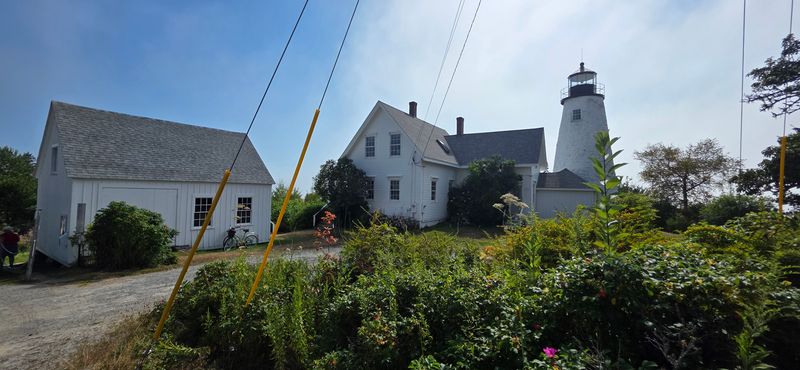
Make your way to Dyce Head Lighthouse, 13 Dyce Head Road, Castine, ME 04421.
The white tower rises above spruce and granite and the air smells like salt and sun-warmed stone.
You can follow the public path down to the rocky shore where waves click pebbles and send up cool spray.
Fog horns sometimes sound in the distance and cormorants dry wings on ledges like little heralds of fair weather.
From the headland the bay looks like a deep blue quilt stitched with wakes and moorings.
It is a perfect place to slow down and let the horizon do its quiet work.
Dyce Head Light was first built in 1828 and remains an active aid to navigation.
The lighthouse is owned by the town and maintained for public access.
Its Fresnel lens was removed in the 20th century but the tower still operates with modern equipment.
The surrounding area is popular for hiking and photography.
Tarratine Street Elm Lined Walk

Stroll along the gracious curve of Tarratine Street beginning near 67 Tarratine Street, Castine, ME 04421.
Historic homes present tidy porches, bright shutters, and gardens that smell like lilac in late spring.
Overhead elms and maples filter sunlight so the whole street feels like a green tunnel.
Footsteps sound soft on old sidewalks and you can catch church bells marking the hour from nearby steeples.
The walk pairs perfectly with a slow harbor loop and it frames the town’s Federal period character in a single glance.
You end near a bluff with a small view that reminds you the water is never far away.
Many of the homes date back to the 18th and 19th centuries.
Architectural styles include Federal, Greek Revival, and Colonial.
The street is part of Castine’s historic district.
Local walking tours often highlight Tarratine Street as a key stop.
Castine Historical Society at the Abbott School
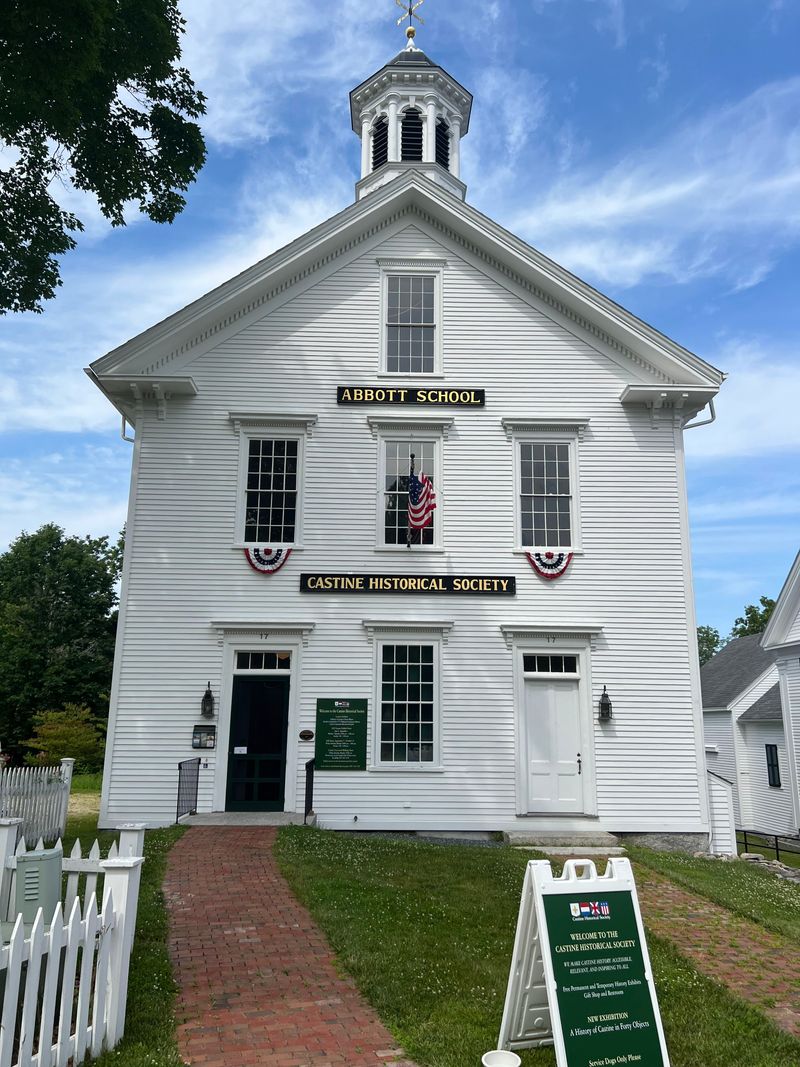
For a compact timeline of town life visit the Castine Historical Society, 17 School Street, Castine, ME 04421.
Exhibits rotate through maritime trade, early settlement, and local cultural life with photographs that feel almost like windows.
The restored Abbott School building gives the displays warm wood and bright light.
Staff answer questions with practical detail and point you toward walking tour brochures that map key sites.
Quiet rooms let you linger on maps that show forts, wharves, and old street names as they shifted over centuries.
You leave ready to notice details you might have walked by before.
The society was founded in 1990 to preserve local history.
Its archives include manuscripts, maps, and photographs.
Public lectures and events are held seasonally.
The Abbott School building dates to 1859 and is listed on the National Register of Historic Places.
Wadsworth Cove Beach and Backshore
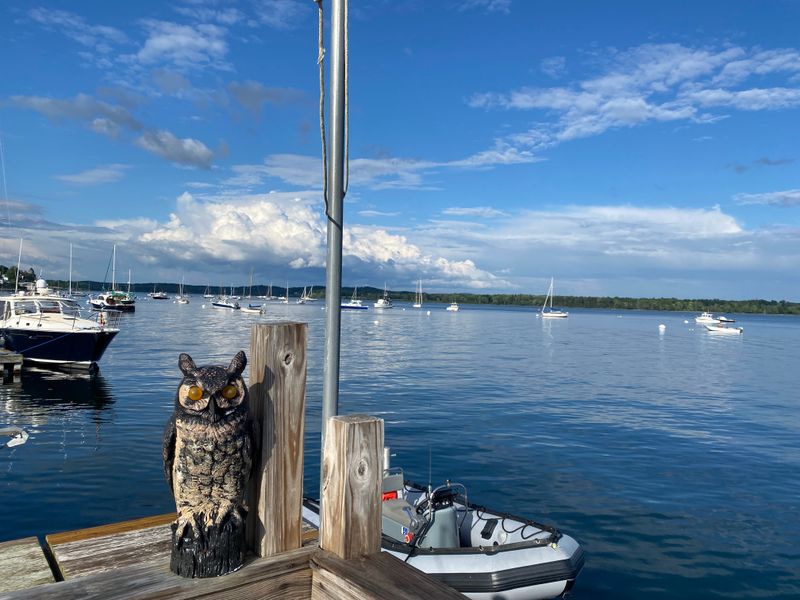
When you want a tide-focused pause, head to Wadsworth Cove Beach, 200 Wadsworth Cove Road, Castine, ME 04421.
At low tide the sandbars broaden and the water glints with tiny shells that tick underfoot.
Children search for periwinkles while ospreys circle overhead and the shore smells like clean kelp and sun.
Locals come for quiet swims in summer and for long bundled walks when the wind shows teeth.
The cove looks toward Penobscot Bay and the sweep of coastline feels open yet sheltered.
You can linger on the Backshore as the sky turns pink and the tide draws a glossy line across the flats.
The beach is town-owned and open to the public.
It is popular for clamming and shellfishing at low tide.
The Backshore area is known for strong surf during storms.
Birdwatchers frequent the cove for sightings of shorebirds and raptors.
Emerson Hall and Town Green
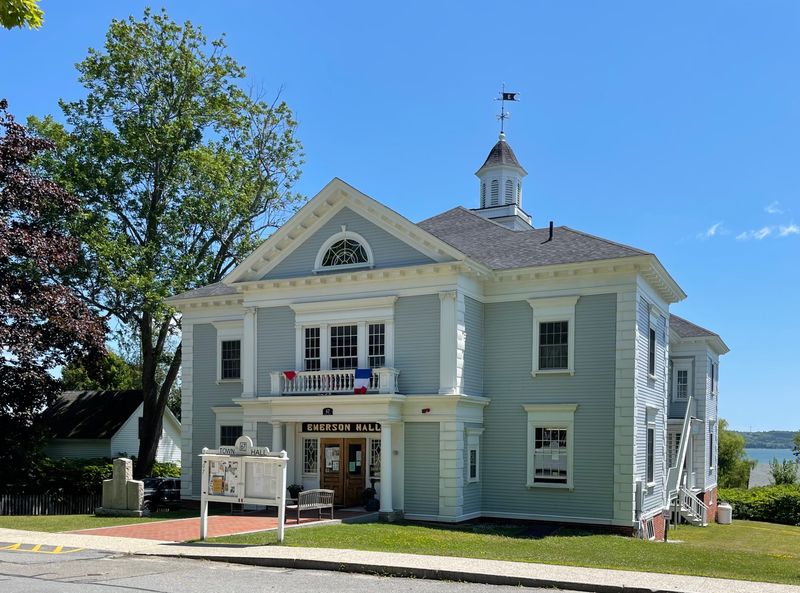
Pause on the village green by Emerson Hall, 67 Court Street, Castine, ME 04421.
The shingled building faces a tidy lawn where community notices and seasonal flowers set a neighborly tone.
Breezes carry the soft clack of flag halyards and the square becomes a natural meeting point before dinner or a harbor walk.
From here streets radiate toward the water and uphill to historic corners so you can choose any direction and find charm.
Benches make people watching easy and you can pick out everyday rhythms that give the town its calm pulse.
The green glows in late light and frames postcard views without feeling staged.
Emerson Hall serves as Castine’s town office and community center.
The building dates to the early 20th century.
Public meetings and events are often held on the green.
The site is central to Castine’s civic and social life.
Fort Madison on Perkins Street
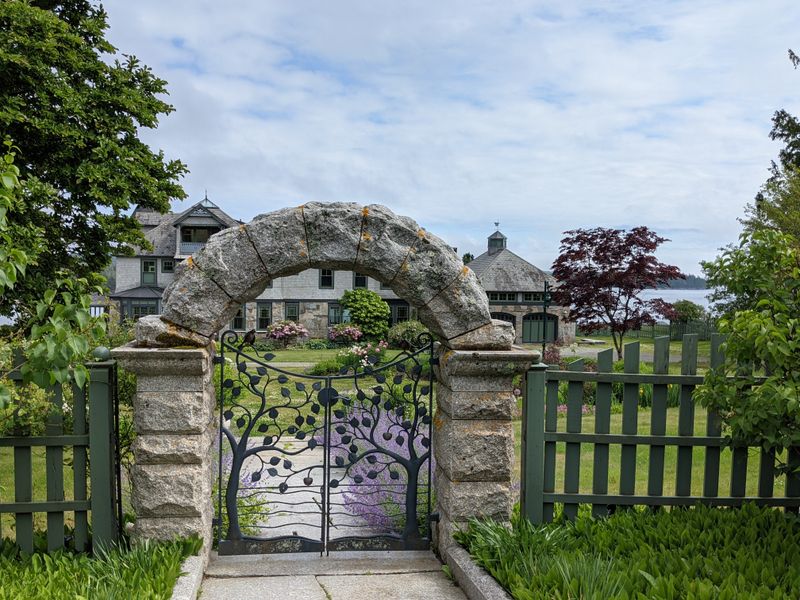
Close to the waterfront you can trace the outline of Fort Madison, 200 Perkins Street, Castine, ME 04421.
Rolling embankments face the harbor where cannon once guarded the channel and now picnic blankets take their place.
Interpretive signs explain War of 1812 defenses while meadow grasses sway in slow waves.
The fort’s open slope gives a lovely view of moorings and the academy’s vessels at rest.
It is an easy stop with plenty of room to breathe and notice how the town balances history with everyday life.
Sunsets paint the grass copper and the water turns the color of old coins.
Fort Madison was constructed by U.S. forces in 1808 to defend Penobscot Bay.
It was captured and destroyed by the British in 1814 during the War of 1812.
The site today is preserved as a public park with interpretive signage.
Archaeological digs have uncovered remnants of the fort’s original structures.
Dennett’s Wharf Boardwalk Lookout
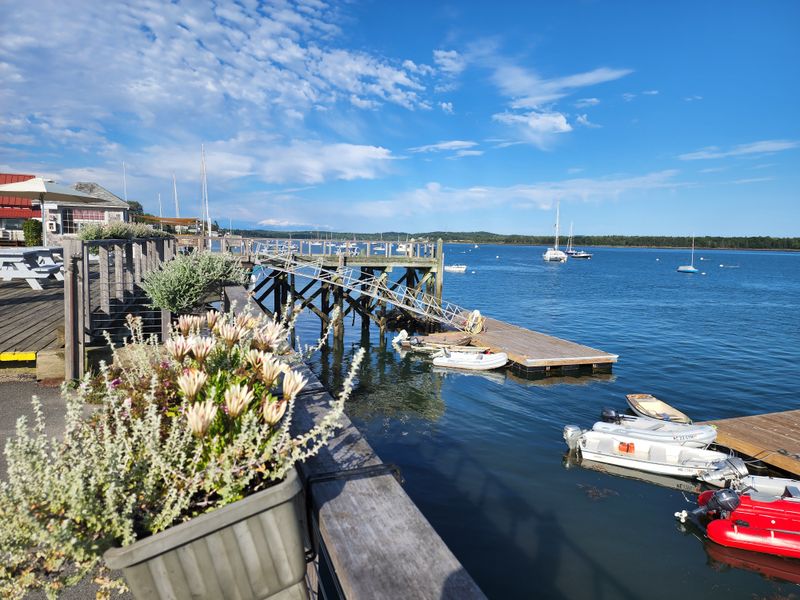
Walk to the public boardwalk by the site of Dennett’s Wharf, 15 Sea Street, Castine, ME 04421.
You can stand above the pilings with a straight shot view of the harbor and the academy pier.
The tide swirls around ladders and the scent is pure ocean with a hint of creosote and rope.
Locals swap weather notes and boat names here and the steady movement of the water is almost meditative.
It is a simple lookout that delivers the town’s best balance of sky, hulls, and horizon.
You will probably take more photos than you planned because every angle feels composed by the tide.
Dennett’s Wharf was once a popular restaurant and gathering spot on the waterfront.
The wharf area has long been used for shipping and marine trade.
Today the boardwalk serves as a public vantage point for harbor views.
It is a favored location for watching academy training ships depart and return.
T/S State of Maine Sightline
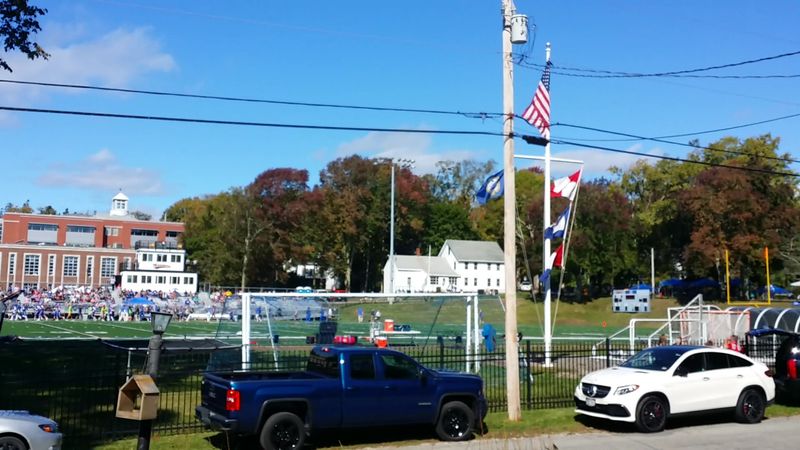
For a last wide-angle moment, frame the T/S State of Maine from the public vantage near 20 Pleasant Street, Castine, ME 04421.
The training ship anchors the skyline and reminds you the town lives by the water’s clock.
You can watch tugs, skiffs, and students moving around the big white hull like a careful dance.
The hum of equipment and gull chatter floats across the cove and the air carries that crisp dockside tang.
It is both a symbol of education and a working vessel that marks seasons with arrivals and departures.
You leave with salt on your lips and a map of streets and stories tucked into memory.
The T/S State of Maine is operated by Maine Maritime Academy as its primary training vessel.
The current ship is the third to bear the name, launched in 1997.
It undertakes summer cruises to ports across the Atlantic and Caribbean.
The vessel is over 500 feet long and accommodates hundreds of cadets during training voyages.
Dear Reader: This page may contain affiliate links which may earn a commission if you click through and make a purchase. Our independent journalism is not influenced by any advertiser or commercial initiative unless it is clearly marked as sponsored content. As travel products change, please be sure to reconfirm all details and stay up to date with current events to ensure a safe and successful trip.
